Highlights
-
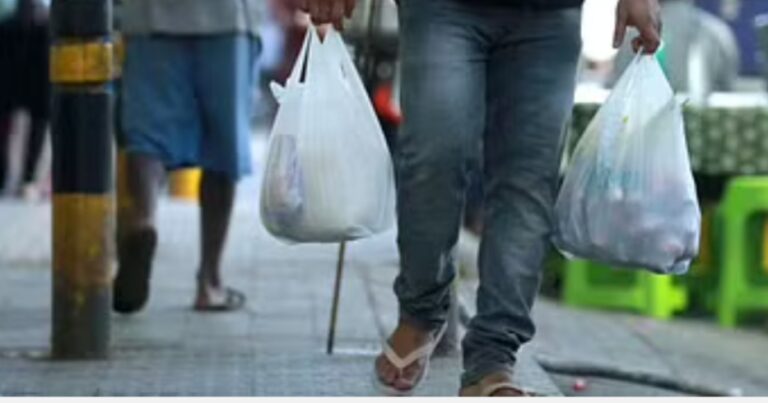
In the wake of a nationwide ban on use of single-use plastic (SUP), Karnataka State Pollution Control Board (KSPCB) chairman Shanth Avverahalli Thimmaiah on Thursday said that from July 1 (Friday), all items will be seized from all retail stores and other sales units.
-
Imposition of fine on violators will also come into immediate effect from Friday. Enough awareness has been spread, it is now time for action, Thimmaiah said.However, in the first phase of implementation of ban on SUP, chips and biscuit packets, water, cold drink and juice bottles, milk sachets and other such items have not been included in the list issued by the Central Pollution Control Board (CPCB). Thimmaiah said Karnataka had implemented the ban on use of plastic since 2016. The manufacturers/suppliers should take back the plastic used for packing items and recycle them. This should be mandatorily followed.
Plastic associations seek govt support
Asked whether plastic collection by BBMP will come to a halt, Thimmaiah said the issue will be discussed with the Palike and steps taken accordingly.He added that scion of the Mysuru royal family, Yaduveer Krishnadatta Chamaraja Wadiyar, who was roped in as the brand ambassador of the board, will help in spreading the message of SUP ban and create awareness. The deputy commissioners and gram panchayats will also play their part in curbing the menace.
The chairman said 112 units have been given notices since 2016, 104 manufacturing units have been shut down and criminal cases have been filed against 12 units — nine of which are in Ballari and three in Mysuru. Thimmaiah said that most of the biscuit and chips manufacturing units and packaging units are not in Karnataka, so acting against them is not possible.
However, many unitshave given representation to the Board seeking time as products have already
been rolled out. In the meantime, members of plastic associations have sought government intervention in the form of financial support as their livelihood will be affected. Jigish Doshi, President, Plastindia Foundation said business units manufacturing single/standalone product which fall under the banned category will face serious financial issues.
Hence, these manufacturers need to be protected by the government in terms of change in policy guidelines and fiscal incentives. One of the steps can be to give more time to the manufacturing units to enable them to comply with the order, he said.
Highlights
-
Normal life was hit in Mangaluru, Udupi cities and other parts of the two districts as heavy rains lashed throughout the day on Thursday. Sunil, a 46-year-old man from Kolnadu near Mulki, died after he was washed away in the floods on Wednesday night. His body was found on Thursday morning. Several low-lying areas were inundated in Mangaluru city, affecting vehicular movement on NH-75, NH-66 and other roads. Heavy traffic was witnessed in Kottara Chowki, Pumpwell, Padil and other places. At Kottara, the Rajakaluve flowing alongside the highway overflowed.
-
Two houses were fully damaged and another 20 houses were damaged partially in Dakshina Kannada. Veerakambha in Bantwal taluk received the highest 140 mm rainfall till 7.30 pm on Thursday.
-
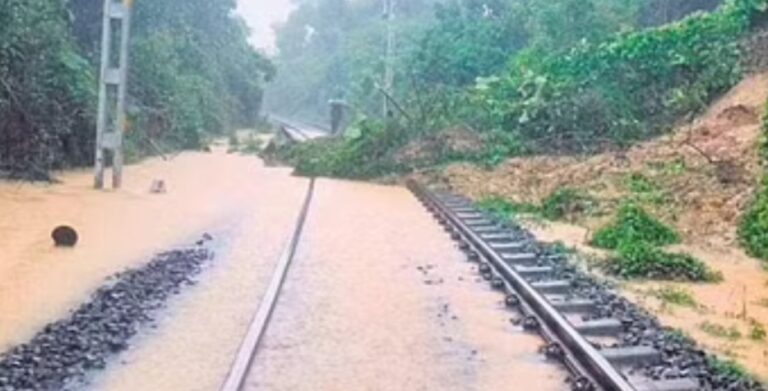
Train services were also affected following a landslip between Mangaluru Junction and Padil section on the Mangaluru Junction-Hassan/Mysuru/Bengaluru section in the morning.
-
By the time the authorities declared holiday, a majority of students had reached schools. At Kodialguthu in Mangaluru city, students were seen wading through knee-deep water while returning from college. Schools and colleges in the two districts will be shut on Friday as IMD has predicted heavy rainfall.
-
Fire personnel rescued three women and a male labourer in a boat in Neermarga after the field they were working in got inundated. Few residents, including children, were rescued with a rope after they got stranded when their houses got flooded in Malemar. Authorities have cautioned people from going close to sea and rivers as water level in Nethravathi, Mruthunjaya, Phalguni rivers increased.
Highlights
-
The city-headquartered private sector Karnataka Bank has increased interest rates on its domestic and NRE rupee term deposits for amount below Rs 2 crore.
-
The rate of interest for 1-2 years deposits will be 5.35 percent and above two years to five years, the rate will be 5.50 percent. The above rates are effective from July 1 this year, a bank release here said.
-
The upward revision in the deposit interest rate will encourage retail customers to invest more in various term deposit schemes of the bank, the release said.
Highlights
-
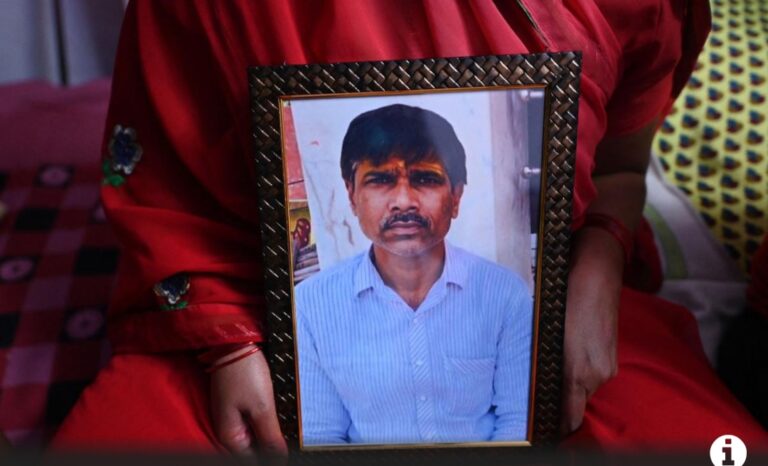
Karnataka Chief Minister Basavaraj Bommai said the two persons who beheaded 40-year-old tailor Kanhaiya Lal inside his shop in Udaipur city of Rajasthan deserve to be hanged to death.
-
Kanhaiya Lal was killed allegedly for posting content in support of suspended BJP leader Nupur Sharma.
-
Mr. Bommai termed the murder an ‘inhuman act’. He wants the Rajasthan Government to take immediate measures to identify terrorist organisations and the persons behind the murder.
-
“It’s a terrorist act,” Mr. Bommai told reporters in Bengaluru on June 30. He claimed that the murder was the outcome of a big international terrorist conspiracy. “A probe should be conducted to identify the global terrorist organisation,” he added.
-
The National Investigation Agency (NIA) has been given charge of the probe into the beheading of Kanhaiya Lal.
-
Right-wing groups have staged protests in several parts of Karnataka opposing the killing.
Highlights
-
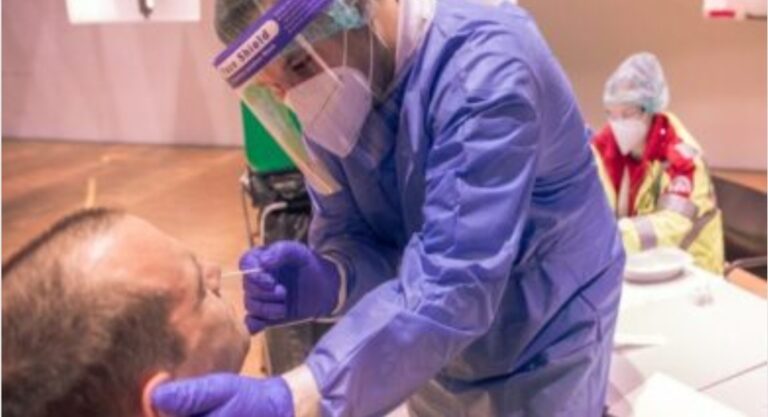
The Centre on Wednesday directed states and UTs to carry surveillance of incoming international travellers as a part of revised surveillance strategy amid the surge in Covid cases.
-
All international travellers arriving in India and testing positive for Covid-19 shall be sequenced, Union Health Secretary Rajesh Bhushan said in a letter to states.
-
“Various actions as per revised surveillance guidelines that need to be undertaken by all states and UTs is surveillance of incoming international travellers. This will include random screening of 2 per cent of passengers in each incoming flight into India by RT-PCR,” he said in the letter.
-
With regards to the sentinel sites surveillance, all health facilities will report influenza-like illness (ILI) cases. “All district survillance officers will be responsible to analyse the data and a proportion (1 in 20 i.e. 5 per cent) of such ILI cases shall be tested through RT-PCR. Futhermore, monitoring of Severe Acute Respiratory Illness (SARI) cases in all district hospitals and selected tertiary hospitals and undertaking their RT-PCR testing for Covid-19. State IDSPs shall share the data so generated on a fortnight basis,” the letter reads.
-
The Union Health Secretary further asked the states to identify and establish suitable linkage between sentinel sites and INSACOG network laboratories to send samples for genonme secqueing.The labs testing for Covid-19 should upload their data on the ICMR portal.
-
The Health Ministry has also asked for sending the positive samples from large clusters and outbreaks in the community and unusual events for whole genome sequencing.
Highlights
-
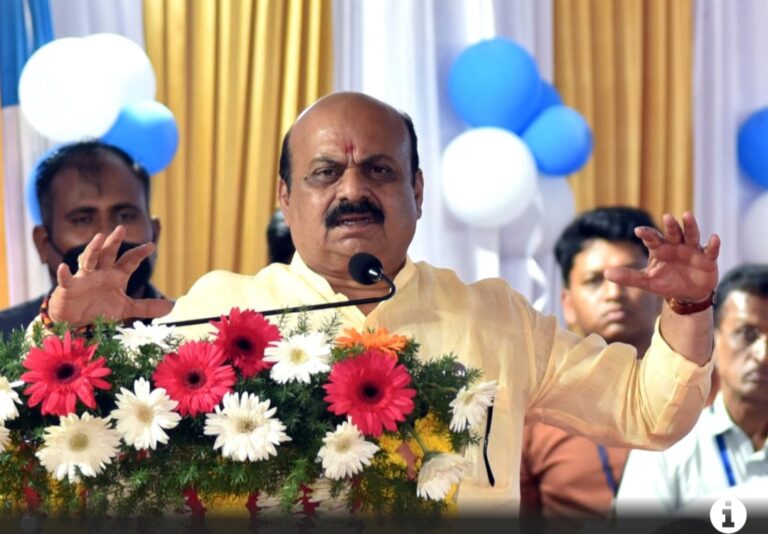
Karnataka Chief Minister Basavaraj Bommai, who returned to Bengaluru after attending the 47 th GST Council meeting in Chandigarh on June 28-29, said the Council will take a final decision in August on the contentious issue of extension of GST compensation to States.
-
The GST Council – the highest decision-making body of the indirect tax regime, which is headed by Union Finance Minister Nirmala Sitharaman and comprises representatives of all States and UTs – discussed the issue in Chandigarh, but could not arrive at a decision, Mr. Bommai said.
-
Speaking to reporters in Bengaluru on June 30, Mr. Bommai, who heads the Group of Ministers on GST, submitted to the Council an interim report on calibration of GST rates on various commodities.
-
Almost all States have been demanding GST compensation for another five years.
-
When GST was rolled out in 2017, States were assured of compensation for revenue loss till June 2022. The GST subsumed 17 Central and State levies from July 1, 2017, and then it was decided that States will be compensated for any loss of revenue on account of the new tax structure for five years.
-
After incurring huge revenue loss in the two years of the COVID-19 pandemic, States have sought an extension of the compensation mechanism for another five years, till 2027.
Highlights
-
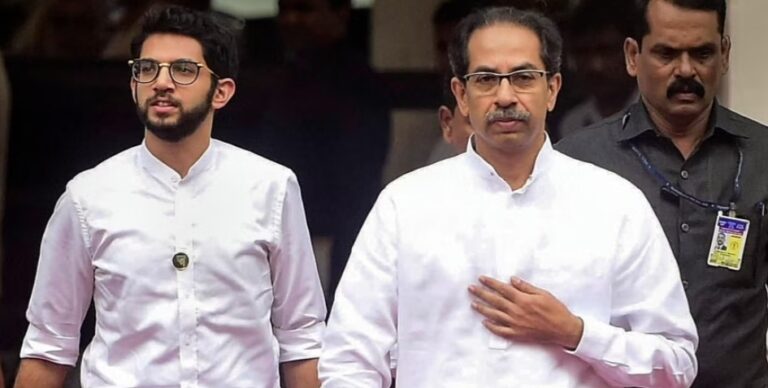
A day after Uddhav Thackeray resigned as Maharashtra chief minister, all eyes are on Raj Bhavan to see when does Governor Bhagat Singh Koshyari invite the BJP to form the next government in the state.
-
The process for the change of regime in the state, which began with the rebellion of around 40 of 55 Shiv Sena MLAs under Eknath Shinde’s leadership, got a boost after BJP leader Devendra Fadnavis met Koshyari on Tuesday night and asked him to order a floor test of the Thackeray government, claiming it had lost majority.
-
Thackeray (62) resigned Wednesday night, minutes after Supreme Court refused to stay Governor Koshyari’s direction to his government to take a floor test in the Assembly on Thursday.
-
“I don’t want to play these games. If those people who were brought up by Sena chief (Balasaheb Thackeray) want to rejoice the fact that they pulled his son down then it is my mistake that I put my faith in them. I don’t want the blood of my Shiv Sainiks to spill on the streets and so I am stepping down from the CM’s post as well as that of an MLC,” said Thackeray in a televised address, that has garnered praise on the social media for his “grace and poise”, as many described it.
-
Thackeray said that he was happy he was able to fulfill his father’s wish of renaming Aurangabad and Osmanabad. The Uddhav-led cabinet had cleared the proposal to rename the two cities on Wednesday. His resignation was greeted with jubilation by BJP leaders who distributed sweets.
-
BJP’s Devendra Fadnavis, who is expected to make a comeback as chief minister after holding the post from 2014 to 2019, is scheduled to brief media later Thursday on the future course of action, which will include staking claim to form the next government.
-
Rebel Sena MLAs led by Eknath Shinde, who are now in a luxury hotel in Goa after spending over a week at posh resorts in Surat and Guwahati, are expected to return to Mumbai soon. It is not yet clear if the Shinde-led group will merge with any party. Shinde Wednesday night reiterated that they are Shiv Sainiks and will remain in Shiv Sena.
-
Meanwhile, Maharashtra Legislature Secretary Rajendra Bhagwat issued a statement saying there won’t be a special session of the Assembly on Thursday as the purpose for which it was convened (floor test) does not exist anymore.
-
Anticipating that the rebel Sena MLAs might start returning to Mumbai soon, police have beefed up security in the city, an official said.
Highlights
-
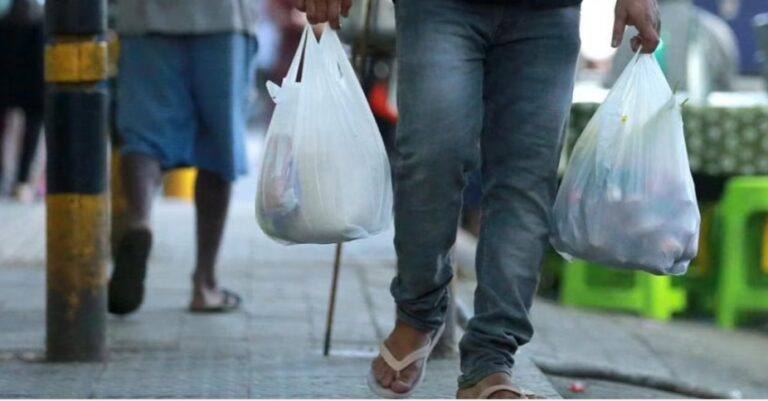
Come July 1, 2022, there will be a nation-wide ban on single-use plastic. While the Karnataka government had banned the use of plastic since 2016, an order issued by the Central Pollution Control Board (CPCB) has given the Karnataka State Pollution Control Board (KSPCB) more teeth to enforce restrictions on border areas.
- The KSPCB has also prepared a list of items which will be banned from July 1. They are also working on providing alternatives to plastic. The board has given approval for the supply of compostable bags and cloth bags. KSPCB Chairman, Shanth Avverahalli Thimmaiah told The New Indian Express that the ban order has given them more powers to ensure strict enforcement. To ensure strict implementation, a meeting with marshals was held on Tuesday. The marshals were trained and informed on what action to take, under which Act and clause penalty should be imposed and under which Act should the manufacturing and retail units be shut down.
-
He said that two agencies — one from Maharashtra and another from Ahmedabad — have been given approval for supply of compostable plastic. These agencies have also got clearance from CPCB and Plastic Unit of India. The bags will come with bar codes, which when scanned will give complete details of the manufacturing unit and suppliers. These agencies will be encouraged to be set up units in Karnataka too, Thimmaiah added.
-
The chairman also said that after 2016 when the ban was enforced, many manufacturing units were raided and shut down. But plastic was still being used. It continues to be found with vendors, eateries, fruit and vegetable sellers and stores. So awareness campaigns need to be taken up in a phased manner. Thimmaiah also said that they were working on imposing a penalty of Rs 2,000 on first time violation by retail vendors, Rs 5,000 for second violation and Rs 10,000 for third time violation.
Say no to these to save environment
Plastic sticks used for ear buds, balloons, candy, ice-creams
Cutlery items — plates, cups, glasses, forks, spoons, knives, trays, stirrers
Packaging items used for sweet boxes, invitation cards, cigarette packets
Other items- PVC banners less than 100 microns, polystyrene for decorations, carry bags, thermocol for decorations, plastic flags.
Highlights
-
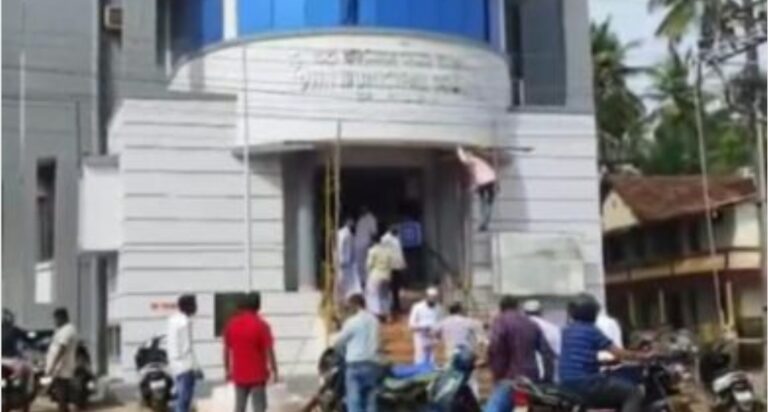
Tension gripped Bhatkal town in Uttara Kannada district after Kannada activists objected to Urdu sign board in the civic agency building in the town.
-
Pro-Kannada activists have strongly objected to the use of Urdu language below Kannada and English languages on the Bhatkal Municipal Council building and given a three-day deadline to remove it.
-
The Bhatkal Municipal Council has taken a decision to put up Urdu language below Kannada in name boards of localities of the town. The administration had put up Urdu language below on the name board of the Municipal Council building.
-
Kannada organisations strongly objected to the move and staged a protest on Tuesday. They also tried to enter the Municipal Council. The local police immediately rushed to the spot and after great effort dispersed the crowd from the spot.
-
Pro-Kannada agitators maintained that since everyone knows Kannada, there is no need for an Urdu sign board. However, Bhatkal town has a sizable population of minorities and a large group of people gathered in support of the Urdu sign board.
-
This is the second time Bhatkal Municipal Corporation is trying to put up Urdu language on the name board of the Municipal Council. The Urdu language sign board was taken off after stiff resistance earlier.
-
Bhatkal is a sensitive town which has made international headlines after few of the youth joined ISIS. The town is constantly under the radar of Indian intelligence agencies. Considering the sensitivity of the matter and district authorities have tightened up security measures in the town.

Highlights
-
Karnataka, along with Uttarakhand, will soon become a torchbearer for other states in establishing a system to check the spread of viruses from animals, with the launch of an integrated effort that seeks to track emerging diseases of zoonotic origin.
-
The programme is the result of an MoU signed by the Department of Animal Husbandry and Dairying with the Bill and Melinda Gates Foundation in September 2021. The department’s premises in Bengaluru will be the hub of the ‘One Health’ initiative, steered by an expert panel in the World Health Organisation (WHO) and supported by global organisations.
-
Launching the pilot project, secretary of the Union Ministry of Fisheries Atul Chaturvedi said the programme will improve the health of livestock as well as wildlife, leading to better human health and an overall improvement in the environment. “This will be made possible by improving disease diagnosis and surveillance, digitising the data collection and sharing mechanism.”
-
Considering human, animal and environmental health from the perspective of interconnectivity and interdependence, the initiative will help check potential threats at the human-animal-environment interface while protecting biodiversity.
-
Chaturvedi said the initiative will also enable seamless flow of information between the experts and members of the community, which will in turn improve surveillance. “The pilot in Karnataka will form the basis for developing the One Health Framework for India. India is the first in the world to try and adapt this approach,” he said.
-
Officials said coordination between various players and sectors was a key objective of the programme which will integrate the laboratories into a network and ensure sharing of data on disease outbreaks.
-
“The project aims to support the development of a targeted surveillance plan and integrate data with the digital architecture of the National Digital Livestock Mission,” Chaturvedi added.
‘Better infrastructure’
Dr Sindura Ganapathi, visiting Fellow at the Office of Principal Scientific Advisor to the Government of India, said, people understand that animal health was as important as human health post-pandemic. “Resources are spent in each of the domains for building laboratories and other equipment. The best use of these resources can be made possible by One Health, where all departments could benefit from the better infrastructure this project could bring in,” he said.
Principal Chief Conservator of Forests (Wildlife) Vijaykumar Gogi said the initiative will help protect wildlife, including the endangered species. “If a wild animal becomes extinct, the diseases that belong to that species will cling on to domestic species and further end up clinging to the human species,” he said.
1...348349350...884Page 349 of 884