J&K polls in AAP’s radar next? Party says ‘will fight assembly elections with seriousness’

Highlights
  • Senior AAP leader and Punjab minister Harjot Singh Bains on Saturday said his party is going to fight the next assembly elections in Jammu and Kashmir with all seriousness to ensure good governance in the Union Territory.
  • Bains, who is J&K election incharge of his party, said winds of change are sweeping the region as people from all walks of life are joining the party.
  • “We are assigned the responsibility to build a robust organization. The work has already started with the joining of many prominent faces. We will work to strengthen the organization and will fight the assembly elections seriously,” Bains told reporters here.
  • He said the party will identify ‘good candidates’ and will not disappoint the people.
  • “We want to replicate the good governance of Delhi and Punjab in Jammu and Kashmir. We are bound to provide a corruption free administration, quality education, health services and job opportunities for the unemployed youth,” he said.
  • Expressing happiness over the warm welcome accorded to him from Kathua to Jammu, he said the people are waiting impatiently for the elections to happen.
  • “We have a development driven agenda and we are going to replicate the Delhi model in Punjab and J&K as well. In Punjab, which is also a border state like Jammu and Kashmir and face threats of terrorism and drone incursions from across the border, has started witnessing a positive development,” he said.
  • He said he sees winds of change blowing in favour of AAP in Himachal Pradesh, Gujarat and also in Jammu and Kashmir.

Good news for Ujjwala Yojana beneficiaries! Centre announces subsidy of Rs 200 per gas cylinder

Highlights
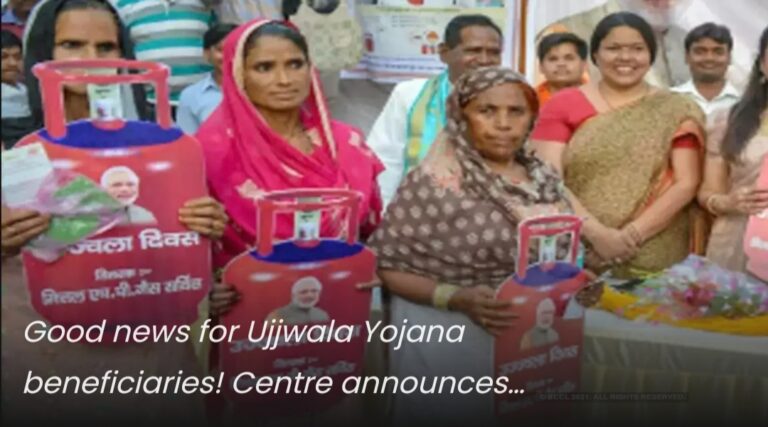
  • Union Finance Minister Nirmala Sitharaman on Saturday announced that the Centre will give a subsidy of Rs 200 per gas cylinder (upto 12 cylinders) to over 9 crore beneficiaries of Pradhan Mantri Ujjwala Yojana this year.
  • The move will have a revenue implication of around Rs 6100 crore a year, the finance minister said.

Earlier this week, cooking gas LPG prices witnessed a jump of Rs 3.50 for the second time in a month. The increase took the LPG cylinder prices across the country over the Rs 1,000-mark. A 14.2 kg domestic LPG cylinder in Delhi and Mumbai costs Rs 1,003, Rs 1,029 in Kolkata and Rs 1,018.5 in Chennai.
FM Sitharaman made a slew of announcements for the welfare of the poor on Saturday. She said, “We are committed to ensure that prices of essential items are kept under control.” Further, the minister said that despite the challenging international situation, we’ve ensured that there are no shortages/scarcity of essential goods. Even a few developed countries couldn’t escape some shortages/disruptions.
“Our government is devoted to the welfare of the poor. We’ve taken a number of steps to help the poor and middle class. As a result, the average inflation during our tenure has remained lower than during previous governments,” Sitharaman stated in a series of tweets.
Meanwhile, PM Narendra Modi had on August 10, 2021 launched Ujjwala 2.0 through video conferencing by handing over liquefied petroleum gas (LPG) connections at Uttar Pradesh’s Mahoba. In Ujjwala 2.0 scheme, migrant workers can also get LPG connections through self-declaration as “proof of address”. Migrants will not be required to submit ration cards or address proof. A self-declaration for both ‘family declaration’ and as a ‘proof of address’ will suffice.
Along with a deposit-free LPG connection, Ujjwala 2.0 is aimed at providing the first refill and hotplate free of cost to the beneficiaries.
The Ujjwala 1.0 scheme was launched in 2016 and under this, a target was set to provide LPG connections to five crore women members of below poverty line (BPL) households. Subsequently, the scheme was expanded in April 2018 to include women beneficiaries from seven more categories (SC/ST, PMAY, AAY, Most backward classes, tea garden, forest dwellers, Islands).
The target was also revised to eight crores LPG connections, which was reached in August 2019, seven months ahead of the target date.
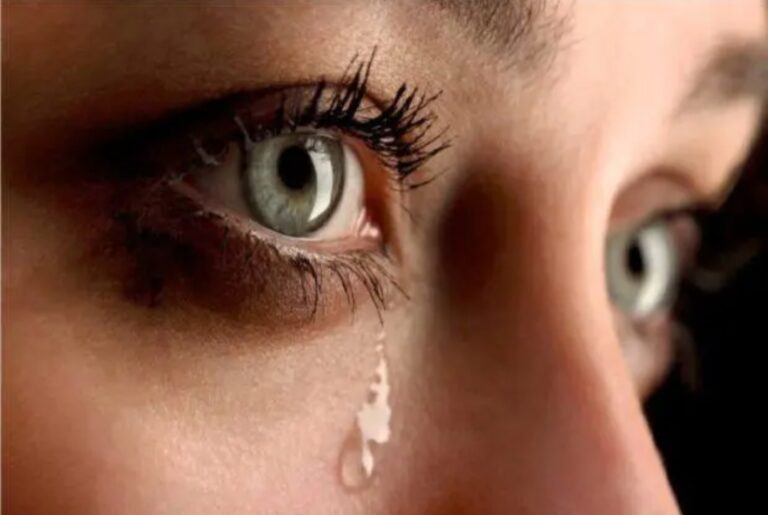
Why do we get teary when we’re tired or sick?

Highlights
  • It’s been a big week and you feel exhausted, and suddenly you find yourself crying at a nice nappy commercial. Or maybe you are struck with a cold or the coronavirus and the fact your partner used up all the milk just makes you want to weep.
  • You may indeed feel sad about being sick or tired, but why the tears? Why can’t you hold things together? Tears serve multiple psychological functions. Tears act as a physical indicator of our inner emotional state, occurring when we feel intense sadness or intense joy.
  • Inside our brains, strong emotions activate the central autonomic network. This network is made up of two parts: the sympathetic system (which activates our “fight or flight” response when we perceive danger) and the parasympathetic nervous system, which restores the body to a state of calm.
  • Strong emotions activate the sympathetic part of this system, but when we cry, the parasympathetic part is activated, making us feel better.
  • What happens when we’re stressed or tired? We are trained from a young age to control our emotions, with socially sanctioned times to express emotion, refraining from physical displays of negative emotion. For example, crying during a sad movie is fine, but crying at work is usually seen as less acceptable.
  • The prefrontal cortex, or the cool, thinking part of our brain, responds to the emotional signals released by the central autonomic network, helping us regulate the emotional response to deal with our emotions in controlled ways. The prefrontal cortex is like the main processor of your computer, managing tasks to keep the system functioning well.
  • Unfortunately, the more stressed and tired we are, or if we experience extended periods of physical or emotional pain, the sympathetic system remains activated. The prefrontal cortex becomes overwhelmed, like a computer that has too many programs running all at once.
  • The brain becomes less able to regulate our emotions in the expected ways, resulting in visible emotional responses, such as tears or angry outbursts. We might not even realise how overwhelmed we are until tears are running down our face after a seemingly minor incident or experience.
  • Some people are more likely to cry than others. Women tend to cry more than men, though the extent to which this is due to biological aspects versus expectations of society is unclear.
  • People who score high on the personality traits of empathy or neuroticism are more likely to cry more often. Excessive crying can also be a physical indication of depression, as the brain is overwhelmed with emotional pain.
  • What’s the point of tears? Beyond psychological reasons, tears play several social roles. Even as our society might disapprove of strong expressions of emotions, tears actually help to create and sustain social bonds.
  • Tears can act as a cry for help, visibly showing others we are not OK and need support. Tears often generate feelings of sympathy in others, helping us connect with them. Tears can also occur when we feel deep sympathy for another person, crying along with them, which further strengthens social bonds.
  • Beyond psychological and social reasons, there are also physical reasons for tears. For instance, when we are tired, we work hard to keep our eyes open, which dries out the eyes. Our bodies produce tears to counteract the dryness, keeping the eyes moist so we can see clearly.
  • Watery eyes are also common in respiratory illnesses such as cold, flu, and the coronavirus. When we have an infection in the body, white blood cells are mobilised to fight the bug. These extra white blood cells can inflame the blood vessels in the eye, which causes the eye ducts to clog, bringing tears.
  • Tears are a natural part of human functioning. Especially with the pressures the past few years have brought, sometimes there’s nothing better than a good cry to relieve overwhelming emotions. But if you find yourself excessively crying, it might be helpful to talk to your doctor about possible physical or psychological causes.

CNG price hiked by Rs 2 per kg; rates up by Rs 19.60/kg in two months

Highlights
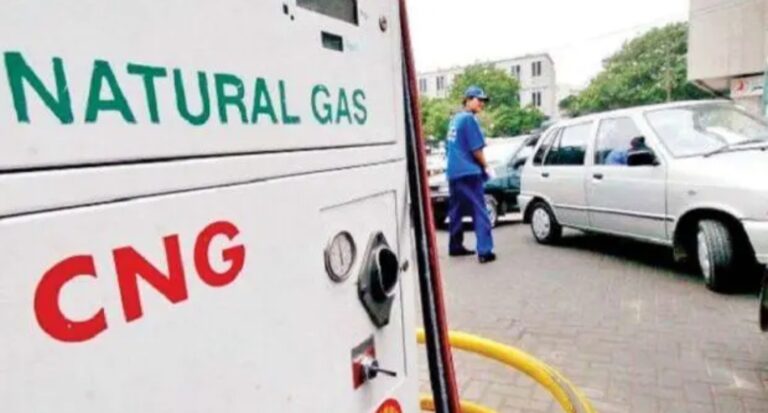
  • The price of CNG in the national capital on Saturday was hiked by Rs 2 per kg, the 13th increase in rates in just over two months.
  • CNG in the national capital territory of Delhi now costs Rs 75.61 per kg, up from Rs 73.61 per kg, according to the information posted on the website of Indraprastha Gas Ltd (IGL) — the firm which retails CNG and piped cooking gas in the national capital and adjoining cities.
  • This is the 13th increase in price since March 7.
  • In all, the CNG price has risen by Rs 19.60 per kg during this period. In the last one year, prices have increased by Rs 32.21 per kg or 60 percent, according to data compiled by PTI.
  • However, the rates of gas piped to household kitchens, called piped natural gas (PNG), remain unchanged at Rs 45.86 per scm.
  • City gas distributors have been periodically raising prices since October last year, when domestic as well as international gas prices started to climb as economies around the world recovered from the pandemic-induced slowdown.
  • IGL Managing Director Sanjay Kumar said the prices are likely to remain elevated in the near future due to high international prices of natural gas.
  • CNG prices rose by Rs 8.74 per kg in the last three months of 2021, and from January there was a steady increase of about 50 paise a kg almost every week.
  • The rates have gone up after the government more than doubled the price of natural gas produced locally to USD 6.1 per million British thermal unit from April 1. With domestically produced gas not sufficient to meet city gas demand, imported fuel (LNG) is being used. LNG in the spot or current market costs USD 18-20 per mmBtu.
  • Natural gas when compressed becomes CNG for use as fuel in automobiles. The same gas is piped to household kitchens and industries for cooking and other purposes.
  • Mahanagar Gas Limited (MGL) has priced Compressed Natural Gas (CNG) at Rs 76 per kg in Mumbai.
  • Prices vary from city to city depending on the incidence of local taxes such as VAT.
  • The increase in CNG prices follows a Rs 10 per litre hike in petrol and diesel prices in 16 days and a Rs 103.50 per cylinder increase in the cooking gas LPG rates.

K’taka CM discusses with Shah over phone list of likely candidates for RS, Legislative Council polls

Highlights
  • Karnataka Chief Minister Basavaraj Bommai on Saturday said he discussed with Union Home Minister Amit Shah over phone the list of probable candidates for Rajya Sabha seats from the state and for the Legislative Council.
  • Bommai, who is in the national capital for the second time in less than 10 days, also said he had a detailed discussion on the list of candidates with the party’s in-charge for Karnataka Arun Singh.
  • Speaking to reporters after meeting Singh, the Karnataka chief minister said he could have a word with Shah over phone only last night due to the home minister’s urgent engagement and that an elaborate meeting with Singh today was held on Shah’s advice.
  • ”I came to Delhi yesterday evening. I had plans to meet Amit Shah ji. Due to his urgent engagement, I could talk to him over the phone only last night. I discussed in detail and shared with him the list of probable candidates for Rajya Sabha seats from the state and for the Legislative Council polls,” he said.
  • The chief minister said he met Singh and updated him about the decision taken during the party’s core committee meeting. ”Singh has conveyed he will soon finalise the list,” he added.
  • The chief minister also said there was no discussion, either with Shah or with Singh, on his government’s cabinet expansion or reshuffle.
  • Meanwhile, Bommai also mentioned that he will review the heavy rain situation in the state after he returns to Bengaluru today.
  • Biennial elections to four Rajya Sabha seats from Karnataka and two each to graduates’ and teachers’ constituencies of the state Legislative Council will be held on June 10 and 13 respectively.
  • Biennial elections to the Karnataka Legislative Council will be held on June 3.

Int’l Day of Yoga: PM to participate in events planned in Mysuru

Highlights
  • Prime Minister Narendra Modi will bring along his zeal and enthusiasm for Yoga with him to the grounds of Mysuru on June 21. According to media reports, Deputy Commissioner Bagadi Gautham has confirmed that the PM will be attending events planned in the city this year.
  • According to UNI, Ayush Secretary Rajesh Kumar Kotecha has written a letter to Karnataka Chief Secretary P Ravi Kumar, informing about PM Modi’s participation in the IDY event to be held in Mysuru.
  • International Day of Yoga has been celebrated since 2015 after a call given by the United Nations. Every year on June 21, people around the world come together and practice yoga. The Indian Government has also been organizing events that encourage people to move towards a healthier lifestyle while also propagating the Indian culture and the art of Yoga to the world.
  • The idea of inviting the PM to the IYD celebrations was apparently mooted by Mysuru-Kodagu MP Pratap Simha and Uttara Kannada MP Ananth Kumar Hegde, media reports said. They wanted to explore the feasibility and the chances to hold the main event of IDY in Mysuru.
  • Furthermore, Pratap in his request letter to Narendra Modi shed light on Mysore being the birthplace of Ashtanga Yoga, and how it would be the ideal place to practice the Yoga form this year.

CM Bommai’s Davos visit confirmed, to leave on May 22

Highlights
  • Chief minister Basavaraj Bommai’s trip to Davos to attend the annual meeting of the World Economic Forum (WEF) has been confirmed. On Friday, the itinerary of CM’s visit to Davos was released.
  • Chief Minister will begin his journey from Kempegowda International Airport at 10.30 am on May 22 to fly to Dubai and onwards to Switzerland on the same day. On May 23 and 24 he will attend the summit meetings and reach Bengaluru on May 26, the itinerary said.
  • WEF summit falling right in the middle of several elections in the state, Bommai’s participation looked doubtful. His visit was confirmed with the political clearance after his last-minute visit to Delhi on Friday.

SSLC results: 145 students score full marks, toppers say only hard work key to success

Highlights
  • As many as 145 students, including 21 students from government schools, have scored cent per cent marks in SSLC exams held this year. Of the 145 students, 24 are from Bengaluru schools. Jayasri B, who is one among the two students from Sri Vidyamandira High School in Malleswaram who scored 625 out of 625 marks, said, “There is no short cut to success. Hard work is the only way.”
  • Jayasri thanked her school principal Alakananda S B, father Balaji Subramanyam, a chartered accountant, and mother Jayamangalam, a homemaker, for helping her especially during the pandemic.
  • “I studied hard everyday and finished each day’s portion of syllabus on the same day. During exams, I studied for four hours a day, she said. When asked about her ambition, she said, “I want to be a chartered accountant like my father and serve the country.”  Jayasri, who had won an essay contest organised by US space agency NASA in Bengaluru, was selected for the next level of competition at NASA in the US where she won the Neil Armstrong Award. She is also a violinist who has completed junior carnatic exams with 99 per cent marks and won three gold medals in Sanskrit exams conducted by Sura Saraswathi Sabha of Sringeri Math.
  • Abhijhna B, who is among three students from Cordial High School in Vijaynagar West who scored cent per cent marks said, “Concentration and five to six hours of hard work everyday helped me in achieving this feat. One needs to study hard and keep revising till the end,” she said.
  • Abhijhna gave the credit of her success to her school principal Sheethal, parents Basavaraju K M, an electrician in a private company, and mother Shailaja Basavaraju, all residents of Moodalpalya. While the family is currently in Mysuru to attend a wedding, her father Basavaraju said he was overwhelmed by her daughter’s achievement and added that she was now being treated like a celebrity by relatives.

Alia Bhatt off to shoot for her Hollywood film, says she is ‘nervous

Highlights
  • Bollywood star Alia Bhatt on Thursday said she feels like ”a newcomer all over again” as she is set to start shooting for her Hollywood debut ”Heart Of Stone”.
  • Billed as a spy thriller for Netflix, the film also features ”Wonder Woman” star Gal Gadot and ”Belfast” star, Jamie Dornan.
  • Bhatt, who completes a decade in Indian cinema this year, shared the work update with her fans and followers on Instagram.
  • “And off I go to shoot my first ever Hollywood film!!!! Feel like a newcomer all over again – sooooo nervous!!!! Wish me luckkkkkkk (sic),” the 29-year-old star captioned the post with a selfie.
  • It is currently unknown where Bhatt is traveling to shoot for the film.
  • “Heart of Stone” will be directed by Tom Harper from a script penned by Greg Rucka and Allison Schroeder.
  • According to the official logline, the film revolves around Rachel Stone (Gadot) an intelligence operative, the only woman who stands between her powerful, global, peace-keeping organization and the loss of its most valuable — and dangerous — asset.
  • Details about Bhatt’s character are currently under wraps.
  • The film is produced by Skydance’s David Ellison, Dana Goldberg, and Don Granger, along with Mockingbird’s Bonnie Curtis and Julie Lynn, and Gadot and Jaron Varsano’s Pilot Wave banner.
  • Harper, Rucka and Patty Whitcher serve as executive producers. Bhatt’s latest theatrical release was ”Gangubai Kathiawadi”, which minted over Rs 150 crore at the domestic box office.

State govt makes uniform mandatory for PUC students

Highlights
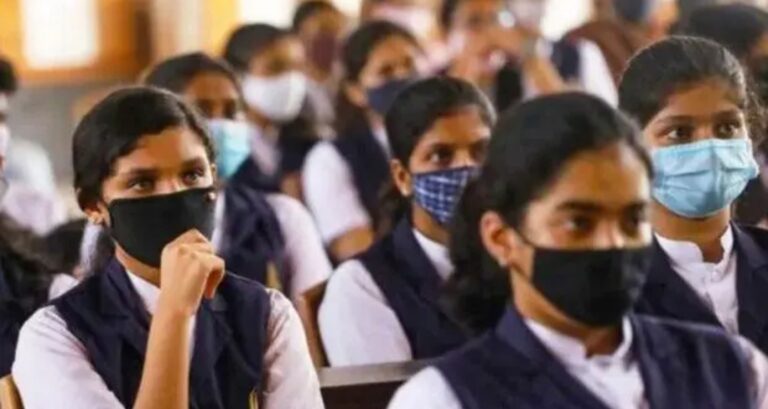
  • Ahead of the admissions for PU colleges for the academic year 2022-23, the state government issued directives that makes uniform compulsory for Pre-University Course(PUC) students.
  • Earlier today (May 19), the results of SSLC examinations were announced and PU college admissions will commence from Friday onwards.
  • According to sources, the ruling BJP took the decision considering the possibility of a hijab crisis, once the PU classes restart. In the guidelines issued by the Education Department for 2020-21 academic year, uniforms were not compulsory.
  • An IANS report quoting sources in the Education Department said that the new rule will empower college management to implement a ban on hijab in classrooms.
  • Several parents and students have questioned the government’s decision. However, the Special Bench of Karnataka High Court which heard the matter upholding the government order stated that wearing of uniform is compulsory for students.
  • The court also dismissed the petition challenging the uniform rule and asking for the right to wear hijab in classrooms. The petitioners have approached the Supreme Court on the matter.
  • Giving no scope for any confusion regarding wearing of hijab, the guidelines mentioned that uniforms prescribed by the School Development and Management Committee (SDMC) are compulsory for PUC students.
  • The new circular stated that in case of SDMC not prescribing any uniform, students are recommended to wear a garment that will maintain equality and unity and it underlined that it should not disturb public order.
  • Hijab row which made international news, began with the six girl students launching a protest demanding rights to wear hijab in classes. The protest for hijab which started in Udupi Girl’s Pre-University College, spread across the state.
  • The issue took a communal turn and threatened the law and order situation in the state. The crisis resulted in a chain of disturbing events causing social unrest in the state. Muslim organisations and traders protested against the High Court order on hijab.
  • Later, the Hindu organisations alleging that Muslim traders do not respect the court order, gave call boycott Muslim vendors, merchants, artisans. Muslim traders were asked to wind up their shops in temples and religious fares. The issue of use of loudspeakers by mosques to call Azan against the Supreme Court guidelines is also being raised by Hindu organisations.