Clear Mekedatu project at the earliest, Siddaramaiah tells Centre

KEY STORY

  • The Centre must immediately give all the requisite clearances for the Mekedatu project. If not, the Congress party will continue its struggle for Mekedatu beyond the ongoing padayatra, Leader of the Opposition Siddaramaiah said on Sunday.
  • Siddaramaiah was addressing the gathering at the relaunch of ‘Namma Neeru, Namma Hakku’ (Our Water, Our Right) campaign of the Congress party for the Mekedatu balancing reservoir project. The party, which had stopped its foot march in January owing to Covid-19, recommenced it from Ramanagar on Sunday.
  • “We need to get environment clearance for the project. Instead of taking initiative towards this, the state government is busy giving false advertisements that the Congress did not take any measures for the progress of the project,” Siddaramaiah alleged.
  • Urging the Centre to immediately give the necessary clearance for the project, Siddaramaiah said if the Mekedatu project was implemented, Bengaluru and surrounding regions would not have drinking water problems for the next 50-60 years.
  • KPCC President D K Shivakumar said that both the BJP and the JD(S) were unnecessarily taking potshots at the Congress’ efforts to materialise the project.

CONCLUSION

  • “Since the BJP calls itself a double engine government, it should show its gumption by getting the clearances done,” he said.
  • Congress General Secretary Karnataka in-charge Randeep Singh Surjewala said that the only hindrance to the project was the BJP government in Karnataka which failed to take initiative to take the project forward.

After NEET exam, dress code prescribed for assistant professors’ exam in Karnataka

KEY STORY

  • The government has issued a stringent dress code for candidates appearing for the recruitment exam for the posts of assistant professors at various government degree colleges.
  • This comes close to the lines of the dress code for the NEET exam.
  • Sources in the department of collegiate education told DH that this is for the first time that the recruitment exam will be held under tight vigil with a prescribed dress code. The examination has been scheduled for March 12.
As per the instructions issued by the Karnataka Examinations Authority (KEA), only half-sleeve shirts or t-shirts, light in colour, will be allowed.
No full-sleeve shirts will be allowed. Clothes with zip pockets, pockets, big buttons and clothes with elaborate embroidery should be avoided.\While trousers and simple pants are a preferred dress code, kurta pyjamas will not be allowed.
Shoes are strictly prohibited inside the examination hall. It is advisable that candidates wear sandals/slippers with a thin sole.
Male candidates are not supposed to wear any jewels around the neck, ears, finger rings and bracelets.
For female candidates, clothes with elaborate embroidery, flowers, broaches or buttons are not allowed.
Clothes with full arm-length sleeves should not be worn. Half-sleeve clothes are allowed.
It has been advised to avoid high heels and thick sole shoes and instead, opt for sandals or slippers. Low-heel footwear is allowed.
Female candidates must avoid wearing any kind of jewellery like earrings.
The admission ticket can be downloaded from February 28, on the KEA website.

CONCLUSION

The candidates have been advised to take extra precautions in reaching the examination centre before the scheduled time and be present there at least one hour before.
Prohibited items: Mobile phones, pen drives, earphones, microphones, bluetooth devices and wristwatches are not permitted inside the examination hall
Stationery like pencil, paper, eraser, scales, geometry box, calculator and log tables are also prohibited.
Wallets, goggles, belts, caps, accessories, cameras and ornaments will not be allowed.
Only admission card, ID proof, 2 passport size photographs (same as on application form) are allowed. Candidates can carry water bottles without labels.

Right-wing groups harp on Harsha murder, washes hands off Dalit’s killing

KEY STORY

  • In less than a fortnight, two murders have evinced polar opposite reactions from right-wing groups.
  • The murder of Harsha, a Bajrang Dal worker from Shivamogga, attracted widespread protests and almost sparked a riot.
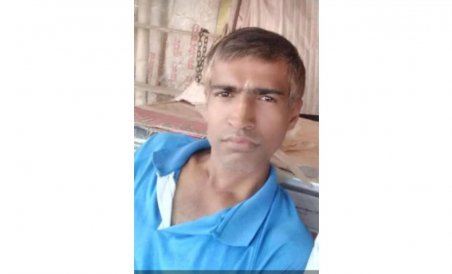
  • However, the relatives of Dinesh Naik, 39, a Dalit killed by a right-wing activist, allegedly over political differences at Kanyadi near Dharmasthala, are shocked at the manner in which his death has attracted virtually zero condemnation from pro-Hindu groups.
  • They allege that a prominent leader of a right-wing group pressured the family against pursuing a case over Naik’s murder, saying that they would ensure that the accused Krishna – who was arrested on Saturday — is released from jail. Naik, a father of three, was the only son of Padmavathi.
  • Neighbours note that he was a regular at the taluk panchayat office where he used to take up issues of locals to help them avail benefits of various schemes.
  • “The only reason for the assault was the humiliation faced by Krishna. He was uncomfortable when Naik pointed out that it was due to his efforts and help from an ex-MLA of the Congress that Krishna got his 94C (a certificate to regularise house built on government land),” Padmavathi said.
  • Krishna, who is said to be a BJP supporter and Bajrang Dal worker, was furious. He chased Naik and showered blows on his stomach and left him in a poor state. This was on February 23.
  • It was only a day later did the family realise the extent of his injuries. Naik, who was physically weak due to alcoholism, was recommended a CT scan by a clinic in Ujire and was subsequently rushed to Mangaluru for surgical intervention. “I called Krishna’s brother, Bhaskar, who is a Bajrang Dal leader, complaining about the assault. He said he wasn’t aware,” she said. Subsequently, Krishna decided to take Naik to Mangaluru for treatment.
  • Naik’s family did not want him to be taken to a government hospital.
  • “The clinic in Ujire had recommended him to a private hospital near Mangaluru. Krishna took him to another hospital that demanded Rs 4 lakh for surgery. Due to this, he admitted Naik to the Government Wenlock hospital, where he died,” she said.

CONCLUSION

  • Soon after his death in the early hours of Friday, Kavita, Naik’s wife, received calls from Bhaskar and his wife.
  • Bhaskar told Padmavathi not to file a complaint as “Dinesh would have died of alcoholism anyway”. Naveen, a local resident, said nobody is willing to talk about this.
  • “The family is very poor and Dinesh was the only breadwinner in the family. People queued up in front of Harsha’s house to offer help, unlike here where the family is left to fend for themselves,” he said.

‘Situation not good in Ukraine, many students staying in bunkers’: Indians evacuees recount horror

KEY STORY

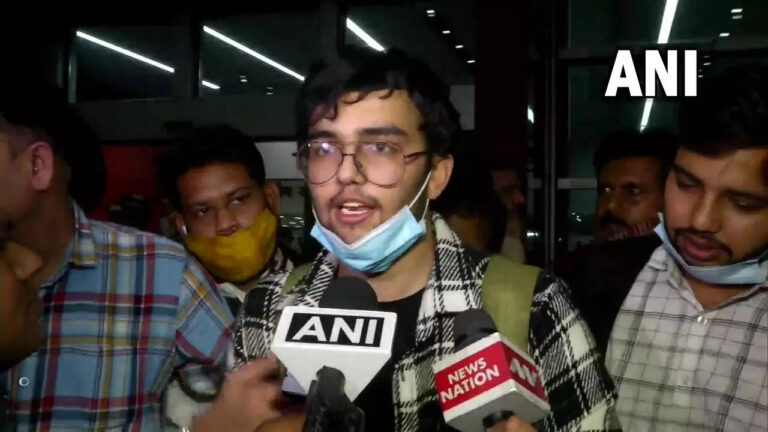
  •  Indian nationals, mostly students, who were evacuated from Ukraine, gave a first-hand account of the ongoing turmoil in the war-hit country, saying that the situation there is not good and that many students are staying in bunkers to escape bombardment amid the raging military conflict.
  • The second Air India flight carrying 250 Indian citizens landed at the airport in Delhi in the early hours of Sunday. The Indians were brought back on the flight from Romanian capital Bucharest.
  • Suriya Subhash from Maharashtra’s Solapur, one of the returnees, said she was relieved to be back in her country after a “hectic journey”. “The situation is very bad there (Ukraine). People are stranded,” she said.
    The students also thanked the Indian government for bringing them back to their home county and saving their lives. The returnees are from different states, including Maharashtra, Uttar Pradesh, Bihar, Arunachal Pradesh, Andhra Pradesh, Gujarat, and Kerala etc.

“The situation is not good in Ukraine. We are worried about our studies. But it is good to be back. I thank the government for bringing us back,” said Susmita Rathore, a first year medical student.
Another student said, “Many students are staying in bunkers due to attacks against Ukraine. The situation is difficult. I would like to thank the government for evacuating us on time.”

Ind vs SL, 2nd T20I: Rohit Sharma surpasses Eoin Morgan, Kane Williamson to become most successful captain at home

KEY STORY

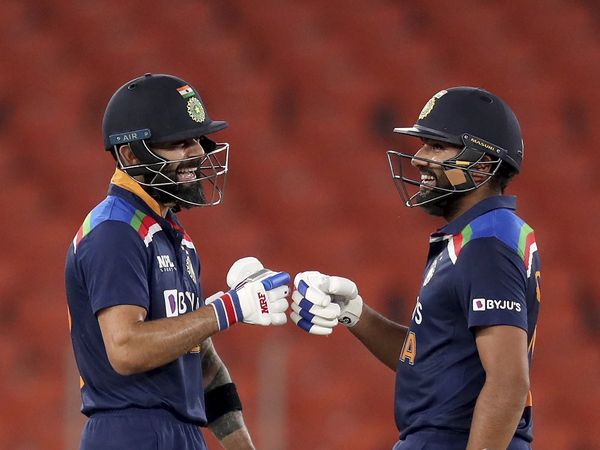
  • Rohit Sharma-led Team India thrashed Dasun Shanaka’s Sri Lanka in the 2nd T20I to take an unassailable lead in the three-match bilateral series on Saturday. Premier batters Shreyas Iyer, Sanju Samson and all-rounder Ravindra Jadeja powered the hosts to a comfortable 7-wicket win over the visitors in the recently concluded encounter contested at the Himachal Pradesh Cricket Association Stadium in Dharamsala.
  • With the convincing win over the Lankan Lions, Team India skipper Rohit has rewritten history in the shortest format of the game. The talismanic leader of the Team India side has surpassed England’s Eoin Morgan and New Zealand skipper Kane Williamson to become the most successful captain in the shortest format. Rohit, who succeeded Virat Kohli as India’s all-format captain, has guided the Asian giants to 11 consecutive wins in the shortest format of the game.
  • The seven-wicket win over Sri Lanka was Rohit’s 16th T20I triumph as the captain of the Indian team at home. Under Rohit’s leadership, Team India has won 16 matches from 17 matches at home. Rohit was tied with England’s Morgan and New Zealand captain Williamson before India hammered the former world champions in the 2nd T20I.

CONCLUSION

  • The premier batter has recorded 16 wins while former Indian skipper Kohli had guided India to 13 wins in his captaincy stint. India’s World Cup-winning captain MS Dhoni had won 10 matches at home. Interestingly, skipper Rohit only needed to score 19 more runs to join Aaron Finch, Eoin Morgan, Kohli, Dhoni and Babar Azam in the elite list of captains with 1000 runs for their respective teams.

Hyderabadi woman stranded in Kuwait, family seeks govt help

KEY STORY

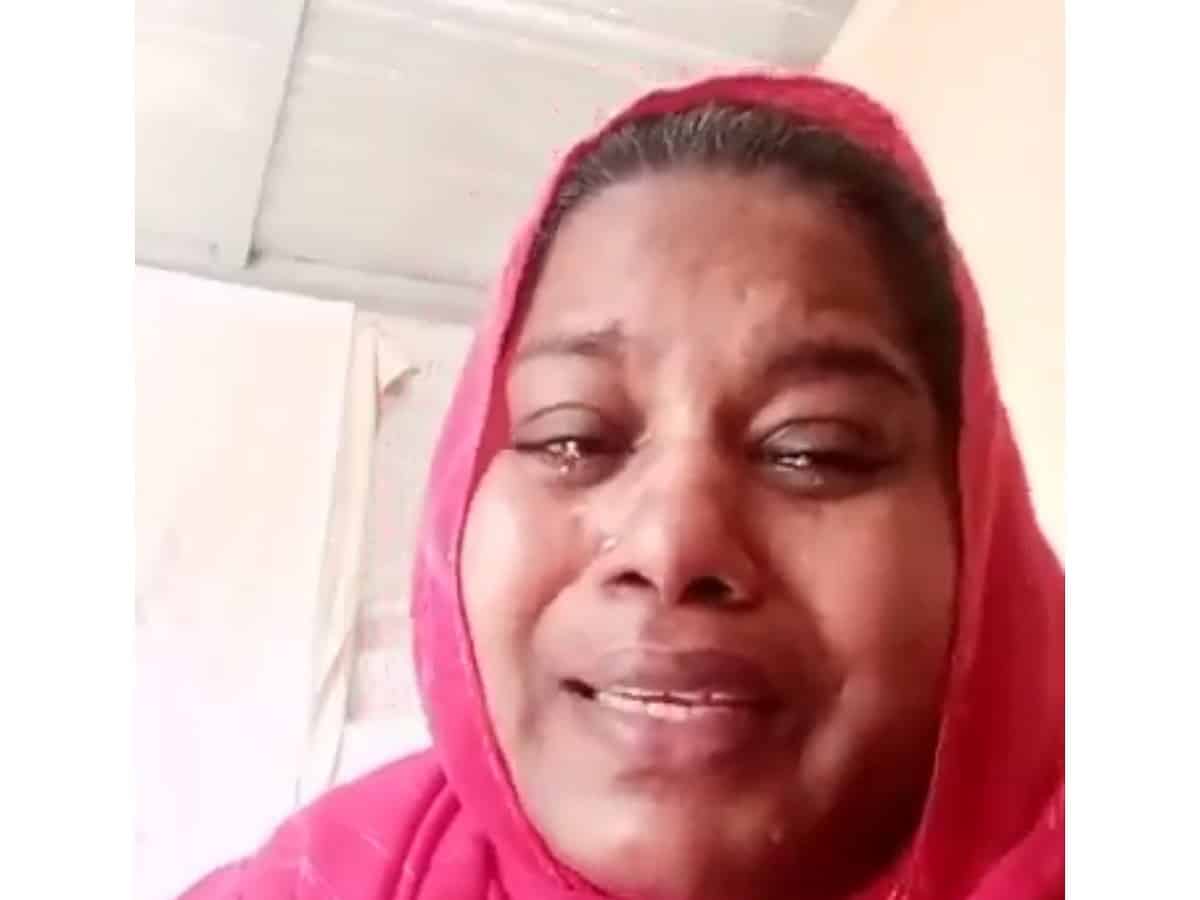
  • A 39-year-old Hyderabadi woman has requested the state to rescue her from Kuwait while narrating her ordeal in a video message, that was shared on Twitter.

Watch: 39-year-old Hyderabad woman stranded in Kuwait; family seek govt help

  • Wahida Begum resident of Kulsumpura, Karwan, who is a domestic helper in Kuwait, alleged that she is being beaten by her employer and has requested to be sent back to her family in Hyderabad.
  • A video clip of Wahida Begum crying and asking for help was shared by a Twitter user named Shaik Shamir Arfath Omari on Friday, February 25.
    Shaik shared a video clip and wrote, “A lady of Hyderabad has been stranded in Kuwait. Request @indembkwt to help this Cc: @meaMADAD @DrSJaishankar.”
    Explaining her ordeal, Wahida Begum said, “He beat me so ruthlessly that I urinated myself. Please call me back, I want to stay with my children. I was a widow who got married again. But after my husband cheated on me, I had to leave him.”
    According to her family, she currently resides near KNPC petrol filling station No 72, Firdous, Kuwait.

    Watch

    In response to Shaik Shamir’s tweet, the Indian Embassy in Kuwait extended help asking for details of the woman to initiate the procedures for rescue.
    The embassy in their reply to the call for help, tweeted, “We have taken up the matter with Kuwaiti authorities. In the meantime, pls send us a copy of the Employment Contract signed with the Kuwaiti employer. Also, give contact details including the name of the Employer. Our contact details attached.”

Consortium wants women-centric industrial policy

KEY STORY

  • A pan-India consortium of women entrepreneurs, UBUNTU, has submitted a set of suggestions to Chief Minister Basavaraj Bommai to include in this year’s state budget to promote women entrepreneurship in Karnataka. This will be Bommai’s first budget as chief minister that will be presented on March 4.Former Chief Secretary K Ratna Prabha, who is UBUNTU president, requested the chief minister to include the consortium while framing the budget to create a woman-centric industrial policy.
  • She said the recently launched Industrial Policy 2020-25 does not have any prominence and scope for development of women entrepreneurship. She requested for the restoration of schemes related to women entrepreneurs mentioned in the 2014-19 Industrial Policy.
    “The allocation of Rs 5 crore for the ELEVATE programme for women entrepreneurship proposed in the previous budget was not implemented and needs a new avatar anchored by the Department of Industries and Commerce both for initiation and reach, and not IT/BT as most of the women entrepreneurs in the state are in the manufacturing sector, agro, health handicraft, food processing etc,” she added. A change in name will also help avoid confusion with the ELEVATE programme for startups in the IT sector, she said. “We could name it Shakti. Land cost has become prohibitive for women entrepreneurs. There is a need for allotment of land in industrial estates and parks with 50 per cent subsidised cost for women entrepreneurs,” she added.
    For startups, Ratnaprabha said they do not require land, but need hand-holding. There is also a need for incubation centres with plug-and-play infrastructure facilities and a flat factory system for women entrepreneurs to start and operate at subsidised and affordable cost. “This effort can begin in a phased manner, preferably in Bengaluru, Hubballi, Mysuru and Kalaburagi to address  scarcity of industrial land. It can be named as KWEENS HUB – Karnataka Women Entrepreneurs Enterprise Networks, just as WEHUB in Telangana,” she added.

Karnataka students back home after living through nightmare in war-torn Ukraine

KEY STORY

  • After several nerve-wracking moments, there was big smiles on the faces of a bunch of medical students from Karnataka as they landed at the Chhatrapathi Shivaji International Airport in Mumbai on Saturday night from war-torn Ukraine.
  • Among the first batch of 219 Indians to return, 12 are students from Karnataka. They were taken by bus on Friday afternoon from Chernivsti, Ukraine, to the Romanian border where they first heaved a sigh of relief. Speaking to TNSE, second-year student at the Bukovinian State Medical University, Mohammed Abid Ali, said, “Even though the bus carrying us reached the Romanian border within 35 minutes, the big traffic jam and the huge crowd of refugees forced us to wait for nearly 12-13 hours to cross the border.
    Timely support from the Indian embassy and the Union Government helped us reach India safely.”
  • “Once we completed the immigration process, it took eight hours to reach Henri Coandă International Airport, Bucharest, from where we boarded the flight to Mumbai. As there was uncertainty over our return, we has stocked food to last a month. But we had to leave everything behind. I’m relieved to reach my motherland,” he added.
  • “When our bus started moving towards the Bucharest airport, it was accompanied by a police convoy from both Ukraine and Romania and the vehicles had the Tricolour.” He also said that the Indian embassy had arranged for dinner and refreshments all through the journey. “Some of the embassy staff even boosted our confidence,” he added.


  • Abid Ali took the lead to gather other students from Karnataka. He said they will be reaching Bengaluru by a connecting flight and added that some of his friends are reaching New Delhi on Sunday morning by another flight. Other students including Pooja, Vijaya, Shreya, Sayeeda Habeeba, Inchara, Monica, Nabeeha Huda, Tushar, Uday, Priya and Monica were with him and were about to board a flight to Bengaluru.

Ease COVID restrictions after analyzing local situation: MHA to States

KEY STORY

  • Amid a significant dip in COVID-19 cases in the entire country, the Ministry of Home Affairs has issued direction to the state government to ease curbs.
  • In a letter to Chief Secretaries of various states, MHA secretary Ajay Bhalla wrote, “With a substantial decline in case of positivity and in the number of active cases in the country, States and UTs are reopening the activities. After the analysis of the local situation, relaxation in various activities may be considered such as social, sports, entertainment, academic, cultural, religious gatherings, schools/colleges and other commercial activities”.
  • However, wearing of masks and maintaining social distancing are still needed. In the letter, it was mentioned, “while allowing such activities, the wearing of masks, maintaining physical distancing, hand hygiene, ventilation in closed spaces and other appropriate behaviour for managing Covid must be in place”.

COVID-19 cases in Telangana

On Friday, Telangana State reported 287 new COVID-19 cases, pushing the tally to 7,88,383, while the death toll remained at 4,111 with no fresh fatality occurring due to the infection.
The Greater Hyderabad Municipal Corporation (GHMC) reported the highest number of cases with 85, followed by Ranga Reddy (28) and Medchal Malkajgiri (20) districts.
Meanwhile, the recovery rate in the state rose to 99 percent. The cumulative number of recoveries in the state reached 7, 80, 462.

The big question: To have school uniforms or not

KEY STORY

  • There are two alternative ways to look at a secularist approach — One law that applies to all, despite diversity; or equal freedom to all to respect that very diversity. The ongoing issue of school uniforms falls within this dilemma – one uniform for all students in a particular institution, or allow students to wear what they want within their socio-cultural boundaries.
  • With the uniform issue grabbing media attention over the last few months, it has become vital to understand where exactly the idea of uniforms for schoolchildren came from. The focal point of this will be the Karnataka Education Act of 1983, particularly Section 133(2), which has been cited multiple times to designate uniforms or dress code in educational institutions by the Karnataka government.
  • However, the Act itself does not mandate any kind of dress code or uniform, with educationist K E Radhakrishna saying that uniforms became popular in Indian schools somewhere between three to four decades ago. “The purpose of uniforms and the reason they were introduced was to have a sense of different identities. It was initially used by private schools to distinguish themselves from each other and to have a qualitative and quantitative competition,” Radhakrishna told TNIE.
  • According to him, the uniform gradually became both a status symbol in schools and an equaliser to prevent poorer students from being targeted due to their economic status. Following this, government schools also started adopting uniforms, both in part to act as an equaliser and also to compete with private schools. In his experience as a faculty member of Seshadripuram College, and later as its principal, he says that dress codes were never mandated.
  • United Nations International Children’s Emergency Fund (UNICEF) education specialist Sheshagiri KM Rao echoes similar views saying that in his days as a PU student, uniforms and dress codes were not the norm, being a relatively newer aspect of education in Karnataka. “There are, however, exceptions made for minority institutions, where the right to practice their religion in educational institutions run by them is a protected right under the Constitution,” he said, citing his experience as a student of Baldwin Boys High School, run by the Methodist Church in India.
  • However, a public school, Rao says, is considered a secular space. “This can be interpreted in two ways — either by removing all religious symbols in schools to ensure complete uniformity, or allow students to wear clothes that are not considered indecent, since a secular school should not be concerned with the religious practices of a student unless it is considered offensive to other students in terms of indecency,” Rao said. Further, he said that in his experience as a specialist, he had visited thousands of government schools where pictures of gods of learning were put up, stating that it had always been common practice.
  • Radhakrishna said that he was in favour of doing away with uniforms as their purpose had been corrupted over the years. “The uniform was introduced with good intentions, it stood as a symbol of preventing caste disparity and to establish equality in schools. It later became a symbol of status, but now, it has become an instrument for politically volatile individuals to take advantage of.” He added that the need for uniforms had also reduced, stating that they were necessary to ensure equality 40 years ago, but India had come a long way in terms of access to education, which is no longer considered a status symbol.Both educationists agreed that there needs to be a minimum guideline for promoting decent clothing in educational institutions, but the need for uniforms had long passed.
  • Citing the 1992 case that led to Article 21 (A), which declares education for children between the ages of 6 to 14 a fundamental right, Sheshagiri Rao says the Supreme Court had equated the right to education with the right to life. “The court had stated that the right to education is no less than right to life and failure to guarantee it would lead to a limiting future prospects that would impact quality of life severely,” he said.
  • Several education experts have stressed that uniforms can be mandated in schools up to Class 10 and done away with in the later years to allow students transition into dressing cultures for various careers where uniforms are not mandated.
  • “Many private education institutions are given the discretion to decide and prescribe uniforms, and students and parents are aware of the uniform rule at the time of admissions,” reasons one academic, unwilling to be named. “So, if wearing a particular uniform is an issue for them on the grounds of social or cultural factors, they are free to take admission in an institution which does not make wearing of
    uniforms compulsory.”
  • Highlighting examples where uniforms are used in other sections of society, Radhakrishna said, “Uniforms are used by defence personnel or police to establish an identity, corporate higher-ups may have a dress code, but people, including civil servants, do not wear uniforms.”

    Arguments In 
    Favour of Uniforms

    • A sense of community among students, staff and parents.
    • Improved discipline and concentration.
    • Instils a working environment mindset that separates home and school life.
    • Reduces distraction from wearing the latest fashionable brands.
    • Places students on a level playing field

    Arguments 
    Against Uniforms

    • Research conducted by David L Brunsma, a researcher at the University of Missouri-Columbia, USA, on the advantages of wearing uniforms in schools/colleges, showed they were not effective in achieving outcomes that were assumed to be achieved.
    • No noticeable increase in concentration on studies among students wearing uniforms, as believed.
    • No noticeable balance in social status separating students.
    • No noticeable improvement in academic achievements.
    • On the contrary, they are associated with a detrimental effect on achievement in reading, Brunsma’s research showed.
    STATUS IN DIFFERENT STATES
    • Uniform codes across India have remained more or less than same, with each state having their respective Education Acts
    • Politics seems to have seeped into drawing up uniform codes in Rajasthan, as the then BJP-led government mandated uniforms to be brown in 2018, and the now Congress-led government changing this to dark grey and blue from the coming academic year.
    • With schools reopening, Goa has removed the compulsory uniform, mandating that authorities are not to insist on uniform wearing in schools.
    • In states like Odisha and West Bengal, school uniforms are mandatory, with the view that it helps lessen the rate of social conflicts. The Odisha government has also provided uniforms to students from Classes 1 to 8.
    • A school in Kerala recently came under fire after they decided to implement ‘unisex’ uniforms, with girls wearing trousers.
    What the Karnataka ACT says
    The State Government, on February 5, issued an order “invoking Sec 133 (2) of the Karnataka Education Act-1983, which says a uniform style of clothes has to be worn compulsorily. The private school administration can choose a uniform of their choice.” The order also said that in colleges which come under the Karnataka Board of Pre-University Education, dress code prescribed by the College Development Committee or the administrative supervisory committee must be followed. If the administration does not fix a dress code, clothes that do not threaten equality, unity and public order must be worn.
    Under Section 133 of the Act, the government reserves the right to issue appropriate directions to schools and colleges to ensure maintenance of public order.
    As per the rules and Notifications under the Karnataka Education Act, 1983, every recognised educational institution may specify its own set of uniforms. Such uniform, once specified, shall not be changed within a period of five years. A notice should be provided to change uniform. Purchase of uniform and books from the school or a shop etc., and stitching suggested by the school authorities, shall be an option to the students and parents.