
KEY STORY
-
PAN card holders are advised to link their Permanent Account Number (PAN) with their Aadhaar card number by 31st March 2022. Failing to do this by given deadline will not only lead to their PAN card becoming invalid but it would require a fee of ₹1,000 for PAN Aadhaar linking. The problem of the PAN card holder won’t end here only as the individual won’t be able to invest in mutual funds, stocks, open a bank account, etc. where furnishing a PAN card is must.
-
Apart from this, if the person furnishes the PAN Card, which is no more valid, then under Section 272N of the Income Tax Act 1961, the Assessing Officer may direct that such person shall pay, by way of penalty, a sum of ten thousand rupees.
-
Speaking on the importance of PAN Aadhaar link deadline; Amit Gupta, MD at SAG Infotech — a SEBI-registered income tax solution provider company said, “Earlier, the rules pertaining to the Aadhaar PAN linking had no provision of penalty. According to the new law, failure to link the two IDs would result in the PAN becoming invalid, which further means that one cannot perform financial transactions requiring PAN details. These include filing an income tax return and opening a bank account.
-
Also, the said individual might have to pay a higher TDS amount, plus a penalty of ₹10,000 will be imposed as per section 272B of the Income Tax Act, if the person fails to quote PAN as and when needed.” He said that furnishing an invalid PAN would also lead to the penalty of ₹10,000. So, it’s important for a PAN card holder to seed its PAN card with its Aadhaar card and avoid any kind of penalty after failing to meet PAN Aadhaar linking deadline.
-
PAN card holders are also advised to note that failing to meet PAN Aadhaar linking deadline, they will have to pay up to ₹1,000 penalty for late seeding of PAN with Aadhaar. As per the newly inserted Section 234H of Income Tax Act (in March 2021 via Finance Bill), “Without prejudice to the provisions of this Act, where a person is required to intimate his Aadhaar number under sub-section (2) of section 139AA and such person fails to do so on or before such date, as may be prescribed, he shall be liable to pay such fee, as may be prescribed, not exceeding one thousand rupees, at the time of making intimation under sub-section (2) of section 139AA after the said date.”

KEY STORY
-
If you are planning a long road trip via expressways, it is advisable to keep all the documents related to your vehicle in order. The National Highways Authority of India (NHAI) is testing a new system, which will tell authorities if a vehicle has valid registration, pollution certificates and other documents.
-
The new system is called Advanced Traffic Management System (ATMS) and all the expressways in the country will soon be integrated into it. It is not only capable of capturing a photo of the number plate of the vehicle, but will also alert the authorities if travellers are not wearing seat belts.
The ATMS will be linked to the vehicle database of the transport department (RTOs).
Here is everything you need to know about ATMS:
• The NHAI is currently testing the system on Delhi-Meerut Expressway, Eastern Peripheral Expressway and some other places.
• It will identify those vehicles, which do not have valid papers. The data will be shared with local traffic police for issuing challans.
• All this will be made possible by capturing the number plate of a vehicle. This will tell ATMS about the insurance of the vehicle, its age, pollution certificate and CNG kit testing certificate since the system will be linked to RTO database.
-
According to NHAI officials, this system will help in reducing traffic jams and road accidents. Instead of placing barricades, the traffic policemen will issue challans only to those vehicles which will be flagged by the system.
• The challans will be issued without stopping the vehicles. It will be the responsibility of the local traffic police to collect the amount later.
• In case of commercial vehicles, the system will also check for valid fitness certificate.
• They also said that the technology will help identity those vehicles which have been used in some crime, or been involved in accidents.
• The ministry of road transport has made ATMS mandatory on all new expressways and national highways being built. The system is also being installed on existing roads, like the Delhi-Agra expressway.
-
Initially, the project was meant to make the Fastag experience more seamless by calculating the distance between vehicles. But, in a recent meeting between officials of the road transport ministry and NHAI, some experts suggested to link it with the database of the road transport department.

KEY STORY
-
Home Minister Araga Jnanendra has said imposing lockdown would be inevitable if the public did not cooperate with the State Government by following COVID appropriate behaviour.
-
Speaking to mediapersons in Chikkamagaluru on January 3, the Minister said if cases of COVID-19 increase, the government would have to take tough decisions to avoid further spread of the infection. It is the duty of the government to protect people’s lives.
-
Referring to the Congress party’s padayatra on the Mekedatu issue, the Minister said the party should postpone the event considering the prevailing situation. “The opposition party has the freedom to organise such events. However, they did nothing on the project when they were in power,” he said.
-
He dismissed speculation suggesting a reshuffle of the cabinet and change in the CM as rumours.
-
Mr. Jnanendra, who is also the Minister in-charge of the district, was in Hassan to launch a vaccination drive for children in the 15-18 age group.

KEY STORY
-
Amid a spike in Covid-19 cases in Karnataka and its borders, chief minister Basavaraj Bommai on Sunday asked people to cooperate with the government in containing the spread of the disease and avoiding a lockdown. He said the officials of districts bordering Maharashtra have been directed to be extra cautious as the neighbouring state is witnessing a spike in cases.
-
“Our stand is very clear. In the past, lockdown was imposed. The same should not happen again. For this, we are taking stringent measures. People have to cooperate with us,” Bommai told reporters in Bengaluru.
-
The statement comes as daily increase in Covid-19 cases in Bengaluru is inching towards the 1,000 mark. On Sunday, Bengaluru reported 923 new Covid cases and three deaths. Karnataka on Sunday added 1,187 new cases to the state’s overall infection count. In comparison, Bengaluru reported 1,033 new cases on Saturday, 832 on Friday, 707 on Thursday and 566 on Wednesday.
-
According to the health department bulletin, while the positivity rate for the day stood at 1.08%, the case fatality rate (CFR) was 0.50 per cent. There were 275 discharges on Sunday.
-
Of the six deaths reported in the state, three are from Bengaluru Urban, and one each from Tumkur, Dakshina Kannada and Uttara Kannada. After Bengaluru Urban, Dakshina Kannada accounted for the second-highest number of new cases with 63 .
-
Regarding extending the night curfew or imposing tough rules, he said it would be decided either on Monday or Tuesday. “We have to see how coronavirus is spreading. We saw it increasing in a big way in Bengaluru. We will take a call keeping that in mind,” he said.
-
Bommai said he has directed the officials to be cautious in the districts such as Belagavi, Vijayapura and Bidar bordering Maharashtra, which is witnessing a rise in cases. He added that those entering Karnataka would have to be fully vaccinated and they should also possess a negative RT-PCR test report. “These measures will cause trouble to the travellers but we are doing it keeping in view the public health of people of Karnataka, especially Belagavi,” Bommai said.
-
Keeping in mind the oxygen shortage last time, the government has now contacted the oxygen plants to supply life-saving to the state. “These plants have been asked to start operations in preparation for the spike in the cases. Also. I have directed the officials to add 4,000 more ICU beds in the state. We are also making preparations for adequate medicines,” he said.
-
Stating that the government was also focusing on the vaccination drive, the chief minister said vaccinating teenagers from 15-18 years would start from Monday. Booster doses would be given to those who have co-morbidities, he added.
-
Karnataka revenue minister R Ashoka said the spike in infections in Karnataka was a serious issue. “Bengaluru is in the Red Zone according to the list declared by the Union government. It is important to sound an alert in Bengaluru. We can save people’s lives if we impose more restrictions in Bengaluru and reduce the number of hospitalisations,” he said.
CONCLUSION
-
He said that the government is mulling to announce ‘some tough rules’ in coming days. “We will convene a meeting and announce some tough rules before January 7 when the night curfew will be lifted,” Ashoka said.
-
He added that the experts’ committee would convene a meeting before January 7. “We will implement the recommendations of the committee in toto because we have seen the sufferings and deaths last time,” the minister said.

KEY STORY
-
WITH CASES of the Omicron variant of corona virus rising sharply, Union Health Minister Mansukh Mandaviya Sunday told states they have collectively utilised only over 17 per cent of the Rs 23,123 crore Emergency Covid-19 Response Package II (ECRP-II) to ramp up medical infrastructure approved by the Union Cabinet last August.
-
Mandaviya’s review meeting with state health ministers and senior officials in the state health departments came in the backdrop of India reporting 27,553 new cases in the last 24 hours and the cumulative active caseload touching 1.22 lakh. Just a week back, on December 26, India had reported just 6,531 cases, and the active case load was 75,841.
-
The Union Health Minister said other countries were witnessing “3-4 times the surge in Covid-19 cases in comparison to their earlier peaks” and noted that in India too, a “high surge in cases can overwhelm the medical system”. “…therefore, states (should) leave no stone unturned in ramping up infrastructure to manage a high surge so that India escapes unscathed from this episode of Covid-19,” Mandaviya said in the meeting.
-
“States/Union Territories were exhorted to expedite the physical progress under ECRP-II in terms of ICU beds, oxygen beds, Paediatric ICU/HDU beds. States/UTs were also urged to effectively use IT tools for tele-medicine and tele-consultation, including training and capacity building of human resources, timely availability of ambulances, the readiness of states to operationalise COVID facilities for institutional quarantining, and effective and supervised monitoring of those in home isolation,” the Union health ministry said.
-
In August last year, the Union Cabinet had approved a new Rs 23,123 crore India Covid-19 Emergency Response & Health System Preparedness Package: Phase-II (ECRP-II). According to the approved plan, and basis the inputs received by states given their experience on the second wave, the Centre approved the plan for creation of 23,056 ICU beds.
-
Under the plan, seven states were to set up more than 1,000 beds each: Uttar Pradesh (4,007), Karnataka (3,021), Maharastra (2,970), West Bengal (1,874), Tamil Nadu (1,583), Madhya Pradesh (1,138), and, Andhra Pradesh (1,120).
-
The rural parts of the country were one of the worst-hit during the peak of the ferocious second wave of the pandemic. Significantly, six states will get 60 per cent of the 75,218 beds that were to be set up to augment the three-tier healthcare system up to the village level. These six states, that will add more than 5,000 beds, at primary health care centres, secondary healthcare centres, and community health care centres in rural parts of the country, are Uttar Pradesh (11,770), Bihar (9,920), Andhra Pradesh (9,596), Odisha (8,206), Assam (7,320), and Jharkhand (5,798).
-
On December 15, during the review meeting on augmentation of medical oxygen supply, Union Health Secretary Rajesh Bhushan had informed the states that ECRP-II funds had been sanctioned for installation of 958 liquid medical oxygen storage tanks and medical gas pipeline systems in 1,374 hospitals. Also, 14,000 oxygen concentrators were being provided under the scheme.
-
Mandaviya discussed “critical bottlenecks in medical infrastructure” in the states, the health ministry said. “He urged the states to reinvigorate their teams to work at the ground level and strengthen monitoring and containment mechanisms. This was followed by a comprehensive and detailed discussion on various aspects of Covid management including ramping up of hospital infrastructure; increased testing; stringent restrictive measures for breaking the chain of transmission; and stress on Covid-appropriate behaviour among the masses,” the health ministry said.
CONCLUSION
-
A day before the roll-out of vaccines for the 15-18 years age group, Mandaviya asked states to ensure the orientation of vaccinators and team and the identification of dedicated session sites. The states were also asked to plan for distribution of Covaxin well in advance and publish sessions for at least 15 days to provide sufficient visibility, it being the only vaccine to be administered in this age group.
-
“To avoid the mixing-up of vaccines during administration, separate CVCs, separate session sites, separate queue (if at same session where adult vaccination is ongoing) and separate vaccination team (if at same session site) are to be strived for,” Mandaviya said, according to the health ministry.

KEY STORY
-
Maharashtra on Sunday reported 11,877 fresh COVID-19 cases, 2,707 more than the day before, and 50 Omicron infections, the state health department said in a bulletin.
-
The state reported nine fatalities, which increased the overall COVID-19 toll to 1,41,542.
-
Maharashtra is now left with 42,024 active cases, the bulletin said. Of the new 11,877 cases, 7,792 are from Mumbai, it said.
-
However, as per the Mumbai civic body, the number of new cases detected in the city on Sunday was 8,063.
-
The Mumbai region including satellite cities and neighbouring districts reported 10,394 infections — nearly 90 per cent of the total cases in the state.
-
The Brihanmumbai Municipal Corporation (BMC) data showed the city had reported 809 cases on December 27, which meant the tally jumped by almost 10 times as on Sunday.
On Saturday, Maharashtra had reported 9,170 cases.
-
More than ten ministers and at least 20 MLAs in Maharashtra have tested positive for coronavirus so far, Deputy Chief Minister Ajit Pawar had said on Saturday.
-
Of the 50 new Omicron infections, 36 patients are from Pune Municipal Corporation areas, eight from Pimpri Chinchwad Municipal Corporation limits, two each from Pune rural and Sangli, and one each from Mumbai and Thane.
Maharashtra has so far reported 510 such cases of which 193 patients recovered.
-
The bulletin said 1,22,975 tests were conducted in the last 24 hours, taking the cumulative tests conducted in Maharashtra to 6,92,59,618. Until a day before, the state had conducted a total of 6,91,36,643 tests.
-
With 2,069 more patients being discharged, the overall count of recoveries in Maharashtra went up to 65,12,610, it said.
The Mumbai civic body conducted 47,410 tests in the last 24 hours, as per the bulletin.
-
With the spike in cases in Mumbai, city civic chief Iqbal Singh Chahal on Sunday sought to allay apprehensions, saying 89 per cent of the infections are asymptomatic. He also said that 90 per cent of beds are lying vacant.
He urged people to strictly adhere to COVID-19 protocols.
-
Mask is mandatory in the public domain and citizens should refrain from going to crowded places. All of us must join hands to tide over this new wave of the COVID pandemic, he stressed.
-
“Today 8,063 new COVID cases have been detected in Mumbai out of which 89 per cent were found to be totally asymptomatic and total number of active cases in Mumbai are now 29,819.
“However, out of 8,063 new cases today, only 503 have been hospitalised out of which 56 cases have been put on oxygenated beds. As of today, 90 per cent of hospital beds in Mumbai are vacant,” he said in a statement.
-
Mumbai did not see any COVID-19 fatality during the day, keeping the toll unchanged at 16,377, the bulletin said, adding that 89 per cent of the cases reported, or 7,176, are asymptomatic.
“There is no reason to panic but at the same time all of us have to be extremely cautious and exercise extreme Covid appropriate behaviour,” Chahal said.
-
As per the bulletin, 578 persons were discharged in Mumbai in the last 24 hours, taking the recovery count to 7,50,736, which is 94 per cent of the overall tally, while 503 people are hospitalised, including 56 on oxygen support.
Of the 30,565 beds available for the treatment of the infection, only 3,059 are occupied, it said.
-
The Mumbai data showed that the caseload doubling time was 183 days, the growth rate in cases between December 26 and January 1 stood at 0.38 per cent. The civic body has sealed 203 buildings. There are nine containment zones.
CONCLUSION
-
In the rest of Maharashtra, the Pune region recorded 931 cases, Nagpur 112, Kolhapur 75, Latur 67, Aurangabad 50, and Akola 31.
Nashik, Kolhapur, Latur, Nagpur, Akola, Aurangabad regions did not report any death. The Pune region recorded eight fatalities and Mumbai region one.
Maharashtra’s COVID-19 figures: Fresh cases 11,877; Total cases 66,99,868; Deaths nine; Total fatalities 1,41,542; Active case 42,024; tests conducted 1,22,975; cumulative tests 6,92,59,618.
Meanwhile, Maharashtra CMO tweeted that COVID-19 vaccination for children in the age group of 15-18 years will be launched at nine dedicated centres in Mumbai along with the national drive for this age group.
KEY STORY
-
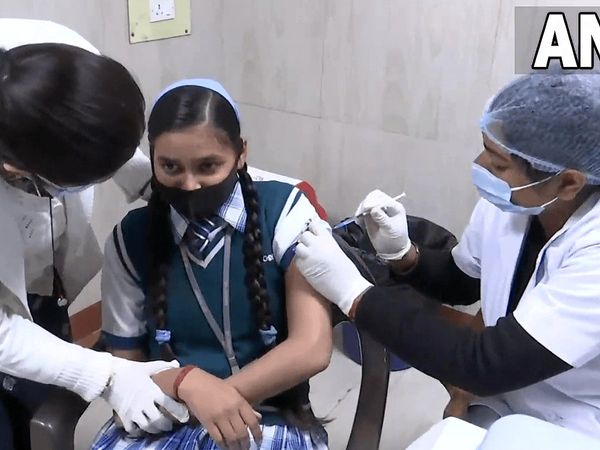
The vaccination of children between 15 to 18 years of age against COVID-19 began on Monday at various hospitals and inoculation centres across the country. Bharat Biotech’s Covaxin is the only COVID-19 vaccine that will be administered to children in the age group of 15-18 years, according to guidelines issued by Union Health Ministry.
-
“For all those aged 15 years or more, option for vaccination would only be available for Covaxin as this is the only vaccine with Emergency Use Listing (EUL) for the age-group 15-17,” the ministry had said in its guidelines
-
While making the announcement on December 25, Prime Minister Narendra Modi said this will reduce the worries of children going to schools and colleges and their parents, and boost the fight against the pandemic, adding that the move is also likely to aid in normalisation of teaching in schools.
-
The estimated population to be covered in this category is seven to eight crores.
-
All those aged 15 years or more can register themselves for vaccination on Co-WIN portal. Beneficiaries can self-register online through an existing account on Co-WIN or can also register by creating a new account through a unique mobile number.
CONCLUSION
-
The beneficiaries can also be registered onsite by the verifier/vaccinator in facilitated registration mode, the guidelines read. Appointments can be booked online or onsite (walk-in).
-
Union Health Minister Mansukh Mandaviya on Saturday requested people to register eligible children in their families for the vaccination.

KEY STORY
-
To ensure uninterrupted power supply, Gulbarga Electricity Supply Company (GESCOM) is replacing defunct transformers to fix the problem within 24 hours of receiving complaints, GESCOM Managing Director Rahul Pandve has said.
-
Addressing presspersons in Kalaburagi on Friday, Mr. Pandve said that during the last one year, GESCOM had received complaints about transformer burnout from Kalaburagi, Yadgir, Bidar, Raichur, Ballari and Koppal districts and replaced nearly 3,212 transformers within 24 hours.
-
To aid consumers and attend to their complaints immediately, GESCOM has now added WhatsApp number to its list of consumer grievances redressal systems. “Consumers can register their grievances through WhatsApp directly with GESCOM officials and staff. Further, complaints will be forwarded to the officials of the area concerned for redressal,” he added.
-
A dedicated toll-free number, 1912, is allotted to electricity call centres for handling power supply-related complaints which will then be forwarded to field personnel for timely action and rectification.
CONCLUSION
-
The officials and staff have been directed to address complaints of farmers within the stipulated time. Mr. Pandve said that strict action will be initiated against the staff who demand money from farmers while addressing their complaints. GESCOM has replaced 196 iron electricity poles with cement ones in the city. The iron electricity poles, interrupting wires and overhead lines near hospitals, schools and parks will be removed immediately.
-
Replying to a question, Mr. Pandve said that 3,548 farmers have benefited through reliable power supply to their pumpsets under the Ganga Kalyana Scheme. And, nearly 400 applications are pending for power supply to irrigation pumpsets under the scheme, Mr. Pandve said and added that GESCOM is also encouraging consumers to switch from counter to online payment mode for paying bills.
KEY STORY
-
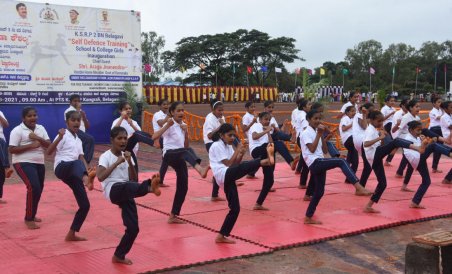
More than four lakh girl students studying at various government high schools and pre-university colleges in the state will be trained in self-defence techniques through special classes starting from the first week of this month.
-
The government has released Rs 2 crore for the training under the Samagra Shikshana Karnataka (earlier known as Samagra Shikshana Abhiyana) project.
-
The SSK has issued a circular directing all government schools and pre-university colleges to commence self-defence classes from the first week of this month.
-
The headmasters of schools and the school development monitoring committees have been told to identify the resource persons or training institutes at the local level, to train the girl students. The trainers will be paid Rs 200 per session. All girl students in 4,245 government high schools and 441 government PU colleges will benefit from this.
-
“We have implemented this self-defence training mainly to help girl students get stronger physically and mentally. Self-defence does not mean only teaching karate,” said an official from SSK.
-
“This self-defence programme includes increasing self-confidence among girl students and encouraging them to pursue higher education,” he added.
-
As explained in the circular, the schools and colleges have to conduct two classes per week (45 minutes each) and a total of 20 sessions in three months.
-
SSK has also instructed schools and colleges to conduct health check-ups for students before putting them on training. In case students have health issues, such students should be exempted from the training, the circular said.
CONCLUSION
-
“When girl students are on self-defence training, teachers must plan other extracurricular classes for boys,” said an official. The training will be implemented under the Rani Lakshmi Bai self-defence training programme.
-
Schools and colleges have to upload photographs and videos of the self-defence training on the Shagun portal.

KEY STORY
-
As India’s COVID-19 cases continue to rise, Union Health Secretary Rajesh Bhushan on Saturday wrote to the chief secretaries of all States and Union Territories regarding measures to deal with a possible surge in cases. He also advised them to initiate the process of setting up makeshift hospitals and constituting special teams to monitor patients in home isolation. The Union Health Secretary also said that all states and UTs should operationalise control rooms at district or sub-district level and revisit the COVID-19 dedicated health infrastructure.
-
India today reported 22,775 fresh COVID-19 cases even as the Omicron tally rose to 1431. As per Health Ministry data, the heavily mutated strain of COVID-19 has so far been detected in 23 states and Union Territories.
-
In his letter, Bhushan asked the states to initiate the creation of field or makeshift hospitals and urged them to consider leveraging hotel rooms and other accommodations linked with the COVID-19 dedicated hospitals in the government and private sector to cater to patients having mild to moderate symptoms.
CONCLUSION
-
“A large number of positive cases may be eligible for home isolation. These cases would require effective follow-up and a clearly defined mechanism for prompt shifting to a health facility in case of deterioration in their health situation,” he added said. The letter also urged states to amp up their home isolation protocols and to constitute special teams to monitor all home isolation cases.
1...437438439...884Page 438 of 884