KEY STORY
-
With a Covid-19 cluster of four new cases of the Omicron variant emerging in Bengaluru, the state’s tally with the new variant has risen to 23 on Wednesday.
-
The new cluster has been detected at the Raheja Residency apartment complex in Koramangala, Bengaluru. The spread began with a 26-year-old woman, who returned from the UK recently, testing positive for Covid-19. Health officials said she had tested negative at the airport but developed symptoms later on, due to which she got herself tested again and was found to be positive. Her samples were taken and sent for genome sequencing.
-
Her family members too developed symptoms in the intervening period and were tested as primary contacts. All their samples too were sent for genome sequencing. The family of four, apart from the 26-year-old woman, includes her 50-year-old mother, 56-year-old father and 20-year-old sister.
‘Secondary contacts have tested negative’
All their genome sequencing results came positive for the Omicron variant on Wednesday. “She, along with her family members, tested positive with Omicron and have been shifted to a hospital. They have mild symptoms. Their secondary contacts all tested negative,” said Dr Thrilok Chandra, Special Commissioner (Health), Bruhat Bengaluru Mahanagara Palike (BBMP).
A BBMP source said that in the first and second wave too, the apartment complex had seen many outbreaks, and three weeks ago, a cluster was reported after many people attended a birthday party. “There are thousands of people living in the apartment complex and we have been requesting them time and again to isolate foreign returnees in separate rooms till they test negative,” the source said.
KEY STORY
-
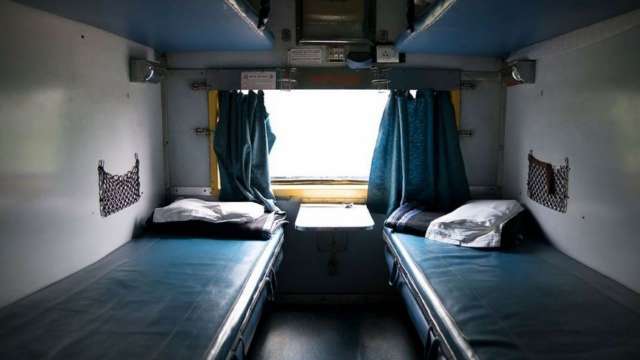
Your train journey is going to be easier in the winter as the Indian Railways is giving big relief to the passengers. You will not need to carry heavy blankets and sheets with you during the journey anymore. Railways is now going to start the facility of disposable bedrolls.
-
Notably, due to the coronavirus pandemic, Indian Railways had stopped the service of bedrolls in trains.
-
Under this special service, passengers will get a disposable bedroll for Rs 150. This facility is being provided to long-distance passengers. According to the information given by the Railways, at present, this facility will be available only in select trains like Mumbai-Delhi Rajdhani Express, Mumbai-Delhi August Kranti Rajdhani Express, Golden Temple Mail and Paschim Express.
-
For this special facility, passengers will have to pay Rs 150 for the kit that will also include things like face masks along with the blanket. Here is what you will get in this railway kit.
-
Bed Sheet White(20 GSM) 48 x 75
-
Blanket Grey/Blue (40 GSM) 54 x 78
-
Inflatable Air Pillow White – 12 x 18
-
Pillow Cover WHITE
-
Face Towel/Napkin WHITE
-
Face Mask
This step of the railways will facilitate the travel of passengers as the passengers will not have to travel carrying the burden of blankets and sheets.

KEY STORY
-
The third wave of COVID-19 in India is likely to peak in February 2022. However, according to projections by scientists, the Omicron-driven surge is likely to be milder than the second wave, possibly subsiding within a month. As per the Sutra model which tracks the country’s COVID-19 trajectory, the daily caseload is expected to rise as Omicron begins to displace Delta as the dominant variant. However, the projections indicate that cases will dip significantly by April and drop to present levels by May.
-
The Sutra model was created by M Vidyasagar of IIT Hyderabad and Maninda Agrawal of IIT Kanpur. The two are also members of the National COVID-19 Supermodel Committee. “Third wave is likely to arrive early next year in India. It should be milder than the second wave due to a large-scale immunity present in the country now,” Vidyasagar had told news agency ANI last week.
-
The post-Omicron projections put forth as of December 10 had suggested a slightly different trajectory, indicating that daily infections would peak (with more than 1.5 lakh cases per day) by the end of January. Based on this estimation, cases would drop to existing levels by the end of March. The best-case scenario in contrast indicated that a peak would be reached in mid-February (with approximately 1 lakh cases per day). Cases were projected to subside to existing levels by April in this case.
-
According to Vidyasagar however, it is “extremely unlikely” that there will be more cases than seen during the Delta-led second wave. The scientist cited India’s ongoing vaccination drive as well as the fact that serosurveys indicate that only a tiny fraction of the population has not come in contact with the Delta variant. While India had begun vaccinating people in January this year, it was only from March 1 that the inoculation drive was opened to the general populace. To date, India has administered nearly 139 crore doses of vaccine. Of these, 55.83 crore individuals are fully vaccinated.
CONCLUSION
-
Experts however emphasise that much remains unknown when it comes to the Omicron variant. First detected in mid-November, it has since spread to at least 90 countries and has now become the dominant strain in the US and some other nations. On Tuesday, the Union Health Ministry asked the states to activate war rooms and track COVID-19 trends. The Omicron variant, officials said, was three times more transmissible than Delta.
-
Even in a worst-case scenario, however, experts predict that the daily caseload will remain below 1.7 to 1.8 lakh per day. It must be noted that at the peak of the second wave, India had set global records with a case tally of more than 4 lakh per day. According to the scientists, the worst-case scenario they have simulated would entail a total loss of immunity conferred due to vaccination and maximum loss of naturally induced immunity. They also assumed that community transmission of Omicron has already started.
KEY STORY
-
The GST Council has not recommended bringing petroleum products under the reformed taxation regime even as certain representations have been made to the government to include petrol and diesel in GST, Parliament was informed on Tuesday.
-
Excise duty on petroleum products is calibrated from time to time for generating resources for infrastructure and other developmental items of expenditure, Minister of State for Finance Pankaj Chaudhary said in a written reply to the Rajya Sabha.
-
The change in duties takes into account relevant factors such as international product prices, exchange rate, tax structure, inflation and keeping in view the prevailing fiscal situation, the minister said.
-
“Certain representations have been received to bring petrol and diesel under GST (goods and services tax). Article 279 A (5) of the Constitution prescribes that the Goods and Service Tax Council shall recommend the date on which the goods and services tax be levied on petroleum crude, high-speed diesel, motor spirit (commonly known as petrol), natural gas and aviation turbine fuel (ATF), ” the minister said
-
Citing the CGST Act, the minister said the inclusion of these products in GST will require the recommendation of the GST Council. “So far, the GST Council, in which the states are also represented, has not made any recommendation for inclusion of these goods under GST,” Chaudhary said further.
CONCLUSION
-
He said the government keeps a close watch on the factors affecting the international fuel prices and makes interventions by way of calibrating excise duty rates on these products as and when required.
-
“Government has, with effect from, 4th November, 2021, reduced Central Excise Duty (including cesses) on petrol by Rs 5 per litre and on diesel by Rs 10 per litre to provide relief to the consumers,” he added.
KEY STORY
-
When Hemanth and his friend Chiranjeevi approached the police earlier with a cheating complaint against a company that had recently hired them, little did they know that they would become part of a massive mobile loan app scam with alleged links to Chinese nationals.
-
The two men, both in their early 30s, had put up their CVs on job recruitment sites earlier this year, and were surprised when an HR manager reached out to them with a deal that seemed too good to be true. They were offered ‘director’ posts and an assured salary with little else to do. All that was required of them was to submit their personal documents, including their Aadhaar and PAN cards. They didn’t even have to report to an office.
-
However, after two months of not receiving even a single rupee from their employer, the duo approached the police in November. The Central Crime Branch (CCB) police, which took charge of the case, unearthed a network of 52 companies that were allegedly fleecing customers by offering loans with high interest rates and processing fees via apps. At the helm of this network was Licorise Technology Pvt. Ltd., a firm in Munnekolala, Marathahalli, that was allegedly employing out-of-work BPO employees as loan recovery agents.
-
The firm was allegedly operating at many levels: offering short-term loans on various mobile applications like Cash Master and Crazy Rupees; hiring former BPO employees to work as recovery agents, and setting up benami companies in the names of employees.
-
The accused offered micro-loans of as little as ₹1,000 with interest rates as high as 15- 20% of the total loan amount. The interest rates were also compound on a weekly or fortnightly basis. They also charged high processing fees, almost half of the loan granted.
-
The apps, once installed by the borrowers, would allow access to all of their phone contacts, gallery and other sensitive information. The management ran a full-fledged ‘call centre’ with 50 to 80 employees whose job it was to convince people to download the apps and apply for a loan. By downloading the apps, clients gave them access to their contacts and other information.\
-
So far, the CCB has announced that it has arrested Licorise Technology’s HR manager Kamaraj More, 25, and team leader Darshan Chavan, 21, for making threat calls to debtors. CCB officials refused to divulge details on the other suspects and people higher up in the firm’s management.
-
The call centre executives were offered salaries based on the percentage of loan recovered from clients who had downloaded the apps. “They were asked to get the dues from clients by hook or by crook using coercion, abuse and blackmail if necessary,” a police officer said.
- Defaulters were humiliated in front of friends and acquaintances with messages going out that the victim had “cheated” someone. Others had their pictures morphed and shared on social media as blackmail.
Benami companies
Licorise allegedly floated multiple benami firms and bank accounts using documents of employees. “The accused were handling U.P. and Bihar clients from the Munnekolala office. Loan payments and other transactions were routed to multiple accounts belonging to companies like ‘Fesolovo Pvt. Ltd., Leadbolt Pvt. Ltd., and Zeter Pvt. Ltd., which Licorise had floated using Aadhaar and PAN cards of Hemanth and Chiranjeevi,” said a senior official.
Even though the bank accounts opened on their behalf showed transactions running into lakhs of rupees, the duo was informed that the companies were running into losses. The CCB uncovered 52 such firms.
The Chinese angle
When CCB Economic Offences Wing carried out a raid in November, they said that the firms had tie-ups with registered non-banking financial companies (NBFCs) for loan disbursal. “These companies did not even offer loans. They get loans granted from NBFCs, cheated customers. Any windfall was transferred out of the country to China,” said a CCB official at the time.
Another official said that the CCB was looking for the handlers who are suspected to be from China. “The accused told the police that they had been hired by a Chinese national through online interviews and were getting instructions on phones and messages,” he said.

KEY STORY
-
Chief Minister Basavaraj Bommai has said the government has decided to drastically hike compensation given to the farmers suffering crop losses due to floods. He was responding to various flood-related issues raised in the Legislative Assembly by members from different constituencies, which were badly hit by floods.
-
Currently, the government was giving Rs 13500 compensation per hectare of crops in the irrigated lands which got damaged, said Bommai, adding that this compensation had been increased to Rs 25500 per hectare land. The compensation had been increased suddenly by Rs 11500 per hectare, said Bommai. For the crops sown and damaged in dry lands, Bommai said, the government had decided to double the current compensation of Rs 6800 per hectare land given to the affected farmers.
-
In the floods that occured in the state, Bommai said, the crops sown in 12.69 hectare land got damaged and the government would deposit compensation of every affected farmer in his bank account. The government would have an additional burden of Rs 1200 crore with the fresh quantum of compensation fixed for crop loss. The government had been releasing Rs 18,000 per hectare for horticulture crops and the same had been freshly fixed at Rs 28,000 per hectare, said Bommai.
Rs 926 crore crop loss compensation credited to farmers’ accounts: R Ashok
BELAGAVI: Revenue Minister R Ashok informed the Assembly that Rs 926.43 crore has been credited directly to accounts of farmers who had been hit by recent calamity.
Replying to the discussion on the crop loss and house damages due to incessant rains and flooding, the minister said, crop loss was reported in around 12.52 lakh hectares, so joint survey would be conducted to ensure disbursement of compensation at the earliest.
The State government had submitted the memorandum to the Union government twice seeking financial help. Initially the Centre did seek Rs 841.57 crore and later for Rs 128.92 crore. The Central teams have already visited the calamity-hit areas twice and conducted the survey of the loss, he added.
Detailing about the damaged houses, the minister said, 23,716 houses were damaged due to incessant rains and flooding and already released Rs 332.87 crore as the compensation. Five lakh rupees was being paid for completely collapsed houses, largely damaged houses have got Rs 3 lakh and that for partially damaged houses are getting Rs 50,000.
Each acre of damaged coffee plantation have got Rs 18,000 and a total of Rs 38.80 crore has been disbursed as crop loss compensation, he said and added, human casualties reported during the calamity was 62 and that animal was 945. Damage was found in 3,306 bridges and 995 lakes used for minor irrigation.
The Union government is expected to release Rs 5,270 crore under the 15th Finance Plan, but Chief Minister Basavaraj Bommai has submitted seeking more funds to Centre, Ashok stated.
KEY STORY
-
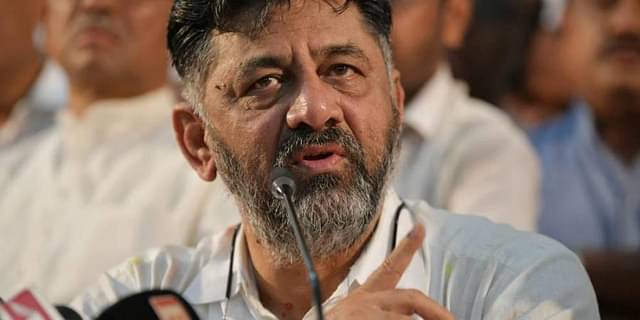
In the backdrop of the debate on the anti-conversion Bill, KPCC President DK Shivakumar said that the children of at least 21 Union Ministers are studying in Christian educational institutions as per a documentary made by a private organisation. The Bill has been brought unconstitutionally for political gains, he charged.
-
“There are no instances to prove that someone has been converted through such institutions. Christians have been there in the country for centuries, running various institutions including hospitals and schools, but they never converted people forcibly anywhere,” he claimed.
-
The Mughals ruled for centuries, but the population of Muslims remained unchanged. The British and Portuguese also ruled India, but they never did anything to convert Indians and the population of Christians never increased in the country, he added.
CONCLUSION
-
Shivakumar said the Congress party will oppose the Bill which, he said, was against the Constitution. Several people hailing from different religions from abroad join ISKCON and other congregations every year and participate in bhajans, Shivakumar said, adding that they all will feel awkward if such legislations are enacted. India has been a secular nation where there is scope for people of all religions to live with respect. Efforts were being made to disturb peace, he said.

KEY STORY
-
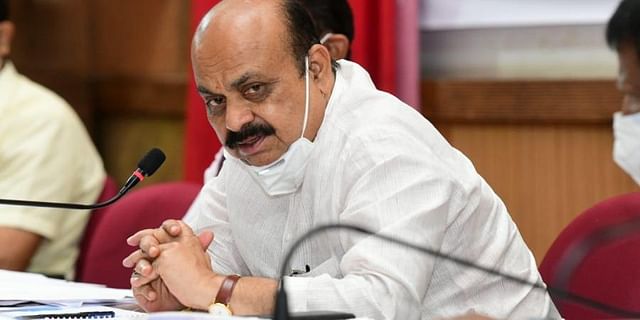
Pandemonium prevailed in the Assembly on Monday with Congress members staging a walkout after Speaker Vishweshwar Hegde Kageri did not entertain an adjournment motion moved by Opposition Leader Siddaramaiah to discuss the alleged involvement of Urban Development Minister Byrathi Basavaraj in a land grab case.
-
After the Speaker commenced the Question Hour, Congress MLAs jumped into the well holding placards seeking Byrathi’s resignation. On Saturday too, Congress members had protested in the well forcing the Speaker to adjourn the House.
-
The JDS members, at the same time, wanted a discussion on the defacing of freedom fighter Sangolli Rayanna’s statue and the burning of the Kannada flag in Maharashtra. They stood up and raised slogans, resulting in chaos. Kageri assured Siddaramaiah of considering his argument after the Question Hour. But the Opposition Leader wanted the question hour to be cancelled.
-
Chief Minister Basavaraj Bommai said holding question hour is a unanimous decision taken by all parties. Siddaramaiah shot back, saying question hours have been cancelled in the past to make way for important discussions. Amid the din, Kageri continued with the Question Hour and only BJP and JDS members raised their queries. Winding up, the Speaker allowed Siddaramaiah to speak, but the treasury benches protested, citing that the House was not in order. Kageri requested Congress members to go back to their seats, but they continued their protest.
CONCLUSION
-
“How can I run the House if members do not cooperate,” Kageri said, adjourning the House. When it reconvened after lunch, Congress members continued to protest. Kageri refused to entertain Siddaramaiah’s motion and Congress MLAs walked out.
-
In the Council too, Congress members rushed to the well asking Chairman Basavaraj Horatti to accept their notice to discuss the land grab case. Horatti said as the case is in court, he will seek the government’s advice to know whether the House can take up the matter for discussion.
KEY STORY
-
Addressing the issue of protection of Kannadigas in Maharashtra after reports of vandalism of statues of Chhatrapati Shivaji in Bengaluru, Karnataka chief minister Basavaraj Bommai said Karnataka authorities and police have taken up the issue with their counterparts in Maharashtra.
-
“State Home Secretary and Director General of Police have taken up the issue with their Maharashtra counterparts to protect the life and property of Kannadigas in Maharashtra,” said Bommai on Monday.
-
“We have taken up the issue to provide security for Karnataka government vehicles,” he added.
-
Referring to the incident of vandalism of statues of Chhatrapati Shivaji and freedom fighter Sangolli Rayanna, CM said, “The State government will take decisive steps to stop vandalism. Stringent action would be initiated against those who take the law into their hands.”
-
“The main perpetrators of the recent vandalism in Karnataka have already been arrested. We will not allow any hooliganism to continue,” he added.
-
Tension erupted in Belagavi after a purported video that showed some people pouring black ink on the statue of Chhatrapati Shivaji Maharaj at Sankey Tank Road in Bengaluru went viral.
-
Shiv Sena and Maharashtra Ekikaran Samiti (MES) followers gathered in Belagavi and protested against the Karnataka government at Dharmaveer Sambhaji Maharaj Chowk.
CONCLUSION
-
The miscreants smashed around 26 vehicles of the Karnataka government and police at Belagavi.
-
The protestors alleged that Kannada goons have defaced a statue of Chhatrapati Shivaji Maharaj in Bangalore.
-
Meanwhile, as per Belagavi commissioner of police K Tyagarajan, 27 people have been arrested in three police station limits in Belagavi for attacking the Sangolli Rayanna statue.
KEY STORY
-
Karnataka has begun issuing BH (‘Bharat’) series of registration numbers for a select group of vehicle owners, to enable smooth transfer of government employees from one state to another.
-
J Purushotham, additional commissioner for transport (E&EG), said the department began processing the applications for BH series two days ago.
-
As per the rules, he said, those seeking BH series should be central government or PSU employees or employees of firms and organisations that have establishments in more than four states.
CONCLUSION
-
Vehicles from other states migrating to Karnataka have to intimate the authorities within 15 days from the date of entry and register in the local RTO within the next 12 months. The process involves a whole set of procedures besides payment of fees.
1...442443444...884Page 443 of 884