101 Omicron cases across 11 states in India, stay vigilant and avoid non-essential travel, mass gatherings: Health Ministry

KEY STORY

  • There are 101 Omicron cases across 11 states in the country with daily COVID-19 cases below 10,000 for the past 20 days.
  • 32 cases were reported in Maharashtra, 22 in Delhi, 17 in Rajasthan, 8 each in Karnataka and Telangana, 5 each in Gujarat and Kerala, one each in Andhra Pradesh, Chandigarh, Tamil Nadu and West Bengal respectively.
  • The Health Ministry said that people must remain vigilant in view of Omicron variant, rising cases in other countries and avoid non-essential travel, mass gatherings and observe low-intensity festivities.
Omicron is spreading faster than the Delta variant’
  • “Omicron variant reported in 91 countries in the world. WHO has said that Omicron is spreading faster than the Delta variant in South Africa where Delta circulation was low. It’s likely Omicron will outpace Delta variant where community transmission occurs, WHO added,” said Lav Agrawal, Joint Secretary, Health Ministry.
  • There is no evidence to suggest that vaccines are not effective against the Omicron variant of coronavirus, said Agarwal.
  • The Health Ministry has also said that districts with over 5 per cent COVID-19 case positivity rate need to ensure restrictive measures until it’s below 5 per cent for at least 2 weeks.
  • The case positivity for the last 1 week was 0.65 per cent with Kerala contributing 40.31 per cent to the total number of active cases in the country.
  • He further said that India is administering COVID-19 vaccine doses at the highest rate in the world and the daily rate of doses administered is 4.8 times the rate of doses administered in the USA and 12.5 times the rate of doses administered in the UK.
  • On Omicron threat, Dr VK Paul, Member-Health, Niti Aayog said that a new phase of the COVID-19 pandemic is being experienced in Europe with a steep rise in cases.
  • ‘Genome sequencing of every sample is not possible’
  • He also said that genome sequencing of every sample is not possible as it is a surveillance and pandemic assessment and tracking tool, not a diagnostic tool as of now.We can assure sufficient systematic sampling is being undertaken, he added.
  • On Gennova mRNA vaccine, Dr Paul said that it is moving very well through Phase 2 and Phase 3 trials.
  • “It is stable at the normal temperature. It is a remarkable possibility and technology on the horizon,” he added.
  • On anti-viral COVID-19 pills, Dr Bhargava said that they have found that these tablets need to be given very early, even before the diagnosis of the disease.
  • Scientific data is still not supported in a big way that the pills will be useful at the moment, he added.

COVID third wave likely to peak in India in February, expected to be milder: Govt panel amid Omicron threat

KEY STORY

  • The third wave of coronavirus is likely to peak in the country early next year but it would be milder than the second wave, according to National COVID-19 Supermodel Committee.
  • M Vidyasagar, the head of the panel, said that coronavirus cases in the country are likely to increase once Omicron starts displacing Delta as the dominant variant.
  • “Third wave is likely to arrive early next year in India. It should be milder than the second wave due to a large-scale immunity present in the country now. There will definitely be a third wave. Right now, we are at around 7,500 cases per day which is sure to go up once Omicron starts displacing Delta as the dominant variant,” he was quoted as saying by ANI.
  • Vidyasagar further suggested that India would not log more than two lakh cases daily, in the worst scenario, if the third wave hits the country.
  • “I emphasise that these are projections, not predictions. We can start making predictions once we know how the virus is behaving in the Indian population. Based on our simulations, in the worst scenario that we have simulated, namely total loss of immunity conferred due to vaccination and maximum loss of naturally induced immunity, the number of cases remains below 1.7 to 1.8 lakh cases per day. This is less than half of the peak during the second wave,” he said.
  • The Central government on Friday advised people to keep new year celebrations at low intensity and avoid non-essential travelling amid a sharp rise in Omicron cases across the country. It also said that Omicron spread is unlikely to outpace Delta variant where community transmission occurs.
  • So far, India has recorded a total of 101 positive cases of the Omicron variant of the coronavirus across 11 states and Union territories.

CONCLUSION 

  • The committee comprising Professor Manindra Agrawal of IIT-Kanpur and Lt Gen Madhuri Kanitkar, the deputy chief of the Army Medical Service was set up by the Narendra Modi government for projections on the likely spread of the COVID-19 pandemic.
  • Vidyasagar, also a professor at the Indian Institute of Technology (IIT) in Hyderabad, said that India is unlikely to report more daily cases than the second wave.

34 O2 plants yet to be commissioned in Karnataka

KEY STORY

  • Thirty-four of the total 224 oxygen generation plants are yet to be commissioned in the state. The state plans to have a mock drill at all the commissioned plants on December 28.
  • The union health secretary has asked the states to conduct mock drills of all installed and commissioned Pressure Swing Adsorption (PSA) oxygen generation plants to ensure that they are fully operational so that oxygen of required quantity, pressure and purity reaches the intended patients at their bedside.
  • These drills are to be completed by the end of December, the union health ministry said (to avert a tragedy like Chamarajanagar where 24 died due to oxygen shortage in May this year). State health commissioner D Randeep told DH, “We will be taking up mock drills on December 28. That’s what we have planned. In 190 commissioned ones.”
  • In response to DH’s query on the functional status of oxygen plants in the state, Health Minister Dr K Sudhakar’s office, in a statement, said, “Out of the 262 allocated plants, we have received 224 plants, 190 are commissioned with total plants’ capacity of 1,08,077 LPM (litres per minute) and production of 187 MT (metric tonne)/day”.
  • The staff at the minister’s office explained that at the rest of the 34 plants, the majority of issues are civil and electrical in nature. “They are in advanced stages of completion. By month-end, all 224 should be commissioned and working. The plants that we have not received are ones from CSR (corporate social responsibility) funds which have been promised but are yet to come,” a staffer said.
  • Giving a further breakdown of the total 262 plants allocated to the state, his office said, out of 170 plants being set up by the state (the rest are being provided by the central government), and CSR, 134 plants have been received, 106 commissioned, and 26 awaiting commissioning. The rest of the sites are yet to receive the plants. “There are a few post-commissioning issues in a few plants. We have trained 245 participants (in 10-hour training modules) in three batches.
  • Five (additional) batches are being planned (which are) in discussion with the skill development department,” the statement added.
  • An online training course on operating an oxygen plant was held by the union government for technicians, paramedical staff,  doctors, and nurses of the health and medical education department in the first week of December.
  • Bidar district health officer Dr V G Reddy said, “We have oxygen generation plants in four taluk hospitals, one mother and child hospital, and two at Bidar Institute of Medical Sciences. In all seven are functioning, one at the community health centre at Santoor is undergoing civil work. Once turned on, it takes half an hour at the plant to start generating oxygen.”

Guidelines for conducting mock drills at oxygen generation plants

The state health commissioner D Randeep issued guidelines here on Thursday for conducting mock drills at the state’s oxygen generation plants.
** Mock-drill to be conducted once every three months
**  It is recommended that senior officials in the state such as ADC/DC/CMO/MS (additional deputy commissioner/ deputy commissioner/ chief medical officer/ medical superintendent) etc. oversee the mock-drill and ensure compliance
**  If a facility has more than one PSA (pressure swing adsorption oxygen generation plant), then mock drill should be conducted for each PSA
**  Drill should be conducted for at least six hours
**  Oxygen purity should be checked in the PSA control panel display every two hours
**  Check and ensure that the PSA plant is connected to facility MGPS (medical gas pipeline system) and there are no leakages either in the linked MGPS pipeline or manifold
**  The oxygen pressure from PSA should be ranging from 4-6 bar
**  The identified gaps should be reported and immediately resolved by the competent state agency/PSA supplier

Why anti-conversion Bill, questions Congress

KEY STORY

 KPCC  working president Dhruvanarayan on Friday questioned the integrity of BJP MLA Gulihatti Shekar for raising the issue of his mother converting into another religion only recently, whereas she had converted some years ago.
”Since Shekar became a puppet of the RSS, he has been raking up the issue of his mother’s conversion now,” he alleged. The former Chamarajanagar MP, addressing a joint press conference with former Chitradurga MP B N Chandrappa, observed that the BJP government’s plan to bring the anti-conversion Bill, when there is an existing law to check forced conversions, is only to target a particular community.

NEP: Parents for less screen time, more interaction

KEY STORY

  • Meetings to implement the National Education Policy (NEP) 2020 in pre-primary schools have already commenced, with members of the policy’s preparation team inviting parents’ opinions.
  • On Friday, several parents were allowed to voice their opinions and give insights into issues which could be resolved with the implementation of NEP. The members focused on what parents look for in a preschool, improvements to be made to the current system of education and whether children require support at home.
  • This follows Primary and Secondary Education Minister BC Nagesh’s announcement that NEP would be rolled out phase-wise in schools, starting from 2022. During the Assembly winter session, he said NEP would be implemented in select pre-primary schools in the coming academic year.
  • Parents from several schools around Bengaluru spoke on various issues that plagued their children, especially with schools opening after the lockdowns. “My child who started offline school for the first time, was overwhelmed because she had not interacted with other students previously,” said Poorna Shilpa, one of the parents. Many parents had faced similar lockdown-related issues. Padmasree, another parent, mentioned that she had difficulty limiting screen time for her child.

CONCLUSION

  • “Students will benefit if they are encouraged to go to libraries and read books, and move away from phones and limit screen time,” she said.Another parent, Neeharika Arvind, said she had noticed a big difference between offline and online classes, as children could take part in personal interactions and have more learning opportunities and moral lessons, when it came to sharing and other activities. Parents also said that students grasp concepts faster when teachers focused on students’ interests.
    A number of parents also expressed interest in bringing back more traditional learning during playtime. Shveta Swamy, a parent, said, “We’re very happy with how moral-based learning has been implemented, however, there can be improvements on playtime”

Can’t dismiss as ‘mild’, Omicron spreading faster than other Covid-19 variants: WHO Regional Director

KEY STORY

  • Amid concerns arising out of the Omicron variant of COVID-19, Dr Poonam Khetrapal Singh, Regional Director, WHO South-East Asia Region, on Thursday said that Omicron appears to be spreading faster than any other previous variant and added that one should not dismiss it as “mild”.
    In an exclusive interview with ANI, Dr Singh responded on how virulent Omicron is and what are the new major symptoms of this variant.
    “The overall threat posed by Omicron largely depends on three key questions: (1) how transmissible the variant is; (2) how well vaccines and prior SARS-CoV-2 infection protect against infection, transmission, clinical disease and death; and (3) how virulent the variant is as compared to other variants,” she said.
    “Based on the current limited evidence, Omicron appears to be spreading faster at a rate not seen with any other previous variant. Emerging data from South Africa suggest an increased risk of re-infection with Omicron, but more data are needed to draw firmer conclusions. There is still limited data on the clinical severity associated with Omicron. More information on case severity associated with Omicron is expected in the coming weeks.”
    Asserting Omicron should not be dismissed as mild, the WHO Regional Director said more information is needed to fully understand the clinical picture of those infected with Omicron variant.
    “Further information is needed to fully understand the clinical picture of those infected with Omicron and WHO encourages countries to contribute to the collection and sharing of hospitalized patient data through the WHO COVID-19 Clinical Data Platform. We should not dismiss Omicron as mild. Even if Omicron does cause less severe disease, the sheer number of cases could once again overwhelm health systems,” she said.
    When asked if anti-COVID vaccines are effective against Omicron, Dr Singh said that preliminary data suggest that “vaccines may have reduced effectiveness against Omicron”.
    “Again, it will take a few more weeks before there is enough evidence to fully assess the vaccines’ performance against Omicron. We should also not forget that vaccines alone will not get any country out of this pandemic… Countries can – and must – prevent the spread of Omicron with proven public health and social measures. We must continue to do it all. Protect yourself and protect each other. Get vaccinated, wear a mask, keep a distance, open windows, clean your hands and cough and sneeze safely.”
    Singh emphasised the emergence of variants is a reminder that the pandemic is far from over.
    “The risk of COVID-19 remains high globally and the emergence of variants is a reminder that the pandemic is far from over. Like I said earlier, we must continue to strengthen surveillance, public health and social measures and rapidly scale up vaccination coverage. As in the past, whenever we have done these well, we have seen a decline in cases. We know that these measures work. It’s up to each one of us, and all of us to together, to stop transmission, which we can and we must,” she told ANI when asked whether India will face the third wave of COVID-19.
    Commenting on booster doses’ effectiveness against Omicron, the WHO official said that current data show that the performance of vaccines that received WHO’s Emergency Use Listing holds up well against severe forms of the disease with minor or modest reductions in effectiveness by 6 months after the last primary dose.
    “Preliminary studies on the impact of Omicron on vaccine effectiveness, and whether additional doses may be necessary suggest that an additional dose may confer benefit, yet it is too early to draw definitive conclusions from these limited labs and clinical studies. WHO will continue to review the evidence, and update its recommendations as appropriate.”
    “SAGE has recommended moderately and severely immunocompromised persons may be offered an additional dose of COVID-19 vaccine as part of an extended primary series. To make a recommendation on the use of booster doses for the general population more data is needed on vaccine performance of the primary series over time. We must also review the benefits from boosting versus the benefits from expanding the coverage of primary vaccination, in different population groups.”
    She further said that the booster policy has to be considered in the context of the goal of preventing severe disease and death and protecting the health system. WHO recommendations on boosters will be updated as more evidence becomes available, she added.

    CONCLUSION

  • Expressing her views on COVID-19 vaccination for children in India, the WHO Regional Director said that countries should consider individual and population benefits of immunizing children and adolescents in their specific epidemiological and social context when developing their COVID-19 immunization policies and programs.
    “As children and adolescents tend to have the milder disease compared to adults unless they are in a group at higher risk of severe COVID-19, it is less urgent to vaccinate them than older people, those with chronic health conditions and health workers. There are benefits of vaccinating children and adolescents that go beyond the direct health benefits. Vaccination that decreases COVID-19 transmission in this age group may reduce transmission from children and adolescents to older adults.”

Cabinet nod for proposal to increase women’s legal marriage age from 18 to 21

KEY STORY

  •  The Union Cabinet Wednesday accorded in-principle approval to a proposal to increase the age of marriage of women from 18 to 21 years. The proposal clearance comes more than a year after Prime Minister Narendra Modi declared the plan in his address to the nation on the 74th Independence Day.
  • In India, men are legally allowed to get married at the age of 21. The proposed reform will equalise legal marriageable ages for both genders. The government, after receiving the Cabinet’s nod, is likely to make amendments to the Prohibition of Child Marriage Act, 2006, the Special Marriage Act and personal legal instruments such as the Hindu Marriage Act, 1955, The Indian Express reported citing sources.
  • The Cabinet gave the Wednesday’s approval on the basis of the recommendations received by Niti Ayog last December from a task force which was set up to examine “matters pertaining to the age of motherhood, imperatives of lowering MMR (Maternal Mortality Rate), improvement of nutritional levels and related issues”. The task force was led by Jaya Jaitly, the former president of the Samata Party.
  • Jailty, in an interview with The Indian Express, clarified that the task force’s reasoning behind the recommendation was not population control. She backed her assertion with the National Family Health Survey recent findings which show that the Total Fertility Rate (TFR) is declining and the country’s population is under control. She stated the idea behind the recommendation is women’s empowerment.

CONCLUSION

  • “We have had feedback from 16 universities and engaged over 15 NGOs to reach out to young people, particularly in rural and marginalised communities, such as in particular districts in Rajasthan where child marriage is quite prevalent. Feedback was taken across religions, and from urban and rural areas, equally,” Jailty told The Indian Express.
  • The task force’s other recommendations included an elaborate public awareness campaign to encourage social acceptance of the decision, the introduction of sex education in the school curriculum, women’s training in polytechnic institutes, etc.

10 new cases of Omicron variant detected in Delhi, says Satyendar Jain; India’s tally goes up to 97

KEY STORY

  • As many as 10 fresh cases of Omicron variant of coronavirus have been detected in the national capital, health minister Satyendar Jain said on Friday. These infections have pushed the countrywide tally of the new mutant strain to 97.
  • “10 new cases of Omicron Variant reported in Delhi, taking the total number of cases of the variant here to 20. A total of 10 people, out of these 20, have been discharged,” said Delhi Health Minister Satyendar Jain today.
  • Earlier on Thursday, India reported 14 fresh Omicron cases, taking the tally of patients contracting the highly infections coronavirus variant in the country to 87. While Karnataka reported five new cases, Delhi and Telangana saw four each and Gujarat one.
    Omicron scare in India
    There have been growing concerns over the possibility of a third wave of the COVID-19 pandemic amid the surge in Omicron cases in the country. Maharashtra has so far reported the highest number of Omicron cases at 32, followed by Rajasthan at 17.
    The cases have also been reported in the states of Karnataka (8), Gujarat (5), Kerala (5), Telangana (2), Tamil Nadu(1), West Bengal (1) and Andhra Pradesh (1) and Union Territories of Delhi (10) and Chandigarh (1).
    The country’s first two cases of the Omicron variant were detected in Karnataka on December 2.
    COVID situation in India
    Meanwhile, the Ministry of Health and Family Welfare (MoHFW) has stated that as many as 7,447 new COVID-19 cases and 391 deaths have been reported in the country in the last 24 hours.
    As per the health ministry, the active caseload in the country stands at 86,415, while the death toll has surged to 391.
    With 7,886 recoveries during the same period, the tally of total recoveries from the virus since the beginning of the pandemic stands at 3,41,62,765.
    Ajay Bhalla reviews COVID situation
    Meanwhile, Union Home Secretary Ajay Bhalla reviewed the COVID-19 situation in the country and the preparedness of the health infrastructure of all Union territories.
    A new study has raised alarms as it suggested that the new mutant variant of COVID-19 is 70 per cent more infectious than the Delta strain.
    The new variant was first reported to the World Health Organisation (WHO) from South Africa on November 25. As per the WHO, the first known confirmed B.1.1.529 infection was from a specimen collected on November 9 this year.
  • On November 26, the WHO named the new COVID-19 variant B.1.1.529, which has been detected in South Africa, as ‘Omicron’. The WHO has classified Omicron as a ‘variant of concern’.

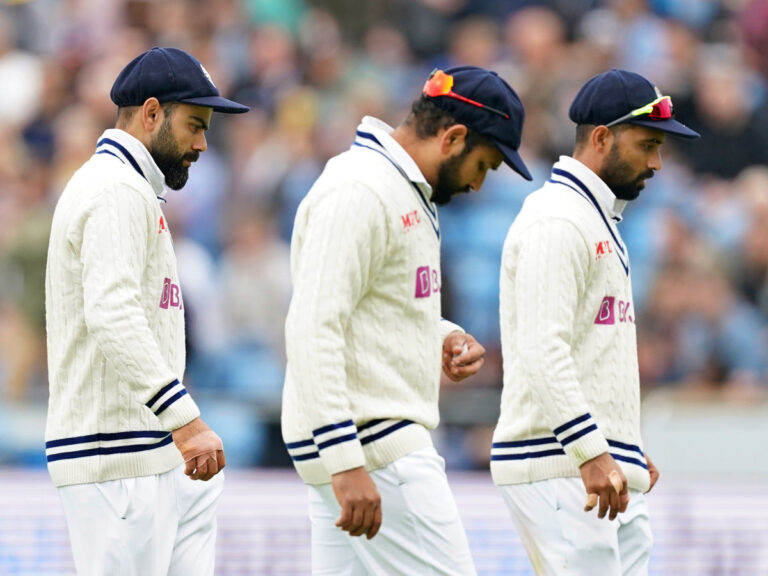
Virat Kohli’s presser for SA tour: 5 takeaways from Indian Test skipper’s explosive press conference

KEY STORY

  • Is Virat Kohli really contemplating taking a rest from international cricket amid the India vs South Africa series? Did Board of Control for Cricket in India (BCCI) president Sourav Ganguly personally request the Indian Test skipper to not give up the T20I captainship? Team India’s Test captain answered several burning questions in one of his most explosive press conferences since his ascension to the leadership throne at the national side.
  • One of the finest leaders in the history of the game, Kohli was speculated to be taking a break from the One Day International (ODI) series between India and hosts South Africa. India’s most successful Test captain in the history of red-ball cricket, Kohli was asked to make way for Rohit Sharma, who was appointed as the full-time captain of the Asian giants in the white-ball cricket after the T20 World Cup.

Kohli’s equation with the newly-appointed white-ball captain was also questioned in the lead-up to India’s tour of South Africa. Putting rest to several speculations on Wednesday, Kohli chaired the traditional press conference before Team India’s departure for the South Africa series.

Here’s a look at 5 takeaways from the Indian Test skipper’s explosive press conference ahead of India’s tour of South Africa.
  • 1) Kohli is available for South Africa ODIs 
First things first – Kohli quashed the rumours linking him with taking a short sabbatical from white-ball cricket during India’s tour of South Africa. Kohli confirmed that he is available for selection and the former skipper will spearhead the world-class batting order of the visitors in South Africa.
“I was and I am available for selection all the time. I never communicated with BCCI asking for rest. I am available for the ODI series in South Africa and was always available. It should be asked to people who are writing lies. My communication with the BCCI on this issue has not happened that I want to rest,” Kohli said in the virtual press conference.
  • 2) Kohli contradicts BCCI chief Ganguly
Not long ago, BCCI president Ganguly said that he personally requested Kohli to not step down as T20I captain. Kohli had relinquished T20I captaincy after India’s 2021 World Cup campaign. “When I decided to leave the T20I captaincy and approached the BCCI about my decision, it was received well – there was no offence or hesitation, I wasn’t told to reconsider it,” Kohli said.
  • 3) How Kohli was told about the end of ODI captaincy 
Kohli revealed that his removal from ODI captaincy took place 90 minutes before the selectors furnished the final squad for the South Africa series. Kohli acknowledged the fact that not winning any major ICC trophy led to his removal as white-ball captain.
“The chief selector [Chetan Sharma] discussed with me the Test team to which we both agreed, and before ending the call I was told the five selectors have decided I will not be the ODI captain, to which I replied, ‘okay, fine’. And in the selection call afterwards, we chatted about it briefly. That’s what happened. There was no communication prior to that at all,” Kohli recalled.

  • 4) Is there a rift with Rohit Sharma?
Kohli was once again made to reiterate the fact that all is well between two of the finest batters of the Indian cricket team. Kohli reckoned that he has been addressing this for a long period of time and there is no rift between him and Rohit at the Indian camp. “There is no problem between me and Rohit Sharma. I have been clarifying for the past two years and I am tired now. I want to also say one thing that none of my actions or decisions will be to take the team down,” Kohli added.
  • 5) India can do something special in South Africa 
After conquering Australia twice in their tour Down Under, Kohli & Co. will aim to register an unprecedented Test series win on South African soil in the second edition of the ICC World Test Championship. Kohli will lead Team India in the upcoming three-match Test series with the Proteas. Kohli’s deputy Rohit has been ruled out of the high-profile Test series.
“South Africa is one place where we have not won a series yet. So we are very motivated to do that. And the mindset is always to go there and win a series in any country that we play. We don’t anymore think of just winning a Test here and there and we will do our absolute best that we can as a team and make sure that we keep contributing towards that cause,” he added.

All districts to have universities: Education Minister

KEY STORY

  • Higher Education Minister Dr C N Ashwath Narayan has said that government will establish universities in all the districts in the state. The proposed varsities will have maximum 25 staff members, including vice-chancellor.
  • The minister was speaking at an event in Visvesvaraya Technological University (VTU) here on Wednesday. He said varsities could now be set up on small lands with modern technology.
  • The Minister also said that University Visvesvaraya College of Engineering (UVCE) and Visvesvaraya Technological University (VTU) will be upgraded on par with Indian Institute of Technology (IIT).
  • ”Universities with vast campuses are becoming irrelevant nowadays. Modern technology has enabled the setting up of universities which are compact. Keeping this in mind, new universities which will be set up in the districts, and will be made to function effectively with the number of staff not exceeding 25, including Vice-Chancellor,” Nrayan said.
  • UVCE in Bengaluru will be developed in line with IIT-Mumbai, and a plan by having a 10 years time frame has been envisaged to make it a reality, he was quoted as saying at an event held at VTU here, by his office in a release.
  • The government will give priority to setting up compact universities in each district instead of setting up large universities, he added.

CONCLUSION

  • Further stating that VTU in Belagavi  which is spread in 120 acres should also develop as an institution similar to IIT, the Minister said Prof.Karisiddappa, Vice-Chancellor, has responded in the affirmative in this regard, to submit the action plan within a month.
  • ”It has also been decided to provide world-class quality education in 17 government engineering colleges of the state. They will be developed as the most favoured institutions by granting more autonomy and constituting governing bodies for each of them,” he said.