KEY STORY
-
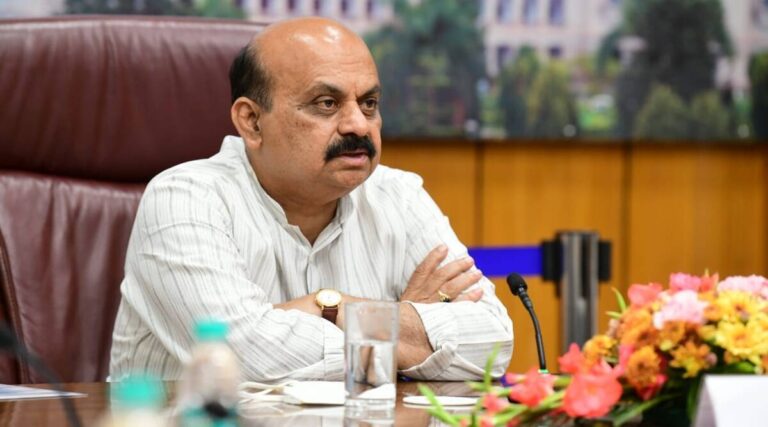
Stating that there can be no compromise in the war against cyber crimes and drug trafficking, Chief Minister Basavaraj Bommai on Saturday said, “We have zero tolerance for criminals and it is high time to wage a war against them.” Sending out a tough message to cyber criminals in his address after launching the ‘Cyber Secure Karnataka’ campaign, Bommai said the state has introduced the CIR number system.
-
“It is the first of its kind in the entire country, wherein an FIR will be registered and bank accounts of the victim and the offenders will be frozen following a mobile phone communication. Even Prime Minister Narendra Modi has appreciated it and it is being emulated by other states as well”, he said.
-
He assured all help, in terms of technology upgrades, to equip the police in going after criminals. He also stressed the need for cyber laws to deal with criminals swiftly and effectively.
-
“As the criminals have a wide network, we need to widen the Cyber Security Network,’’ the CM said, and suggested that officials seek the cooperation and suggestions from the Centre in this regard.
CONCLUSION
-
He called upon the youth to use their knowledge of the digital space and gadgets as a weapon against cyber crimes and drug trafficking.
-
Bommai rated the Cyber Crime wing of Karnataka as one of the best in the country, citing a case of Rs 50 crore cyber fraud in one of the government’s departments being busted by the state police.

KEY STORY
-
Andhra Pradesh on Sunday detected its first case of Omicron variant of Covid-19, confirmed the state Health Department. Meanwhile, a third case of Omicron variant was reported in Karnataka.
-
While speaking to media, Karnataka Health Minister Dr Sudhakar K said, “A 34-year-old returnee from South Africa has tested Covid positive. He is isolated and being treated in a government hospital. 5 primary and 15 secondary contacts traced and their samples sent for testing.”
-
In an official statement, the Andhra Pradesh Health Department said, “A 34-year-old foreign traveller came from Ireland to Mumbai Airport, tested and found negative for Covid-19 RT-PCR test. He was allowed to travel and came to Visakhapatnam on November 27, 2021.
-
“On conducting a re-test at Vizianagaram, the RT-PCR test was found positive for COVID-19. His sample was sent to CCMB, Hyderabad for genome sequencing and the result was declared as Omicron positive,” it further read.
-
However, he was tested negative for the virus on December 11.
-
He does not have any symptoms and was re-tested on December 11, 2021, and RT-PCR result was found to be negative. There are no other Omicron cases in the state.
-
This is the first case of Omicron identified in Andhra Pradesh.
CONCLUSION
-
So far, a total of 15 foreign travellers were found Covid-19 RT-PCR positive and all the 15 samples were sent to CCMB for Genome sequencing. Whole genome sequencing reports were received in which one of them found Omicron positive, as per the official communique.
-
The Andhra Pradesh Health Department advised the public to not worry or pay any heed to rumours. However, it asked them to continue to take precautions and follow social distancing, wearing of mask and washing of hands regularly.
KEY STORY
-
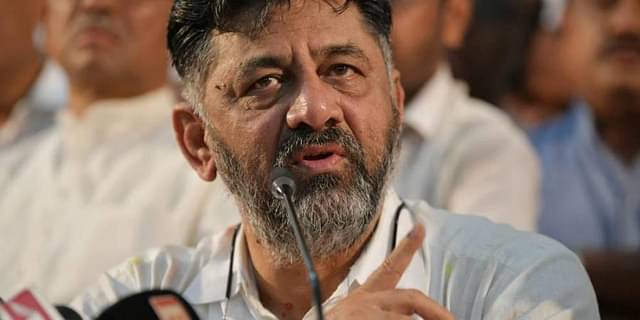
Karnataka Pradesh Congress Committee (KPCC) president D.K. Shivakumar on Saturday said his party would oppose the proposed anti-conversion Bill, arguing that it was aimed at targeting the Christian community.
-
Speaking to mediapersons after launching a membership drive of the party here, he said the anti-conversion Bill would come in the way of attracting investment and development of the State.
-
The Government had been attempting to undermine the contributions of the Christian community in education and other fields by proposing such a Bill, he alleged. The BJP Government was planning to introduce the Bill with an eye on the Assembly elections 2023. “In whatever form the Government introduces the Bill, we will oppose it,” the KPCC chief said.
-
Provisions to punish
The proposed Bill would have provisions to punish the accused involved in forced conversions and make a declaration before a magistrate ahead of religious conversions mandatory. The law would empower authorities to conduct a police inquiry, if needed, sources pointed out.
A couple of days ago, Minister for Panchayat Raj and Rural Development K.S. Eshwarappa hit out at Mr. Shivakumar, saying the BJP had decided to introduce anti-conversion Bill to preserve and protect Indian culture.
Earlier, Mr Shivakumar launched the membership drive through a virtual meeting with senior leaders. The membership drive was taken up from 2000 different locations in the state. AICC general secretary in-charge of Karnataka Randeep Singh Surjewala, former Chief Minister Siddaramaiah and other leaders participated.

KEY STORY
-
Union Health Minister Mansukh Mandaviya on Friday said out of the total 157 newly approved medical colleges in the country’s backward areas, only 70 institutes have become functional till date.
-
“Health is a state subject, and primary responsibility to ensure availability of public health facilities lies with the state government. However, the Ministry of Health and Family Welfare administers a Centrally Sponsored Scheme for ‘Establishment of new Medical Colleges attached with existing district and referral hospitals’ with preference to under-served areas and aspirational districts where there is no existing government or private medical college,” he said in the Parliament.
-
This step will help to improve the healthcare delivery system in these areas. In this scheme, the Central government has approved establishment of 157 new medical colleges in three phases. Out of these, 70 medical colleges have become functional till date.
-
Answering another question on the steps taken by the Centre for making healthcare facilities affordable for patients, he said: “To provide affordable and quality tertiary health care facilities, the government is setting up new All India Institute of Medical Science (AIIMS) and upgrading Government Medical Colleges under the Pradhan Mantri Swasthya Suraksha Yojana. The state governments are also supported for setting up of new medical colleges as well as for increasing undergraduate and postgraduate medical seats.”
CONCLUSION
-
“Further, under the National Health Mission (NHM), technical and financial support is provided to states and union territories for strengthening their healthcare systems upto district hospital level, based on the proposals submitted by them in their Program Implementation Plans (PIPs), subject to availability of resources. NHM adopts a health system approach and targets to build a network for public health facilities with health and wellness centres at the grassroot level and district hospitals, with robust referral linkage, to offer comprehensive primary and secondary care services to citizens,” the minister added.

KEY STORY
-
The State Government, in an order issued on Friday, has said that it will go with post-based classification while recruiting civil servants and thereby put an end to the vacancy-based classification. This means that if there is any direct recruitment or promotion in any cadre, then the classification to fill the vacancy will be done as per post-based criteria.
-
The posts that fall vacant upon retirement, resignation and untimely death of a civil servant cannot be filled by direct recruitment, and instead, will be filled through promotion. And, if a post held by a direct recruit falls vacant, it must be filled through direct recruitment only.
-
The order further states that by December 31 every year, a preliminary seniority list of the civil servants should be prepared. After inviting objections for the same, a final list should be ready by March 31 in the upcoming year. This will improve the chances of the government employees getting promotion by 25 to 30 per cent, it noted.
-
“The government’s decision will do away with the imbalance in the classification of posts based on vacancies for direct recruitment and promotions. With the announcement of a seniority list every year, it will also prevent administrative hiccups”, remarked Karnataka State Government Employees’s Association president C S Shadakshari, while welcoming the order.
-
“Vacancy-based classification has been found causing injustice to promotees. Hence, there was a long-pending demand from the Association to consider it. The government has responded to it positively. The post-based classification leads to the rational classification of vacancies and provides justice to both direct recruits and promotees”, remarked Narasimharaju, an office-bearer.
CONCLUSION
-
As regards the Karnataka Administrative Service cadre, a separate Government Order was issued in 2016 to consider classification of posts of that cadre as per post-based criteria. Later, direct recruits of KAS cadre had questioned the decision of the government before the KSAT tribunal and the case is pending.
-
The government’s decision to consider the post-based classification criteria for all cadres may have its bearing on the decision, observed a KAS officer.
KEY STORY
-
The State Government has amended the rules on providing education scholarships to children of farmers. With the changes, children of farmers can avail the ‘Mukhyamantri Raitha Vidya Nidhi Scholarship’ even if they are getting other scholarships.
-
As per the order issued on Friday, based on the data available with the various departments, the government will identify students eligible for the Mukhyamantri Raitha Vidya Nidhi Scholarship and provide them with financial assistance for higher education.
-
Applications submitted by students will also be considered for the scholarship in which money will be transferred directly to their bank accounts. For the purpose of the scheme, a farmers’ family means a family registered with the e-governance department’s ‘kutumba’ app, the order stated.
-
The Mukhyamantri Raitha Vidya Nidhi Scholarship was announced by Bommai soon after he took over as CM, to help farmers’ children pursue higher education. He had announced that Rs 1,000 crore will be set aside for this scheme.
KEY STORY
-
The government has taken several steps to address the challenges of user harm and hateful information available on social media platforms, Parliament was informed on Friday.
-
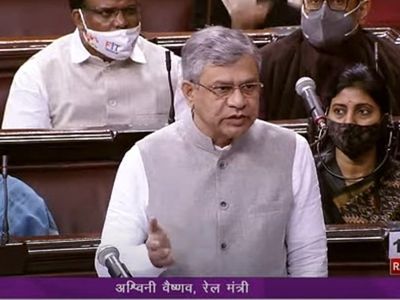
Minister of Electronics and IT Ashwini Vaishnaw, in a written reply (starred question) in the Rajya Sabha, also stated the ministry has taken note of reports based on a whistleblower’s statements about Facebook and its alleged role in circulation of hate speech, fake news and misinformation.
-
He was responding to a question on whether the government has noticed reports regarding “adversarial harmful networks – India case study” released by the Facebook whistleblower.
-
“The Ministry has taken note of such news reports based on a whistle blower’s statements regarding Facebook. The whistle blower referred to in such articles has attributed amplification of extreme views to algorithmic promotion,” he said.
-
The minister stated that these news reports also refer to the apparent bias of significant social media platforms like Facebook for alleged circulation of hate speech, fake news and misinformation and Facebook’s alleged negligence in deployment of adequate algorithmic measures in controlling these unwarranted circulations.
-
There have been allegations that Facebook’s system fuelled hate speech and fake news after Frances Haugen, an employee of the company’s integrity team until May 2021, leaked tens of thousands of internal documents.
-
On Friday, Vaishnaw said the government has taken several steps to address the challenges of user harm and hateful information on social media platforms.
-
In order to ensure accountability of social media platforms to users and enhanced user safety, the government in February notified the Information Technology (Intermediary Guidelines and Digital Media Ethics Code) Rules, 2021 under the IT Act, 2000.
CONCLUSION
-
These rules require that the intermediaries follow certain due diligence as prescribed, he said.
-
“MeitY through a program, namely, Information Security Education and Awareness (ISEA), has been creating awareness among users highlighting the importance of following the ethics while using Internet and advising them not to share rumours/fake news.
-
“A dedicated website for information security awareness provides all the relevant awareness material,” he added.

KEY STORY
-
The government unveiled its plans to privatise 25 airports over the next five years under the National Monetization Pipeline (NMP), said Minister of State for Civil Aviation (Gen. (Dr) VK Singh in a written reply to Lok Sabha on Thursday.
-
As per NMP, 25 (Airport Authority of India (AAI) airports have been earmarked for asset monetization over the years 2022 to 2025 namely Bhubaneshwar, Varanasi, Amritsar, Trichy, Indore, Raipur, Calicut, Coimbatore, Nagpur, Patna, Madurai, Surat, Ranchi, Jodhpur, Chennai, Vijayawada, Vadodara, Bhopal, Tirupati, Hubli, Imphal, Agartala, Udaipur, Dehradun and Rajahmundry.
-
The MoS said the airports were selected as they met conditions for monetisation which stipulate annual traffic above 0.4 million passengers in FY 2019 and 2020 and a sizeable ongoing, proposed capes plan as per the National Infrastructure Pipeline (NIP).
-
According to Singh’s reply, all but four airports out of the country’s 137 were profitable in the pandemic year 2020-21. He was responding to MP Mimi Chakraborty’s query whether 136 AAI airports made profits or losses in the last 3 financial years.
-
Singh said that except Kandala (0.11 crore), Kanpur Chakeri (6.07 crore), Bareilly (0.68 crores) and Porbandar (1.54 crores) all other airports suffered huge losses.
-
Additionally, management, operations and development of 13 more airports including Tamil Nadu’s Tiruchirappalli International Airport will be done on Public-Private Partnership mode.
-
“The Airports Authority of India (AAI) has identified Tiruchirappalli (Trichy) International Airport in Tamil Nadu among 13 airports for operations, management and development of the airports through Public Private Partnership (PPP) mode in public interest and for better management of the airports,” said MoCA in a statement.
-
“Even after bringing these airports under PPP mode of operations, AAI will remain the owner of the airports and all these airports will revert to AAI once the Concession Period is over,” it added.
-
AAI has recently awarded 6 airports Ahmedabad, Jaipur, Lucknow, Guwahati, Thiruvananthapuram, Mangaluru for operations, management and development under PPP for a period of 50 years.
CONCLUSION
The airport body under MoCa’s Directorate General of Civil Aviation (DGCA) owns 136 airports in the country out of which, AAI has formed joint venture in 7 airports.
The 7 airports include Indira Gandhi International Airport (26%), Chhatrapati Shivaji Maharaj International Airport, Mumbai (26%), Rajiv Gandhi International Airport, Hyderabad (13%), Kempegowda International Airport, Bengaluru (49%), Kannur International Airport, Kannur (7.47%), Chandigarh Airport, Chandigarh (51%).
KEY STORY
-
The state government on Friday issued a discharge policy for recovered Covid patients with the Omicron variant. State Health Commissioner D Randeep instructed the district and BBMP health authorities to follow the discharge policy ‘for the institutionally isolated Covid-19 (Omicron variant) patients until further orders.’
-
In mild, moderate and severe cases (including immunocompromised HIV patients, transplant recipients, malignancy), the patient can be discharged after 10 days of symptom onset if there is no fever, breathlessness or any other symptom for the last three consecutive days before discharge without antipyretics (drug used to prevent or reduce fever).
-
The patient has to maintain saturation above 95% for the last four consecutive days without oxygen support. There should be resolution of clinical signs and symptoms based on the report of investigations.
-
Patients should undergo repeat tests for inflammatory markers like S Ferritin, S.LDH, D-Dimer, and CRP at the time of discharge. These should be in the normal range or decreasing trend. Patients shall be discharged only after two negative RT-PCR reports 24 hours apart. If the report is positive, the swab test shall be repeated after 48 hours.
-
At the time of discharge, the patient shall be advised to quarantine himself at home and self-monitor health for further seven days. The district surveillance officer (DSO) shall follow up these persons at their homes for their health status. They shall be followed up by the tele-monitoring team in the community and by using the quarantine app.
-
In home quarantine, RT-PCR is repeated on the sixth day of home quarantine, if negative, patients can be released from home quarantine. All patients advised home quarantine after discharge need to watch for onset of any new symptoms like fever, cough, breathlessness, chest pain, weakness, etc. If any of these are found, they are immediately advised to consult the doctor/physician.
-
If there’s no facility for home quarantine, institutional quarantine is advised.
CONCLUSION
-
Since the circular does not mention Omicron suspects who are awaiting genomic sequencing results, Dr K Ravi, Professor of Medicine, and Chairman of the State Covid-19 Clinical Expert Committee clarified to DH saying, “Even Omicron suspects who test Covid positive at the airport will be sent to designated hospitals. If they test Omicron positive, they will stay back at the hospital, if they test negative, the existing protocol for other Covid patients will apply in which asymptomatic patients need not be hospitalised.”
-
Any deviation from the discharge policy will be viewed seriously, said Randeep in his order dated December 9. The state government has so far identified only two designated hospitals for Omicron patients: Wenlock Hospital in Mangaluru and Bowring and Lady Curzon Hospital in Bengaluru.

KEY STORY
-
India’s civil aviation regulator, the DGCA, on Thursday extended the ban on scheduled international commercial flights till January 31.
-
Earlier, India had announced plans to allow resumption of scheduled commercial international passenger services from December 15 with certain conditions.
-
However, on December 1, the Directorate General of Central Aviation (DGCA) said it is “closely monitoring” the situation emerging out of the Covid-19’s Omicron variant and the final decision on the resumption of near normal international flight operations will be taken after consultation with stakeholders.
-
In the notification on Thursday, the DGCA extended the ban on scheduled international commercial flights till January 31, 2022.
-
“This restriction shall not apply to international all-cargo operations and flights specifically approved by the DGCA.”
CONCLUSION
-
It also said that scheduled international flights might be allowed on selected routes on a case to case basis.
-
India had banned the operation of international flights on March 23 last year to contain and control the spread of Covid-19. Flight restrictions, however, were later eased under air bubble arrangement with certain countries.
1...447448449...884Page 448 of 884