Teachers find no need to cut II PU syllabus

KEY STORY

  • The chances of reducing syllabus for the pre-university course now seem less as teachers are confident of completing it within the stipulated time.
  • Following the decision by the department of primary and secondary education to cut down class 10 syllabus by 20%, there was a demand from the stakeholders, including students of the commerce and arts streams, to reduce the II PU syllabus.
  • But teachers working with PU colleges in the state say there is no need to reduce the syllabus and they can complete it by mid-March.
  • Prof Ninge Gowda, president of the Karnataka State Pre-university College Teachers Association, told DH, “We lost 15 to 20 working hours per subject and that doesn’t make a big difference as the majority of us are conducting classes on Saturdays and Sundays to compensate for the same.”
  • According to faculties teaching science subjects, reducing the syllabus will impact students planning to take up competitive examinations like NEET, JEE and KCET.
  • “The competitive examinations will be based on the II PU syllabus. Moreover, this year, the central boards have not announced syllabus cuts. So, there is no need to reduce the syllabus in the state,” said a teacher in the science stream working with a private college in Bengaluru.
  • However, sources from the department said discussions were on at the high level on reducing syllabus, fearing the third wave.


Omicron virus: India expresses solidarity with Africa, assures Made in India COVID vaccines, medical equipment

KEY STORY

  • The Ministry of External Affairs on Monday assured all help to African countries to deal with the new COVID variant Omicron. The government announced that it would not only continue to supply the COVID vaccines under the COVAX agreement, but also send supplies of ‘Make in India’ vaccine doses.
  • Assuring full support to the African nations in view of the Omicron threat, the Indian government also announced to send medicines, test kits, gloves, PPE kits and other medical equipment to tackle the COVID pandemic.
  • The MEA informed that Covishiled vaccine doses have already been sent to Malawi, Ethiopia, Zambia, Mozambique, Guinea and Lesotho through COVAX. The Centre further informed that it has also cleared the export of indigenous Covaxin to Bostwana.
  • The external affairs minister informed that India has so far supplied more than 25 million doses of Made-in-India vaccines to 41 countries in Africa, including nearly 1 million doses as grant to 16 countries and more than 16 million doses under the COVAX facility to 33 countries.
  • Here’s what MEA said in its statement:
“We have noted the emergence of a new variant of Covid-19, Omicron. We express our solidarity with the countries, particularly in Africa, who have so far been affected by the Omicron variant.
The Government of India stands ready to support the countries affected in Africa in dealing with the Omicron variant, including by supplies of Made-in-India vaccines. Supplies can be undertaken through COVAX or bilaterally. In this regard, the Government has cleared all orders placed so far by COVAX for supplies of COVISHIELD vaccines including to African countries like Malawi, Ethiopia, Zambia, Mozambique, Guinea and Lesotho. We have also cleared supplies of COVAXIN to Botswana. Any new requirement projected either bilaterally or through COVAX will be considered expeditiously.
India also stands ready to supply essential life-saving drugs, test kits, gloves, PPE kits and medical equipment such as ventilators, as may be required. Indian institutions would favourably consider cooperation in genomic surveillance and virus characterization related research work with their African counterparts.”

Sample of South Africa returnee ‘different from Delta’ variant of COVID: Karnataka health minister

KEY STORY 

  • India has not reported any case of the Omicron variant of coronavirus yet but the Karnataka health minister Monday said the sample of one of the two recent South Africa returnees appears “different from the Delta variant”, even as experts stressed vaccines remain a critical tool.
  • The WHO said it is “not yet clear” if the newly-detected variant is more transmissible or causes more severe disease, but authorities across states in India ramped up efforts to deal with the evolving situation.
  • Civil Aviation Minister Jyotiraditya Scindia said the situation is being closely monitored in consultation with other ministries regarding “any further decision” on resuming scheduled international passenger services.
  • A senior Central government official said in Delhi no case of the new variant has been detected in the country, but results of genomic analysis of positive samples of international travellers are being expedited.
  • In Maharashtra’s Thane, a 32-year-old Merchant Navy engineer who tested positive for coronavirus after returning from South Africa has been kept in isolation and his sample sent for genome sequencing.
  • The result will be known after seven days, Kalyan Dombivli Municipal Corporation’s (KDMC) epidemic control officer Dr Pratibha Panpatil said.
  • Karnataka Health Minister Dr K Sudhakar, meanwhile, said the sample of one of the two persons who arrived in Bengaluru recently from South Africa appears “different from the Delta variant”, the currently dominant strain.
  • “There is a 63-year-old man whose name I should not disclose. His report is a bit different. It appears different from the delta variant. We will discuss with the ICMR officials and will let people know by the evening what it is,” the minister said.
  • Experts Monday said the Omicron variant carries “concerning” mutations that may make it more transmissible and allow it to evade immunity, but stressed vaccines are still a critical tool.
  • The B.1.1.529 Covid variant, first detected in South Africa last week, was designated by the World Health Organisation as a Variant of Concern (VOC).
  • Public policy expert Chandrakant Lahariya noted that Omicron has around 50 mutations. Of these, 32 are in spike proteins, which the virus uses to enter the human cells, and 10 are mutations of high relevance.
  • “These include H655Y, N679K and P681H mutations which potentially increase the transmissibility. The mutations R203K and G204R are being considered to be associated with higher infectivity. Similarly, there are deletions at NSP6, which could result in immune escape,” Lahariya, also a physician and epidemiologist, told PTI.
  • Immunologist Satyajit Rath added that the emergence of the new variant suggests that “we need to stop treating the Covid pandemic as a short-term crisis that needed short-term measures but has already passed”.
  • “I would guess that it will probably turn out to be very good at spreading, it will likely not cause more severe disease, current vaccines will probably show some reduction in their potency against it but will not be ‘ineffective’, and current drugs will quite likely work well against it,” Rath told PTI.
  • Upasana Ray, a senior scientist at Kolkata’s CSIR-Indian Institute of Chemical Biology (IICB), agreed.
  • “The most important tool against this variant is to follow COVID-19 appropriate health guidelines and getting vaccinated. Vaccines should provide at least partial protection against progression of the infection to severe COVID,” Ray told PTI.
  • In Chandigarh, a 39-year-old resident who returned from South Africa has been home quarantined even as the authorities dismissed as “rumours” anyone having tested positive for the new variant.
  • “He was RT-PCR negative on his arrival at the airport. He was quarantined at home on his arrival in Chandigarh,” an official statement said.
  • It further said another RT-PCR test has been conducted on the person on November 29.


Omicron Symptoms: What We Know Explained In 5 Points

KEY STORY 

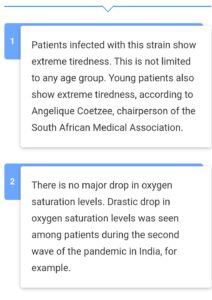
Doctors in South Africa, where a new coronavirus variant of concern ‘Omicron’ has been found, have been studying symptoms of this new strain on COVID-19 patients and they have now made certain observations.

             Symptoms of Omicron variant:


Govt issues fresh guidelines for India arrivals amid Omicron fears: New rules explained in five points

KEY STORY

  • The Centre on Monday has announced a revised set of guidelines for international travellers amid renewed fears over a new Covid variant ‘Omicron’ – classified as a variant of concern by the World Health Organisation.
  • All international passengers must submit 14 days’ travel history and upload negative Covid test results on the government’s Air Suvidha portal, the government said. The new guidelines will come into effect from December 1, 2021.
  1. Every international passenger coming to India has to fill a self-declaration form and show a negative RT-PCR test report. They can’t enter India if any of these two conditions are not fulfilled.
  2. Following the arrival from ‘at risk’ countries, the travellers will have to wait for their test results at arrival airport before leaving or taking a flight. If the test is found negative, they will have to to quarantine for 7 days. On the 8th day, a second test will be conducted and passenger will have to self monitor for 7 days if tested negative.
  3. Passengers testing positive shall be managed at a separate isolation facility and their samples should be sent to INSACOG, added the guidelines. Contacts of positive patients will be kept under institutional or hone quarantine.
  4. The government in its guidelines mentioned it clearly that all arriving passengers will have to undergo the same protocol — as applied for passenger form ‘at risk’ and non-risk countries. However, the facility for online registration is not available for such passengers currently. The passengers will have to submit the self-declaration form to the concerned authorities of Government of India at seaports or land ports on arrival.
  5. According to the new document, all new passengers — planning to travel — must submit a self-declaration form on the online Air Suvidha portal before the scheduled travel, including last 14 days travel details. Also, they will have to upload a negative COVID-19 RT-PCR report in the portal, which should have been conducted within 72 hours prior to undertaking the journey. The traveller will also have to submit a declaration with respect to authenticity of the report and will be liable for criminal prosecution.

Is Omicron More Contagious? What Top Scientist Said In 5 Points

KEY STORY

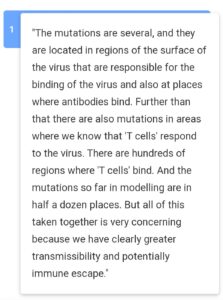
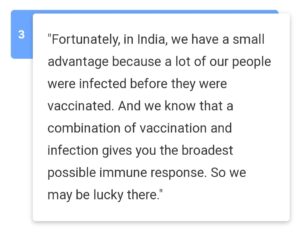
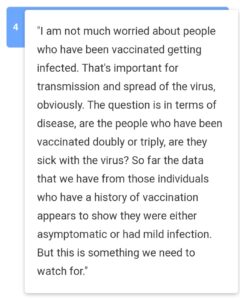
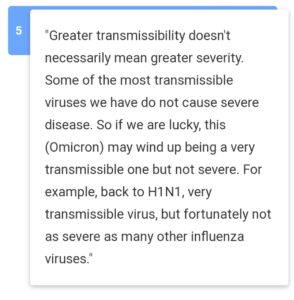
  • India’s top biomedical scientist Dr Gagandeep Kang explains what could be the factors that make the new coronavirus strain, Omicron, a variant of concern. Omicron has more mutations than any other variant seen in the past, Dr Kang told NDTV.

Here are 5 key points on Omicron from Dr Gagandeep Kang:


Don’t shift ISRO project to Gujarat: Karnataka Congress chief DK Shivakumar to PM Modi

KEY STORY

  • KPCC president DK Shivakumar on Sunday urged Prime Minister Narendra Modi to drop the proposal to shift ISRO’s Indian Human Space Flight programme from Bengaluru to Gujarat. Shivakumar has written separate letters to Modi and Chief Minister Basavaraj Bommai.
  • “The Indian Human Space Flight programme was initiated by ISRO in 2007 to develop technology needed to launch a crew-based orbital spacecraft into low-earth orbit as part of its Gaganyaan project,” Shivakumar said in his letter to Modi.
  • “The agency planned the first manned crew flight in 2003 on homegrown GSLV rocket. If completed on schedule, India will become the fourth nation to launch an independent space flight after the US, Soviet Union (Russia) and China. It is a prestigious and epoch-making project. People of Karnataka are proud of this institution because it is located in Bengaluru,” he added. In his letter to Bommai, he said, “Kannadigas are basically emotional people and get attached to national programmes and feel proud when Karnataka hosts such programmes. Kannadigas are shocked and severely hurt to know that there are plans to shift this prestigious programme to Gujarat.”
  • “If it happens, the Kannadigas will feel that the Centre is ignoring, betraying and giving scant respect to the feelings of the people of Karnataka. There is outrage over stepmotherly treatment being meted out to Karnataka by the Centre in several spheres. The move will cause adverse effects on consolidation of the federal system in the nation,” he added.
  • He urged Bommai to take a delegation of Karnataka MPs to the Centre. “Use your good office to explain the above to the PM and ensure that the self-respect of Kannadigas is upheld,” he urged Bommai.

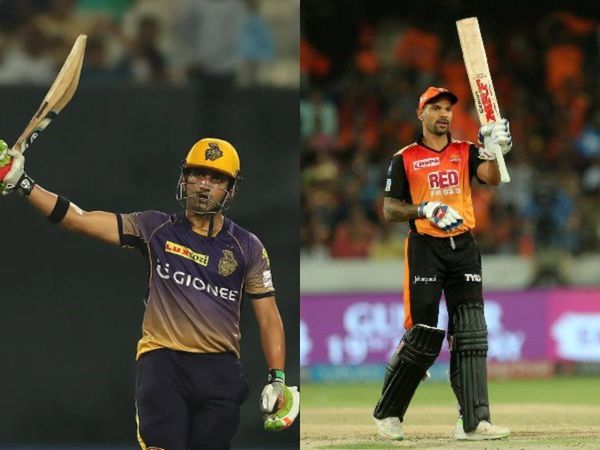
From Gautam Gambhir to Shikhar Dhawan: 5 times franchises surprisingly released mega stars before IPL auctions

KEY STORY

  • The 8 IPL franchises are gearing up to submit the list of the retained and released players to the BCCI and they have 24 hours left to make the last-minute changes. The BCCI has set the last date to submit the list of players on November 30. Since there’s a mega auction this time, a team will only be allowed to retain a maximum of 4 players.
  • There’s no guarantee of the team managing to buy back its former players. Hence, they will have to release players after much deliberations and talks. Before the IPL franchises declare the names of retained and released players, we revisit past IPL seasons and have a look at 5 surprising releases in history –
    Gautam Gambhir
    Kolkata Knight Riders (KKR) decided to overhaul their squad and only retained 2 players in 2018. The team management made a bold call and decided against retaining captain Gautam Gambhir, who had led the side to 2 IPL titles. Under Gambhir, KKR emerged as a force and also made it to the 2nd round consistently.
    They had also cleared the group stage in 2017 but the management moved on from Gambhir and released the two-time IPL-winning captain. The franchise hasn’t won an IPL trophy since 2014. Gambhir moved to Delhi Capitals in 2018 and retired from the game later that year.
    Shikhar Dhawan
    Despite his success and consistency for the team, Sunrisers Hyderabad (SRH) opted to release Shikhar Dhawan before the IPL 2018 mega auction. The left-handed batsman had scored 479 runs in 14 matches while striking at 127.39 in IPL 2017. But SRH only retained two players and let go of the opening batsman.
    The release didn’t mark an end to his SRH’s career as the franchise bought him for Rs 5.2 crore in IPL 2018 auction. Dhawan moved on from SRH after 2018 and joined Delhi Capitals.
    Rashid Khan
    Playing his maiden IPL season in 2017, Rashid Khan showed his mastery with the ball and scalped 17 wickets in 14 matches, while maintaining an economy rate of 6.62. Despite his heroics, SRH decided against retaining him before the auction.
    But he was always in the team’s plan and the franchise retained him in the auction for a mega amount of Rs 9 crore. Considering that the franchise always wanted him, the move to release him was a big surprise.
    David Warner
    Delhi Daredevils (now known as Delhi Capitals) didn’t use to back players in the first few seasons and they went on to release the likes of Gautam Gambhir, Andre Russell, Shikhar Dhawan and many others. One of the players released was David Warner, who would go on to lead Sunrisers Hyderabad with utmost success.
    Warner, who was part of DC from 2009 to 2013, was back in the auction in 2014 as DC decided against retaining any plyer. Warner had fixed his spot in the previous season and had scored 410 runs in 2013. But DC released him. The move turned out to be a boon for Warner as he joined SRH in 2014 and was named their captain in 2015.
    Chris Lynn
    The KKR team management backed Chris Lynn to the hilt in IPL 2017 and decided against sending him back home even when he sat out of action for almost a month. But come IPL 2018 auction, the management released him while retaining 2 overseas players.
    They did buy him back in the auction but a huge amount of Rs 9.6 crore. Given the backing that he received, the move to release Lynn was a big surprise.

Covid: India revises guidelines for international travellers amid Omicron variant scare

KEY STORY

  • As more countries announce travel restrictions over the detection of new variant of Covid-19 Omicron, the Union Health Ministry on Sunday revised its guidelines for international arrivals in India.
  • The Centre has mandated submitting 14 days travel details and upload negative Covid (RT-PCR) test results on Air Suvidha portal before the journey. The new rules will come into effect from 1 December till further orders. The revised guidelines will supersede earlier ones issued on and after 11 November.
  • The travellers from ‘countries at-risk’ will need to take Covid-19 test post-arrival and wait for results at airport, the Health Ministry has said.
  • If the test is negative, they’ll follow home quarantine for 7 days, re-test on the 8th day and if negative again, further self-monitor for the next 7 days, the ministry’s statement read.
  • The government also said that travellers from countries excluding those ‘countries at risk’ will be allowed to leave the airport and shall self-monitor health for 14 days.
  • “A sub-section (5% of total flight passengers) shall undergo post-arrival testing at random at the airport on arrival,” the statement said.
  • A declaration with respect to the authenticity of the Covid-19 test report will also be required, manipulated reports will make the passenger liable for criminal prosecution.
  • The existing guidelines have been revised in view of the Covid variant Omicron (B.1.1.529), which has been now classified as a Variant of Concern by the World Health Organization, the Health Ministry said.
  • As per the revised guidelines, before boarding passengers originating from or transiting through at-risk countries shall be informed by the airlines that they will undergo post-arrival testing, quarantine if tested negative, stringent isolation protocols if tested positive, etc.
  • Do’s and Don’ts shall be provided along with ticket to the travellers by the airlines/agencies concerned and airlines will allow boarding of only those passengers who have filled in the self-declaration form on the Air Suvidha portal and uploaded the negative RT-PCR test report.
  • This test should have been conducted within 72 hours prior to undertaking the journey.
  • At the time of boarding the flight, only asymptomatic travellers will be allowed to board after thermal screening and all passengers shall be advised to download Aarogya Setu app on their mobile devices.
  • “Travellers from specified countries at risk will follow the protocol as detailed below: Submission of sample for post-arrival COVID-19 test at the point of arrival (self-paid). Such travellers will be required to wait for their test results at the arrival airport before leaving or taking a connecting flight.
  • “If tested negative they will follow home quarantine for 7 days. Re-test on the 8th day of arrival in India and if negative, further self-monitor of their health for next seven days,” the guidelines stated.
  • However, if such travellers test positive, their samples should be sent for genomic testing at the INSACOG laboratory network.
  • They shall be managed at separate isolation facility and treated as per laid down standard protocol, including contact tracing, and the contacts of such positive case should be kept under institutional quarantine or at home quarantine monitored strictly by the state government concerned.
  • The nations (at risk updated as on November 26, 2021) from where travellers would need to follow additional measures on arrival in India include European countries, the UK, South Africa, Brazil, Bangladesh, Botswana, China, Mauritius, New Zealand, Zimbabwe, Singapore, Hong Kong and Israel.
  • Children under five years of age remain exempted from both pre- and post-arrival testing. However, if found symptomatic for Covid-19 on arrival or during home quarantine period, they shall undergo testing and treated as per laid down protocol.

CONCLUSION

  • As per the guidelines, contacts of the suspect case are the co-passengers seated in the same row, three rows in front and three rows behind along with identified cabin crew.
  • Also, all the community contacts of those travellers who have tested positive during home quarantine period would be subjected to quarantine for 14 days and tested as per ICMR protocol.
  • International passengers arriving through seaports/land ports will also have to undergo the same protocol, except that facility for online registration is not available for such travellers currently.

Omicron: 10 restrictions Karnataka has imposed amid new variant concerns

KEY STORY

  • Bringing back , the Karnataka government has declared an all-out fight amid apprehension of the new Covid variant, Omicron, first identified in South Africa. The Union health ministry has alerted all states and Union territories to be alert, to increase testing and the monitoring of the hotspots.
  • The decision to resume international flights from December 15, which was earlier announced by the civil aviation ministry, is being reviewed. While all the states are scaling up efforts to assess the situation and take action when there is time, the new variant sent Karnataka into a tizzy as over 1,000 people have come to the state from South Africa.
  • The government said all have been tested and their samples have been sent for genome sequencing. Two Covid positive cases spread fresh concern in the state, while later it was confirmed that those were of Delta variant and not of Omicron. The state government has asked the Centre to ban passengers coming from the affected countries. The state has also sought booster doses of vaccines from the Centre.
The state government has put in place several restrictions in the wake of the new Covid variant being reported from other countries.
1. People coming from Omicron-affected countries will have to take mandatory RT-PCR after landing in Bengaluru. If they are found positive, they will have to stay in and around the airport.
2. All schools, colleges, educational institutes have been asked to postpone all kinds of public events.
3. Negative RT-PCR is mandatory for those travelling to Karnataka from Kerala and Maharashtra.
4. Students who have travelled to the state from Kerala 16 days ago have to undergo RT-PCR test again.
5. Students from Kerala staying in hostels, who have got a negative RT-PCR test report, would have to get the tests done again on the 7th day after the first report.
6. Stringent checks have been put in place on the areas bordering Maharashtra and Kerala.
7. Two doses of vaccination have been made mandatory for those working at government offices, malls, hotels, swimming pools and theatres.
8. All medical and nursing colleges have been alerted to increase testing of students.
9. For the MLC elections on December 10, no big public meeting will be allowed.
10. Two Covid cluster zones have been identified in Bengaluru and Dharwad. All positive cases in these two clusters will undergo genome sequencing to find the variant.

Will there be another lockdown in Karnataka?

The chief minister has made it clear that at this stage, the directions are advisory. If required, more stringent measures might be taken, depending on the situation, the chief minister has said. There will be restrictions over Christmas and New Year celebrations too, following the direction of the chief minister, an official said. Separate directives will be issued regarding that.