Karnataka Monsoon Session from September 12: floods, graft charges give Oppn ammo against govt

Highlights
The monsoon session of the state legislature begins on Monday, as Opposition parties up the ante against the government over its apparent failures in dealing with floods in different parts of the state and cases of alleged corruption that have dogged the government.
The ruling BJP, which is on the defensive, has also chalked out a strategy to corner the opposition Congress by announcing to initiate probes against cases of corruption during Siddaramaiah’s tenure as chief minister.
The 10-day session is expected to go on till September 23. The Opposition parties are likely to continue their demand for a judicial probe into allegations of corruption levelled by the Karnataka State Contractors’ Association.
HomeStateTop Karnataka Stories
Karnataka Monsoon Session from September 12: floods, graft charges give Oppn ammo against govtCongress has demanded a White Paper from the government on encroachments cleared by BBMP and infrastructure woes in the city

DHNS
DHNS, Bengaluru,
SEP 11 2022, 23:44 IST UPDATED: SEP 12 2022, 07:15 IST
Workers spruce up the Vidhana Soudha ahead of the legislature session that begins on Monday. Credit: DH Photo
The monsoon session of the state legislature begins on Monday, as Opposition parties up the ante against the government over its apparent failures in dealing with floods in different parts of the state and cases of alleged corruption that have dogged the government.
The ruling BJP, which is on the defensive, has also chalked out a strategy to corner the opposition Congress by announcing to initiate probes against cases of corruption during Siddaramaiah’s tenure as chief minister.
Also Read: Corruption charges, rain havoc, Bengaluru’s infrastructure likely to make Karnataka legislature session stormy
Check out DH’s latest videos
The 10-day session is expected to go on till September 23. The Opposition parties are likely to continue their demand for a judicial probe into allegations of corruption levelled by the Karnataka State Contractors’ Association.
While the government under Basavaraj Bommai has rubbished the allegations as politically motivated, it has provided enough fodder for the Opposition parties to target the government.
The flooding witnessed in parts of Bengaluru due to heavy rainfall over the last fortnight is also expected to feature prominently in discussions during the session.
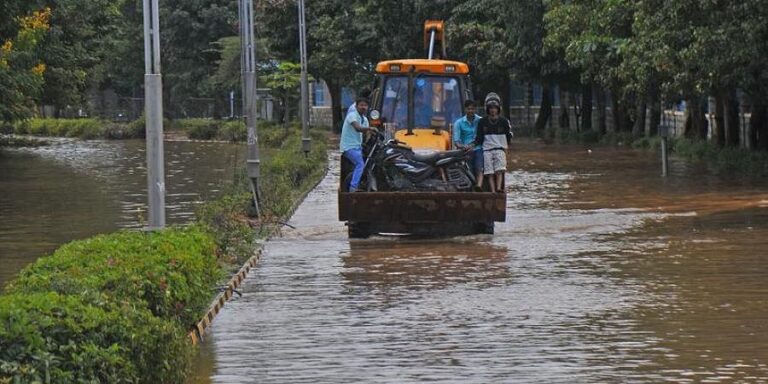
The ruling and Opposition parties have blamed each other for floods along the Outer Ring Road that resulted in estimated damages worth Rs 250 crore to IT firms, apart from losses faced by various apartments and layouts due to waterlogging.
Congress has demanded a White Paper from the government on encroachments cleared by BBMP and infrastructure woes in the city.
Communal flare-ups
Communal flare-ups in parts of the state over the last two months are also expected to feature during debates in both houses of the legislature.
Murders in Dakshina Kannada district, repeated communal incidents in Shivamogga district, Idgah maidan row, controversy over saffronisation of textbooks are also expected to be discussed during the short monsoon session.
The government will also introduce a few bills, including the one on managing Bengaluru’s traffic effectively.

Karnataka: Lokayukta flags lack of staff, infra in hospitals

Highlights
  • Teams of officials from the Karnataka Lokayukta to Vani Vilas Hospital in the city found that there is a staff crunch, which is impeding the service to patients. There are two nurses who are looking after 60 in-patients, which is causing trouble for newborn babies and patients in post-natal care.
  • The Lokayukta report stated that lady doctors are over-stressed and burdened as they have to also examine the victims in Pocso cases. The same doctors also continue the night shifts, and so, there is ineffective handling of in-patients and OPD patients.
  • There is no dedicated staffer for medical examination of Pocso and rape victims, the report said. The team also pointed out other issues like stinking toilets, shortage of space for storing medicines, water seepage through walls, rusted steel cots, overcrowding.
Ghosha Hospital
The team also made a surprise visit to the Ghosha Hospital in Shivajinagar, and found out that there was a staff crunch also, with no proper provisions for OPD patients to wait. Patients were seen standing outside the hospital building. Construction debris was found on the hospital premises, with dust covering the hospital which could be harmful for the newborn babies.
At Sanjay Gandhi Institute of Trauma and Orthopedics, the team found out that there is no proper check on the quality and quantity of the food being prepared and supplied in the canteen by a private contractor. Meanwhile, Lokayukta Justice BS Patil has initiated suo motu proceedings against the authorities concerned, and directed them to take the required remedies.
Vani Vilas Hospital
In OBG Dept, working strength is 59 as against 77 sanctioned (teaching and non-teaching)
Among all groups, only 53 staffers are working as against 413 sanctioned
Frequent theft of mobile phones, jewellery, etc
No police outpost
Ghosha Hospital
Among all groups, 55 are working as against 95 sanctioned
Services of outsourced nursing staff utilised
They quit without notice without immediate replacement
Sanjay Gandhi Institute of Trauma and Orthopedics
Among all groups, 146 are working as against 583 sanctioned.

Karnataka rains: Transportation comes to halt as six bridges submerge in Krishna river

Highlights
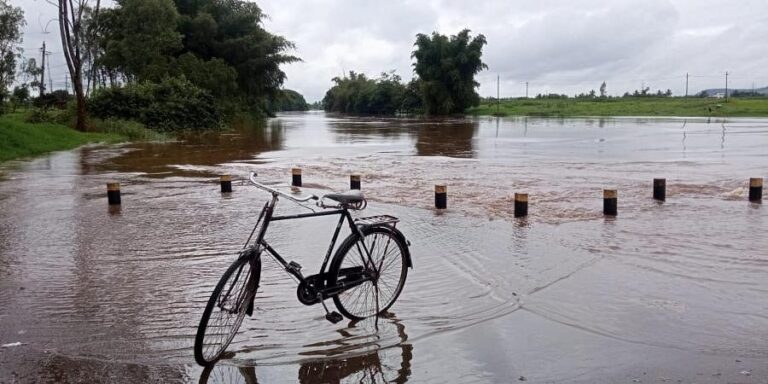
As rains continue to lash the district, six bridges on the Krishna river and its tributaries have submerged under water.
Alert to villages situated on the river bank as water inflow increases
The Hidkal reservoir on the Ghataprabha river and Navilteerth reservoir in the Belagavi district have almost reached their full capacity. On Sunday, about 20,000 cusecs of water were released into the Ghataprabha river. Officials have indicated that the levels would be increased if heavy rains continued.
Similarly, the water inflow to the Malaprabha river was about 4,000 cusecs on Sunday. Officials issued an alert that the Inflow to Malaprabha Dam is increasing and the dam is attaining full capacity. Hence, outflow to the Malaprabha river will be gradually increased from the present 1,500 cusecs to 4,000 cusecs depending on inflow.
Six bridges under water 
Six bridges in Chikkodi, Nippani and Hukkeri taluk near the Krishan river basin have submerged in water. The bridges situated between Akkol-Sidnal, Kunnur-Bojwad, Kunnur-Borwad, Bhivashi-Jatrat villages in Nippani taluk submerged while Lolasur bridge in Gokak taluk, Hukkeri-Yarnal bridge in Hukkeri taluk has submerged in the river water. As precautionary measures, the police officials have closed these roads with barricades and deployed policemen to prevent any mishap.
Wall collapses
A 55-year-old woman died after a wall collapsed on her on Sunday in the wee hours at Hulikatti village of Savadatti taluk.

The deceased woman is identified as Gangawwa Ramanna Moolimani (55), a resident of Hulukatti village of Savadatti taluk. The wall of the old house owned by Moolimani collapsed on Sunday around 4 am, when she was asleep. Severely Injured Moolimani was shifted to the hospital for treatment, but she was declared dead by the doctors till she was taken to hospital. Saundatti police station have registered a case.

Karnataka farmer dies as out-of-control car hits two scooters

Highlights
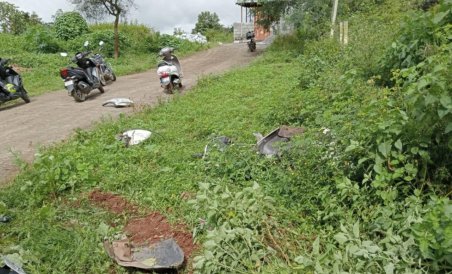
  • A 50-year-old man was killed and three others, including two children, were injured after a car hit two scooters at K Gollahalli Village near Kumbalgodu off Mysuru Road, on Friday morning.
  • Kaggalipura police said the car with five first-year BBA students from a private college in Jigani, including two women, lost control of the four-wheeler at 8.45 am near K Gollahalli village when the driver Vijay tried avoiding a motorbike coming in the opposite direction.
  • The car hit the first scooter with Giriyappa, a farmer from Kulle Gowdanapalya, and tossed it outside of the road. Giriyappa and two children from his village — Yogitha, 10, and Charitha, 8, — who were riding pillion with him were injured.
  • The farmer was taken to a nearby hospital where he succumbed to his injuries.
  • Yogitha and Charitha had fractured their legs, while Lathesh, riding the other two-wheeler that the car had hit, has injuries all over his body. All three are getting treated at the hospital and are not out of danger, a senior police officer said.
  • Students escape unhurt
  • The five classmates in the car, all aged 19, were heading to Manchanabele Dam. The two women travelling in the car had left the accident spot before police could arrive. None of the five students sustained injuries.
  • Police have impounded all three vehicles involved in the accident. Vinod, a Kanakapura native, possessed a driving licence and tested negative for alcohol and drugs, a senior police officer said.

Karnataka teacher accused of throwing hot water on boy for urinating in class

Highlights
  • A teacher in Raichur district has been accused of throwing hot water on a class 2 student for urinating in class.
  • The boy, studying in Ghanamateshwar Mutt’s school in Santekellur village of Maski taluk, is recovering from burn injuries at a local hospital.
  • District Women and Child Welfare Department officials visited the school and collected information from the parents at their house Mittikellur village.
  • Though the boy’s father Venkatesh claimed the boy was hurt after hot water from the solar water heater accidentally fell on him when he entered the bathroom, Women and Child Welfare officials have asked the police to conduct an enquiry. The incident is said to have occurred on September 2 but came to light only on Friday.
  • Venkatesh said he has not lodged a police complaint.
  • Maski sub-inspector Siddaram Bidarani said a complaint has been registered and investigation will be launched. District child protection officials had lodged a police complaint.

Finally, Karnataka government shuts down ACB

Highlights
  • The Basavaraj Bommai administration on Friday issued an order formally winding up the Anti-Corruption Bureau (ACB) and transferring all its cases to the Lokayukta.
  • The executive order issued by the vigilance wing of the Department of Personnel & Administrative Reforms (DPAR) came nearly a month after the High Court dissolved the ACB.
  • The government order restores the powers of the Lokayukta police under the Prevention of Corruption Act and the Code of Criminal Procedure (CrPC) by giving life to relevant notifications that were issued in 1991 and 2002.
  • All pending investigations and private complaints will be “completely transferred” to the Lokayukta, the order said.
  • On August 11, the High Court abolished the ACB, formed by the state government in 2016 by withdrawing the Lokayukta police wing’s power under the Prevention of Corruption Act. The formation of the ACB was criticised as an attempt to defang the Lokayukta, which was powerful in dealing with corruption.
  • The ruling BJP had promised in its 2018 election manifesto that it would restore the powers of the Lokayukta, which meant that the ACB had to be closed down.
  • Earlier this week, Lokayukta Justice BS Patil told DH that he was waiting for action by the government. He said that Lokayukta police across the state had started registering cases.

New Karnataka coastal plan will ruin ecology: Activists

Highlights
  • The dilution of restrictions in the coastal zone management (CZM) plans of Karnataka, recently approved by the Centre, will not only damage the coastal ecosystem but effectively hand over the coastal commons to corporate companies at the cost of the livelihood of fishing communities, warned conservationists and activists.
  • Karnataka’s CZM plans were drawn up by the National Centre for Sustainable Coastal Management, Chennai, to exploit the relaxations provided in the Union government’s new notification for Coastal Regulation Zone (CRZ) issued by the Centre in 2019.
  • “We have held public hearings in each of the three districts before finalising the CZM plans. The new plans lift the blanket restrictions on the 300 km coastline to help boost tourism in the coastal area to help people,” a senior official and member of the board told DH.
  • Marine ecologist Prakash Mesta questioned the government’s claim and noted that the public hearing in Uttara Kannada was conducted in the office of the deputy commissioner without creating any awareness among the people who are most affected by the new rules.
  • “Let alone fishermen, even an educated villager finds it difficult to visit the DC’s office amid his work. The officials issued a notification in a newspaper and conducted a hearing . The fishing community and the lakhs of villagers who depend on the coast for their livelihood were never part of this consultation process,” he said.
Major relaxations
The new plan incorporates the suggestion to reduce the application of CRZ regulations from 100 metres to 50 metres measured from the high tide line (HTL) towards the land. Development activities, which were once banned within 200 metre of the HTL, can be taken up as near as 50 metres from HTL in places where the population density is more than 2,161 per sq km.
Former chairman of Karnataka Biodiversity Board Anant Hegde Ashisar noted that the relaxations have come at a time sea erosion has emerged a major concern across the world due to global warming.
“In the coastal districts, encroachment near beaches is already a menace. Once you make it a commercial zone, there is nothing else to project. The new plan is the last straw for the mangroves in Uttara Kannada. Karnataka should have enhanced the protection of the 2011 rules, not abandon it this way,” he said.
The CZM plan of Karnataka provides protection for 11 of the 12 eco-sensitive coastal areas. The official said that one ESZ has been excluded due to the absence of the necessary physical conditions like the mud flats. “Even for the other areas, the plans incorporate the prohibition of activities recommended by the Centre. The temporary tourism activities include setting up the stalls, washrooms, shower rooms, drinking water facilities and other least intrusive structures,” he explained.
Mesta said the increased activity will drastically affect fish breeding, crab diversity besides the general ecology of the coast. “The government is doing this in the middle of the news of disasters linked to climate change within the borders of Karnataka. Let them consult the real stakeholders like fishermen and rural folk. They will come to know the ground realities,” he added.
Activist Dinesh Holla said the government’s idea of development was aimed at helping the top two companies in the country get all natural resources.” In Western Ghats, people lost their natural resources and got disasters in return. In Mangaluru, we are already seeing the corporatisation of the coastal area. With the new rules, people will see the beaches fenced by big corporates in the name of development,” he added.

Karnataka: Poor admissions in 170 govt colleges as efforts to improve quality fail

Highlights
  • At least 170 state-run degree colleges have failed to attract students notwithstanding the government’s efforts to improve quality of education, data shows.
  • Though the department of collegiate education has extended the last date for first year/semester undergraduate courses admissions till September 15, the admissions so far at several government degree colleges is poor, with some of them failing to fill up even 50% of the seats.
  • Of the 430 government first grade colleges, 171 colleges have failed to cross an intake of even 100 for the 2022-23 academic year.
  • Principals of the colleges and the faculty blame the unified university college management system (UUCMS), through which admissions are mandatory this year.
  • According to principals, specially of colleges in rural areas, the students are not familiar with online mode.
  • “We have opened help desk to help students upload documents online. Despite that, we were able to admit only 40% of the overall intake,” said the principal of a college in Mangaluru.
  • Department officials said it is premature to consider these admissions as final.
  • “We have to wait for the II PU supplementary results and also for KCET admission process to get over. The admissions will improve after that,” said a senior official from the department.
  • But officials admitted that admissions at some of the colleges in Kalyana Karnataka region and Kodagu were in single digits.
  • “These colleges witnessed single digit admissions even in the past few years and there were also discussions to shift those colleges. But considering the interest of students, we dropped the idea,” an official said.
Poor results in arts
Officials also blamed poor results in arts stream in II PU exams this year. “The demand for commerce and BCA courses is high and exceeds availability of seats,” he said.
Eleven evening colleges started by the government have recorded single digit admissions and officials say the admissions will pick up after the II PU supplementary results.

Grand celebration marking 3rd anniversary of BJP government in Karnataka begins

Highlights
  • In a major show of strength, the Bharatiya Janata Party in Karnataka on Saturday organised a programme celebrating three years of the party’s rule in the state, at Doddaballapura in Bengaluru Rural district.
  • The event, named ‘Jana Spandana’ (public response), is also an occasion to mark Chief Minister Basavaraj Bommai’s one year in office. According to Bommai, two lakh people from various parts of the state are participating in this event. Union Minister for Woman and Child Welfare Smriti Irani is also participating in this event, he said.
  • The celebration was supposed to be held on July 28 when Bommai completed one year as Chief Minister. However, due to the murder of Bharatiya Janata Yuva Morcha leader Praveen Nettaru in Dakshina Kannada district on July 26, the government decided not to postpone the celebrations. The day Nettaru was hacked to death allegedly by a group of Muslim youth happened to be the third anniversary of the BJP government in Karnataka.
  • The incident triggered massive outrage from BJP workers and various right-wing organisations compelling the government to defer the celebrations.
  • Besides Chief Minister Bommai, BJP strongman B S Yediyurappa, party’s state president Nalin Kumar Kateel, ministers in the government including Health Minister K Sudhakar, who is an MLA from Chikkaballapura, are among the prominent people attending the event.
  • A party worker said 5,000 buses have been arranged to ferry the party workers, supporters and well-wishers. Large number of people thronged the venue. Elaborate security arrangements have been made to avert any untoward incident.
  • Many cooks have been toiling since early morning to feed the massive crowd that would turn up here. The event assumes significance as the state assembly elections are expected to be held next year.

‘Target Siddaramaiah’: Karnataka BJP launches poll charge

Highlights
  • The ruling BJP, which flaunted its poll preparedness with a massive ‘Janaspandana’ rally at Doddaballapur here Saturday, went after Leader of the Opposition Siddaramaiah, indicating the saffron party’s approach as election heat rises in poll-bound Karnataka.
  • Addressing a 2-lakh-strong crowd, top BJP leaders, including Chief Minister Basavaraj Bommai, targeted Siddaramaiah and accused him of presiding over scams when the Congress was in power.
  • This made it evident that the BJP views Siddaramaiah, arguably the biggest mass leader in the Congress, as a threat in its bid to retain power by winning 150 seats.
  • In a fierce speech, Bommai said the “real face” of Congress will be out in the days to come. “(Siddaramaiah) keeps talking about the Anna Bhagya scheme. The poor used to get 30 kg rice for Rs 3. You brought it down to 7 kg. For two years, you gave only 4 kg. Again, for elections, you raised it to 7 kg. The rice came from Modi, only the bag was yours,” he said, aiming at Siddaramaiah’s flagship rice scheme.
  • “There was a scam in Anna Bhagya. [IAS] officer Anurag Tiwari, who was investigating it, died mysteriously in Uttar Pradesh. This is a mirror to your ‘clean’ administration,” Bommai said.
  • “You also ran a big sand business. You sanctioned 36,000 borewells for farmers on a single day without selecting beneficiaries. You did a scam in giving bed sheets and pillows to SC/STs. You did a big (denotification) scam in the BDA Arkavathy scam. The list is long…scam in giving laptops. In minor irrigation, you billed Rs 40,000 crore without any work. And, you accuse us of percentage? Yours was a 100 per cent (commission) government,” Bommai said.
  • He also said the Siddaramaiah government sat on recruitment scams involving the police and teachers.
  • BJP state president Nalin Kumar Kateel said 3,000 farmers died by suicide under the Siddaramaiah government. “Some 24 Hindu workers died and cows were slaughtered. And, whose side did (Siddaramaiah) take on Hijab?” he asked.
  • The blistering attack on Siddaramaiah came more than a month after the Congress leader’s massive birthday bash that drew lakhs of people is said to have rattled the BJP.
  • BJP national general secretary CT Ravi said the Justice HS Kempanna Commission report on Arkavathy denotification should become public. Even BJP veteran BS Yediyurappa criticised Siddaramaiah.
  • Bommai declared that Congress won’t get a second chance. “People have seen your maladministration,” he said, adding that the ‘double-engine’ government will prove itself worthy for people. “We’ll hold Janaspandanas across the state, make the lotus bloom again. If you have guts, try stopping us,” Bommai hollered. “All your scams will be exposed soon.”

‘Bharat Jodo Yatra’ in Karnataka starts on September 30

Highlights
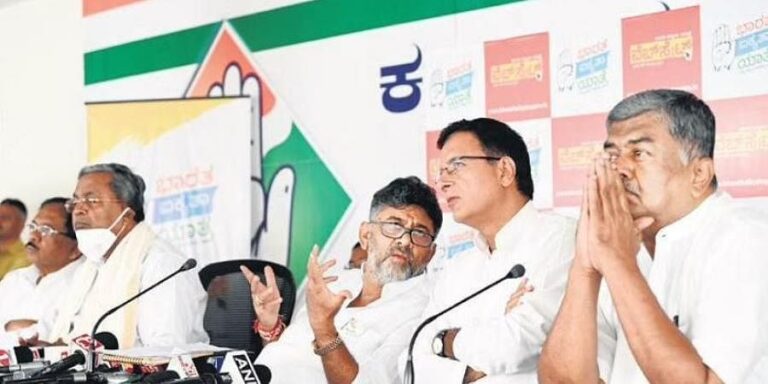
  • The Karnataka phase of Bharat Jodo Yatra will begin from September 30 and will take a two-day break as it falls during Dasara, said Congress Legislature Party leader Siddaramaiah, KPCC president DK Shivakumar, party national General Secretary Randeep Surjewala and Council opposition leader BK Hariprasad on Friday.
  • An online registration portal was launched on Friday for people, irrespective of their political affiliations, to take part in the rally. Over one lakh people, 76,000 of them aged below 35, registered on Independence Day. Food, lodging and other necessities of the yatris will be taken care of during the rally, they said.
  • The yatra is to ensure that the country becomes a “garden of peace for all people”, in contrast with the present BJP government, which is spreading the poison of division and disharmony, they said. The other objectives are fighting price rise, unemployment, freeing Karnataka of  corruption and improving the lot of farmers and the poor, they added.
  • Different sections of people, including workers, farmers, women, SCs and minorities, will be given an opportunity to interact with senior party leader Rahul Gandhi, who is leading the yatra, during afternoon breaks. They explained that Rahul’s interactions with forest dwellers at Biligiriranga Hills helped bring the Forest Settlement Act.
  • With the horror of floods still fresh in people’s minds, a special committee has been set up to collect the opinions and views of Bengalureans over the next 15 days. The committee will be headed by PCC working president Ramalinga Reddy and comprise former minister Krishna Byregowda and former mayor Padmavathi.

Highest rain in 51 yrs, Karnataka releases excess water to TN

Highlights
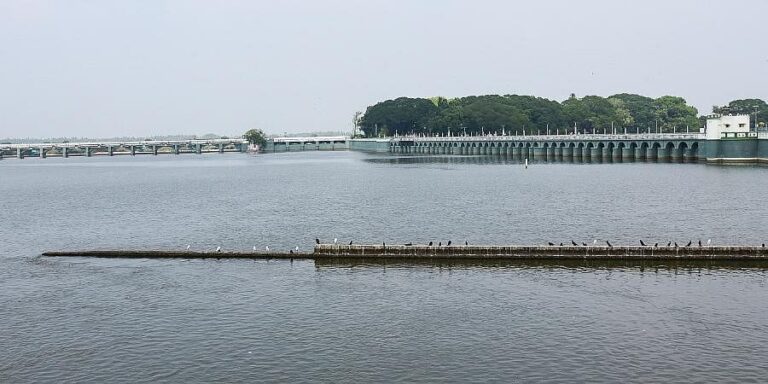
  • The state has received 22% excess South West Monsoon rainfall from June 1 to August 31, which is the highest in 51 years. With all reservoirs in the Cauvery basin full, the state has released 47 tmcft excess Cauvery water for the entire water year (June to May) to Tamil Nadu during the same period, which is the highest in 48 years.
  • Karnataka received 844 mm of average rain during South West Monsoon in three months, as against the average  691 mm (in 30 years), the highest since 1971, during the period. Also, 224 tmcft of Cauvery water has already been released to Biligundlu reservoir in Tamil Nadu in the said period, which is the highest since 1974. “The state was supposed to release 177.25 tmcft of water for the entire water year as per the final order of the Cauvery water dispute tribunal, but has released 47 tmcft excess water to Tamil Nadu”, Manoj Rajan, Director, Karnataka State Disaster Management, said.
  • During this period, the state received 8% deficit rain in 2021 and 6% excess rain in 2020. From July 1 to August 31, the state received 40% excess rain, which is the highest in 50 years. South and North Interior Karnataka and Malnad received excess rain of 151%, 50% and 32% respectively, in these two months.
226% excess rain in B’luru
This month alone (Sept. 1 to 9), the state received 142% excess rainfall (average of 101 mm rainfall as against the normal 42 mm rainfall) and Bengaluru alone received 226% excess rainfall (average of 143 mm of rainfall as against normal rainfall of 44 mm).
All four reservoirs in the Cauvery basin, including Harangi, Hemavathi, KRS and Kabini, can hold 104 tmcft of live storage and 114 tmcft of gross storage of water.
If there is a balancing reservoir at Mekedatu, 67 tmcft of surplus Cauvery water that flows downstream can be stored whenever there is excess rainfall. With no balancing reservoir in the downstream and having good rainfall, the state has been releasing excess water to Tamil Nadu than its actual share since 2019.

Rain and flood havoc in different parts of Karnataka

Highlights
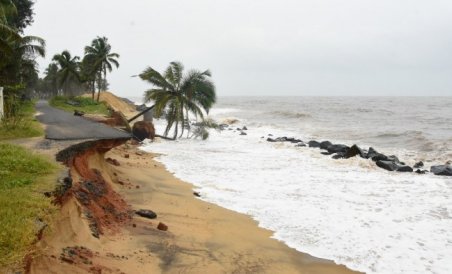
  • Like the state capital Bengaluru, torrential rains have caused havoc in different parts of Karnataka, with overflowing rivulets and floods affecting normal life, and causing damage to life and properties.
  • Acres of agricultural land, number of houses, several bridges, kilometres of roads are either washed away or inundated by flood water in several parts of north and south interior Karnataka.
  • There are reports about a farmer in Bagalkote district being washed away in flooded Malaprabha river and a woman losing her life due to a wall collapse in Ballari district. Livestock deaths have also been reported from several areas.
  • Parts of districts like Dharwad, Chitradurga, Vijayapura, Ballari, Haveri, Vijayanagara, Chitradurga, Hassan, and districts of Mysuru region like Kodagu, Chikkaballapura, Kolar, Chamarajanagara and Mysuru have also been hit by torrential rains, and several rivers in these districts are overflowing causing damage to crops and houses.
  • Meanwhile, the Inter-Ministerial Central Team (IMCT) headed by Home Ministry’s Joint Secretary Ashish Kumar, which is visiting Karnataka to take stock of the rain and flood havoc in the state, is touring various districts.

Bengaluru rains: Central team reach Kodagu to assess flood damages

Highlights
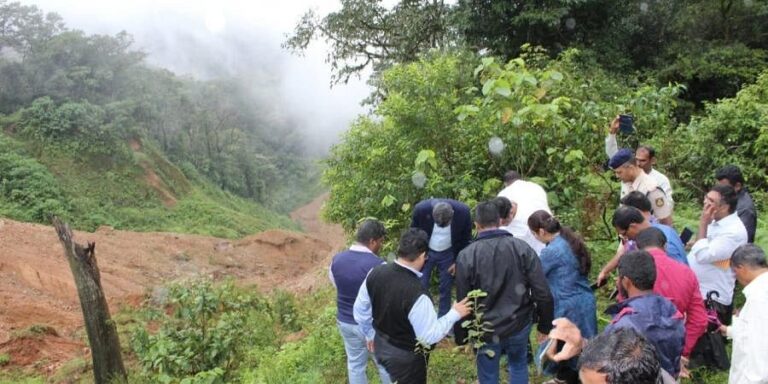
  • The central team visited several rain-affected places in Kodagu on Wednesday evening. While the district has assessed the rain damage loss at Rs 83.93 crore, the central team’s assessment report will determine the relief funds that will be released to the district.
  • The team led by Dr Manoj Rajan, commissioner of the Karnataka State Disaster Management Authority (KSDMA) visited the affected places mostly in North Kodagu limits including Madenadu, Koyanadu and Sampajea areas.
  • The officials also observed the damage to National Highway 275 at Kartoji. The team will also be visiting the rain-affected places in other districts and a detailed assessment report will likely be submitted in the coming week.
  • While the central team officials confirmed that a study on landslide is being conducted by Amrita University, the same has not witnessed any progress in Kodagu. According to an official, a team from the University visited the district in June for a day and they inspected a couple of places to determine if they can conduct a study of landslides using improved technology. However, as per the official, no proper study of the landslide was conducted by the team.
  • “The central team has assessed the damages across rain-affected areas in the district. A report in this regard will be submitted to the state home ministry and compensation will be released under NDRF accordingly. Dr Manoj Ranjan has stated that he will study the preliminary reports submitted by GSI and Amrita University to make a comprehensive report,” confirmed DC Dr BC Sateesha.

Health dept survey indicates 75.38% of children were infected with COVID-19

Highlights
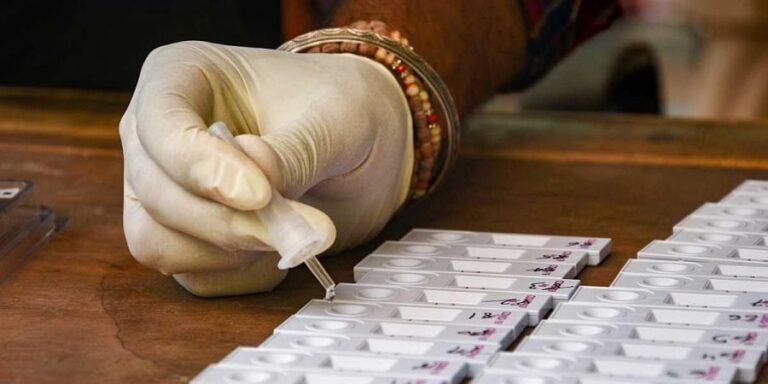
  • A survey by the health department has revealed how vulnerable the children were to COVID-19, as it is revealed that over 75 percent of the children who were surveyed were found to be exposed to or infected with COVID-19 previously.
  • The health department has released the much-awaited report of the COVID-19 pediatric sero survey, “Assessing the burden of COVID-19 in children aged 6 to 14 years in Karnataka, a cross-sectional survey”, conducted by the State Surveillance Unit of the department from June 6 to 14, based on the recommendations of Covid Technical Advisory Committee (TAC).
  • The IGG (Immunoglobin G, a type of antibody, which indicates previous infection or vaccination) Test conducted on 5,358 non-vaccinated children has indicated that 75.38% of children were exposed to or infected with COVID-19 virus earlier. The exposure/infection rate among girls was 77.83% while it was 73.02% among boys.
  • During the study period, only 13.23% (709) of the children were symptomatic and the rest were asymptomatic. Among 5,278 valid samples, only two were positive for RTPCR including one symptomatic from Udupi and one asymptomatic Chitradurga. The genomic sequence among children positive for RTPCR, sublineage of Omicron variants BA5 was found in symptomatic and BA2.10 was found among those asymptomatic.
  • Among 584 symptomatic but covid negative children sent for an ILI panel of tests (Influenza A, Influenza B, H1N1, H3N2, RSVA and RSVB) to know the incidence of other influenza infections, as many as 32 (6.44%) of them were found positive of Influenza A, H1N1 and one (0.2%) was found positive for Influenza B.
  • The study was conducted at 232 health facilities in 38 units across the state including BBMP (which was subdivided into 8 units). It was done among 5,358 non-vaccinated children (50.9% boys and 49.1% girls) including 31% aged between 6-8 years, 35.8% between 9-11 years and 33.2% between 12-14 years. 33.3% were from urban slums, 38.3% from rural areas and others from urban non-slums. In all, 93.5% were school-going children.
Division-wise infection rate:
Urban slums – 77.02%
Rural slums – 71.98%
Urban non-slums – 77.96%
76.81% of children were asymptomatic and 65.85% of children were symptomatic.
The highest infection rate among Chikkamagaluru kids
While 74.44% of the children tested in Bengaluru were found to be exposed to or infected with the virus earlier, the highest infection rate was recorded in Chikkamagaluru, as all children tested there were found to be exposed/infected before.

Pay minimum wages or face action, Karnataka government warns departments

Highlights
  • Karnataka’s Labour Department has issued a circular to all departments, public sector undertakings, universities, boards and corporations to pay salaries to the housekeeping staff, security guards, manual scavengers and other contract staff as per the latest minimum wages fixed by the government, failing which action will be initiated against those responsible.
  • The circular stresses on minimum wages to be paid to the workers who are working on a contract basis for various government and government undertaking agencies and follow the guidelines issued on working hours, leave, payment of ESI and Provident Fund. The guidelines should also be followed by agencies that supply manpower to these departments.
  • These include security personnel hired through security agencies, and scavengers working with urban local bodies and the panchayat raj department. Officials say that despite the guidelines, the department is receiving complaints from various sectors on minimum wages not being paid or delay in payment. “Agencies that do not fall in line will be blacklisted”, said a senior official from Labour Department.
  • The state government revised minimum wages for 82 categories that come under working class which include agriculture labourers, tailors, scavengers, gardeners and weavers. The minimum wages are fixed once in five years. This year, it was done in the last week of July. As per the latest revision, it varies from Rs 14,000 to Rs 18,000 per month.
  • The circular stresses on eight-hour working hours. If the employers extract work less than eight hours a day, they have the provision to pay wages on an hourly basis. If the workers are made to work for more than eight hours, they should be paid more for every extra hour. Also, in a month, workers should be given leave for four days. If the employers make the workers work on their days of leave, they should be compensated.
  • The circular adds that the salaries/wages should be paid by the 5th of every month. Also, the employer should pay their share of ESI and Provident Fund to the workers every month and records of the same should be maintained. Employers have also been directed to adopt a bio-metric attendance system for their workers.

Exams, results major cause of anxiety among school students: NCERT survey

Highlights
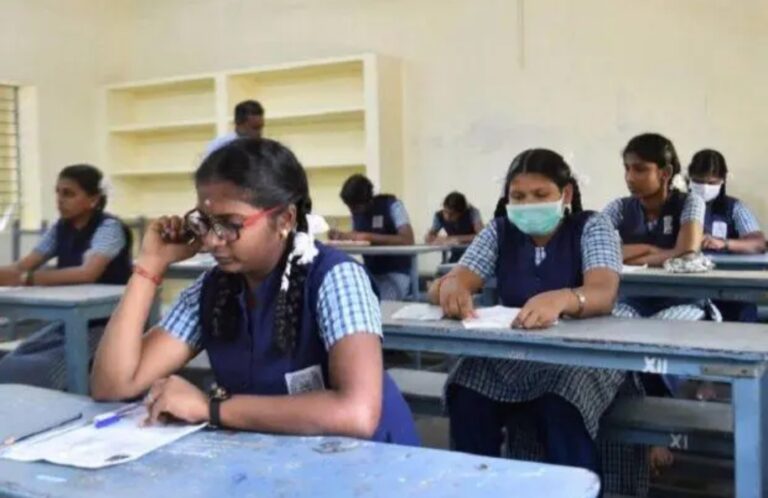
  • Studies, examinations, and results are major causes of anxiety among school students while over 33 percent comply with peer pressure most of the time, a survey on mental health and well-being of students by NCERT said.
  • The survey reported that at least 73 percent of students are satisfied with their school life, while over 45 percent of students are not satisfied with their body image.
  • A total of 29 percent of school students lack concentration, while 43 percent of students between classes 6 to 12 have mood swings.
  • The National Council of Educational Research and Training (NCERT) surveyed over 3.79 lakh students from 36 states and UTs.
  • The Manodarpan Cell of the NCERT undertook the task of conducting the survey to help understand the perceptions of school students on aspects related to their mental health and well-being. It collected information from students across gender and grades — middle state (6-8) and secondary stage (9 to 12) between January to March 2022.
  • Anonymity of participants was ensured by making the name column optional, allowing students the comfort, privacy and independence to respond, the NCERT said.
  • ”Decline in satisfaction with personal and school life is seen as students shift from middle to secondary stage. The secondary stage is marked by challenges of identity crisis, increased sensitivity towards relationships, peer pressure, fear of board examination, anxiety and uncertainty experienced by students for their future admissions, career etc,” the survey report released on Tuesday said.
  • The focus of the survey was on the aspects known to contribute to the mental health and well-being of students. It explored students’ perceptions about their own self and how they think others view them in the context of feelings, academics, relationships, peers, managing emotions, handling challenging situations etc as these are important determinants that impact mental health, the NCERT said.
  • The survey found that 81 percent of respondents attribute studies, exams, and results as major causes of anxiety.
  • As many as 43 percent of the total respondents admitted being able to quickly adapt to changes and the response of students at the middle stage (46 percent) was higher than students at the secondary stage (41 percent).
  • A total of 51 percent of students face difficulty in learning online while 28 percent of the respondent students are hesitant in asking questions, as per the survey.
It found that ”yoga and meditation, attempts to shift the way they think and writing journals were reported as frequently adopted strategies by students for coping with stress”. Trusting others is another aspect looked into as it helps in relating with others, forming social connections, and enhances the quality of relationships, the NCERT said.
A total of 27 percent of the students reported that they frequently trust people, the survey said.
Lower percentage of students’ responses at both the middle stage (27.4 percent) and secondary stage (26.5 percent) reflects lower trusting ability among students of both stages.
Exploring the contentment of students with personal and school life indicates higher satisfaction towards school life in comparison to personal life. Findings show encouraging trends as researches suggest that students’ sense of belonging to school has an influence on their academic engagement. Higher school engagement leads to higher academic achievement and a reduced likelihood of students dropping out of school, the NCERT said.
The spread of COVID-19 pandemic impacted different aspects of life in several spheres, resulting in changes in routine, lifestyle, and the ways in which we interact with others, it said.
The survey also covered the emotions experienced by students, especially during the unprecedented times of COVID-19, the attempts of continuing teaching-learning online, and the challenges experienced by students.
The focus of the survey was on the aspects known to contribute to the mental health and well-being of students. It explored students’ perceptions about their own self and how they think others view them in the context of feelings, academics, relationships, peers, managing emotions, handling challenging situations, etc as these are important determinants that impact mental health, the NCERT said.

Puttur: KSRTC bus conductor suspended for manhandling, kicking inebriated passenger out of bus

Highlights
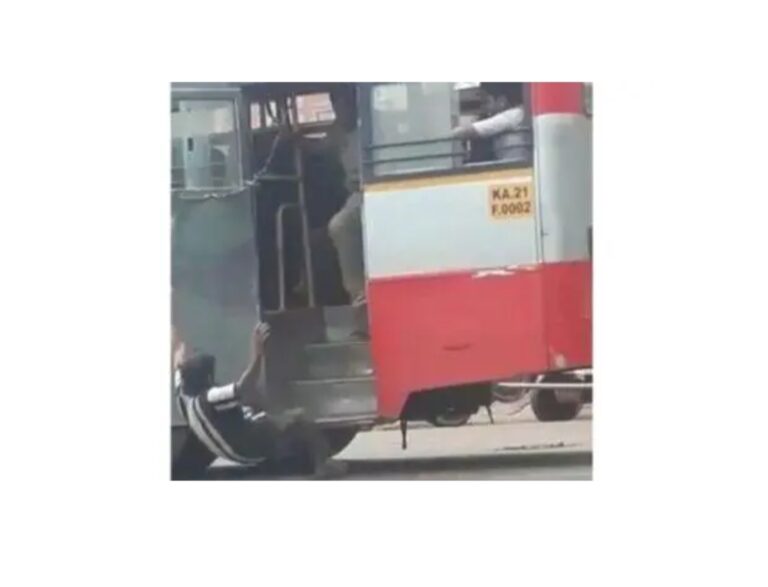
  • A KSRTC bus conductor has been suspended after a video of him manhandling a bus passenger and kicking him out of the bus at Eshwaramangala in Puttur taluk here went viral on social media.
  • The incident took place on Wednesday, September 7 evening at the KSRTC bus depot in Puttur.
  • Reportedly, the conductor identified as Sukhraj Rai tried to stop the passenger, who was said to be in an inebriated state, from boarding the bus. However, when the man managed to force his way in, Rai grabbed the passenger’s stuff and threw it out of the bus. He then assaulted and kicked him out of the bus.
  • When the passenger fell on the road, Rai instead of helping him signaled the driver to start the bus. Few bystanders recorded this incident which has now gone viral.
  • Meanwhile, KSRTC Puttur divisional controller Jayakar Shetty asserted that the conductor’s actions were inappropriate and he has been suspended after ascertaining the facts.

D K Shivakumar’s promise to Bengaluru sets off speculation again

Highlights
  • Karnataka Congress president D K Shivakumar’s personal promise to the citizens of Bengaluru that he would restore Bengaluru’s glory has ended up in political tittle-tattle and is seen as his bid to project himself as the party’s chief ministerial face.
  • “Bengaluru’s serious flooding problem is being reduced to memes on social media should make us hang our heads in shame. Once hailed for infrastructure, Bengaluru has been reduced to a joke. Come 2023, I promise to put an end to all this & restore Namma Bengaluru to its former glory,” Shivakumar asserted in a tweet.
  • The tweet had a screenshot of a news article on Bengaluru’s flood situation in The Washington Post.
  • This could be viewed as Shivakumar’s continuing attempt to pitch himself as the CM face should the Congress win the 2023 Assembly election, putting him up against Leader of the Opposition Siddaramaiah who is also eyeing a second chance at the top job.
  • After Siddaramaiah’s massive 75th birthday bash at Davangere last month, Shivakumar publicly projected himself as a “Vokkaliga CM”.
  • In May 2021, the Karnataka Congress’ official Twitter handle tweeted that the Covid-19 pandemic would have been under control if Shivakumar was the CM. The tweet was deleted, but not before ticking off the Siddaramaiah camp.

Karnataka HC restores complaint against former CM Yeddyurappa over alleged corruption case

Highlights
  • Observing that there is no need for the previous sanction for the special court to order an investigation under Section 156(3) of the CrPC, the Karnataka High Court on Wednesday restored the private complaint against former chief minister BS Yeddyurappa for allegedly accepting bribe.
  • The High Court has also directed the Special Court to proceed from the state of post-presentation of the private complaint, it added.
  • Justice S Sunil Dutt Yadav passed the order while partly allowing the petition filed by social activist TJ Abraham challenging the rejection of a private complaint by the special court on July 8, 2021.
  • Abraham had approached the special court to take cognisance of offences against nine persons including Yeddyurappa, his son BY Vijayendra and some of their family members and Minister ST Somashekar or order for an investigation into the charges of accepting a bribe of Rs 12.5 crore to get a project to Ramalingam Construction Company Private Limited from the Bangalore Development Authority (BDA).
  • Though the special court had observed that no doubt, there are some materials to refer the complaint for investigation under Section 156(3) of CrPC but rejected the complaint saying that there was no previous sanction.