Ease COVID restrictions after analyzing local situation: MHA to States

KEY STORY

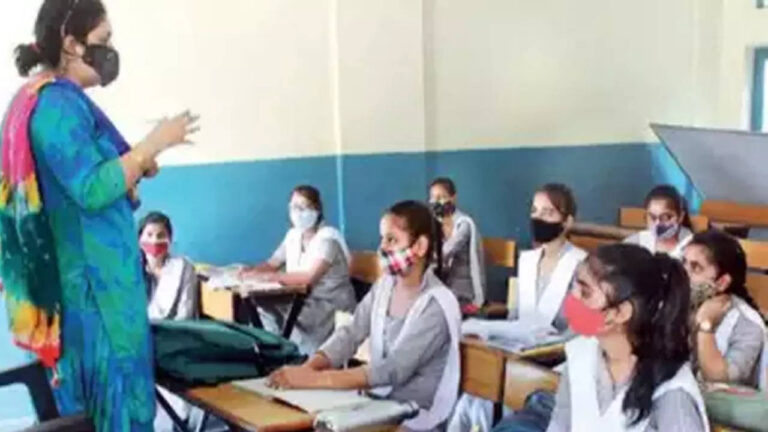
  • Amid a significant dip in COVID-19 cases in the entire country, the Ministry of Home Affairs has issued direction to the state government to ease curbs.
  • In a letter to Chief Secretaries of various states, MHA secretary Ajay Bhalla wrote, “With a substantial decline in case of positivity and in the number of active cases in the country, States and UTs are reopening the activities. After the analysis of the local situation, relaxation in various activities may be considered such as social, sports, entertainment, academic, cultural, religious gatherings, schools/colleges and other commercial activities”.
  • However, wearing of masks and maintaining social distancing are still needed. In the letter, it was mentioned, “while allowing such activities, the wearing of masks, maintaining physical distancing, hand hygiene, ventilation in closed spaces and other appropriate behaviour for managing Covid must be in place”.

COVID-19 cases in Telangana

On Friday, Telangana State reported 287 new COVID-19 cases, pushing the tally to 7,88,383, while the death toll remained at 4,111 with no fresh fatality occurring due to the infection.
The Greater Hyderabad Municipal Corporation (GHMC) reported the highest number of cases with 85, followed by Ranga Reddy (28) and Medchal Malkajgiri (20) districts.
Meanwhile, the recovery rate in the state rose to 99 percent. The cumulative number of recoveries in the state reached 7, 80, 462.

The big question: To have school uniforms or not

KEY STORY

  • There are two alternative ways to look at a secularist approach — One law that applies to all, despite diversity; or equal freedom to all to respect that very diversity. The ongoing issue of school uniforms falls within this dilemma – one uniform for all students in a particular institution, or allow students to wear what they want within their socio-cultural boundaries.
  • With the uniform issue grabbing media attention over the last few months, it has become vital to understand where exactly the idea of uniforms for schoolchildren came from. The focal point of this will be the Karnataka Education Act of 1983, particularly Section 133(2), which has been cited multiple times to designate uniforms or dress code in educational institutions by the Karnataka government.
  • However, the Act itself does not mandate any kind of dress code or uniform, with educationist K E Radhakrishna saying that uniforms became popular in Indian schools somewhere between three to four decades ago. “The purpose of uniforms and the reason they were introduced was to have a sense of different identities. It was initially used by private schools to distinguish themselves from each other and to have a qualitative and quantitative competition,” Radhakrishna told TNIE.
  • According to him, the uniform gradually became both a status symbol in schools and an equaliser to prevent poorer students from being targeted due to their economic status. Following this, government schools also started adopting uniforms, both in part to act as an equaliser and also to compete with private schools. In his experience as a faculty member of Seshadripuram College, and later as its principal, he says that dress codes were never mandated.
  • United Nations International Children’s Emergency Fund (UNICEF) education specialist Sheshagiri KM Rao echoes similar views saying that in his days as a PU student, uniforms and dress codes were not the norm, being a relatively newer aspect of education in Karnataka. “There are, however, exceptions made for minority institutions, where the right to practice their religion in educational institutions run by them is a protected right under the Constitution,” he said, citing his experience as a student of Baldwin Boys High School, run by the Methodist Church in India.
  • However, a public school, Rao says, is considered a secular space. “This can be interpreted in two ways — either by removing all religious symbols in schools to ensure complete uniformity, or allow students to wear clothes that are not considered indecent, since a secular school should not be concerned with the religious practices of a student unless it is considered offensive to other students in terms of indecency,” Rao said. Further, he said that in his experience as a specialist, he had visited thousands of government schools where pictures of gods of learning were put up, stating that it had always been common practice.
  • Radhakrishna said that he was in favour of doing away with uniforms as their purpose had been corrupted over the years. “The uniform was introduced with good intentions, it stood as a symbol of preventing caste disparity and to establish equality in schools. It later became a symbol of status, but now, it has become an instrument for politically volatile individuals to take advantage of.” He added that the need for uniforms had also reduced, stating that they were necessary to ensure equality 40 years ago, but India had come a long way in terms of access to education, which is no longer considered a status symbol.Both educationists agreed that there needs to be a minimum guideline for promoting decent clothing in educational institutions, but the need for uniforms had long passed.
  • Citing the 1992 case that led to Article 21 (A), which declares education for children between the ages of 6 to 14 a fundamental right, Sheshagiri Rao says the Supreme Court had equated the right to education with the right to life. “The court had stated that the right to education is no less than right to life and failure to guarantee it would lead to a limiting future prospects that would impact quality of life severely,” he said.
  • Several education experts have stressed that uniforms can be mandated in schools up to Class 10 and done away with in the later years to allow students transition into dressing cultures for various careers where uniforms are not mandated.
  • “Many private education institutions are given the discretion to decide and prescribe uniforms, and students and parents are aware of the uniform rule at the time of admissions,” reasons one academic, unwilling to be named. “So, if wearing a particular uniform is an issue for them on the grounds of social or cultural factors, they are free to take admission in an institution which does not make wearing of
    uniforms compulsory.”
  • Highlighting examples where uniforms are used in other sections of society, Radhakrishna said, “Uniforms are used by defence personnel or police to establish an identity, corporate higher-ups may have a dress code, but people, including civil servants, do not wear uniforms.”

    Arguments In 
    Favour of Uniforms

    • A sense of community among students, staff and parents.
    • Improved discipline and concentration.
    • Instils a working environment mindset that separates home and school life.
    • Reduces distraction from wearing the latest fashionable brands.
    • Places students on a level playing field

    Arguments 
    Against Uniforms

    • Research conducted by David L Brunsma, a researcher at the University of Missouri-Columbia, USA, on the advantages of wearing uniforms in schools/colleges, showed they were not effective in achieving outcomes that were assumed to be achieved.
    • No noticeable increase in concentration on studies among students wearing uniforms, as believed.
    • No noticeable balance in social status separating students.
    • No noticeable improvement in academic achievements.
    • On the contrary, they are associated with a detrimental effect on achievement in reading, Brunsma’s research showed.
    STATUS IN DIFFERENT STATES
    • Uniform codes across India have remained more or less than same, with each state having their respective Education Acts
    • Politics seems to have seeped into drawing up uniform codes in Rajasthan, as the then BJP-led government mandated uniforms to be brown in 2018, and the now Congress-led government changing this to dark grey and blue from the coming academic year.
    • With schools reopening, Goa has removed the compulsory uniform, mandating that authorities are not to insist on uniform wearing in schools.
    • In states like Odisha and West Bengal, school uniforms are mandatory, with the view that it helps lessen the rate of social conflicts. The Odisha government has also provided uniforms to students from Classes 1 to 8.
    • A school in Kerala recently came under fire after they decided to implement ‘unisex’ uniforms, with girls wearing trousers.
    What the Karnataka ACT says
    The State Government, on February 5, issued an order “invoking Sec 133 (2) of the Karnataka Education Act-1983, which says a uniform style of clothes has to be worn compulsorily. The private school administration can choose a uniform of their choice.” The order also said that in colleges which come under the Karnataka Board of Pre-University Education, dress code prescribed by the College Development Committee or the administrative supervisory committee must be followed. If the administration does not fix a dress code, clothes that do not threaten equality, unity and public order must be worn.
    Under Section 133 of the Act, the government reserves the right to issue appropriate directions to schools and colleges to ensure maintenance of public order.
    As per the rules and Notifications under the Karnataka Education Act, 1983, every recognised educational institution may specify its own set of uniforms. Such uniform, once specified, shall not be changed within a period of five years. A notice should be provided to change uniform. Purchase of uniform and books from the school or a shop etc., and stitching suggested by the school authorities, shall be an option to the students and parents.

IND vs SL, 2nd T20I: 3 changes Team India might contemplate despite a big win in series-opener

KEY STORY

  • The action in the India-Sri Lanka series will move to Northern India for the next week as the two teams square off in 2 T20Is and one Test match in Dharamsala and Mohali, respectively. After dominating the proceedings in the opening T20I in Lucknow, Team India will hope to seal the series in the 2nd T20I itself. A clean sweep win for the Men in Blue won’t be a big surprise.
  • On the eve of the 2nd T20I, India suffered another injury blow as Ruturaj Gaikwad has been ruled out of the series due to a wrist issue. The issue kept him out of playing XI for the first T20I as well. With Ruturaj out, Ishan Kishan is confirmed to open the innings with Rohit Sharma. But will India make changes to their middle-order or the bowling department? Here’s a look at likely changes India might contemplate despite a big win in the opening game of the series –
    Ravi Bishnoi for Deepak Hooda: Deepak Hooda worked hard for his maiden India call-up and has done well in 4 matches he played for the Men in Blue since his debut. But in T20Is, he isn’t a confirmed starter as Washington Sundar and Axar Patel will regain their spots once they return.
  • Since Hooda may not get regular chances once the regulars return, the team management can try Ravi Bishnoi, who was surprisingly benched for the opening T20I. Bishnoi holds a strong chance of making it to the T20 World Cup squad and can be given regular chances before the ICC event.
    Mohammed Siraj for Bhuvneshwar Kumar: Bhuvneshwar Kumar is one of the senior pacers in the squad and a confirmed starter in the shortest format of the game. After being rested for 3rd T20I against WI, Bhuvneshwar returned for the opening T20I against SL and scalped 2 wickets for just 9 runs.
  • With Bhuvneshwar set to keep his spot, the management might give Mohammed Siraj a chance as there are only 2 T20Is left in the season. Siraj is an automatic selection in Tests but he isn’t a regular in T20Is. By playing him in the last 2 T20Is of the season, the management can give him the top-flight experience of playing the shortest format.
  • Kuldeep Yadav for Yuzvendra Chahal: A surprising choice but yes, the management is expected to give Kuldeep Yadav a chance somewhere down the line. Kuldeep may not have a great record of late but there’s a reason why the selectors brought him back in the squad.
  • They want wickets in the middle-order and with the aim to churn out positive results, Kuldeep could be included along with Bishnoi, which means a rest for Yuzvendra Chahal. Sri Lanka team isn’t expected to match India’s balance and the home team can manage to test out its irregulars during the last 2 matches with the T20 World Cup in mind.

Kangana Ranaut calls Gangubai Kathiawadi’s release baby steps for theatres: ‘Never expected movie mafia will rise to the occasion’

KEY STORY

  • Bollywood actor Kangana Ranaut took to Instagram stories on Saturday to congratulate the team of  Gangubai Kathiawadi’s and wrote that she never expected ‘move mafia will rise to the occasion’ and help the theatres that are on ‘ventilator here’.
  • Kangana’s post read, “Happy to hear theatres are being revived in south film industry with record breaking collections…! Hear some baby steps are being taken in Hindi belt also… with recent female centric film which has a big hero and a super star director… They may be baby steps but they are not insignificant, they will be crucial for theatres which are on ventilator here.. Great!! Never expected that movie mafia will rise to the occasion and do something good… If they do we will be absolutely appreciative… Hoping for the best.”

kangana ranaut

Kangana’s mention of south films refers to the recents releases – Tamil film Valimai starring Ajith and Telugu film Bheemla Nayak starring Pawan Kalyan, that have opened strongly in the southern states. Gangubai Kathiawadi starring Alia Bhatt has been directed by Sanjay Leela Bhansali and has released exclusively in theatres.
Kangana had previously said that the Bhansali film’s biggest drawback was Bhatt’s casting. She shared on Instagram, “This Friday, 200 cr will be burnt to ashes at the box office… For a papa (movie mafia daddy) ki pari (who likes to keep a British passport) because papa wants to prove that romcom bimbo can act… Biggest drawback of the film is wrong casting… Yeh nahi sudhrenge no wonder screens are going to South and Hollywood films… Bollywood is destined to doom jab tak movie mafia has power.”
She added, “Bollywood mafia daddy papa who has single-handedly ruined the work culture in the film industry, has emotionally manipulated many big directors and forced his products of mediocrity on their cinematic brilliance, another example will be following soon after this release. People need to stop entertaining him, in this Friday release even a big hero and greatest director are the new victims of his manipulations.”

Delhi govt ends all COVID-19 restrictions, night curfew to be lifted from Monday, schools asked to fully reopen from April 1

KEY STORY

  • The Delhi Disaster Management Authority (DDMA), on Friday lifted all COVID-19 restrictions in the Union Territory due to a dip in the positivity rate below 1 per cent. Night curfew in Delhi will be lifted from Monday. Stress has been given on COVID appropriate behaviour, masking, surveillance, testing, and vaccination. Schools have also been asked to do away with the hybrid mode of classes from April 1 – news agency ANI reported citing sources.
  • “Fine for not wearing masks reduced from Rs 2,000 to Rs 500…,” said Delhi Chief Minister Arvind Kejriwal.
  • The decision to lift all COVID-19 curbs in Delhi was taken at the DDMA meeting chaired by Delhi Lieutenant Governor Anil Baijal. The meeting was attended by Delhi Chief Minister Arvind Kejriwal and other key ministers of the Delhi government including Deputy Chief Minister Manish Sisodia, Health Minister Satyendar Jain, Revenue Minister Kailash Gehlot, NITI Aayog member VK Paul and Health Department officials.
  • “Except for gatherings related to political, social, cultural and such other activities, the remaining restrictions are expected to be lifted as the Covid situation has improved significantly,” a Delhi government official had earlier told news agency PTI.
  • Many traders’ bodies, including the Chamber of Trade and Industry, have approached Delhi LG seeking relaxation in COVID-19 restrictions citing a dip in the number of cases in the city. Delhi BJP president Adesh Gupta had also written to Baijal urging him to allow devotees and visitors to temples and other religious places in the national capital.

New onset post COVID-19: Patients report cases of tinnitus, rashes, hair loss and mask acne

KEY STORY

  • While much is known about major post-COVID complications such as diabetes, cardiac and neurological issues, doctors are now seeing many patients with tinnitus, skin rashes, hair loss and even mask acne.
  • This, doctors said, is mainly because COVID-19 has induced many autoimmune and dormant infections in people with low immunity. According to the World Health Organisation, COVID causes symptoms that last for weeks or months after the infection has gone in some people. Even people who were not hospitalised and who had mild illness can experience persistent or late symptoms and some patients develop medical complications that may have lasting health effects.
  • Karthik Shamanna, Professor, Department of ENT at Bangalore Medical College and Research Institute (BMCRI), said he is seeing at least five COVID recovered patients daily in Victoria Hospital reporting with tinnitus or ringing sound in the ear. “Rhinitis can cause blockage in the eustachian tube and that in turn can lead to negative pressure in the middle ear leading to tinnitus. While we are not seeing any cases with nerve damage, hearing loss and vertigo, people are complaining of ringing or other noise in one or both ears. This is mainly seen in middle aged people,” he said.
  • “We advise people to keep themselves warm and consume warm food. Breathing exercises, antihistamines, nasal spray and steam inhalation work best for tinnitus,” the doctor said.
  • Prateek Nayak, Consultant – ENT Surgery at Aster CMI Hospital, said post-COVID tinnitus could be due to viral infection affecting the inner ear. “Early treatment is important for complete improvement. We are also seeing patients with one-side hearing loss and giddiness along with tinnitus. People experiencing ringing sound in the ear should get evaluated at the earliest,” he said.

Skin problems

  • Girish M S, head of the department of Skin and STD at ESIC Hospital, said he has been seeing several patients with superficial fungal infections such as tinea corporis apart from acneiform eruptions, Herpes Zoster (also known as shingles) and even hair loss.
  • “Another common issue people are now complaining about is mask acne (now referred to as maskne) resulting due to clogged pores. Oil, bacteria, and dead cells on the skin can build up and block the pores when wearing a mask. A mask also traps humidity due to breathing and sweating, which may increase the risk of acne. The problem is seen more in those who are used to wearing heavy make-up,” the doctor explained, adding that maintaining mask hygiene is important.
  • Shireen Furtado, Consultant – Medical and Cosmetic Dermatology at Aster CMI Hospital said at least five patients are reporting post-COVID fiery red rashes on the body every week. “All patients give a preceding history of fever for a couple of days at least four weeks previously. Many would not have tested for COVID but an investigation shows high COVID antibodies signifying a recent infection,” she said.
  • Praveen Bhardwaj, dermatologist at Manipal Hospital (Whitefield), said many patients are also developing Lichen Planus, a condition that can cause swelling and irritation in the skin, hair, nails and mucous membranes. “People are reporting with itchy purple rashes, generalised or localised after COVID infection. This is usually self limiting but it takes time and sometimes medication to heal,” he said.
  • “We are also seeing children with reddish painful swellings on legs called Erythema Nodosum, especially in this third wave. Besides, hair loss is another common complaint that patients are reporting soon after a month of recovery,” the doctor added.

Karnataka creates portal, app to upload details of stranded people in Ukraine

KEY STORY

  • The Karnataka government has created a web portal and a mobile app, where people can upload details of students and others stranded in war-hit Ukraine. The Karnataka State Natural Disaster Management Authority, which is managing and monitoring the portal and the app that were created within 12 hours, stated that the portal (http://ukraine.karnataka.tech) collects relevant information on people from Karnataka who are stranded in Ukraine.
  • Family members and friends can upload the details of those stranded in Ukraine. They have to provide basic information of the informant, relation with the stranded person and the stranded person’s details, including the phone number, email id and the place where they are stranded.
  • Information collected from the app and portal will be sent to the control rooms of the Ministry of External Affairs (MEA). The KSNDMA control room will talk to the informants and give them the latest updates and collect information as required.
  • The portal also gives relevant information, like contact numbers and email ids of people concerned at the central government, state government, Indian embassy in Ukraine and also the helpline numbers. The KSNDMA release stated that the Chief Minister’s Office, chief secretary and nodal officers are personally pursuing cases of stranded people with the MEA and Indian embassy in Kyiv. “The MEA is making alternative arrangements in mission mode for evacuation of Indian nationals since the Ukrainian airspace is closed,” it stated.
  • As on Friday afternoon, data of 346 students was uploaded on the portal. Of them, 115 are from Bengaluru, 30 from Mysuru, 24 from Vijayapura and other districts. KSNDMA is sending real time data to MEA. On Thursday,  senior IFS officer Manoj Rajan, who is also commissioner to the Karnataka State Natural Disaster Management Authority, was appointed as nodal officer to facilitate safe transportation of stranded people and students from Karnataka in Ukraine to their respective places.

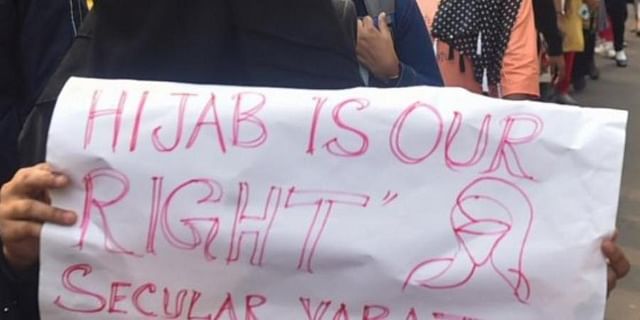
Karnataka hijab row: High Court reserves verdict after marathon hearing

KEY STORY

  • The Karnataka High Court on Friday reserved the verdict of a batch of petitions questioning the order dated February 5, 2022, passed by the state government to ban hijab on school and college campuses.
  • The full bench of Chief Justice Ritu Raj Awasthi and Justices Krishna S Dixit and JM Khazi which commenced the hearing on February 10, 2022, reserved the verdict, after a marathon hearing for the last two weeks.
  • The petitioners-students from Government PU College for Girls at Udupi and several others have challenged the government order.
  • Purdah or burqa may not be an essential practice but a headscarf or hijab is an essential part of Islam, and two judgments of the Kerala High Court and the Madras High Court, which has gone through Islamic verses and scriptures, have arrived at this conclusion, the petitioners’ counsels argued.
  • In the counter, the state government defended its order. It has been contended that the hijab is not an essential religious practice. Citing several supreme court’s judgments, starting from Shirur Mutt to Sabarimala cases, in support of his arguments that wearing hijab is not essential religious practice under Article 25 of the Constitution, Advocate General Prabhuling K Navadagi argued that petitioners-students have placed zero materials to substantiate their claim to declare that wearing hijab is an essential religious practice.

CONCLUSION

  • On February 10, 2022, the full bench passed the interim order restraining all the students regardless of their religion or faith from wearing saffron shawl (Bhagwa), scarfs, hijab, religious flags, or the like within the classroom, pending consideration of the petitions. However, the court made it clear that this interim order is confined to such of the institutions wherein the CDCs have prescribed the student dress code/uniform.

Draw up plans for uplift of poor among minorities: Bommai

KEY STORY

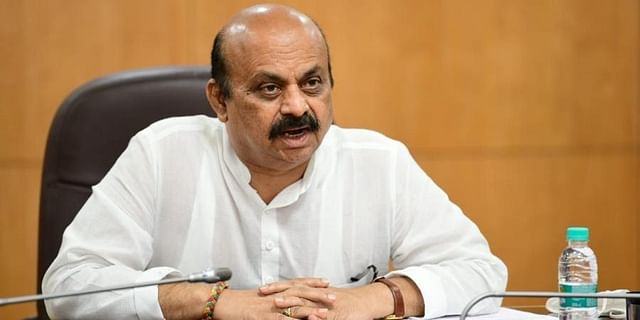
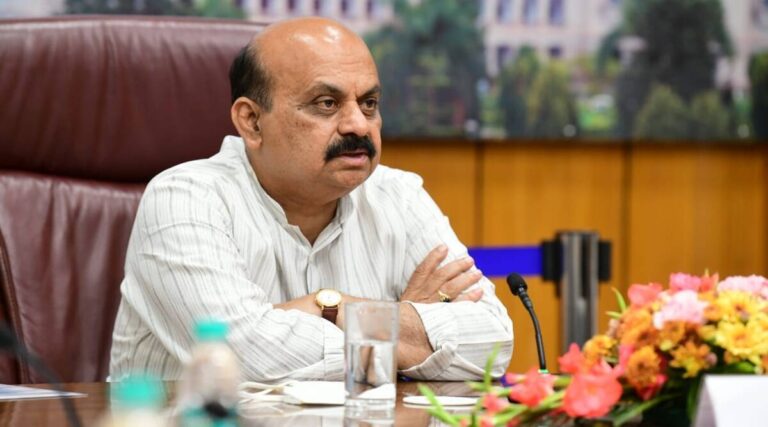
  • Some subgroups among the minorities are steeped in poverty and suitable programmes will be formulated for their development, Chief Minister Basavaraj Bommai said on Friday.
  • Speaking at the inaugural of the Maulana Abul Kalam Azad Bhavan, built by the Minorities Development Department, the CM said the minorities should adapt to the fast-changing world to achieve their goals and join the social mainstream. “The 21st century is the ‘Knowledge Century’. Children should be prepared to face the competitive world. We should help them utilise the opportunities and rise to international level,” he said.
  • The CM suggested that the Minorities Development Department draw up its plans keeping in mind the poorest of the poor among the communities. “Children, who should be having books in their hands, are being made to toil. They should get professional guidance to pursue IT, engineering, ITI, IAS, IPS and other career opportunities, become economically empowered and join the social mainstream,” he noted.
  • The Wakf Board should protect its properties and ensure that they are not misused. Wakf property should be used for the welfare of the community. Stringent action will be taken against those who violate the law in this regard, Bommai stressed.

Bajrang Dal man Harsha’s murder may have been planned weeks earlier: Sources

KEY STORY

  • The murder of 26-year-old Bajrang Dal activist Harsha was “planned” days before
    executing it. He was logistically a soft and easy target because he lived close to some of the accused, informed sources have told TNIE.
  • The killers had allegedly planned his murder 10-15 days before they finally got him on February 20. “They had kept a close watch on his movements,” the sources added. Harsha was fatally stabbed near Kamath petrol bunk late evening on February 20 in Shivamogga town.
  • “His murder was reportedly a message of one up-manship in the communally fragile district, which has been periodically used by politicians and community leaders. The fear of retaliation to Harsha’s murder in Shivamogga, or elsewhere in the state, is not lost upon the police,” the sources said. Ten people have been arrested so far for their alleged involvement in the murder case.
    Both Harsha and his assassins have previous police records for indulging in communal violence.
    Whether his murder is linked to the hijab row is yet to be verified, but sources said that hijab row was a “catalyst” to his murder as he had reportedly taken part in the ongoing controversy.
    Shivamogga had turned into a fortress after rampant vandalism on February 21 when, despite prohibitory orders under Section 144 CrPC, RDPR Minister K S Eshwarappa and Shivamogga MP B Y Raghavendra led Harsha’s funeral procession. “Most of the people in the procession were not locals due to fear of identification,” claimed sources.
    Shivamogga, according to sources is a “politically active district” and a hotbed of “communal and political opportunism”.
    “A majority of the lower and middle-ranking police personnel like sub-inspectors and inspectors have better control in the region than the IPS officers, who are posted for a one-year tenure. The former are nurtured and have a close proximity with local politicians and elected representatives,” claimed the sources.
    “Politicians encash on the fragile communal demography, which thrives upon one-upmanship between the two communities. The use of commonly available contraband drugs like ganja by the youth, who indulge in crime and communal violence, is another cause for concern,” added the sources.
    Lack of access to quality higher education and employment opportunities have left a majority of youngsters in Shivamogga vulnerable to communal and hate politics.
    “They otherwise have nothing to identify themselves with or brag about. The fringe extremist outfits on either side look for such youth and make use of them to carry out their ideological agenda in return for identity,” said sources.

    Curbs relaxed

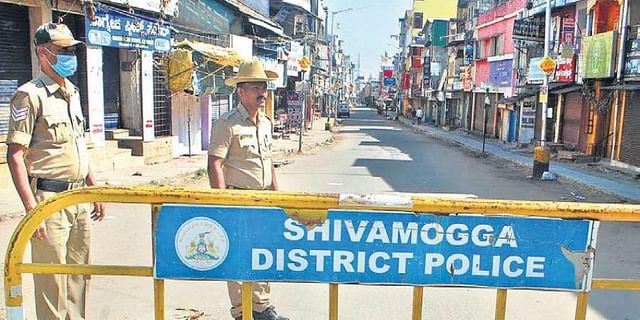
    The Shivamogga district administration has relaxed the curfew between 6 am and 4 pm from Saturday.
    The decision to reopen schools and colleges from Saturday has been put on hold and a call on reopening them from Monday will be taken after reviewing the situation.
    Meanwhile, police are still hunting for slain Bajrang Dal activist Harsha’s mobile phone.

Centre to revive ASI’s underwater wing for explorations in four states

KEY STORY

  • The underwater wing of the Archaeological Survey of India (ASI) is being revived for explorations in four states with a significant coastline, officials in the Ministry of Culture say.
  • Over the next few months, several projects will be readied for excavations in Dwarka (Gujarat), several mythological sites in the Cauvery delta (Tamil Nadu), and sites along the coast in Maharashtra and Odisha, officials say. However, there is no plan for the Ram Setu site yet, they add.
  • Even as the ASI had established its underwater wing in 2001, it has remained defunct for more than a decade, mostly owing to lack of experts at the helm, sources say. In fact, several underwater excavations had to be abandoned in the past, including an offshore exploration in Tamil Nadu’s Poompuhar between 1981 and early 2000s to unravel the 2000-year-old port of Kaveripattinam. Officials say further surveys could reveal more facts about the ancient port city, which reportedly had trade links with the Roman empire and China.
  • In its 305th report on the Parliamentary Standing Committee on transport, tourism and culture, submitted to the Rajya Sabha on February 2, the 31-member committee headed by BJP MP TG Venkatesh recommended to the Ministry of Culture that “underwater archaeological exploration has to be revived in the states of Maharashtra, Gujarat, Tamil Nadu and Odisha”.
  • In its response, the ministry said the ASI was reviving its underwater wing and Alok Tripathi, an additional director general-level officer who had been posted recently, was an underwater archaeology expert.
  • Established in 2001, the UAW has to its credit the exploration of Elephanta island, Mahabalipuram in the Bay of Bengal, a site in Pondicherry and the excavation of a shipwreck named ‘Princess Royal’ in Lakshadweep. Near-shore explorations were also carried out at ancient port sites such as Chilka, Kalingapatnam, Machilipatnam and Rameswaram coast, ASI officials say.

Indian passengers from Ukraine can return via Qatar, says government

KEY STORY

The Centre on Thursday said Indian passengers from Ukraine can return via Qatar, with aviation industry experts stating that civilian flights will restart from Ukraine only when its airspace opens.
Currently 20,000 Indians, mostly students, are stranded in Ukraine.
Since the Ukrainian airspace is closed due to the Russian military offensive, it is currently not clear how they are to travel from Ukraine to Qatar to take Qatar-India flights, which are operating normally.
The authorities of the eastern European country issued a NOTAM (notice to airmen) Thursday morning stating that civilian flights within Ukraine “are restricted due to potential hazard for civil aviation”.
The Indian Embassy in Qatar said on Twitter, “Government of India, Ministry of Civil Aviation has allowed passengers traveling from Ukraine to travel by transit under India-Qatar bilateral air bubble arrangement.”
This means that the passengers coming from Ukraine to Qatar will be able to board flights operating between Qatar and India.

IPL 2022: CSK’s title-defending season to kick off on March 26, final on May 29

KEY STORY

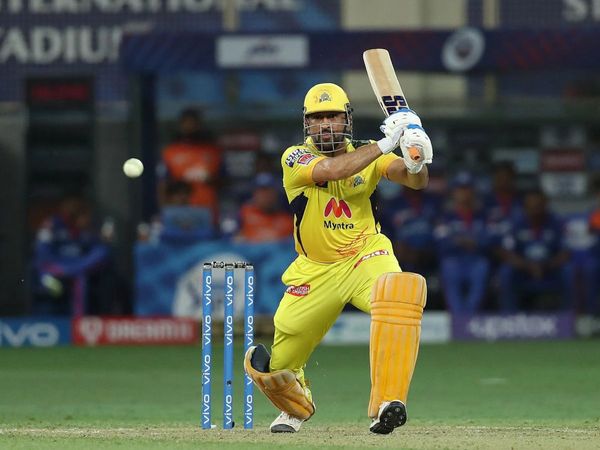
  • The title-defending season of MS Dhoni’s Chennai Super Kings (CSK) side is scheduled for a kickoff in March this year. Under the leadership of legendary captain Dhoni, Chennai Super Kings had staged an epic comeback after capping off their worst-ever finish in an IPL season last year. Dhoni-led CSK defeated Eoin Morgan’s Kolkata Knight Riders (KKR) to lift the famous trophy for the fourth time in the 14th season of the cash-rich league.
    With all roads leading to the new season of the world’s richest T20 league after the mega auction, Dhoni’s CSK will kickstart their title defence in the IPL 2022 next month. As per the latest developments, the 15th season of the cash-rich league is set to have 55 matches in Mumbai while 15 games will be contested in Pune. The Board of Control for Cricket in India (BCCI) has confirmed that the new season of the IPL will kickstart on March 26. The decision was taken during the recently concluded meeting of the IPL Governing Council (GC) on Thursday.
  • “The IPL will kick off on March 26, the full schedule will come soon. We will also have crowds but as per the policy of the Maharashtra government. Whether it will be 25 or 50 per cent of the stadium capacity will be decided by the government instruction,” the IPL chairman Brijesh Patel told Cricbuzz. Earlier, multiple reports had suggested that the playoffs stage of the elite T20 tournament will be played at Ahmedabad’s Narendra Modi Stadium.
  • “We will decide about the play-offs later,” Patel added. Mumbai’s iconic Wankhede Stadium (20 matches), Brabourne Stadium (15), DY Patil Stadium (20) and Maharashtra Cricket Association (MCA) ground (15) are the host venues for the league stage phase of the cash-rich league. The summit clash of the IPL 2022 will be played on May 29 (Sunday).

Situation peaceful in Shivamogga, says Karnataka Home Minister

KEY STORY

  • Karnataka Home Minister Araga Jnanendra on Thursday said the situation is peaceful and under control in Shivamogga that witnessed violence including stone-pelting and arson following the murder of a 28-year-old Bajrang Dal activist earlier this week.
  • He said, police are interrogating eight arrested and others in connection with the murder, and all angles including the involvement of communal organisations are being looked into.
  • “Situation in Shivamogga is under control….I’m going there to take stock of the situation personally with officials there, things are peaceful. I compliment the people of Shivamogga,” Jnanendra said.
  • Addressing reporters here, he termed the murder and subsequent violence as ‘unfortunate’, and said efforts were on to secure justice for the deceased person’s family and to punish the guilty.
  • “There is no need for people to worry, the government is with you and will provide protection. Eight people have been arrested in the murder case, interrogations are of other are on. All angles are being looked into, including information about involvement of communal organisations,” he added.

CONCLUSION

  • Harsha, a resident of Seegehatti in Shivamogga, was stabbed with lethal weapons by a group of people on Sunday night, following which he was taken to McGann Hospital where he succumbed to injuries.
  • To a question on inciting statements and messages on social media after Shivamogga incident, the Home Minister said, “We are monitoring the social media, action will be taken against those posting such messages.”

HC asks counsels in Hijab case to wind up their argument today, hints delivering order shortly

KEY STORY

  • The Karnataka High Court on Thursday asked the counsels in the Hijab case to wind up their arguments by Friday as it indicated that it will shortly deliver the order.
  • The Chief Justice of the High Court Ritu Raj Awasthi, who is part of the three-judge bench, told the counsels that that the arguments should be finished by Friday. He also asked the parties to give their written submissions within two to three days.
  • Meanwhile, in his rejoinder argument advocate Devadatt Kamat said his client studies in a co-education college where she got admitted two years ago.
  • According to him, she was in the habit of wearing Hijab from the time she joined the college but suddenly the restriction was imposed and she was forced not to wear it anymore.
  • Kamat told the court that he is not asking for any general declaration on Hijab that it is part of an essential religious practice but his contention was the government order on Febuary 5, which barred everyone from wearing clothes that could disturb peace, harmony and public order.
  • According to him, the GO cannot stand and it has to be quashed. “If the GO goes there is no restriction on the exercise of a fundamental right under Article 25,” the lawyer argued.\
  • In reply, the Chief Justice sought to know how can he insist on wearing hijab in an institution which has a uniform and which fundamental right the petitioner has? He also asked Kamat to establish that Hijab is part of a religious practice.
  • “We are not talking about any restriction. We are just talking about your right which you insist for,” CJ Awasthi said.
  • Responding, Kamat told the bench that the right derives from Quran and Hadis.
  • On January one, six girl students of a college in Udupi attended a press conference held by the CFI in the coastal town protesting against the college authorities denying them entry into classrooms wearing hijab.\
  • This was four days after they requested the principal permission to wear hijab in classes which was not allowed.
  • Till then, students used to wear the headscarf to the campus, but entered the classroom after removing it, college principal Rudre Gowda had said.
  • “The institution did not have any rule on hijab-wearing since no one used to wear it to the classroom in the last 35 years. The students who came with the demand had the backing of outside forces,” Gowda had said.

At least 10 students from Karnataka stranded in Ukraine: CM Bommai

KEY STORY

  • Karnataka Chief Minister Basavaraj Bommai on Thursday said at least ten students of the state are stranded in Ukraine, and the government is working with the Indian Embassy there and Ministry of External Affairs to bring them back home safely.
  • He said that he will also be speaking to External Affairs Minister S Jaishankar in this regard.
  • “At the time when war broke out between Russia and Ukraine, about hundred Indian students were on their way to the airport in two buses and got stranded, as the flights could not land. More than 10 are from Karnataka, we are gathering information about them,” Bommai said.
  • Speaking to reporters here, he said, his government is in constant touch with the Indian Embassy in Ukraine, the Chief Secretary is in touch with the Foreign Secretary, and that he will also be personally speaking to the External Affairs Minister in this regard.
  • “A message has been sent to the Embassy, and the Embassy is guiding the students on where to reach and the security situation. They should be safe first, and when the flights begin operation, all measures will be taken to bring them back home, in coordination with the Government of India,” he added.
  • Stating that students were coming back to India in batches as per their convenience, the Chief Minister said, this was probably the last batch and they had almost reached the airport, when the situation changed.

CONCLUSION

  • India on Thursday was firming up contingency plans including activating alternate air routes to evacuate its citizens from Ukraine as the spectre of a massive Russian offensive loomed over the eastern European country after President Vladimir Putin announced a military operation.
  • The Ministry of External Affairs held a series of high-level meetings to put into operation certain contingency plans in view of the rapidly changing situation in Ukraine.
  • Official sources have said given that the Ukrainian airspace was closed for civilian aircraft, alternate evacuation routes are being activated to bring back the Indians, especially the students.

Hijab row: Six students of Udupi’s women college ask Karnataka govt to postpone practical exams

KEY STORY

  • The six students of government pre-university college for women in Udupi, who approached the High Court seeking to allow them to wear hijab and attend classes, have appealed to the pre-university board to postpone their practical examinations starting from February 28.
  • In their request, the students said they could not attend classes for the last two months after they were denied entry inside classrooms for wearing headscarves and needed more time to appear for the practical examinations.
  • A H Almas, one of the six petitioners, told reporters in Udupi Thursday that all the six students have requested the deputy director of pre-university education (DDPU) of Udupi district to consider postponing their practical examination.
  • “The DDPU told us that he will communicate the request to the authorities concerned in the PU board,” she said.
  • Aliya Assadi, another petitioner in the hijab case, said they have been receiving threatening and abusive calls from unknown numbers after their demand for wearing hijab issue was politicised.

CONCLUSION

  • She said all petitioners in the hijab case are eagerly waiting for the final verdict of the High Court.
  • “Till the court comes out with the verdict, there is no question of appearing for the practical exam without wearing hijab,” she said.

Ind vs SL: 3 records captain Rohit Sharma can achieve in T20I series between India and Sri Lanka

KEY STORY

  • After guiding Team India to a historic series win in their previous white-ball assignment, skipper Rohit Sharma has set his sights on rewriting history again in the shortest format of the game. Veteran opener Rohit can shatter multiple records in the upcoming three-match T20I series between Sri Lanka and hosts India. Rohit, who succeeded Virat Kohli as the full-time captain of the Asian giants across all formats, had masterminded Team India’s rare double over Kieron Pollard-led West Indies.
  • Rohit had created a unique captaincy record as the charismatic leader became the first Indian skipper to complete 3 or more series whitewashes in the shortest format. Under Rohit’s leadership, Team India had also claimed the No.1 spot in T20I rankings after the 3-0 series sweep over the two-time world champions. Talking about India’s next home assignment, Rohit can surpass veteran Pakistani all-rounder Shoiab Malik in an exclusive list.
    • 1) Most capped player in T20I history
    For the record, Indian skipper Rohit is the second most capped player in the history of T20I cricket. While Rohit has played 122 matches for India, former Pakistan skipper Malik has represented the Green Army in 124 T20Is. Thus, Rohit is all set to break Mailk’s record in the final encounter of the three-match series. The 34-year-old will become the most capped player in T20I cricket at Dharamsala. Rohit and Malik are followed by Mohammad Hafeez (119), Eoin Morgan (115) and Mahmudullah (113) in the elite list.


  • 2) All-time leading run-getter in T20I cricket
The premier batter is also expected to reclaim the top spot in the all-time list of T20I run-getters. Former Indian skipper Virat Kohli smashed a quick-fire half-century in India’s win over the West Indies in the 2nd T20I. With Kohli rested for the Sri Lanka T20Is, skipper Rohit will look to surpass the former Indian captain and New Zealand’s Martin Guptill in the list of all-time leading run-scorers.
Rohit only needs 37 runs to become the all-time leading run-getter in the shortest format.


  • 3) Babar Azam’s captaincy record
In his iconic T20I career, Indian skipper Rohit has amassed 3,263 runs from 122 matches. Nicknamed the Hitman for his aggressive batting style, the 2007 World Cup winner with Team MS Dhoni’s India has scored 4 centuries and 26 half-centuries in the shortest format. In the three-match T20I series between India and Sri Lanka, Rohit can also shatter Babar Azam’s captaincy record. Pakistan’s Babar Azam is the fastest to score 1,000 runs as captain in T20I cricket. If Rohit ends up scoring 63 or more in the series opener against Sri Lanka, the batting icon can break Babar’s captaincy record in the shortest format.


Budget can transform agri sector, roll out schemes from April 1: PM Modi

KEY STORY

  • Observing that the Budget can “transform” the agriculture sector and the villages, Prime Minister Narendra Modi Thursday asked officials to roll out the proposals from April 1, the first day of the new financial year, without wasting time.
  • Addressing a webinar on the “positive impact” of Union Budget 2022 on the agriculture sector, Modi said, “We have one full month of March in hand. The Budget has already been presented in Parliament. We should complete all preparations in March and deliver the schemes to the farmers from April, which is well ahead of the new agriculture year which begins around June and July.”
  • Modi also urged officials to rope in the corporate world, financial world, start-ups and technological world in this effort. He said the agriculture Budget has increased manifold in just six years. “Agricultural loans for farmers have also been increased by 2.5 times in seven years,” he said.
  • “In the last seven years, we have prepared many new systems, from (distribution of) seeds to the markets, we have improved the old systems,” he added.

CONCLUSION

  • Recounting that the PM-Kisan scheme was launched on this day three years ago, the Prime Minister said, “Today, this scheme has become a big support for the small farmers of the country.”
  • Modi said that about Rs 1.75 lakh crore have been given to 11 crore farmers of the country.
  • “Direct money transfer into the bank accounts of 10-12 crore farmers with just one click is a matter of pride for every Indian in itself,” he said.

Karnataka CM defends salary hike for lawmakers

KEY STORY

  • Chief Minister Basavaraj Bommai on Wednesday defended the hike in salaries of lawmakers by saying it is not a sudden decision.
  • “This is done once every five years. There was a lot of discussions earlier also. It came up for discussion during the last two sessions. But we didn’t bring (the Bills). It’s not the first time this is being done,” Bommai told reporters.
    Bommai was responding to outrage over the hike in salaries for lawmakers at a time when the state has just begun recovering from the Covid-19 pandemic.
  • On Tuesday, the Legislative Assembly and the Council passed two Bills to hike salaries and allowances of lawmakers. The monthly salary of all lawmakers has gone up from Rs 25,000 to Rs 40,000. The salary of the chief minister is up from Rs 50,000 to Rs 75,000 whereas ministers will get Rs 60,000 against the existing Rs 40,000. All other allowances have been hiked as well.
    Cong MLA opposes
     Khanapur Congress legislator Dr Anjali Nimbalkar opposed the hikes.
    “We don’t want this. Pay the Covid bills of common man first, give them shelters. Give better infrastructure, jobs, transport and a better life for a person to survive in this pandemic,” Anjali said in a tweet.
    “Amidst the din of protest by Congress MLAs, the House passed this Bill,” Anjali said.