KEY STORY
-
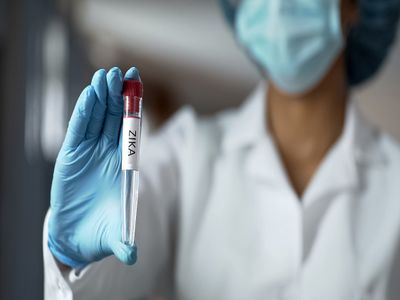
The Zika outbreak in Uttar Pradesh is raging on at an alarming rate as 30 more people have tested positive for the deadly virus in Kanpur, taking the district’s total infection count to 66.
-
Of the total caseload, 45 are men and 21 are women, officials said on Friday.
-
The first case of Zika infection was reported in Kanpur on October 23 when an Indian Air Force (IAF) warrant officer tested positive.
-
Thirty more people have tested positive for Zika virus in Kanpur,” District Magistrate Vishak G Ayyar said, according to news agency PTI.
-
He said that samples were collected from various pockets in the neighbouring areas of the IAF station and sent to the laboratory at King George’s Medical University (KGMU) in Lucknow for testing.
-
“Thirty of them came back positive for Zika virus. Zika is a mosquito-borne virus and hence, getting rid of mosquitoes is the safe way out,” he said.
-
In order to contain the spread of the disease, health teams have started undertaking sanitisation steps, including anti-larvae fumigation, identifying patients with fever, and screening seriously ill people and pregnant women.
-
Health officials have also been asked to augment surveillance and ensure door-to-door sampling and testing for the virus.
CONCLUSION
-
“We advise the local people not to panic regarding the sudden spurt in Zika virus cases,” Ayyar said.
-
Another official said that a high alert has been issued in the periphery of the hangars at the IAF station.
-
Chief Minister Yogi Adityanath has directed the state health department to carry out strict surveillance and undertake frequent and extensive door-to-door sanitisation and fogging drives to prevent mosquito breeding.
KEY STORY
-
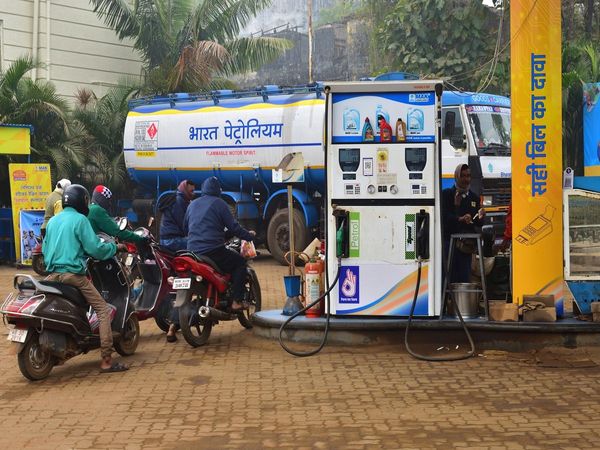
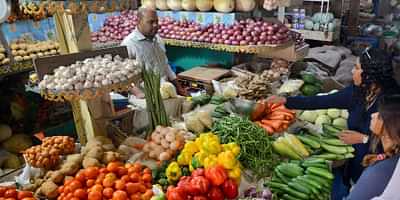
While there is much joy over the cut in diesel prices, motorists are upset that they are still coughing up Rs 107 per litre for petrol. Some stakeholders expressed concern that this reduction could be temporary and would not really help them, and that consumers may continue to feel the pinch of high prices of essential commodities.
-
“Almost all sectors were streaming towards pre-pandemic levels in terms of production and sales after Covid-19 restrictions were relaxed, but fuel prices acted as a major deterrent. Industries have achieved only 50 per cent to 75 per cent productivity. I feel the relief is temporary, and depends on crude oil prices. The government needs to reduce more taxes. We request that petrol and diesel be brought under the GST regime, and also reduce GST on daily essentials,” said Dr IS Prasad, President, FKCCI.
-
Meanwhile, the fuel price hike has led to a spiral in prices of vegetables, fruits and other essentials, forcing people to change eating habits — like cutting down on meat and eggs, milk, fruits etc. However, traders say, “Rain hampered supply of vegetables and fruits, and hike in transport charges forced retailers to increase prices of dals, pulses and sugar. Commodities will not see a price reduction anytime soon,” says Prakash Perumar, a trader.
CONCLUSION
-
Ramesh Chandra Lahoti, Chairman, APMC Committee, Federation of Karnataka Chamber of Commerce and Industry (FKCCI), says APMC yards were resorting to bargains, and transporters were demanding a hike in trip rates. “Foodgrains in the retail market see a hike when fuel prices go up. To adjust transport cost, retailers increase prices, and these may not come down,” Lahoti said.
KEY STORY
-
In a move that has activists seeing red, the State Government has decided not to entertain any anonymous complaints against government officials written on postcards, inland letters or other means of communication.
-
Chief Secretary P Ravi Kumar told TNIE that the circular was passed recently. Henceforth, all department heads and staff have been told not to take anonymous letters into consideration and only those with valid names and addresses will be considered.
-
Activists explained that the government is swamped with hundreds of anonymous letters every year with information about different issues, mostly dealing with corruption. People do so anonymously because the information is important, and if the person reveals his identity and other details, he may risk persecution.
-
In a country where RTI activists and journalists have paid with their lives, where is the safety for an underprivileged informant who has important information to offer, they questioned.
-
T R Raghunandan, who has fought corruption through the ‘Ipaidabribe’ campaign, angrily asked, “Where is the accountability? I am not surprised by this at all. This is one more nail in the coffin.” “Successive dispensations have set records in corruption and Karnataka has been rated among the most corrupt states in the country over many years.
CONCLUSION
-
We have cases of RTI activists being intimidated and whistleblowers being punished. Appeals under the RTI Act are not entertained and there is a pendency of 20,000-30,000 appeals,’’ he added.
KEY STORY
-
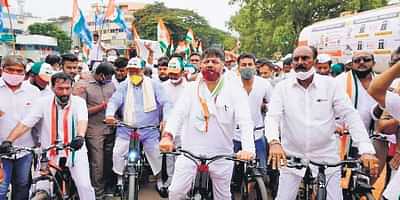
Starting November 14, the state Congress unit will resume its protest against the hike in prices of essential commodities, including LPG, and rising unemployment. Reacting to the sudden reduction in petrol and diesel prices, KPCC president D K Shivakumar said that it is not a ‘Deepavali gift’ as claimed by Chief Minister Basavaraj Bommai or Prime Minister Narendra Modi. “When you snatch Rs 40 from someone and pay them back Rs 7, does that make it a gift?” he questioned.
-
“No matter what politicians or the Opposition do, it is the people’s mandate that matters,” he said, adding that the results of the bypolls showed BJP its place in the state. He said the Congress will continue its fight against price hike.
-
Claiming that the fuel price reduction is a victory of the common people, he said, “We had appealed to voters to teach the government a lesson and the bypolls results are proof. This also shows that in democracy, voters are rulers.” He, however, added that the Congress welcomes the cut.
CONCLUSION
-
Further, Shivakumar said there is a shortage of coal, which has disrupted power generation, which will turn away investors from the state. “This will further increase the unemployment problem. The coal minister in the Modi government is from Karnataka. The state is getting supply for one day. We will discuss it with our party leaders on November 7 and take further action,’’ he said.
KEY STORY
-
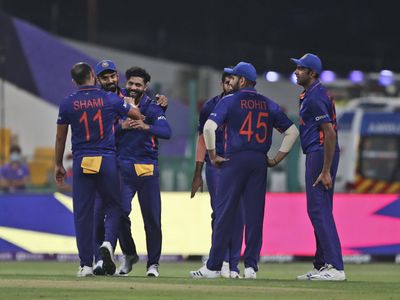
After it felt like India were dead and buried in the 2021 T20 World Cup after the defeat to New Zealand, the Men in Blue got their campaign back on track with a resounding victory against Afghanistan. Virat Kohli & Co defeated their Asian rivals by 66 runs to register their first victory in the competition.
-
With the massive victory margin, India managed to significantly improve their Net Run Rate (NRR) from -1.609 to + 0.073. Significantly, they ensured that Afghanistan’s NRR falls to +1.481 from +3.097.
-
While the Men in Blue will fancy themselves to win their remaining two games against Scotland and Namibia, they still need other results to go their way to have any chances of qualifying for the semi-final.
How can India qualify for-semi-final
India will need New Zealand to lose to either Namibia or Afghanistan to have any hopes of making it to the semi-final. If New Zealand wins both their remaining games, they will join Pakistan in the semi-final.
If New Zealand beat Namibia and lose to Afghanistan while India win both their games, it will see India, New Zealand, and Afghanistan on the same number of points on the table.
While India will the opportunity to increase their NRR against Scotland and Namibia, even a narrow margin of victory for Afghanistan against New Zealand will give them a big chance of making it to the last four.
However, the calculations could be tricky as both New Zealand and Afghanistan currently have a better NRR than India. Hence, the Men in Blue will hope that even if New Zealand beat Namibia, they manage to do that by a low margin.
-
Similarly, while the Men in Blue will be supporting Afghanistan when they face the Kiwis, a big victory margin for the Afghans could derail India’s hopes of finishing second in the group.
CONCLUSION
-
One possible scenario for India that will surely see them through is that India beat Scotland and Namibia by 60+ runs each or chase the total within 13 overs in both games. After which if Afghanistan beat New Zealand less than 9 runs and the Kiwis defeat Namibia by lesser than 84 runs, it will be enough for Virat Kohli’s men to make it to the semi-final.
-
India have the advantage of playing the last game in the group which means when they take the field against Namibia, they will know what they exactly need to do to get over the line.
KEY STORY
-
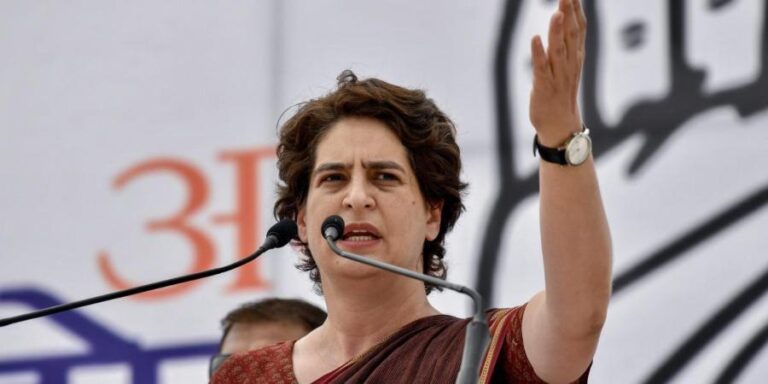
A day after the Centre announced a reduction in the excise duty of petrol and diesel by Rs 5 and Rs 10 respectively, Congress general secretary Priyanka Gandhi Vadra on Thursday lashed out at the Union government saying that the decision was made out of fear and not from the heart.
-
“This is a decision out of fear, not from the heart. Give answer to this ‘vasooli’ government’s loot in the coming elections (sic),” she said in a tweet (roughly translated from Hindi).
-
Taking a cue from the central government’s move to reduce fuel prices on the eve of Diwali, chief ministers of several BJP-ruled states announced a further reduction of petrol and diesel prices.
-
States including Assam, Tripura, Karnataka, Goa and Manipur have reduced petrol, diesel prices by Rs 7 while Uttarakhand has reduced VAT by Rs 2.
-
Meanwhile, Uttar Pradesh said that after reduction of taxes /duties by the Centre and the State, the prices of Diesel and Petrol here will go down by Rs 12 per litre.
-
After the Centre reduced excise duty, Union Petroleum Minister Hardeep Singh Puri said, “the states should add to this celebration by reducing VAT on fuel to give further relief to consumers.”
Congress calls it PM Modi’s jumla
Earlier on Wednesday, Congress leader and spokesperson Randeep Surjewala had slammed that Centre’s move by terming it as PM Modi’s jumla.
“In the year 2021, prices of petrol were hiked by ₹28 and diesel by ₹26 per litre. After losing 14 by-elections and 2 Lok Sabhas, reducing the petrol-diesel price by ₹5 and ₹10 is tom-tommed as ‘Diwali gift’ of Modi Ji! Hey Ram…” He tweeted.g

KEY STORY
-
The clearance for using Covaxin on children will take much less time, World Health Organization (WHO) chief scientist Dr Soumya Swaminathan told NDTV after the Bharat Biotech-manufactured vaccine’s Emergency Use Listing.
-
The WHO’s Emergency Use Listing is a risk-based procedure for assessing and listing new, or unlicensed, products that can be used during public health emergencies.
-
The global health organisation’s nod means that the ‘made-in-India’ vaccine will be recognised by other countries and Indians who received the shot need not self-quarantine or face restrictions when travelling abroad.
-
Swaminathan said that WHO is yet to receive data on children from Covaxin makers. She added that assessing the vaccine for use on children is likely to take less time. “But again, it really depends on the data,” Swaminathan told NDTV.
-
The WHO chief scientist added: “The same thing happened with other companies also. The mRNA vaccines were first approved for adults. And as data in younger and younger groups became available, it was submitted [to WHO].”
-
In October, a subject expert committee on Covid-19 vaccines in India had recommended granting emergency use authorisation for using Covaxin on children in the age group of 2 years to 18 years. The Drugs Controller General of India will be the one to give the final approval for this
Covaxin for pregnant women
The WHO chief scientist told NDTV that Bharat Biotech is also planning to conduct a pregnancy sub-study. Swaminathan added that a large number of pregnant women in India had received Covaxin and there was enough data on its safety.
-
We are not seeing any safety signals,” Swaminathan told NDTV. “What is still awaited in data on the newborns because one looks at both the mother and the baby when it comes to pregnancy outcomes.”
Covxin did not take longest to get approved
Swaminathan said that one an average, it took about 50 to 60 days for vaccines to get the WHO’s approval but some were cleared in 165 days.
China’s Sinovac and Sinopharm vaccines took 150 to 165 days to obtain the global health body’s approval, the WHO chief scientist said.
“Covaxin is somewhere in the middle, it took somewhere between 90 and 100 days,” she told NDTV. “The [technical advisory] committee met again and were very satisfied [with Covaxin data].”
KEY STORY
-
Within a few hours of the Union government reducing the prices of petrol and diesel by Rs 5 and Rs 10 per litre respectively, Chief Minister Basavaraj Bommai announced that Karnataka will reduce the prices of both fuels by another Rs 7. With this, the price of petrol is expected to be Rs 95.5 and diesel Rs 81.5 per litre in Karnataka.
-
This will lead to a revenue loss of Rs 2,100 crore to the state government. Bommai stated that the new prices will come into effect from Thursday evening. “This will be the Deepawali gift from state and union governments,” he tweeted.
-
The prices of petrol and diesel crossed Rs 100 a few weeks ago. The Opposition Congress had taken up the issue and protested both inside and outside Vidhana Soudha. Leader of opposition Siddaramaiah and KPCC president DK Shivakumar had even mocked the government by riding a bullock cart to Vidhana Soudha during the legislature session.
KEY STORY
-
7There is good news on the GST front for the state this Diwali season as a GST loan of Rs 1,602.61 crore was released as GST compensation on Wednesday. The Centre released Rs 60,000 crore to 31 states, including Karnataka, and Union territories.
-
While the largest allocation of Rs 3,053 crore went to Maharashtra, Karnataka stood second in the list. Gujarat and UP were given Rs 1,400 crore each, while Tamil Nadu received Rs 1,314 crore.
-
The GST Council has released a loan of Rs 1.59 lakh crore to states to deal with the shortfall in GST collection during the current financial year and this is in proportion to the overall loss of revenues and a previously agreed upon formula.
-
The loan amount will be adjusted with the compensation later, said an official source in the government requesting anonymity. Karnataka’s GST collection of Rs 8,259 crore in October is an 18 per cent jump over the same period last year, indicating an economic recovery.
‘GST mop-up to rise in soon’
The source said that if the supply of semiconductors had not been disrupted, the sale of cars and SUVs would have been higher, leading to an increased collection of GST. Former National Finance Commission Member Govinda Rao predicted that GST collections will continue to rise in the coming days, thanks to the stable system. Additional Chief Secretary ISN Prasad and Commercial Tax Commissioner C Shikha said the GST is being enforced harder, ensuring better compliance.
KEY STORY
-
A skill demand assessment survey will be conducted in the state to enable planning of skill development training in a systematic way, Karnataka Minister for Skill Development and Higher Education Ashwath Narayan said on Wednesday.
-
The decision was taken during Narayan’s meeting with the Union Minister of State for Skill Development and Entrepreneurship Rajeev Chandrasekhar in New Delhi.
CONCLUSION
-
“It was felt in the meeting, that such a survey would help to know the region-wise skill requirement specifically, thus paving the way to train the youth accordingly to cater to the current needs,” Narayan’s office said in a statement.

KEY STORY
-
South India is likely to receive above normal rainfall over 122 per cent of its long period average in November, the India Meteorological Department said on Tuesday.
-
Rainfall for November over the South Peninsular India (Coastal Andhra Pradesh, Rayalaseema, Tamil Nadu, Puducherry, Kerala and south interior Karnataka) is most likely to be above normal (>122 per cent of long period average ), it said.
-
Based on data collected during 1961-2010, the long period average (LPA) of rainfall over South Peninsular India in November is about 117.46 mm.
-
The northeast monsoon that commenced on October 25 has led to heavy rainfall in Kerala.
-
The state gauged 589.9 mm rainfall in October, the highest in the month since 1901.
-
IMD Director General Mrutyunjay Mohapatra said rainfall will continue over south India, particularly Kerala, till November 11.
-
He also said India recorded 125 extremely heavy rainfall events during September and October of 2021, the highest in five years, owing to late withdrawal of the southwest monsoon and higher-than-normal low-pressure systems.
-
The country recorded 89 extremely heavy rainfall events this September against 61 in the same month last year, 59 in 2019; 44 in 2018 and 29 in 2017.
-
Also, 36 such events were witnessed in October this year compared to 10 in the corresponding period of 2020; 16 in 2019; 17 in 2018 and 12 in 2017, according to IMD data.
CONCLUSION
-
The meteorological department said the causes of disastrous weather episodes included the late withdrawal of the monsoon, a higher-than-normal number of low-pressure systems during the period and the interaction of active western disturbances with low-pressure systems in October.
-
Nine low-pressure systems, including two cyclones Gulab and Shaheen -, one deep depression and six lows, affected the country during the period.
KEY STORY
-
Breakfast indeed is the most important meal of the day. After eight to ten hours of fasting while you sleep, fueling your body is essential. According to several studies, an early breakfast is linked to better management of diabetes, blood sugar, blood pressure, can induce weight loss and lower risk of insulin resistance as well. However, timing is not all that matters when it comes to a healthy breakfast; one needs to know what to eat as well.
-
A combination of carbohydrates and proteins is ideal for a complete and healthy breakfast; and for those who felt that Indian breakfast options only include deep fried foods and high-fat, unhealthy options like chhole bhature and aloo puri, here’s some good news. Desi breakfast options include both proteins and carbs in good quantities if you know what to choose.
Keep reading to find out the best desi breakfast options that are super light and healthy for those on a weight loss spree.
-
Poha: Filling, light and easy to make, poha is one of the most popular breakfast options on the table of an Indian and a weight watcher as well. The Marathi speciality is rich in fibre, healthy carbohydrates, proteins and fats. Add a hint of lemon juice, peanuts and chillies to give it a touch of flavour and make it a weight loss staple as well.
-
Masala omelette: A masala omelette with a touch of some onions, tomatoes, green chillies, mushrooms and some milk to add fluffiness is another super filling and healthy desi breakfast option. Serve it with toasted multigrain bread and a protein-rich and delicious desi meal is ready.
-
Besan cheela: Besan or chickpea flour is a super healthy and fibrous source of protein that speeds up your metabolism for the day to come thereby helping speed up the weight loss process. Besan cheela accompanied by some mint chutney – no ketchup due to its sugar and cornflour content – can help keep you full for longer and speed up the weight loss process as well. The same can be prepared with chana dal and moong dal – protein-rich sources – in desi ghee for maximum benefits.
-
Idli: Made with rice or with semolina (suji), idli is one of the healthiest breakfast options for those on a weight loss spree. Serve it with some coconut chutney or sambhar or both and you’ve got a complete meal. Rich in carbs, fibre, proteins, healthy fats and vitamins, idli is an ideal breakfast and evening snack for all those who are trying to shed additional pounds.
-
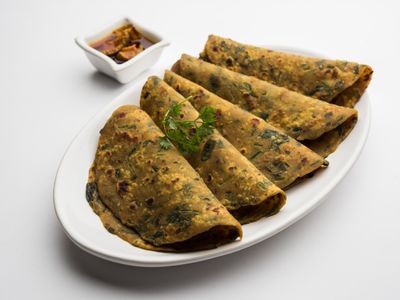
Mixed vegetable, multigrain paranthas: Paranthas are the most popular breakfast staple in India. Stuffed with boiled potatoes, cauliflower, cottage cheese, methi and so on, these are usually served with butter, curd and pickle. However, to give parathas an additional touch of nutrition, prepare the dough with wheat, bajra, jowar, chickpea and corn flour in equal quantities and add spices to it. Prepare the filling with the vegetables that you like best and cook it in desi ghee, serve with some curd, raita or pickle on the side and you’ve got a healthy, filling meal.
KEY STORY
-
To help manage the dengue outbreak, the Union Health Ministry has deployed central teams of experts in nine states and Union Territories. The teams will provide technical guidance, including public health measures.
-
Haryana, Punjab, Kerala, Rajasthan, Tamil Nadu, Uttar Pradesh, Uttarakhand, Delhi and Jammu and Kashmir are among the states and Union Territories registering a significant number of dengue cases.
-
National Centre for Disease Control and National Vector Borne Disease Control Program officials are part of the expert teams.
-
“It has been decided by the competent authority to depute central teams to the identified states to assist the state governments by providing technical guidance, including public health measures, for managing the ongoing outbreak of dengue,” read an office memorandum dispatched to principal secretaries (Health) and directors general of health services of the nine states and Union Territories.
-
The government of India said in a press release: “The teams are tasked to assist and support states to mount an effective public health response. The teams have been asked to report on status of vector control, availability of kits and medicines, early detection, availability and use of insecticides, status of anti-larval and anti-adult vector control measures etc. They will also brief the State Health authorities about their observations.”
-
During a review of the dengue situation in Delhi on Monday, Health Minister Mansukh Mandaviya directed the Union Health Secretary to identify and send teams of experts to states with a high active dengue caseload.
CONCLUSION
-
There have been over 1,530 cases of dengue in Delhi so far this year, and more than 1,200 of those were reported in October alone, the highest number recorded for the month in the last four years.
-
According to the government of India, “15 States/UTs are reporting their maximum cases in the current year; these states contribute 86% of the country’s total dengue cases till 31st October”.
KEY STORY
-
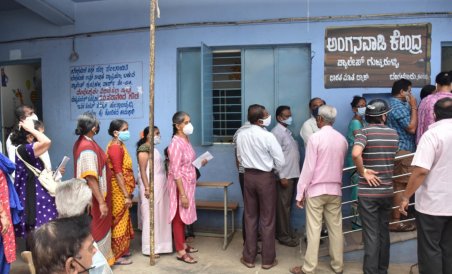
Anganwadis across the state, which were closed for over one-and-a-half years due to the Covid-19 pandemic, will reopen in a full-fledged manner from November 8, Women and Child Development Minister Halappa Achar said on Tuesday.
-
“The government has decided to reopen anganwadis after taking opinion of the Covid-19 technical advisory committee. With the chances of a tird wave appearing remote, the experts have given a go-ahead for reopening of anganwadi centres.
-
The centres will be open for two hours daily during which the nutritional food and other facilities will be provided to the beneficiaries, including the kids,” the minister told reporters here.

KEY STORY
-
Bengaluru may be the IT capital of India but the final report of a door-to-door survey to identify out-of-school children shows that the Bruhat Bengaluru Mahanagara Palike (BBMP) has the highest number of children who have no access to education.
-
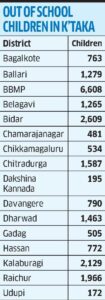
The report from Samagra Shikshana Karnataka (SSK), earlier known as Sarva Shikha Abhiyan, shows that 34,411 children in the state are out of school. This includes children who never enrolled and those who dropped out. Of them, 6,608 are from BBMP limits.
-
According to SSK, three main reasons for children being out of school are: health issues, financial crisis and family issues. The details of the survey have been shared with the officials concerned at the district level.
-
“They have been asked to share the data with taluk and block-level officers. These officers have to meet the parents/guardians of out-of-school children to know the reasons for them being away from schools and submit a report to the state project director,” said an official from SSK.
-
In BBMP limits, more children in the 14-16 age group are not attending schools (4,465) while 2,143 are out of schools in the 6-14 age group.
-
Bidar district followed the BBMP with 2,609 such children while Udupi district reported the least number of such kids (172).
-
According to officials involved in the survey, children in the age group of 14 to 16 years dropped out due to financial crisis in families because of the Covid-19 pandemic in the last two years. “In many cases, older children have dropped out and joined jobs to support families during the pandemic,” said an official.
CONCLUSION
-
In all the 31 districts, 21,300 children who enrolled dropped out for various reasons.
-
Recently, the Karnataka High Court had taken note of the high number of children remaining out of school and asked officials to conduct a door-to-door survey.

KEY STORY
-
The pathetic show by the JDS in the bypolls to Hangal and Sindagi constituencies, despite party top leaders — H D Deve Gowda, H D Kumaraswamy and Prajwal Revanna — camping in Sindagi constituency during campaigning, has come as a massive setback to the party leadership ahead of the next Assembly elections scheduled for 2023.
-
The JDS, which had won the Sindagi seat in the previous election, could neither retain the seat nor bag a sizable number of the traditional Congress votes to play some role in the defeat of the latter. Although Sindagi MLA M C Managuli, whose death necessitated the bypoll, hailed from the JDS, the results brought to fore the fact that Managuli had been able to win the seat last time based on his popularity and image in the constituency and not as a leader of the party.
-
After the bypoll results came out, JDS leader H D Kumaraswamy said he never expected this and that the party had to field candidates as per the demands of its workers. Much against predictions of political pundits that the JDS may bag a good share of the traditional Congress votes in both Sindagi and Hanagal to help the BJP, the party candidates were no match for their opponents. Given the poor show, party leaders in Sindagi and Hanagal feel that the JDS will not field its candidates in the next Assembly polls.
CONCLUSION
I am still alive, will tour N K’taka in 2023: Gowda
Bengaluru: Despite the party candidates losing their deposits in Sindagi and Hanagal, party supremo H D Deve Gowda and former chief minister H D Kumaraswamy claimed they were not disheartened by the results. “I am still alive. For the 2023 polls, I will travel more to North Karnataka to organise the party. Kumaraswamy will oversee the South,” Gowda told reporters in New Delhi.
KEY STORY
-
After Australia recognised Bharat Biotech’s Covaxin for allowing entry of travellers who had received the vaccine, five more countries on Monday recognised India’s vaccine certificate. These five countries recognised both Covaxin and Covishield.
-
The Ministry of External Affairs (MEA) said that five more countries have recognised India’s vaccination certificate, including Estonia, Kyrgyzstan, State of Palestine, Mauritius and Mongolia.
-
In a tweet in the evening, MEA spokesperson Arindam Bagchi said, “Mutual recognition of Covid-19 vaccination certificates continues! Five more recognitions for India’s vaccination certificate, including from Estonia, Kyrgyzstan, State of Palestine, Mauritius and Mongolia.”
-
Earlier, in the day Australia recognised Bharat Biotech’s Covaxin along with Covishield for allowing entry of travellers who had received the vaccine. The Therapeutic Goods Administration (TGA), the Australian drug regulator, announced that it has recognised two more Covid-19 vaccines not registered in Australia but used widely internationally, which includes Bharat Biotech’s Covaxin and BBIBP-CorV (manufactured by Sinopharm, China).
-
The TGA further stated that with recognition of Covaxin, and BBIBP-CorV, along with the previously announced recognition of Coronavac (manufactured by Sinovac, China) and Covishield (manufactured by AstraZeneca), means many citizens of India and China as well as other countries in the region where these vaccines have been widely deployed will now be considered fully vaccinated on entry to Australia.
-
The TGA stated that this will have significant impact for the return of international students, and travel of skilled and unskilled workers to Australia.
-
“This recognition is for travellers aged 12 and over who have been vaccinated with Covaxin, and those 18 to 60 who have been vaccinated with BBIBP-CorV,” the TGA said in a statement.
-
The TGA mentioned that in recent weeks it has obtained additional information demonstrating these vaccines provide protection and potentially reduce the likelihood that an incoming traveller would transmit Covid-19 infection to others while in Australia or become acutely unwell due to Covid-19. “The supporting information has been provided to the TGA from the vaccine sponsor and or the World Health Organisation (WHO),” it said.
-
In addition, with input from the TGA, Australian Technical Advisory Group on Immunisation (ATAGI) (ATAGI) have determined that those who have received two doses of a TGA-approved or recognised vaccine at least 14 days apart are regarded as fully vaccinated from seven days after the second dose (with the exception of Janssen vaccine, where they are regarded as fully vaccinated seven days after the single dose). This includes homologous (two doses of the same vaccine) and heterologous (two doses of two different TGA-approved or recognised vaccines) schedules.
-
“From 1 November 2021, vaccinated Australians and permanent residents aged 12 and over may depart Australia without the need to seek a travel exemption,” the statement added.
KEY STORY
-
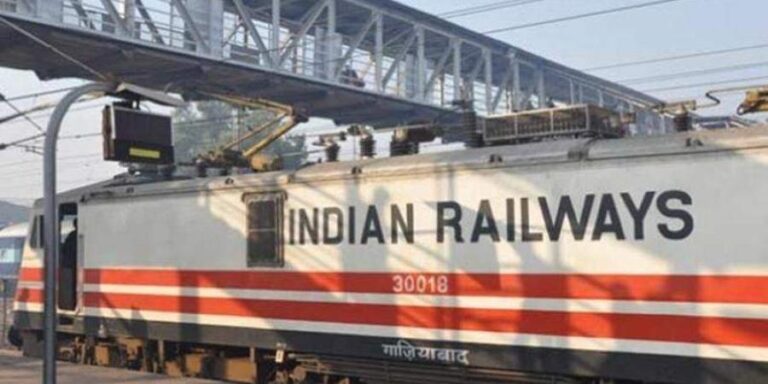
In a first, to ease the process of shooting a film on trains or at railway stations, the Ministry of Information and Broadcasting’s Film Facilitation Office (FFO) and the Ministry of Railways have collaborated to create a ‘single window filming mechanism’.
-
This website aims to make the process of getting permission to film across railways premises more efficient.
-
Rajiv Jain, additional director general (ADG) of PR of Railway, said that “the shooting of many films in the past were completed at the-eye-catching railway and its cinematic locations.”
-
“Until now, international and Indian film-makers had to visit the offices of Chief Public Relation Officer (CPROs) of the concerned railway zone or the railway board for obtaining permission for filming,” added Jain.
-
He said “with this new arrangement, seeking permission would be hassle free for the film producers and makers.”
-
Once the film-maker or producer uploads the application on www.ffo.org.in for seeking permission for shooting, the FFO will automatically start facilitating the process in tandem with the railway officials.
-
Many sites with splendid natural and cinematic beauties are under the jurisdiction of 12 railway zones in the country. The film-makers make their first choice to those locations of railways.
-
“The permission within the shortest possible timeframe would get upload on the site of FFO. The film-makers can download the permission from the FFO On being asked about the objective of such a first move, he said that integration with FFO of Indian Railway is aimed at reducing the number of windows that producers have to access to obtain permission for filming in various eye-catching natural locations of railways.
CONCLUSION
-
According to Apurva Chandra, secretary of I&B, the idea is to create value for filming by way of easing the process across various jurisdictions like railways, which offer unique, distinctive locations for cinematic experiences.
-
The FFO will accept now the applications for permissions for the shooting of feature movies, websites and TV shows on behalf of the railways but for making documentary and music videos or AV commercial AV, one will have to apply to the railways directly.

KEY STORY
-
The IPL franchises are gearing up for the IPL 2022 mega auction and they still have a few weeks left before zeroing in on the key players they want to retain. While there are some automatic retentions, the franchises could also spring a surprise by releasing some big names.
-
Mumbai Indians are one of the teams which might not have any surprises in store as there are some automatic retentions in their line-up. As the fans anxiously await a final word from the franchise, here we have a look at 4 players which MI might retain before IPL 2022 auction –
Rohit Sharma
No doubts here. Rohit Sharma is all but set to be MI’s first-choice pick before IPL 2022 auction. He has been the most successful skipper in the history of IPL and has led MI to 5 IPL titles. Even though Rohit hasn’t been able to deliver on the batting front, he has excelled on the captaincy front.
Under him, MI ended their dry spell in IPL and clinched the trophy for the first time in 2013. They repeated their heroics in 2015, 2017, 2019 and 2020. Although the team didn’t have a fruitful run in 2021, Rohit will continue to lead the side and looks set to be paid the mega sum of Rs 16 crore. He earned Rs 15 crore every year from 2018 to 2021.
Kieron Pollard
Since a franchise was only allowed to retain 3 players before the 2018 mega auction, MI couldn’t retain their vice-captain. They wasted no time in winning his services again at the auction and used their Right to Match card for Rs 5.4 crore – he was bought by Delhi Capitals. Since there will be no RTM card this time, MI probably wouldn’t want to let go of their star player back in the auction pool.
Pollard has single-handedly won many matches for MI and is a part of the leadership group as well. He leads MI in Rohit’s absence and is an automatic selection in the playing XI even if he doesn’t perform well.
Ishan Kishan
A look at Ishan Kishan’s dry run in IPL 2021 and the fact that he was benched for 4 matches might force people to think that he would be released. But with an eye on the future, MI might continue to back the youngster. MI had to pay Kishan Rs 6.2 crore in IPL 2018 mega auction and the franchise probably sees him as the next Big Thing.
Hence, they might back him and keep his services. Although he had played for Gujarat Lions, MI gave him regular backing, which saw him making his India debut in March 2021.
Jasprit Bumrah
Mumbai Indians gave Jasprit Bumrah the platform on which he capitalised before making it to the national squad. There is no way that MI would even give any franchise an opportunity to bid for him. Bumrah has been their biggest asset in the bowling department and is one of the senior members of the team now.
He is also a regular at the national level and leads Team India’s pace attack across all formats. Like Rohit, there is no doubt over his future with MI.
KEY STORY
-
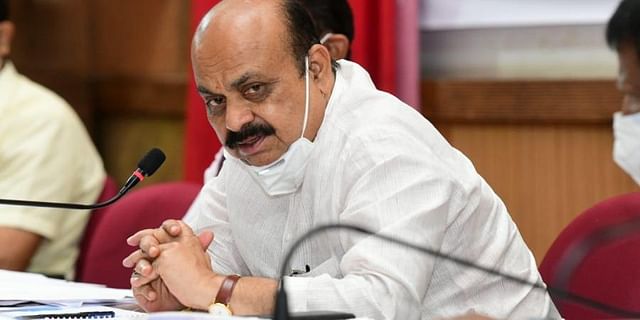
Chief Minister Basavaraj Bommai said that preference will be given to Kannadigas in jobs at private, government and autonomous government institutions. “The government will give priority to get 75 per cent of jobs to Kannadigas in skilled and semiskilled sectors with the effective implementation of the industrial policy,” he added during the Karnataka Rajyotsava celebrations at Kanteerava Stadium on Monday.
-
He said that the government will take a decision in the upcoming cabinet meeting on renaming Mumbai-Karnataka as ‘Kittur-Karnataka’ region, which is a cluster of districts in North Karnataka. “After the unification of Karnataka, our border disputes started and ended. But yet, we continue to hear news of disputes. What is the point in calling it Mumbai-Karnataka?”
-
Stating that mere renaming is not sufficient till the standard of living of people in that region improves, Bommai said the regional imbalance and disparities should go and all regions should grow together. “We are committed to preparing an action plan for the development of Kittur-Karnataka region,” he added.
CONCLUSION
-
The upgradation of 180 government ITI colleges will be completed this month and dedicated to students, he added. “This government has provided an opportunity of studying in one’s mother tongue from primary level to higher education. The New Education Policy enables students to compete globally,” he added.
1...236237238...442Page 237 of 442