The Kingdom of Saudi Arabia will soon introduce a chip-based electronic passport replacing the current passport with a machine-readable passport with additional security features, local media from the gulf country reported.
Prince Bandar Bin Abdullah Al Mashari, assistant minister of interior for technical affairs has revealed the development of the new service, saying that the addition of Saudi passports would soon be replaced with a machine-readable passport (MRP) and National IDs can be renewed from anywhere in the world.
Speaking to reporters during his visit to the Saudi pavilion participating in GITEX Technology Week 2021 at the Dubai World Trade Center, Prince Bandar said that the new electronic passport service will be launched within the next few months.
According to Arabic daily Al-Arabiya, Prince Bandar said that all government agencies that grant visas allowed the registration of biometrics and fingerprints when issuing digital visas without the need to visit embassies.
“The service will be available to everyone according to a timetable to be agreed upon between the Ministry of Foreign Affairs and all government agencies concerned with each type of visas,” he said.
Travellers will no longer need to wait in lines at immigration offices. The new electronic passport can be scanned within a few minutes. However, the electronic passport will be a little heavier and thicker than the regular passport we use.
What is an electronic passport?
An electronic passport, also known as biometrics or digital passport, contains an embedded electronic processor chip that contains the applicant’s biometric information that can be used to authenticate the identity of the passport holder.
A chip embedded to it, the electronic passport will ensure the security of the passport holder’s data.
The chip in the electronic passport adds advanced security features to it. With security features, if anyone tries to tamper with the chip, the system will be able to detect it.
The electronic passport cannot be tampered with and misuse of the passport will be prevented.
Electronic passports will contain all the applicants’ personal details, stored digitally and signed on the chip.
Also, access to information is protected in such a way that the chip cannot be read without physical possession of the passport.
The memory of the said chip is 64KB, while information about 30 international movements and visits can be stored in it.
Another advantage of an electronic passport is that it can be read in just a few seconds, which saves time.
With a mega auction set to take place ahead of Indian Premier League (IPL) 2022, and with also two new teams being added to IPL’s roster, the talking point for the franchises is the number of players they can retain ahead of the auction.
As reported by Cricbuzz, discussions took place between the Board of Control for Cricket in India (BCCI) as well as franchise owners over the number of players who can be retained by each franchise. The franchises can retain up to three Indian players and two overseas players with the overall count for retained players not crossing four.
The report added that a formal announcement on the retention rule will be made after the two new franchises are brought onboard. The sale of the two new teams is expected to take place on October 25 in Dubai.
CONCLUSION
It is unlikely that the existing franchises will be allowed to use Right to Match (RTM) option at the mega auction. Any franchise that opts to retain four players will have to spend 35-40 percent of its money from the overall purse which is said to be 90 crore for each franchise for next year.
The two new franchises may be allowed to pick two to three players from outside the auction.
Hesitancy to take the vaccine and complacency among people over reduced severity of the Covid-19 infection could prove costly if the third wave of the pandemic hits, Health and Medical Education Minister Dr K Sudhakar said on Friday.
Sudhakar said though he was not too sure of the arrival of the third wave, those who have kept away from the vaccine could fall prey to the virus. Those who have taken the first shot should mandatorily take the second one to become completely immune, he added.
He said that around 52 lakh people are due for the second dose, but have not got vaccinated. Health department staff have reached out to them to take their second jab at the earliest. Though the government is making all efforts to contain the infection through a large-scale immunisation drive, the virus cannot be defeated unless people cooperate, he added.
CONCLUSION
While 75% of eligible adults of the nation have received the first dose, the rate in Karnataka is 83 per cent. Similarly, 38% of the state’s eligible population is fully vaccinated, against 28% in the entire nation. The emphasis now is to bring the remaining 62% under the vaccine umbrella,he said.
Reacting to criticism by the Congress on celebrations of one billion doses of vaccine, he said it is a historic achievement that happened in just nine months. Earlier, vaccines would come to India 10-25 years after their discovery, but now the country managed to invent its own vaccine. He also accused the Opposition of spreading canards on the vaccine, and calling it “Modi’s vaccine” which could influence innocent people into avoiding the jab.
The selection process for pilgrims for Haj 2022 will be based on several COVID-appropriate criteria, including complete inoculation with all required doses, and in accordance with the guidelines set by the governments of India and Saudi Arabia, Union Minister Mukhtar Abbas Naqvi said on Friday.
After chairing a Haj review meeting here, Naqvi, who is the Union Minister for Minority Affairs, said the official announcement of Haj 2022 will be made in the first week of November and along with that the process of online application for Haj will also be started.
He said the Digital Health Card, “E-MASIHA” health facility and “E-luggage pre-tagging”, providing all information regarding accommodation/transportation in Mecca-Madina, will be provided to all the Haj pilgrims.
Preparations for Haj 2022 have been started keeping in mind the health and Covid protocols of the Saudi Arabian government and the Government of India, he said.
The entire Haj 2022 process in India will be 100 per cent digital, Naqvi stressed, underlining that India sends the second largest number of Haj pilgrims to Saudi Arabia after Indonesia.
Naqvi said that arrangements for special training for Haj 2022 regarding COVID protocols and health and hygiene are being made in India and Saudi Arabia for the Haj pilgrims.
National and international protocol guidelines due to pandemic position will be implemented and followed strictly during Haj 2022, he said.
Naqvi said the entire Haj 2022 process will be held according to the necessary guidelines to be issued by the governments of India and Saudi Arabia in view of the coronavirus pandemic to ensure health and well-being of the people of the two countries.
Haj 2022 process is being chalked out after deliberations between the Ministry of Minority Affairs, Ministry of Health, Ministry of External Affairs, Ministry of Civil Aviation, Haj Committee of India, Indian Embassy in Saudi Arabia and India’s Consul General in Jeddah and other agencies keeping in view all aspects of challenges posed by the pandemic, a statement said.
The arrangements for Haj 2022 are being made under special circumstances with special norms, rules and regulations, eligibility criteria, age restrictions, health and fitness requirements and other relevant conditions of the Saudi Arabia government amid the pandemic.
Naqvi said the entire travel process for Haj 2022 is being planned with significant and important changes in view of the pandemic and its effect.
These include accommodation, period of stay of pilgrims, transportation, health and other facilities both in India and Saudi Arabia.
Naqvi said more than 3,000 women had applied for Haj 2020 and 2021 under without “Mehram” (male companion) category and their applications will be eligible for Haj 2022 also if they want to go to the pilgrimage next year.
Other women can also apply for Haj 2022 under without “Mehram” category, he added
All the women under without “Mehram” category will be exempted from the lottery system, Naqvi said.
CONCLUSION
The Haj Review Meeting was attended by senior officials including Minority Affairs Ministry Secretary Renuka Kumar, Indian Ambassador to Saudi Arabia Ausaf Sayeed, Joint Secretary of Minority Affairs Ministry Nigar Fatima, External Affairs Joint Secretary (Gulf) Vipul, Civil Aviation Ministry Joint Secretary S K Sharma, Health Ministry Deputy DG Shri P K Sen, Haj Committee of India CEO Mohd Yakoob Shekha; India’s Consul General in Jeddah Shahid Alam and Air India Executive Director Melwin D’Silva.
Expected Haj quota for 2022, Haj Air Charter, Corona protocols, vaccination, medical facilities, health card, transport in Saudi Arabia, Haj deputation of officials, Khadim Ul Hujjaj, Haj training, Embarkation Points and other issues were discussed in the Haj review meeting, the statement said.
Chief Minister Basavaraj Bommai on Friday said that he joined BJP and became Chief Minister of Karnataka only because of Former Chief Minister BS Yeddiyurappa.
Bommai said, ” Yediyurappa is our leader. He visited the constituency several times and farmers interest was never compromised during his reign. BSY’s and C M Udasi’s developmental thinking serves as an inspiration to young people. When Congress stopped the water supply and levied the water tax, C M Udasi fought against it and stood with the farmers. We need to honour their developmental works.”
He further said,” BS Yediyurappa introduced many schemes such as Bhagyalaksmi schemes, bicycle schemes. Bhagyalakshmi schemes were introduced at a time when a girl child was considered a curse. Schemes introduced by Congress never reached the beneficiaries which is why they were sent home by the voters. This constituency has seen developments only because of BS Yediyurappa and CM Udasi. ”
“This time when BS Yediyurappa became the Chief Minister, he launched of Balambida – Hirekounshi projects. He also launched Honkanna and Tilavalli projects. All these projects will be completed by the end of December. Arecanut is being grown in an area of 2500 hectares. We are planning to grow them in an area of 5000 hectares in the coming days,” he added.
“People don’t vote for money, they vote for developments. The opposition is making these kinds of statements because they are scared of losing in the next elections,” he opined.
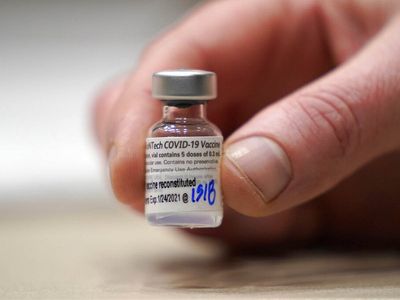
Pfizer/ BioNTech has claimed that the third dose of their COVID-19 vaccine is 95.6 per cent effective against the deadly disease. According to a study published by the vaccine manufacturer, the clinical trial of the vaccine with 10,000 participants of 16 years of age and older showed that the ‘relative vaccine efficiency was 95.6 per cent’ against the deadly disease, a report by news agency AFP said.
“These results provide further evidence of the benefits of boosters as we aim to keep people well-protected against this disease,” Pfizer CEO Albert Bourla said in a statement.
According to a Reuters report citing the statement, the average age of the participants who were included in the survey was 53 years. 55.5 per cent of the participants were between the age group of 16-55 years and 23.3 per cent were above 65 years and older.
Booster shot has a favourable safety profile: Pfizer
According to the company, the detailed results of the trial for peer-reviewed publication will be submitted to the US Food and Drug Administration (FDA), the European Medicines Agency, and other regulatory agencies as soon as possible. It further said that the booster shot also had a favourable safety profile.
According to a Reuters report, Pfizer had earlier said that the efficacy of its two-dose vaccine reduces over time and cited a study which showed that the effectiveness of the vaccine dropped from 96 per cent to 84 per cent four months after the second dose. The US FDA, as well as the EU, have already authorised the third dose of COVID-19 vaccines to patients who have a compromised immune system.
As India marked a historic milestone of administering 100 crore vaccine doses, a number of events marked the achievement. Prime Minister Narendra Modi lauded the historic feat and said that the country now has a strong and protective armour of 100 crore vaccine doses against COVIDF-19.
“Today, this day of October 21, 2021, has been recorded in history. India has crossed the 100 crore vaccine dose mark sometime back. To counter the biggest pandemic in 100 years, the country now has a strong protective armour of 100 crore vaccine doses,” PM Modi said.
Besides world leaders, health bodies and the medical fraternity which showered praises over the landmark achievement, World Health Organisation (WHO) chief Tedros Adhanom Ghebreyesus also congratulated India’s scientists, healthcare workers and the medical fraternity over the one billion vaccine doses mark.
“Congratulations, Prime Minister @narendramodi, the scientists, #healthworkers and people of #India, on your efforts to protect the vulnerable populations from #COVID19 and achieve #VaccinEquity targets,” Tedros Adhanom Ghebreyesus said in a tweet.
#WATCH | Delhi: Qutub Minar illuminated as part of Archaeological Survey of India's initiative to illuminate 100 monuments in Tricolour across the country as India achieves landmark milestone of administrating 100 crore COVID vaccination pic.twitter.com/mU8AEzNjWs
Old Currency Building (pics1-2) & Metcalfe Hall (pics3-4) in Kolkata light up in colours of Tricolour
As part of Archaeological Survey of India's initiative, 100 monuments across India being illuminated in colours of National flag following milestone of 100 cr COVID vaccination pic.twitter.com/Te23NWasna
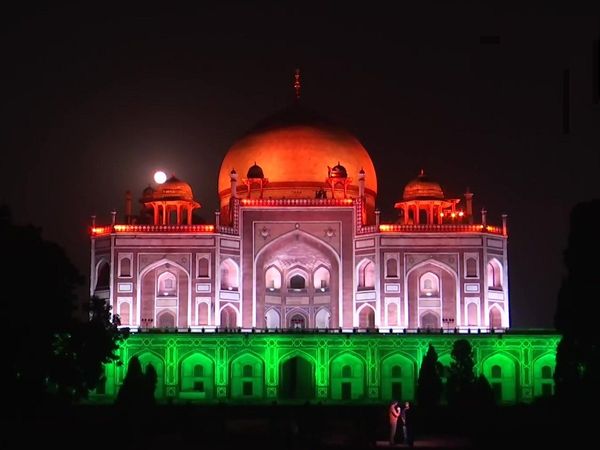
Delhi: Humayun’s Tomb illuminated in colours of Tricolour this evening
As part of Archaeological Survey of India's initiative, 100 monuments across the country are being illuminated in colours of National flag as India achieved milestone of administering 100 cr COVID vaccination pic.twitter.com/HCyoM1ILuF
As part of the Archaeological Survey of India’s initiative, 100 monuments across the country were illuminated in colours of the National flag as India achieved the milestone of administering 100 crore COVID-19 vaccination. Among sites that were lit to mark the occasion on Thursday were Delhi’s Qutub Minar, Red Fort and Humayun’s Tomb, Hyderabad’s Char Minar, Bhubaneswari Temple in Tripura, Old Currency Building and Metcalfe Hall in Kolkata, the Shankaracharya temple in Srinagar among others.
#WATCH | Hyderabad: Char Minar illuminated in Tricolour as part of Archaeological Survey of India's initiative to illuminate 100 monuments in the colours of National flag across the country as India achieves landmark milestone of administering 100 crore COVID vaccination pic.twitter.com/RZ3FDTrdZ9
The Indian Council of Medical Research building, which has been at the epicentre of India’s fight against the deadly disease, was also illuminated in the colours of the Tricolour on the day of India achieving 100 crore COVID-19 vaccination mark
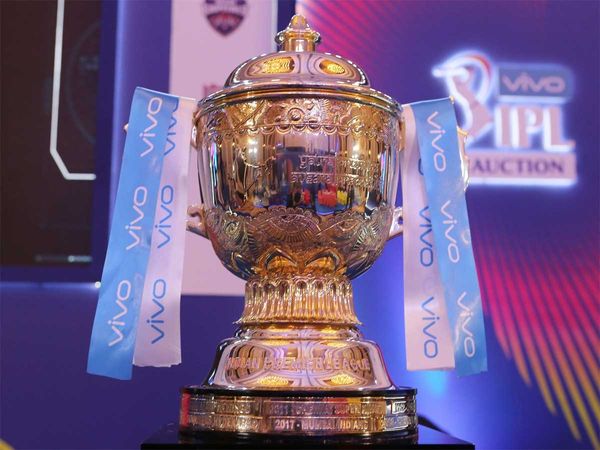
The Indian Premier League (IPL), unarguably the biggest franchise-based cricket league in the world, is set to get bigger with the introduction of two new franchises. From the Adani Group to Manchester United’s owners, the Glazers, several big names have reportedly expressed their interest in owning one of the two new franchises.
\Not just the corporates, a number of state bodies are also interested in being the home of the two new franchises. As per a report in NDTV, Lucknow and Ahmedabad are topping the charts in the race as home venues for the two new franchises.
The Board of Control for Cricket in India (BCCI) recently extended the deadline to receive the tender documents for the 9th and 10th IPL franchises. “Pursuant to requests from various interested parties, BCCI has now decided to further extend the date for purchasing the ITT document till October 20, 2021,” a BCCI release had said.
It isn’t yet known when the Indian board is going to announce the names of the two new owners but there’s a strong chance that the franchises will be based out of Ahmedabad and Lucknow.
List of interested parties to have shown interest in the two new franchises:
Sanjeev Kumar – RPSG.
Glazer Family – Manchester United Owners.
Adani Group.
Naveen Jindal – Jindal Power & Steel.
Torrent Pharma.
Ronnie Screwvala.
Aurobindo Pharma.
Kotak Group.
CVC Partners.
Singapore Based PE Firm.
Hindustan Times Media.
Broadcast & Sport Consulting Agencies ITW, Group M.
Alongside Ahmedabad and Lucknow, Cuttack, Guwahati, Ranchi and Dharamsala were shortlisted as the bases of the two new teams.
It isn’t the first time that the BCCI is expanding the number of franchises in the league. Pune Warriors India and Kochi Tuskers Kerala were part of the league in 2010 before their contracts were terminated.
Rising Pune Supergiant and Gujarat Lions, on the other hand, were roped in as replacement franchises when Chennai Super Kings and Rajasthan Royals were suspended from the T20 league for two years.
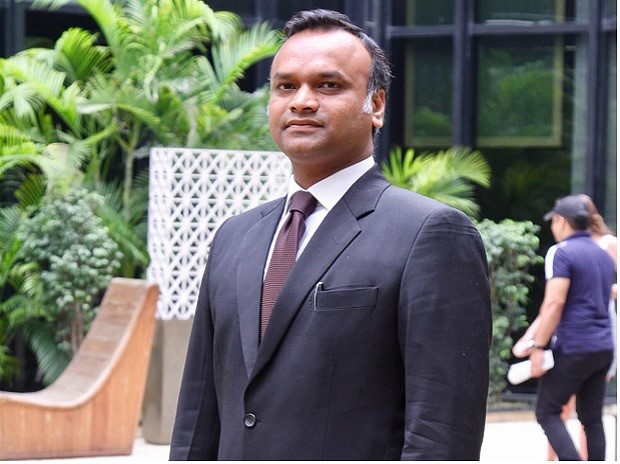
Hitting out at BJP state president Nalin Kumar Kateel for calling Congress leader Rahul Gandhi “a drug addict and peddler”, KPCC spokesperson Priyank Kharge suspected Kateel of consuming drugs to satisfy his frustration caused by the little or no importance being given to him either by his party or the media.
“He (Kateel) is making such comments to catch the attention of the media as he is not getting any importance. Former CM BS Yediyurappa, CM Basavaraj Bommai and MLA Basanagouda Patil Yatnal have overshadowed him. I hope Kateel is not consuming drugs. But looking at the way he is making baseless and personal attacks on Congress leaders, it prompts me to suspect that he is into drugs,” the Chittapur MLA said. He said the drug mafia had become more active during the BJP regime. Priyank presented reports on the alleged involvement of BJP supporters in drug smuggling cases and abuse.
“The number of cases of drug smuggling in Karnataka has gone up from 255 in 2018 to 709 in 2019, and further to 2,766 in 2020. This year till date, the number stands at 3,337. The number of drugs seized has gone up from 1,053 kg in 2019 to 1,912 kg in 2020, and further to 3,255 kg till date this year. As per NCRB data, 1,113 people in 2018 and 1,230 people in 2019 committed suicide due to narcotic drugs.”
He said as much as 3,000 kg of heroin worth Rs 21,000 crore was recently seized at Adani-operated Mundra port in Gujarat. In June this year, another consignment of 25,000 kg of heroin worth Rs 1.75 lakh crore had landed in another Gujarat port. Let Kateel ask the Union Home Minister about his failure in controlling drug mafia,” he said.
During this year’s Diwali celebrations, the Karnataka government is likely to allow the use of green crackers. The Karnataka State Pollution Control Board (KSPCB) officials said they are awaiting guidelines from the Central Pollution Control Board (CPCB) on the matter.
KSPCB member secretary Srinivasulu K said: “As of now no decision has been taken. Based on the CPCB guidelines, we will send our recommendations to the government. However, public health is the priority during Covid19”
Green crackers are developed by the Council of Scientific and Industrial Research-National Environmental and Engineering Research Institute (CSIR-NEERI) lab and product approval for the new formulation is given by Petroleum and Explosives Safety Organisation (PESO).
Mahesh Kashyap, an environmental consultant, requested a robust mechanism to prevent regular crackers from being smuggled into green cracker packets.
“All crackers, whether regular or green, emit smoke. It affects people who are already experiencing symptoms by affecting their respiratory system. This will worsen their condition and make them more vulnerable to the coronavirus. The festival of lights is known as Diwali. The government should impose a total prohibition on the use of any kind of cracker. Furthermore, Covid is not yet finished. Is it possible for the government to tell us if the effect of green crackers on human health during Covid has been investigated?” Kashyap explained.
Last year, after issuing a blanket ban on the bursting of crackers, the state government came under attack from pro-Hindutva groups. Buckling under pressure, former chief minister BS Yediyurappa allowed green crackers.
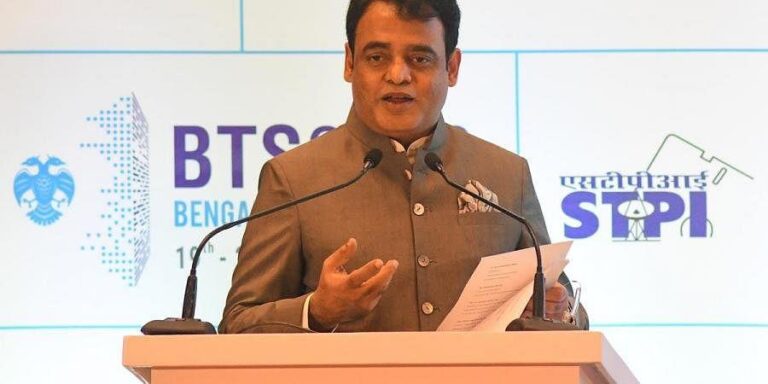
The Karnataka government said Thursday that classes at 150 Industrial Training Institutes (ITIs) around the state that have been turned into “technology hubs” will commence on November 1 in a major announcement on the “evolution” of technical education in the state.
“Tata Technologies Limited (TTL) is slated to inaugurate the 150 ITIs upgraded as technology hubs under the UDYOGA scheme in two weeks. After examining an ITI in Peenya on the outskirts of Bengaluru, Higher Education Minister C N Ashwathnarayan said, “Training of students in these institutes with advanced courses would begin on November 1.”
The minister added admission to the advanced courses is in progress with approval accorded to the curriculum of trades, including Advanced CNC Machining, Basics of Design and Virtual Verification, Artisan Using Advanced Tools, Industrial Robotics and Digital Manufacturing, Manufacturing Process Control and Automation and Mechanic Electric Vehicle.
Ashwathnarayan explained that Junior Training Officers (JTOs) at each of these ITIs would be trained in these new technology areas over a period of three years. “The investment in infrastructure, equipment and training of JTOs will benefit students to study new courses. Around one lakh students from ITIs.
The government also plans to collaborate with TTL to deploy 300 subject matter experts during the first two years beginning November 1. Another 150 subject matter experts are expected to be positioned during the third year to assist JTOs and to handhold the ITI staff in understanding and exploring the new technology areas.
While the total cost of the initiative is estimated at Rs 4,636 crores, 88 per cent of the same is being borne by TTL with the remaining 12 per cent funded by the state government. “In addition to this, the state government is spending Rs 220 crore to create new civil infrastructure. On the technology side, the investment will ensure procuring equipment, including CNC machines, laser cutting machine, additive manufacturing or 3D printing machine, industrial robotics, and advanced software,” Ashwathnarayan said in response to a query.
Once vaccinations for those aged between the age of 12- to 18-year-olds is given the green light, Karnataka is likely to vaccinate 16 and 17-year-olds first.
A member of the state’s Covid-19 Technical Advisory Committee (TAC) told by The New Indian Express. that they had recommended higher-aged children be given the vaccine first, followed by children under 16 years of age. The committee also recommended identifying co-morbid children in the 16-17 age group at the earliest.
Two vaccines — Zydus Cadila’s ZyCoV-D and Bharat Bioech’s Covaxin — are likely to be included in India’s vaccination program for children soon. While ZyCoV-D received Emergency Use Authorisation (EUA) from the Drugs Controller General of India in August Covaxin was recommended by the Subject Expert Committee close to a week ago. Karnataka has so far vaccinated 66.76 per cent of its adult population with the first dose of the Covid-19 vaccine and 33.23 per cent of its adult vaccination has received the second dose.
Fuel prices were increased by Oil Marketing Companies (OMCs) once again on Thursday marking a marathon run of hikes that first began on September 5.
Petrol and diesel in the national capital Delhi reached Rs 106.54 per litre and Rs 95.27 per litre respectively after being raised by Rs 0.35 each.
In Mumbai, petol costs Rs 112.44 per litre and diesel sells at Rs 103.26 per litre; Rs 107.12 and Rs 98.38 in Kolkata; Rs 103.61 & Rs 99.59 in Tamil Nadu’s Chennai.
While most petrol breached Rs 100 per litre mark in most Indian cities some time back, diesel too has crossed the figure in many towns and cities. Pump prices of fuel are maximum in Rajasthan’s Ganganagar where petrol is retailed at Rs 118.23 per litre and diesel at Rs 109.04 per litre.
Petrol and diesel are priced differently in different states due to Value-Added-Tax (VAT) and excise levies. The daily changes, if any, are implemented by state-run OMCs Indian Oil Corporation (IOC), Bharat Petroleum (BPCL) and Hindustan Petroleum Corp Ltd (HPCL) at 6 am every day.
Domestic oil prices remain at record high levels owing to centre and state levied taxes. Also, multi-year high international crude oil prices are responsible for the series of hikes witnessed recently.
Global crude oil prices
International oil prices rallied on Wednesday after US crude inventories at the nation’s largest oil site dipped to their lowest levels in three years as oil stocks fell sharply signalling increasing demand.
However, some relief is anticipated after China’s National Development and Reform Commission said that it would bring coal prices back to a reasonable range and crack down on any irregularities that disturb market order.
“The news rubbed off the crude prices and both Brent and WTI and down by half a per cent this Wednesday early afternoon trade in Asia. Markets now will look to inventory data from the U.S. Energy Information Administration later. Technically, WTI Crude Oil November is still above $81.00 level but a trade below could pull prices up to the support zones at $80.20-$79.50 levels. Resistances zones remain at $82.03-$82.98 levels,” said Sriram Iyer, Senior Research Analyst at Reliance Securities on Wednesday.
Domestic crude oil prices are also trading in the red this Wednesday early afternoon trade tracking weak overseas prices. On the domestic front, MCX Crude Oil November is trading 6200 levels and could see a bearish momentum up to the support zones at 6170-6120 levels. Resistance zones remain at 6250-6330 levels, added Iyer.
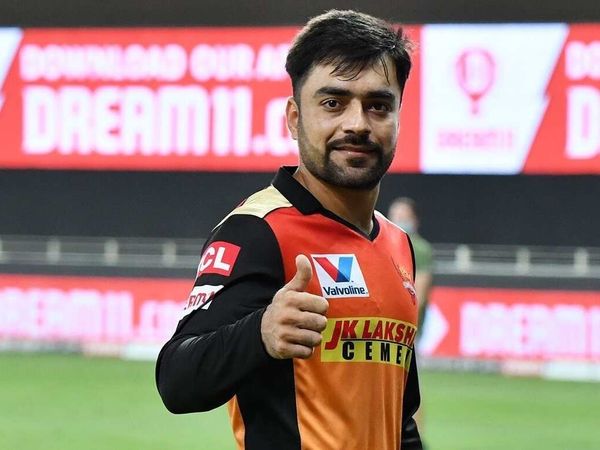
Emerging from a country in perpetual political turmoil like Afghanistan and becoming arguably the world’s best-spinner, Rashid Khan’s rise to stardom has been one of cricket’s most heartwarming stories in recent years.
The wrist-spinner has not only shone on the international stage but made a name for himself in various franchise T20 leagues across the globe in the last few years. One of them is the Indian Premier League (IPL) where he has been a stand-out performer over the last few years playing for the Sunrisers Hyderabad (SRH).
However, as talented as Rashid is, his development has come on the back of a lot of hard work on his game and fitness. Like various top athletes across the globe, the 23-year-old has had to make a lot of sacrifices to establish himself among the elite in the game which includes changes in his lifestyle.
Rashid stressed that improving his fitness has been being a key factor in improving his consistency as a player which he only realized after playing in the IPL for the first time in 2017.
Talking to EspnCricinfo’s Cricket Monthly, he said, “Before 2017 – when I played the IPL for the first time – my consistency wasn’t as good, and the reason for that was my fitness. After playing a couple of games, my body wasn’t ready for the next couple, and that’s why the performances weren’t coming. But since the 2017 IPL, I saw how players took care of their fitness.”
He added, “I was hardly going to the gym before that. Coming from Afghanistan, it’s pretty hard to understand these things when you don’t have the kind of facilities to see how important fitness is. It is more cricket there than about fitness.”
Rashid also spoke about the drastic changes he made in his diet to stay fit.
“I used to eat so much unhealthy food: biryani, breads, a bit of sweets. But since the 2017 IPL, I have stopped all that. Now mostly I have barbecue or grilled food along with salad. I decided if I want to be the best and if I have to improve my skills, I have to be fitter.
CONCLUSION
“For a couple of years, I totally stopped eating biryani, breads and sweets. I have them once a month or when I decide to have a cheating day. But I do gym regularly. If I miss my gym, I don’t eat properly. As long as I can do my workouts, I can eat properly. That’s the kind of mindset every cricketer should have, because this is our job and we have to be fully committed to it. As long as you are fully committed, the performance will speak for itself,” said Rashid.
Rashid is currently with the Afghanistan national team for the 2021 T20 World Cup in UAE and Oman.
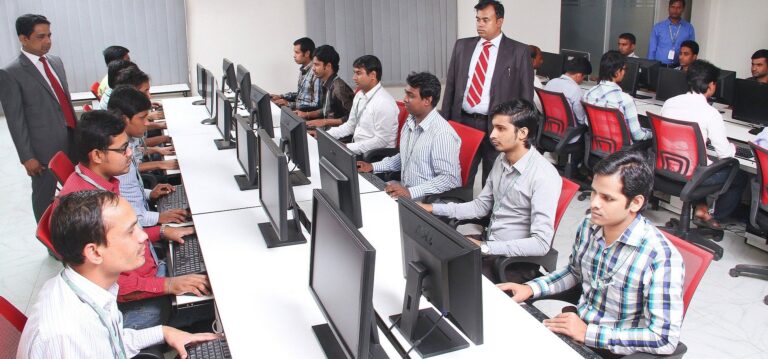
Good news for job seekers as a one-day job fair is going to be held in Hyderabad on October 22.
On the directives of the Telangana Commissioner of Collegiate Education, the job fair is scheduled to be held at Chanchalguda Government Degree College from 11 am on Friday.
The fair will be supervised by Dr. Pollapally Venkatramana, the Principal of the Chanchalguda Government Degree College.
In the fair, 10 Multi-National Companies (MNCs) will participate to provide job opportunities to the deserving candidates.
Dr. Venkatramana said the objective of the job fair is to provide both part-time and full-time job opportunities.
In this regard, the principal of the college has advised the candidates to appear in the fair with a set of xerox copies of their academic qualifications and personal ID proofs.
If everything goes well, the Karnataka government is all set to establish the ‘Bengaluru Design District’ on lines of Dubai Design District popularly known as d3.
Dubai District Design (d3) established in 2013 is a space where the world of design, art, and fashion co-exist, where new perspectives are provided and a change of the ordinary to the extraordinary is made possible.
Keeping in mind to set up the proposed ‘Bengaluru Design District’, C.N. Ashwath Narayan, the Minister for IT/Bt and S&T, GoK, visited the d3 (Dubai Design District) on Sunday, along with senior officials among others.
C.N. Meena Nagaraj, Director of IT, Arun Director Digital ISDC, Ivan A. Fernandes, Managing Director Regent Technologies, Sathar Al Karan, Founder of ArtUAE visited Dubai Design District and Al Serkal Avenue, Dubai to explore the Design, Art and technology ecosystem in Dubai for the establishment of the same in Bengaluru.
Majid Almari, CEO of Real Estate registration and services Dubai Land Department, Govt of Dubai received the minister and had a discussion for future collaborations pertaining to various initiatives.
“d3 enables disruptive thinking to create a world of endless possibilities through beautifully designed spaces and unique community offerings. Taking inspiration from d3, the Karnataka government has the objective of setting up a design district to an extent of 100-150 acres in Bengaluru. Along with this the government also wants to organise ‘Banglore Design Festival’ as the world’s largest design festival” the Minister explained.”d3 enables disruptive thinking to create a world of endless possibilities through beautifully designed spaces and unique community offerings. Taking inspiration from d3, the Karnataka government has the objective of setting up a design district to an extent of 100-150 acres in Bengaluru. Along with this the government also wants to organise ‘Banglore Design Festival’ as the world’s largest design festival” the Minister explained.
CONCLUSION
Narayan further said, “Bengaluru Design District will be a global outsourcing destination for various design domains. It will be a creatively stimulating environment that will keep creators, makers, and designers in one place. It will benefit Corporates design centers, Media and Advertising Companies, Product / Service Design companies, Design Startups, Digital design companies among others.”
The Design District project is proposed by ISDC (International Skill Development Corporation) and Jain university in association with the World Design Council, UK.
Star kid Aryan Khan is currently in Arthur Road prison, Mumbai after being arrested by the Narcotics Control Bureau in a case of alleged seizure of drugs from a cruise ship on October 3. He has spent nearly 18 days in custody.
His parents Shah Rukh Khan and Gauri Khan have been restless and are devastated as they did not expect their son to be under custody for so long. Citing a close friend of the family, Bollywood Hungama revealed that SRK and Gauri have been praying a lot as they await Aryan’s bail plea hearing today. The source also revealed that the star couple wants their son Aryan to be under house arrest for at least two months after his bail.
“They don’t know what exactly their son is guilty of. They just want him home. They want Aryan to be under house arrest for at least two months. No parties, no late nights. Not even outings with friends. Aryan will have to be very careful of the company that he keeps from now, and his parents will make sure of that,” the source told the news portal.
Aryan Khan’s next bail plea hearing is scheduled to be held today, October 20.
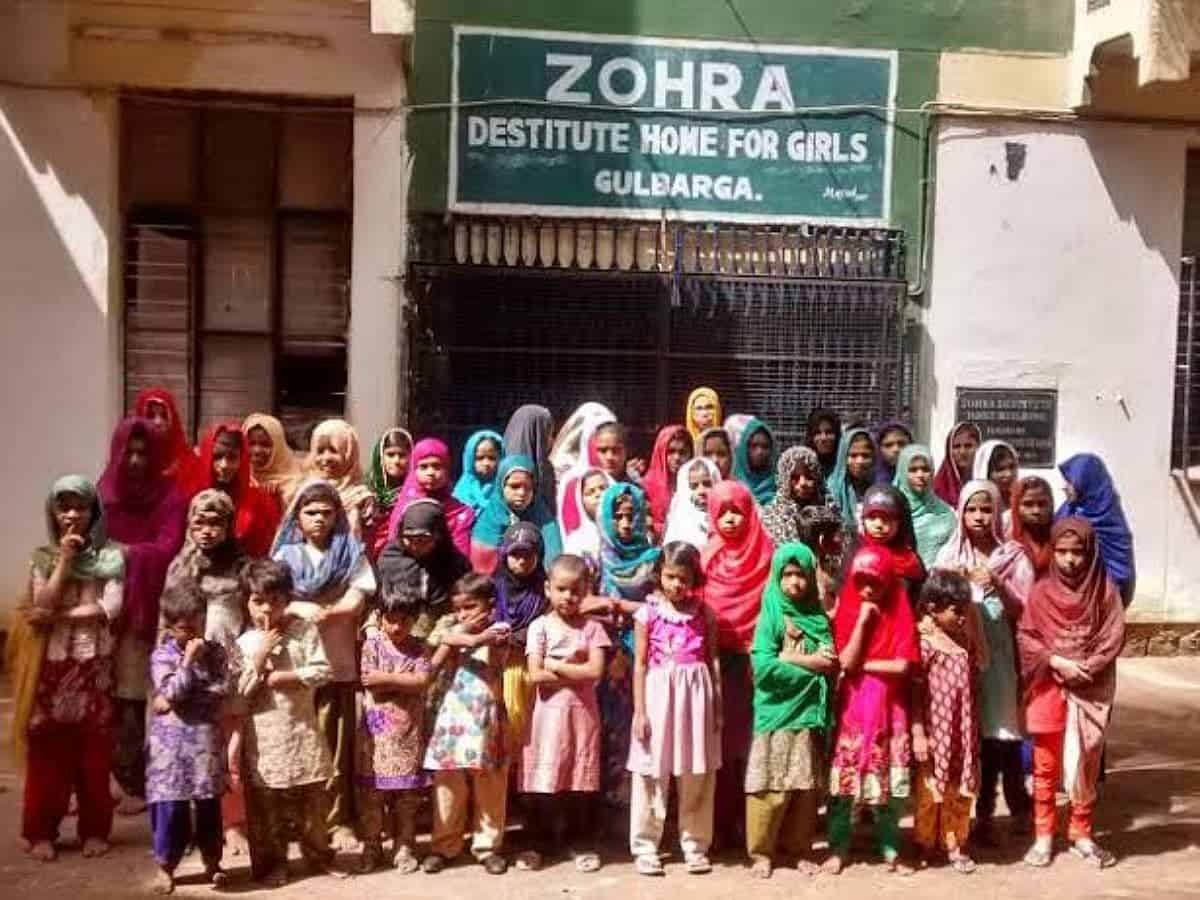
Zohra Destitute Home for Girls in Gulbarga, Karnataka has supported many orphans with their higher education by aiding them in medicine, engineering, degree, journalism, and other allied fields.
Two destitute girls have secured government seats in MBBS and since then have been employed in rural areas as doctors on behalf of the government. Zohra trust has made education more accessible to orphans for over 40 years.
Zohra Home run by the Zohra Women and Children Charitable Welfare Trust was set up by Mohammed Nasir Ali and a group of social workers in 1979 on the Old Jewargi Road in Gulbarga. It is located on half an acre plot of land and can accommodate 250 girl inmates in its 60 room facility. The entire home is looked after by a single warden and four cooks man the kitchen.
The trust was set up with an initial contribution of Rs 100 from each of the seven trustees and in the year 1979 it started functioning with eight girls. Currently, the trust houses over 270 girls.
Speaking to sources , President of the trust Mohammed Azam Ali said, “One of the orphan girls who have been admitted in our destitute home in the year 1995, has become the headmistress of our Zohra Kannada Medium School.”
According to Azam Ali, 25 girls have completed diplomas in engineering, four girls have completed bachelor in engineering, two girls have completed their bachelor’s degrees in architecture and have secured jobs.
One of the orphans, Amreen has been taken care of by the trust since she was six years old after her father’s demise and is the first girl from the orphanage to become a doctor and work as a medical officer.
”Zohra orphanage looks after me and my four siblings and tends to our needs like food, clothing, education, medical treatment,” Amreen told
Other achievements by Zohra Women and Children Welfare Charitable Trust
In the year 1995, the trust started industrial training center for girls.
In the year 1997, the trust started a primary school in Kannada medium for girls and later established a high school both of which are recognised by state government.
Zohra Kannada medium School
In the year 2004 the trust has started Zohra minority girls hostel for 150 girls.
In the year 20212-2013, the trust started a working women hostel and so far 600 have been benefitted.
In the year 2016 the trust has constructed one marriage hall for the poor.
The trust has so far conducted the marriage of 122 destitute girls.
The trust have also started basic education, tailoring and toy-making centers for girls from villages by providing them with food and accomodation and Quran learning.
The trust also helps widows with monthly pension and almost 400 have been benefitted.
As Covid-19 dies down, the state is facing the rise of another epidemic – dengue – which has come with a reckoning for a state beset by abnormal amounts of rainfall this year.
According to the official data, the state has already recorded 3,681 cases of dengue among 51,151 people tested this year. In comparison, last year, from January to December 2020, the state had recorded 3,685 cases.
Experts noted that the increasing numbers are a direct consequence of the larger amounts of rainfall the state has received this year, resulting in more pools of stagnant freshwater – an ideal breeding ground for the larvae of the Aedes aegypti mosquito. According to the Indian Meteorological Department (IMD), the state has been witness to a 60 per cent increase in rainfall in the last week alone.
State Health Commissioner D Randeep said that heavy rainfall usually has the end result of disrupting the life cycle of the aedes by displacing stagnant water. However, the copious water collection could herald more cases in November. The dengue season normally transpires between August to October, he said.
Data from the Bruhat Bengaluru Mahanagara Palike (BBMP) and the Department of Health and Family Welfare shows that while the city recorded 941 positive cases among 6,837 people tested in September, that October’s numbers are a fraction of this: 260 positive cases up to October 17, with 1,832 people having been tested.
“Dengue cases usually come down amid heavy rains, such as the situation we are currently in. But they will increase once the rains stop,” added Special Commissioner (Health), Dr Thrilok Chandra of BBMP.
He and Randeep added that larval surveillance teams are at work mitigating stagnant water sources.
Nevertheless, an increase has been already noted at one city hospital. “There have been day-by-day increases of people turning up with the severity of the disease,” said Dr Dinesh V Kamath, an internal medicine specialist at Manipal Hospital (Malleswaram).
“Four to five out of every 10 dengue cases that we see, have the moderate disease. While we cannot predict what the dengue incidence rate will be like in future, evidence shows that the numbers will increase over the course of the next two weeks. It is headed towards a peak.”
Our weather prediction shows that the heavy rains will not let up for the next five days at least. Furthermore, historically, the northeast monsoon onset date is October 20 – which means a further bout of heavy rain,” explained Dr Geeta Aghnihotri of IMD’s Bengaluru office.
CONCLUSION
“We are predicting a further bout of heavy rain on October 21 and 22 along with south belt districts of the state,” she added.
According to the IMD, Bengaluru, for example, receives an average of 98 cm of rain a year (between January and December). This year, the city has already received 115 cm.
The Centre is reportedly considering tweaking how the defination of ‘employment’ to widen coverage to include new forms of the workforce, including gig and platform workers and Anganwadi workers, ahead of the launch of a new National Employment Policy that will seek to ensure a fair deal to workers, the Economic Times mentioned in a report.
The need for a revised and comprehensive definition of employment is being felt because of the evolving forms of employment in India, a senior government official told the publication.
“The new form of workers, including gig and platform workers, need to be factored in when the government comes up with India’s first National Employment Policy,” the above-mentioned official said on condition of anonymity.
The revised definition is expected to address the widespread issue of disguised employment, under which workers are denied rightful dues as their work is not covered in India’s current definition of employment.
Under the new policy and the revamped definition, the employers’ liability may rise in terms of minimum wages, weekly rest and annual leaves, along with other worker-related benefits.
The Industrial Relations Code, 2020 defines ‘employee’ as any person (other than an apprentice engaged under the Apprentices Act, 1961) employed by an industrial establishment to do any skilled, semi-skilled or unskilled, manual, operational, supervisory, managerial, administrative, technical or clerical work for hire or reward while an ‘employer’ means a person who employs, whether directly or through any person, or on his behalf or on behalf of any person, one or more employee or worker in his establishment.
This definition assumes an employer-employee relationship, which may be missing in some of the newer jobs.
The International Labour Organization (ILO) has been advocating that nations look beyond the conventional definition of employment. In its Employment Relationship Recommendation, 2006, the ILO had said “for the national policy for the protection of workers in an employment relationship, the determination of the existence of such a relationship should be guided primarily by the facts relating to the performance of work and the remuneration of the worker.”