India reliable partner of US, working on at least 3 coronavirus COVID-19 vaccines

Washington DC: The Indian and American pharmaceutical companies are currently working together on at least three possible vaccines to fight the coronavirus, India Ambassador to the United States, Taranjit Singh Sandhu, said on Saturday.

Sandhu said that India is a “reliable partner” to the US and has been able to fulfill whatever assistance Washington has required.”Both International Centre for Medical Education and Research (ICMER) and here the Centers for Disease Control and Prevention as well as the National Institutes of Health (NIH), have been collaborating for a number of years.

There is a close cooperation exchange of information. Plus, as I said, collaboration, the at least three vaccines, on which Indian companies, and the United States companies are working together,” Sandhu said.

He further noted that this is not the first time when the two countries are collaborating over the exchange of information related to medical research. In fact, he said, about two or three years back the ICMR and the CDC had together developed a vaccine for another virus, named the rotavirus. “It has helped not only India but the United States as well along with many other countries,” Sandhu said.

The US and India have been closely cooperating during COVID-19 crisis and are providing all possible assistance to each other. The leaders of the two countries are in regular touch since the outbreak on the virus.

The US has provided almost USD 5.9 million towards health assistance to India to curb the spread of COVID-19. Meanwhile, India also exported a consignment of hydroxychloroquine (HCQ) tablets to the US, last month, after a request by President Donald Trump.

The HCQ is an anti-malarial drug and has only been recommended as prophylaxis of COVID-19 as per the national taskforce for COVID-19. It is not a cure but this protocol has been recommended by the national task force for mostly frontline healthcare workers and has been approved by the Drug Controller General of India (DCGI) for restricted use in an emergency situation.

Apart from domestic use, India has also exported close to three million of HCQ tablets to more than 87 countries, garnering praise from heads of state of various nations.

Karnataka to extend work hours, relax labour laws?

A video conference between Labour Secretary Captain P Manivannan and the Confederation of Indian Industries (CII) set off speculations Saturday that the government will extend work hours and relax labour laws on the lines of some other BJP-ruled states.

That Manivannan may have given some assurances to the CII came to light when the state chapter of the All India Central Council of Trade Unions (AICCTU) expressed concerns on social media.

With some of AICCTU’s representatives who have taken part in the meeting, the trade union tweeted: ‘Dear all, get set to work maybe 12-14 hours a day.

Labour department told CII that the Cabinet approval for increasing the working hours to 72-100 hours is pending. This is a violation of the Factories Act which stipulates 48 hours per week.’

Despite the Centre stating clearly that there should be no wage or job cuts at this time, the labour secretary told CII that even in such a scenario, action against companies would be taken after ascertaining whether the company is making profits, according to the Twitter thread.

Also, the state government would apparently write to the Centre asking to reduce ESI/PF deductions, apart from stating that essential services companies could initiate action against employees who did not report to work, the trade union claimed, criticising the government for such a move.

When contacted, Manivannan clarified that the discussion on the extension of work hours was misconstrued. ‘The discussion was 100 additional work hours over four months. It was not about increasing it to 100 hours per week.’

Moreover, the government had not arrived at any decision on any of these aspects and it was still at the level of discussion, he added. ‘They (the CII) had some concerns. I listened to them. We will work on them soon,’ he said.

Labour Minister Shivaram Hebbar also said the government had not taken any decision either on the extension of work hours or on easing of labour laws at the moment.

The BJP-ruled Uttar Pradesh, Madhya Pradesh and Gujarat have announced the relaxation of their labour laws in a bid to give a fillip to economic activities that came to a standstill because of the COVID-19 lockdown.

People must learn to live with the virus, follow prevention guidelines: Government

“We have to learn to live with the virus,” the government said on Friday, urging people to make COVID-19 prevention guidelines a part of their lives as a behavioural change amid easing of lockdown restrictions and migrant labourers returning home.

Addressing a press conference, joint secretary in the health ministry Lav Agarwal said there has been a reduction in the doubling time of COVID-19 cases in the country from 12 days till two days ago to 10 now because of the spike in cases at some places, even as he asserted that the peak of the disease can be avoided if the prescribed dos and don’ts are followed.

“As we talk of relaxations to the lockdown and of migrant workers returning back to their respective homes, there is a big challenge in front of us that we also have to learn to live with the virus,” he said.

“And when we are talking about learning to live with the virus then it is very important that the guidelines that are there on saving oneself from the virus are adopted in the community as a behavioural change,” Agarwal said.

It is a big challenge and the government needs community support for it, he said.

Delhi Chief Minister Arvind Kejriwal had also recently said people will have to be ready to live with the novel coronavirus and that time has come to re-open the city, as the government announced certain relaxations.

Giving district-wise situation of coronavirus cases, Agarwal said there are 216 districts in which no COVID-19 case has been reported till date.

The health ministry on May 1 classified 733 districts in the country as 130 in the red zone, 284 in the orange zone and 319 in the green zone, taking into consideration incidence of cases of COVID-19, doubling rate, extent of testing and surveillance feedback.

Forty-two districts have had no fresh cases in the last 28 days while 29 districts have reported no new cases of COVID-19 in the last 21 days. Also, 36 districts have not registered any fresh cases in the last 14 days and 46 districts have had no fresh cases in the last seven days, he said.

Asked about AIIMS Delhi Director, Dr Randeep Guleria’s remarks citing modelling data that the peak of the disease in India may be reached in June or July, Agarwal said, “If we follow the prescribed dos and don’ts, we may not reach the peak in number of COVID-19 cases and our curve may remain flat.”

If the precautions are not taken and guidelines are not followed properly, there can be chances of spike in cases, he warned, stressing that community support and field action should continue so that the country does not reach the peak

Responding to a question on how many cases India may witness if the peak comes in June- July, the official said different organisations have projected a figure of some thousands to some crores based on their analysis.

“They are widely varying that determining field level action based on that will be slightly difficult. We do an analysis based on the current growth rate of cases and doubling rate, according to analysis, our doubling rate is now 10 days and simultaneously, we do an analysis of districts and cities where cases are rising.

“On the basis of that we see where more action and additional efforts are required to increase the doubling time of cases,” Agarwal said.

Stating that some states like Maharashtra, Gujarat, Delhi, Rajasthan and Madhya Pradesh have witnessed a rise in cases during the last few days, Agarwal stressed the need to strengthen containment efforts to stop the rise, along with proper adherence to measures such as physical distancing at field level.

“As migrant workers return to their respective home states, it is essential that during movement all precautions regarding infection prevention and management are taken and the rules at the quarantine and isolation facilities are followed,” Agarwal said.

“We request workers to understand that this is for their own benefit, their people, village and city. They should follow physical distancing, hand, respiratory and environmental hygiene and support the local administration,” he said.

Providing details on recovered patients, Agarwal said India’s recovery rate stands at 29.36 per cent with 16,540 COVID-19 patients having cured till now, including 1,273 who recovered in the last 24 hours.

He said 3.2 per cent of total active COVID-19 cases are on oxygen support, 4.2 per cent in ICU and 1.1 per cent on ventilator:

A total of 3,390 COVID-19 cases and 103 deaths have been reported in the last 24 hours till Friday 8 am, taking the total number of cases to 56,342 and death toll to 1,886, according to the ministry.

Agarwal also said that the ICMR will conduct randomised controlled clinical trials to assess the safety and efficacy of convalescent plasma therapy in COVID-19 patients in 21 hospitals.

The hospitals where the trials will be conducted comprise five from Maharashtra, four from Gujarat, two each from Rajasthan, Tamil Nadu, Madhya Pradesh, UP and one each from Karnataka, Chandigarh, Punjab, Telangana.

During the briefing, Agarwal also said the railways has converted 5,231 coaches into COVID Care Centres which will be placed at 215 identified railway stations and will be used for treatment of very mild and mild COVID19 patients.

SOURCE: TIMES OF INDIA

Protesters stop ambulance, keep bodies on road demanding Vizag plant be shut

Hundreds of people belonging to RR Venkatapuram and adjoining villages on the outskirts of Visakhapatnam in Andhra Pradesh on Saturday gathered at the LG Polymers Ltd, demanding immediate closure of the plant from where there was a leakage of poisonous Styrene gas vapour on Thursday day that claimed 12 lives.

Tension prevailed at the plant in the morning as agitated people, returning to their villages after two days, stormed the plant and tried to barge into the premises raising slogans demanding that it be shut immediately and moved elsewhere.

Around the same time, ambulances carrying the bodies of some of the victims from King George Hospital mortuary to the villages for cremation were passing by. The angry villagers stopped them and kept the bodies on the road in front of the company gate to stage a dharna.

The police had a tough time controlling the protesters even as the force was mobilised in large numbers in view of Director General of Police Gautam Sawang’s visit to the plant.

A woman protester fell on the feet of the DGP demanding justice for the people by taking immediate action against the company. However, she was taken away by the women constables posted at the spot. The DGP was escorted out of the premises with heavy police security.

‘It has been two days since the cases were booked against the management of LG Polymers. But no action was taken against any of the company officials till date. We shall not allow the company to run under any circumstances,’ an angry villager told the reporters.

With the situation getting tense, the police had to resort to lathi-charge to disperse them. They bundled scores of protesters into vans and took them away to the Gopalapatnam police station. But within no time, many others assembled at the spot and gate-crashed into the company premises.

Visakhapatnam police commissioner RK Meena quickly intervened and, with the help of additional forces, managed to force the protesters out of the company premises. The police managed to shift the bodies from the spot to Venkatapuram village for cremation.

State minister for tourism M Srinivasa Rao and other YSR Congress party leaders tried to convince the angry villagers, saying that the government would make efforts to see that the LG Polymers is moved out.

‘The government has appointed a high-powered committee to probe the accident and take stern action against the company. Please bear with us,’ Srinivasa Rao appealed to the villagers with folded hands.

The DGP told reporters that the Styrene gas leakage was under complete control and it would be neutralised by evening.

‘We are not here to protect anybody. The investigation has begun and we shall take action based on the investigation. There is no need for the villagers to get agitated,’ he said.

Petrol, diesel prices remain unchanged on Saturday. Check rates in key cities here

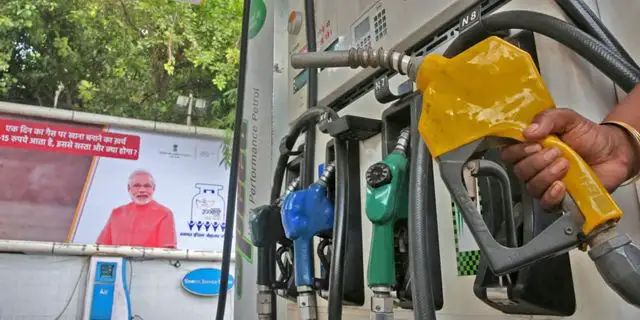
New Delhi: Petrol, diesel prices on Saturday remained unchanged in key cities across the country. The central government recently raised excise duty on petrol and diesel by Rs 10-13 per litre. However, state-run oil marketing companies absorbed the hike and chose to offset it against the fall in crude oil rates. In Delhi, a litre of petrol today was priced at 71.26, while diesel was retailing at Rs 69.39 per litre

Petrol, diesel price in key cities:

In Mumbai, petrol and diesel price remained unchanged at Rs 76.31 a litre and Rs 66.21, respectively. In Kolkata, while petrol was retailing at Rs 73.30 per litre, diesel price remained stagnant at 65.62. In Chennai, petrol price remained unchanged at Rs 75.54 per litre and diesel retailed at Rs 68.22 (unchanged) per litre.

In Gurugram, a litre of petrol was priced at Rs 71.21, while diesel was retailing at Rs 63.18 per litre. In Noida, one has to shell out Rs 74.05 for a litre of petrol Rs 63.97 for a litre of diesel. In Bengaluru, a litre of petrol was retailing at Rs 73.55 whereas diesel was priced at Rs 65.96 per litre, no change in prices.

States where petrol, diesel rates have gone up during lockdown:

Despite OMCs absorbing the excise duty hike on the two automobile fuels, petrol, diesel rates have still gone up during the lockdown as 15 state governments have hiked Value Added Tax (VAT) on petrol and diesel so far.

Across cities like Delhi, Mumbai, Pune, Bengaluru, Noida, Gurgaon and Chandigarh, petrol and diesel rates went up during lockdown as the respective state governments hiked VAT to shore up falling revenues.

Delhi, Maharashtra, Karnataka, Tamil Nadu, Uttar Pradesh, Punjab, West Bengal, Tripura, Goa, Rajasthan, Meghalaya, Assam, Nagaland, Arunachal Pradesh and Haryana are the states where petrol, diesel rates have gone up during the lockdown. Besides, the union territory of Chandigarh has also hiked VAT.

Petrol, diesel VAT hike:

The cash-strapped Delhi government hiked the price of diesel by Rs 7.10 per litre and that of petrol by Rs 1.67 a litre. Tamil Nadu govt’s VAT hike led to a retail price hike of Rs 3.25 per litre of petrol and Rs 2.50 per litre of diesel. The Haryana government also hiked VAT by Re 1 per litre on petrol and Rs 1.1 per litre on diesel. Uttar Pradesh government imposed the additional tax on petrol by Rs 2 per litre, and Re 1 per litre for diesel

Other states like Maharashtra, Karnataka and West Bengal had hiked VAT during the lockdown. The Rajasthan government has also increased VAT on petrol and diesel. Petrol in the state is costlier by 2 per cent and diesel by 1 per cent. The Uttarakhand government, on the other hand, has increased the price of petrol and diesel per litre by Re 1 and Rs 2 respectively by imposing healthcare tax.

CBSE Exams 2020: Final Dates For Pending Class X, XII Board Examinations Announced – Details Here

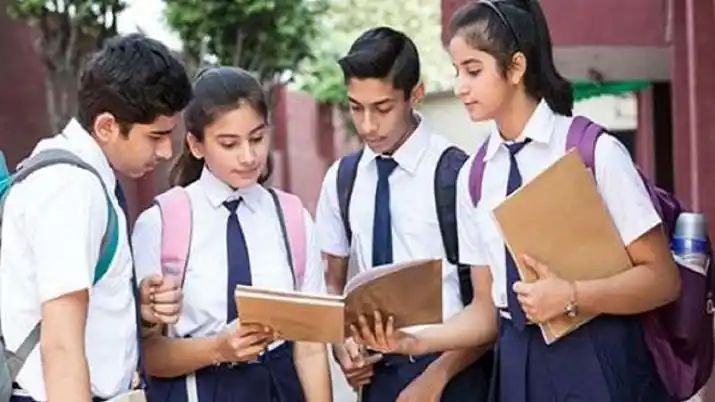
New Delhi: The Central Board of Secondary Education (CBSE) on Friday announced dates for pending class X, XII board examinations, which were postponed due to coronavirus pandemic. Issuing a notification, the board said that the remaining papers of class X and XII will be held between July 1- 15.

Reports had claimed that the government has directed CBSE to hold papers before JEE main examinatons, scheduled to be held between July 18-23.


The dates come a day after Union Human Resource Development Minister Ramesh Pokhriyal announced that JEE Advanced exam will be conducted on August 23.

Study says most COVID-19 patients may lose sense of smell by third day of infection

By PTI

NEW YORK: Loss of the sense of smell is most likely to occur by the third day of infection with the novel coronavirus, according to a study of over 100 COVID-19 patients which may help public health experts better identify those carrying the virus without adverse symptoms.

The telephonic study, whose results were published in the journal Otolaryngology-Head and Neck Surgery, examined characteristics and symptoms of 103 patients who were diagnosed with COVID-19 over a six-week period.

The patients from Aarau, Switzerland provided data on the number of days they had COVID-19 symptoms, and the timing and severity of their loss of smell, said study co-author, Ahmad Sedaghat from the University of Cincinnati in the US.

Of the 103 patients, at least 61 per cent reported reduced or lost sense of smell, Sedaghat said, adding that the mean onset for reduction or loss in the sense of smell was 3.4 days.

“We also found in this study that the severity of the loss of smell is correlated with how bad your other COVID-19 symptoms will be,” Sedaghat said.

“If the anosmia, also known as loss of smell, is worse, the patients reported worse shortness of breath, and more severe fever and cough,” he added.

According to the scientist, the relationship between decreased sense of smell and the rest of the COVID-19 is something to be aware of.

“If someone has a decreased sense of smell with COVID-19, we know they are within the first week of the disease course, and there is still another week or two to expect,” he added.

The findings indicated that a decreased sense of smell may be an indicator of patients early in the disease course as well as those who may go on to develop more severe symptoms, like shortness of breath, Sedaghat said.

He cautioned that while the loss of smell is an indicator of COVID-19, it’s not the only factor.

“When you start to experience serious symptoms of COVID-19 which include shortness of breath and respiratory distress, that’s when you should become alarmed,” he said.

Younger patients and women in the study were also more likely to experience a decreased loss of smell, the study noted.

About 50 per cent of study patients experienced a stuffy nose and 35 per cent experienced a runny nose.

According to Sedaghat, this is important since previous studies indicated that these nasal symptoms were rare in COVID-19, and these symptoms were attributed to allergy and not the novel coronavirus.

“This just means that greater awareness is needed of COVID-19’s nasal symptoms so people are not running around sneezing in public and thinking it is okay since this is just allergies,” Sedaghat said.

“It very well could be COVID-19 and wearing masks as protective gear for others you encounter is a good idea,” he added.

Understanding more about loss of smell and COVID-19 is important for a public health perspective, the scientist cautioned.

“No one is going to die because of a loss of the sense of smell and it’s not the symptom that will kill anyone,” he said, but adding that,” it is important because it helps us to identify these COVID-19 patients as asymptomatic carriers so they don’t spread the disease to others.

Train runs over migrant workers in Aurangabad district, at least 14 killed

Aurangabad: At least 14 migrant workers sleeping on rail tracks were crushed to death by a goods train in Aurangabad district of Maharashtra on Friday morning, police said.

Two other labourers were injured in the accident which took place at 5.15 am under the Karmad Police station jurisdiction, an official said.

The workers, who were walking to Bhusawal from Jalna in central Maharashtra along rail tracks, were returning to their home state Madhya Pradesh, an official at the Karmad police station told PTI.

They were sleeping on rail tracks due to exhaustion when they were run over by the goods train coming from Jalna, around 40km from Karmad, he said.

“The labourers, working in a steel factory in Jalna, left for their home state on foot last night. They came till Karmad and slept off on the tracks as they were tired,” police officer Santosh Khetmalas said.

Fourteen workers lost their lives in the accident, while two others were injured, he said, adding three labourers who were also part of the group survived as they were sleeping some distance away from the rail tracks.

The injured are undergoing treatment, Khetmalas said.

The migrant workers, rendered jobless due to the coronavirus-enforced lockdown and desperate to go to their native places, were walking along the rail tracks apparently to escape police attention.

A video clip from the scene of the tragedy shows the bodies of migrant workers lying on the tracks and nearby with their meagre personal belongings scattered around.

Prime Minister Narendra Modi expressed anguish over the death of 14 migrant workers in the train accident.
He said all possible assistance is being provided.

Extremely anguished by the loss of lives due to the rail accident in Aurangabad, Maharashtra. Have spoken to Railway Minister Shri Piyush Goyal and he is closely monitoring the situation. All possible assistance required is being provided.

In a tweet, the prime minister said, “Extremely anguished by the loss of lives due to the rail accident in Aurangabad, Maharashtra. Have spoken to Railway Minister Shri Piyush Goyal and he is closely monitoring the situation”.

Maharashtra and Madhya Pradesh governments announced financial aid of Rs 10 lakh – Rs 5 lakh each – to families of the deceased.

18-yr-old Mumbai boy’s startup has ₹6 crore annual revenue. Here’s what he did

Image Source : TWITTER

18-yr-old Mumbai boy’s start-up has ₹6 crore annual revenue and Ratan Tata as investor

Business tycoon and chairman emeritus at Tata Sons, Ratan Tata, on Thursday, picked up 50 percent stakes of a start-up by a Mumbai-based 18-year-old entrepreneur, who started his business two years ago with funding from his parents. The head honcho of the Tata group invested an undisclosed amount in Arjun Deshpande’s ‘Generic Aadhar’, a unique pharmacy retail chain, which is different from various other online pharmacies and apps available on the internet.

Based on a unique pharmacy-aggregator business model, Generic Aadhar sources generic drugs directly from manufacturers to the pharmacies across various cities. The company provides medicines at much cheaper rates than the market price by eliminating 16-20 per cent wholesaler margin. As of now, the start-up claims to have annual revenue of Rs 6 crore. Deshpande is aiming at a revenue of Rs 150-200 crore in the next three years.

Generic Aadhar aims to bring affordable medicines to the masses, has already tied up with 30 retailers from Mumbai, Pune, Bangalore, and Odisha following a profit-sharing model.

The company has currently employed 55 people which include pharmacists, IT engineers, and marketing professionals. The company mainly supplies diabetes and hypertension drugs but will soon start offering cancer drugs at much lower rates than the market price.

Ratan Tata’s collaboration with Generic Aadhar:

The 18-year-old CEO said that he proposed the idea of his start-up 3-4 months ago to Ratan Tata and he keenly listened to it. Deshpande told Business Today, “When Sir Ratan Tata came to know about the business plan, he was impressed and decided to be a part of this mission in a personal capacity and help Generic Aadhaar to reach every Indian.”

As per Business Today’s sources, Ratan Tata has made the investment on a personal level and it is not linked to the Tata Group.

Generic Aadhar’s future plans:

The teenager from Mumbai plans to partner with 1,000 pharmacies on a franchisee-based model and expand his reach to cities like Gujarat, Tamil Nadu, Andhra Pradesh, and New Delhi. The company is planning to bring IT infrastructure and branding to the forefront and provide support to the unorganized sector by bringing the right technology.

“Our unique business model gives us an edge over any other players in the market currently as we aim to bring affordable healthcare to millions of households. Our mission is to provide senior citizens and pension holders the care they deserve with our idea of delivering inexpensive medicines which are required on a daily basis,” said Deshpande.

With lockdown relaxation, Bengaluru sees biggest single-day spike in violence cases

Umesh R Yadav,

With the relaxation of the lockdown and opening of liquor shops, the number of assaults, attempt to murder and murder cases has seen a spike.

Following the low crime rate for the 43 days of total lockdown, the city witnessed 32 assaults, 11 murder attempts and three murder cases in a single day.

While there were barely three to five complaints in all the 108 police stations put together, the violence cases alone were 46 on Monday. This is apart from thefts and missing complaints.

DH has reviewed all the FIRs related to violence and it was apparent that most of those incidents involved people under the influence of alcohol or when people demanded money to buy liquor.

Sikanta (22), a driver, was stabbed by a friend when he was out to buy vegetables and groceries at 3 pm on Monday and was passing by Muthyala Nagar. The friend had stopped Sikanta and asked him for money to buy liquor. The Jalahalli police have booked an attempt to murder case and are investigating.

Turf wars broke out between rowdies under the influence of alcohol. Sharavan (20), a plumber, had been to Vinayaka Nagar to meet his friends when a gang of rowdies stabbed him in the stomach for entering their area. They were under the influence of alcohol. The Hanumantha nagar police have booked a case.

A five-member gang attacked BBMP corporator Deepa Nagesh and her realtor husband Nagesh G P when the couple went to Rajajinagar to distribute vegetables and groceries to the poor. The gang threw the vegetables on the road and threatened them not to enter the area. The Magadi Road police have taken up a case.

A senior police official said the spike in crimes is natural after a 43-day lockdown, assuring that the situation would be brought under control soon. ‘People’s movement was blocked all these days and the liquor shops were shut. So, there were hardly any crimes. But
now, violence will return,’ he said.

8 Dead, 200 In Hospital After Major Gas Leak At Andhra Chemical Plant

New Delhi: 

Eight people including a child reportedly died after toxic gas leaked from a chemical plant of a multinational firm in Andhra Pradesh’s Visakhapatnam. 200 people have been admitted to hospital. Ambulances, fire engines and policemen have reached the chemical plant, officials said.

Residents near the chemical gas plant of LG Polymers India Pvt Ltd in the district’s village RR Venkatapuram reported of burning sensation in their eyes and difficulty in breathing, officials said. They were immediately taken to hospital, they said.

“There is gas leakage identified at LG Polymers in Gopalpatnam. Requesting Citizens around these locations not to come out of houses for the sake of safety precautions,” the Greater Visakhapatnam Municipal Corporation tweeted.

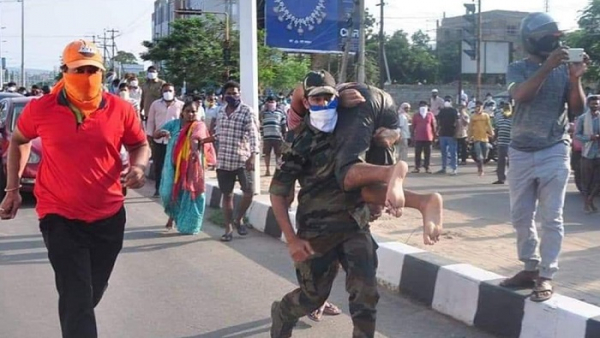
In visuals, at least a hundred people are seen on a chaotic road trying to help the injured and putting them into waiting ambulances. An industrial siren is heard in the background. People in masks are seen carrying others who show signs of difficulty in breathing. They are made to sit on the road divider till the ambulances arrived.


Mobile videos taken by rescuers show nearly 10 people lying on the ground. It’s not clear whether they were unconscious or the casualties would rise.

In one of the mobile videos, a woman standing near a scooter suddenly collapses on the pavement.

Prime Minister Narendra Modi said he is praying for everyone’s safety in Visakhapatnam. “Spoke to officials of MHA and NDMA regarding the situation in Visakhapatnam, which is being monitored closely. I pray for everyone’s safety and well-being in Visakhapatnam,” PM Modi tweeted.

Congress MP Rahul Gandhi tweeted his condolences.


Set up in 1961 as Hindustan Polymers, the company was taken over by South Korea’s LG Chem and renamed as LG Polymers India in 1997. The plant makes polystyrene and expandable polystyrene, a versatile plastic used to make a wide variety of consumer products like toys and appliances

Haven’t forced any migrant labourers to stay: Karnataka Revenue Minister R Ashok

Akram Mohammed,

Karnataka Revenue Minister R Ashok on Wednesday dismissed reports of the state forcing migrant labourers to remain back in the state, even as the government received flak for cancelling trains meant for migrants on Tuesday evening.

“We are not forcing any migrant labourers to stay back here. We have not tried to stop them,” Ashok said, addressing a news conference.

Referring to the incident of migrant labourers gathering near Bangalore International Exhibition Centre on Tuesday evening, he said that the labourers had returned after being assured of wages and realising that they be in mandatory quarantine for a 14-day period as soon as they reach their natives.

Many of the labourers were from a Gutka company – who were demanding wages and rest were construction labourers – who agreed to return after learning about mandatory quarantine, and resumption of construction activity throughout the state.

Resistance

The government was also facing resistance from other states over the return of migrant labourers, he said, alleging that West Bengal has declined to take back the 18,800 migrant labourers at the moment.

“Respective governments have to permit the travel of those seeking to return and should also make quarantine arrangements,” he said, reiterating that the government will not stop anyone leaving the state.

On cancellation of trains on Tuesday evening, Ashok said that the government was forced to cancel them as labourers changed their mind on returning to their native states.

The state’s decision to cancel the trains had come under attack, with critics terming it as a hostage situation for migrant labourers, forced to remain despite facing hardships.

Karnataka Cancels Trains for Migrant Workers, Read to know why?

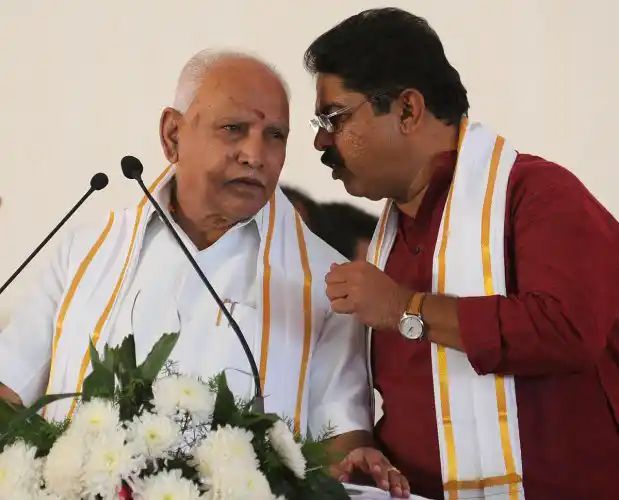
Hours after a meeting between Karnataka Chief Minister B S Yediyurappa and property builders, the state government cancelled all trains that were to send stranded migrant workers back to their hometowns.

“The COVID-19 situation in the state is in control as compared to other states. Barring the red zones, business, construction work and industrial activities have to be resumed. In this background, it was explained that unnecessary travel of the migrant workers has to be controlled,” Yediyurappa said after the meeting.

Nodal officer for Karnataka in-charge of migrants’ movement wrote to the railways on Tuesday asking for the trains scheduled for Wednesday to be cancelled.

“About 10,000 labourers who wanted to go to Bihar were at the Bangalore International Exhibition Centre. They said they wanted to go home following which we requested the railways for trains. Yesterday (Tuesday), Yediyurappa held a meeting with construction agencies — Metro, BIAL and all infrastructure projects which are going on. The chief minister directed them to start all work immediately. Afterwards, migrant labourers at BIEC were all told that work will start. They were also told about the chief minister’s meeting. All of them have gone back. We have informed that trains scheduled for Wednesday will not be required. Three trains scheduled for Bihar now stand cancelled,” Manjunath Prasad, nodal officer for Karnataka for inter-state movement told CNN News18.

“These are people who have come to work in Bangalore. Once there is employment, normalcy will get established. so why go back then? Those who still want to go back can do so using their own vehicle,” he added.

The state government had requested for two trains each day for five days starting May 2 except on May 6 when three trains were arranged for 9am, 12 noon and 3pm for going to Dhanbad, Bihar. All three have been cancelled.

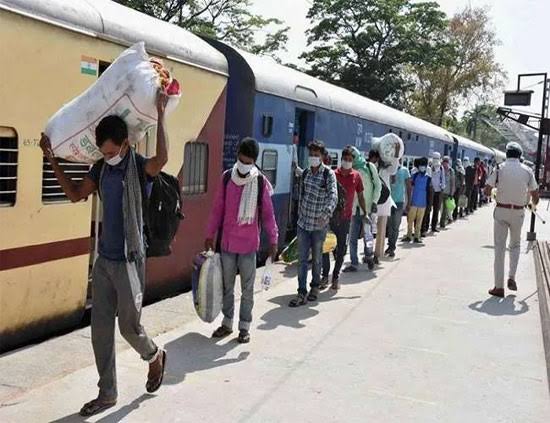
Two Shramik Special trains left on Tuesday, one at 7pm from Chikbanawara to Lucknow with 1,199 passengers and another at 7.10pm from Malur to Barkakana (Jharkhand) with 1,200 onboard.

The workers who took the trains back home were made to shell out Rs 800 to 1,200 per ticket depending on the destination, and also the fare for the state-run BMTC buses which ferried them to the railway station.

The state has more than two lakh migrant labourers from different parts of the country and from Bangladesh and Nepal. More than 80,000 of them are from Orissa and about 70,000 are from Bihar, according to labour department’s records taken during the pandemic.

Symptom-Based Quarantine, Tracking on Apps: K’taka Govt Gears up to Take Care of Foreign Returnees

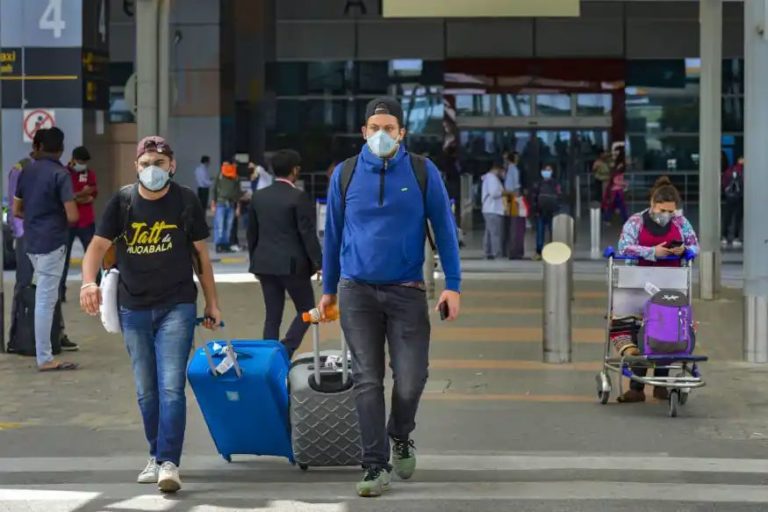
Bengaluru: The Karnataka government on Tuesday put out a standard operating procedure (SOP) to be followed for all those stranded nationals who wish to return to the state.

According to details shared by the central government, there are about 10,823 passengers who are residents of Karnataka and are currently abroad. These include, tourists, visitors, students, migrants, professionals as well as crew members on ships.

Of these, the Ministry of External Affairs has assessed over 6,100 passengers who would be returning early. It said 2,380 tourists and visitors, 1,660 students, 1,503 migrants and professionals and 557 crews of ships are likely to return next week.

Karnataka expects 328 passengers from Canada and 927 from the United State. From the Middle East, 2,575 passengers are likely to be from the United Arab Emirates, 414 from Qatar and another 927 from Saudi Arabia.

The state Health and Family Welfare Department plans to quarantine all the 10,823 passengers entering Karnataka, after being screened on arrival at the airport.

They will also have to download three applications — the Arogya Setu App developed by the Centre, the ‘Quarantine App’ and the ‘Apthamitra App’ – being used by the state government.

Passengers will then be categorised into three groups — Category A: symptomatic on arrival, Category B: asymptomatic with co-morbidity or aged above 60 years, and Category C: Asymptomatic.

The quarantine period for each category would also vary. Passengers falling under category A would be kept under institutional quarantine for 14 days followed by a 14-day reporting period.

Category B returnees would have to stay for seven days in an institutional centre followed by seven days in home quarantine, while those falling in the third category would be under strict 14-day home quarantine.

Passengers under home quarantine will also have to upload their selfies everyday on the Quarantine App during the 14-day period.

They will also be stamped at the airport as was done with passengers who arrived before March 24.

The state government has appointed two nodal officers who will be the in-charge of the overall movement of Indian nationals working or studying abroad and wanting to return.

Senior IPS officer Umesh Kumar and CN Meena Nagaraj, who serves as Director of Atalji Janasnehi Kendra, will now monitor people coming from abroad.

HRD Minister announces JEE, NEET dates, No decision on CBSE 10th,12th board exams

As the entire nation is under lockdown compelling the educational institutions such as schools colleges and universities to also halt their curriculums, Minister of Human Resource Development Ramesh ‘Nishank’ Pokhriyal ending the uncertainty of Engineering and Medical aspirants, has announced the dates of NTA JEE and NEET which are Engineering and Medical entrance exams respectively. The HRD Minister made the announcement while he was interacting with the students via a video conference. However, the government is yet to take any decision on dates for the pending CBSE Class 10, 12 board exams, Pokhriyal said.

According to Pokhriyal, JEE (MAIN) test will be held from July 18, 20, 21, 22 & 23. JEE (ADVANCED) to be held in August, while the medical entrance exam NEET to be held on July 26 says HRD Minister Ramesh Pokhriyal

The exams were postponed due to a nationwide lockdown announced to contain the COVID-19 spread. More than 15 lakh students across the country have registered for NEET this year, which is the gateway to medical colleges in India, whereas more than 9 lakh have registered for JEE Mains, the entrance exam for all other engineering colleges except IITs.

Karnataka 1st PUC Results 2020 LIVE Updates: Results to be declared at 10 am, how to get online

When will next academic session begins

The next session for these students is expected to begin by August while fresh admissions and sessions will begin from September. Earlier, these sessions start by July.

When to get results

According to the online portal SuVidya, the results for the PUC I February exams will be uploaded online at 10 am. The students can check results via results.bspucpa.com

Over 6.53 lakh appear for 1st PUC this year

Over 6.53 lakh (6,53,461) candidates have appeared for the exams of which over 2 lakh (2,00,801) are from arts, 2.48 lakh from commerce, and 2.04 lakh from science.

How to get results

The candidates will get their results via mail or SMS, unlike previous years when the results will be hosted at respective colleges.

Karnataka 1st PUC results 2020 today

The Karnataka government is all set to release the result for pre-university course (PUC) first year or class 11 level of exam on May 5. The result will be declared by the Dakshin Kanna Pre University Principals Association (DKPUCPA) as every year, however, this year, to ensure social distancing and other safety measures in time of coronavirus, the government will not host the result at respective colleges.

Karnataka 1st PUC Results 2020 LIVE: The results will be available via mail, sms, SuVidya portal. Representational image/ file

Karnataka 1st PUC Results 2020 LIVE: For those who could not clear exams, supplementary tests are held. This year, the exam date is yet to be an announced on the same. Several colleges and universities are contemplating having exams only for the final year students. The UGC had suggested holding exams in July, that too, for two hours instead of three.

However, these guidelines are applicable only if the situation gets better. For rest of the students, it is suggested should be promoted based on internal assessments.

Karnataka gains Rs 45 crore from liquor sales on first day of re-opening of shops

Image Source : PTI

Representational image

Scenes of jubilation were witnessed in Karnataka as alcohol shops re-opened after being closed since March 24, as people were seen bursting firecrackers to celebrate the so-called occasion. In Kolar, people were witnessed bursting firecrackers, apparently oblivious to the fact that the country was in the middle of a lockdown.

Towards the evening, Karnataka’s Excise Department said that liquor worth Rs 45 crore had been sold in the shops across the state till 7 PM, when the liquor shops have been ordered to be shut down. According to the Excise Department, 3.9 lakh litres of beer and 8.5 lakh litres of Indian-made liquor was sold on the first day of re-opening of liquor shops after being shut for over a month.

According to rules of the third phase of the lockdown, standalone alcohol shops in green, orange and red (non-containment) zones have been given permission to operate till 7 PM, as part of government’s strategy to open up the lockdown in a phased manner.

Will Withdraw Lockdown Relaxations From Areas Flouting Social Distancing Norms: Kejriwal

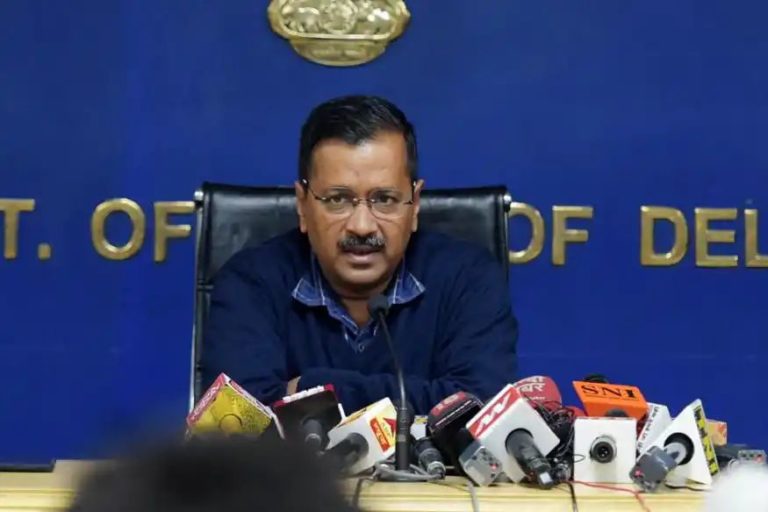
New Delhi: Chief Minister Arvind Kejriwal on Monday said the Delhi government will withdraw all lockdown relaxations from areas where people do not maintain social distancing.

The announcement comes amid reports of people flouting social distancing norms at liquor shops in many areas in the national capital which were re-opened on Monday as authorities allowed all activities permitted by the central government.

Kejriwal said it is sad that people were not maintaining the mandatory six feet or two metre distance from one another at some shops and requested everyone to not take any risk.

“Shops are not going to be closed. We will have to take strict steps. We all will have to behave like responsible citizens,” Kejriwal said while addressing an online media briefing.

The chief minister further said that if there is no compliance of social distancing norms outside a shop, the government will seal it.

“We have to defeat coronavirus. I appeal to people to wear masks, maintain social-distancing and sanitise their hands,” Kejriwal said.

Day 1: People make beeline at liquor shops

New Delhi: In a big respite for tipplers, all standalone liquor stores will open across Karnataka from Monday except in containment zones. Making the announcement Karnataka Excise Minister today said that shops will remain open from 9 am to 7 pm.

Meanwhile, the Delhi government has also launched an exercise to open liquor shops in those areas where such activity is allowed according to the latest guidelines issued by the home ministry. The excise department has already directed four government-run agencies, which are responsible to sell liquor in the city, to identify such outlets which fulfil all conditions prescribed by the Ministry of Home Affairs.

However, liquor shops will not be allowed in COVID-19 containment zones.

The Himachal Pradesh government has also allowed liquor vends to operate in the state from May 4.

This comes after the MHA in its latest guidelines allowed the sale of liquor, paan and tobacco after ensuring minimum six-feet social distancing while no more than five people will be allowed inside a shop at a time. These shops should not be located in markets and malls in urban areas.

In rural areas, all shops are permitted to remain open without any distinction of essential and non-essential. However, consumption of liquor, paan, gutka, tobacco etc., is not allowed in public places during the lockdown.

As per the MHA’s notification, barbershops and salons located in green and orange zones will also be allowed to open from Monday apart from the sale of non-essential items by e-commerce platforms during the third phase of the lockdown which will be in force till May 17.

In red zones, e-commerce companies are allowed to sell only essential commodities.

Sale of liquor, the opening of barbershops and salons were not been allowed during the first two phases of lockdown, which started on March 25. As per the health ministry report, there were 130 ‘Red’ zones in the country with a maximum of 19 in Uttar Pradesh, followed by 14 in Maharashtra while the number of ‘Orange’ Zones was 284 and ‘Green’ was 319.

All the districts of the national capital have been put under ‘Red’ zone.

Liquor shops, domestic helps, salons: What’s allowed, what’s not in lockdown 3.0 from today

The extended the lockdown is entering the third phase from Monday and according to the new set of guidelines issued by the Ministry of Home Affairs (MHA), there will be considerable relaxations across the country except for the hotspots or containment zones. The Centre has divided the country into three zones and the relaxations have been made according to the severity of coronavirus in the areas.

Ahead of the lockdown extension, the Union Health Ministry had divided the country into Red, Orange and Green Zones. These three different zones will witness relaxations to different degrees and these will continue till May 17.

WHAT’S ALLOWED, WHAT’S NOT FROM TODAY:

1. Public activities will remain prohibited throughout the country irrespective of the zone divisions.

Air, rail and travel by Metro will remain banned like the first two phases of the lockdown. Inter-state movement on roads will also remain banned.

2. Air, rail and road travel will be allowed only for special purposed and with permission from the Ministry of Home Affairs.

3. Schools, colleges, and other educational, training and coaching institutions will continue to remain prohibited from functioning, across the country. Hospitality services, including hotels and restaurants, will also not be allowed to reopen across the country.

4. Places that see large-scale public gatherings such as cinema halls, malls, gymnasiums, sports complexes etc will continue to remain shut. The government has also banned all social, political, cultural and other kinds of gatherings. Religious gatherings and worshiping in public places have also been banned.

5. The MHA has banned movement of individuals for all non-essential activities in all three zones from 7 pm till 7 pm. These movements will be allowed from 7 am till 7 pm. However, these rules do not apply for containment zones, where all movement will remain prohibited.

6. In the Green Zones and Orange Zones across the country, barber shops, spas and salons will be allowed to reopen from today.

7. Sale of non-essential items by e-commerce companies such as Amazon and Flipkart has been allowed in the Green and Orange Zones in the country. These relaxations do not apply for the Red Zones.

8. Liquor shops have been allowed to reopen from today in all Red, Orange and Green Zones, but with a set of guidelines. Liquor shops that are not located inside markets and malls are the only ones that will be allowed to reopen. These are standalone liquor shops. These shops have also been asked to follow certain guidelines of social distancing to prevent spread of coronavirus.

9. The government has prohibited people above the age of 65 years, those with underlying health conditions, pregnant women, and children below 10 years from venturing out. Only exception for these people to go out is for essential and health purposes.

10. Outdoor patient departments at hospitals and clinics in all three zones will be reopened from Monday but with strict social distancing norms and precautions. These will continue to remain prohibited in containment zones.

11. All goods traffic will be permitted and no state or UT shall stop the movement of cargo for cross land-border trade under treaties with neighbouring countries.

12. In Red Zones (outside the containment areas), some additional activities are prohibited: plying of cycle rickshaws and auto-rickshaws, taxis and cab-aggregators; intra-district and inter-district buses; barber shops, spas and saloons.

13. Certain other activities have been allowed in the Red Zone with restrictions: Movement of individuals and vehicles for permitted activities with a maximum of 2 persons (besides the driver) in four-wheelers, no pillion rider on two-wheelers.

14. Domestic helps such as maids, drivers and cleaners have been allowed to go to work, however, their commute will be a hurdle. On domestic helps in red zones, resident welfare associations will have to take a call on allowing in outsiders.

15. Industrial establishments in urban areas, like Special Economic Zones (SEZs), Export Oriented Units (EOUs), industrial estates and industrial townships with access control have been permitted from Monday in all zones, except containment areas.

16. Private offices can operate in red zones with up to 33 per cent strength with the remaining staff working from home.

17. In Orange zones, and taxi and cab aggregators (driver with 2 passengers only) have been allowed.

18. Inter-district movement of people and vehicles for permitted activities, 4 wheelers with 2 passengers besides driver, pillion riding on 2 wheelers are allowed.

19. In Green zones, all activities are permitted except the ones prohibited throughout the country, irrespective of the zone.

20. Buses can operate with upto 50 per cent seating capacity and depots too at 50 per cent.