Match 11 of the ongoing Indian Premier League (IPL) 2020 edition saw a dominant Delhi Capitals (DC) take on a winless David Warner-led Sunrisers Hyderabad (SRH) in Abu Dhabi on Tuesday (September 29). Being the only team to not get off the mark in the season, so far, Warner & Co. came out with a lot of intent, with a marked improvement in all departments, to stun the DC camp by 15 runs.
Iyer-led DC expected the pitch to remain as it and, hence, opted to bowl first. However, their bowlers had to wait for a long time for the first breakthrough.
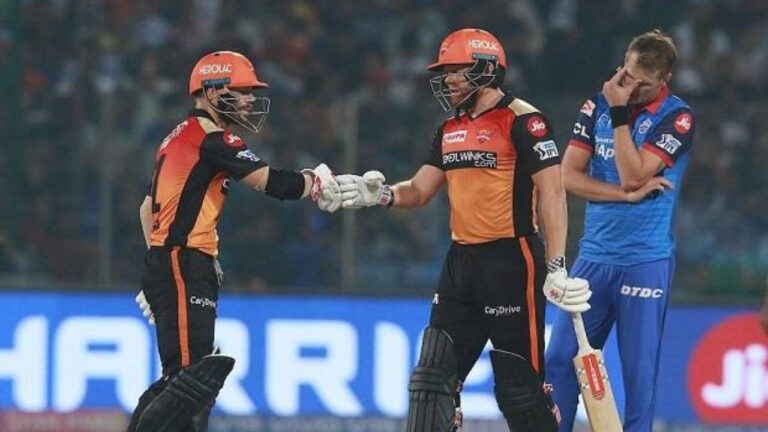
While Jonny Bairstow and Warner are a daunting opening pair, they hadn’t struck big so far in the competition. However, the two came out with a lot of intent, especially the captain.
Warner looked hungry to get a big score. He started with a positive mindset and kept the scoreboard ticking with his aggressive play.
His six, getting on one knee off Anrich Nortje, was the highlight of his 33-ball 45. Bairstow, on the other hand, was slow to start off but came to his own as the innings progressed.
After Warner, Manish Pandey went back to the pavillion soon. The onus fell on Kane Williamson, who had been added to the line-up to bolster the SRH middle-order.
The New Zealander did just that as he timed his inning beautifully, shuffling across and finding the gaps with ease. His 26-ball 41 along with debutant and Jammu and Kashmir’s swashbuckling youngster, Abdul Samad’s 7-ball 12* took SRH to 162/4.
CONCLUSION
Plenty has been made of the fact that Rishabh Pant hadn’t hit a six in the first two games of this IPL. Perhaps he was proving, more to himself than anyone else, that he too could play according to the situation – as scores of 31 and 37* in twin wins prior to tonight suggest. Or perhaps he was just not that confident, we’ll never know. But until Tuesday, a six Pant hadn’t hit.
That changed when exactly a 100 runs were needed from 8 overs for the table-toppers Delhi to stay on top, and in turn keeping bottom-placed Sunrisers Hyderabad at the bottom.
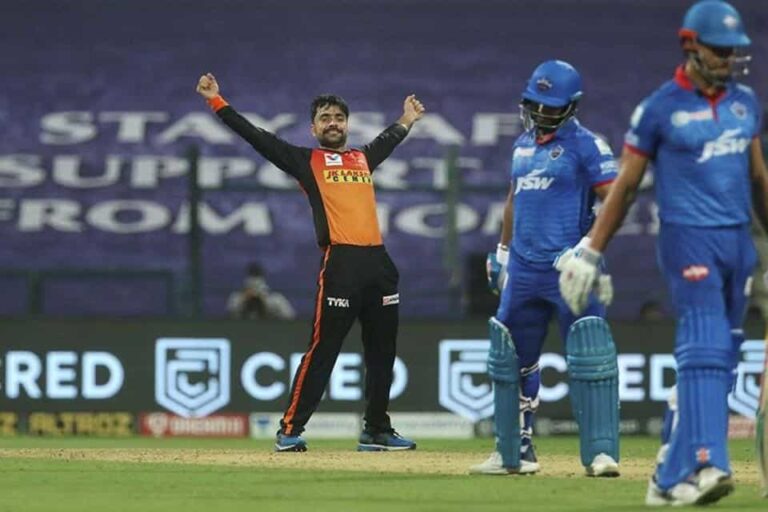
Five overs later, with the required rate mounting, Pant looked to strike his third six against yet another spinner bowling his final over of the day. But Afghanistan’s Rashid Khan, the best short-format bowler in the world, is a little harder to tonk about than Sharma. On a slow-and-low Abu Dhabi wicket, the leggie had already put the brakes on Delhi’s scoring with the wickets of opener Shikhar Dhawan and captain Shreyas Iyer.
when Pant walked across the stumps to slog Khan over square-leg, Khan already had his fists up in delight. Such was this wicket, one that needed the service of a true anchor batsman and not just someone pretending to be one. And such was this day, one that Delhi lost by 15 runs despite chasing a (relatively) paltry 163, especially in a tournament where scores of 200 have easily been toppled.
Equine biotech startup have developed a Kit for fast, yet accurate testing for Covid-19 infection. The kit simplifies and frees the testing from expensive reaction steps, enabling upscaling of the diagnostic.
An indigenous ICMR-approved COVID-19 diagnostic kit Equine Biotech, a startup incubated at the Indian Institute of Science (IISc), has developed an indigenous RT-PCR diagnostic kit called “GlobalTM diagnostic kit” for accurate and affordable diagnosis of COVID-19.
The test kit, based on Reverse Transcriptase Polymerase Chain Reaction (RT-PCR), the gold standard for COVID-19 diagnosis, has been approved for use in authorised COVID-19 diagnostic labs by the Indian Council of Medical Research (ICMR).
The test takes about 1.5 hours to confirm the presence of SARS-CoV-2 in patient samples, according to Utpal Tatu, Professor in the Department of Biochemistry, IISc, and founder of Equine Biotech.
“Our startup has been working on testing for coronavirus infections for many years, even before the COVID-19 pandemic started. This experience has helped us engineer the kit for COVID-19,” says Tatu.
The COVID-19 pandemic has affected more than 30 million people and caused more than 900,000 deaths worldwide. India currently has the second highest number of reported cases, with more than five million people infected.
Ramping up testing in the country is crucial for tracking and controlling the spread of this infectious disease. India needs home-grown diagnostics kits that can easily be mass produced and made accessible to a larger population. But so far, only a few Indian companies have developed reliable and accurate RT-PCR kits; most of the kits used widely are imported, and therefore expensive.
In RT-PCR, RNA ‒ the genetic material of SARS-CoV-2 ‒ is transcribed into complementary DNA by a process called reverse transcription, and then amplified.
The PCR reaction is monitored in real time with the help of a fluorescent DNA-binding dye. The degree of fluorescence indicates the severity of the infection.
CONCLUSION
The kit developed by Equine Biotech is an easy-to-use, multiplex RT-PCR kit with 100% specificity, and its run time is relatively short when compared with the kits available in the industry, according to its founders. The company is currently seeking to license its new COVID-19 test kit and work with med-tech companies and other industries for mass producing, marketing and distribution of these kits.
Equine Biotech has 30 years of experience working on infectious diseases, including zoonotic diseases. The company is founded on the concept of ‘One Health’, which encompasses human as well as animal health and wellness. It has previously developed diagnostic tests for screening livestock, especially cattle and horses, for blood parasitic diseases such as trypanosomiasis, trichomoniasis, theileriosis and babesiosis.
The Vice President of India Venkaiah Naidu on Tuesday tested positive for the novel coronavirus. Releasing a statement, the office of the Vice President said that Naidu underwent a Covid-19 test today morning.
As per reports, Naidu is asymptomatic and in good health. Naidu’s wife Usha Naidu also underwent a test today, however, she has tested negative and is in self-isolation.
“The Vice President of India who underwent a routine COVID-19 test today morning has been tested positive. He is however, asymptomatic and in good health. He has been advised home quarantine. His wife Smt. Usha Naidu has been tested negative and is in self-isolation,” read the official statement.
Naidu, who is also the Rajya Sabha Chairman, recently attended the monsoon session of parliament, which was cut short after more than 25 members tested positive for the deadly virus.
CONCLUSION
Earlier, BJP leader Uma Bharti has also tested positive for coronavirus. She tweeted about her diagnosis in a late night post and urged all those who had come in contact with her to get tested for the virus.
The leader said she got tested because she was down with a mild fever for three days and was positive for the virus in spite of following all Covid-19 norms including social distancing over her recent trip to the Himalayas.
“I am currently quarantined at Vande Mataram Kunj that lies between Haridwar and Rishikesh. I will get another Covid-19 test done after four days and if the situation remains the same, will consult doctors,” Uma Bharti tweeted.
It has been 19 days since Tata Group handed over the keys of its COVID-19 hospital to the government, but it’s yet to start functioning.
On September 10, the Tata Group handed over the keys of its newly built hospital in Kasaragod district, proposed to be used for COVID-19 care, to the Kerala government. Tata has kept its promise, and completed the construction in five months.
It has been 19 days since this development, but the hospital is yet to open its doors to the COVID-19 patients.
The much-hyped hospital building in Thekkil village, near Chattanchal of Kasaragod, remains there on the hilltop, still waiting for a start.
When this reporter visited the hospital, barring a few staff from the Tata Group who are finishing the documentation works, the entire premises wore a deserted look.
Inside the hospital, one can spot neatly built cabins, strong iron cots in the rooms with at least two air conditioners, separate cupboards for each bed and attached bathrooms for each room. In some rooms, the plastic covering of many new beds is yet to be opened.
In other sections, there are rooms for Intensive Care Units (ICUs) and ventilator facilities. There are also single rooms for isolation purpose. In total, the hospital, which was built at approximately Rs 60 crore, provides 540 beds.
All that is required now to start this COVID-19 hospital are the medical infrastructure as well as the medical professionals and other staff.
“But don’t you know that this is Kasaragod! It will take ages for this hospital to start functioning,” a person who lives near the hospital remarked.
Yes, the health sector in this district has been and is still panting, even as the whole state is focusing on this sector now, and despite the growing number of COVID-19 cases. In fact, the prevailing absence of strong health infrastructure in Kasaragod reared its ugly head with the onset of COVID-19.
A total of 3,705 coronavirus cases have been reported in Kasaragod in September alone. A total of 2,295 patients are currently under treatment.
Proposal for medical personnel yet to be cleared
It was on April 6 that the Chief Minister and Revenue Minister E Chandrashekharan announced that the Tata Group will set up a specialty hospital in Kasaragod in three months. District Collector Sajith Babu also announced that the project will be completed at the earliest after handing over the appropriate land in the district.
According to the office of the Kasaragod District Medical Officer (DMO), the Tata Group had put forth two proposals to the Health Department. In the first proposal, Tata detailed the required medical personnel and equipment for a multispecialty hospital in Kasaragod.
There was no response to first proposal, In second proposal they turn the building into an exclusive COVID-19 hospital instead, which required lesser equipment and staff.
There was allegedly no response for the second proposal for medical personnel and the Finance Department, too, is yet to sanction it.
Why there is a severe shortage of staff
A senior doctor from the district, who chose to remain anonymous, said that the shortage of staff is the biggest challenge in Kasaragod’s health sector.
“There are vacancies for more than 60 doctors in the district hospital. This was never filled before COVID-19 or when it struck. As a result, the situation has turned worse,” he said, adding that the district needs over 100 doctors more to help contain the crisis.
Dr Shameen Kattathadka, a doctor from Kasaragod, said that the root cause of the scarcity of doctors in the district is that many don’t want to live in Kasaragod because it lacks other facilities.
“First of all, there are only very few doctors who are from our own district. And, doctors from other southern districts do not want to settle down here because there are no good schools or other facilities in Kasaragod. So, if there should be more doctors in Kasaragod, the education sector should be equally boosted,” he said.
The senior doctor mentioned above also added that only half of the appointed doctors actually join duty while many take a transfer.
Former Union Minister Uma Bharati, one of the senior BJP leaders facing a verdict on September 30 in the Babri Masjid demolition case being heard in a special CBI court has said that she would “prefer to hang than seek bail” in the case, if found guilty.
In an emotional letter written to BJP president JP Nadda, dated September 26, the day he announced his new team of office bearers (dropping her as vice president), she said that her decision not to seek bail if found guilty in the case may make him (Mr. Nadda) exclude her from his team, but that would be the latter’s decision.
I am proud of my participation in the Ayodhya movement and seeking bail would, I believe dilute this participating. Even if I have hang for having participated, it will be acceptable to me. In such circumstances whether or not you would want to keep me in your team is for you to consider,” she wrote.
Bharti is currently admitted at the All India Institute of Medical Sciences (AIIMS) in Rishikesh after testing positive for Covid-19. Her condition is said to be stable. While Bharti will not be present in court for the hearing, it is not yet clear whether she would appear via video conferencing.
Apart from Bharti, BJP veterans LK Advani and Murli Manohar Joshi are among the accused in the in the 1992 Babri Masjid demolition case. Other accused include former Uttar Pradesh chief minister Kalyan Singh, Vinay Katiyar and Sadhvi Rithambara.
CONCLUSION
The trial under the serious criminal conspiracy charges commenced against them after having been dropped by the trial court in 2001. The verdict was upheld by the Allahabad High Court in 2010, but the apex court ordered restoration of the conspiracy charge against them on April 19, 2017. The top court ordered daily hearing in the high profile case and directed the special judge to conclude it in two years.
The conspiracy charge is in addition to the existing charges against them for promoting enmity between different groups on grounds of religion for which they are already facing trial. The other charges against them include indulging in “deliberate and malicious” acts intended to outrage religious feelings, uttering statements leading to public mischief, rioting and unlawful assembly.
The CBI argued that the accused conspired and instigated ‘kar sevaks’ to demolish the 16th century mosque. But the accused pleaded innocence maintaining that there is no evidence to prove their guilt and claimed they were implicated by the then Congress government at the Centre as a political vendetta.
The Babri Masjid was demolished in December 1992 by “kar sevaks” who claimed that the mosque in Ayodhya was built on the site of an ancient Ram temple.
In a landmark judgment last year, the Supreme Court allotted the disputed site in Ayodhya for construction of a Ram temple, while calling the demolition of the mosque a violation of the rule of law. An alternative five-acre site was marked in the city for building a mosque.
To improve India’s economy and create more jobs, E-commerce giant Amazon India on Tuesday launched a new ‘Fulfilment Centre’ in Tamil Nadu as part of strengthening its network in the state.
The company, in a statement, said that the new ‘Fulfilment Centre’ would offer close to seven lakh cubic feet of storage space, housing lakhs of products in the appliances and furniture categories, the company said.
“With this infrastructure expansion, Amazon.in will now offer storage capacity of close to three million cubic feet across five fulfilment centres to its more than 43,000 sellers in Tamil Nadu”, a company statement said.
The expansion would contribute to the economic growth in the State, besides creating new job opportunities, it added.
Tamil Nadu industries department principal secretary N Muruganandham said, “We are happy to note that Amazon’s investment in Tamil Nadu will generate significant employment opportunities”. “I am certain these fulfilment centres will push the agenda of Tamil Nadu’s economic growth forward”, he added.
Amazon India, Director-Amazon Transportation Services, Abhinav Singh said, “this expansion will work as an enabler to SMBs (small and medium businesses) in Tamil Nadu helping them with faster delivery of their products to a wider customer base”.
“This festive season, health and safety of our associates and customers is of utmost priority while we work hard to deliver a delightful shopping experience”, he said.
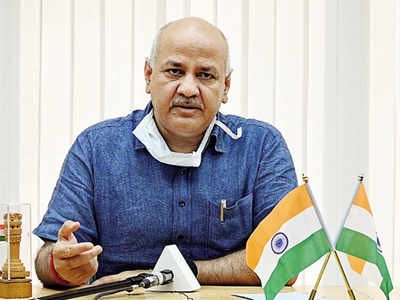
Deputy chief minister Manish Sisodia was discharged a Delhi hospital after testing negative for Covid-19 on Tuesday. The doctors have still advised him to take rest for a week, his office said in a statement.
Along with Covid-19 , Sisodia was also suffering from Dengue. He was admitted to the Intensive Care Unit at a private Max hospital in Delhi on September 25.
Sisodia was later administered convalescent plasma therapy after which there was an improvement in his health condition.
The 48-year-old Aam Aadmi Party (AAP) leader tested positive for Covid-19 on September 14. He was moved to the state-run Lok Nayak Jai Prakash Narayan hospital on September 23 after his condition deteriorated in home isolation.
Sisodia is the second minister in the Arvind Kejriwal-led cabinet to have tested positive for Covid-19.
In June, Delhi health minister Satyendar Jain was hospitalised after he tested positive for Covid-19. He was discharged from the hospital on June 26 after being treated for 12 days.
Human rights watchdog Amnesty International on Tuesday said that its work in India has been halted after the government froze several of the organisation’s bank accounts.
“The complete freezing of Amnesty International India’s bank accounts by the Government of India which it came to know on 10 September 2020, brings all the work being done by the organization to a grinding halt,” the organisation said in a statement on its website.
Amnesty further claimed that it has been compelled to let go of staff in India and pause all ongoing campaign and research work.
“For a movement that has done nothing but raise its voices against injustice, this latest attack is akin to freezing dissent,” said Avinash Kumar, Executive Director of Amnesty International India.
The statement also claimed that Amnesty India stands in full compliance with all applicable Indian and international laws.
Its offices in Bengaluru were raided by the Central Bureau of Investigation (CBI) in November last year in connection with accusations that the non-profit had received foreign funds in violation of the law.
CONCLUSION
The Enforcement Directorate (ED) too had carried out investigations into charges that the rights group had attempted to bypass the Foreign Contribution Regulation Act by floating a commercial entity, Amnesty International India Pvt Ltd.
The government had declined permission to receive foreign funds to Amnesty International India Foundation Trust that has been critical of security agencies in several cases including the arrest of activists such as Sudha Bharadwaj, Rona Wilson and Varavara Rao, who was accused of being a Maoist ideologue.
In these unprecedented times when the world is coming to terms with and fighting a pandemic, it is more important now more than ever to take care of our hearts.
According to the World Heart Federation, cardiovascular disease (CVD) is the primary cause of death on the planet and the causes range from ‘smoking, diabetes, high blood pressure and obesity, to air pollution, and rare and neglected conditions such as Chagas Disease and Cardiac amyloidosis’.
This year, on World Heart Day, the federation aims to spread awareness about taking care of our hearts and to ‘use heart to beat cardiovascular disease’, which can only happen when one brings about changes in their lifestyle and inculcate healthy eating habits among other things.
So, here, we talk about a few easy ways by which you can ensure that your heart stays healthy and you stay strong.
1. Control your portion size
How much you eat is just as important as what you eat. Overloading your plate, taking seconds and eating until you feel stuffed can lead to eating more calories than you should. Portions served in restaurants are often more than anyone needs.
Use a small plate or bowl to help control your portions. Eat larger portions of low-calorie, nutrient-rich foods, such as fruits and vegetables, and smaller portions of high-calorie, high-sodium foods, such as refined, processed or fast foods. This strategy can shape up your diet as well as your heart and waistline.
2. Eat more vegetables and fruits
Vegetables and fruits are good sources of vitamins and minerals. Vegetables and fruits are also low in calories and rich in dietary fiber. Vegetables and fruits, like other plants or plant-based foods, contain substances that may help prevent cardiovascular disease.
Eating more fruits and vegetables may help you cut back on higher calorie foods, such as meat, cheese and snack foods.
Fruits and vegetables to choose:
Fresh or frozen vegetables and fruits
Low-sodium canned vegetables
Canned fruit packed in juice or water
Fruits and vegetables to limit:
Coconut
Vegetables with creamy sauces
Fried or breaded vegetables
Canned fruit packed in heavy syrup
Frozen fruit with sugar added.
3. Select whole grains
Whole grains are good sources of fiber and other nutrients that play a role in regulating blood pressure and heart health. You can increase the amount of whole grains in a heart-healthy diet by making simple substitutions for refined grain products. Or be adventuresome and try a new whole grain, such as whole-grain farro, quinoa or barley.
Grain products to choose:
Whole-wheat flour
Whole-grain bread, preferably 100% whole-wheat bread or 100% whole-grain bread
High-fiber cereal with 5 g or more fiber in a serving
Whole grains such as brown rice, barley and buckwheat (kasha)
Whole-grain pasta
Oatmeal (steel-cut or regular)
Grain products to limit or avoid:
White, refined flour
White bread
Muffins
Frozen waffles
Corn bread
Doughnuts
Biscuits
Quick breads
Cakes
Pies
Egg noodles
Buttered popcorn
High-fat snack crackers.
4. Limit unhealthy fats
Limiting how much saturated and trans fats you eat is an important step to reduce your blood cholesterol and lower your risk of coronary artery disease. A high blood cholesterol level can lead to a buildup of plaques in your arteries, called atherosclerosis, which can increase your risk of heart attack and stroke.
An easy way to add healthy fat (and fiber) to your diet is ground flaxseed. Flaxseeds are small brown seeds that are high in fiber and omega-3 fatty acids. Some studies have found that flaxseeds may help lower cholesterol in some people, but more research is needed. You can grind the seeds in a coffee grinder or food processor and stir a teaspoon of them into yogurt, applesauce or hot cereal.
Fats to choose:
Olive oil
Canola oil
Vegetable and nut oils
Margarine, trans fat free
Cholesterol-lowering margarine, such as Benecol, Promise Activ or Smart Balance
Nuts, seeds
Avocados.
Fats to limit:
Butter
Lard
Bacon fat
Gravy
Cream sauce
Nondairy creamers
Hydrogenated margarine and shortening
Cocoa butter, found in chocolate
Coconut, palm, cottonseed and palm-kernel oils.
5. Choose low-fat protein sources
Lean meat, poultry and fish, low-fat dairy products, and eggs are some of your best sources of protein. But be careful to choose lower fat options, such as skim milk rather than whole milk and skinless chicken breasts rather than fried chicken patties.
Legumes — beans, peas and lentils — also are good sources of protein and contain less fat and no cholesterol, making them good substitutes for meat. Substituting plant protein for animal protein — for example, a soy or bean burger for a hamburger — will reduce your fat and cholesterol intake and increase your fiber intake.
Proteins to choose:
Low-fat dairy products, such as skim or low-fat (1%) milk, yogurt and cheese
Eggs
Fish, especially fatty, cold-water fish, such as salmon
Skinless poultry
Legumes
Soybeans and soy products, such as soy burgers and tofu
Lean ground meats.
Proteins to limit or avoid:
Full-fat milk and other dairy products
Organ meats, such as liver
Fatty and marbled meats
Spareribs
Hot dogs and sausages
Bacon
Fried or breaded meats.
6. Reduce the sodium in your food
Eating a lot of sodium can contribute to high blood pressure, a risk factor for cardiovascular disease. Reducing sodium is an important part of a heart-healthy diet. The American Heart Association recommends that:
Healthy adults have no more than 2,300 milligrams (mg) of sodium a day (about a teaspoon of salt)
Most adults ideally have no more than 1,500 mg of sodium a day.
Low-salt items to choose:
Herbs and spices
Salt-free seasoning blends
Reduced-salt canned soups or prepared meals
Reduced-salt versions of condiments, such as reduced-salt soy sauce and reduced-salt ketchup.
High-salt items to limit or avoid:
Table salt
Canned soups and prepared foods, such as frozen dinners
Tomato juice
Condiments such as ketchup, mayonnaise and soy sauce
Restaurant meals.
7. Plan ahead: Create daily menus
You know what foods to feature in your heart-healthy diet and which ones to limit. Now it’s time to put your plans into action.
Create daily menus using the six strategies listed above. When selecting foods for each meal and snack, emphasize vegetables, fruits and whole grains. Choose lean protein sources and healthy fats, and limit salty foods. Watch your portion sizes and add variety to your menu choices.
For example, if you have grilled salmon one evening, try a black-bean burger the next night. This helps ensure that you’ll get all of the nutrients your body needs. Variety also makes your meals and snacks more interesting.
8. Allow yourself an occasional treat
Allow yourself an indulgence every now and then. A candy bar or handful of potato chips won’t derail your heart-healthy diet. But don’t let it turn into an excuse for giving up on your healthy-eating plan. If overindulgence is the exception, rather than the rule, you’ll balance things out over the long term. What’s important is that you eat healthy foods most of the time.
Incorporate these eight tips into your life, and you’ll find that heart-healthy eating is both doable and enjoyable. With planning and a few simple substitutions, you can eat with your heart in mind.
Sunrisers Hyderabad (SRH) captain David Warner has had a quiet start to the Indian Premier League (IPL) 2020 so far as the swashbuckling left-handed batsman has so far scored 42 runs from two matches so far.
Hyderabad rely heavily on Warner to deliver the goods at the top of the order and he has been one of the most consistent performers in the tournament.
Warner was the Orange Cap holder in 2019 – where he scored 692 runs from 12 matches at an impressive average of 69.20. With SRH having suffered two losses in their first two games in UAE, the onus is on Warner to produce a big knock against Delhi Capitals (DC) – SRH’s next opponent.
Ahead of the match, SRH posted a video from the training session – where Warner was seen unleashing a series of explosive strokes. “WARNING: Explosive Content,” SRH captioned the video.
In the opening match against RCB, SRH suffered a batting collapse while chasing 163. Warner was run-out for 6 in the match after which Jonny Bairstow and Manish Pandey got the Orange Army in control of the proceedings with a 71-run stand for the second wicket.
Yuzvendra Chahal brought RCB back in the game by removing Bairstow and Pandey in quick succession. Towards the end, SRH were bowled out for 153 as RCB registered a come-from-behind win to seal the match by 10 runs.
Up against KKR next, SRH put a below-par total of 142 runs batting first. Warner was dismissed by Varun Chakravarthy for 36 as Manish Pandey and Wriddhiman Saha helped the side reach a decent total. In reply, riding on a masterclass by Shubman Gill (70* off 62), KKR successfully chased down the total with 7 wickets in hand.
Lack of firepower in the middle-order has been a major area of concern for SRH – who depend on Warner and Bairstow to get the side off to a flier.
Kane Williamson missing the first two matches is also a move which has left the fans and cricket experts wondering.