Almost half of India can’t survive more than a month sans income

New Delhi: Almost half of India`s population will not be able to survive more than a month without any job or income, just with the help of savings or family support.

With a protracted lockdown and dismal economy, job losses are mounting and concerns are going up for families as to how long they can hold out.

As per the latest IANS CVoter Economic Battery Wave survey, 28.2 per cent of males said they would survive less than a month without income, while 20.7 per cent said they could survive for a month. At the more comfortable end of the spectrum, 10.7 per cent said they could survive without income for more than a year.

For 2 months, the number is 10.2 per cent while for 3 months it is 8.3 per cent. It is 9.7 per cent for 4-6 months and 5.7 per cent for less than a year.

The numbers are concentrated for less than a month and a month, which is almost half the respondents.

The sample date is first week of June and the sample size is 1,397 and covers more than 500 Lok Sabha seats across the country. This is a weekly tracker of 1,000 plus new respondents.

For females, the numbers are similar in less than a month to a month of survival without income. However, in the case of females, the survival is more for a month as compared to less than a month.

For females, 19.9 per cent said they would survive less than a month without a job or income while 28.4 per cent said they could survive for a month. Broadly, this also adds up to half the numbers. A total of 11.5 per cent said they could survive for more than a year.

From the survey, it is clear that the senior citizens have the best survival rate without income and are leveraging their savings. For the senior citizens, 60 and above, 19.2 per cent said they could survive more than a year without any income.

The lowest survival rate is indicated by the young, in the 25-40 years age group, where the highest percentage of 28.6 said that they would survive less than a month sans income.

Understandably, the survival rate is longer for those with higher education and in the high-income group, although both may not necessarily follow.

The higher education group is the highest amongst all social groupings with 31.6 per cent saying they can survive for more than a year without income. For the high-income group, this number is 29.6 per cent.

Among the social groups, for Muslims the number is highest for less than a month with as high as 38.4 per cent while it is 30.2 per cent for a month, which makes it more than 68 per cent who would not be able to survive for more than a month.

Among the regions, the prosperous and industrialised Western region is the best performing, where only 17.2 per cent said they would survive for less than a month while 15 per cent said they would survive for more than a year.

The Eastern region is more vulnerable as 30.4 per cent said they would survive for less than a month. For the regions as a whole, more than 48 per cent said they would survive for a month or less without income or jobs.
Water supply to be disrupted in some areas of Bengaluru on June 11

0

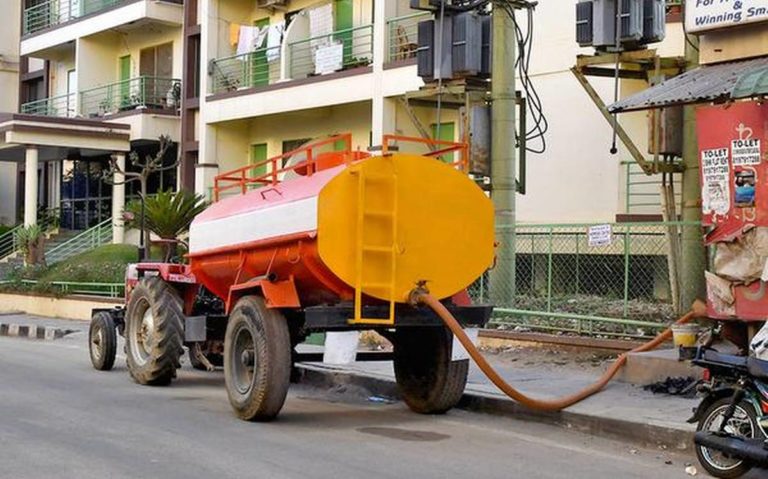
Water supply in Bengaluru will be disrupted on Thursday (June 11) in several areas in Bengaluru East and South zones, due to a pipeline-related work.

Confirming the same, the Bangalore Water Supply and Sewerage Board (BWSSB) notified that water supply will be disrupted from 6 am to 6 pm due to a linking work that needs to be undertaken below Bannerghatta Road in the city.

Full list: Areas in Bengaluru where water supply will be affected on June 11

The Bangalore Water Supply and Sewerage Board (BWSSB) has notified that water supply will be disrupted in the city from 6 am to 6 pm on Thursday (June 11) due to a linking work that needs to be undertaken below Bannerghatta Road.

Water supply will be affected in the areas mentioned below:

  • Vijaya Bank Layout
  • RBI Layout
  • Konanakunte
  • JP Nagar (Stages 4-8)
  • Puttenahalli
  • Jaraganahalli
  • Chunchunaghatta Main Road
  • Bilekahalli
  • Arakere
  • Mico Layout
  • Dollars Colony
  • Kodichikkanhalli
  • HSR Layout
  • Bommanahalli
  • Mangammanapalya
  • Somasundra Palya
  • Parangipalya
  • Agara
  • BTM Layout (Stages 1-2)
  • Madiwala
  • Venkateswara Layout
  • Guruppapnapalya
  • Bismilla Nagar
  • Sudeguntepalya
  • Jayanagar 4th T Block
  • BHEL Layout
  • NAL Layout
  • Krishnappa Garden
  • Bandepalya
  • Koramangala
  • Bellandur
  • Venkatapura

Jyotiraditya Scindia and mother test positive for coronavirus, admitted to Delhi hospital

BJP leader Jyotiraditya Scindia and his mother Madhavi Raje Scindia have tested positive for coronavirus and have been admitted at Max Hospital in south Delhi’s Saket.

Jyotiraditya Scindia and his mother Madhavi Raje Scindia both have tested positive for coronavirus. The BJP leader have been admitted to Max Saket for the last 4 days after Jyotiraditya Scindia developed symptoms of coronavirus.

While Jyotiraditya Scindia has showed symptoms of coronavirus, his mother remains asymptomatic. Both of them are now undergoing treatment at the private hospital in Delhi.

Earlier, BJP national spokesperson Sambit Patra had also showed symptoms of coronavirus and was admitted to the Medanta Hospital in Gurgaon.

Sambit Patra was discharged on Monday.

Meanwhile, Delhi CM Arvind Kejriwal has also developed fever and sore throat. Kejriwal underwent a coronavirus test on Tuesday morning. His test reports are being awaited now.

Schools in Karnataka will not reopen on July 1

0

Image Source : FILE

Schools in Karnataka will not reopen on July 1

The Karnataka government has said that the schools across the state will remain closed for some more time. “The schools in the state will not reopen on July 1,” Karnataka primary and secondary education minister S Suresh Kumar on Monday said.

“The HRD ministry has hinted that schools can reopen after August 15. Karnataka is in no hurry,” he added.

The education department has extended the date for seeking parents’ opinion from June 12 to June 20. Parents can give their opinion to schools, which, in turn, will update it on the Student Achievement Tracking System.

The ministry will hold meetings with officials after June 20 to form its opinion on school reopening.

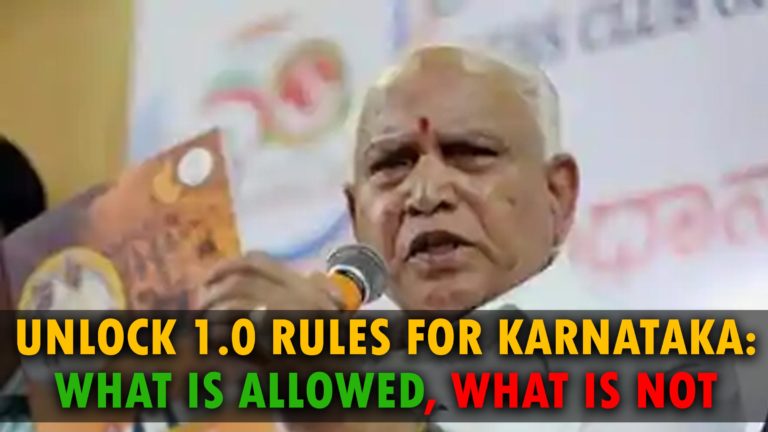
Unlock 1.0 rules for Karnataka: What is allowed, what is not

0

Let us take a look at what will be allowed in Karnataka from June 8:

Karnataka Chief Minister BS Yediyurappa has lifted all restrictions on inter-state travel, while a separate order from the Department of Health and Family Welfare Services is awaited on the inflow of people to Karnataka.

> People will be allowed to travel by private cars and motorbikes without requiring an e-pass or any other special permit.

All places of worship will reopen, but only for darshan. The body temperature of all devotees entering the temple will be checked with an infrared thermometer and hand sanitisers should be available. Social distancing of six feet will be mandatory, with markings for devotees waiting in a queue. Those without face covers or masks will not be allowed to enter.

> Private offices can now reopen in non-containment zones, although companies have been advised to let employees continue working from home.

> Local, standalone shops and those inside shopping malls that sell essential and non-essential goods can reopen in non-containment zones from June 8.

Restaurants will be allowed to offer dine-in, while enforcing strict social distancing guidelines, mandatory temperature checks for all patrons and employees, reduced seating capacity, etc.

> Walking, cycling and exercising outdoors will be permitted in all zones from 5 am to 9 pm as a curfew continues to be in place. While indulging in such outdoor activities, strict social distancing must be maintained, while children aged below 10 years, senior citizens (aged above 65 years), pregnant women and people with co-morbidities have been advised to stay at home.

> Domestic helps and drivers can return to work in non-containment zones.

> Plumbers, carpenters, AC repair mechanics and other self-employed persons can also resume work in non-containment zones. However, the final decision on allowing their entry into gated societies would rest with the respective Resident Welfare Associations (RWAs).

> Salons have been allowed to reopen in non-containment zones while following strict social distancing.

> Weddings can be held, but with a maximum of 50 guests.

Funerals can be held with no more than 20 people present.

What is still not allowed in Karnataka?

> In containment zones, only essential services will be allowed. A strict perimeter will be enforced around such areas to regulate the movement of people in and out of them. Movement outside containment zones will be only be permitted for medical emergencies and to procure essential goods.


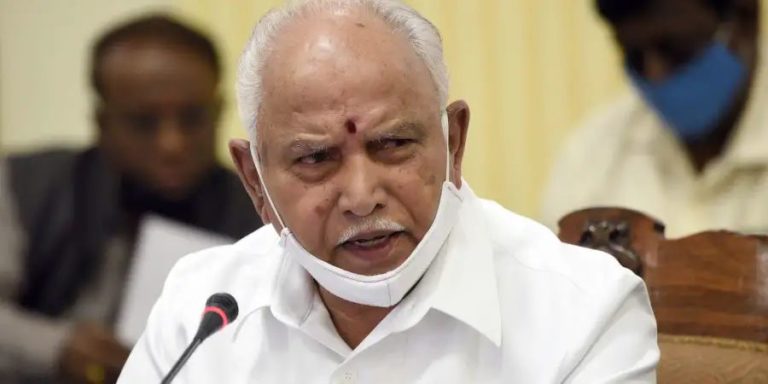
Karnataka CM Yediyurappa directs officials to work on plan for MPM revival

By Express News Service

SHIVAMOGGA: Chief Minister B S Yediyurappa has directed officials to initiate a plan to rejuvenate the Mysore Paper Mills Limited (MPM) which was closed two years ago due to heavy losses. Yediyurappa conducted a meeting in this regard with officials of Forest and Industries and others in Bengaluru on Saturday.

The CM said many families of employees who were dependent on the factory are struggling after its closure. The factory equipment are also on the verge of rusting, hence it is necessary for the government to restart the factory, he said.

Earlier, efforts were made to privatise the factory to revive it. But the public and workers opposed the move. The factory stopped production in 2015 citing losses. However, some of the employees took voluntary retirement as soon as the factory halted production and the rest of them were deputed to other departments.

Schools will reopen after August 2020: HRD Minister Ramesh Pokhriyal

HRD Minister Ramesh Nishank Pokhriyal in a June 3 interview revealed that schools and colleges which have remained closed since around March 16 will reopen after August 2020. Around 33 crore students have been waiting for school reopening news to dispel their doubts.

As per reports in the end of May, it was thought that schools and colleges would reopen in July with 30% attendance and with younger students till class 8 remaining at home.

It also stated that Green and Orange zones would reopen their educational institutes first and that to maintain social distancing norms and a smaller attendance, school would take place in two shifts.

But the Coronavirus scene in India wasn’t stable and in a week, the ministry came out with an official statement within a week that stated that no decision of this sort had been taken yet.

HRD Minister says schools to reopen after August

After weeks of confusion from students, teachers and parents, HRD Minister Ramesh Nishank Pokhriyal in an interview finally revealed that schools and colleges would be reopened after August 2020, possibly even after August 15, 2020.

“We are trying to get declared all the results from the examinations this session by August 15,” said the HRD Minister.

“This means those exams which have already taken place before and those which are taking place now,” Pokhriyal added in the interview.

The anchor asks again if that meant that schools and colleges would re-open after August, to which the HRD minister replied with an enthusiastic “absolutely”.

While CBSE board exams would be held from July 1 to July 15, ICSE/ISC exams will begin from July 1 till July 12.

NEET and JEE are also taking place in July while NEET will take place on July 26, JEE will take place from July 18 to July 23.

UGC, NCERT guidelines to be followed for safety when schools reopen

Safety guidelines are a must for education institutions to resume work again in the Covid-19 circumstances.

Thus, while UGC was deciding on safety guidelines for reopening colleges and universities, NCERT was doing the same work for schools.

The guidelines, which would be different in all three cases, will help students and teachers ensure safety while schools reopen amidst a coronavirus pandemic.

As per reports, teachers would need to wear masks and gloves, thermal scanners would be installed in schools, only two students would sit on three-seaters, CCTVs would observe if social distancing rules are being followed.

Moreover, the safety guidelines would be printed and put up in several locations in each school and the SDM and DM of each concerned area would further fine-tune the Covid-19 safety guidelines as required.

It remains to be seen what the updated guidelines would be if schools reopen after August.

Karnataka gets Rs 4,313 crore in GST dues, fuel tax trickles into coffers

0

By Express News Service

BENGALURU: In a huge relief to the State Government, which is facing a severe fund crunch due to the Covid-19-induced lockdown, the Central Government has released Rs 4,313 crore towards the Goods and Services Tax (GST) component for December 2019-February 2020. With Unlock 1.0, there has also been an increase in collection of taxes on petrol and diesel in the state.

The lockdown had badly affected the state’s economy and to overcome the crisis, the government has been pushing for economic revival even as it continues to take measures to fight the pandemic.

A CMO official said the GST component coming at this juncture will help the state shore up its finances. Also, the situation is slowly improving after restrictions were eased with industries and other businesses restarting, the official pointed out.

On Saturday, at a meeting chaired by Chief Minister B S Yediyurappa, Finance Department officials informed that Rs 4,313.13 crore has been released by the Central Government as the GST compensation for the December-February period. The officials also pointed out that there is an increase in collection of taxes on automotive fuel.

Sales tax on fuel is among the major sources of revenue for the state and, according to estimates, the government gets around Rs 1,200 to 1,300 crore per month from it. However, it had dropped significantly during the lockdown due to restrictions on movement of vehicles within and outside the state. State excise, motor vehicle tax and registration of properties are other major sources of revenue for the state.

Action to be taken against illegal transport of goods

Apart from the GST component, the State Government is also expecting Rs 5,495 crore in special grant, recommended by the 15th Finance Commission. The CM had earlier discussed this issue with the Union Finance Minister.

The Chief Minister on Saturday directed the Commercial Taxes Department officials to take strict action against illegal transportation of goods. Based on a similar directive by the CM during a meeting last month, the department has increased the number of road vigilance teams from 77 to 116.

The teams inspected 2.89 lakh transport vehicles and 7.46 lakh e-way bills. Of this, 300 unlawful cases were detected and Rs 6.21 crore in taxes and fine had been collected, according to a note issued by the Chief Minister’s Office. The CM also instructed the officers to conduct a survey of dealers conducting transactions of more than Rs 40 lakh and commercial complexes in big cities which collect monthly rent of more than Rs 20 lakh.

Telangana SSC Exams 2020: After parents demand cancellation, edu department comes up with relaxations

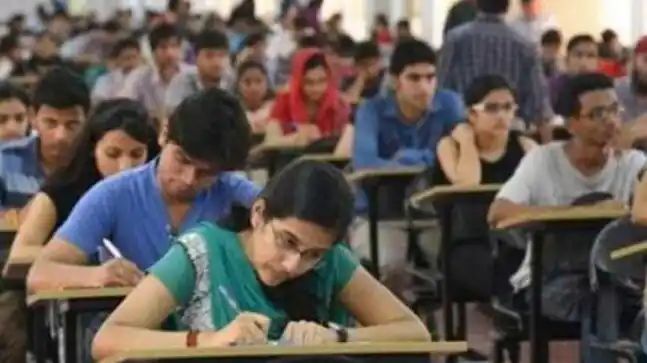
Telangana SSC Board Exams 2020: After Telangana High Court bench headed by Chief Justice Raghavendra Singh Chouhan pull up KCR Govt over the scheduled SSC examination from Monday, education department came up with relaxation.

The students who don’t want to appear in examination starting from Monday should be allowed to appear in the supplementary examination to be held on a later date.

The students appearing for supplementary examination will be treated as regular students only.

Parents demanding cancellation of exams

The pending Telangana SSC Exams 2020 for class 10 students are scheduled from June 8 to July 5 and parents as well as child rights organizations are demanding cancelation off examination amid the rising number of Covid-19 cases in Telangana, particularly in Hyderabad.

The High Court branch, headed by the chief justice, asked the state government to postpone the SSC examination in the Greater Hyderabad Municipal Corporation area, and the matter is still pending in front of the High Court as Advocate General BS Prasad seeks time to convey the decision to the state government.

He informed the government to consider the postponement of examinations either in the GHMC area only or in the entire state. The state government will submit a reply by 4 pm.

India now sixth worst-hit nation by COVID-19, Surpasses Italy with an infection tally of 2,36,657

India is now the sixth worst-affected nation in terms of coronavirus infection cases after the US, Brazil, Russia, Spain and the UK, according to Johns Hopkins University data. The number of active COVID-19 cases stood at 1,15,942, while 1,14,072 people have recovered and one patient has migrated, the Union Health Ministry said.
NEW DELHI: India went past Italy to become the sixth worst-hit nation by the COVID-19 pandemic with the country registering a record single-day spike of 9,887 cases which pushed the nationwide tally to 2,36,657.

India’s death toll due to COVID-19 rose to 6,642 with a record increase of 294 deaths in the 24 hours till Saturday 8 AM. India has registered over 9,000 cases for the third day in a row.

India is now the sixth worst-affected nation in terms of coronavirus infection

cases after the US, Brazil, Russia, Spain and the UK, according to Johns Hopkins University data.

The number of active COVID-19 cases stood at 1,15,942, while 1,14,072 people have recovered and one patient has migrated, the Union Health Ministry said.

“Thus, around 48.20 per cent patients have recovered so far,” a senior health ministry official said.
The total confirmed cases include foreigners.
Of the 294 deaths reported since Friday morning, 139 were in Maharashtra, 58 in Delhi, 35 in Gujarat, 12 each in Tamil Nadu and Uttar Pradesh, 11 in West Bengal, eight in Telangana, seven in Madhya Pradesh, five in Rajasthan, two in Andhra Pradesh and one each in Jammu and Kashmir, Odisha, Punjab Jharkhand and Uttarakhand.
The death toll reached 57 in Karnataka and 48 in Punjab.
Of the total 6,642 fatalities, Maharashtra tops tally with 2,849 deaths followed by Gujarat with 1,190 deaths, Delhi with 708, Madhya Pradesh with 384, West Bengal with 366, Uttar Pradesh with 257, Tamil Nadu with 232, Rajasthan with 218, Telangana with 113 and Andhra Pradesh with 73 deaths.