JDS continues to figure game on, sends four Kalaburagi councilors into safe zone

KEY STORY

  • Once again, the JDS finds itself as kingmaker. The party has shepherded its four Kalaburagi councillors into a safe house in Bengaluru, to stave off advances by the Congress and BJP, locked in a battle for supremacy in the Kalaburagi Mahanagara Palike (KMP).
  • The big two, who are short of numbers in the 55-member House, are ready to pay big money to poach the four councillors, who hold the key to power. JDS leader and former Chief Minister H D Kumaraswamy confirmed to TNIE that the foursome has been brought to Bengaluru, and he is holding meetings with them. He also confirmed that the BJP and Congress have offered to pay the councillors — N Appaji Gowda, Sandesh Nagaraj, CR Manohar and Kanthraj BML — Rs 75 lakh each.
  • Asked which party the JDS would support, Kumaraswamy said he has not yet taken a decision, and has left it to the four councillors. The party is driving a hard bargain, with the councillors demanding that the JDS be given two of five terms as mayor, and three standing committees of their choice.

CONCLUSION

  • “We will decide all this after the Mayor and Deputy Mayor election dates are announced. My priority is not so much these civic elections. I have told the councillors that my priority is to win the two assembly constituencies of Gulbarga Dakshin and Gulbarga Uttar. We want to win 100 assembly seats overall across the state,” Kumaraswamy said.
  • All three parties will now try to get maximum share in the upcoming Legislative Council polls for 25 seats from the Urban Local Body constituencies, where elections are due in a few months, and would like to maximise representation through its four seats in KMP.

WhatsApp says client writes about spam don’t subvert start to finish encryption

KEY STORY
  • WhatsApp on Wednesday said reports sent to it by users flagging spam and abuse do not undermine end-to-end encryption of the messaging platform.
  • WhatsApp’s clarification came in response to a report by non-profit newsroom ProPublica that said even though WhatsApp says it does not see user content, the Facebook-owned company has an extensive monitoring operation and regularly shares personal information with prosecutors.
  • “WhatsApp provides a way for people to report spam or abuse, which includes sharing the most recent messages in a chat. This feature is important for preventing the worst abuse on the internet. We strongly disagree with the notion that accepting reports a user chooses to send us is incompatible with end-to-end encryption,” a WhatsApp spokesperson said.
  • The spokesperson added that in India, in accordance with the government’s IT rules, it also publishes monthly reports that contain details of how WhatsApp keeps users safe and prevents abuse on the platform on the basis of these user reports. “WhatsApp remains deeply committed to privacy and user-safety,” the spokesperson said.
  • In the past too, there have been instances when concerns were raised about privacy of conversations on WhatsApp.
  • The company, on its part, has always maintained that all messages and calls on the platform are end-to-end encrypted and that it has no visibility on the content.
  • WhatsApp in its latest compliance report said that it has banned over three million Indian accounts, while it has received 594 grievance reports in the June 16-July 31, 2021 period.

CONCLUSION

  • The 594 user reports spanned across account support (137), ban appeal (316), other support (45), product support (64) and safety (32) during June 16-July 31. During this period, 74 accounts were “actioned”, as per the report.
  • “Accounts Actioned” denotes reports where the platform took remedial action based on the report. Taking action denotes either banning an account or a previously banned account being restored as a result of the complaint.
  • The company has previously said that apart from “behavioural signals” from accounts, it relies on available “unencrypted information” including user reports, profile photos, group photos and descriptions as well as advanced AI tools and resources to detect and prevent abuse on its platform.

Nipah infection: Karnataka CM guides specialists to play it safe

KEY STORY

  • Karnataka Chief Minister Basavaraj Bommai on Wednesday directed his officials to be cautious against the Nipah virus and adopt precautions to prevent the viral outbreak in the state.
  • Bommai said that officials have been advised to take precautionary measures amidst Nipah virus cases reported in the neighbouring state of Kerala.
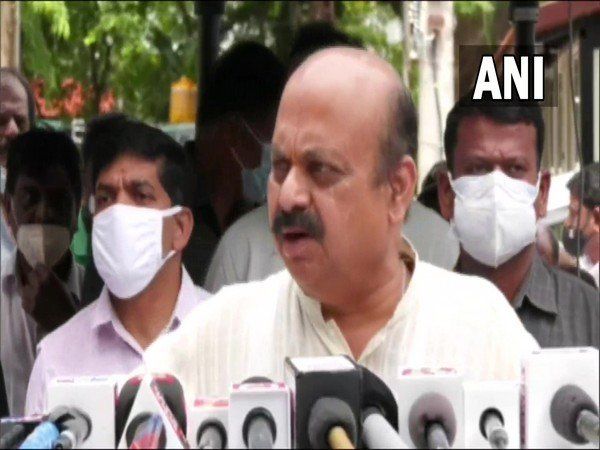
  • “The health department secretaries and a panel of experts have been instructed to take early measures,” he said while addressing the media in New Delhi in presence of Karnataka Deputy Chief Minister Govinda Karajola, ministers V Somanna and CC Patil and MP Shivakumar Udasi.
  • The state government on Tuesday issued an advisory to prevent the outbreak of infection and instructed the administration to monitor arrivals from Kerala for Nipah virus symptoms like fever, altered mental status, severe weakness, headache, respiratory distress, cough, vomiting, muscle pain, convulsion and diarrhoea.
  • It also asked the authorities to spread public awareness in this regard and develop a systematic surveillance system to identify clusters of encephalitis cases for early detection of Nipah outbreaks.

CONCLUSION

  • Notably, Kerala registered the death of an eight-year-old due to the Nipah virus on Sunday following which the Centre advised immediate public health measures for the state. On Wednesday, 20 more samples that were sent for testing at the NIV laboratory, Pune turned negative.
  • State Health Minister Veena George said that one cannot completely claim things are fine, but the results give us cheer.
  • “According to the rules of Nipah spread, after the last case is reported, then one waits for 21 days and then for another 21 days, if there are no more fresh cases, then one can say Nipah spread has been contained, so we have to wait more and as such things are fine,” said George.

Delhi Airport’s raised runway to be prepared by December 2022. Here’s the means by which it will assist with decreasing fossil fuel byproduct

KEY STORY

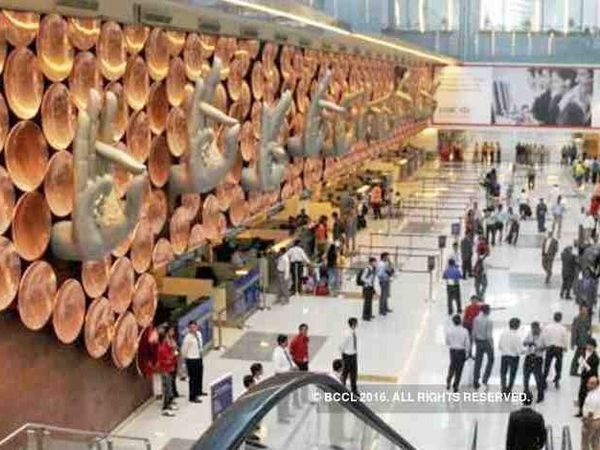
  • Delhi Airport’s elevated taxiway, which is first of its kind in India, is likely to be ready by December 2022, the Delhi International Airport Limited (DIAL) said in a statement on Wednesday. DIAL said 60% of the construction work of the elevated eastern cross taxiway (ECT) is already complete and the remaining work will be done before the above deadline.
  • The ECT will reduce the aircraft taxiing distance by seven kilometers, helping in carbon emission. “At present, after landing at RWY 29/11 or to take-off from this runway, an aircraft has to cover a distance of about 9 km. During this period, passengers have to remain inside the plane,” the DIAL said.
  • The ECT will help airlines to save approximately 350 kg of fuel every time an aircraft uses the taxiing route provided by the ECT from runway 29/11 to Terminal 1 and vice-versa. It will help decongest the airport and reduce approximately 55,000 tonnes of carbon emission annually.
  • “This would translate in reduction of nearly 1,114 kg of CO2 emissions for each aircraft taxiing along this route. Annually, the ECT is estimated to reduce emission of approximately 55,000 tonnes of CO2 from aircraft,” the GMR group-led company said in the statement.
  • DIAL has ensured that an environment-friendly approach is followed in the construction of ECT. It has used fly ash, a waste product of coal-fired power plants, in the filling material.
  • “It is using around 9,715 MT of fly ash in the construction of ECT. If not used, fly ash is disposed in specially designed landfills which could lead to leaching of heavy metals into ground water,” the DIAL stated.
  • The use of fly ash is recognised as an environment-friendly measure as it promotes waste reutilisation and ensures that other raw materials used in construction can be reduced, thus making our construction process environment friendly, DIAL said.
  • Under Phase 3A, the DIAL is also constructing 4.4-kilometre-long fourth runway, parallel to runway 11/29 on the southern side.
  • Once commissioned, the fourth runway would handle the increased traffic movement and help reduce carbon emission and Delhi airport would become the first airport in India to have four operational runways.

CONCLUSION

  • To fulfill its ambition of becoming a net zero carbon emission airport, the DIAL has initiated a number of key infrastructure development projects. One of these initiatives is the development of the ECT.
  • “Construction of dual eastern cross taxiways, the first of its kind in India, will not only reduce significant amount of carbon emissions but also enhance passenger experience. This is another step towards our goal of becoming a net zero carbon airport by 2030,” I Prabhakar Rao, deputy managing director of Delhi-based GMR Group which currently runs the Delhi and Hyderabad international airports, said.
  • “The ECT, an integral part of Delhi airport’s Phase-3A expansion project, would make Delhi airport future-ready. After completion of this project, the airport would be able to handle 140 million passengers per annum (MPPA),” Rao said.

MS Dhoni 2.0: The story behind MSD’s re-visitation of Indian group as ‘guide’ for T20 World Cup 2021

KEY STORY

  • Just as Indian cricket fans were debating their views on India’s 15-man squad for the ICC T20 World Cup 2021, the Board of Control for Cricket in India (BCCI) made another big announcement of giving the mentor’s role to MS Dhoni for the showpiece event.
  • Dhoni, who retired from international cricket on August 15 last year, was last seen in the Indian shirt during the 2019 World Cup semi-final against New Zealand. Though not as a player, Dhoni will be donning the India colours again as a mentor of the Indian team in a supporting role to head coach Ravi Shastri.
  • Though Dhoni’s return came as a surprise to many, this was a pre-planned move by the BCCI who had discussed it with the current Indian team management as well as the wicket-keeper batsman from Jharkhand. Board secretary Jay Shah also revealed the thinking behind bringing Dhoni into the team as a member of the support staff.
  • As per Sports Tak, Jay Shah had spoken to Dhoni about such a move and the latter showed keen interest in contributing to the Indian team with the mentorship role. In fact, the first conversation between Shah and Dhoni over this role had reportedly taken place two months ago.
  • During a virtual interaction between the two, Shah offered Dhoni the opportunity to go into the 2021 T20 World Cup as a mentor. Dhoni sought clarity on his role and then agreed to it.
  • After getting Dhoni’s approval, Shah reached out to head coach Shastri and skipper Virat Kohli about the same. The duo also agreed to the proposal, especially considering the T20 World Cup is Shastri’s last assignment as the coach of the Indian team.
  • It was only after getting the trio of Dhoni, Kohli and Shastri came on board that Shah decided to discuss the idea with his colleagues inside the BCCI.

CONCLUSION

  • With Shastri set to leave the head coach’s job after the conclusion of the T20 World Cup, many wonder if this is a way through which the BCCI can ease Dhoni into role. But, that isn’t the case. Dhoni is unlikely to apply for the post of India head coach in the near future. But, the 40-year-old is likely to be used as a mentor in major events.
  • With the years 2022 and 2023 also set to bring about two World Cups (T20 and ODI respectively), Dhoni’s experience and maturity are bound to benefit the Indian team, even if he comes only for tournament-specific assignments.

Karnataka Schools reopen for classes 6 -8 in districts with less than 2% positivity rate

KEY STORY 

  • Schools in Karnataka have reopened for classes 6 to 8 from today, September 6, 2021. However, schools have resumed only in these districts where the COVID-19 positivity rate is less than 2%.
  • Karnataka government took the decision to reopen schools for classes 6 to 8 on August 30, 2021. The final decision was taken after a meeting that was chaired by Chief Minister Basavaraj Bommai.
  • Schools have already resumed in the state for classes 9 to12 from August 23, 2021.  However, schools have resumed offline classes with adherence to strict COVID-19 protocols. Further, the government has not made attendance mandatory for students. Thus, those students who do not resume physical classes will have the option to attend online classes. There are as many as 3.8 million students for classes 6 to 8.
  • Karnataka Minister of Primary and Secondary Education and Sakala BC Nagesh had recently said that schools will resume for classes 6 to 8 with all necessary arrangements that have been done by the education departments and other departments. Classes will be conducted in the state on alternative days.
  • Further, protocols such as wearing masks, maintaining social distancing, and using sanitizer have to be followed by all stakeholders.

CONCLUSION

  • The total number of active cases of COVID-19 in Karnataka is 17,527 cases. Further, the active ratio in the state is 0.59% and the death ratio is 1.27%. With the possibility of a third wave of COVID-19, several parents have expressed concern about sending their wards to schools.
  • In order to attend offline classes, students have to submit the consent of their parents or guardian. Further, all school staff, both teaching and non-teaching will have to be vaccinated before entering the school campus. Meanwhile, Karnataka Chief Minister  Basavaraj Bommai had said on September 4 that the government has not yet made any decision to reopen schools for classes 1 to 5.

Karnataka govt issues fresh guidelines for Ganesh Chaturthi celebrations. Details here

KEY STORY

  • The Karnataka government has decided on Covid safety protocols to be followed during the upcoming five-day Ganesh Chaturthi festivities.
  • As per a new order, only a maximum of 20 people will be allowed for the celebrations and immersion of the Ganesha idol. In addition to this, no celebrations will be allowed after 9 pm.
  • The government had also said that no procession will be allowed for the festivities. Only eco-friendly Ganesha idols should be used for celebrations, where the distribution of food and prasad will be prohibited.
  • No function will take place for Ganesh Chaturthi in districts where the positivity rate is above 2%.
  • The Karnataka cabinet had said on Saturday that state Chief Minister Basavaraj Bommai will call a meeting to decide on relaxing Covid-induced restrictions on Ganesha festival.
  • “The chief minister has been authorised to call a meeting (of experts and officials) and take a decision regarding Ganesha festival celebrations,” said law and parliamentary affairs minister JC Madhuswamy.
  • He informed that Bommai would speak with deputy commissioners and superintendents of police of various districts to vet the Covid-19 infection rate in their areas.
  • Citing Covid-19, the government had, earlier, banned the celebration of the festival in public and said the people can celebrate in their houses.

Karnataka Covid restrictions

  • The state government had earlier this week decided to ease night curfew regulations in most areas except four districts – Kodagu, Hassan, Dakshina Kannada and Udupi — which are sharing its borders with Kerala.
  • Moreover, the state also tightened the quarantine rules for passengers from Kerala. In a fresh order, the government said that one-week institutional quarantine and testing after seven days, irrespective of vaccination or negative RTPCR report, is compulsory for people coming from Kerala.

Covid-19 situation in Karnataka

  • Karnataka on Saturday reported less than 1,000 new COVID-19 cases with 983 infections and logged 21 deaths, taking the total caseload to 29,54,047 and the toll to 37,401. Out of 983 cases, 289 were from Bengaluru Urban, as the city saw 618 discharges and seven deaths.
  • Dakshina Kannada accounted for 162 cases, Udupi 97, Mysuru 89, Hassan 62, while the rest were scattered in other areas.
  • Bengaluru Urban district topped the list of positive cases, with a total of 12,39,123, followed by Mysuru 1,76,433 and Tumakuru 1,19,411.

CONCLUSION

  • The active cases in the state stood at 17,746. While the positivity rate for the day was 0.61 per cent, the Case Fatality Rate (CFR) was 2.13 per cent.
  • Dakshina Kannada followed Bengaluru Urban in the fatality count with five deaths, Hassan and Mysuru logged two each, followed by others.
  • Saturday also saw 1,620 discharges, taking the total number of recoveries in the state so far to 28,98,874

Sputnik V, Covaxin and Covishield: How to identify fake Covid-19 vaccines

KEY STORY

  • The Union Health Ministry has issued guidelines to identify fake Covid-19 vaccines and ensure that they are not administered in India. The guidelines come nearly two weeks after the World Health Organisation (WHO) said it has identified counterfeit versions of Covishield in South-East Asia and Africa.
  • Currently, there are three vaccines being administered in India — Serum Institute of India’s (SII) Covishield, Bharat Biotech’s Covaxin, and the Russian vaccine Sputnik V.
  • Here are the various parameters to identify if the Covid-19 vaccine is original:

    COVISHIELD

    * SII product label
    * Label colour shade is dark green, as per approved art work (shade: Pantone 355C). Colour of the aluminium flip off seal is dark green.
    * Brand name with trade mark is mentioned. i.e. COVISHIELD.
    The text font of Generic name is un-bold.
    * (Recombinant) is printed at the end of Generic name.
    * Overprinted with CGS NOT FOR SALE.
    * With advanced systems installed on printing machine, the printing of SII logo on the adhesive side of the label. The logo is printed at a unique angle and position which can be identified by only a select few who are aware of the exact details.
    * The lettering is printed in special white ink to be more clear and readable. The general trend is to keep white lettering in reverse and just print the solid color. This gives the labels a special look and unique claret and readability.
* The entire label has been given a special texture honeycomb effect which is visible only at a specific angle
* At strategic locations, the honeycomb design has been altered slightly and certain additional special elements added to the texture design such that it is not visible to the layman, but people who know the subtle changes can easily check and verify the authenticity of the label and vial.

COVAXIN

* Invisible UV helix (DNA like structure) on label which is only visible under UV light
* Micro Text hidden in label claim Dots, which is written as COVAXIN.

* Green foil effect in X of “Covaxin”

* Holographic effect on COVAXIN

SPUTNIK V

* Imported products are from two different bulk manufacturing sites from Russia and hence, there are two different labels for both these sites. While all the information and design is the same, only the manufacturer name is different.

* For all the imported products till now, the English label is only available on the front and back of the carton of 5 ampoule pack while for all other sides, including the primary label on the ampoule, is in Russian.


Sidharth Shukla and Shehnaaz Gill Were Planning to Get Married in December

  • Sidharth Shukla and Shehnaaz Gill were apparently intending to get hitched in December 2021. Sidharth died apparently because of a cardiovascular failure on Thursday (September 2). Specialists announced him dead on landing in the emergency clinic. He is made due by his mom and two sisters. Shehnaaz, who showed up for Sidharth Shukla’s incineration with her sibling Shehbaz Badesha, was found in a sad state.
  • Presently, a report in BollywoodLife proposes that Shehnaaz and Sidharth were locked in and intending to secure the bunch before the current year’s over. The report states: “They had educated their families who were profound into arrangements.
  • Not simply this, they were additionally in converses with an extravagant Mumbai lodging to book rooms, meal and different administrations for the wedding celebrations which were anticipated a time of three days. The two entertainers, their companions, and families had kept quiet.”
  • Previous Bigg Boss 13 hopeful, vocalist Abu Malik, in discussion with ETimes, shared that Shehnaaz needed him to request that Sidharth wed her. Abu said, “Shehnaaz disclosed to me this on March 22, 2020 – I believe that this was only a day prior to the main lockdown.
  • Ý” He likewise added Sidharth cherished Shehnaaz a ton. Abu added, “Sidharth used to adore her a great deal. He would say that agar ek racket woh naaraz ho jaati thi, toh uska commotion kharaab ho jaata tha.”

CONCLUSION 

  • In the mean time, when Shehnaaz showed up at the incineration ground for Sidharth’s keep going rituals on Friday, she was seen crying wildly. She additionally hurried towards the emergency vehicle shouting ‘Sidharth’. Her deplorable photographs from Sidharth’s memorial service made her fans stressed over her psychological state.
  • Sidharth Shukla and Shehnaaz Gill’s celebrity lives became intertwined ever since the two developed a bond on Bigg Boss 13. The two were almost always seen together, and the actress ensured that she was by his side till the last.

Karnataka:CM Bommai Hints at More Covid restrictions Amid Rampant Flouting

KEY STORY 

  • Karnataka Chief Minister Basavaraj Bommai on Saturday said new Covid-19 rules will be given to control huge scope occasions and mobilizes, taking into account infringement of COVID-19 conventions.
  • “We are viewing this load of things in a serious way, as barely any such occasions have occurred, we will indeed report rules for such occasions,” Bommai said while responding to an inquiry regarding huge scope occasions, rallies connected to ideological groups occurring notwithstanding limitations.
  • A few occurrences of occasions or gatherings by ideological groups, including by the decision BJP which coordinated “Jan Ashirwad Yatras” across the state, has seen a huge scope social event of individuals, infringing upon COVID-19 conventions, and they have gone under exceptional analysis.
  • The Chief Minister also said the government has still not considered reopening schools for classes 1 to 5. “No, we have not considered it yet. We will see how things will function with class 6,7 and 8, and based on that we will take further decisions,” in response to a question on reopening school for classes 1-5.
  • The government has already allowed reopening of schools for students from class 9 to 12 since August 23, and class 6, 7 and 8 will reopen from September 6.

CONCLUSION 

Further, noting that the Inter Ministerial Central Team (IMCT) is visiting the state in the wake of recent floods and landslides, the Chief Minister expressed confidence about getting funds as per the state government’s demand, under the National Disaster Response Fund (NDRF) norms.
“I will be holding a preliminary meeting with them (IMCT) along with Ministers and officials today and will share all information and reports, and after their visit to affected regions another round of meeting will be held. Our officials will also be travelling with them,” he added.