
KEY STORY
-
A.R. Rahman who turned producer and co-writer with the film 99 Songs, on Wednesday, announced the digital premiere of the film. He announced that the film will be streaming on Netflix from May 21. It will also start streaming on Jio Cinemas from May 21. The film was first released in theatres on April 16.
-
The film that has been released in Hindi, Tamil, and Telugu streams in all three languages on the streaming giant from May 21. Making the announcement, A.R. Rahman took to his Twitter handle and shared links to the trailer in all three languages. “Here’s the announcement that will lighten your mood. #99Songs will stream on Netflix from May 21st,” he tweeted.
-
99 Songs also marks the debut of actors Ehan Bhat and Edilsy Vargas. The film is directed by debutant Vishwesh Krishnamoorthy, who worked as an ad filmmaker before Rahman offered him to direct for his production. Vishwesh is also a musician known for the Mumbai-based band Scribe.
-
The world premiere of the film was held at the 24th Busan International Film Festival in Busan, South Korea in 2019.
KEY STORY
-
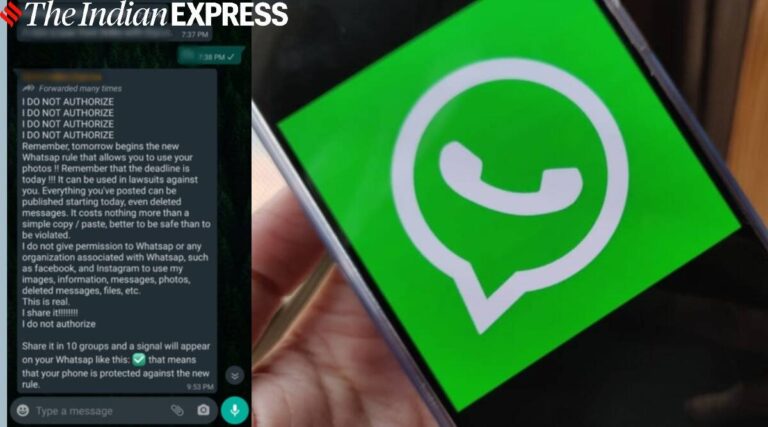
A new fake message is being shared on WhatsApp, which makes false claims about the app’s new privacy policy. The message says there is a new rule which allows WhatsApp, Facebook, and Instagram to use your images, messages, files, and other information for their personal gain.
-
The message even requests you to forward it in 10 groups, after which if you receive a green tick, it means that “your phone is protected against the new rule.”
-
This is a fake message and WhatsApp users are advised to not forward it to anyone. In a blog post, WhatsApp has reiterated that it does not share any user data with Facebook. The messaging app is end-to-end encrypted, so the company cannot access your chats, images, personal files, or any other private information. The service can’t track your calls.
-
End-to-end encryption basically means that your messages are secured with a lock, and only the receiver and sender have the special key needed to unlock and read them.
-
WhatsApp has been making headlines lately. Earlier this year, the Facebook-owned company updated its privacy policy, which stated that the service may use some of your information for marketing purposes. This sparked concerns among privacy-conscious people with most of them saying they would switch to different a messaging app.
-
The company later clarified that the update will not change the end-to-end encryption of personal conversations, and only business conversation hosted with the app might be readable and used for advertising. “Messaging with businesses is different than messaging with your family or friends” and some “large businesses need to use hosting services to manage their communication,” WhatsApp said.
CONCLUSION
-
WhatsApp also reported that it will “clearly label conversations with businesses that are choosing to use hosting services from Facebook.” The company also gave a few months of time to users to understand the new terms.
-
WhatsApp says you can stop using the messaging app if you don’t want to accept the 2021 privacy policy. If you continue to use it without accepting the new update, then WhatsApp will slowly limit all the features and you will have to eventually accept the policy or move to a different app.

KEY STORY
-
The Indian Council of Medical Research, on Wednesday, approved the sale and use of a self-administered Rapid Antigen Test (RAT) for COVID-19, developed by Pune-based Mylab Discovery Solutions, and named ‘CoviSelf.’
-
The hope is that, with the self-use kit now on the market and expected to be joined by other similar products, the burden on existing laboratories as well as the manpower required for COVID-19 home testing will be reduced. According to Dr Hasmukh Rawal, managing director of Mylab, the test will retail for Rs 250 with current production of 70 lakh (per week) expected to be ramped up to one crore within the next two weeks.
How to use the CoviSelf kit
-
Each CoviSelf kit comes with a sterile nasal swab, a testing card (or cassette), a biohazard bag and a pre-filled extraction tube. Before opening the kit, users are required to download and open the AI-enabled Mylab CoviSelf app before inputting their relevant credentials. Once these are filled in, remove the testing cassette from the bag, and use a mobile device to scan the QR code located on the cassette to match the code with one’s credentials.
-
Remove the pre-filled extraction tube from the pouch and hold it vertically to ensure that the extraction buffer (liquid) settles at the bottom of the tube.
-
Carefully remove the nasal swab from the tube, before inserting it between 2 to 4 cms into one nostril (or until resistance is met). Roll the swab around to ensure that cells are collected. Repeat the same process with the other nostril using the same nasal swab.
-
Open the nozzle at the top of the extraction tube, and insert the nasal swab into the tube. Ensure that it is the end with the nasal swab head that is being inserted and not the tail end. Also, ensure to avoid making contact with the nasal swab head.
-
Pinch the tube at the bottom, and swirl the nasal swab around 10 times to ensure it is well immersed in the extraction buffer. Identify the breakpoint along the nasal swab, and break the swab while ensuring that the swab head remains immersed. Discard the other end of the swab.
-
Close the extraction tube with the nozzle cap and ensure that it is well sealed. Carefully align the extraction tube with the extracted antigen buffer mixture over the testing cassette with the nozzle facing downward, and add 2 full drops of the mixture onto the testing device.
-
Wait between 15 to 20 minutes for the results to appear. Using the CoviSelf app, take a picture of the testing cassette and wait for the app to analyse the results. If the result is COVID-19 positive, a quality control line (C) and a test line (T) will both appear on the testing cassette. In some cases, the test line may be very faint so make sure to look closely. However, if the result is COVID-19 negative, only the quality control line will appear. If the quality control line does not appear, the test must be considered invalid regardless of whether the test line appears.
-
Once the test is complete and the results have been analysed, all components of the testing kit must be placed in the biohazard bag and disposed of safely.
While a RAT does represent a quick way to identify whether someone is infected with COVID-19, it is important to note that such tests are notorious for showing false negatives. As such, it is only to be considered a supplementary test and is in no way as reliable as the gold standard RT-PCR test. The ICMR has advised that the test only be used for those individuals who are showing COVID-19-related symptoms or high-risk contacts of confirmed COVID-19 carriers.

KEY STORY
-
Given that the IPL franchises have now started to invest in players and are giving them longer rope, it’s certainly a tough call for any team to bring about a change in captaincy. In order to build homegrown players who can serve the team for a number of years, the franchises now don’t shy away from handing the job to youngsters even with lesser experience.
-
Rohit Sharma was made Mumbai Indians’ captain even when he was yet to fix his spot in the national team while KL Rahul was appointed Punjab Kings’ captain with no prior experience. David Warner, Sanju Samson, Shreyas Iyer and Rishabh Pant are some other players who started leading IPL teams at a young age.
-
While many youngsters have already led IPL teams, there are few IPL legends who are yet to don that hat in their respective careers. From AB de Villiers to Chris Gayle, today we have a look at 5 IPL legends who haven’t led a franchise in the T20 league yet –
AB de Villiers
Probably the biggest name who has never led an IPL team, AB de Villiers is a former national captain but he has never done the top job in IPL. The star batsman played under the likes of Virender Sehwag and Gautam Gambhir at Delhi Capitals while at Royal Challengers Bangalore, he has spent time under Daniel Vettori and present captain, Virat Kohli.
His name has never been floated for the top job. In 2017, when Kohli sat out for a few matches due to shoulder injury, Shane Watson took over the charges despite de Villiers’ presence. And not de Villiers, but Parthiv Patel was RCB’s Vice-captain in IPL 2019. De Villiers is likely to end his IPL career without leading a team in the T20 tournament.
Chris Gayle
IPL’s 7th highest run-scorer, Chris Gayle is another big name who hasn’t led an IPL team. The left-handed batsman has plied his trade for Kolkata Knight Riders, RCB and Punjab Kings. but he never got a chance to lead the team. A T20 globetrotter, there is no match to Gayle’s experience in the shortest format and his presence is a big boost for any franchise he is a part of.
Gayle, who has 4950 runs in IPL, is now nearing the end of his IPL career and looks all to end his IPL stint without getting to do the top job. He has played 140 IPL matches so far.
Lasith Malinga
IPL’s highest wicket-taker, Lasith Malinga has only played for Mumbai Indians (MI) and unsurprisingly, he hasn’t gotten an opportunity to lead them due to the presence of heavyweights in the camp. Malinga started his IPL career under Sachin Tendulkar and later played under the likes of Harbhajan Singh, Ricky Ponting and Rohit Sharma.
Though he was regular in the playing XI, Malinga had to miss few seasons due to different reasons. He is a former national captain but was never considered for the top job at MI. With 170 wickets in only 122 matches, Malinga sits at the top on the list of most wicket-takers list. He retired from IPL earlier this year.
Amit Mishra
This name might surprise many but Amit Mishra is an IPL legend. With 166 wickets, the leggie is IPL’s second-highest wicket-taker and add to it his 3 IPL hat-tricks. Mishra has been a regular in IPL right since the league’s inception and is one of the best spinners in the history of the league. He also has captaincy experience in domestic cricket as he has led the Haryana cricket team.
Ravindra Jadeja
Another IPL veteran on the list, Ravindra Jadeja has been one of the highest-paid players in the league since 2012 and is a regular for whichever team he plays for. A complete package on the field, Jadeja has scored 2290 runs and scalped 120 wickets. But as he doesn’t have experience of leading an IPL team. With MS Dhoni likely to take a call on his career after the completion of IPL 2021, Jadeja could be one of the players CSK might consider for captaincy.
KEY STORY
-
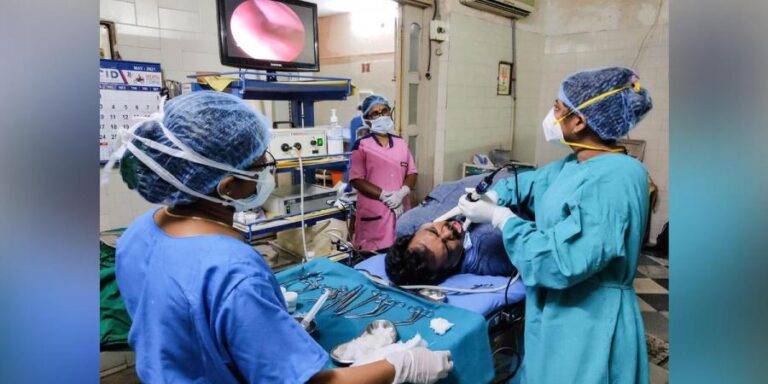
At Mahatma Gandhi Institute of Medical Sciences at Sevagram in Wardha, a major tertiary care centre in rural Maharashtra, nearly 4,000 Covid patients had undergone treatment before March this year.
-
None of these patients, however, developed mucormycosis (black fungus) that has now offered a fresh challenge to the healthcare system in India.
-
Beginning April through the first week of May, when nearly 1,000 Covid patients were treated at MGIMS, 20 of them went on to develop black fungus, a dreaded disease with a reported fatality rate of nearly 50%, most of whom needed urgent life saving surgeries.
-
At present, there are at least 15 patients of this disease caused by a group of molds called mucormycetesin. It infects the sinuses, lungs and brain of the patients.
-
Raymond Savio, a critical care expert from Chennai, explains the multiple reasons behind the fungus infecting those with Covid.
-
“It’s a combination of the virus infection, nature of treatment, steroid and other immune-suppressants, nature of body’s response to Covid infection (ferritin level), uncontrolled blood sugar and humidification systems for oxygen that makes it appropriate for the spores to infect patients,” he said.
-
The sudden and unprecedented rise in mucormycosis cases, however, has prompted SP Kalantri, a senior doctor and medical researcher at MGIMS, like many others in different parts of India, to question whether the popular perception that indiscriminate use of steroids, suppressed immunity, history of diabetes and unhygienic conditions in ICUs may be triggering this spurt in cases.
-
“It’s my assumption and I may be completely wrong but maybe Covid virus and mucor are now hunting together, something about Covid virus has changed over the months,” he said, adding that more research is required to understand the rise in the disease.
-
“All of the factors that are being cited as reasons for rise in mucormycosis existed before March-April too, but why suddenly this fungal infection is being reported now in Covid patients across India?” he asks.
-
He has more questions than answers but, in his understanding, so far, it could be something to do with virulence of Covid virus, that is making it easier for opportunistic pathogens like mucor to target weak patients.
-
A senior doctor at AIIMS, Delhi said she has been treating autoimmune disease patients with steroids for years but mucormycosis was seen in very rare cases. “There is something that has definitely changed now, but whether it is the use of industrial oxygen or the way oxygen has been instituted in overwhelmed health facilities, I am not sure. That is for researchers and scientists to find out.”
-
“But we should try and probe why so many cases are happening and it is especially important because unless we know the reason, we cannot possibly prevent the large outbreaks we are seeing,” she said.
-
Unconfirmed data so far suggests that over 5,000 cases of this disease have been reported from several states—including about 200 in Delhi over the last few days, prompting the Centre on Wednesday, to ask states to declare it as epidemic which will make it mandatory for states to report all the cases.
-
States, grappling to cater to healthcare needs of Covid patients on the other hand are finding it difficult to manage the alarming rise in mucormycosis cases, especially as its first line of treatment — amphotericinB — has suddenly become out of stock in most places.
CONCLUSION
-
Savio, meanwhile, stressed that while there is no evidence so far that use of industrial oxygen may be triggering it, there are already more than many contributing factors to the rise in mucormycosis.
-
“If identified early and started on appropriate treatment, surgical and medical, the outlook is not as bad as is being projected. However, we are already facing a shortage on the drug-of-choice needed for this treatment and we have started resorting to second line anti-fungal agents,” he said.
KEY STORY
-
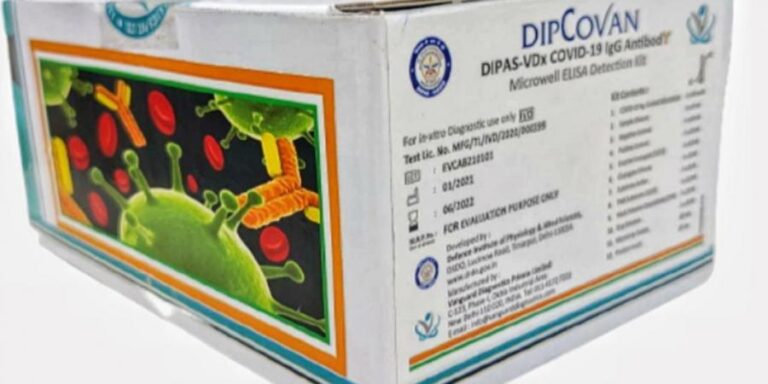
The Defence Research and Development Organisation (DRDO) has developed an antibody test kit for the early screening of COVID.
-
DIPCOVAN, the DIPAS-VDx COVID 19 IgG Antibody Microwell ELISA for sero-surveillance has been developed by the Defence Institute of Physiology and Allied Sciences (DIPAS) in association with Delhi-based firm Vanguard Diagnostics Pvt Ltd.
-
Defence sources said the DIPCOVAN kit can detect both spike as well as nucleocapsid (S&N) proteins of SARS-CoV-2 virus with a high sensitivity of 97% and specificity of 99%.
-
“The kit was developed indigenously by the scientists, followed by extensive validation on more than 1000 patient samples at various Covid designated hospitals in Delhi. Three batches of the product were validated during last one year. The antibody detection kit is approved by ICMR in April this year,” said a defence official.
-
In May 2021, the product received regulatory approval from the Drugs Controller General of India (DCGI) and Central Drugs Standard Control Organisation (CDSCO), Ministry of Health and Family Welfare to manufacture for sale and distribution.
-
According to DRDO, DIPCOVAN is intended for the qualitative detection of IgG antibodies in human serum or plasma, targeting SARS-CoV-2 related antigens. It offers a significantly faster turn-around time as it requires only 75 minutes to conduct the test without any cross-reactivity with other diseases. The kit has a shelf life of 18 months.
-
Earlier this month, the product had received the regulatory approval from the Central Drugs Standard Control Organisation’s Drugs Controller General of India (DCGI) under the Ministry of Health and Family Welfare to manufacture for sale and distribution.
-
DIPCOVAN is intended for the qualitative detection of IgG antibodies in human serum or plasma, targeting SARS-CoV-2 related antigens. It offers a significantly faster turn-around-time as it requires just 75 minutes to conduct the test without any cross reactivity with other diseases. The kit has a shelf life of 18 months.
-
Industry partner Vanguard Diagnostics Pvt Ltd will commercially launch the product during the first week of June. Readily available stock at the time of launch will be 100 kits (approx 10,000 tests) with a production capacity of 500 kits/month after the launch.
CONLUSION
-
Secretary of Department of Defence (Research and Development) and DRDO Chairman Dr G Satheesh Reddy complimented the teams involved in developing the kit. “The kit expected to be available at a reasonable price of around Rs 75 per test will help people ascertain their antibody during the pandemic. It will be available in the market next month,” he said.
-
Once available in the market, the kit will be very useful for understanding Covid-19 epidemiology and assessing an individual’s previous SARS-CoV-2 exposure. Appreciating the efforts of DRDO and industry in developing the kit at the need of hour, Defence Minister Rajnath Singh stressed on its availability in the market at the earliest.

KEY STORY
-
Amid a rise in patients suffering from Mucormycosis, also known as black fungus, across the country, there are certain things that one needs to keep in mind if they come across this illness.
-
Dr Suresh Kumar, MD at Delhi’s LNJP Hospital, said that early diagnosis of black fungus cases is critical for its treatment.
-
“White fungus (Aspergillosis) is not as dangerous as black fungus. The treatment for the latter can continue for 1-1.5 months, hence early diagnosis is critical. Don’t take steroids to treat Covid-19 without consulting your doctor,” Dr Kumar said.
-
Stating that clean and hygienic environments are crucial in avoiding fungal infections, he said that “fungus grows in cramped and humid spaces”.
-
“Fungus grows in cramped and humid spaces, and so ensure that your surroundings are cleaned regularly. Avoid consuming eatables refrigerated for days, eat fresh fruits, let sunlight in your house and wash your masks daily,” he added.
-
The Union Health Ministry on Friday wrote to all states and Union Territories (UTs) advising them to review their preparedness for infection prevention and control, as well as hygiene and sanitation in hospitals.
-
The government has instructed the states and UTs to implement the Infection Prevention Control (IPC) Programme in hospitals and health facilities as per the guidance given in National Guidelines for Infection and Control in Healthcare Facilities.
CONCLUSION
-
Delhi Health Minister Satyendra Jain yesterday said that the AAP government will provide injections against black fungus to hospitals in the city as soon as the Centre clears it.
-
Prime Minister Narendra Modi, in an interaction with doctors and frontline workers of Varanasi on Friday, too warned against the “new challenge of black fungus”.
-
“In our ongoing fight against Covid-19, a new challenge of black fungus has surfaced. We must focus on precaution and preparation to deal with it,” the Prime Minister said.
KEY STORY
-
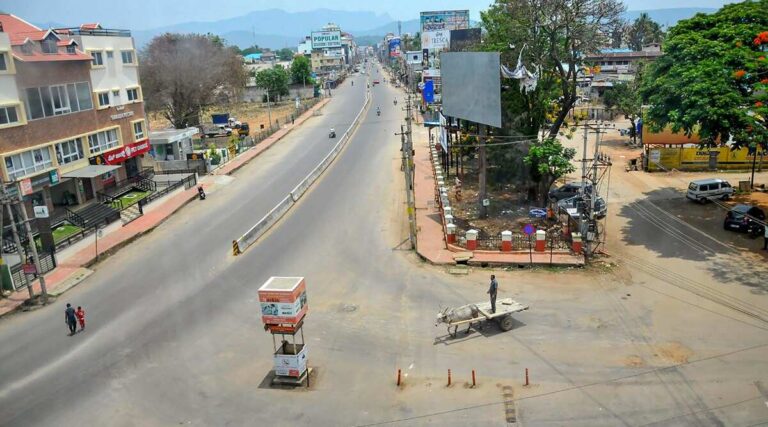
Karnataka Chief Minister BS Yediyurappa on Friday confirmed that the ongoing COVID-induced lockdown in the state will be extended till June 7. He also announced that the state govt will provide free treatment for Mucormycosis or black fungus patients.
-
During a press briefing, BS Yediyurappa said that he has taken a decision on lockdown after having a meeting with senior officials and ministers of the state.
-
“Karnataka had strict restrictions till May 24. However, as per the opinion of experts, we are extending the strict restrictions till June 7 at 6 am,” he added.
-
The Chief Minister clarified that there are no changes in the current restrictions. “The decision to extend the lockdown for two weeks is taken after experts advised us to continue the lockdown.” he said after a meeting with senior officials and ministers on Friday evening.
Meanwhile, the CM said that in case of not following the lockdown rules and regulations, the police have been directed to take action against violators.
Karnataka, especially the capital city Bengaluru, is reeling under the second wave of Covid-19 that has severely affected the healthcare infrastructure where patients are struggling to getting oxygen, ventilator and ICU beds. The crematoriums are running at full capacity in Bengaluru.
Karnataka lockdown: What is not allowed
*Metro Rail, taxi and bus services (except while hired for emergency).
*Schools and colleges (Online/ distance learning is permitted).
*Cinemas, shopping malls, stadiums and swimming pools.
*Social, political, sports, entertainment, cultural, religious functions and other gatherings and congregations.
*Religious places will remain closed for the public.
*No movement of public or private buses or passenger vehicles.
*Hotels, restaurants, liquor shops and hospitality services can only act as takeaway and home delivery.(home delivery allowed)
*Inter-state and intra-state movement of passenger vehicles allowed in cases of emergencies or as permitted.
Karnataka lockdown: What is allowed
*Flights and trains: Tickets will act as a pass for movement of person.
*Karnataka government offices
*Departments dealing with health
*Municipal administration
*District administration
*Medical education.
*Police, civil defence, defence, fire and emergency services.
*Water, electricity and sanitation.
*Government of India offices such as defence, defence PSUs, armed police forces.
*Petroleum, CNG, LPG, PNG, power generation and disaster management.
*Banks, RBI regulated financial markets
*Microfinance institutions
*The Rural Employment Guarantee Scheme.
*Homes for children, disabled, mentally challenged, senior citizens, destitutes and women.
*Agriculture activities, supply chain of essential goods
*Movement of all types of goods and cargo
*Manufacturing wholesale, retail, large brick and mortar stores or e-commerce companies
*Groceries shops will open from 6 am to 10 am
* Fruits, vegetables, dairy shops and milk booths (6 am to 10 am)
* Meat and fish and animal fodder (all from 6 am to 10 am.)
* All food processing and related industries.
*Construction activities and repair work.
*Print and electronic media.
*Construction activities with in-situ labourers/workers
*Road works
* Marriages (only with 50 persons in attendance)
*Cremations or funerals (only with five persons in attendance)
KEY STORY
-
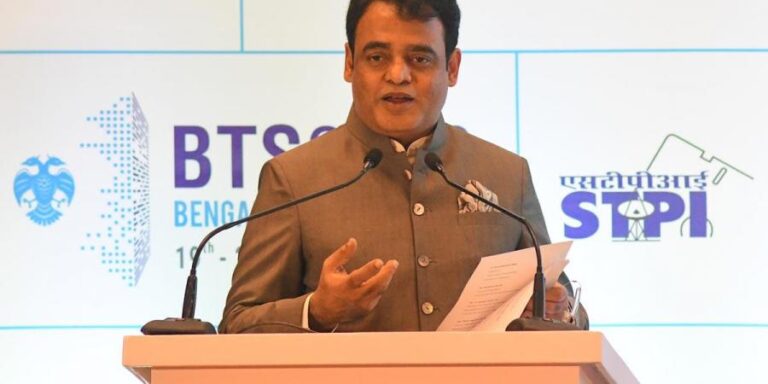
Deputy CM and Minister for Higher Education Dr C N Ashwath Narayan on Friday instructed universities and college to continue online classes for even semesters (semester 2,4,6,8) for all undergraduate programmes.
-
He said that there was a carryover system for most programmes, and exams could be held once the Covid-19 pandemic was under control. “We will take a call on offline classes once the situation gets better,” he said.
-
For engineering and professional courses that have restrictions on carryover to higher semesters, he asked the principals and vice-chancellors to consult the Karnataka state higher education council.
-
Even in the case of post-graduate courses, the minister said that colleges which have completed classes for odd semesters (semester 1,3) can move on to taking up online classes for the next semesters and exams for the former can be scheduled once the situation is better. He attributed the delay in admissions to the pandemic.
CONCLUSION
-
Bengaluru North University Vice-Chancellor Kemparaju told TNIE that colleges were awaiting the degree results to admit students to PG courses. Bangalore University V-C K R Venugopal said that admissions still could not take place because colleges were yet to complete the current academic year 2020-21.
KEY STORY
-
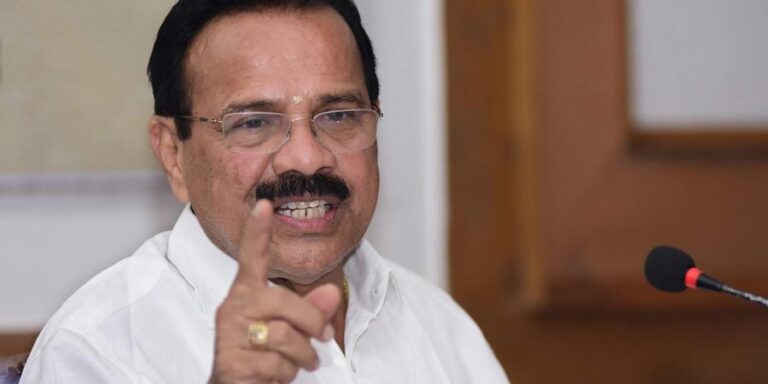
Union Minister for Chemicals and Fertilisers DV Sadananda Gowda on Friday said that the Centre has been proactive in preparing to fight Mucormycosis, or black fungus, as cases are rising as a post-Covid-19 condition.
-
Speaking to reporters at an event organised by the BJP Bengaluru North unit, to disseminate information about the Centre’s efforts in tackling Covid-19, Gowda said Karnataka’s demands are being met on priority.
-
“Black fungus cases were first seen in Maharashtra, Gujarat and Rajasthan. Karnataka has been reporting it only in the last three days and demand for medicines has gone up. Mylan Labs is importing Amphotericin-B that is used in black fungal infection treatment, while five others are manufacturing it in India. By May-end, we will have 1.63 lakh vials. So far, Karnataka has received 1,660 vials in batches of 600, 450, 300 and 310 vials each. We will provide more supplies on Saturday when 40,000 vials, imported by Mylan Labs, will arrive in India,” the former chief minister said.
-
Backing his senior colleague, Deputy Chief Minister Dr C N Ashwath Narayan said that apart from Amphotericin-B, other medicines can also be used in the treatment of black fungus. “It isn’t a new condition. There are many alternatives available but, there is a shortage only of Amphotericin-B.
-
That is also being taken care of,” he said.Meanwhile, the Depuy Chief Minister, who is also in charge of medicine supplies related to Covid-19, said Amphotericin-B and other antifungal medicines can now be indented online by private hospitals through the KPME portal.
CONCLUSION
-
The process is intended to save time and keep track of its usage, he added.Gowda’s statement on supplies to Karnataka came on the day the Union Government decided to ramp up supply and availability of Amphotericin-B.“Five additional manufactures given license to manufacture the drug & production by existing five manufacturers being substantially ramped up.
-
With accelerated efforts, 3,63,000 vials of Amphotericin-B will be imported in May 2021, resulting in total availability of 5,26752 vials and 3,15,000 vials will be imported in June 2021 making availability of 5,70,114 vials in June 2021 inclusive of domestic production,” Sadananda Gowda posted on his Twitter handle sharing a press release from the
Union Ministry of Health and Family Welfare.
1...576577578...883Page 577 of 883