Congress to set up help desks for Covid-19 in all Karnataka districts

KEY STORY

  • The Congress party which had launched ‘Arogya Hasta’ programme to help in distress during the wave of the pandemic, has gone a step forward by coming out with a plan to start a dedicated Covid helpdesk in each district.
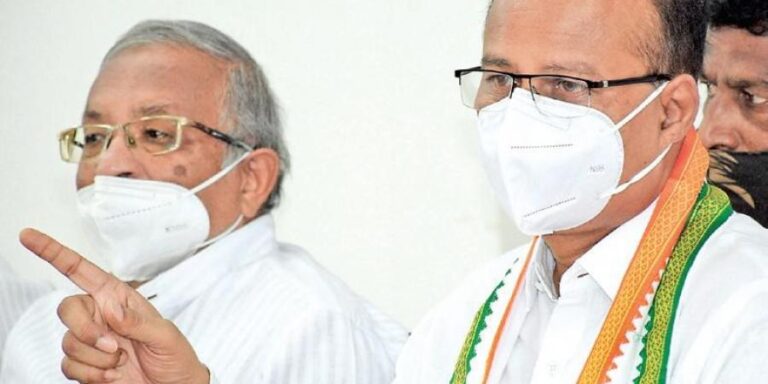
  • Revealing this during a press meet here on Friday, KPCC working president R Dhruvanarayan said over 320 doctors have registered with the doctors’ cell of the KPCC who will assist Covid patients and their family members by giving them required information besides helping them in getting a bed and other facilities.
  • “The first such control room set up by the Mysuru district Congress committee would be operational in the city from Saturday,” he said.
  • Coming down heavily against the state and Central government, he said: “Though our leader Sonia Gandhi and former prime minister Manmohan Singh tried to awaken the government from their slumber, they were ignored. The state is experiencing a lack of coordination in handling of the crisis.”

CONCLUSION

  • He questioned the district administration and the minister for not opening up relief centres to assist migrants and shelterless hit by the crisis and suggested to involve NGOs and volunteers to set up such relief centres and give them shelter until the situation turns normal.
  • He urged the government to increase the daily wages under the MGNREGA from Rs 289 to Rs 350 and also extend the man days from 100 to 150 which would help people take up works amid the Covid crisis.

18+, don’t storm hospitals, no Covid vaccine supply yet

KEY STORY

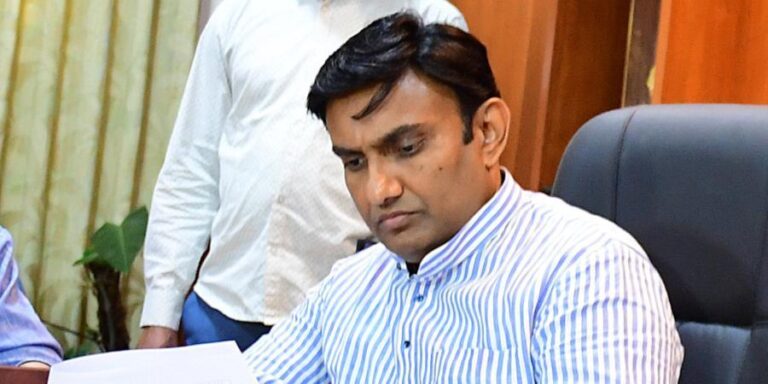
  •  If you are in the 18-44-year age group and have registered on the CoWIN portal to get vaccinated in Karnataka, you will have to wait for some more time. A day after TNIE reported that the fourth phase of the Covid-19 inoculation drive may begin only by mid-May, Chief Minister B S Yediyurappa and Health Minister Dr K Sudhakar said vaccine supplies have not reached Karnataka and hence, the rollout cannot happen from May 1.
  • With Serum Institute in Pune yet to supply Covishied vaccines, ordered by Karnataka at a cost of Rs 400 crore, the government has appealed to citizens in that age bracket not to approach hospitals for vaccines.
  • “We have placed an order for more than one crore doses. It is now official that it won’t be delivered on May 1 as thought earlier. We request those aged between 18-44 to refrain from going to hospitals for vaccination. We will definitely intimate all when we get word from Serum institute.
  • I request everybody to register on the CoWIN portal and to await your turn. We are trying our best to get the vaccines at the earliest. We are also requesting the Government of India to help us get the vaccines on priority,” said Dr Sudhakar, on Friday on the eve of the planned vaccination drive for those above the age of 18 and below 45.

CONCLUSION

“There is no question of failure. We were supposed to get vaccine supplies, but it has been delayed. As soon as we get it, we will begin the drive. There is no need to drag the Prime Minister’s name. The Union Government is also making attempts and other counties are helping us as well in various ways. Things will take a turn for the better soon,” said Chief Minister Yediyurappa on Friday, when asked if the PM’s plan of opening up vaccines for all on May 1 had failed. Free vaccines for those aged 45 and above, however, will continue.

Congress meeting to discuss Covid situation on Monday

KEY STORY

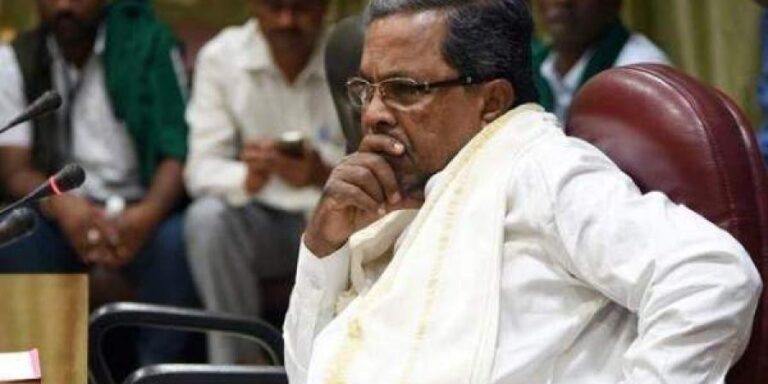
  • Former chief minister and Congress Legislature Party (CLP) chief Siddaramiah has convened a legislature party meeting on Monday to discuss the Covid situation in the state.
  • During the virtual meeting at 11 am on Monday, the party legislators will discuss the Covid situation in all the districts, including the shortage of beds with oxygen supply in hospitals, the government’s “failure to handle the situation” and measures required to be taken up to help people, CLP secretary E Tukaram said in a communication to party legislators.
  • The CLP meeting is also likely to discuss the urban local body election results announced on Friday as well the assembly and Belagavi Lok Sabha bypoll results to be announced on Sunday.Meanwhile, Siddaramiah has urged the state government to provide financial assistance to people hit by the Corona Curfew.

CONCLUSION

  • In a letter to Chief Minister BS Yediyurappa, the former CM said that the state government must provide Rs 10,000 financial assistance to BPL families and also farmers.
  • He urged the government to direct banks to provide Rs 5 lakh interest-free agricultural loan to farmers as they are in distress. The former CM also urged the government to take steps to help small and medium industries and provide them free power and give tax exemption on their exports.

DGCA extends ban on scheduled international commercial passenger flights until May 31

KEY STORY

  • The Directorate General of Civil Aviation (DGCA) on Friday extended the ban on international commercial passenger flights by one month till May 31, 2021. The ban has been in place since March 2020.
  • However, this restriction will not apply to international all-cargo operations and flights specificly approved by the aviation regulator.
“In partial modification of circular dated 26-06-2020, the competent authority has further extended the validity of circular issued on the above subject regarding Scheduled International commercial passenger services to/from India till 2359 hrs 1ST of 31th May, 2021. This restriction shall not apply to international all-cargo operations and flights specifically approved by DGCA. However, international scheduled flights may be allowed on selected routes by the competent authority on case to case basis,” said DGCA circular.

  • All scheduled international flights were restricted on March 23 last year in wake of the Covid-19 pandemic and continue to be banned. However, various international flights were operationalised under bilateral air bubble agreements that India signed with several nations for the unhindered movement of passengers.
  • India has formed air bubble pacts with 27 countries including the US, the UK, the UAE, Kenya, Bhutan and France. Under an air bubble pact between two countries, special international flights can be operated by their airlines between their territories.

CONCLUSION

  • However, the second wave of the pandemic, which has resulted in daily infection cases rising to as high as 3.87 lakh, has forced many countries including the US, UK and Canada to temporarily stop international flight operations to/from India.
  • Even for domestic air travel, many state governments have made it compulsory for passengers to have a negative RT-PCR report in order to be eligible for air travel. Due to such restrictions, domestic aviation has been severely affected.

‘Saand Ki Aankh’ actors Taapsee Pannu, Bhumi Pednekar mourn ‘shooter dadi’ Chandro Tomar’s death

KEY STORY

  • Actor Bhumi Pednekar, who played Chandro Tomar in biopic “Saand Ki Aankh”, said she was devastated by the 89-year-old sharpshooter’s death.
  • Nicknamed “shooter dadi”, Chandro died on Friday after battling COVID-19.
    “Devastated by the news of Chandro Dadi’s demise. Feels like a part of me is gone,” an emotional Pednekar wrote on Twitter.

  • She further said Tomar made her own rules and paved the path for many girls to find their dream.

“Her legacy will live on in them. Condolences to the family. Am lucky I got to know and be her #ChandroTomar #ShooterDadi,” she wrote.
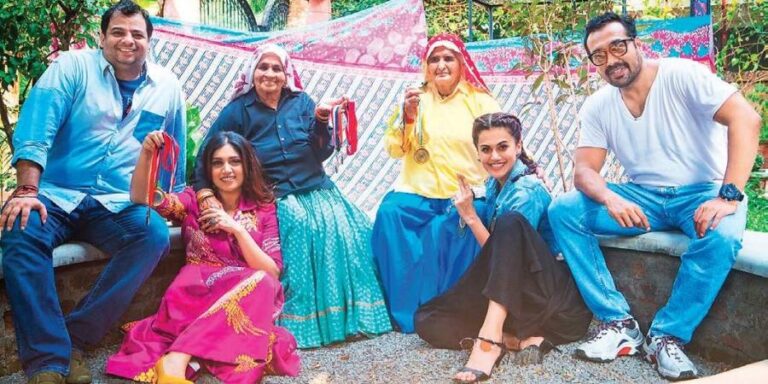
Actor Taapsee Pannu, who played Chandro’s sister-in-law Prakashi Tomar, also mourned her death.
“For the inspiration you will always be
“You will live on forever in all the girls you gave hope to live. My cutest rockstar. May the love and peace be with you, Pannu wrote alongside a photograph of her with Tomar.

Instagram Live now has the option to turn off audio, video

KEY STORY

  • Social media giants are actively turning to the audio space as the next big thing for their users. Facebook has been making several developments in this regard and the latest one comes on its photo-sharing app Instagram.

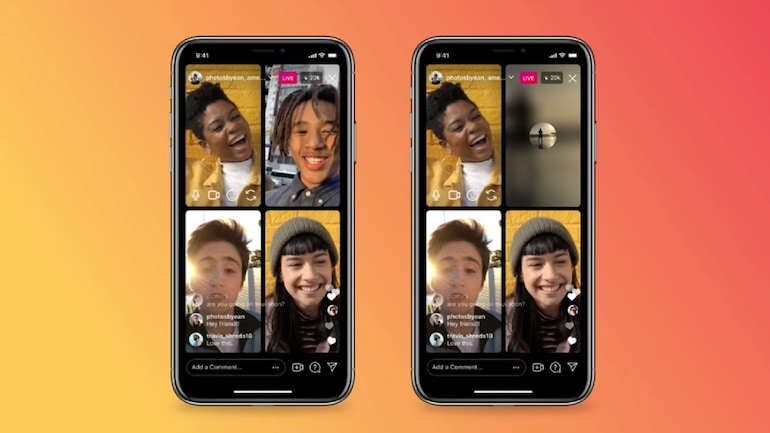
  • Instagram is poised to get new functionality for its Live feature. Going forward, Instagram users will be able to turn off their video, audio or both during live videos. The new features for Instagram Live are being rolled out to all Android and iOS users globally.
  • The functionality will understandably serve a dual purpose. The option to mute video during an Instagram Live will make it much like an audio chat room, made much popular by the recently famous audio app Clubhouse. With this, Instagram users will be able to hold audio-only chats with all their followers and others at any time.
  • The feature will also reduce pressure on those who are camera shy. Making it easier for them to engage a conversation and then choose whether to appear on the video or not.
  • The option to mute the audio, on the other hand, will help with the regular Instagram Live sessions that make use of video. The functionality will help the conductor of Instagram Live to mute out any audio from his or her own surroundings. This will let another presenter on the live reach out to the audience more clearly.
  • Those who wish to use the features will be able to see them at the bottom of their screens while conducting a live on Instagram. Users will be able to tap on the microphone button to mute the audio, or the video camera button to turn off their video.

CONCLUSION

  • If the user chooses to switch off the video, the live video will be replaced by the display picture on their profile. The host, however, will not be able to switch off the audio or the video for any other participants on the live session. A report by TechCrunch says that Instagram is working on this feature and should be available soon on the app.
  • Other than the updates to Instagram Live, Facebook is working on several other audio chat products. These include virtual rooms as well as a “soundbites” feature to let users post short audio snippets to their feed

Weight loss and other benefits of sugar detox: Lose flab, get leaner, beat diabetes by quitting added sugar

KEY STORY

  • Addiction to sugar (a product which is often called the white poison) is a matter of acquired habit like the taste for salt. If you’re one of the millions of Indians suffering from obesity, diabetes, high blood pressure or even just plain feeling crummy as a result of an unplanned diet, you’ll want to seriously consider sugar detox.
  • Addiction to any food item or a compulsive relationship with food can interfere with one’s quality of life. To feel amazing and to begin thriving again, you need to detoxify your body and mind. More ahead in this piece on why sugar is addictive, why excess sugar hurts, and how to kick the addiction.
    Think of a detox as your “reset” button.
    Now that you have realised that sugar is one thing that is not helping you at all when it comes to sticking to a health regimen, make a plan to chuck it from your meal plan. Just imagine the health benefits. You can:
    1. Restore body’s blood sugar balance,
    2. Reduce insulin spikes,
    3. Balance hormones,
    4. Cool off inflammation,
    5. Drop pounds,
    6. Improve digestion,
    7. Boost your metabolism,
    8. Improve your health, and
    9. Give you more radiant skin.
    What are the sugar-loaded items you eat?
    Tea with sugar and milk, cake, biscuits, cookies, ice creams, cakes, pastries, jams, chocolates, mithai, Indian desserts like gulab jamun, etc… right?
    While all these are obvious sources of sugar, other foods that may not even taste sweet — such as salad dressings, tomato sauces and slices of bread — can be loaded with the white stuff, warn nutrition experts.
    “Sugar makes you fat, ugly and old,” Brooke Alpert, a registered dietitian and co-author of “The Sugar Detox: Lose the Sugar, Lose the Weight — Look and Feel Great,” told CNN Health.
    Why is sugar addictive?
    Alpert also elaborated on why we can’t stop consuming sugar. “People have a real dependency — a real addiction to sugar. When we consume sugar, we feel good from it, we get a kind of high or rush of joy, and then we crash and need to reach for more.”
    Why is sugar bad for you?
    • Sugar isn’t poison, but it definitely isn’t good for you.
    • This readily available sugar interferes with the body’s ability to regulate itself.
    • Most non-processed foods like fibres, complex carbs etc that we eat force the body and metabolism to “work” for its sugar.
    • Most foods lead to gradual increases in blood sugar because they slowly release sugars.
    • In contrast, foods containing added refined sugars, on the other hand, release those sugars all at once.
    • Your body responds to this rapid increase in blood sugar by making and secreting insulin, asking cells to start hoarding and warehousing sugar while it’s around and turn it into fats.
    • Chronic high levels of insulin will eventually cause your cells to start ignoring it, which eventually leads to diabetes.
    How to sugar detox:
    Alpert spells out a plan.
    Week 1:
    Go cold turkey at least for the first three days of the sugar detox.
    Give up added sugar completely. Have green tea without sugar.
    Also no fruits, no starchy vegetables, no dairy, no grains and no alcohol.
    Eat foods that classify as protein, vegetables and healthy fats.
    On day 4, you can add an apple. (We promise you it will taste like candy!)
    Add one dairy food and one apple each day, like yoghurt, cheese etc. till day-7
    Add some higher-sugar vegetables such as carrots and snow peas till day-7.
    Week 2: 
    Add a serving of antioxidant-rich berries and an extra serving of dairy.
    Add back starchy vegetables.
    Week 3: 
    Add grains such as dalia, roti, sooji, barley, quinoa and oatmeal
    Add some more fruit
    Week 4:
    You are “permitted” two starches per day. Add bread and rice, high-fibre crackers.
    A sandwich on any one day of the week.
    Do you love wine? No wine for the first two weeks. You are permitted 3 glasses in all – in week 3; 4 in week 4. After sugar detox, “The onions are sweet! Almonds are sweet! Once you take sugar away from your diet cold turkey, your palate recalibrates, and you start tasting natural sugars,” says Alpert.
    How to maintain a sugar detox diet:
    1. Do not use artificial sweeteners though they add no calories.
    2. They make our palates dull and immune and less reactive to what sweetness really is.
    3. Occasional, intentional added sugar food item indulgences are allowed
    4. No fruit is off-limits once you’ve completed the 31 days.
    5. You can have an ice cream or a piece of cake at a birthday party.
    Alpert observes that 31 days of sugar detox leaves you healthier:
    • The addictive behaviour is gone
    • Having ice cream once or twice will not send you back to square one.
    • You have control and ownership of your diet and body.
    Quit sugar, lose unhealthy weight:
    Alpert tells CNN that detoxing from sugar can help you lose weight quickly. “We had over 80 testers from all over the country, and they lost anywhere between 5 to 20 pounds during the 31 days, depending on their weight or sugar addiction,” Alpert said. “Many also noticed that a lot of the weight was lost from their midsection. Belts got looser!”
    Why would you too not want to try sugar detox, provided your doctor is okay with it?
    Disclaimer: Tips and suggestions mentioned in the article are for general information purposes only and should not be construed as professional medical advice. Always consult your doctor or a professional healthcare provider if you have any specific questions about any medical matter.

IPL 2021: KL Rahul, Harpreet Brar guide Punjab Kings to 34-run win over Royal Challengers Bangalore

KEY STORY

  • Punjab Kings (PBKS) returned to the winning ways against a strong Royal Challengers Bangalore (RCB) and handed them only their second defeat of the season. Asked to bat first, PBKS bounced back on a couple of occasions to put up a big total of 179/5 on the board.
  • The total proved to the enough as RCB failed to chase down the target in Ahmedabad. PBKS have moved to the 5th spot in the points table with this win.
  • RCB struggled in the chase and lost an early wicket in form of Devdutt Padikkal, who was bowled by Riley Meredith. Virat Kohli and Rajat Patidar did add 43 runs for the 2nd wicket but took 7.4 overs to do so.
  • Playing his first game of the season, left-arm spinner Harpreet Brar got two crucial scalps for his side in the 11th over. He bowled Kohli for 35 off 34 and then sent back Glenn Maxwell on the very next ball.

  • Harpreet got another big scalp and dismissed AB de Villiers, caught by KL Rahul in the 13th over, leaving RCB reeling at 69/4. With their main players back in the hut, not much was expected from RCB and they fell short in the end.

  • Patidar scored 31 before being dismissed in the 15th over. Ravi Bishnoi and Harpreet shared 5 wickets between them. Bishnoi scalped 2 wickets for 17 runs. Harpreet spent 19 runs for his 3 big scalps.

  • Earlier in the game, the new opening pair of KL Rahul and Prabhsimran Singh couldn’t do much as the latter was dismissed by Kyle Jamieson for 7 off 7. Chris Gayle showed an aggressive approach after coming out to bat at 3 and scored 46. The left-handed batsman batted at 191.67 and hit 2 sixes and 6 fours during his knock.
  • Gayle and Rahul provided the much-needed push to PBKS’ score and added 80 runs for the 2nd wicket in just 7.1 overs. The Jamaican was dismissed off Daniel Sams. The home team lost three quick wickets after Gayle’s dismissal.

  • Nicholas Pooran’s struggles continued and he failed to open his account for the 4th time in the tournament. Deepak Hooda managed 5 off 9. Shahrukh was bowled by Yuzvendra Chahal for a duck.
  • The sixth-wicket partnership between Rahul and Harpreet proved to be vital as they added 61 runs for the 6th wicket in the final 5.2 overs. Rahul upped his scoring rate in the final overs and finished at 91* off 57. Harpreet struck at 147.06 and scored 25* off 17. He hit 2 sixes in his knock.

Major relief to India’s COVID vaccination drive: Sputnik V vaccines arriving on May 1

KEY STORY

  •  As several states, including Maharashtra, Delhi, Kerala, Punjab, Uttarakhand, Andhra Pradesh and some others saying they do not have sufficient COVID-19 vaccine doses for the inoculation of those in the 18-44 age group, the first lot of Sputnik V vaccines from Russia will arrive in India on May 1 (Saturday), giving a much-needed boost to the country’s mega vaccination drive.
  • Sputnik V vaccine, which is developed by the Gamaleya Research Institute of Epidemiology and Microbiology in Russia, has an effectiveness of 91.6 per cent against coronavirus.
  • The Drugs Controller General of India (DCGI) had given permission to Dr. Reddy’s Laboratories (DRL) to import Sputnik V vaccines in India for restricted use in emergencies.
  • The drugs controller had given its approval to Bharat Biotech’s Covaxin and the Oxford-AstraZeneca vaccine, known as Covishield, which is being produced by Serum Institute of India (SII), in January 2021.
  • Later in April, the DCGI paved the way for India to rollout Sputnik V against coronavirus infections.
  • The central government said that it has so far provided more 16.33 crore COVID vaccine doses to states/UTs free of cost and over 1 crore doses are still available with the states/UTs to be administered. More than 19 lakh doses in addition will be received by the states/UTs in the next 3 days, the government assured.

CONCLUSION

  • Meanwhile, the union ministry of health and family welfare stated that the total vaccination across the country has crossed more than 15.48 crore mark. The country administered more than 26 lakh vaccine doses till 8 pm today.
  • Notably, India is set to kickstart its third phase of COVID-19 vaccination drive for all adults in the country from May 1, however, almost all the states have deferred the inoculation for the 18-45 age group due to a shortage of vaccine doses.

Details of latest guidelines by Home Ministry on management of COVID-19 crisis at state and UT level

KEY STORY

  • The Ministry of Home Affairs has issued an order dated 29 April, asking all states and Union Territories to implement intensive, local and focussed containment framework, in specific districts/cities/areas identified on a prescribed criterion.
    The broad and detailed directions as per the above order (which takes forward the directions issued under the Home MInistry’s notification dated 23rd April and another by the Union Health Ministry on 25th April) are as under:
    Community Containment/Large Containment  area:
    1. Spread the message of the importance of individual actions such as wearing of masks, maintaining a distance of 6 feet from one another, sanitising one’s hands frequently, not attending mass gatherings or congregations.
    2. Public Health Measures such as
    1. Quarantining and testing individuals suspected to be positive, including contacts of SARS-CoV-2 positive persons, SARI cases, persons with flu-like cases and ensuring that they are not moving about inadvertently causing the infection to spread.
    2. Isolating all those who are positive, tracing their contacts, quarantining and testing them.
    3. Deploying ways of creating containment zones with clear boundaries and stringent controls in areas with cluster cases such that instead of simply quarantining individuals or families, it is ensured that the infection does not spread to the outside. This is in line with the containment strategies followed worldwide and has already been enumerated in the SOPs of the Ministry of Health. However, regulated movement of public transport would be permitted.
    3. The decision on where to go for a large Containment Zone (CZ) has to be evidence-based and done at the state/UT level after proper analysis of the situation, such as the population affected, the geographical spread, the hospital infrastructure, manpower, the ease of enforcing boundaries etc.
    Till when will the below orders be in effect? 
    Order will be in effect for the next 14 days.

    Steps to follow before implementing these orders:

    1. Before declaring a containment area, make a public announcement outlining the rationale for the same and the kind of restrictions that will be in place. A Leaflet in the local language needs to be distributed.
    2. Involve community volunteers, civil society organisations, ex-servicemen, members of the local NYK/NSS centres etc to help in the management of containment activities, translating aforementioned leaflets, encouraging people in the community to bring about sustained behavioural change as well as go ahead with vaccination.
    Strategic areas of Intervention:
    Containment
    1. Focus on containment as a major approach to flatten the current curve of the epidemic
    2. Night Curfew: Movement of individuals to be strictly prohibited during the night hours, except for essential activities.
    3. Local administration to decide the duration of the night curfew hours under appropriate provisions of the law such as under Section 144 of the CrPC and ensure strict compliance.
    4. Restrict the intermingling of people.
    5. Social/political/sports/entertainment/academic/cultural/religious/festival-related and other gatherings and congregations to be prohibited.
    6. Marriages (attended by up to 50 persons) and funerals (attended by up to 20 persons) may be allowed.
    7. All shopping complexes, cinema halls, restaurants and bars, sports complexes, gym, spas, swimming pool and religious places should remain closed.
    8. Essential services and activities such as healthcare services, police, fire, banks, electricity, water, and sanitation, regulated movement of public transport should be allowed.
    9. Public transports (railways, metro, buses, cabs) to operate at a maximum of 50% of their respective capacity.
    10. No restrictions on interstate or intrastate movement – including transportation of essential goods.
    11. All offices, both government and private to function with a maximum of 50% staff capacity.
    12. Industrial and scientific establishments to be allowed to function with regular RAT testing and watching out for flu-like symptoms.
    Test-Track-Treat-Vaccinate
    1. Districts should continue with their Test-Track-Treat-Vaccinate approach. Ensure adequate testing and door-to-door search in the area with an adequate number of teams formed for the same.
    2. 100% vaccination for the eligible age groups shall be undertaken duly creating additional vaccination centres and optimal capacity utilisation of existing centres.
    Clinical Management:
    This is regarding the treatment of COVID-19 infected persons:
    1. Analysis to be undertaken with respect to health infrastructure so as to manage present and projected cases for the next one month in terms of sufficient provisions of:
    2. Oxygen-supported beds, ICU beds, ventilators, ambulances, setting-up of makeshift hospitals, if necessary. Sufficient quarantine facilities to be reactivated.
    3. Leverage government, private health facilities including hospital facilities available with central ministries, railway coaches, temporary field hospitals etc.
    4. Ensure that people satisfying protocol for home isolation is aided through a mechanism of regular monitoring through call centre and regular visits of surveillance teams to such houses.
    5. Customised kits of Dos and Don’ts for people under Home Isolation
    6. Shift high-risk cases to a health facility in time, elderly, comorbid contacts of positive cases are to be shifted to quarantine centres and monitored.