Milk as everyday medicine: Turmeric milk for immunity, milk for bone calcium, constipation cure

KEY STORY

  • Long ago, milk came either from the local dairy farms that catered to nearby households or government dairies that supplied milk in glass bottles. Then came the era of cooperative milk dairy farming and milk in pouches.
  • “Operation Flood” was a government campaign to take the white nectar to every household with the drop logo of NDDB (National Dairy Development Board) signifying quality.
  • There was a TV jingle in the 1990s that went like this: “Doodh, doodh doodh doodh; doodh hai wonderful, pi sakte hain roz glassful; Doodh doodh doodh doodh!” and soon it was being hummed by one and all. It took the message of milk being a healthful drink to every home.
  • Now we all take milk for granted. But milk (cow’s milk, buffalo milk) has been at the heart centre of our culture for ages. Hundreds of Pauranic stories about Gau Mata Kamdhenu abound and we also see how milk was woven into religious ceremonies too.
  • Now, as the COVID-19 pandemic has brought the focus back on our innate immunity and measures that help longevity and weight loss, the magical desi drink – milk – is into the spotlight again.
    The  goodness of milk has been to our rescue in our everyday healing
    Here’s how the goodness of milk has been to our rescue in our everyday healing and health regimens:
    1. Turmeric Milk: Fashionably branded as “turmeric latte” at niche cafes or Golden milk — also known as Haldi Doodh — is a drink not new to India but one that has been gaining popularity in Western cultures. This bright yellow beverage is traditionally made by warming up cow milk or buffalo milk with turmeric and other spices, such as cinnamon, ginger, and some kind of sweetener. Some recipes also include black pepper, nutmeg, or other spices and sweeteners. Turmeric milk is a rich source of protein, antioxidants, curcumin, magnesium, calcium, and potassium (protects against strokes).  This Haldi Doodh helps us fight the common cold, general inflammation inside the body due to infections, falls, and/or injuries, and against an upset stomach. In Indian households, mums will often hand you a glassful of turmeric milk when you have a sore throat, cough, cold, or flu.
    2. Milk for bone and teeth building: The calcium content in milk plays a key role in bone health and fortifying your dental pearls. Calcium also helps maintain heart rhythm, muscle function, and more. The Harvard TH Chan School of Medicine, however, warns that while calcium and dairy can lower the risk of osteoporosis and colon cancer, high intake can increase the risk of prostate cancer and possibly ovarian cancer. It suggests that one must limit milk and dairy foods to no more than one to two servings per day and instead also add non-dairy foods such as leafy green vegetables and broccoli, both of which are also great sources of vitamin K, another key nutrient for bone health. Beans and tofu can also supply calcium.
    3. Milk to cure constipation: Dr Vasant Lad mentions in his book “The Complete Book of Ayurvedic Home Remedies” writes:  “Constipation is a vata condition that expresses vata qualities like dryness and hardness. It is caused by insufficient fibre in the diet, inadequate water intake and lack of exercise… Taking 1 or 2 teaspoonfuls of ghee in a cup of hot milk at bedtime is an effective but gentle means of relieving constipation. This is especially good for vata and pitta constitutions, but it may be too kapha-increasing for kapha types to use regularly.”
    4. Milk as medicine for good sleep: If consumed at night, a glass of warm milk could promote good sleep as well. Certain compounds in milk — specifically tryptophan and melatonin — may help you fall asleep. Tryptophan is an amino acid found in a variety of protein-containing foods. It plays an important role in the production of the neurotransmitter known as serotonin (the feel-good hormone). Melatonin is not produced by the body in the daytime due to its association with the circadian cycle and is also thought of by many as a sleep hormone, either directly having a sleep-inducing effect or as a time cue marker, starting off the normal physiological processes that lead to sleep.
    5. Milk for weight loss: Milk is high in protein content and that is why milk may also facilitate your weight loss and muscle-building goals. Proteins are the building blocks for all processes in the human body, especially vital to building muscles. The protein in milk can keep you feeling satiated and curb hunger pangs while still providing nutrition.
    Except for iron, milk has all major nutrients required to sustain a healthy lifestyle, which is why it is also considered a complete food. It is dense with nutrients like protein, vitamin A, B1, B2, B12 (that aid longevity), D, calcium, potassium and magnesium. So we have given you all the reasons to continue India’s desi obsession with milk to fulfil your health goals.
    But if you are lactose intolerant or have any known/unknown allergy to milk, please do none of the above without consulting your doctor. Consult your doctor before adopting any of the above home remedies.
    Disclaimer: Tips and suggestions mentioned in the article are for general information purposes only and should not be construed as professional medical advice. Always consult your doctor or a professional healthcare provider if you have any specific questions about any medical matter.

Asia Cup postponed once again, to be held in 2022 due to Covid-19 pandemic: Report

KEY STORY

  • The Covid-19 pandemic has had a huge impact on sporting schedules all over the world. Several events were cancelled, a number of others were postponed.
  • Even those that have been taking place, happen in bio-secure bubbles because of the threat of the virus. The Asia Cup 2020 was also one of the events to have been postponed to 2021 after the virus outbreak last year. It has now been learned that the tournament has been postponed again because of the virus.
  • The Pakistan Cricket Board (PCB) released a statement on Sunday suggesting that the Asia Cup has now been postponed to 2022. The PCB holds the rights to organise the tournament and has been mulling Pakistan and UAE as the two venues for the event.
  • The PCB then offered Sri Lanka Cricket (SLC) the option to swap hosting rights for the tournament. The proposal was accepted and the Asia Cup this year was now supposed to be played in the Island country.
  • With the world still grappling with Covid-19, the decision to postpone the Asia Cup was taken.
  • “PCB Chairman Ehsan Mani briefed the BoG on matters relating to the International Cricket Council as well as this year’s ICC T20 World Cup and the ACC Asia Cup, which has now been postponed to 2022,” a statement from the PCB said.

CONCLUSION

  • The absence of Asia Cup means that fans will possibly only get to see an India vs Pakistan event in the ICC T20 World Cup this year. Because of the poor political relations between the two countries, bilateral cricket series between the two countries have been absent from the calendars.
  • It was the Indian cricket team that had won the tournament last time. The Asia Cup was last held in 2018 in UAE where Rohit Sharma had led the Men in Blue while regular skipper Virat Kohli had taken a break. India is also the team with the most number of Asia Cup victories (7) in the tournament’s history.

RTGS for high-value transactions to remain unavailable for 14 hours on April 18

KEY STORY

  •  Real Time Gross Settlement (RTGS) for high-value transactions will remain unavailable for 14 hours from midnight of Saturday (April 18) due to a technical upgrade to further improve the disaster recovery time of the system, informed Reserve Bank of India on Monday.
  • The central bank in a notice stated, “A technical upgrade of RTGS, targeted to enhance the resilience and to further improve the Disaster Recovery Time of the RTGS system, is scheduled after the close of business of April 17, 2021.
  • Accordingly, RTGS service will not be available from 00:00 hrs to 14.00 hrs on Sunday, April 18, 2021. The NEFT system will continue to be operational as usual during this period.”
  • “Member banks may inform their customers to plan their payment operations accordingly. RTGS Members will continue to receive event update(s) through system broadcasts,” it further added.
  • The National Electronic Funds Transfer (NEFT) system will continue to be operational as usual during this period, RBI said.
  • Last week, the central bank extended the NEFT and RTGS facilities to non-bank payment system operators. Till now, only banks were allowed to use RTGS and NEFT payments facilities.
  • Now, Prepaid Payment Instrument (PPI) issuers, card networks, White label ATM operators and Trade Receivables Discounting System (TReDS) platforms can use NEFT and RTGS modes.
  • The aim is to encourage participation of non-banks across payment systems, RBI said. “This facility is expected to minimise settlement risk in the financial system and enhance the reach of digital financial services to all user segments.
  • These entities will, however, not be eligible for any liquidity facility from the Reserve Bank to facilitate settlement of their transactions in these CPSs. Necessary instructions will be issued separately,” a statement by banking regulator mentioned.

CONCLUSION

  • Note that The Real-Time Gross Settlement (RTGS) system for real-time settlement of high-value transactions of Rs 2 lakh and above, became available round the clock from 00:30 hours on December 14, 2020.
  • India is one of the very few countries where the payment settlement system is available at all times of day and night.
  • Earlier, the large-value RTGS system was available for customers from 7.00 am to 6.00 pm on all working days of the week except on second and fourth Saturdays of the month.

UP: Bride runs away with Rs 1 lakh cash, jewellery during pheras; victim approaches cops claiming cheating

KEY STORY

  • The bride, guardians and even the priest all turned out to be fake during a wedding ceremony in the Meerut district of Uttar Pradesh.
  • A man has filed a complaint claiming he was cheated of Rs 1 lakh and other jewellery by a group of people.
  • The bride ran away in the middle of the fourth ‘phera’ during a wedding ceremony that was organised in a temple, according to a report in Hindi daily Hindustan.
  • The incident took place in Bhoor Baral village of the Partapur area of Meerut. A man identified as Devendra, a resident of Mohammadpur Gumi in Muzaffarnagar, said one of his friends Pradeep told him that a family is looking for a groom for their daughter. Pradeep also forwarded the picture of the girl to Devendra.
  • Devendra agreed to the proposal. The wedding was fixed in Partapur on Sunday. Devendra reached Bhoor Baral with Rs 1 lakh cash and jewellery. The wedding was to be solemnised at a temple.
  • There were three persons from the bride’s side. As the wedding rituals started at a Shiv temple in Mohiuddinpur, the ‘bride’ disappeared during the four phera on the pretext of going to the toilet.

CONCLUSION

  • Later, a woman, who claimed to be the aunt of the bride, also got up and ran away on teh pretext of finding her.
  • During the commotion, other ‘guests’ from the bride’s side also fled. Finding no one on the spot, Devendra realised that he was cheated and gave a complaint at Partapur police station.
  • Partapur Inspector Nazeer Khan said they are probing the matter based on the information given by the victim.

More COVID-19 vaccines coming! Centre fast-tracks emergency use approvals for foreign-produced jabs

KEY STORY

  • In a significant development, the Central government on Tuesday announced that it is fast-tracking emergency approvals for foreign-produced COVID-19 vaccines as coronavirus cases continue to surge at an unprecedented rate in the country, as part of the second wave of the pandemic.
  • The Government of India said in a statement that emergency approvals are being put on fast-track mode for vaccine candidates that have already been granted Emergency Use Authorization (EUA) in other countries.
  • This is being done to have more vaccines for domestic use so that the pace and coverage of COVID-19 vaccination can be speeded up.
  • The announcement came less than a day after India approved Russia’s Sputnik V COVID-19 vaccine for emergency use in the country. The approval was granted by India’s Drugs Controller General of India (DCGI).
  • Sputnik V is the third COVID-19 vaccine to have been approved by India for domestic use. Earlier, Covaxin – developed by Bharat Biotech International Limited (BBIL) – and Covishield – Oxford-AstraZeneca vaccine produced in India by the Serum Institute of India (SII) – were granted Emergency Use Authorization (EUA) by the Drugs Controller General of India.
  • “The matter of augmenting the Basket of Vaccines available for fighting the pandemic as well as to accelerate the pace & coverage of domestic vaccination programme was discussed in the 23rd meeting of the National Expert Group on Vaccine Administration for COVID-19 (NEGVAC) held on 11th April 2021, chaired by Dr V K Paul, Member (Health), Niti Aayog.
    CONCLUSION
    “The NEGVAC, after comprehensive deliberation, recommended that vaccines for COVID-19, which have been developed & are being manufactured in foreign countries and which have been granted emergency approval for restricted use by USFDA, EMA, UK MHRA, PMDA Japan or which are listed in WHO(Emergency Use Listing) may be granted emergency use approval in India, mandating the requirement of post-approval parallel bridging clinical trial in place of conduct of local clinical trial as per the provisions prescribed under Second Schedule of the New Drugs & Clinical Trials Rules 2019.,” the Centre said in a press release.


  • The Centre has already given its nod to the recommendation made by NEGVAC. However, it should be noted here that the Centre has mandated that the first 100 beneficiaries of such foreign vaccines should be assessed for seven days for safety outcomes before the vaccines are rolled out as part of the national vaccination drive.

Deepika Padukone resigns as MAMI chairperson citing ‘current slate of work’

KEY STORY

  • Bollywood star Deepika Padukone on Monday announced her departure from Mumbai Academy of Moving Image (MAMI). She issued a statement on social media informing fans that she is no longer going to continue as the Chairperson of MAMI.
  • The ‘Padmaavat’ actor took to her Instagram handle and posted a story announcing the news.
  • She wrote, “Being on the board of MAMI and serving as Chairperson has been a deeply enriching experience. As an artist, it was invigorating to bring together cinema and talent from all over the world to Mumbai, my second home.”
  • Further, Deepika gave her reason for leaving the academy and wrote, “I have come to realise, however, that with my current slate of work, I will be unable to give MAMI the undivided focus and attention it requires.
  • I depart knowing that MAMI is in the best hands possible and that my bond and connection with the academy is one that will last a lifetime.”

CONCLUSION

  • MAMI is a public trust that annually organizes the international film festival in Mumbai, known as the Mumbai Film Festival. In 2019 Deepika had replaced filmmaker Kiran Rao as its chairperson.
  • Meanwhile, the 35-year-old actor has an impressive line-up of projects in the pipeline including ’83’, ‘Baiju Bawra’, ‘Fighter’, ‘Sanki’, ‘Pathan’, and Indian adaptation of Nancy Meyers’s 2015 hit Hollywood film ‘The Intern’.

Karnataka private hospitals told to reserve 50% beds for COVID-19 patients

KEY STORY

  • As covid 19 cases surge, the Karnataka government has asked private hospitals to reserve 50 per cent of the beds for the novel coronavirus patients as was done during the first wave, Health Minister Dr K Sudhakar said on Monday.
  • Speaking to reporters after a video conference with the Private Hospitals and Nursing Home Association (PHANA), Sudhakar said the private hospitals have been advised to vacate beds occupied by non-COVID patients who do not require hospitalisation and reserve the same for COVID-19 patients.
  • “The private hospitals have agreed to reserve 50 per cent beds for COVID-19 patients within a week.
  • Patients without symptoms and with mild symptoms will be isolated in hotels and COVID care centres. Only patients with severe conditions will be treated in hospitals,” the Minister said.
  • Regarding the shortage of Remdesivir, Sudhakar said drug companies have stopped its production.

CONCLUSION

  • “We need this drug. Private hospitals have complained of the medicine not being available in the market. We will discuss the issue with the drug controller and supply the medicine to private hospitals at government rates,” said Dr Sudhakar.
  • To a question on the availability of equipment, he said the government has taken measures to ensure sufficient quantities of ventilators and oxygen. If required, industrial oxygen would be used, he added.

Karnataka witnesses close to 20k new Covid cases in two days

KEY STORY

  •  In 48 hours, Karnataka has reported a record number of Covid cases in the second wave. The state reported 10,250 cases on Sunday and 9,579 on Monday, amounting to a total of 19,829 new patients within a span of two days.
  • The total number of cases is now 10,74,869. The positivity rate has been going up for the last four days, jumping from 4.69 per cent on April 11 to 4.71 per cent on April 12. The recovery rate has been consistently decreasing.
  • Though more people, that is 2,767, were discharged in the day, as compared to 2,638 discharges the day before, the recovery rate went below 92 per cent.
  • The total discharges now stand at 9,85,924. The death toll increased from 40 on Sunday to 52 on Monday, which is the highest so far in the second wave, bringing the mortality rate to 1.20 per cent. The total number of deaths stands at 12,941.

CONCLUSION

  • Active cases in the state crossed the 75,000 mark and now stand at 75,985 cases, experiencing a 9.76 per cent growth from the day before when the active cases stood at 69,225.
  • Bengaluru alone reported 6,367 new cases in the day, lower than the day before when 7,584 were reported. The city’s recovery rate is also falling drastically, and on Monday, it went below 88 per cent, now standing at 87.42 per cent. Active cases in the capital crossed the 56,000 mark and stood at 56,545 patients. Of these active cases, 470 are high risk and in the ICU.

No question of lockdown in Karnataka, practising COVID safety norms only way out: CM Yediyurappa

KEY STORY

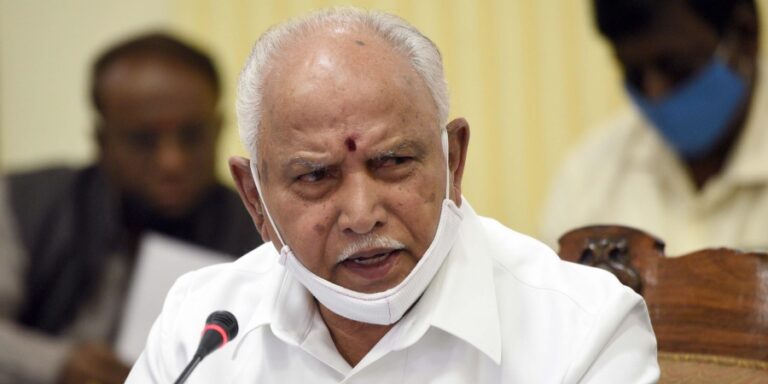
  • Ruling out the possibility of a lockdown in Karnataka to contain the spread of coronavirus, Chief Minister B S Yediyurappa on Tuesday said he has convened an all-party meeting on April 18 to decide the future course of action.
  • “There is no question of lockdown,” Yediyurappa told reporters in Bidar.
  • The CM clarified that the Technical Advisory Committee (TAC) has not recommended any lockdown.
  • “I am in the TAC. No one has recommended a lockdown,” Yediyurappa said.
  • Besides former chief ministers Siddaramaiah and H D Kumaraswamy and Congress state chief D K Shivakumar, the members of Technical Advisory Committee members will attend the meeting on April 18.
  • Emphasising on public support to contain the spread of the pandemic, he said the night curfew from 10 pm to 5 am has already been imposed.

CONCLUSION

  • “People have to cooperate by wearing masks, maintaining hand hygiene, and physical distancing. There is no other way. With folded hands I want to ask the people to cooperate,” Yediyurappa said.
  • He also wished everyone peace and happiness on the occasion of Ugadi.
  • “May the difficulties in life go away from everyone’s life. May this coronavirus pandemic too go away,” Yediyurappa said in his Ugadi message.

Facebook leaked data shows it tracks users across internet, knows when you ordered pizza

KEY STORY

  • Hundreds of millions of Facebook users were recently the victims of a large-scale data breach. The attack exploited user data including phone numbers, email IDs, photos and more. A new Twitter thread now explains that there is much more data that Facebook collects from a user, which might now be out in the open for the data breach victims.
  • The information has been shared in a series of tweets by Twitter user Zamaan Qureshi. Qureshi decided to download his Facebook data after learning that he was a part of the data breach. It was then that some revelations around Facebook’s tracking activities were made.
  • While gathering his data from the social media website, Qureshi checked a folder titled “your_off_facebook_activity.” The Twitter user found that Facebook was in fact following much of his internet activities.
  • This included his online food orders, his applications to universities as well as his search queries.
  • Note that all these internet tasks were performed on websites other than Facebook. The tech major collects this information under the term “Off-Facebook Activity.” The umbrella term helps Facebook track the user’s activities on businesses and organisations other than Facebook.
    (Image: Zamaan Qureshi/ Twitter)


  • Screenshots shared by Qureshi in his tweets show that such activities by him have been traced by Facebook categorically. Facebook has collected data including the host website/ business’ name, the activity performed on it as well as the time at which it was done.
  • In the case of ordering a pizza, the screenshot shows the name of the business as Domino’s Pizza USA. In addition, the time at which the tasks were traced is mentioned against each of the activities, which have been categorised as per action – Purchase, Custom, Activate_App etc. Just visiting a website has been labeled as Page_View.
  • How to stop it?

    (Image: Zamaan Qureshi/ Twitter)
  • Towards the end of his Twitter thread, Qureshi says that he has disabled these tracking features since they came to his notice. In addition, the user cleared his browser history and now recommends all to do the same.
  • Those interested can manage the same through the Off-Facebook Activity tab under their Facebook settings. A Clear History option under the subhead should allow users to delete such data tracked by Facebook to date. As for the future, a toggle switch can be moved to Off under the Future Off-Facebook Activity setting.
  • The issue somehow does not stop here, as Qureshi warns that Facebook will still track you despite opting out of the practice.
  • A clause under the Off-Facebook Activity states that the social media service will still receive activities from the businesses and organisations visited by the user. However, this information will be disconnected from the user account.
  • Note that switching this feature off will prevent you from using your Facebook login for any other website or service on the Internet.
  • To be extra wary of this privacy invasion, the utmost step is to delete the Facebook group apps including Facebook and Instagram. In case that is not an option, users are advised not to browse at the same time when they are logged into it. It is recommended that they access Facebook through a different browser and never on a phone, especially Android.