Gadag: Villagers panic after 50 birds found dead

KEY STORY

  • GADAG: Nearly 50 birds were found dead on the outskirts of Dambal village in Gadag district on Tuesday. Forest department officials visited the spot, collected the carcasses and sent samples for testing.

  • The birds were found dead near a farm in Dambal village. According to primary reports, the dead birds were red vented bulbul and white rumped munias.
  • People residing in the vicinity of Dambal village in Mundargi taluk panicked after hearing the news of dead birds as there have been cases of bird flu in some parts of the country. After the news spread like wildfire, hundreds of people from Dambal, Doni and other villages thronged the site to catch a glimpse of the dead birds.
  • Forest department officials asked the villagers not to venture too close to the dead birds as they had sprayed an anti-microbial solution in the farm and nearby IB campus. Shashi Koppad, a villager said, “We were working in the fields and one of our workers saw the birds and called farmers from other fields.

CONCLUSION

  • We are worried as cases of the bird flu are being reported in the last few weeks. As it is, people have stopped going near poultry farms.
  • This incident has only increased the fear among us.” “The carcasses have been sent to a Bengaluru laboratory for testing.
  • There is no reason for people to panic at this stage. They may have been poisoned by someone or the birds may have consumed something poisonous in nature. We shall investigate the matter thoroughly, even as we wait for the test resul ts,” said a Gadag division forester.

Karnataka to get 40k doses of Covaxin, 20k to arrive on Wednesday

KEY STORY

  • BENGALURU: A day after Karnataka received the first consignment of the Covishield vaccine, the state is set to receive doses of Bharat Biotech’s Covaxin.
  • Deputy Director for immunisation at the Department of Health and Family Welfare, Dr Rajani Nageshrao, told The New Indian Express, “We are expecting 40,000 doses of Covaxin, of which 20,000 will arrive on Wednesday. The Serum Institute (of India) has sent more (Covishield) vaccines and that will be used for now in Phase I, for health care workers and frontline workers.”
  • However, with the state set to have both vaccines, it is unclear which category of people will receive Covaxin.  Managing Director of the National Health Mission, Arundhati Chandrashekar, said, “We are yet to decide which districts will receive how many doses of vaccines.
  • The cost of vaccines for health care and frontline workers will be borne by the Union government, but the state government is yet to take a call on whether charges will be levied on vaccines when it is distributed for the general public.”
  • Phase 3 clinical trials – which test for efficacy – of Covaxin are currently underway and the results are likely to be ready by March.
  • Although both Covishield and Covaxin are two-dose vaccines, they are of different types and one must receive two doses of the same vaccine.
  •  The list of health workers – both public and private – who have registered with the health department was finalised on Tuesday night. The government has identified 235 vaccination sites.

CONCLUSION

  • In BBMP and Bengaluru Urban limits, KC General Hospital, Sir CV Raman General Hospital, Jayanagar General Hospital, Victoria Hospital, St John’s National Academy of Health Sciences, East Point College of Medical Sciences, Mallasandra Urban Primary Health Centre, Yelahanka Taluk Hospital, KR Puram Taluk Hospital, Anekal Taluk Hospital, and Kannuru Primary Health Centre, have been identified as vaccination sites but this may be subject to change, department officials said.
  • “More people will be vaccinated after four months as more vaccines would be manufactured by then. Staff are trained for safe handling and transportation of vaccines. There is no doubt about the efficiency of officials of the health department. Everything is being carried out as per rules. Two lakh staff have been trained to administer vaccines,” said Health Minister Dr K Sudhakar.

New Maruti Suzuki Swift facelift India launch scheduled for February 2021

New Maruti Suzuki Swift facelift India launch scheduled for February 2021 | Representative image

We are barely two weeks into 2021 and it is already starting to get more and more exciting by the minute. Hold on, we will explain. You see, we have just learned that one of the most popular cars in India, i.e. the Maruti Suzuki Swift, will receive a facelift and that too mighty soon! Yep, our source confirms the 2021 Maruti Suzuki Swift facelift’s India launch is scheduled for the second week of February 2021. They also confirmed the company will launch 6-7 Maruti Suzuki cars in the next financial year. But let’s talk about the upcoming Maruti Suzuki car first — it was also spotted on a test run in India fairly recently, meaning the launch really is round the corner.
The facelifted model, which has been available for retail in international markets since 2020, will feature largely cosmetic updates. The list of changes will include a revised fascia which will now get a revised radiator grille. The upcoming car in India will also be offered with an optional dual-tone exterior colour option in its 2021 avatar. Besides that, we don’t expect to see the car’s exterior to feature any other changes.
Maruti Swift facelift 2021 images
As for the cabin — if the model retailed globally is anything to go by, then the new Maruti Suzuki Swift 2021’s interior will not feature major changes. This means it will retain the current model’s all-black interior, flat-bottom steering wheel, climate control, Apple CarPlay and Android Auto support, dual airbags, ABS with EBD, etc.
Maruti Suzuki Swift 2021 facelift is expected to come powered by the same 1.2-litre Dualjet petrol engine that also does duty on the current Maruti Suzuki Dzire. This motor belts out a maximum power of 89 bhp along with a peak torque of 113 Nm. For transmission, Maruti Suzuki will offer this engine with a choice between a five-speed manual gearbox and a five-speed AMT. Oh, and there will be no Maruti Suzuki Swift diesel in the range.

‘No close relatives, no gifts’: Anushka Sharma and Virat Kohli gear up security at the hospital after their daughter’s birth

‘No close relatives, no gifts’: Anushka Sharma and Virat Kohli gear up security at the hospital after their daughter’s birth

HIGHLIGHTS

  • Virat and Anushka are one of the biggest celebrity couples of the country and it is not surprising that all eyes are glued to get a glimpse of their baby. Their pregnancy announcement in August 2020 also turned out to be the most liked tweet of 2020, such is their popularity as a couple.
  • Therefore, in order to safeguard their privacy, the couple have put some strict restrictions in the hospital with regards to who can visit them. The couple have not allowed even close relatives to visit them at the hospital. They have decided to not accept any flowers or other gifts in the hospital. The security is so tight that even visitors in nearby rooms and other hospital staff are not allowed to even get a sneak peek into Anushka’s room.
  • With such tight security in place, we cannot help wonder if it’s just a matter of privacy or the couple is preserving the first pictures for exclusive use for a magazine where they plan on sharing the first pictures of their daughter.
  • Meanwhile, the hospital on their part has strictly instructed the staff who have access to Anushka’s room to not click photos. The hospital might also arrange for a back door exit for the couple to leave without getting into the eye of the paparazzi who have stationed themselves outside the hospital.
  • Some paparazzi are waiting outside the hospital to capture the first glimpse of the newborn baby girl. Such is the demand of the baby’s picture that the paparazzi may not hesitate to follow the couple’s car back to their home once the actress gets discharged.

How to see better when driving at night

Driving at night

Here are three of major reasons why you’re having trouble seeing after the sun sets.

Challenge #1: Anatomy

The eye’s retina is responsible for helping us see in a variety of light settings, from sunrise to sunset. The retina’s light receptors are made up of rods and cones. The cones help us see color and fine detail, and function best in well-lit settings.
When the cones don’t work properly, we have what is called a “central blind spot,” making vision difficult in the dark by reducing depth perception, color recognition and peripheral vision. This means you may not be able to accurately tell how close you are to another car or you may not notice someone walking along the side of the road.
Making matters more difficult is delayed dark adaptation, which means the eyes have trouble adjusting to dark settings after being exposed to light. Think about how hard it is to see after looking into a bright set of car headlights or at your smartphone in a dark room. It’s easier to see in the dark when your eyes have adapted to that particular set of lighting.

Challenge #2: Age

Children are much better at dark adaptation than adults.
“We start to lose function after age 30 and it gets worse with age,” says Dr. Roach.
Wearing glasses for distance while driving can help, as can following the practical tips below.

Challenge #3: Health issues

There are several health issues that affect vision, especially nighttime vision, including:
  • Cataracts. This common condition causes clouding of the eye’s lens. Those with cataracts can even experience a glare as light hits the lens and scatters. Cataracts are typically easy to treat with surgery.
  • Macular degeneration. This condition causes the retina’s cones to lose their function.
  • Dry eyes. Having dry eyes can create a glare that makes vision difficult. If you struggle with dry eyes, talk to your doctor about treatment options.
Your ophthalmologist can help treat these issues, which can improve nighttime vision.

Practical ways to improve vision at night

Dr. Roach recommends the following tactics to improve nighttime vision, particularly while driving:
  • Treat any underlying conditions, such as those mentioned above.
  • Have your vision checked to see if you need glasses or contacts. For some people, wearing glasses at night helps significantly.
  • Instead of looking directly into the headlights of an incoming car, look down and to the right with the right eye, focusing on the white line on the right side of the road. In severe cases, Dr. Roach recommends his patients briefly close their left eye to prevent the temporary blindness associated with seeing bright light at night.
  • Keep the outside and inside of your windshield clean. This makes a bigger difference than you may think – smudges, smears and dings can hinder your ability to see the road.
  • Turn down the lights in the cockpit of your car. Bright lights on your dashboard can disrupt your vision.
  • Make sure your headlights are clean and properly aligned.
  • Eat a healthy diet. Vitamin A in particular is key for good eye health and can be found in orange or dark green vegetables (like sweet potatoes, carrots, pumpkin, spinach and kale), orange fruits (such as cantaloupe and peaches), milk, eggs and beef liver. If you are deficient in vitamin A or don’t eat well in general, consider taking a daily multivitamin.

Fibre-Rich Foods: Eating More Vegetables, Dal, Whole Grains May Lower Depression Risk – Study

Fibre-Rich Foods: Eating More Vegetables, Dal, Whole Grains May Lower Depression Risk - Study

Fibre is one of the building blocks of a healthy body. An important nutrient in a well-balanced diet, dietary fibre is credited for promoting digestion, metabolism, weight loss et al. Fibre, as per experts, is also responsible for lowering the risk of diabetes and heart-related issues. Adding to the benefits of this essential component, a new study finds a link between fibre and reduced risk of depression, especially in premenopausal women. The findings were published in the journal of The North American Menopause Society (NAMS)- Menopause.
Depression is a major concern for people world-wide. World Health Organisation (WHO) estimates more than 264 million people across the globe suffer from this serious mental health condition. Studies have further stated that depression is more prevalent in women, compared to men. And according to a research, published in the Journal of Psychiatry and Neuroscience, hormonal changes in women, particularly during puberty, prior to menstruation, following pregnancy and at pre-menopause, suggests that female hormonal fluctuations may be a trigger for depression.

Dietary Fibre For Depression | Benefits Of Dietary Fibre:

While antidepressants are often criticised by many for treating depression, this new study looks into a natural way reduce the risk of this condition. “Lifestyle interventions, including diet, exercise, and mindfulness, may help to reduce the risk for depression,” read an official statement.
The researchers observed more than 5,800 women of various ages. They evaluated the relation between dietary fibre and depression in pre and post-menopausal women. As per the findings, there’s an inverse relation between the two where intake of more fibre in your daily diet is linked to decreased risk in premenopausal women. However, post-menopausal women don’t benefit much from increased fibre intake.
“This study highlights an important link between dietary fiber intake and depression, but the direction of the association is unclear in this observational study, such that women with better mental health may have had a healthier diet and consumed more fiber, or a higher dietary fiber intake may have contributed to improved brain health by modulating the gut microbiome or some combination.” said Dr. Stephanie Faubion, NAMS medical director.
“What we eat has a profound effect on the gut microbiome which appears to play a key role in health and disease,” added Dr. Faubion.
Considering this, we say, include adequate amount of fibre in your daily diet for an overall healthy mind and body.

5 amazing sources of dietary fibres, as per British Nutrition Foundation, are:

  • Whole grains
  • Fruits
  • Vegetables
  • Legumes, beans and pulses
  • Nuts and seeds
Always remember, you are what you eat!

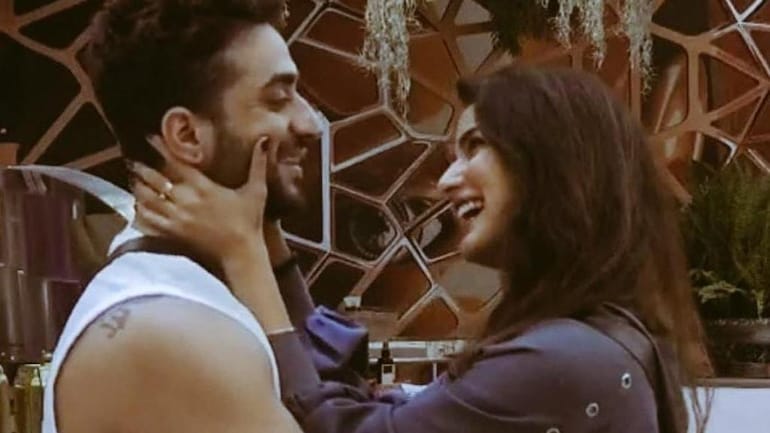
Jasmin Bhasin will marry Aly Goni as soon as he comes out of Bigg Boss 14

HIGHLIGHTS

  • In the latest episode of Bigg Buzz on Voot Select, host Karan Wahi welcomed Jasmin Bhasin, who was recently evicted from Bigg Boss 14. She got candid on the show and revealed that everyone in the house were playing against each other. She said, “Bigg Boss ke ghar mein sab against khel rahe hote hai ek dusre ke so they bring out the worst in you. Sabki koshish yehi hui (Bigg Boss brings out the worst in you because everyone is playing against you).”
  • Jasmin Bhasin also said that she was the happiest in the house when Aly Goni had entered it. She said, “Aly aaya toh saans mai saans aane wali feeling aayi but at the same time agar Aly nahi hota, toh mai iss se kahi zyada ladaaku hoti (I was relieved when Aly entered the show. If he hadn’t been there, I would have gotten into more fights).”
  • Talking about her feelings for Aly, Jasmin said, “Aur denial main nahi jeena mujhe. Jaise hee bahar agayega mai sab tayyar rahungi- aate hi shaadi (I don’t want to stay in denial anymore. Whenever he comes out of Bigg Boss, I will be ready for marriage).”
  • Jasmin feels that Eijaz Khan and Rubina have the capacity to win the show. She calls Eijaz someones who is very intelligent and clever and Rubina, a headstrong contender, who is clever, intelligent and knows how to manipulate smartly. Jasmin said, “Rubina ka dimag bahut tez chalta hai. Unko pata hai rishto ko kis tarah, kiske through kisko apni taraf modhna hai and hence she has strong chance of winning the show (Rubina has a very strong mind. She knows how to create bonds in the house).” She also added that Abhinav Shukla’s positive nature neutralises Rubina’s negativity.
  • And who does she feel will be evicted next? Jasmin puts her vote on new contestant Sonali Phogat.
  • Meanwhile, Rahul Vaidya, Nikki Tamboli, Rubina Dilaik and Sonali Phogat are nominated for evictions this week. Jasmin Bhasin was evicted from Bigg Boss 14 in this Weekend Ka Vaar episode. After Jasmin’s eviction, only nine contestants are left on Bigg Boss 14 including Aly Goni, Rubina Dilaik, Abhinav Shukla, Rakhi Sawant, Vikas Gupta, Arshi Khan, Rahul Vaidya, Sonali Phogat, and Eijaz Khan.

“We Want To Address Some Rumours”: WhatsApp Updates On Privacy Policy Row

HIGHLIGHTS

  • WhatsApp policy “doesnt affect privacy of messages with friends, family”
  • Reiterates WhatsApp can’t see content; private chats end-to-end encrypted
  • As per revamped privacy policy, WhatsApp will share data with Facebook

WhatsApp clarifies again on privacy policy amid row: "Update doesn't affect privacy of messages with friends or family"

Amid row over reports of WhatsApp users alleging leak of their private messages with family and friends on search engines, the Facebook-owned messaging service has issued yet another clarification.
WhatsApp has said the change in its recently revised policy “does not affect privacy of messages with friends or family”. “Instead, this update includes changes related to messaging a business on WhatsApp”.
It further shared a list of information “NOT shared with Facebook”.
  • WhatsApp cannot see your private messages or hear your calls and neither can Facebook.
  • WhatsApp does keep logs of who everyone is messaging or calling.
  • WhatsApp cannot see your shared location and neither can Facebook.
  • WhatsApp does not share your contacts with Facebook.
  • WhatsApp groups remains private.
  • You can set your messages to disappear.
  • You can download your data.
We want to address some rumors and be 100% clear we continue to protect your private messages with end-to-end encryption.

Addressing one the biggest concerns about “group privacy”, WhatsApp in the Security and Privacy section of its website states: “We don’t share this data with Facebook for ads. Again, these private chats are end-to-end encrypted so we can’t see their content.”
For “additional privacy”, it suggested users change message settings to “disappear from chats after you send them”. Complete steps on how to accomplish this have been shared on its website.
This is the second clarification to be issued by the cross-platform messaging and Voice over IP service provider since it revamped its privacy policy stating it will share data with its parent company Facebook.
It is mandatory for the user to accept the new terms of use, failing which the user’s account would be deleted when the policy comes into effect in February.
The update has prompted an exodus of sorts from WhatsApp, which has 400 million users in India alone.
Privacy concerns and fear of security breach have prompted people to weigh other messaging apps, such as Signal and Telegram which either do not collect any data, or just basic user information.

Karnataka receives first consignment of covid-19 vaccines

KEY STORY

  • BENGALURU : The first consignment of 6.47 lakh doses of COVID-19 vaccines has arrived here on Tuesday, and the Karnataka government said it was committed to conducting the vaccination drive in a transparent way.

Each dose of vaccine contains 0.5 ml and each vial contains 10 dosages of vaccines. (ANI)


  • According to official sources, the flight carrying the Covishield vaccines landed at the Kempegowda international airport here. Karnataka Health Minister K Sudhakar’s office issuing corrections to his statement earlier in the day, said 6,47,500 doses of vaccine arrived in Bengaluru and Belagavi in the northern part of the state will receive next consignment tomorrow.
  • Earlier, addressing reporters Sudhakar said, 7.95 lakh vials of Covishield vaccines were arriving in the first consignment. The vaccine consignment was transported to the state vaccine store in the city in a refrigerated truck. “The state government will conduct the vaccination drive- whether it is storage, supply or administering as per guidelines- in a transparent way, as directed by Chief Minister B S Yediyurappa,” Sudhakar said.
  • COVID-19 vaccination drive will start on January 16, and the state government has already said that about 16 lakh frontline workers in the state will be administered a vaccine against COVID-19 in the first phase at 235 sites.
  • Noting that the Drugs Controller General of India (DCGI) has given approval to Covishield and the Centre has purchased 1.1 crore doses, Sudhakar claimed that there was no other country in the world that has fixed the price of the vaccine at such low rates. “It has been procured at ₹210 per dose including GST from the Serum institute, Pune.
  • The total cost is ₹231 crore,” he said. The central government will be vaccinating about 3 crore people in the country in the first phase for free of cost.
  • Observing that each vial contains 5 ml and it will be 0.5 ml per dose, Sudhakar said 10 people can be administered in each vial of vaccine. “28 days after taking the first dose, a second dose should be taken. The vaccine will help in developing immunogenicity.
The vaccine is completely safe and there is no need for anyone to worry or fear,” he said. “If there are any side effects it will be recorded… details of every person who takes a vaccine will be recorded, after getting the vaccine shot the person will have to be in the observation room. If there is any side effect, there will be facilities to immediately treat them,” the minister said adding that the vaccine has been safe during clinical trials.

Rs 200 a special price for govt, Covishield to be sold in private markets at Rs 1,000 per vial: SII CEO

KEY STORY

  • Pune: Serum Institute of India (SII) CEO Adar Poonawalla on Tuesday confirmed the Central government has procured the Covid-19 vaccine ‘Covishield’ at a “special price” and that the SII is planning to sell the vaccine at Rs 1,000 per vial in the private markets.
  • Poonawalla was upbeat about the historical moment that the first Covid-19 vaccine in the country was being dispatched from his factory. He said that the main challenge of the SII is to deliver the vaccine to everyone in the country by the end of this year.
  • Talking about the Covishiled vaccine, which the government will use in its mega vaccination drive, the SII CEO said, “We have given a special price of Rs 200 for the first 100 million doses only to the Government of India on its request because we want to support the common man, vulnerable, poor, healthcare workers and all the underprivileged.”

  • “We decided not to make any profit, we wanted to support the nation and the govt for the first 100 million doses,” he added.
  • He then announced that the SII will sell the Covishield vaccine in the private markets at Rs 1,000 per vial.
  • Adar Poonawalla asserted that he will maintain a very reasonable price for the government even after the supply of the 100 million units, but it will be a little bit more than Rs 200.
  • A lot of countries have been writing to India and PMO for vaccines to be supplied from the Serum Institute to their countries. “We are trying to keep everyone happy. We have to take care of our population and nation as well,” he added.
  • Talking about the production of the vaccine, Poonawalla said, “We make 70-80 million doses every month. Planning is underway to see how many will be given to India and foreign countries. Health Ministry has made logistics plans. We also have a partnership with private players for trucks, vans and cold storage.”

CONCLUSION

  • It should be noted that the first consignment containing vials of the Covishield vaccine was dispatched from the SII in Pune in the early hours of Tuesday, ahead of the January 16 launch of the nationwide vaccination drive.
  • Amid tight security, three trucks carrying the very first consignment of the Oxford-AstraZeneca Covid vaccine left for Pune airport to be flown to 13 locations across the country today.
  • The locations include Delhi, Karnal, Ahmedabad, Chandigarh, Lucknow, Chennai, Bengaluru, Hyderabad, Vijayawada, Bhubhaneshwar, Kolkata and Guwahati.