Integrated portal for citizen’s grievances in Karnataka soon

KEY STORY

  • The Karnataka government will soon launch the “Integrated Public Grievance Redressal System” (IPGRS) replacing all existing multiple web portals for citizens’ grievances redressal.

Karnataka govt to launch one portal for all citizen's grievances | Deccan  Herald

  • The new IPGRS has been developed by Karnataka’s Centre for E-governance and will be launched on a pilot basis in January 2021.
  • The portal will keep track of the status of complaints and ensure that officials resolve issues pooling grievances from across government departments.
  • The recent government order which announced the launch of IPGRS stated that numerous helplines and web portals have been set up by different departments to receive and redress department-specific grievances of the people in the State making the officials work in silos to redress the issues.
  • The government order further cites a High Court order concerning few unaddressed public grievances that many departments failed to address in time and at times even government staff had to approach courts to get their problems addressed.

CONCLUSION

  • With the integrated grievance portal, once a grievance is uploaded, the system shall automatically connect the person to “last mile functionary” in the department for resolving the issue.
  • As per reports, there are around 6000 categories and sub-categories of grievances in all the government departments.
  • The pilot phase will take up to 20-30 types of complaints to evaluate how the system responds.

Karnataka Clears Cow Slaughter Bill, To Be Sent For Governor’s Approval

KEY STORY

  • The Karnataka cabinet on Monday decided to promulgate an ordinance to give effect to the contentious anti-cow slaughter bill that is yet to be approved by the legislative council.
  • Once it comes into effect, there will be a blanket prohibition of slaughter of cows in the state.
    However, slaughter houses will continue to function and beef consumption will not be prohibited with respect to buffalo meat.
    “The anti-cow slaughter law is not new. We have had it for decades. Previously, there was a ban on slaughter of cows until the age of 13. We have extended it with an intention that older cows should not be left out. Since the prohibition does not extend to buffaloes, there is no ban on beef consumption,” Law and Parliamentary Affairs Minister JC Madhuswamy said.
  • Speaking to reporters after the cabinet meeting, he said the ordinance is likely to be sent to the Governor within a day for his assent.
  • The government is also considering building ‘gaushalas’ (cow shelters) to ensure that aged cows that are not used for milching do not become a burden on the farmer, he said.
  • The Karnataka Prevention of Slaughter and Preservation of Cattle Bill-2020 bill proposes a maximum of seven years’ imprisonment and fine of ₹ five lakh for the offenders.
  • It seeks a total ban on slaughter of cows in the state and provides for stringent punishment to those who indulge in smuggling, illegal transportation, atrocities on cows and slaughtering them.
  • The government had to opt for the ordinance route as the Bill passed by the legislative assembly earlier this month in the winter session amid din and stiff opposition from the Congress has not yet been approved by the legislative council.
  • The council was adjourned sine die even before the bill was tabled there for passage.
  • For a bill to become law, its passage in the legislative council, followed by assent by the Governor, is necessary.
  • Noting that objections the Centre had on the then BJP government’s anti cow slaughter bill of 2010 has been addressed, Animal Husbandry Minister Prabhu Chauhan said the earlier one also prohibited slaughtering of buffaloes.
  • In the present bill, the prohibition is for slaughtering of buffaloes until the age of 13, he said.
  • In a statement released by his office, he said cow is the root of India’s culture, faith and farmers’ livelihood.
  • Expressing concern over the decline in the number of cows year after year, he called on everyone to rise above politics to work towards the growth of the state’s cattle assets.
    “Opposing the Bill just for the sake of politics and misleading the public is intolerable,” he said.
  • Citing the 2019 cattle census, Mr Chauhan said 2.38 lakh cows are slaughtered every year. Even a day’s delay would lead to slaughter of 662 cows, he said.
    “If it continues at this pace, we aren’t far away from a time when cows will only be read about in books. Stopping illegal transportation and slaughtering is our priority,” he said.
  • Despite resistance from the opposition, the then BJP government led by BS Yediyurappa in 2010 had got the controversial Prevention of Slaughter and Preservation of Cattle Bill passed, that proposed to replace the Karnataka Prevention of Cow Slaughter and Cattle Preservation Act, 1964.

CONCLUSION

  • The bill had widened the definition of ‘cattle’ and imposed a blanket ban on cattle slaughter, coupled with stringent penalty clauses for violation.
  • However, the Siddaramaiah headed Congress government that came to power in 2013 withdrew the bill that was before the President for his assent.
  • After BJP came back to power in the state, several party leaders have been making a pitch to re-enact the anti-cow slaughter law.
  • Mr Chauhan, along with officials, had even travelled to Uttar Pradesh and Gujarat to study and gather information on implementation of the laws there, before bringing the 2020 bill to assembly earlier this month.
  • According to sources, BJP, that hurriedly tabled the bill and ensured its passage in the assembly in the winter session, did not do so in the council, sensing that the numbers were not in its favour with opposition Congress and JD(S) against it, and may refer it to the joint select committee.

Karnataka Schools To Reopen For Classes 10, 12 From January 1

KEY STORY

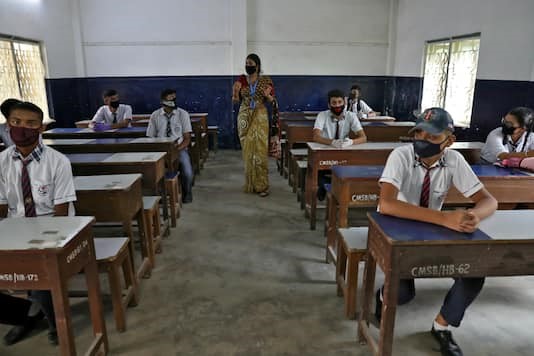
  • Karnataka Education Minister S Suresh Kumar on Monday announced that regular classes for students of Classes 10 and 12 will commence from January 1, 2021. The state had earlier decided to reopen regular classes for Class 10, second pre-university and Vidyagama programme for government school students from Class 6 to Class 9 from January 1.
  • Karnataka Primary and Secondary Education Minister S Suresh Kumar said, “From January 1, classes will resume. There have been speculations, but whatever programmes we have planned from January 1 will go on.”
  • Vidyagama scheme is aimed at taking school education to the doorsteps of students in rural areas who cannot afford to attend online classes due to various reasons.

CONCLUSION

  • Mr Kumar informed that there would be no hard and fast rule to attend the regular classes. Furthermore, he added, “If the parents and students are comfortable with the online classes they can study from home.”
  • The Minister added that his department will abide by the suggestions given by Technical Advisory Committee members.

Eating A Balanced Diet May Not Be As Easy As It Sounds: Study; Know Tips That Can Help

  • Eat a balanced diet for weight loss, weight management, good health and strong immunity. We are sure you must have heard this statement many times, coming from health experts, doctors, nutritionists and fitness trainers. Though, it is noteworthy that following the so-called balanced diet is easier said than done.
  • A balanced diet is ideally defined as a diet which includes a variety of different types of food, and provided adequate amount of nutrients that are required for good health. Now this variety needs to be maintained within meals, and not just in all meals in a day.

Eating A Balanced Diet May Not Be As Easy As It Sounds: Study; Know Tips That Can Help

Why following a balanced diet may not be as simple

Studies have shown that you need to have variety in not just your whole diet, but also within meals. For instance, every meal should include fats, carbs, protein, fibre and probiotics, and the variety should also be across all meals, like having different foods for lunch every day.
  • According to a study published in BMC Public Health, when people are trying to follow a healthy diet as recommended by their respective health expert or doctor, they tend to place less importance on variety within meals.
  • This means that in order to achive overall balance, they may believe that it doesn’t matter to have less or more variety within a meal, as long as you make up for the difference in the next meal.
  • However, it is important to consider variety in every meal, as studies show that people eat more when foods differ in taste, texture, appearance within the same dish. Every new characteristic that one experiences in food can keep him/her interested in the meal for longer. This can delay the feeling of fullness which normally prompts one to stop eating.

da3r4e7

  • So considering variety with respect to these characteristics can increase the risk of overeating and weight gain. It is because of this reason that eating a variety of foods from the same food group (with the exception of fruits and vegetables), has been linked to higher body weight.
  • It is important to note that eating different variety of fruits and vegetables will benefit your health. This is because they are low in calories and also incredibly nutritious. So if you want to eat a balanced diet to improve your nutrient intake or lose weight, you need to ensure variety (in terms of different food groups, with the exception of fruits and vegetables) within a meal.
  • Nutritionist Rujuta Diwekar suggests an interesting way of making your meals perfectly balanced. She proposes the 3:2:1 proportion of eating meals to make your meals perfectly balanced, in one of her Instagram posts. To follow this pattern, you need to fill half of your plate with rice, roti or millets, 35% of it with dal/sabzi or meat, and 15% of with papad/pickle/salad/curd etc.
  • While it may seem too technical to apply, when you do follow it, you will see that it is the age-old pattern of eating in a way which allows maximum nutrients and also enhances taste.


Disclaimer: This content including advice provides generic information only. It is in no way a substitute for qualified medical opinion. Always consult a specialist or your own doctor for more information. Gohash.in does not claim responsibility for this information.

Karnataka Cabinet may take up cow slaughter Bill on December 28

KEY STORY

  • The state cabinet is expected to take up the controversial Karnataka Prevention of Slaughter and Preservation of Cattle Bill 2020 for approval on Monday. To ease Bengaluru traffic, the Cabinet ministers may give the nod to the advanced traffic information and management system using the Japanese government grant.

Cows

  • The other agenda on the list includes the approval for a brand new emergency response system which will be set up at a cost of Rs 35 crore, and the premier BR Ambedkar School of Economics University, which has been delayed raising concerns of academicians. The setting up of University of Horticultural Sciences too may come up for discussion.
  • The cabinet is likely to sanction Rs 150 crore to pump 430 million litres of treated sewage water a day from KR Puram, Medahalli and Kadugodi-Whitefield areas to fill up 38 tanks in Hoskote, on the outskirts of Bengaluru.
  • It is expected to take up the issue of greening Nandi Hills and Kemmangundi to make them more picturesque to boost tourism. The hills will be handed over to the Horticulture Department to grow more trees.
  • The cabinet may approve tightened laws relating to cash transportation under the Karnataka Private Security Agencies Rules 2020. After many cyber crimes, it is expected to take up and approve setting up of a state-of-the-art cyber-forensic laboratories throughout the state under the smart policing project.
  • The issue of appointment of Chairman of State Medical Supplies Corporation after a series of serious allegations about medical supplies too is likely to come up.

Council adjournment likely to be discussed 

The state cabinet is likely to discuss the untimely adjournment of the Legislative Council by Chairman Prathapchandra Shetty that led to ugly scenes on the floor of the House

Cold Wave To Hit Delhi, Expected To Last Till January 3: Weather Office

KEY STORY

  • New Delhi: Cold to severe cold wave is likely to hit Delhi NCR from December 30 and is expected to last till January 3, according to the India Meteorological Department (IMD) on Sunday. The minimum temperature may fall to 3-4 degrees Celsius during this period.

Cold Wave To Hit Delhi, Expected To Last Till January 3: Weather Office

  • Senior IMD scientist Dr RK Jenamani, while speaking to ANI, said the change in weather is due to an active fresh Western disturbance.
    “New Year will be much colder. The condition will last for a few days. This is occurring due to an active fresh Western disturbance. The air quality will continue to remain in moderate to the poor category,” Jenamani said.
  • The minimum temperature recorded in Delhi’s Safdarjung observatory on Sunday was 6 degrees Celsius.
  • solated rain or thundershowers might be observed in Punjab and Haryana on Sunday and Monday. The minimum temperature recorded in Haryana’s Narnaul on Saturday was 3.3 degrees Celsius.
    As per IMD predictions, scattered rainfall or snowfall is expected to be observed in Himachal Pradesh and Uttarakhand till Monday.

Ratan Tata’s 4-point guide for India heading into 2021

KEY STORY

  • Globally, Covid-19 killed 1.7 million in the annus horribilis 2020, out of which almost 150,000 fatalities were in India alone. The year was unprecedented in terms of loss of lives and livelihood but Tata Group Chairman Emeritus Rata Tata is optimistic that humanity will clear this “test” eventually.

    Cycles of life (and the importance of breaking them)  

  • In an article titled, “Be humble, but also be brave” in Times of India newspaper, Tata writes, the world experiences cycles whether it is in business, health or epidemics, but it is important for humans to rise above and deal with the problems with creativity and agility as these cycles get more entrenched.
    “Whether we find an effective vaccine or not, I am hopeful that we will eventually find some cure that will reduce the intensity of this pandemic. But it will be imperative for all of us to learn not to take this pandemic for granted. It calls for true reflection,” Tata wrote.
  • The octogenarian who turns 83 tomorrow feels that there will be a new low that will require businesses to transform and adapt in the new normal.
    “We will, as countries, have to work hard to boost consumption, bring in infrastructure development to create jobs, and find solutions to revive industries and sectors that are in deep depression,” he wrote.
  • Tata added that it will be critical for India and other countries to collectively in finding new solutions in order to emerge out of the crisis successfully.

Collective responsibility towards vulnerable

  • The philanthropist, whose family bequeathed most of its wealth to the many trusts to make lives of Indians better, urges the nation to be mindful of the migrant workers who paid heavily with their lives and livelihoods at the start of the lockdown.
“If we build an ecosystem that can protect and grow this community based on their skills, then we will emerge prosperous as a nation” wrote the chairman of Tata Trusts, which owns 66% shares of Tata Son –the holding company which controls the salt-to-software conglomerate.
  • Tata urges the nation to create an ecosystem wherein gender equality is nourished and sustained.
    “Gender equality and equal reward will be critical for progress. Whenever there is a depression there is always someone who has found solutions. Women, in this case, will rise up but it is important for us to understand if we have the ecosystem to allow them to flourish and fuel their enthusiasm. This will be looked at as the creative skills of a country,” he wrote.

    Importance of youth & youth-led innovation

    “It will be important for us to recognise youth and groups or communities that have a point of view and provide them with enough curiosity and energy to succeed and progress”
  • Tata feels its important to support the start-up ecosystem with Indian money rather than getting youth to find money from Japan or Korea. He says the country must place a premium on finding the innovation and talent which young Indians are abundantly blessed with, he said, citing the example of Dr Amar Bose who went on to become the founder of world-class acoustics and electronics brand – Bose.

Convergence Of Creativity And Culture   

  • He stressed upon the need to create a culture of creativity citing the examples of US innovators and entrepreneurs such as Bill Gates, Steve Jobs and Elon Musk which he attributed to the culture of valuing creativity in the US.
In the end, he surmised with four things that need to be kept into mind going into 2021
1 Let’s not take the universe for granted, there is a large power that governs us.
2 Let’s learn to live with humility and gratitude, as life is uncertain. We must do our best to keep ourselves safe by co-creating solutions that address all humankind.
3 Technology is transforming the way we eat, live, learn and play — let us be brave enough to embrace it and find solutions collectively through collaboration.
4 And lastly, to be part of this high world transformation that is happening around us, we need to foster a culture of innovation that converges with the right investment without fear of failure.

PM Modi flags off first driverless train: Here’s all you need to know

KEY STORY

  • New Delhi: Prime Minister Modi today inaugurated India’s first-ever driverless train on Delhi Metro’s Magenta Line, which connects the national capital to Noida. Today the National Common Mobility Card was also expanded to the Airport Express Line of Delhi Metro.
    Speaking on the occasion, the Prime Minister termed today’s event as an attempt to make urban development future-ready. He added that in 2014, only 5 cities had a metro rail and today, metro rail is available in 18 cities. The Prime Minister giving a vision of the future, said that by the year 2025, metro train services will be extended to 25 cities with an over 1,700-km network.

    Here is all you need to know India’s 1st driverless train:

    1. Metro trains without drivers to be operational on 37 KM magenta line. Trains to connect Janakpuri West – Botanical Garden in Noida.
    2. Trains will be initially operated by drivers but drivers will be gradually withdrawn. The driverless trains are fully automatic and built to eliminate possibilities of human error.
    3. After the start of driverless services on the Magenta Line, the Pink Line (Majlis Park-Shiv Vihar) of Delhi Metro is expected to have driverless operations by mid-2021.
    4. With this innovation, the Delhi Metro network joins the elite league of 7% of the world metro services, which run driverless trains. Once the driverless trains are operationalised on the Pink Link too, the Delhi Metro will have a driverless network length of about 94 km which will be approximately 9% of the world’s total driverless metro network.
    5. The trains will be operational only on line 7 & 8. The trains can be controlled from command centres. And Communication based train control (CBTC) technology will be used.
    6. The driverless train having 6 coaches are equipped with several advanced features. They are designed for a maximum speed of 95 kmph and operational speed of 85 kmph.
    7. Each coach can accommodate maximum of 380 passengers, which translates to 2,280 passengers in each train set of six coaches. The cabin-less trains would be able to accommodate 40 commuters more in a six-coach train as the driver’s cab will not be required in such trains.
    8. These trains will be more energy-efficient than the earlier trains of Delhi Metro because of improved design features such as better regeneration of energy during braking, energy-efficient subsystems like LED lighting and air conditioning systems.
    9. What are the safety measures? They involve the installation of high-resolution cameras. Images of tracks, overhead wires will be continuously monitored.

Why computer science engineers get a vast number of career choices

computer science, computer science engineering, career prospects of computer science engineering, computer science engineering career choices, computer science engineering vast choices

Computer science graduates are gaining ground at a very large level because evidently, the whole of the world has become dependent upon algorithms, codes, and networks.
It is not surprising that it is an irreversible process but the beauty of the fact is that computer science has moved beyond its domain to include people from all the streams who have analytical skills, understand all the nitty-gritty of how things can be driven in a system through linked processes.

Therefore it is not just the computer science graduates but people who are associated with the stream directly or indirectly and may function in areas starting from generating codes and algorithms to versatile applications wherein anything or everything can become a part.

For example, an architecture engineering graduate who understands analysis and coding may not only traverse into design thinking and design-related functions but also may think of going towards brand development, brand organization, and other functions of brand value chain he or she may even think of moving into a diverse field of equity management by understanding the whole computer-driven process.
Therefore computer science now has encompassed almost everyone.

Versatile job trends in computer science

As far as computer science graduates are concerned the emerging job trends are versatile starting from industry analysis to value chain analysis to generating processes of value chains to visualizing control and applications of processes to the generation of new acumen related to independent systems.
It also includes acumen related to the interdependence of humans and systems on each other along with other several functions for facilitating production, manufacturing, and so on. Another important element which computer science graduates have started delivering is off getting associated with design thinking and storytelling.

Art of storytelling in computer science

These minds driven by data mining, data analysis, and artificial intelligence have developed themselves into understanding the cross dependence of several value chains and envisioning the impact of productivity of one industry on the other.
On the other hand, have developed themselves developing an acumen associated with deciphering whatever comes in front of them as analyzed or presented by machines in the form of correlated or scattered big data.

This art of storytelling which these graduates have developed though is interpretative but has a very strong scientific understanding associated with it and becomes the reason for decision making at a very large level.

For example, several computer science graduates definitely would have contributed in several processes related to understanding COVID, fighting with the virus, development of vaccine and now the distribution of vaccine on the other side they definitely would have been contributing in catering to the depreciation of economy and shortages at different levels, therefore, the emerging trends can be summarized in one term called ‘versatility’.

SCOOP: Akshay Kumar INCREASES his acting fees from Rs. 117 to 135 crores for films slated to release in 2022

If there is one man who is working every single day of his life, it’s Akshay Kumar. When not on the sets, the superstar is listening to scripts and on a signing spree setting his line-up of releases for not just 2021 but also 2022. Bollywood Hungama has exclusively discovered that the actor, who has his dates blocked for the next one year, has decided to hike his acting fees further due to excessive demand in the market.
“Over the last few months in the lockdown, Akshay Kumar has gradually hiked his fees from 99 crores to 108 crores and finally settled in on 117 crores for the films he signed recently. Every producer wants to have Akshay on board, considering his low risk, low budget, and assured return model, leading to excessive demand in the market. Akshay too has followed the economic formula of higher the demand, higher the price, as with every film offer coming his way, he hiked his fees. For the films which are slated for a 2022 release, Akshay will charge a bomb of Rs 135 crores per film” a source told Bollywood Hungama, adding further that the upfront charging of fees won’t act as a burden on his films.
“The production budget of most Akshay Kumar films will be in the range of Rs. 35 to 45 crores, in addition to 15 crores more for print and publicity, taking the total in the range of Rs. 50 to 60 crores. Taking the number of his acting fees into account, the overall budget of his films would be in the range of 185 to 195 crores. Doing a backward calculation in the account, his films earn approximately 80 to 90 crores from the sale of satellite and digital, whereas 10 crores more comes from the sale of music rights, leaving an amount in the range of Rs. 95 to 100 crores for recovery from theatres, meaning lifetime box-office collections of Rs. 210-220 crores in India. This isn’t as big a number for him to achieve, given his stardom and trust among the audience. And in 2021, it’s a rather easy number for a superstar like Akshay,” the source further told Bollywood Hungama, explaining the low risk, assured return model of Akshay Kumar.
The actor has however given a special discount to his producer friend, Sajid Nadiadwala, by charging around 20% below his market rate, since Sajid is planning to mount the film on a bigger scale, resulting in a bigger production budget than his other films. “Akshay doesn’t want to burden his film with unrealistic expectations, and the films which warrant a bigger budget, he is open to negotiating on his acting fees in tandem with the hike in the budget, however, will make up for the same by asking for a share in profit. He knows the box-office market as also his appeal among the audience, and setting realistic targets for film to be a rather safe venture,” the source concluded.
Akshay’s upcoming films include Sooryavanshi, Atrangi Re, Prithviraj, Ram Setu, Mission Lion, Raksha Bandhan, and many more.