IPL 2020, KKR vs CSK :Men in Purple takes the match into their pace with a thrilling victory against CSK by 10 runs

HIGHLIGHTS

Match 13 of Indian Premier League (IPL) 2020 saw Kolkata Knight Riders (KKR) lock horns with MS Dhoni-led Chennai Super Kings (CSK) from the United Arab Emirates (UAE).
Batting first, the openers gave KKR a fiery start, before Shardul Thakur dismissed Shubman Gill. Rahul Tripathi dazzled with a brilliant 81, but the other batsmen couldn’t get going, as CSK stifled the run-flow. Karn Sharma and Dwayne Bravo starred with the ball, as KKR were bowled out for 167 runs.

CSK lost Faf du Plessis in the powerplay, but Watson and Rayudu put CSK in control with a fine partnership. However, Rayudu’s wicket turned the game on its head, as KKR stifled the run-flow, and pulled of a stunning 10-run victory.

Game Ends – Kolkata Knight Riders win

Chennai have only themselves to blame for this loss. They were 90-1 at the 10-over mark, and Sunil Narine’s advent just turned the game on its head.
Dinesh Karthik was being riled for not bringing on Narine in the powerplay, but boy, didn’t that move pay off! It did, and KKR have ended benefitting from it.
Rayudu’s wicket stifled the run-flow, and Dhoni getting castled unravelled the chase altogether. Chennai were cruising, and just threw the game away.
Karthik must be given a lot of credit for this performance. What a fine performance, overall, from the Men in Purple. Captivating game, indeed. Thanks for joining us folks, goodnight!

Schools, colleges turn to virtual labs to teach practicals

KEY STORY

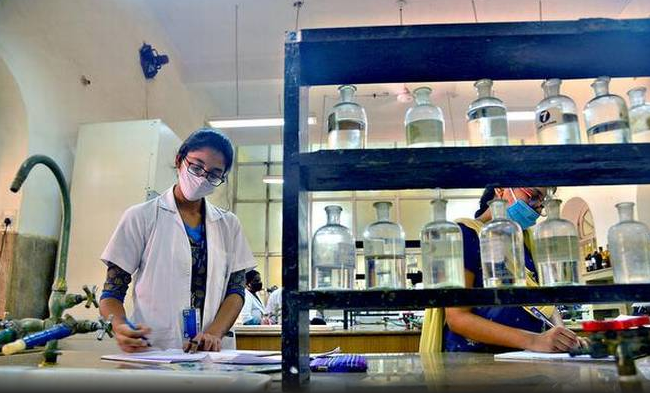
  • In an attempt to break away from the tedium of a digital class format where a teacher talks online while students take notes, several city schools and colleges are conducting practical classes by making use of ‘virtual labs’ and also organizing virtual field trips of museums and zoos

Student Research in a COVID-19 World - Titan Voices

  • Virtual labs allow students to conduct experiments by testing formulae, clicking on icons and test tubes, etc.
  • While it is a far cry from the actual experience of conducting experiments in laboratories, teachers say it’s the best option available given that the government is not allowing schools to open this month.
  • Manila Carvalho, principal, Delhi Public School (Bengaluru East), said that science teachers in the school use these labs to help students visualise and understand concepts.
  • “Many of our teachers, besides using these virtual labs which are available online, also come to school and record the experiments they conduct. They then share the videos with students,” she said.
  • Many virtual labs conduct experiments that are aligned to the NCERT/CBSE and State board syllabus
  • Dakshayini Kanna, principal of Harvest International School, said that they have been conducting virtual field trips as well.
  • “We can book virtual tours of museums and zoos. We cannot continuously only conduct online classes. We are trying to do everything to make sure that online learning is attractive for the students,” she said.
  • Several enterprising teachers in government schools and colleges too are making use of these labs.

CONCLUSION

  • Visvesvaraya Technological University has tied up with National Institute of Technology Karnataka Surathkal to implement technology enabled learning through virtual labs for all institutions affiliated to the university.
  • The university said that these labs can be used to provide remote experiential learning of courses in engineering and applied sciences.
  • The move has received a mixed response from students. Karthik S., who studies in a government PU College, started using these virtual labs after his teacher recommended them. “Our college does not have a lab and I am glad that I found these tools to understand concepts better,” he said.
  •  Tanya S., a class twelve student of a CBSE-based school says that the virtual labs do not provide them hands-on experience like the regular practical classes. “We understand that our schools have no option but to conduct virtual practical sessions. But if we do not get any practical exposure this academic year, we want CBSE to cancel our practical examination,” she said.

M Rajeshwar Rao appointed as deputy governor of RBI

KEY STORY

  • The central government on Wednesday has appointed M Rajeshwar Rao as deputy governor of the Reserve Bank of India, it said in a notification. He is currently the executive director of RBI.

M Rajeshwar Rao appointed as RBI Deputy Governor- The New Indian Express

  • The Appointment Committee of the Union cabinet has approved the appointment, the notification stated. Rao succeed NS Vishwanathan as the fourth deputy governor.
  • He has been associated with the Reserve Bank since 1984, holding various positions. He took charge as an executive director of the central bank in 2016.
  • At present, he is in charge of the internal debt management, financial markets operations, international and secretarial departments at the central bank.
  • Prior to taking over this position, Rao was the chief general manager, financial markets operations department. He has previously held charge of the risk monitoring department.
  • His vast experience makes him a front runner for the post. He has a Bachelor of Arts in Economics and a Master of Business Administration from University of Cochin. He is also a Certificated Associate of Indian Institute of Bankers.
  • Rao has experience of working as the Banking Ombudsman in New Delhi and in the Reserve Bank’s regional offices at Ahmedabad, Hyderabad, Chennai and New Delhi.
  • The central government on Tuesday appointed three external members Ashima Goyal, Jayanth R Varma and Shashanka Bhide to the Monetary Policy Committee (MPC) of the RBI.
  • The MPC of the RBI on Wednesday has started its three-day deliberations. There is a consensus that the central bank will maintain status quo on the benchmark lending rates in the view of inflation, scheduled to be announced on 9 October.
  • Rahul Gupta, head of research- currency, Emkay Global Financial Services said, “We expect the central bank to maintain a status quo on the back of rising inflation. The focus will be on growth projections, as since February 2020, the RBI has not given a solid economic projection.”

“This meeting of the MPC is the first with the new government nominees on the Committee. Considering that this is their first meeting and with the inflation consistently above 6, they are expected to retain the policy rates,” said Divakar Vijayasarathy, founder and managing partner, DVS Advisors LLP.

Former CBI Director and Ex-Governor of Dies by Suicide, Say’s Police

KEY STORY

Former CBI director and Governor of Nagaland Ashwani Kumar on Wednesday allegedly committed suicide by hanging himself at his residence in Shimla.
Shimla Superintendent of Police Mohit Chawla confirmed the incident, according to news agency ANI, describing it as a shocking development. It is learnt that the former state Director General of Police was under depression for sometime.

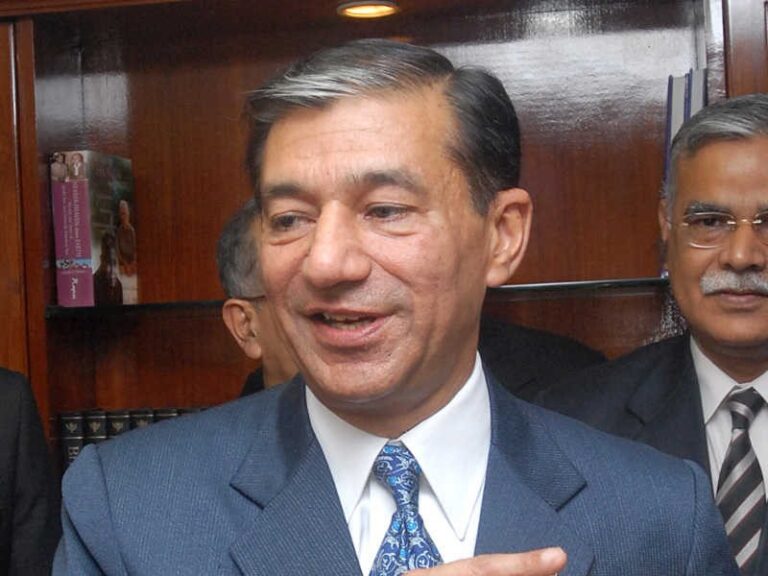
A file photo of Ashwani Kumar.

Kumar was DGP of Himachal Pradesh from August 2006 to July 2008 and then the Director of CBI from August 2008 to November 2010.
After his retirement from the CBI, Kumar had settled down in Shimla. After his retirement, he worked briefly for a private university located near Shimla as its chancellor. A 1973-batch IPS officer, Kumar is survived by his wife and son.


Bengaluru suburban rail project cleared, announcement delayed by MCC

KEY STORY

  • BENGALURU: Bengalureans grappling with notorious traffic snarls got some relief when the Union cabinet on Wednesday cleared the long-pending 148-km Bengaluru suburban rail project, sources said.
  • However, no official announcement was made due to election Model Code of Conduct in place due to byelections to assembly constituencies Sira and Rajarajeshwarinagar on November 3. A formal announcement is likely later.
  • Sources say the project was on Wednesday’s agenda and was discussed and cleared. However, Union railway minister Piyush Goyal at the press meet in New Delhi said: “We can’t disscuss or give any information as Model code of Conduct is in force in Bengaluru”.
  • A source who spoke on condition of anonymity, said: “CCEA (Cabinet Committee on Economic Affairs) has given the nod for Bengaluru suburban rail project.
  • Bengaluru Central MP PC Mohan and Bengaluru South MP Tejasvi Surya told TOI the project will take off soon but refused to divulge details citing the poll code. Mohan said
  • He has been following up the project for several years. “I thank PM Narendra Modi for expediting the long-pending project. This will be a next-generation infrastructure facility surya ,said.
  • South Western Railway sources confirmed that CCEA has cleared the project but can’t speak on record due to the poll code. The project will be executed by Rail Infrastructure
  • Development Company (Karnataka) Limited (K-RIDE), an SPV of the Union ministry of railways and Karnataka government. “K-RIDE will soon float tenders for civil work.” they said
  • The 37-year-old proposal, announced in the 2018-19 Union Budget, was cleared by the railway board in November 2019. It was awaiting CCEA approval.
  • The project will comprise for corridors: KSR Bengaluru City-Devanahalli, Byappanahall-Chikkabanavara, Kengeri-Cantonment-Whitefield and Heelalige-Rajanukunte.
  • This will be the country’s first modern suburban train system. Commuter trains on the proposed network will be similar to that of the Metro.
  • There will be automated fare collection gates for smart card-based cashless travel. Fifty-three AC trains with automated sliding doors may be deployed in the first phase.
  • Railway sources said the minimuin fare could be Rs 13 for less than 3km. In Chennai and Mumbai, a train trip for the same distance now costs Rs 5. “For a 15 km trip, the fare will be rs 35 as apposed to RS 45 in the mertro,” an official said

Restaurateurs meet Delhi CM, other officials to discuss key issues faced by the restaurant industry

KEY STORY

  • A delegation of the National Restaurant Association of India (NRAI) had a follow-up meeting with the Delhi Chief Minister Arvind Kejriwal on Wednesday.
  • The delegation had earlier met the CM on September 28 to discuss key issues faced by the restaurant industry, like requirement of multiple licences, excise-related concerns, legal drinking age in Delhi and the requirement of multiple clearances from different departments by the restaurants.
  • The restaurant body also discussed with the CM how they can work together to promote tourism in the city.
  • Restaurateurs and trustee, NRAI, Rahul Singh and Riyaaz Amlani were part of the delegation. Talking about the Wednesday meeting, Rahul said, “The meeting was attended by officials from different departments and it helped us bring forward our issues and concerns that need to be addressed.
  • It was a meeting to help everyone involved understand the problems being faced by the restaurant industry and find solutions. We discussed various reforms required for the restaurant industry in Delhi.

  • One of the requirements is to reduce/rationalise the existing excessive licencing regime. Essential regulation that needs to be retained should relate to compliances for food safety, environment and pollution, taxes and safety/security of customers and workers.
  • The system should move from the present ‘licencing’ to ‘registration’ regime, with standard validity of approvals for a period of five years.”
  • He also added that the restaurant body highlighted that there should be an online single window platform for restaurants with time-bound approvals and the creation of restaurant-based tourism hubs are needed to promote tourism in the city.
  • “The response from the CM has been very encouraging and we are hoping that our issues will be addressed and we can work together to find solutions,” added Rahul.

CPCB Writes to Delhi Govt for Urgent Action on Major Polluting Sources, Lists Out Pending Tasks

0

KEY STORY

  • Expressing concern over the menace of air pollution in Delhi during winters, the central pollution watchdog has asked the Arvind Kejriwal government to take immediate action on major pollution sources like construction and demolition activities and open garbage dumping.
  • Listing out a series of tasks to be accomplished across Delhi, the Central Pollution Control Board asked in a letter to the Delhi government on Tuesday to take early action on dumping of mixed municipal solid waste at three dump sites in Bhalswa, Ghazipur and Okhla.
  • “It is observed that construction and demolition activities and open dumping of waste/garbage continue to be the major concern in most of the areas and therefore, special efforts are needed to curb these activities, the CPCB said.
  • It said some tasks to curb air pollution in Delhi have been accomplished but “more needs to be done”.
  • Pointing out the shortcomings in action plans of 13 pollution hotspots in the capital, it said the updated status of Wazirpur hotspot has not been received while the target of greening and paving in the hotspot areas is not mentioned.

Public Places, Roads Can’t be Occupied Indefinitely, Says Supreme Court on Shaheen Bagh Stir

KEY STORY

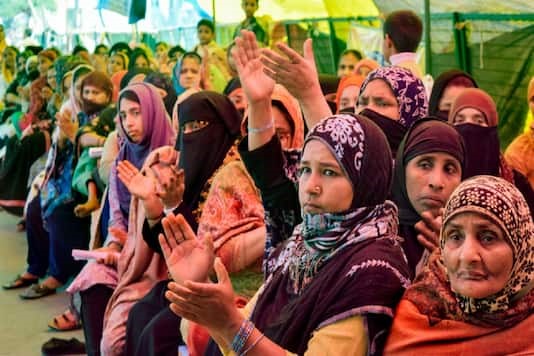
  • The Supreme Court on Wednesday ruled against the legality of the Shaheen Bagh protest, saying public spaces cannot be occupied indefinitely by protesters.
  • A bench, headed by Justice Sanjay K Kaul, held that occupation of public roads and public spaces in exercise of the right to protest is not permissible under the law.
  • Public spaces and places can’t be occupied indefinitely whether in Shaheen Bagh or elsewhere,” said the judge, reading out the operative part of the judgment.
  • The bench added that notwithstanding right to protest is a right guaranteed under the Constitution, protests have to be in designated areas after due approvals from the authorities concerned.
  • The bench was delivering its judgment on a petition by advocate Amit Sahni, who alleged inaction on the part of the Delhi Police and administration in clearing the public road along the Shaheen Bagh area in Delhi.
  • Sahni pointed out the sheer inconvenience faced by lakhs of commuters because of blocking of the arterial road that connected Delhi with other cities in the National Capital Region (NCR).
  • The bench, in its judgment, also pulled up the Delhi Police for not doing anything even after the High Court asked it to act within its authority to clear the road.
  • It said that administration must keep public spaces free from obstructions and that they cannot wait either for an order from the court or go on having endless talks with the protesters.


”

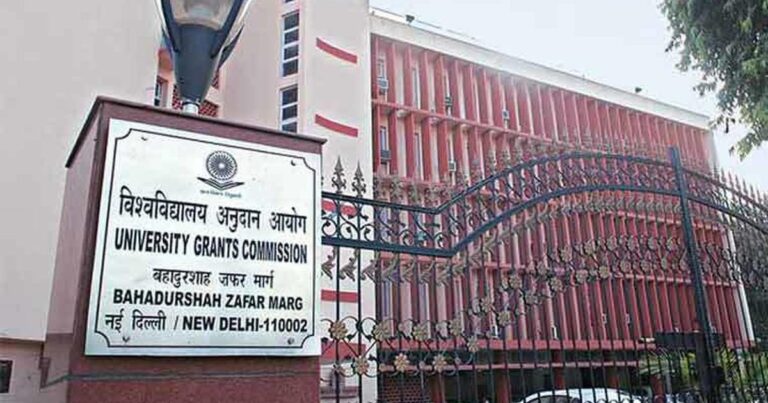
UGC releases names of 24 Fake Universities with no power to confer degrees – Complete List here

KEY STORY

University Grants Commission has released the Fake Universities List 2020 having names of 24 universities that have been termed as fake.
These universities are not empowered to confer any degree, as per the Commission. A total of 7 universities in Delhi and 8 in Uttar Pradesh have been declared as fake Fake Universities List by the Commission.
As per the statement released by the commission, these 24 self-styled, unrecognized institutions are functioning in contravention of the UGC Act, which have been declared as fake universities and these are not empowered to confer any degree. The list of universities is given below in the table.

Fake Universities List

State 

Name of the Universities 

Delhi
Commercial University Limited, Daryaganj
United Nations University
Vocational University
ADR-Centric Juridical University
Indian Institution of Science & Engineering
Viswakarma Open University for self employment
Adhyatmik University
Uttar Pradesh
Varanaseya Sanskrit Viswavidyalaya
Mahila Gram Vidyapith/Viswavidyalaya
Gandhi Hindi Vidyapith
National University of Electro Complex Homeopathy
Netaji Subhash Chandra Bose University (Open University)
Uttar Pradesh Viswavidyalaya
Maharana Pratap Shiksha Niketan Viswavidyalaya
Indraprastha Shiksha Parishad
Karnataka
Badaganvi Sarkar World Open University Education Society
Kerala
St. John’s University
Maharashtra
Raja Arabic University
West Bengal
Indian Institute of Alternative Medicine
Indian Institute of Alternative Medicine and Research
Meanwhile, UGC has also directed the universities of India to begin with the new academic session from November 1, 2020. The first-year classes for undergraduate and postgraduate courses will be beginning in November 2020. The varsities have been asked to wrap up the admission schedule by November 30.


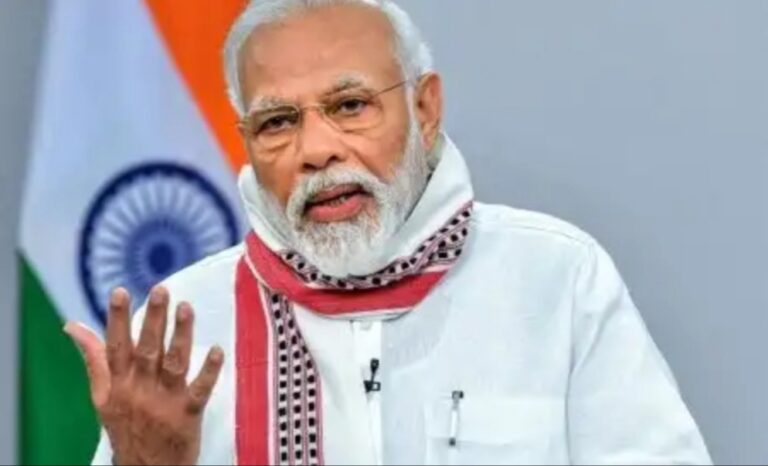
Want to contact PM Narendra Modi? Get his phone numbers, e-mail ID, address here

KEY STORY.

  • New Delhi: It was on this day 20 years ago when Prime Minister Narendra Damodardas Modi had begun his journey as the head of an elected government. Born on September 17, 1950, in Vadnagar, Narendra Modi became Gujarat Chief Minister for the first time in 2001.
  • Since then, he has not looked back. Narendra Modi served 12 years and 227 days as the Gujarat CM from 2001 to 2014. He was elected as the 14th PM of India in 2014 and then again in 2019.
  • On August 13, 2020, Narendra Modi became the longest-serving head of elected government among all Indian PMs when he completed 6,878 days in office.
  • PM Modi enjoys huge popularity among the masses, and election results are proof of that. The PM also finds ways to connect with the hoi polloi through various means, whether it is through his radio programme Mann ki Baat or his NaMo app.
    What if you want to contact him? Here is the compilation of the ways and means of contacting PM Modi:

    PM Modi’s contact numbers:

    If you want to call PM Narendra Modi’s residence or office or fax him, you can do it at:
    PMO: +91-11-23012312
    PMO Fax: +91-11-23019545, 23016857
    PMO helpline: +91-1800-110-031
    Please note: The Prime Minister’s Office receives a lot of public grievances relating to issues which fall under the purview of various Ministries/Departments or the State Governments. Such grievances are forwarded by the Public Wing of this office to the concerned Ministry/Department or the State Government. Citizens can enquire about the status of their letters sent to the Prime Minister by dialing the facilitation number – 011-23386447.
    PM Modi’s social media accounts
    PM Modi is undoubtedly one of the most active State leaders in the world on social media. Since it is impossible for him to personally track all the tweets and messages on his own, there is a dedicated team for the purpose.
    Here are his verified social media accounts.

    YouTube: https://www.youtube.com/user/narendramod

    Facebook: https://www.facebook.com/narendramod

    Twitter:https://twitter.com/narendramodi

    You can tag him in tweets with the following handles: @narendramodi or @PMOIndi

    Instagram: https://www.instagram.com/narendramodi/

    PM Modi’s e-mail ID:

    The Prime Minister’s Office can be contacted at [email protected]. This account is for engagement with the public.

    You can also register your grievances here:https://pmopg.gov.in/pmocitizen/Grievancepmo.aspx

    You can also discuss various topics here:https://www.mygov.in/home/61/discuss/