Not 14 Days, People Coming From Maharashtra Must Undergo 21-Day Quarantine in Karnataka

0

Unlock 1 Karnataka News: The Karnataka government has tweaked quarantine requirements for people arriving from Maharashtra, raising the isolation time from a fortnight to three weeks. The first seven days will be an institutional quarantine, followed by 14-day strict home quarantine.

The 21-day quarantine regimen is for all asymptomatic people returning from Maharashtra, considering most of the COVID cases in Karnataka are having domestic travel history to that state. If any of the asymptomatic people develop symptoms during the isolation, they will be subjected to a COVID test.

However, some asymptomatic individuals from Maharashtra have been provided with some exceptions from the three-week quarantine and designated as special category passengers.

Special category passengers include people who suffered a death in the family, pregnant women, children below 10, elderly people above 60, individuals suffering from serious illness and human distress.

Similarly, the department has also made some provisions for business travellers from Maharashtra.

“To establish that one is a business visitor, (that) person should show confirmed return flight or train ticket which should not be more than seven days later from the date of arrival,” ordered Chief Secretary T.M. Vijay Bhaskar.

Similarly, if a business visitor is arriving on road, he should provide the address proof of the person in Karnataka he intends to meet. Additionally, such a person should also produce a COVID negative test certificate which is not more than two days old.

“One does not have a COVID negative test certificate such a person should go for institutional quarantine for two days within which COVID test should be conducted at his own cost. After the test result is negative, that person is exempted from quarantine,” he said.

However, business travellers have been exempted from hand stamping.

All shops, offices, malls, commercial establishments in Karnataka have been asked to not allow COVID-stamped people to enter their premises before the completion of the prescribed quarantine time. The chief secretary has also issued the order to all religious places, hotels and others to first check for quarantine stamp on all their customers or visitors before they enter the premises.

“All shops, commercial establishments, offices, factories, malls, religious places, hotels and etc.. are required to check for quarantine stamp on all their customers or visitors before they enter the premises,” the chief secretary said.

General public, commercial establishments and resident welfare associations have been empowered to report quarantine violations at a time when many activities are set to reopen from June 8 as part of Unlock – 1, after more than two months of lockdown.

(With Agency Inputs)

Air India to Open International Booking For These 7 Places Tomorrow at 5 PM | Check List

New Delhi: While the resumption of international flights will take some time, Air India will open bookings from 5 PM on June 5 for destinations in US and Canada under Vande Bharat Mission’s third phase which will ferry stranded passengers to several destinations in the US between June 9 and June 30.

Here is a list of the destinations:

1. New York

2. Newark

3. Chicago

4. Washington

5. San Francisco

6. Vancouver

7. Toronto

“Normal International civil aviation operations will only start when they can. Right now most of our metro cities are under some form of restrictions due to which people from other cities cannot travel to catch flights and we also have requirement for mandatory quarantine on arrival,” Union civil aviation minister Hardeep Singh Puri wrote on Twitter.

“We have to wait for the domestic operations to touch about 50-60% and consider the behaviour of the virus and its spread to fully lift these restrictions and Lockdown. Till then flights under Vande Bharat Mission are facilitating both inbound & outbound international passengers,” the minister wrote.

According to the latest MHA guidelines, international flights can resume in the third phase of unlocking, which does not yet have a tentative deadline to it. In the first phase beginning from June 8 religious places, restaurants and shopping malls will open. In the second phase, which will begin in July, educational institutes will resume operations only after consultations with the stakeholders. Following that, the third phase of unlocking will begin with the resumption of metro and international flights.

After Mitron app, Google takes down Remove China Apps from Play Store

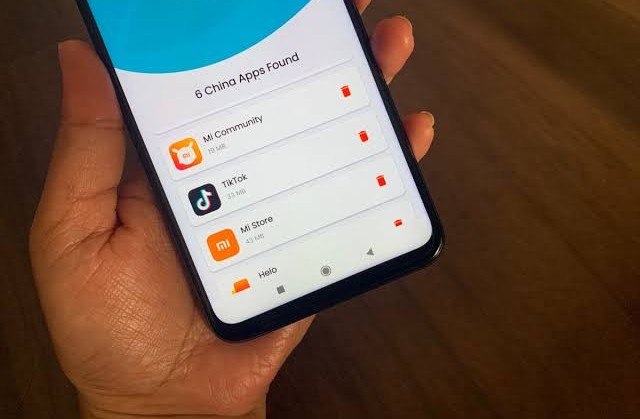
Remove China Apps now taken down from Google Play Store. Earlier today, we reported that the so-called India rival for TikTok — Mitron app — has been removed from Google Play Store. Indianexpress.com has now discovered that Google has removed Remove China Apps application from Play Store. The tech giant has not confirmed why the app has been taken down or if it will be available again or not.

The developer of the app — Jaipur based OneTouchAppLabs — took to Twitter to announce that the app has been suspended from Play store. However, even the firm didn’t confirm why the app has been removed.

Google usually removes apps that violate Play Store’s policies. The same happened to Mitron. A CNBCTV18 report noted that the tech giant ‘red-flagged the app and decided to suspend it for violating its ‘spam and minimum functionality’ policy’. ‘Another clause of the policy mentions a ‘repetitive content’, which means ‘copying content from other apps without adding any original content or value’ amounts to a violation,’ the report further stated.

If you have the Remove China Apps application already downloaded on your phone it will still work for you.

Mitron app removed from Play Store, here’s why

As the name suggests, Remove China Apps application lets users delete all applications on their phones that are developed in China. It scans the user’s device and lists the apps with China as their origin. The app also lets users decide which Chinese app they want to keep or remove.

Over one million people in India installed the application on their phone with the aim to delete Chinese apps present on their smartphone. In fact, until Tuesday morning it was the top-free app on Play Store.

full report here Remove China Apps: What is it?

Explaining how the app works Satyajit Sinha, a cybersecurity researcher at Counterpoint told indianexpress.com earlier that the Remove China Apps app just identifies the app developer’s country of origin by comparing it with the repository database of apps developed in China.

Sinha had also said the app is safe to use and one shouldn’t worry about downloading it on their Android smartphone. ‘The app scan focused on the installed android application package (APK) only. Hence, it doesn’t affect any change in stored personal data,’ he explained to indianexpress.com.

So, it’s surprising as to why Google removed the app from Play Store.

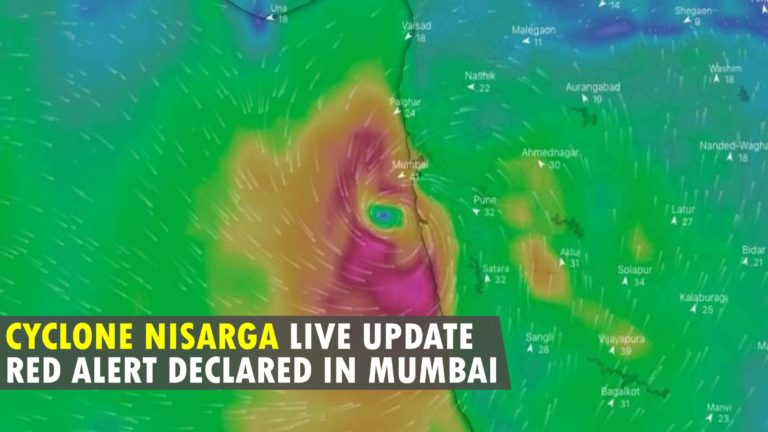
MUMBAI LIVE WEATHER CYCLONE NISARGA | SOURCE WINDY.COM

MUMBAI LIVE WEATHER CYCLONE NISARGA | SOURCE WINDY.COM

Travelling to Karnataka from Maharashtra or other states? What you need to know

0

All interstate travellers to Karnataka must register themselves on the Seva Sindhu online portal before entering the state.

The Karnataka government has released a set of protocols on May 31 for those who are travelling to the state as part of its phased reopening, Unlock 1.0.

Health screening of all inter-state travellers entering Karnataka will be carried out at the entry points, including border check-posts, airports, railway stations and bus stands. The state has issued special guidelines for travellers coming from Maharashtra, which has the highest number of COVID-19 cases in the country.

The standard operating procedure (SOP) comes after the state government issued an order on Sunday stating, “There shall be no restriction on inter-state and intra-state movement of persons and goods. No separate permission, approval or e-permit will be required for such movements.

The Karnataka government has mandated that all travellers must register themselves on the Seva Sindhu online portal before entering Karnataka. This is a registration process and does not require governmental approval.

Passengers will have to key in their name, address and mobile number. Business visitors should give additional details: Name, mobile number and address of persons in Karnataka they intend to meet. They should also have confirmed return flight/train ticket, which is not more than one or seven days after the date of arrival.

All symptomatic passengers coming from other states will be tested on arrival. Persons found to be positive will be shifted to a Dedicated COVID Hospital (DCH). If found negative, no further test would be required.

If the person is asymptomatic on arrival, he/she will have to follow 14-day home quarantine. Testing will be done if the person develops symptoms during this period. Those who do not have the facility or ideal environment for home quarantine (large family, no separate rooms, slum and overcrowded areas) will be taken to institutional quarantine.

Asymptomatic business travellers will be exempted from quarantine if they show confirmed return flight/train ticket, which is not more than seven days after the date of arrival, or the address proof of native state for those arriving by road.

All passengers from Maharashtra – symptomatic or asymptomatic – must undergo seven days of institutional quarantine, followed by seven days of home quarantine. While symptomatic persons will be tested on arrival, asymptomatic persons will be tested if he/she develops symptoms during the quarantine period.

Passengers who produce a coronavirus-negative test certificate from an Indian Council of Medical Research (ICMR)-approved lab, which is not more than two days old from the date of arrival, will be exempted from seven-day institutional quarantine. They can be asked to go for 14-day home quarantine.

Asymptomatic persons from Maharashtra who come in the special category – pregnant women, children aged below 10 years, elderly people aged above 60 years, those with serious illness and bereaved family members – can undergo 14-day home quarantine.

Business travellers must produce a confirmed return flight/train ticket, which is not more than seven days after from the date of arrival. Those travelling by road must show the address proof of the person he/she intends to meet in Karnataka.

Business travellers from Maharashtra will be exempted from quarantine if they show coronavirus-negative test certificate, which is not more than two days old. Those who cannot produce such a certificate will be sent for two-day institutional quarantine, during which COVID-19 test will be conducted at his/her own expense. If the result is negative, he/she will be exempted from quarantine.

Transit travellers who arrive in Karnataka, to proceed to other states, must provide their address in the destination state, and indicate their exit check post from Karnataka. They should show a flight/train ticket for the onward journey, which should not be more than one day after the date of arrival. Those travelling by road should provide identity proof and address proof in the destination state. A hand stamp saying “Transit Traveller” will be issued.

Wajid Khan, of composer duo Sajid-Wajid, dies at 42

Wajid Khan, of composer duo Sajid-Wajid has died at the age of 42. The news was confirmed by singer Sonu Nigam, who wrote in an Instagram post, “My brother Wajid left us.”

Music composer Salim Merchant told PTI, “He had multiple issues. He had a kidney issue and had a transplant a while ago. But recently he got to know about kidney infection… He was on the ventilator for the last four days, after his situation started getting worse. Kidney infection was the beginning and then he got critical.”

Earlier, entertainment journalist Faridoon Shahryar reported that Sonu confirmed to him that Wajid had coronavirus. “Sad News: Noted singer Sonu Nigam just confirmed to me that music composer Wajid Khan of Sajid-Wajid passed away a short while back. He was suffering from Covid 19,” he tweeted.

Starting their career in 1998 with Salman Khan-starrer Pyaar Kiya Toh Darna Kya, Sajid-Wajid scored music for many films of the superstar including Dabangg franchise, Chori Chori, Hello Brother, Wanted and Mujhse Shaadi Karogi. They had recently composed the actor’s single, Bhai Bhai, as well.


View this post on Instagram


My Brother Wajid left us.

A post shared by Sonu Nigam (@sonunigamofficial) on

Bollywood fraternity mourned the demise of the singer-composer. Actor Priyanka Chopra wrote on Twitter, “Terrible news. The one thing I will always remember is Wajid bhai’s laugh. Always smiling. Gone too soon. My condolences to his family and everyone grieving. Rest in peace my friend. You are in my thoughts and prayers. @wajidkhan7.”


Composer Salim Merchant wrote, “Devastated with the news of the passing away of my brother Wajid of Sajid -Wajid fame. May Allah give strength to the family. Safe travels bro @wajidkhan7 you’ve gone too soon. It’s a huge loss to our fraternity. I’m shocked & broken. Inna Lillahi wa inna ilayhi raji’un.”


Singer-turned-politician Babul Supriyo wrote, “Shocked to hear about the cruelly untimely demise of Wajid of the renowned Composer duo of SajidWajid•Incredible loss of a very very dear friend & a very very talented musical mind – a Gr8 sport….”


Singer Tulsi Kumar said that she was in ‘complete shock’ over the news. “This cannot be true ! I can’t believe that Wajid bhai has left us .. In state of complete shock ! Worked with u on so many songs and just met u a while ago @wajidkhan7 .. May your soul Rest In Peace. May god give strength to the family to bear this huge loss,” she wrote on Twitter.


Along with composing music for blockbusters such as Tere Naam, Mujhse Shaadi Karogi, Dabangg and Ek Tha Tiger, Wajid had also lent his voice to songs such as Hud Hud Dabangg, Jalwa and Fevicol Se.

Wajid along with his brother Sajid served as mentor on singing reality shows Sa Re Ga Ma Pa 2012 and Sa Re Ga Ma Pa Singing Superstar. They also scored IPL 4 theme song, Dhoom Dhoom Dhoom Dhadaka.

40 Million Children Aged 13 To 15 Years Using Tobacco Products Globally: WHO

The tobacco industry invests USD 9 billion every year to advertise its products targeting youngsters, with over 40 million children aged 13 to 15 years presently using nicotine items globally, the World Health Organization has warned.

The UN agency is focusing on spreading awareness among teenagers to mark World No Tobacco Day on Sunday. “More than 40 million young people today aged 13-15, have already started to use tobacco,” the WHO said, as it launched a kit for school students aged 13-17 to alert them about the marketing tactics of THE tobacco industry

“Every year the tobacco industry invests more than USD 9 billion to advertise its products.

Increasingly, it is targeting young people with nicotine and tobacco products in a bid to replace the 8 million people that its products kill every year,” the agency said.

Even during a global pandemic, the tobacco and nicotine industry is pushing its products, the WHO said, adding that these addictive substances limit people’s ability to fight coronavirus. “Educating the youth is vital because nearly nine out of 10 smokers start before 18 years. We want to provide young people with the knowledge to speak out against tobacco industry manipulation,” said Director for Health Promotion at WHO Ruediger Krech.

In a bid to prevent addiction among 13 to 17-year-olds, the agency has highlighted commonly used tactics to watch out for. It points out that smoking e-cigarettes and hookah pipes — marketed as “safer” alternatives to conventional cigarettes — is harmful, addictive, and increasing the risk of developing heart and lung disease.

The WHO also noted that the 15,000-odd flavours of tobacco items which are sold — such as bubble-gum and candy — are introduced in the market to attract youngsters who are likely to become serious nicotine-users later in life. Marketing strategies during the COVID-19 pandemic have included the offer of free branded masks and home delivery service during the quarantine.

The tobacco industry has also lobbied for its products to be listed as “essential”, the health agency said. With the view to reaching maximum young people, the WHO has also launched the #TobaccoExposed challenge on youth online platform TikTok, and welcomed social media partnerships with other platforms including Pinterest and YouTube.

The WHO has also launched a classroom activities kit that puts the students in the shoes of the tobacco industry to make them aware of how the manipulative tactics used by the industry. “Countries can protect children from industry exploitation by putting in place strict tobacco control laws, including regulating products like e-cigarettes that have already begun to hook a new generation of young people,” the WHO said.

(Image credits: WHO)

New academic calendar after central government’s guidelines: Karnataka minister S Suresh Kumar

0

By Express News Service

BENGALURU: Primary and Secondary Education Minister S Suresh Kumar on Saturday said the academic calender for 2020-21 will be chalked out as per the requirements of the state, after the Union Ministry for Human Resource Development (MHRD) issues guidelines.

The minister, however, remained silent on the dates of reopening of schools. Managements of pre-primary schools, who said they were under financial distress, have also written to the minister to allow them to start classes.

Speaking at a programme to distribute masks and sanitizers for SSLC students, the minister said, “The syllabus length and the duration of the academic year among other matters will be decided after assessing the requirements of the state.”

Sanitizers worth Rs 75 lakh, donated by the Embassy Group, and masks hand-stitched by teachers and cadets of Bharat Scouts and Guides, were distributed at the event.

PGR Sindhia, State Chief Commissioner of Bharat Scouts and Guides, said his team was glad to extend help during the pandemic. The articles were handed over to director of Karnataka Secondary Education Examination Board.

Lockdown 5.0 guidelines issued for phased-reopening of all activities for 1 month. Full List

Image Source : FILE

Lockdown 5.0 guidelines issued for phased-reopening of all activities for 1 month. Full List

The government has extended coronavirus lockdown till June 30. New guidelines have been issued for phased-reopening of all activities outside containment zones for the next one month. The current phase of re-opening, Unlock 1, will have an economic focus, the government said. The Ministry of Home Affairs (MHA) said that the lockdown measures have been relaxed in a graded manner, keeping the overarching objective of containing the spread of COVID-19 in view.

NEW MHA GUIDELINES

All activities that were prohibited earlier will be opened up in areas outside Containment Zones in a phased manner, with the stipulation of following Standard Operating Procedures (SOPs), to be prescribed by the Health Ministry:

In Phase I, religious places and places of worship for public; hotels, restaurants and other hospitality services; and shopping malls; will be permitted to open from June 8, 2020. Health Ministry will issue SOPs for the above activities, in consultation with the Central Ministries/ Departments concerned and other stakeholders, for ensuring social distancing and to contain the spread of COVID-19.

In Phase II, schools, colleges, educational/ training/ coaching institutions etc., will be opened after consultations with States and UTs.

State Governments/ UT administrations are being advised to hold consultations at the institution level with parents and other stakeholders. Based on the feedback, a decision on the re-opening of these institutions will be taken in the month of July, 2020. MoHFW will prepare SOP for these institutions.

Only a limited number of activities will remain prohibited throughout the country. These activities are: International air travel of passengers; operation of Metro Rail; cinema halls, gymnasiums, swimming pools, entertainment parks, theatres, bars and auditoriums, assembly halls and similar places; and, social/ political/ sports/ entertainment/ academic/ cultural/ religious functions/ and other large congregations. In Phase III, dates for their opening will be decided based on assessment of the situation.

Lockdown shall continue to be implemented strictly in the containment zones. These will be demarcated by the State/ UT Governments, after taking into consideration the guidelines issued by the Health Ministry. Within the containment zones, strict perimeter control shall be maintained and only essential activities allowed.

Unrestricted movement of persons and goods

There shall be no restriction on inter-State and intra-State movement of persons and goods. No separate permission/ approval/ e-permit will be required for such movements.

However, if a State/ UT, based on reasons of public health and its assessment of the situation, proposes to regulate movement of persons, it will give wide publicity in advance regarding the restrictions to be placed on such movement, and the related procedures to be followed.

Night curfew

Night Curfew shall continue to remain in force, on the movement of individuals, for all non-essential activities. However, the revised timings of the curfew will be from 9 pm to 5 am.

National Directives for COVID-19 management

National Directives for COVID-19 management shall continue to be followed throughout the country, with a view to ensure social distancing.

States to decide on activities outside Containment Zones

States and UTs, based on their assessment of the situation, may prohibit certain activities outside the Containment zones, or impose such restrictions as deemed necessary.

Protection for vulnerable persons

Vulnerable persons, i.e., persons above 65 years of age, persons with co-morbidities, pregnant women, and children below the age of 10 years, are advised to stay at home, except for meeting essential requirements and for health purposes.

Use of Aarogya Setu

The Aarogya Setu mobile application is a powerful tool built by Government of India to facilitate quick identification of persons infected by COVID-19, or at risk of being infected, thus acting as a shield for individuals and the community. With a view to ensure safety, various authorities are advised to encourage the use of the application.

Karnataka bans spitting of tobacco in public places, violators will be punished

0

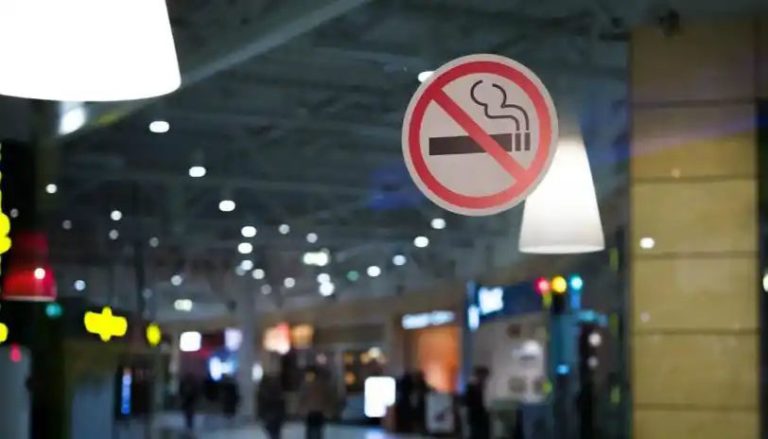
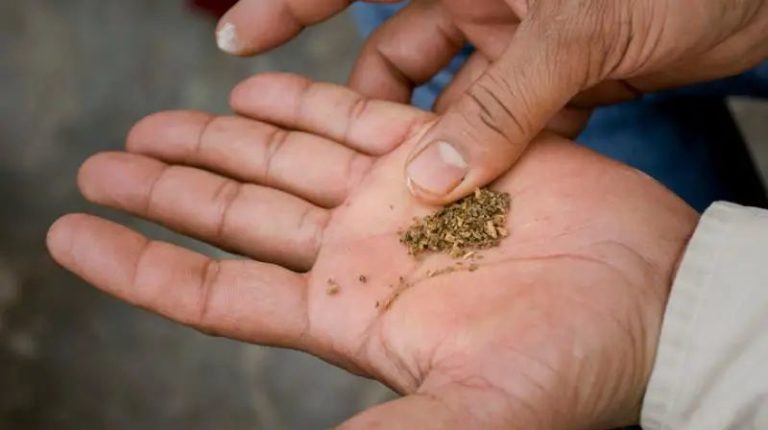
BENGALURU: In a welcome move, Karnataka has followed the footsteps of other states and Union Territories to curb the spread of Covid 19 has banned the use of smokeless tobacco products and spitting in public places.

The union ministry in the month of April had asked all the states and Union Territories to take measures to curb public usage of tobacco as it increases the chances of the Corona virus spread.

Additional secretary of Health and Family Welfare department in the order dated May 29 stated that the incidence of Coronavirus is on rise in the state and the guidelines of the World Health Organization and Indian Council of Medical Research have insisted a ban on the chewing tobacco products and spitting in public places.

“After going through their recommendations in depth, the state as per the powers conferred by the Karnataka Epidemic Diseases Ordinance 2020 section 4(2) A and Indian Penal Code 1860, the state to prevent the spread of Corona and other communicable diseases have banned the usage of chewing tobacco products and consuming pan masala products and spitting them in public places” the order read.

Those who found violating the order will be booked under IPC 188, 268, 269, 270 and action will be initiated against the violators.

It should be noted that the state had already banned the sale of single cigarettes and have been taking action for COTPA violations.

this year the Anti Tobacco Day will be observed on Sunday with the theme ‘To prevent the use of tobacco products and save the younger generations from the devious ways used by tobacco manufacturers’.