HRD Minister announces JEE, NEET dates, No decision on CBSE 10th,12th board exams

As the entire nation is under lockdown compelling the educational institutions such as schools colleges and universities to also halt their curriculums, Minister of Human Resource Development Ramesh ‘Nishank’ Pokhriyal ending the uncertainty of Engineering and Medical aspirants, has announced the dates of NTA JEE and NEET which are Engineering and Medical entrance exams respectively. The HRD Minister made the announcement while he was interacting with the students via a video conference. However, the government is yet to take any decision on dates for the pending CBSE Class 10, 12 board exams, Pokhriyal said.

According to Pokhriyal, JEE (MAIN) test will be held from July 18, 20, 21, 22 & 23. JEE (ADVANCED) to be held in August, while the medical entrance exam NEET to be held on July 26 says HRD Minister Ramesh Pokhriyal

The exams were postponed due to a nationwide lockdown announced to contain the COVID-19 spread. More than 15 lakh students across the country have registered for NEET this year, which is the gateway to medical colleges in India, whereas more than 9 lakh have registered for JEE Mains, the entrance exam for all other engineering colleges except IITs.

Karnataka 1st PUC Results 2020 LIVE Updates: Results to be declared at 10 am, how to get online

When will next academic session begins

The next session for these students is expected to begin by August while fresh admissions and sessions will begin from September. Earlier, these sessions start by July.

When to get results

According to the online portal SuVidya, the results for the PUC I February exams will be uploaded online at 10 am. The students can check results via results.bspucpa.com

Over 6.53 lakh appear for 1st PUC this year

Over 6.53 lakh (6,53,461) candidates have appeared for the exams of which over 2 lakh (2,00,801) are from arts, 2.48 lakh from commerce, and 2.04 lakh from science.

How to get results

The candidates will get their results via mail or SMS, unlike previous years when the results will be hosted at respective colleges.

Karnataka 1st PUC results 2020 today

The Karnataka government is all set to release the result for pre-university course (PUC) first year or class 11 level of exam on May 5. The result will be declared by the Dakshin Kanna Pre University Principals Association (DKPUCPA) as every year, however, this year, to ensure social distancing and other safety measures in time of coronavirus, the government will not host the result at respective colleges.

Karnataka 1st PUC Results 2020 LIVE: The results will be available via mail, sms, SuVidya portal. Representational image/ file

Karnataka 1st PUC Results 2020 LIVE: For those who could not clear exams, supplementary tests are held. This year, the exam date is yet to be an announced on the same. Several colleges and universities are contemplating having exams only for the final year students. The UGC had suggested holding exams in July, that too, for two hours instead of three.

However, these guidelines are applicable only if the situation gets better. For rest of the students, it is suggested should be promoted based on internal assessments.

Karnataka gains Rs 45 crore from liquor sales on first day of re-opening of shops

Image Source : PTI

Representational image

Scenes of jubilation were witnessed in Karnataka as alcohol shops re-opened after being closed since March 24, as people were seen bursting firecrackers to celebrate the so-called occasion. In Kolar, people were witnessed bursting firecrackers, apparently oblivious to the fact that the country was in the middle of a lockdown.

Towards the evening, Karnataka’s Excise Department said that liquor worth Rs 45 crore had been sold in the shops across the state till 7 PM, when the liquor shops have been ordered to be shut down. According to the Excise Department, 3.9 lakh litres of beer and 8.5 lakh litres of Indian-made liquor was sold on the first day of re-opening of liquor shops after being shut for over a month.

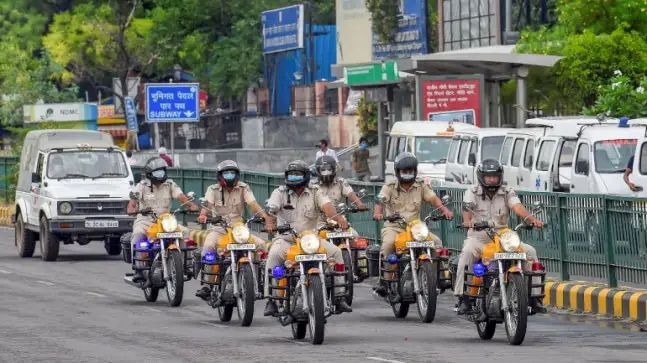
According to rules of the third phase of the lockdown, standalone alcohol shops in green, orange and red (non-containment) zones have been given permission to operate till 7 PM, as part of government’s strategy to open up the lockdown in a phased manner.

Will Withdraw Lockdown Relaxations From Areas Flouting Social Distancing Norms: Kejriwal

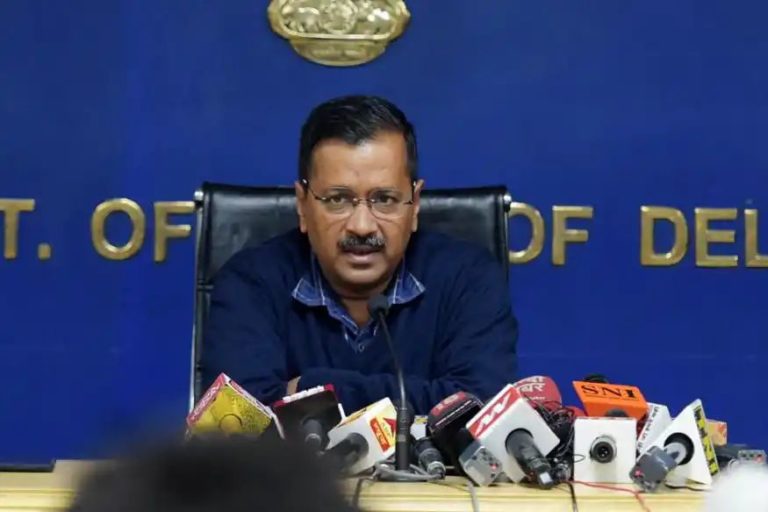
New Delhi: Chief Minister Arvind Kejriwal on Monday said the Delhi government will withdraw all lockdown relaxations from areas where people do not maintain social distancing.

The announcement comes amid reports of people flouting social distancing norms at liquor shops in many areas in the national capital which were re-opened on Monday as authorities allowed all activities permitted by the central government.

Kejriwal said it is sad that people were not maintaining the mandatory six feet or two metre distance from one another at some shops and requested everyone to not take any risk.

“Shops are not going to be closed. We will have to take strict steps. We all will have to behave like responsible citizens,” Kejriwal said while addressing an online media briefing.

The chief minister further said that if there is no compliance of social distancing norms outside a shop, the government will seal it.

“We have to defeat coronavirus. I appeal to people to wear masks, maintain social-distancing and sanitise their hands,” Kejriwal said.

Day 1: People make beeline at liquor shops

New Delhi: In a big respite for tipplers, all standalone liquor stores will open across Karnataka from Monday except in containment zones. Making the announcement Karnataka Excise Minister today said that shops will remain open from 9 am to 7 pm.

Meanwhile, the Delhi government has also launched an exercise to open liquor shops in those areas where such activity is allowed according to the latest guidelines issued by the home ministry. The excise department has already directed four government-run agencies, which are responsible to sell liquor in the city, to identify such outlets which fulfil all conditions prescribed by the Ministry of Home Affairs.

However, liquor shops will not be allowed in COVID-19 containment zones.

The Himachal Pradesh government has also allowed liquor vends to operate in the state from May 4.

This comes after the MHA in its latest guidelines allowed the sale of liquor, paan and tobacco after ensuring minimum six-feet social distancing while no more than five people will be allowed inside a shop at a time. These shops should not be located in markets and malls in urban areas.

In rural areas, all shops are permitted to remain open without any distinction of essential and non-essential. However, consumption of liquor, paan, gutka, tobacco etc., is not allowed in public places during the lockdown.

As per the MHA’s notification, barbershops and salons located in green and orange zones will also be allowed to open from Monday apart from the sale of non-essential items by e-commerce platforms during the third phase of the lockdown which will be in force till May 17.

In red zones, e-commerce companies are allowed to sell only essential commodities.

Sale of liquor, the opening of barbershops and salons were not been allowed during the first two phases of lockdown, which started on March 25. As per the health ministry report, there were 130 ‘Red’ zones in the country with a maximum of 19 in Uttar Pradesh, followed by 14 in Maharashtra while the number of ‘Orange’ Zones was 284 and ‘Green’ was 319.

All the districts of the national capital have been put under ‘Red’ zone.

Liquor shops, domestic helps, salons: What’s allowed, what’s not in lockdown 3.0 from today

The extended the lockdown is entering the third phase from Monday and according to the new set of guidelines issued by the Ministry of Home Affairs (MHA), there will be considerable relaxations across the country except for the hotspots or containment zones. The Centre has divided the country into three zones and the relaxations have been made according to the severity of coronavirus in the areas.

Ahead of the lockdown extension, the Union Health Ministry had divided the country into Red, Orange and Green Zones. These three different zones will witness relaxations to different degrees and these will continue till May 17.

WHAT’S ALLOWED, WHAT’S NOT FROM TODAY:

1. Public activities will remain prohibited throughout the country irrespective of the zone divisions.

Air, rail and travel by Metro will remain banned like the first two phases of the lockdown. Inter-state movement on roads will also remain banned.

2. Air, rail and road travel will be allowed only for special purposed and with permission from the Ministry of Home Affairs.

3. Schools, colleges, and other educational, training and coaching institutions will continue to remain prohibited from functioning, across the country. Hospitality services, including hotels and restaurants, will also not be allowed to reopen across the country.

4. Places that see large-scale public gatherings such as cinema halls, malls, gymnasiums, sports complexes etc will continue to remain shut. The government has also banned all social, political, cultural and other kinds of gatherings. Religious gatherings and worshiping in public places have also been banned.

5. The MHA has banned movement of individuals for all non-essential activities in all three zones from 7 pm till 7 pm. These movements will be allowed from 7 am till 7 pm. However, these rules do not apply for containment zones, where all movement will remain prohibited.

6. In the Green Zones and Orange Zones across the country, barber shops, spas and salons will be allowed to reopen from today.

7. Sale of non-essential items by e-commerce companies such as Amazon and Flipkart has been allowed in the Green and Orange Zones in the country. These relaxations do not apply for the Red Zones.

8. Liquor shops have been allowed to reopen from today in all Red, Orange and Green Zones, but with a set of guidelines. Liquor shops that are not located inside markets and malls are the only ones that will be allowed to reopen. These are standalone liquor shops. These shops have also been asked to follow certain guidelines of social distancing to prevent spread of coronavirus.

9. The government has prohibited people above the age of 65 years, those with underlying health conditions, pregnant women, and children below 10 years from venturing out. Only exception for these people to go out is for essential and health purposes.

10. Outdoor patient departments at hospitals and clinics in all three zones will be reopened from Monday but with strict social distancing norms and precautions. These will continue to remain prohibited in containment zones.

11. All goods traffic will be permitted and no state or UT shall stop the movement of cargo for cross land-border trade under treaties with neighbouring countries.

12. In Red Zones (outside the containment areas), some additional activities are prohibited: plying of cycle rickshaws and auto-rickshaws, taxis and cab-aggregators; intra-district and inter-district buses; barber shops, spas and saloons.

13. Certain other activities have been allowed in the Red Zone with restrictions: Movement of individuals and vehicles for permitted activities with a maximum of 2 persons (besides the driver) in four-wheelers, no pillion rider on two-wheelers.

14. Domestic helps such as maids, drivers and cleaners have been allowed to go to work, however, their commute will be a hurdle. On domestic helps in red zones, resident welfare associations will have to take a call on allowing in outsiders.

15. Industrial establishments in urban areas, like Special Economic Zones (SEZs), Export Oriented Units (EOUs), industrial estates and industrial townships with access control have been permitted from Monday in all zones, except containment areas.

16. Private offices can operate in red zones with up to 33 per cent strength with the remaining staff working from home.

17. In Orange zones, and taxi and cab aggregators (driver with 2 passengers only) have been allowed.

18. Inter-district movement of people and vehicles for permitted activities, 4 wheelers with 2 passengers besides driver, pillion riding on 2 wheelers are allowed.

19. In Green zones, all activities are permitted except the ones prohibited throughout the country, irrespective of the zone.

20. Buses can operate with upto 50 per cent seating capacity and depots too at 50 per cent.

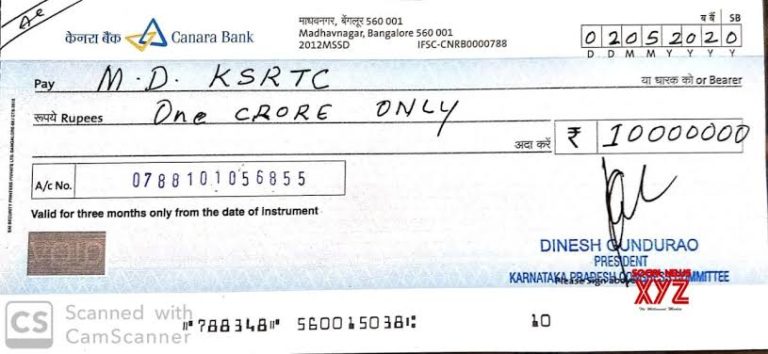
Karnataka Congress pays Rs 1 crore for migrants’ bus fare

Image Source : PTI

Karnataka Congress pays Rs 1 crore for migrants’ bus fare

Accusing the ruling BJP government of cheating hundreds of migrant workers by first over-charging and collecting single journey fare from them, the Karnataka Congress donated Rs 1 crore to the state-run transport service to send the stranded workers to their native place free, a party official said on Sunday.

“Our party’s state unit president D.K. Shivakumar gave Rs 1 crore through cheque to the Karnataka State Road Transport Corporation (KSRTC) towards the cost of bus fare for sending the migrant workers to their native places across the state from Bengaluru,” party’s spokesman Ravi Gowda told IANS.

In a damage control exercise, state chief minister B.S. Yediyurappa on Saturday directed the KSRTC to charge only single fare for ferrying the migrant labourers to their home and not to charge to and fro, as the state would bear its operational cost.

“The state government has been insensitive to the plight of the migrant workers belonging to our state itself, as they have been left in the lurch with no local transport to reach the intra-bus/inter-bus terminal in the city centre and enough buses to send them to their native place,” Gowda lamented.

With the extended lockdown norms further relaxed, the state government has allowed the migrant workers in the cities across the southern state to return to their native place in special buses within the state and special trains to other states since Saturday.

“Though hundreds of migrant workers rushed to the terminal in the city centre in private vehicles, KSRTC failed to arrange enough buses to send them to their native place across the state. Many waited till late night without food and water to board the special buses to their native place,” Gowda alleged.

The party’s state unit cadres arranged free food and water to all the migrants who boarded the buses belatedly to their home towns and villages.

On the reported delay in arranging buses for the migrant labourers, a KSRTC official told IANS that due to operational and logistic reasons, some buses were late in reaching the terminal as they were parked in different depots during the nearly 40-day lockdown since March 25, enforced to prevent the coronavirus spread across the state.

According to the state labour department, about 2 lakh migrant workers have been stranded in relief camps in cities and border areas across the state, with 80,000 of them in this tech city as buses and train services were suspended since March 25 due to the lockdown.

Coronavirus lockdown: Karnataka announces free bus travel for labourers

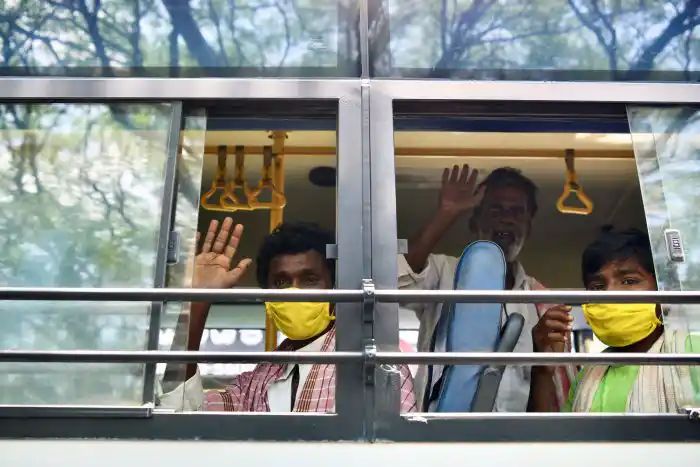
The Karnataka government on Sunday announced that migrant labourers returning home could travel for free for the next three days on state-run buses.

A release by the Chief Minister’s Office said that the decision would be applicable till Tuesday and KSRTC buses would not charge any fares to migrant labourers wanting to return to their native districts within the state.

The order came after widespread criticism against the government’s decision to levy high ticket charges for labourers returning home, which was subsequently reduced on Saturday.

A day later, however, the government decided to ensure free transport facilities for their benefit.

Karnataka CM B S Yediyurappa has urged the labourers to maintain social distancing at the bus station and assured adequate facilities would be provided for them..

‘Indian Banks’ Association introduces new norms till May 11 to withdraw money

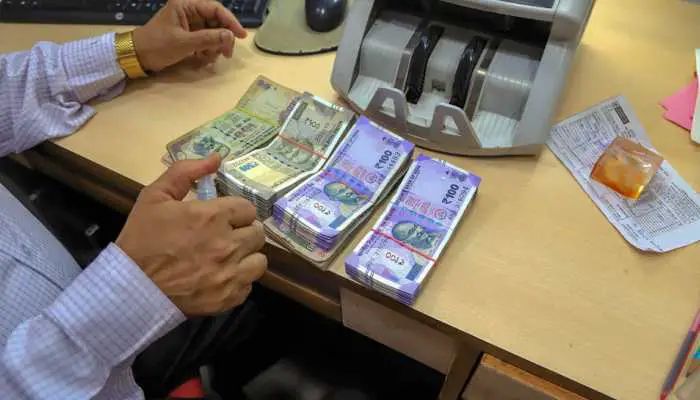
The Indian Banks’ Association on Saturday introduced new norms to withdraw money from banks amid coronavirus COVID-19 lockdown. The IBA has asked customers not to rush into banks as it wants customers to reduce their bank visits and do more work through electronic transactions.

In order to avoid crowds and follow social distancing, banks have assigned specific dates to withdraw money. This arrangement has been made based on the last number of the account numbers of bank customers.

As per this new norm, those bank customers having 0 and 1 as the last digits of their bank account numbers will be allowed to withdraw money on May 4. Similarly, those bank customers who have 2 and 3 as the last digits of their bank account numbers will be allowed to withdraw money on May 5; those with 4 and 5 can withdraw on May 6.

Bank customers having 6 and 7 as the last digits of their bank account numbers can withdraw on May 8; those with 8 and 9 can withdraw the amount on May 11.

However, this arrangement is applicable till May 11 after which the restrictions of account numbers and dates will get lifted and anyone can withdraw money on any day.

This has been done because in April, a large number of people formed a queue in front of the banks to withdraw money and social distancing could not be followed. The Indian Bank Association has also asked customers to withdraw money from any ATM as there will be no charge for it.

Apart from this, under the Pradhan Mantri Garib Kalyan Yojana, Rs 500 is being deposited in the accounts of women. The banks have advised that the money is safe in the accounts urging customers not to make a rush to withdraw. The installment for April has been added to the women’s account and the installment for May is under process.

75-yr-old woman beggar donates Rs 5,000 for fight against Covid-19 pandemic

A 75-year-old woman in Odisha who begs for a living has donated Rs 5,000 of her savings to the Chief Minister’s Relief Fund in their fight against Covid-19 pandemic.

Sarojini Das, resident of Ekatala village in Rajkanika block, went to the BDO’s office on Tuesday and donated her savings to BDO DS Subhadarshi Joshi as her contribution to CMRF for the fight against corona pandemic. Das, a widow, also donated Rs 2,000 to the local press club that is providing cooked food to the poor and destitute people in the locality.

The BDO (Block Development Office) said Das has set an example for other people of the state by her selfless act.

‘She said she was moved by the plight of several other people going hungry during the lockdown. After she came to know about the state government’s appeal to people to donate money to fight the pandemic, she decided to donate the money,’ he said. The woman lost her husband a decade ago.

Incidentally, in October last year Das had donated Rs 50,001 from her old age pension and savings to the Jagannath Temple corpus at Puri. The BDO said that she had a patch of land which she had sold off 5-6 years ago and kept the money. ‘As she has no children, she did not use the money. She probably donated the money to the Jagannath temple from that amount,’ he said.

When asked what the state government would do for Das, the BDO said the government would think about it.

Das has no children and ekes out her living by begging in the locality and sleeps in a room of the Jagulaipada grampanchayat office. Incidentally, after the grampanchayat office was turned into a quarantine centre, the woman was forced to look for shelter in other places.

Subhransu Sutar, a member of the local press club, said Das always remains happy even during adversity. ‘Even when she has to beg for food, she thinks of others going hungry,’ said Sutar.