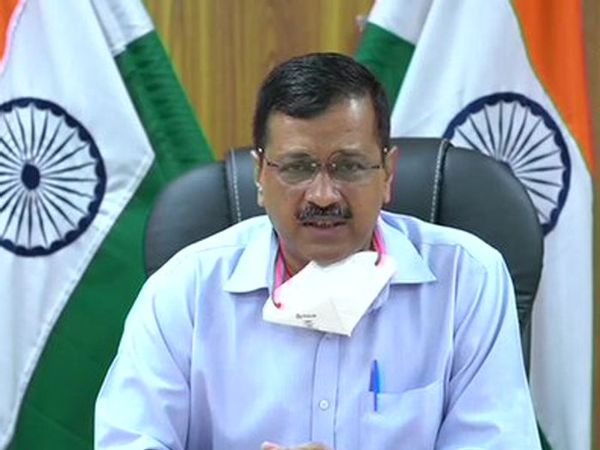
‘If home delivery of pizza, smartphones possible…’: Kejriwal as AAP, Centre spar over doorstep ration scheme

KEY STORY

  • Delhi Chief Minister Arvind Kejriwal on Sunday accused the Centre of halting the “revolutionary” doorstep delivery of ration scheme, saying that the Delhi government took approval for it five times.
  • “Just two days before the implementation of the doorstep delivery of ration scheme in Delhi, the Central government stopped it. They claim we didn’t take approval. We took approval from the Centre not just once, but five times. Legally, we don’t need Centre’s approval for launching such a scheme but we did so to avoid any dispute,” the Chief Minister said at a virtual press briefing.
  • The Chief Minister also said that the ration delivery scheme should be implemented across India otherwise ration shops will act as superspreaders.
  • “Our government had completed the preparatory work for the implementation of the scheme. The Centre has stalled this revolutionary scheme suddenly. Why it has been stopped? The nation wants to know,” he asked.
  • He further asked if home delivery of pizza, burger, smartphones, and apparel is possible then why can’t ration be delivered at the doorstep of poor people.
  • Kejriwal appealed to Prime Minister Narendra Modi to not stall the scheme, saying that “politics over matters meant for the country’s benefit” should be avoided.
  • “I request you (PM Modi) with folded hands on behalf of Delhi’s 70 lakh poor people, please don’t stop this scheme (Doorstep Delivery of Ration). It is in the interest of the nation. We need to be united amid the COVID-19 crisis,” he added.

AAP VS Centre over ration scheme

On Saturday, the Chief Minister’s Office (CMO), in a statement, claimed the lieutenant governor returned the file on June 2 stating the scheme cannot be implemented.
The Central government, however, refuted the allegation as “baseless” and claimed the lieutenant governor has not rejected the proposal as was being “portrayed” by the Delhi government, sources privy to the development told PTI.
The Delhi government was all set to launch the doorstep delivery of ration scheme within one to two days, benefiting 72 lakh poor beneficiaries, said the CMO statement.
Earlier, the name of the scheme — ‘Mukhyamantri Ghar Ghar Ration Yojana’ — was dropped by the Delhi government after the Centre’s objection.
Under the scheme, every beneficiary was entitled to receive 4 kg of flour and one kg of rice cleaned and packed at their doorstep.

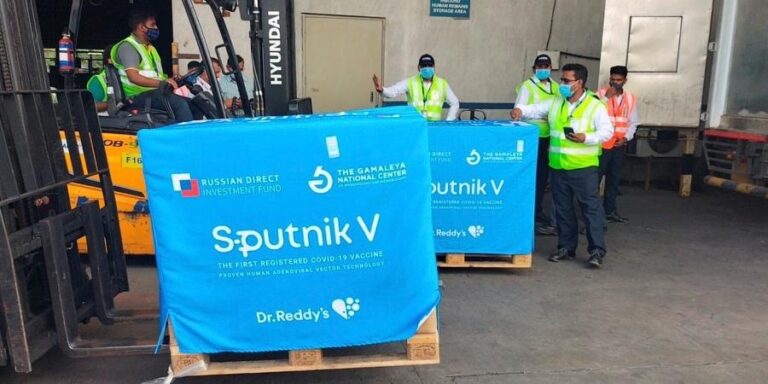
Manipal Hospitals collaborates with Dr Reddy’s to include Sputnik V in its vaccine portfolio

KEY STORY

  •  Leading hospital chain Manipal Hospitals on Sunday said it has collaborated with Dr Reddy’s Laboratories to add the Sputnik V COVID-19 vaccine in its existing vaccine portfolio that consists of Covishield and Covaxin.
  • The roll-out of the Sputnik V vaccine by Manipal Hospitals in Bengaluru is part of the limited pilot soft launch initiated by Dr Reddy’s in Hyderabad last month, Manipal Hospitals said in a statement.
  • “Manipal Hospitals has worked closely with Dr Reddy’s to create the state-of-the-art infrastructure to maintain Sputnik V vaccine,” Manipal Health Enterprises Chief Operating Officer Karthik Rajagopal said.
  • He added that the hospital chain has successfully conducted vaccination drives with Covishield and Covaxin across the country till date and will continue the efforts along with the new addition of Sputnik V.
  • Manipal Hospitals expects the vaccine to be available for the public soon in the latter half of the month, Rajagopal said.

CONCLUSION

  • “We are pleased to collaborate with Manipal Hospital in Bengaluru as we scale up our soft pilot launch of the Sputnik V vaccine in India and extend it to more cities ahead of the commercial launch later in June.
  • “In the upcoming months, we hope to inoculate as many Indians as possible,” Dr Reddy’s Branded Markets (India and Emerging Markets) CEO M V Ramana said.

Avika Gor shares boyfriend Milind Chandwani helped in her personal growth: ‘I started to feel better’

KEY STORY

  • Avika Gor and Milind Chandwani made their relationship status public in November last year. While the two never shy away from expressing love for each other in their social media posts, the Balika Vadhu fame actor recently opened up about the same in an interview.
  • Avika shared that she made her relationship official with Milind only after her parents were okay with it. “So the idea of always being open, something that I had learnt from my parents. They have always been very open. They are like my best friends and I can share anything and everything with them. And that is what made me feel that if I can do that with them, if I am okay telling them then what am I even hiding it for. If they know, then my world knows and that’s okay with me and that’s okay with them, so why not the entire world,” shared the actor in her interview with Pinkvilla.
  • “I have always wanted to have a person in my life that I am proud of. And the fact that we are together and we see our future together, the idea itself…. I am very very proud of, deep in my heart, I know this is it. Then there was no doubt, no hesitation before talking about it or sharing about it because one thing is for sure, when a person is happy, everybody around can see it, everybody in your life will notice that happiness, that change. With me, it was a lot of growth that happened when Milind entered my life, not just personally feeling better about everything but mentally I started to understand things better, I started to feel better. The minute we were confident about it, we thought it’s okay sharing this with the world,” said the actor.

INSTA POST

MILIND INSTA POST

Avika Gor and Milind Chandwani had shared earlier that they are not getting married anytime soon.

Chrome to get new ‘Safe Browsing’ features: All you need to know

KEY STORY

  • Google will soon roll out a new Chrome 91 update, which will add new ‘Safe Browsing’ features. The new update will help Chrome users choose better extensions and will offer enhanced protection against downloading malicious files on the web.
  • So, if you download an unsafe extension, Chrome will alert you via a dialogue box. Google says the extensions built using the Chrome Web Store Developer Program Policies will be considered trusted by Enhanced Safe Browsing.
  • If you enable the ‘Enhanced Safe Browsing’ option, Google will do a check on every file you downloaded on Chrome and will alert you if it is malicious.
  • Google is yet to roll out these two features and users will soon get them with the Chrome 91 update. Until then, you can enable the existing ‘Safe Browsing’ features. The tool can predict and warn you about dangerous events before they happen, as per Google.
  • The company says the “web browser can be used to improve your security in other Google apps when you are signed in.” The current ‘Safe Browsing’ tool can also warn you if passwords are exposed in a data breach.
  • It can send URLs to ‘Safe Browsing’ to check them. Additionally, it sends a small sample of pages, downloads, extension activity, and system information to help discover new threats, as per Google. “Temporarily links this data to your Google Account when you’re signed in, to protect you across Google apps,” the company said.

CONCLUSION

  • “Since the initial launch, we have continuously worked behind the scenes to improve our real-time URL checks and apply machine learning models to warn on previously unknown attacks. As a result, Enhanced Safe Browsing users are successfully phished 35 percent less than other users,” Google said in a blog post.
  • You can enable the ‘Safe Browsing’ option by visiting the Settings section. Then, go to Privacy & Security and tap on ‘Security.’ Now, tap on Enhanced protection, which is listed under Safe browsing section.

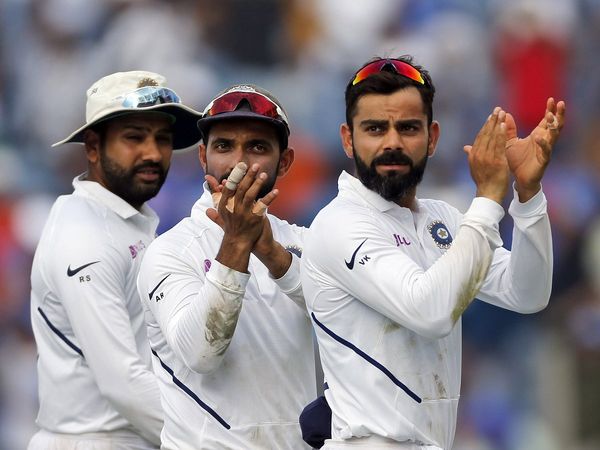
‘Man to man, India looks the better team’: Dilip Vengsarkar names Virat Kohli & Co. favourites for WTC final

KEY STORY

  • The conditions in Southampton might suit New Zealand better in the upcoming World Test Championship (WTC) final but former India batsman Dilip Vengsarkar feels team India will enjoy an edge over Kane Williamson & Co. Vengsarkar believes India have a better side compared to New Zealand with a quality batting and bowling attack.
  • While India are currently placed at the top spot in the ICC Test rankings, New Zealand are at the second spot. The top two teams will lock horns in what is expected to be a blockbuster of a final at the Rose Bowl in Southampton.
  • Despite New Zealand gaining some advantage over India by playing a two-match Test series against England currently, Vengsarkar is giving ‘all-round’ India an upper hand.
  • “If you compare the New Zealand team to the Indian team, man to man, India looks the better team,” Vengsarkar told Khaleej Times.
  • “Of course, Trent Boult is a world-class bowler and Kane Williamson is a world-class batsman. But India is a more all-round team. We have got quality spinners (Ravichandran Ashwin and Ravindra Jadeja), we have got quality fast bowlers (Jasprit Bumrah, Ishant Sharma, Mohammed Shami, and Mohammed Siraj) and quality batters as well,” he explained.
  • Vengsarkar has urged the Indian batsmen to step this time around and support the likes of Kohli and Rohit Sharma in the final. Kohli fought like a lone warrior on India’s last tour of England where he notched up a staggering 593 runs in the five-match Test series while other Indian batsmen failed to churn out runs consistently.

CONCLUSION

  • With Kohli not in the best of form ahead of the final, a lot will depend on the likes of Cheteshwar Pujara, Rishabh Pant, Rohit, and Ajinkya Rahane among others.
    “There are talented players in the (Indian) team. Virat Kohli, Rohit Sharma, they are world-class cricketers. But it is also important for other players to chip in, you know, because you can’t depend only on two players. If you are playing Test match cricket, everybody has to contribute,” said Vengsarkar.

Hyponatremia or low sodium syndrome: Did you know drinking too much water can kill as electrolytes level dips?

KEY STORY

  • You may have heard of the water-drinking contest held by a radio station in the US in 2007 that caused the death of a woman named Jennifer Strange. The radio station was fined $16.5 million in the compensation payable to the dead woman’s husband following the wrongful death lawsuit.
  • Strange suffered hyponatremia, or acute water intoxication. Immediate medical care might have saved with an IV sodium drip to counteract the water, the doctor testified. She had been drinking water for nearly three hours without urinating during the January 12, 2007 contest. She died of water poisoning.

    Water-poisoning! Really? And Hyponatremia! Now, what’s that?

  • That case really made people sit up and realise that there is something such as water poisoning and Hyponatremia – a condition that occurs when the concentration of sodium in your blood is abnormally low. Sodium is an electrolyte, and it helps regulate the amount of water that is in and around your cells.
  • In hyponatremia, one or more factors — ranging from an underlying medical condition to drinking too much water — cause the sodium in your body to become diluted. When this happens, your body’s water levels rise, and your cells begin to swell. This swelling can cause many health problems, from mild to life-threatening, says the Mayo Clinic website.
    Hyponatremia and the low sodium connection:
    Sodium plays a key role in your body. It helps maintain normal blood pressure, supports the work of your nerves and muscles, and regulates your body’s fluid balance. A normal blood sodium level is between 135 and 145 milliequivalents per litre (mEq/L). Hyponatremia occurs when the sodium in your blood falls below 135 mEq/L.

    What can cause Hyponatremia or dangerously low sodium in blood:

    1. Certain medications. Diuretics, antidepressants and pain medications, etc can interfere with the normal hormonal and kidney processes that keep sodium concentrations within the healthy normal range.
    2. Heart, kidney and liver problems. Congestive heart failure and certain diseases affecting the kidneys or liver can cause fluids to accumulate in your body, which dilutes the sodium in your body, lowering the overall level.
    3. Syndrome of inappropriate anti-diuretic hormone (SIADH). In this condition, high levels of the anti-diuretic hormone (ADH) are produced, causing your body to retain water instead of excreting it normally in your urine.
    4. Chronic, severe vomiting or diarrhoea and other causes of dehydration. This causes your body to lose electrolytes, such as sodium and increases anti-diuretic hormone levels.
    5. Drinking too much water. This happens when a person runs a marathon or a triathlon, for example – and loses a lot of sodium through sweat. Simultaneously, he or she is also drinking too much water during endurance activities… this can also dilute the sodium content of your blood as drinking excessive amounts of water can cause low sodium by overwhelming the kidneys’ ability to excrete water.
    6. Hormonal changes. Adrenal gland insufficiency (Addison’s disease) affects your adrenal glands’ ability to produce hormones that help maintain your body’s balance of sodium, potassium, and water. Low levels of thyroid hormone also can cause a low blood-sodium level.
    7. The recreational drug Ecstasy. This amphetamine increases the risk of severe and even fatal cases of hyponatremia.
    8. Age. In old age, certain medications, body changes, etc. as well as setting in of chronic disease can alter the body’s sodium balance.
    9. Certain drugs. Prescription medicines such as diuretics as well as some antidepressants and pain medications and banned (so-called recreational) drugs such as Ecstasy have been linked to fatal cases of hyponatremia.
    10. Conditions that decrease your body’s water excretion. People with kidney disease, heart failure, etc need to stay on alert about Hyponatremia.
    11. Sportspersons who undertake physical activities. People who drink too much water while taking part in marathons, ultramarathons, triathlons and other long-distance, high-intensity activities are at an increased risk of hyponatremia. They should consult their doctor and ensure that they consume the electrolytes that the doctor prescribes, mixed with water so that they do not suffer Hyponatremia.
    How much water can one safely drink?
    According to the Mayo Clinic, the US National Academies of Sciences, Engineering, and Medicine has determined that an adequate daily fluid intake is:
    • About 15.5 cups (3.7 litres) of fluids a day for men
    • About 11.5 cups (2.7 litres) of fluids a day for women
    These recommendations cover fluids from water, other beverages and food. About 20% of daily fluid intake usually comes from food and the rest from drinks. Basically, listen to your body. Drink when you feel thirsty. Stop when your body tells you that you have had enough. Healthy individuals do not need outside indicators, mostly. Those with underlying conditions must check with their doctors or dietitians.
    Disclaimer: Tips and suggestions mentioned in the article are for general information purpose only and should not be construed as professional medical advice. Always consult your doctor or a dietician before starting any fitness programme or making any changes to your diet.

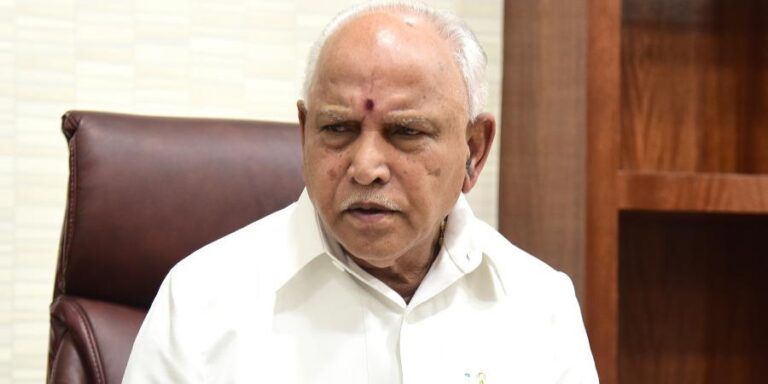
Covid positivity rate below 5% must to get curbs lifted: Yediyurappa

KEY STORY

  • As the number of Covid-positive cases are coming down in Karnataka, the State Government is likely to relax lockdown restrictions in districts with a positivity rate below 5 per cent, Chief Minister BS Yediyurappa indicated on Saturday.
  • He said that the government will review the situation after four or five days and then take the decision. The government on Thursday extended the lockown till June 14 and the process of lifting the restrictions is likely to start only after that.
  • Fifty days after the second wave started in the State, the positivity rate has fallen below 10 per cent and on Saturday, it hit 9.69 per cent. Data from the Health Department showed that it has come down from a high of 32.73 during May 8-May 14 and 12.23 per cent between May 29 and June 4.
  • In Bengaluru too, the positivity rate has gone down from 32.89 per cent during May 8-May 14 to 6.96 per cent during May 29 to June 4. The Health Department is targeting micro-pockets within districts that have recorded a higher number of Covid cases. As on Saturday, the State had 2.68 lakh active cases.

    Mysuru logs highest Covid positivity rate


  • Of the 30 districts (the Health Department still considers Vijayanagar as part of Ballari district), Bidar, Kalaburagi and Haveri have reported less than 5% positivity rate, while Yadgir, Bengaluru Urban and Ramanagara have less than 7%. Mysuru has the highest positivity rate at 30.54%.
  • Dr KV Thrilok Chandra, Commissioner, Department of Health, said that though some districts are showing lesser positivity rate, few pockets within those districts are reporting higher numbers. “We are micromanaging these pockets,’’ he said.

    aid to construction workers

    Chief Minister B S Yediyurappa on Saturday launched an initiative of depositing D3,000 each into the bank accounts of 25 lakh construction workers as part of Covid-19 relief announced under the first package. A sum of D749.55 crore has been earmarked for this purpose.

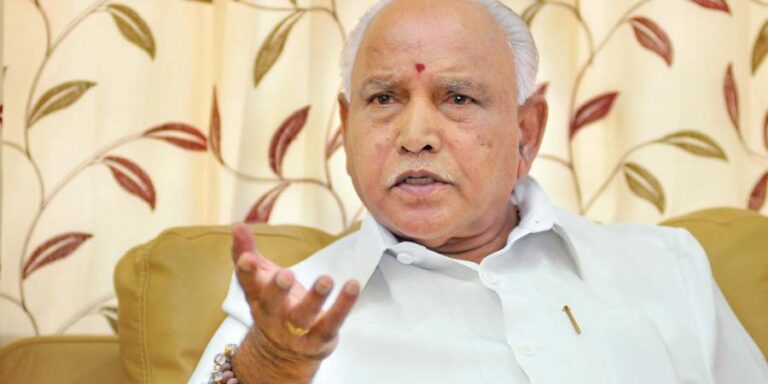
‘Will quit as CM the day central leadership asks me to’: Yediyurappa on replacement speculations

KEY STORY

  • Breaking his silence for the first time over murmurs of leadership change in the state, Karnataka chief minister BS Yediyurappa on Sunday said he will resign from his post the day central leadership of the BJP asks him to.
  • The strong and clear statement from the 78-year-old chief minister comes days after BJP Vice-President and his son BY Vijayendra met Party’s national president JP Nadda.
  • This also comes a day after National General Secretary of the BJP CT Ravi insisted that Yediyurappa will complete his term in office.
  • “I will continue as the Chief Minister till the day Delhi high command has confidence in me. The day they tell me I have to quit, I will resign and involve myself entirely towards working for the welfare of the State. My stance is clear. They have given me a chance and I am trying to use it to the best of my abilities. Rest of it is left to the Central leadership” BS Yediyurappa said when asked about attempts to unseat him.

CONCLUSION

  • He even added that lack of alternatives, if he were to resign as Chief minister, would not be a problem.
  • “There will always be an alternative in any State across the country. I don’t believe that in Karnataka there are no alternatives. I will continue as Chief Minister till central leadership has trust in me,” Yediyurappa added, insisting that he will not comment on public attacks against him by the likes of minister CP Yogeshwara or quiet attempts to unseat him by a few MLAs of the party.

The best foods for heart health? These 10 foods impact your overall heart health, chances of diabetes, stroke

KEY STORY

  • We often hear that certain foods are good for our heart and another set is bad. We are told that some foods send us hurtling towards diabetes and some others bring on a stroke.
  • Medical authorities in the United States wanted to find out the individual association of dietary factors with specific cardiometabolic diseases that are not already well established.
  • They planned to figure out the associations of intake of 10 specific dietary factors with mortality due to heart disease, stroke, and type 2 diabetes (cardiometabolic mortality) among US adults.
  • The study found in 2012 that eating suboptimal levels of 10 foods or nutrients — too much of some and not enough of others — was associated with more than 45% of deaths due to type 2 diabetes, heart disease, and stroke.

    A word of caution:


  • The Harvard Medical School’s Harvard Health Publishing that published a piece on the study and its findings also put out a word of caution, though. As with any study, there are some limitations, it said.
  • The comparative risk model is not a cause-and-effect model, and it does not prove that changing intakes of these foods and nutrients would reduce CMD disease risk.
  • In addition, the health effect of each food or nutrient on an individual could be affected by a number of factors including other dietary habits, age, sex, level of physical activity, and genetics.
  • Still, it is safe to say that everyone has some room for improvement in their diet. It advises what one must eat for better heart health and to reduce the chances of being struck by diabetes or stroke:

    Foods that you must consume and how much:

    Nuts and seeds: Goal = 1 ounce (1/4 cup) per day. Add to oatmeal, whole-grain cereal, or salads. Try 1/4 cup as an afternoon snack.
    Seafood: Goal = 12 ounces per week. Make a sardine or tuna sandwich during the week. Grill or broil seafood kabobs for dinner. Order fish when you eat out.
    Vegetables: Goal = 5 servings per day (1 serving = 1 cup raw or 1/2 cup cooked veggies). Steam, grill or stir-fry vegetables to preserve all their nutrients, or eat them raw. Fill at least half your plate with vegetables. The Tsimane – an Amazonian indigenous tribe – is an example of how a diet of vegetables and fruits protects our brain and heart for far longer a time than eating processed foods allows us to.
    Fruits: Goal = 4 servings per day (1 serving = 1 medium fresh fruit). Try to have fruit at each meal or between meals. Frozen fruit is also a good option. You must take a look at this Harvard study that promotes the “two fruits & 3 vegetables a day” diet for longevity with good health.
    Whole grains: Goal = 4 servings per day (1 serving = 1 slice whole-grain bread or 1/2 cup cooked whole grains). Try a variety of whole grains such as barley, millet, quinoa, bulgur, brown rice, or farro. Make ahead, keep refrigerated, and heat for a warm side or add cold to a salad. Indian options would be
    • Rajgira or Amaranth: …
    • Kuttu or Buckwheat: …
    • Sabudana or Pearl Sago: …
    • Lapsi or Broken Wheat or Dalia: …
    • Barley or sattu or jau:
    • Ragi or Millet: …
    • Bajra:
    • Jowar or Sorghum:
    Polyunsaturated fats in place of saturated fat or carbohydrates: Goal = replace at least 11% of calories from saturated fat or carbohydrates with calories from polyunsaturated fats (the equivalent of about two tablespoons of a healthy oil for someone consuming 1,800 calories per day). Try healthy oils such as canola or olive oil in place of butter. Eat a small spoonful of nut butter instead of a piece of white toast for a mid-morning snack.
    Cut down on these foods to safe limits:
    Sodium: Goal = less than 2,000 milligrams per day. Limit intake of processed, packaged, and fast foods, as well as condiments such as soy sauce, bottled salad dressings, and barbecue sauce. Cut back on the American Heart Association’s Salty Six: Bread and rolls, pizza, sandwiches, cold cuts and cured meats, soups, and burritos and tacos. As part of a healthy dietary pattern that emphasizes the intake of vegetables, fruits, nuts, whole grains, lean vegetable or animal protein, and fish and minimizes the intake of trans fats, red meat and processed red meats, refined carbohydrates, and sugary drinks, the American Heart Association recommends 2,300 milligrams (mg) or less a day of sodium.

    Salty Sic American Heart Association

    Processed meats: Goal = 0 servings per day. Put chicken or tuna in your sandwiches instead of bologna, ham, salami, or hot dogs. Or try plant-based fillings like beans or nut butter.
    Sugar-sweetened beverages: Goal = 0 servings per day. Instead of sports drinks, sugar-sweetened coffees and teas, or soda, infuse a large pitcher of water with slices of oranges, lemon, lime, or berries. Plain tea, coffee, and seltzer water are also great substitutes.
    Red meat: Goal = less than 4 ounces per week. Use red meat more as a side and not as the main attraction (a small amount of lean meat in a veggie-heavy stir fry, for example). Go meatless one night per week.
    Disclaimer: Tips and suggestions mentioned in the article are for general information purposes only and should not be construed as professional medical advice. Always consult your doctor or a professional healthcare provider if you have any specific questions about any medical matter.

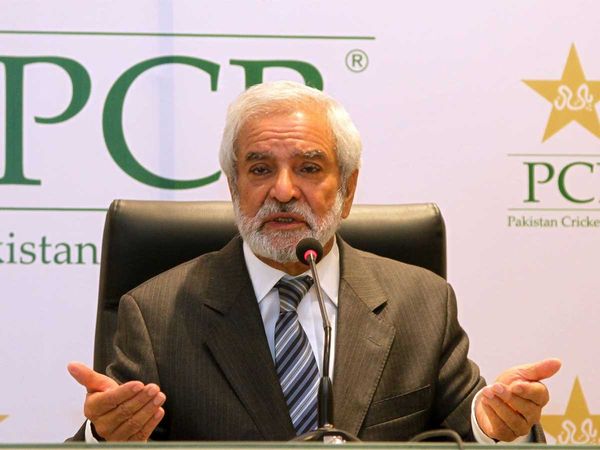
With IPL 2021 and T20 World Cup happening in UAE, PCB was forced to shift PSL to Abu Dhabi: Ehsan Mani

KEY STORY

  • Cricketing contests all across the globe had to be postponed or cancelled ever since the Covid-19 pandemic began last year. The latest high-profile example is the Indian Premier League (IPL) 2021, which had to be suspended after 29 games.
  • Now that the Board of Control for Cricket in India (BCCI) is looking to resume the tournament in UAE in the middle of September, the Pakistan Cricket Board (PCB) has had to alter its Pakistan Super League (PSL) plans.
  • PCB chief Ehsan Mani shed light on the upcoming cricketing schedule in the sub-continent, featuring the IPL, PSL as well as the 2021 T20 World Cup. Though there’s still time before the T20 World Cup’s fate is decided, Mani is of the opinion that the showpiece event will also be held in the UAE. Also, it is because of this venue clash, that the remaining PSL games had to be shifted to Abu Dhabi.
  • “The ICC T20 World Cup, which was supposed to be held in India, is now going to the UAE. India is forced to hold the remaining IPL 2021 matches in UAE also. As such Pakistan had no other choice but to shift the venue of the remaining PSL matches in Abu Dhabi.
  • We had two options, either to cancel the remaining matches or look for a possible venue during the period when we have no other international commitments. This is the best time for us and we have decided to hold it in Abu Dhabi,” Mani said as quoted by news.com.pk.
  • The 2021 T20 World Cup is scheduled to take place in India in October – November but considering the volatile Covid-19 situation in the country, the UAE is being mulled as the alternate venue. Though the BCCI has been given one month’s extension by ICC to finalise its plans as far as the T20 World Cup’s venue is concerned, UAE is being seen as a safer option.

CONCLUSION

  • The PCB chief also admitted that the current Covid-19 situation has caused plenty of disruptions in the cricketing calendar, increasing the difficulty of organisers.
  • “It is not easy to organize cricket matches these days. All the cricket boards are making adjustments and PCB has not done anything new. We cannot take any risk. It is the safety and security of the players and officials that should be our top priority,” he said.
  • While the IPL is likely to take place from mid-September to mid-October in UAE, the T20 World Cup could kick-off right after IPL’s conclusion in the Middle East too.