
KEY STORY
-
Being observed since 1 June 2001, World Milk Day is an international day established by the Food and Agriculture Organization (FAO) of the United Nations to recognize the importance of milk as a global food.
-
Milk has been an essential part of the human diet for thousands of years. Domestication of cattle and agricultural practices gave mankind the ability to produce food to sustain and not depend purely on what nature held in its palms.
-
But, over the centuries, the importance of milk in the diet has acquired mythical proportions. Several myths have been built around the drink that is, no doubt, enriching, but certainly not the only source of vitamins and energy for us.
5 milk myths that need to be debunked right away:
Milk is essential to build strong bones:
-
Most of us grew up believing that milk is important for children to build strong bones and for the elderly to prevent osteoporosis. But milk, a good source of calcium, isn’t necessarily the most critical factor for bone health, said Stanford University nutrition scientist Christopher Gardner, the Rehnborg Farquhar Professor and a professor of medicine.
-
“There are countries like Japan and India where the population is predominantly lactose-intolerant, where milk intake is low and hip fracture rates are also low. But many of those cultures do more weight-bearing activities than Americans,” he said. “
-
It’s better to be physically active than drink milk as a way to strengthen your bones.” Studies have shown that drinking milk can improve your bone density, but whether it helps prevent bone fractures is debatable, he added.
Milk is the best source of Calcium:
-
According to the Harvard TH Chan School of Public Health, calcium is important, but milk isn’t the only, or even best, source. Getting enough calcium from childhood through adulthood helps build bones up and then helps slow the loss of bone as we age.
-
It’s not clear, though, that we need as much calcium as is generally recommended, and it’s also not clear that dairy products are really the best source of calcium for most people. While calcium and dairy can lower the risk of osteoporosis and colon cancer, high intake can increase the risk of prostate cancer and possibly ovarian cancer. Plus, dairy products can be high in saturated fat as well as retinol (vitamin A), which at high levels can paradoxically weaken bones.
-
According to the National Institute of Nutrition in India, 100 ml of milk contains 125mg of calcium while 100 grams of ragi contains a whopping 344mg of calcium. It is also believed that after the age of 3 our bodies lose the ability to break down the milk proteins (casein) which inhibits the absorption of calcium from milk.
Raw milk is better, pasteurised milk is bad as it kills healthy bacteria:
-
Raw milk proponents argue that pasteurisation kills off important healthy bacteria, but Stanford University nutrition scientist Professor Christopher Gardner said that it is difficult to prove any health benefits from these bacteria.
-
Some raw milk producers also claim it is easier to digest. However, a study overseen by Gardner found that lactose-intolerant participants had the same symptoms with raw and pasteurised milk.
Drinking more milk helps weight loss:
-
The old belief was that drinking whole milk will make you fat and skim milk will help you lose weight. But this was refuted by Harvard’s Nurses’ Health Study, which followed the diets of over 100,000 nurses for more than 30 years, including how their diets changed. “The Harvard study found that switching back and forth from whole-fat to 2-per cent to 1-per cent was not associated with changes in weight,” Gardner said.
-
But does drinking more milk help with weight loss? Some small, short-term studies showed that people lost weight if they drank more milk. according to Gardner, this raises the always-present nutrition-research challenge: Was it drinking more milk or was it consuming less of something else that caused the weight loss?
Humans aren’t designed to drink cow’s milk:
-
Most people can easily digest milk, which humans have been drinking since they first domesticated animals around 10,500 years ago. Lactose, the sugar that naturally occurs in milk, requires an enzyme to naturally digest it, and almost, 60 to 65 per cent of people in India are lactose intolerant, which means these people cannot digest lactose, which makes it an even relevant question should we consume dairy?
-
If you’re lactose intolerant, you might still be able to tolerate dairy products where lactose is removed (such as butter), digested (such as cheese) or fermented (such as yoghurt) – or lactose-free milk.
Disclaimer: Tips and suggestions mentioned in the article are for general information purposes only and should not be construed as professional medical advice. Always consult your doctor or a professional healthcare provider if you have any specific questions about any medical matter.
KEY STORY
-
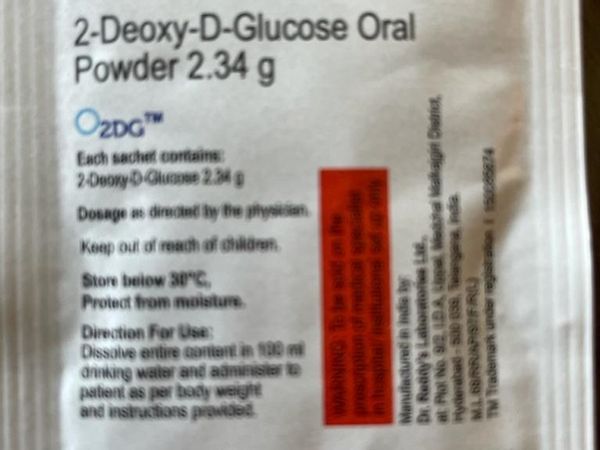
The Defence Research and Development Organisation (DRDO) on Tuesday issued directions for the use of 2DG (2-Deoxy-D-glucose) drug for Covid-19 patients under care as per Drugs Controller General of India (DCGI) approval. The drug can be given on a prescription by a doctor.
-
Directions for the usage of this drug for COVID-19 patients as per DCGI are below:
-
The 2DG is approved for emergency use as adjunct therapy to the standard of care in the treatment of COVID-19 patients in the hospital settings.
-
Ideally, 2DG should be prescribed as early as possible by doctors for moderate to severe COVID-19 patients for maximum duration up to 10 days.
-
Uncontrolled diabetes, severe cardiac problem, ARDS, severe hepatic and renal impairment patients have not been studied yet with 2DG, hence caution should be exercised.
-
2DG should not be given to pregnant and lactating women and patients below 18 years.
-
Patients/attendants are advised to request their hospital to contact Dr Reddy’s Lab, Hyderabad for medicine supply at email: [email protected].
The price of the anti-COVID 19 drug has been kept at Rs 990 per sachet by Dr Reddy’s lab. Government hospitals, central and the state government would be provided the medicine at a discounted price, however.
CONCLUSION
-
INMAS-DRDO scientists conducted experiments with the help of the Centre for Cellular and Molecular Biology (CCMB), Hyderabad in April 2020 when it was observed that the 2-deoxy-D-glucose (2DG) molecule works effectively against the SARS-CoV-2 virus and inhibits its growth. It is a glucose analogue, which arrests the virus spread.
-
Clinical trial results have shown that 2DG helps in the recovery of hospitalised patients and reduces supplemental oxygen dependence.
KEY STORY
-
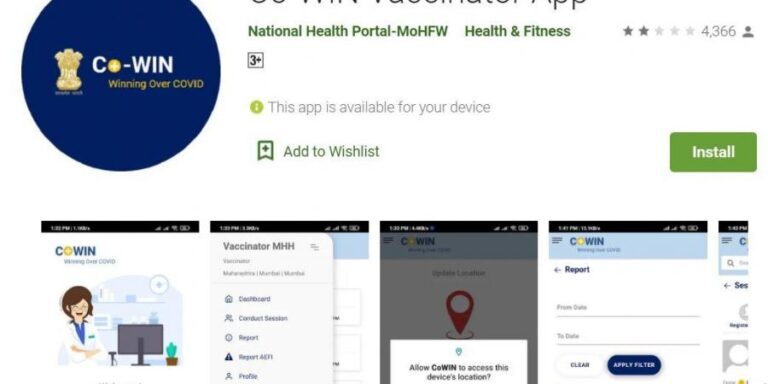
While dismissing concerns that booking a Covid19 vaccination slot on CoWIN portal did not guarantee an actual jab, the Centre on Monday acknowledged that in some cases inoculation sessions had been cancelled due to vaccine shortage.
-
“There have been some media reports suggesting that even a successful booking on the CoWIN platform for a vaccination slot does not assure one of a Covid-19 vaccine jab,” a vaccination “myth buster” by the Union ministry of health and family welfare said on Monday.
-
It also called such reports “baseless and incorrect, not supported by full information on the matter”.
-
However, the same statement went on to add that in some cases the district immunisation officers were publishing a session and then in case vaccines were in short supply, such sessions were being cancelled and beneficiaries had to return without taking the shots.
-
“This definitely caused inconvenience to such beneficiaries who booked their appointments for such vaccination centres or sessions,” the ministry said.
-
To remove this problem, CoWIN has now provided the feature for rescheduling of vaccination sessions so that the district authorities do not have to cancel the sessions, the government said that such provision has also been made that pre-booked appointments for a session, also get rescheduled when a session is rescheduled.
-
In such cases now the beneficiary will not have taken a fresh appointment and will also receive an SMS informing them about rescheduling of their session. The system still provides the option of rescheduling or cancellation of an appointment to the beneficiaries.
CONCLUSION
-
On the concerns that those vaccinated are not receiving their vaccination certificates, the ministry said that the web link for Covid19 vaccination certificate is available in the text SMS sent to beneficiary after vaccination after successful updation of vaccination status in CoWIN.
-
It added that states have been advised from time to time that vaccination certificates should be issued to all vaccinated beneficiaries on the same day of vaccination before they would exit the vaccination centre but sometimes there may be a delay of a day.
KEY STORY
-
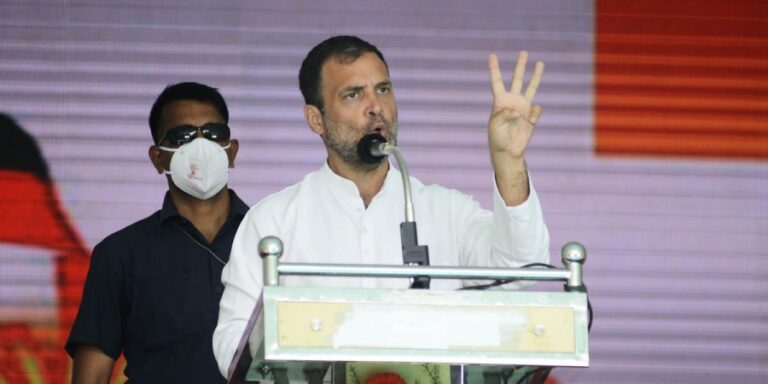
Expressing concern over a rise in black fungus or Mucormycosis cases in the country, Congress leader Rahul Gandhi on Tuesday again targeted the central government on its efforts to curb the rise in fungal infection.
-
Taking to Twitter, he sought answers from the Centre to three of his questions.
-
“Central Government should clarify about the Black fungus epidemic – 1. What is being done for Amphotericin B drug shortage? 2. What is the procedure for getting this medicine to the patient? 3. Instead of giving treatment, why is the public getting bogged down in formalities by the government?” he posted on his Twitter page.
-
The Congress MP has previously also attacked the BJP government and blamed the “inefficiency” of the PM Narendra Modi government for the “epidemic of black fungus along with the Covid pandemic” in the country.
CONCLUSION
-
Cases of Covid-19 triggered black fungus across the country have witnessed a significant increase, which has also led to a significant rise in the death toll. Karnataka has reported 1,250 cases and 39 related deaths so far. In Madhya Pradesh’s Indore city, 39 people died due to the infection. On Friday, two succumbed to the infection in Shimla, Himachal Pradesh. Uttar Pradesh’s Meerut reported 147 black fungus cases in total.
-
Meanwhile, on Sunday, India received a consignment of 200,000 AmBisome (Amphotericin B injection), informed Ambassador of India to the United States, Taranjit Singh Sandhu.
KEY STORY
-
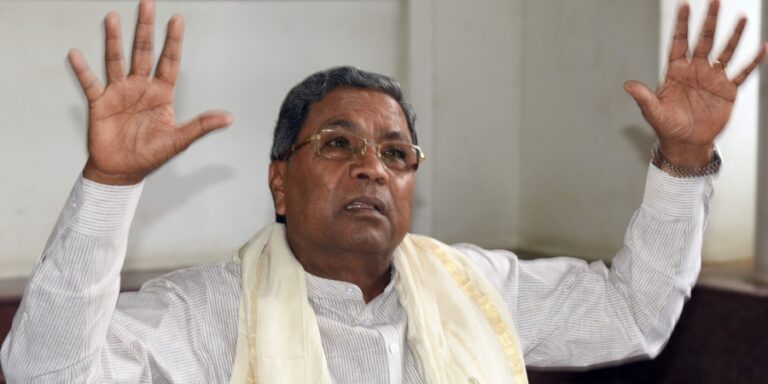
Congress Legislature Party chief and fomer CM Siddaramaiah on Monday lashed out at the Narendra Modi government — that completed seven years in office on Sunday — accusing it of taking the country back 70 years in just seven years. Armed with data comparing growth indicators in 2014 and now, Siddaramaiah listed out seven “disasters of Modi”.
-
“Seven years of governance with hundreds of disasters by Narendra Modi-led BJP government. Demonetisation. GST. Covid19 mismanagement. Anti-farmer and labour laws. Unemployment. Privatisation of national assets. Inflation and Price rise are just a few of the 7 years of Modi-made disaster,” Siddaramaiah said. He pointed out that barely eight states were in revenue deficit in 2014, but now all states are in deficit.
CONCLUSION
-
“The Modi government is selling off enterprises that were built with the sweat and blood of Indians over the past 70 years.
-
The only enterprise they are running successfully is a factory of lies. From LPG, fuel to cooking oil prices are skyrocketing. People are struggling without jobs, standing in queues for oxygen, medicines and food, but businessmen from Gujarat seem to be increasing their wealth,” Siddaramaiah said, insisting that the Modi government’s achievement is being the source of wealth spike for industrialists Ambani and Adani.

KEY STORY
-
The future of Micro, small and medium scale industries in Karnataka is at stake and if the government does not permit them to function from June 1, about 30-40 per cent of MSMEs in the state will be on the verge of closure — this was the cencern expressed by many industrialists and Karnataka Small Scale Industries Association (KASSIA)
-
According to KASSIA, the first wave of Covid led to the closure of 15-20 per cent of MSMEs in Karnataka.
-
Now, it is worried that if the government fails to permit operations from June 1, it may lead to the closure of 30-40 per cent of these in the near future.
-
Speaking to TNIE, K B Arasappa, president of KASSIA asked: “When the government can allow large-scale industries to function, where about 500 to 1000 can work and there is high risk of Covid infection, why is it not permitting MSMEs, with SOP in place?” He said, “Usually, MSMEs have 10- 50 employees.
-
If we go by government directions, only 50 per cent of the staff will be operational. Hence, it will be easy to manage the group with SOPs,” he said.
CONCLUSION
-
“MSME employers depend on the revenue generated every month and it is a cyclic process of supplying to the customer and collecting the previous balance amount. Now, this cycle has been hampered as the customers are not releasing the previous balance amount, citing Covid crisis. Even they are under loss.
-
How do we settle the previous bills?,” he questioned. Ramesh Hegde, chairman of Machenahalli Industries Association (MIA) said, except for foundries, no other small and micro industries are functioning. The owners of these industries are worried about how to generate funds to pay salaries of their employees in June.
KEY STORY
-
The Technical Advisory Committee (TAC) on Covid-19, after a detailed analysis of available data, has recommended to the government a “stricter” lockdown even after June 7. This decision of the TAC comes at a time when the state’s Covid-19 positivity rate is still hovering around 15 per cent, with a case fatality rate (CFR) of 1.87 per cent.
-
Also, a recent advisory from the Government of India had recommended continuation of restrictions till June-end in districts having a total positivity rate (TPR) of more than 10 per cent, oxygenated bed occupancy of more than 60 per cent and CFR above 1 per cent.
-
“Considering this, the TAC has recommended further continuation of the lockdown in a stricter form in the state as a whole, placing lives before livelihoods to achieve TPR below 5 per cent, daily new cases below 5,000 and CFR below 1 per cent,” the committee’s report said. Experts have also suggested that the situation will be reviewed on a weekly basis for any relaxations and concessions, and if considered, the panel has suggested that it should be done in a graded manner as done between June and November 2020.
-
Meanwhile, Health and Medical Education Minister Dr K Sudhakar said the government will take a decision on lifting restrictions based on scientific advice, and Chief Minister B S Yediyurappa will take the decision in this regard.
-
“The TAC committee will submit its report and it will be discussed in the Cabinet. Since elected representatives work very closely with people, they know the ground reality. Many of them have expressed their concerns based on the opinion of the people. However, the government has to ultimately take a decision on this, based on scientific advice.
-
The CM will take a final call,” Sudhakar said. Meanwhile, the next wave of Covid-19, as per TAC, is expected in October-November and there is an intervening period of four months which should be used to ramp up clinical facilities, training and deployment of human resources.
-
TAC predicts that the third wave will increase mortality in the paediatric population aged 0-9 by 4 per cent, and a 43 per cent rise in cases. Also, the wave will see a 6 per cent increase in mortality in children aged 10-19, and 60 per cent rise in the number of cases.
Other recommendations
Child care
Paediatric facilities should be ramped up: Special attention on facilities for clinical manage ment of Covid-19 in children at CHC, taluk and district levels. Parents, as caregivers, to be provided PPE kits, N95 masks & resting facilities in hospitals
Genome sampling
Sampling for genomic sequencing (for variants) and serology from children to be started immediately
Vaccines for children
State govt should seek vaccines from Centre, recommended for use in children, like Pfizer and others and start vaccinating them
Board exams for Classes 10 & 12
Very “challenging”, but if it has to be held then a “special SOP” has to be planned, with teachers being well trained and facilities arranged. Enlist only those who are vaccinated or provide at least one dose of vaccine to those engaged in exam duties
KEY STORY
-
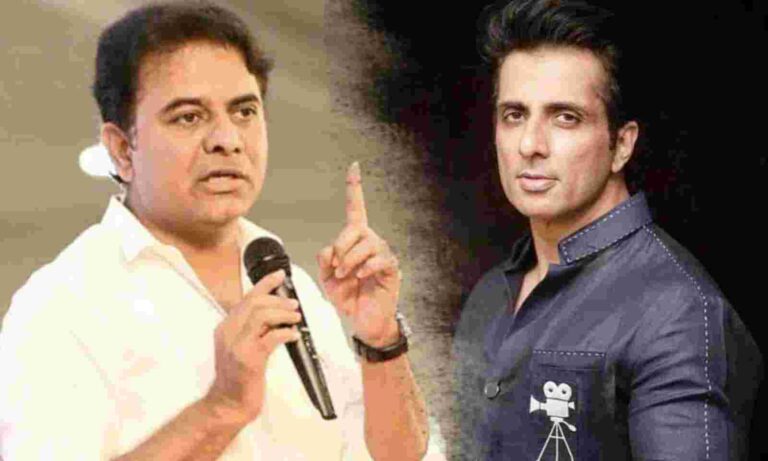
During the Covid-19 crisis, there have been several celebrities who extended their support to those in need of medical help. Sonu Sood has been one such celebrity, who has kept no stone unturned to help people with medical supplies, oxygen cylinders and concentrators and hospital beds. His selfless work did not go unnoticed by the Minister of Municipal Administration and Urban Development of Telangana, KT Rama Rao.
Recently a man who received help from KTR, took to Twitter to thank him. The man had requested for an oxygen cylinder for a friend’s father which was delivered to him within 10 hours. The Twitter user called KTR the “real superhero” and wrote, “@KTRTRS @KTRoffice Once again I can’t thank you enough KTR garu. We Received requested #OxygenConcentrator within 10 hours. You Helped many till date and we never forget your continous help to TG people. And I must say this today, you are a real #SuperHeroRed heart (sic).”
-
Responding to his tweet, KT Rama Rao wrote that he is just doing his bit to ease the pain of the people. However, it is Sonu Sood who should be addressed as a “superhero”. “Am just an elected public representative doing my bit brother. You can call @SonuSood a super hero for sure Thumbs up. Also, request you to kindly help others in distress (sic),” he wrote.
-
Sonu Sood was touched by the Telangana minister’s kind words. While the actor thanked KTR for showering him with appreciation, he also did not forget to mention how he has been doing so much for the people of Telangana.
-
The actor added that he considers Telangana as his second home. “Thank you so much sir for your kind words! But you are truly a hero who has done so much for Telangana. The state has developed so much under your leadership. I consider Telangana as my second Home as it’s my place of work & the people have shown me so much love over the years (sic),” Sonu Sood tweeted.
Sonu Sood has been a ‘messiah’ for hundreds of people who couldn’t afford medical treatment. The actor has been working day and night to ensure that anyone who comes to him asking for help does not return empty-handed.
KEY STORY
-
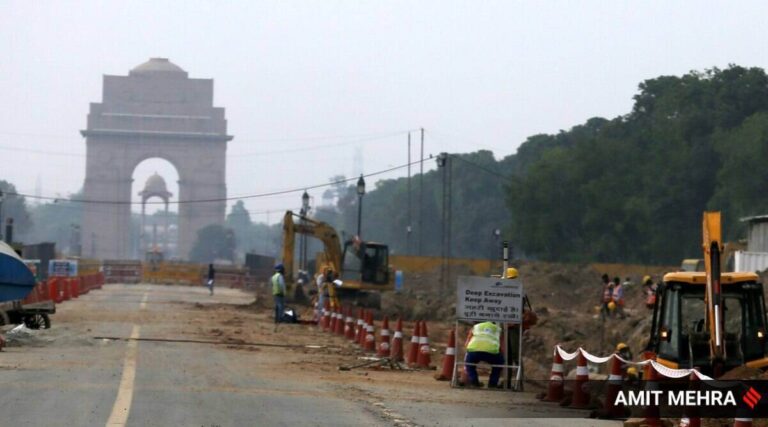
HOLDING Central Vista Project to be of national importance, the Delhi High Court on Monday dismissed a petition which had sought a stay on the construction taking place at Central Vista Avenue during the peak phase of Covid -19 pandemic and imposed a cost of Rs 1 Lakh on the petitioner.
-
The division bench of Chief Justice D.N Patel and Justice Jyoti Singh said the work at Central Vista Avenue is part and parcel of the work at Central Vista Project and of vital public importance. The construction of Central Vista Avenue Redevelopment cannot be seen in isolation, it added
-
“Since the workers who are working at the project are staying on site, there is no question of issuing directions to suspend the work of Central Vista Avenue Redevelopment Project,” said the court, adding the DDMA in the April 19 order has not prohibited construction activity where labourers are residing on-site.
-
It further noted that the work at Central Avenue has to be completed before November and said time is essence of the contract. “The work has to be completed within time-bound schedule,” the bench said, adding once the workers are staying at the site and “all the facilities have been provided, COVID-19 protocols are adhered to and COVID-19 appropriate behaviour is being followed,” there is no reason for the court to stop the project.
-
“This a motivated petition preferred by the petitioner and is not a genuine Public Interest Litigation,” said the court, while imposing a cost on the petitioners.
-
The petition filed by Anya Malhotra, a translator, and Sohail Hashmi, historian and documentary filmmaker, stated that they are concerned by the “super spreading potential and threat” posed by the continuing construction at the project site and the plight of the workers who are being exposed to the infection on a daily basis. Centre in a written reply has said the petition deserves to be dismissed with “exemplary costs” on the ground “that it is an abuse of the process of law”.
-
Centre had sought dismissal of the petition and termed it as “one more attempt” to stall the project. It had also argued that the PIL was a facade to “satisfy some kind of a vanity in mind of certain individuals”. The government had also contended that the DDMA on April 19 has permitted construction activities during curfew where labourers are residing on-site.
-
“Such attempts are going on since the inception of the project under one pretext or the other and in one name or the other,” the union government had said in a reply to the petition, while arguing the case deserves to be dismissed with “exemplary costs” on the ground “that it is an abuse of the process of law”.
CONCLUSION
-
Senior Advocate Siddharth Luthra, representing the petitioners, had argued the petitioners are in no manner seeking to overreach the Supreme Court judgement permitted the Central Vista and the prayer to stop the construction was limited to construction during the peak phase of pandemic.
-
“When we came to your lordships, we were afraid their dereliction was going to lead to an Auschwitz on the gardens of Central Delhi, on the gardens of India Gate,” Luthra argued on May 17.
-
Malhotra and Hashmi in the petitioner also had asked “why or how the project constitutes an ‘essential service’ merely because some executive mandated contractual deadline has to be met”.
KEY STORY
-
As a part of its push to bolster the economy amid the second Covid wave, the Government Sunday expanded the scope of the Emergency Credit Line Guarantee Scheme (ECLGS) to provide more relief to small businesses, bring the aviation sector under its ambit, and provide a concessional credit facility of up to Rs 2 crore in loans for health facilities to set up oxygen generation plants.
-
The overall size of ECLGS, however, has been kept at Rs 3 lakh crore, out of which about Rs 45,000 crore is left to be sanctioned. Those who have already availed loans under the scheme can get additional assistance of up to 10 per cent of outstanding dues as of February 29, 2020.
-
Simultaneously, public sector banks have announced that they are joining hands to offer standardised loans to healthcare facilities and individuals under the Covid loan book proposed by the RBI and the ECLGS.
-
Under this initiative, borrowers will be able to avail a tenure of five years in the revised ECLGS scheme — as against four years earlier — with repayment of interest only for the first 24 months, and of principal and interest in the next 36.
-
The Union Finance Ministry has also removed the current ceiling of Rs 500 crore of outstanding loans for eligibility under ECLGS, subject to maximum additional assistance to each borrower being limited to 40 per cent or Rs 200 crore, whichever is lower.
-
Since there is a loan cap of Rs 200 crore per company, the new scheme should be able to accommodate a large number of stressed entities, bankers said.
-
Under the ECLGS scheme to help companies tide over the liquidity crunch resulting from the Covid curbs, banks provide additional loans to existing borrowers without asking for extra collateral. To encourage banks, these loans are fully guaranteed by the Government against credit losses.
-
The scope of the scheme had been expanded thrice before. The scheme will be valid till September 2021 or till the guarantee amount of Rs 3 lakh crore is exhausted, while disbursements are permitted till December 2021.
-
Welcoming the latest move, FICCI president Uday Shankar raised the need to increase the limit of Rs 3 lakh crore. “The new scheme ECLGS 4.0 provides financial support to the critical healthcare sector, and we hope that the banks will go all out in disbursing the loans in a quick and timely manner. It would have further helped if a higher allocation would have also been made under this scheme. FICCI had requested that the quantum be doubled to Rs 6 lakh crore,” he said.
-
“These initiatives taken by all the PSU banks by coming together…is a significant step in the right direction to mitigate the financial impact due to Covid resurgence on all affected segments of borrowers,” SBI chairman Dinesh Khara said.
-
“Stressed sectors are already well known, like civil aviation and tourism…(the) civil aviation sector definitely needs a lot of support at this point of time,” Indian Banks Association (IBA) chairman Rajkiran Rai said.
-
Addressing a press conference Sunday, Khara and Rai said PSU banks will offer unsecured personal loans to individuals for Covid treatment at a concessional rate of interest — for SBI, the rate will be 8.5 per cent. These loans will start at a minimum of Rs 25,000 and can be repaid over five years.
-
Similarly, public sector banks will offer loans upto Rs 100 crore at concessional rates for hospitals, nursing homes, clinics, diagnostic centres and pathology labs to set up or expand healthcare facilities, Rai said.
-
These banks have also formulated a templated approach for loans restructuring for individuals, small businesses and MSMEs upto to Rs 25 crore. “The idea behind this is that there should not be any hardship in terms of any implementation,” said Khara.
-
On May 5, the RBI had announced a new restructuring scheme for individuals, small businesses and MSMEs to restructure their loans in light of the second wave. Entities that had not restructured their loans earlier, with borrowings classified as standard as on March 31, 2021, are eligible under the scheme. “Many lending institutions have got board approval and have started sending messages to eligible customers,” Khara said.
-
“Under ECLGS, there is still a window for Rs 45,000 crore. The schemes announced today will exhaust the remaining window,” said IBA Chief Executive Officer Sunil Mehta.
-
Public sector banks have designed three products to provide fresh lending support to vaccine manufacturers, hospitals and dispensaries, pathology labs, manufacturers and suppliers of oxygen, ventilators, importers of vaccines and Covid related drugs logistics firms and patients for treatment.
-
“Under healthcare business loans for setting up oxygen plants under ECLGS, loans up to Rs 2 crore at an interest rate of 7.5 per cent for hospitals and nursing homes is backed by 100 per cent guarantee cover under ECLGS 4.0,” Khara said.
CONCLUSION
-
Khara said banks will offer business loans for healthcare facilities up to Rs 100 crore to set up or expand healthcare infrastructure. They will also offer unsecured personal loans — from Rs 25,000 to Rs 5 lakh — for salaried, non-salaried and pensioners for Covid treatment, most of them at concessional rates of interest.
-
So far, the RBI’s restructuring plan has been availed by 60,000 customers as against 8 lakh plus eligible, the SBI chairman said. The plan covers three categories: Loans up to Rs 10 lakh for which there will be a standardised restructuring offer for certain small businesses and MSMEs; above Rs 10 lakh and up to Rs 10 crore; and, above Rs 10 crore.
1...567568569...884Page 568 of 884