Google Photos to end support for free unlimited storage starting June 1: What to keep in mind

KEY STORY

  • Google Photos is updating its storage policy starting June 1. The platform currently allows unlimited free storage for photos at High Quality resolution, which will no longer be the case starting next month.
  • Any new photos and videos you upload on Google Photos starting June 1, 2021 will be counted as part of your free 15 GB storage that comes with all Google Accounts. If you have exhausted your 15 GB free storage across Gmail, Drive and Photos you will have to purchase additional storage in order to continue uploading photos at high-resolution.

What happens to existing photos and videos uploaded in High Quality?

  • Photos and videos that have been uploaded in High Quality before June 1, 2021 will not count towards your 15GB free storage. It will be considered free and exempt from the storage limit set by Google. If you want to cross check your current backup quality you can do so by visiting the back up & sync option in Settings.

    Google Photos: Additional Storage

  • If you have exhausted your 15 GB free storage, you can purchase additional storage to continue backing up content. In India, users can choose from monthly and yearly plans. Google offers 100 GB storage space for Rs 130 per month. If you want more space, Google also has a plan that will offer 1TB of storage space for Rs 650 per month.
  • Users looking to opt for yearly plans can either get 100 GB per month for one year at Rs 1,300. There is also an offer to get 1TB per month for a year at Rs 6,500. Google has said that it will notify users in the app and subsequently via an email once their 15 GB of free storage is about to get over.

    Managing your storage


  • Users can view a personalised estimate on the platform for how long their storage will last. This estimate takes various factors into account. These include how frequently you back up photos, videos and other content to your Google Account.
  • Google has a new free tool which will help you in easily managing backed up photos and videos. The new option will help you in reviewing which content you want to keep and which you wish to delete.
Note : Google has stated that Pixel smartphone users will not be affected by this change. These users will still be able to upload content in High quality from their device even after June 1, 2021 and not worry about buying extra storage.

‘I have never…’- Sachin Tendulkar reveals two biggest regrets from his glittering international career

KEY STORY

  • Master Blaster Sachin Tendulkar had a flawless and glittering career at the highest level. The 48-year-old played the gentlemen’s game for a period of 24 years, breaking several records and creating a niche for himself.
  • Easily regarded as one of the top five batsmen of all time, since the sport came into the picture, Tendulkar ended his career with over 34,000 international runs (18,463 in ODIs and 15,921 in Tests) along with 100 centuries. An ICC title eluded him for long till MS Dhoni-led India won the 2011 ODI World Cup to fulfill Tendulkar’s long-standing dream to boast of a showpiece event’s medal in his cabinet.
  • Having represented India in over 600 international games (664), the retired cricketer recently revealed his two biggest cricketing regrets.
  • “I have two regrets. The first is that I have never played with Sunil Gavaskar. Mr Gavaskar was my batting hero when I grew up and not playing with him as part of a team remains a regret. Mr Gavaskar retired a couple of years before I made my debut,” Tendulkar said.
  • “My other regret is not having played against my childhood hero Sir Vivian Richards. I was fortunate to have played against him in county cricket, but I still rue not being able to play against him in an international match. Even though Sir Richards retired in 1991 and we have a couple of years overlapping in our careers, we did not get to play against each other,” he added.

CONCLUSION

  • Tendulkar retired from the gentlemen’s game in 2013, when Daren Sammy-led West Indies came to India to play two Tests against Dhoni & Co. Having completed his career with a plethora of records under his belt, the Master Blaster still regrets having not got a chance to play with his idol Sunil Gavaskar and also compete against Sir Vivian Richards on the 22-yard cricket strip.
  • Tendulkar was last seen on the cricket field during the Road Safety World Series 2021. After its conclusion, the star cricketer had contracted the novel coronavirus but has now completely recovered.

Food labels must contain accurate sugar and salt information to prevent childhood obesity: Experts

KEY STORY

  • As a parent, one of the biggest concerns regarding the kids is their diet because ensuring a balanced and nutritious diet is one of the primary steps towards ensuring their health. An unmoderated diet can lead to the development of childhood obesity which can be extremely healthy for the kid.
  • Dr Rekha Harish, Chairperson, Indian Academy of Paediatrics, NCD Prevention said, “At least 15 per cent of children in India are obese or overweight and these numbers will steadily rise if left unchecked. We need strong policy regulating harmful ingredients in ultra-processed and packaged foods including food labels that can help parents make an informed choice.”
  • “Usually, increased consumption of unhealthy or processed food coupled with physical inactivity leads to this preventable condition. It is fast emerging as the most serious public health challenge of the 21st century. Studies have shown that 75-80 per cent of severely obese children will remain obese as adults and be at heightened risk of various NCDs.”, she added.

    Accuracy of food labels – Why is it important?


  • It is relatively difficult to restrict the diets of children and force them to abstain from junk food, however, knowing what they are eating proves to be a decisive factor for many parents. One of the reasons behind providing food labels is to give consumers clear information about what they are consuming.
  • Fast foods and packaged foods often contain an unhealthy amount of salt and sugar and unmoderated consumption may lead to the development of childhood obesity. Inaccurate display of nutrition facts may lead to harmful consumption of the same which may not be conducive to the health.
  • Dr Umesh Kapil, Professor, Clinical Epidemiology, Indian Institute of Biliary Sciences (ILBS) said, “Food Labels should provide clear guidance, for example, black octagons adopted in Chile that says up front whether or not foods contain an excess of fats or sugars. Simple to understand labels with evidence-based nutrition cut-off is a need of the hour and will go a long way to address the crisis of childhood obesity in the country.”

    Tips for parents to prevent childhood obesity

    Here are some ways in which childhood obesity can be prevented:

    1. Encourage the kids to follow a healthy and balanced diet that is low in sugar and processed foods.
    2. Drinking adequate amounts of water must be encouraged. This can be achieved by making a daily hydration chart.
    3. A regular exercise routine must be followed by children. Physical inactivity is one of the leading causes of the development of obesity, cardiovascular diseases, and bone issues.
    4. Emphasis must be paid to a healthy body, and not on weight goals.
    5. The management of weight must be the family’s holistic approach and not just that of the kid’s as it may result in making the kid feel isolated and unmotivated.

Disclaimer: Tips and suggestions mentioned in the article are for general information purpose only and should not be construed as professional medical advice. Always consult your doctor or a dietician before starting any fitness programme or making any changes to your diet.

‘Free education, health insurance’: PM Modi announces financial aid to children orphaned by COVID [DETAILS]

KEY STORY

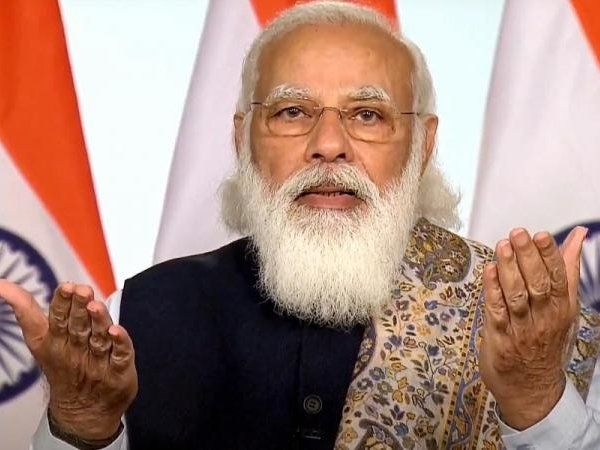
  • Prime Minister Narendra Modi on Saturday announced that all children who have lost both parents or guardian due to coronavirus infection will be supported under the ‘PM-CARES for Children’ scheme.
  • “Several children lost their parents due to COVID-19. The Government will care for these children, ensure a life of dignity and opportunity for them. PM-CARES for Children will ensure education & other assistance to children,” PM Modi said in a tweet.
  • The Prime Minister’s Office (PMO) said in a statement that fixed deposits will be opened in the names of such children, and the PM-CARES fund will contribute through a specially designed scheme to create a corpus of Rs 10 lakh for each of them when he or she reaches 18 years of age.

  • This corpus will be used to give monthly financial support or stipend from 18 years of age for the next five years to take care of his or her personal requirements during the period of higher education. On reaching the age of 23 years, they will get the corpus amount as one lump-sum for personal and professional use.
  • The PMO further said that the children will also get free health insurance of Rs 5 lakh under Ayushman Bharat till 18 years and the premium will be paid through the PM CARES fund. The measures being announced have only been possible due to the generous contributions to the PM CARES Fund which will support India’s fight against COVID-19, the Prime Minister said.


    PM-CARES for Children scheme includes:

    1. Fixed Deposit in the name of the child
    2. School Education: For children under 10 years
    3. School Education: for children between 11-18 years
    4. Support for Higher Education
    5. Health Insurance
    Besides, several state governments have also announced financial assistance for the children who lost their parents to COVID-19. Check statewise list here.
    Union Home Minister Amit Shah and BJP chief JP Nadda have welcomed the scheme announced by PM Modi for support and empowerment of those children who lost their parents due to COVID.

‘Against guidelines’: Centre directs pvt hospitals, hotels to stop giving COVID-19 vaccination packages

KEY STORY

  • After some private hospitals in collaboration with hotels started giving packages for COVID-19 vaccination, the Union Health Ministry called the move against the guidelines issued for the National COVID vaccination programme saying it must be stopped immediately.
  • The Centre said this in a letter written to states/Union Territories (UTs).
  • Union Health Ministry Additional Secretary Dr Manohar Agnani in the letter stated that necessary legal and administrative actions should be initiated against such institutions.

    ‘Ensure that vaccination drives are carried out as per prescribed guidelines’


  • According to ANI, four options available for the vaccination drive are: Government COVID Vaccination Centre, Private COVID Vaccination Centre run by private hospitals, Workplace COVID Vaccination Centre at government offices to be run by government hospitals and at private companies to be run by private hospitals, Near to Home COVID Vaccination Centre for the elderly and differently-abled person to be organised at group housing societies, RWA offices, community centres, Panchayat Bhawans, schools/colleges, old age homes on a temporary basis.
  • Agnani has urged the states and UTs to monitor and ensure that vaccination drives are carried out as per the prescribed guidelines.
  • This development comes after several social media posts started regarding vaccination package offered by star hotels in collaboration with private hospitals started circulating.

India’s cumulative vaccination coverage crosses 21 crore mark

  • Meanwhile, the cumulative number of coronavirus vaccines administered in India crossed 21 crores on Saturday.
  • According to the Union Ministry of Health and Family Welfare (MoHFW), a total of 28,09,436 vaccine doses was given out of which, 25,11,052 beneficiaries were vaccinated for the first dose while 2,98,384 beneficiaries received a second dose of vaccine.
  • The report states that Bihar, Gujarat, Madhya Pradesh, Rajasthan, and Uttar Pradesh administered more than 10 lakh beneficiaries of the age group 18-44 years for their first dose of COVID-19 vaccine.

Lockdown in Karnataka may not be extended beyond June 7: Yediyurappa

  KEY STORY

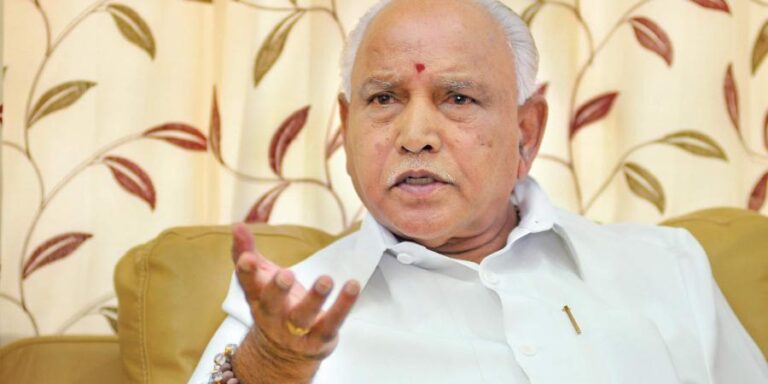
  • With a slight decline in Covid cases and positivity rate over the last few days in the State, Chief Minister BS Yediyurappa on Saturday expressed confidence that the situation would come under control in the next four to five days.
  • After his three-hour meeting with elected representatives and officers from districts that are reporting a high number of cases, he said, “The lockdown will continue till June 7 and it will be implemented strictly. The decision on its extension will be taken depending on the situation. If people cooperate with us, probably the question of extending it may not arise.”
  • Revenue Minister R Ashoka and other elected representatives from Bengaluru suggested that the restriction in Bengaluru should be lifted in a phased manner.
  • The lockdown has helped Bengaluru as the number of cases has gone down from a peak of 22,000 to around 5,000 now, Ashoka said. “We suggested to the chief minister that export-oriented industries should be reopened first, and other sectors later. He will take the final decision,” he added.
  • Earlier in the day, Home Minister Basavaraj Bommai said the chief minister will decide on the lockdown extension after discussing it with ministers. As the Centre has directed that Covid guidelines be followed till June 30, the CM will discuss this too with ministers before taking the decision, he added.
  • During the meeting, the CM instructed MPs, MLAs and officers from Mysuru, Hassan, Belagavi, Kalaburagi and Vijayapura districts to bring down the positivity rate to less than 10 per cent.

    ‘Even as Covid cases dip, govt won’t lower guard’


  • Bengaluru Urban, Mysuru, Tumakuru, Hassan and Ballari districts report nearly 60 per cent of all cases in the state and authorities were told to take measures to contain the infection, said a statement from the CM’s Office.
  • The CM observed that though cases have declined slightly, the government cannot lower its guard as incidents are increasing in rural areas. Elected representatives play an important role in reducing the number of cases in their constituencies, he added.

CONCLUSION

  • Some elected representatives expressed concerns over shortage of drugs, staff and vaccine, to which Yediyurappa said that the government has released Rs 50 lakh under the Legislators Area Development Fund and Rs 50,000 to each gram panchayat.
  • On staff shortage, he said the government has started the process of recruiting 1,200 doctors. On ventilators that were given to the State under the PM Cares Fund not being utilised fully, he said some of them had required minor repairs.

Curb religious events, rallies for a year to stem third Covid wave in Karnataka: Expert

KEY STORY

  • Karnataka needs to live without elections, rallies and religious events for one more year to prevent a third wave of Covid-19 in the state, warned Dr V Ravi, renowned virologist, Nodal Officer for Genome Sequencing of SARS-CoV-2 and also member of Technical Advisory Committee on Covid-19.
  • He was speaking at a webinar organised by the Karnataka Women Journalist’s Association (KWJA).
  • Warning that the country should have no doubt about the coming of the third and multiple such waves, he said the government needs to be prepared, not just at the state level, but also at district- level, as each district will peak at different times.
  • Children and those adults who are not infected till now will be vulnerable in the next wave, he warned.
  • “The new committee to tackle this wave is working at the ground level. But the State Government should ensure that there are enough trained paediatricians. We don’t have many in the state. Also, NICUs, paediatric Covid care centres should be set up in every taluk. Some of the dangerous diseases like MIS-C should be taken care of,” he said.
  • Speaking about variants of concerns, he said that there are all possibilities that new variants will occur and one has to be prepared, assuming that the new variants will come.
  • The genome sequencing of Covid virus in circulation in Karnataka in the second wave since March has revealed that the double mutant, which was first found in Maharashtra (B.1.617), has taken over even the UK variant (B.1.1.7) and these two have virtually obliterated the previous strain dominant in the state (B.1.36.29).

CONCLUSION

  • He said India will add 17 new laboratories to the Indian Sars-COV-2 Genomics Consortium (Insacog) network to ramp up genome sequencing.
  • Meanwhile, he also said that those who are already infected with Covid- 19 should wait for three months before taking the vaccine as the person will have natural antibodies.
  • However, both doses of the vaccine must be taken after recovering from Covid-19, he said.He added that all the vaccines available in the country are safe and more importantly, people should follow “social vaccine” which is right masking, social distancing and staying hygenic.

Karnataka announces financial scheme to help Covid orphans

KEY STORY

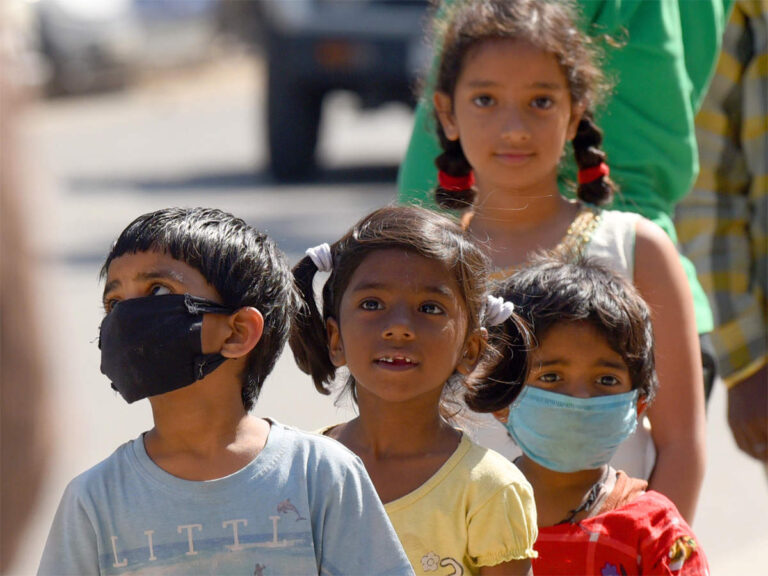
  • The Karnataka Government on Saturday announced the Bala Seva scheme to provide financial assistance to children who have lost their parents to Covid.
  • Chief Minister BS Yediyurappa said that Rs 3,500 per month will be given to guardians/ caretakers of such children. Children below 10 years old, who do not have guardians, will be put under registered childcare institutions and admitted to model residential schools.
“For children who have completed 10th standard, a free laptop or a tablet will be provided. For girls who have completed 21 years, Rs 1 lakh will be provided for their marriage expenses, higher education or self-employment,” Yediyurappa said, and added that mentorship will be provided for the overall development of such children.

‘Virus caused big crisis’

Chief Minister BS Yediyurappa said that the government is yet to work out the details and the total amount required for the scheme. “We have decided to extend it to all those in need,” he added.
Yediyurappa said Covid has caused an unprecedented crisis. In the first wave, the timely measures taken by Prime Minister Narendra Modi had helped people and in the second wave, the Central Government has suggested to the state to start the scheme to help children who have lost their parents, he added.

DGCA extends ban on scheduled international commercial passenger flights until June 30

KEY STORY

  • The Directorate General of Civil Aviation (DGCA) on Friday extended the ban on international commercial passenger flights by one month till June 30, 2021. The ban has been in place since March 2020.
  • “In a partial modification of circular dated 26-06-2020, the competent authority has further extended the validity of circular issued on the subject cited above regarding Scheduled International commercial passenger services to/from India till 2359 IST of 30th June 2021,” the fresh order reads.
  • However, this restriction will not apply to international all-cargo operations and flights specifically approved by the aviation regulator.

  • All scheduled international flights were restricted on March 23 last year in wake of the Covid-19 pandemic and continue to be banned. However, various international flights were operationalised under bilateral air bubble agreements that India signed with several nations for the unhindered movement of passengers.
  • India has formed air bubble pacts with 27 countries including the US, the UK, the UAE, Kenya, Bhutan and France. Under an air bubble pact between two countries, special international flights can be operated by their airlines between their territories. However, a few countries like the US
  • Meanwhile, India recorded 186,364 fresh Covid-19 cases in the last 24 hours, the lowest daily count in 44 days, as infections continued to decrease in the country. The daily death toll, however, remained over the 3,000-mark, with 3,660 deaths. India’s total cases now stand at 27,555,457, while total fatalities are at 318,895, according to MoHFW. The test positivity ratio stands at 9 per cent.
  • With 33,361 cases reported in the past 24 hours, Tamil Nadu is leading the state list. It is followed by Karnataka with 24,214 new infections. Kerala reported 24,166 cases. Maharashtra 21,273 cases, and Andhra Pradesh 16,167 cases. The case count was 13,046 for West Bengal. Meanwhile, Delhi reported 153 cases of mucormycosis (black fungus) today, exceeding the total number of cases from 620 to 773.

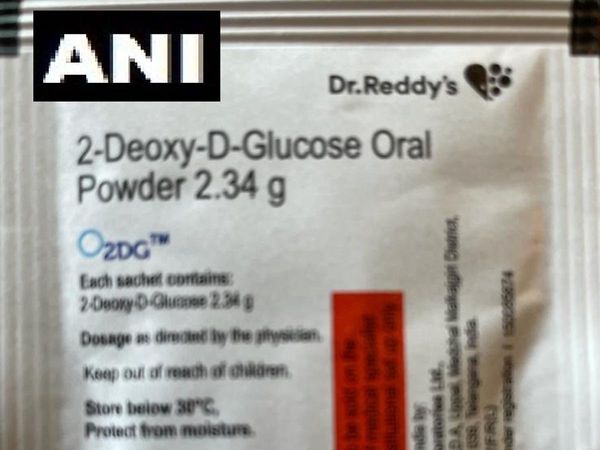
DRDO’s 2-DG anti-COVID-19 drug to be available for Rs 990 per sachet; discount for Centre, states

KEY STORY

  • The drug 2-deoxy-D-glucose (2-DG), developed by the Institute of Nuclear Medicine and Allied Sciences (INMAS), a lab of Defence Research and Development Organisation (DRDO), in collaboration with Dr Reddy’s Laboratories (DRL), Hyderabad, would be available for Rs 990 per sachet. However, the Centre and state government would get the drug at a discounted price.
  • The Drugs Controller General of India (DCGI) approved anti-COVID drug developed by DRDO for emergency use earlier this month.
  • “Clinical trial results have shown that this molecule helps in faster recovery of hospitalised patients and reduces supplemental oxygen dependence.
  • Higher proportion of patients treated with 2-DG showed RT-PCR negative conversion in COVID patients. The drug will be of immense benefit to the people suffering from COVID-19,” the ministry of defence had stated following DCGI’s approval.
  • The drug comes in powder form in a sachet, which is taken orally by dissolving it in water. It accumulates in the virus-infected cells and prevents virus growth by stopping viral synthesis and energy production. Its selective accumulation in virally infected cells makes this drug unique.
  • Notably, the drug comes as a boon for the COVID patients who have been facing severe oxygen dependency and need hospitalisation.
  • The drug is expected to save precious lives due to the mechanism of operation of the drug in infected cells. This also reduces the hospital stay of COVID-19 patients the defence ministry said.

CONCLUSION

  • Defence Minister Rajnath Singh and Union Health Minister Dr Harsh Vardhan on May 17 had released the first batch of the 2-deoxy-D-glucose or ‘2-DG’.
  • Notably, the DRDO also developed an antibody detection-based kit ‘DIPCOVAN’, the DIPAS-VDx COVID-19 IgG Antibody Microwell ELISA for sero-surveillance. The DIPCOVAN kit can detect both spike as well as nucleocapsid (S&N) proteins of SARS-CoV-2 virus with a high sensitivity of 97 per cent and specificity of 99 per cent.