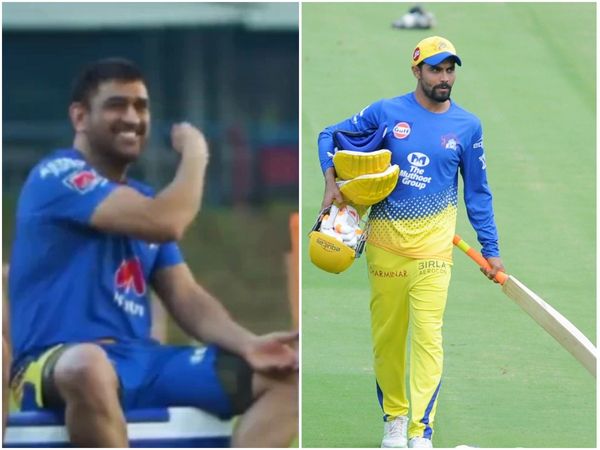
‘Thala’ MS Dhoni does Ravindra Jadeja’s sword celebration during now-postponed IPL 2021 – watch viral video

KEY STORY

  • The MS Dhoni-led Chennai Super Kings (CSK) revamped in style in the now-postponed IPL 2021 edition in India. In what was a forgettable IPL 2020 campaign for them, the Yellow Army moved past the terrible season last year and were going ahead at their usual best in the now-indefinitely suspended IPL 14 edition.
  • The CSK franchise opened their campaign with a 7-wicket loss to Delhi Capitals (DC) before turning it around in style and winning five back-to-back games. Their victory run was halted by Rohit Sharma-led Mumbai Indians (MI) before the season came to an abrupt end due to the Covid-19 virus breaching the bio-bubbles of as many as four IPL camps, including CSK.
  • However, it was safe to say that the dressing room atmosphere remained very good in CSK’s IPL 14 season — with the team bonding really well in the bio-bubble environment and the results going in their favour more often than not. Hence, a video of Dhoni imitating Ravindra Jadeja’s famous sword celebration went viral.
  • It was a training session video, which was recently shared from the official Twitter handle of CSK. Here’s the clip:

  • Talking about Dhoni and Jadeja’s form in the now-postponed IPL 14 season, the former Indian captain continued to bat much lower down the order. While he never looked in any sort of touch, all-rounder Jadeja carried his fine form in the cash-rich league. He amassed 131 runs at a strike-rate of 162.32 and also chipped in with 6 wickets — along with his brilliant fielding skills on display at regular intervals.
  • Apart from Jadeja, Moeen Ali, Faf du Plessis, Ruturaj Gaikwad, Sam Curran and Deepak Chahar also played their parts to take CSK to the second spot at the time this year’s IPL season got postponed indefinitely.
  • BCCI is looking to host the remaining fixtures either in United Kingdom or UAE in the latter part of 2021.


Nearly 50,000 ventilators distributed across country under PM-CARES: Which state received how much

KEY STORY

  • Nearly 50,000 ventilators have been distributed across the country under the PM-CARES fund to augment the hospital infrastructure to tackle COVID-19 cases, the BJP has said.
  • “India battling against COVID 2nd wave bravely under PM Modi. Nearly 50,000 ventilators distributed across country under PM-CARES fund,” the BJP said in a tweet.
  • These ‘Made-in-India’ ventilators were purchased from PM CARES Fund at a cost of approximately Rs 2000 crore and allocated to government-run COVID hospitals in all states and Union territories for better treatment of the critical COVID-19 cases.
  • Of the total 45,946 ventilators, Maharashtra – the worst-hit state by coronavirus in the country – has received the highest number of critical machines while Delhi has been allocated the lowest.

  • Maharashtra has been allocated 5,555 ventilators, Delhi 763, Punjab 810, Uttar Pradesh 5316, West Bengal 1245, Tamil Nadu 1450, while 3569 have been given central institutions.
  • The Centre has said that additional 14,000 ventilators will be delivered to all states and Union territories by the end of June 2020.
  • Prime Minister Narednra Modi recently took serious note of some reports about ventilators lying unutilised in storage in some states, and directed officials that an immediate audit of installation and operation of ventilators provided by the Central Government should be carried out.
  • The Prime Minister suggested that refresher training for properly operating ventilators should be provided to healthcare workers if necessary.
  • The Union Health Ministry also urged states to fully use the ventilators after it came to light that the machines are lying unused in several states as a result of technical glitches.
  • In a statement, the ministry said WhatsApp groups have been created with the concerned nodal officers of the states and UTs, representatives of the user hospitals and technical teams of the manufacturers in order to address any technical issues in real time.

Haven’t accepted new WhatsApp privacy policy? Don’t worry, you will not lose app features

KEY STORY

  • In what may be a big relief, WhatsApp has said users who have not accepted the new privacy policy will not lose functionality after the deadline. The Facebook-owned chat app has been prompting millions of its users to accept the privacy policy since January earlier this year. The final deadline for that was May 15.
  • WhatsApp now requires all its users in India to accept the new privacy policy, a move that has been at the centre of controversies ever since Facebook announced back in January that its users will have to give up a little more data about themselves to help businesses communicate better.
  • And there were many users reluctant to accept the privacy policy that was thrown in their faces through frequent pop-ups in the app. Initially, there was confusion that their WhatsApp accounts would be deleted over — something that led to the exodus of many users to rival platforms such as Signal and Telegram.
  • Later, however, WhatsApp said it is not going to remove the accounts of these users. Then came another round of rumours that made the privacy policy a nightmare for many users.
  • These users have feared that WhatsApp will take away features from the app if they do not accept the privacy policy. In fact, this resistance turned into a litmus test for several WhatsApp users. But now, WhatsApp has backtracked, again, on its plans to get users to accept the privacy policy. The Facebook-owned app will not terminate certain functionalities for these users.
  • While WhatsApp is no longer going to limit the functionality of its app for both Android and iOS platforms, it is still going to pester users who have not accepted the privacy policy changes. If you are one of these users, you will keep seeing random pop-ups whenever you open WhatsApp on your phone.
  • The pop-up reminds you to accept the privacy policy and that it is important for the company to serve you better. Ever since Facebook sparked off the debate over user privacy with the new changes that will collect more data about you than before, privacy advocates have lambasted Facebook. Not just them, various governments, including that of India, have asked WhatsApp to reconsider its new privacy policy. But both Facebook and WhatsApp have maintained their stance.

CONCLUSION

  • “We want everyone to know that this update does not impact the privacy of personal messages. We’re providing information about new options we are building to communicate with businesses that people may choose to use in the future,” the spokesperson added.
  • Except for those who live in Europe, the entire user base of WhatsApp will eventually need to accept the privacy policy. And even if WhatsApp has receded in terms of compelling its users into a do-or-die-like situation, it will not stop asking them from agreeing to the new privacy policy.
  • It is possible that you may start seeing these prompts about accepting the privacy policy on Instagram and Facebook, although the company has not said anything about this. But you never know what Facebook can do, especially with the heap of data it already has on you.

Fresh cases fall, recoveries speed up in Karnataka

KEY STORY

  • For the first time since mid-March, when the second wave started raging in the state, the number of active cases have shown a decline, even as Karnataka recorded its highest number of daily discharges that was almost 5,000 more than the fresh Covid cases reported on Sunday.
  • Bengaluru recorded 8,344 cases, a sharp slide from 13,402 on Saturday, but testing is also said to be on the decline. The state saw a whopping 36,475 Covid-19 patients discharged as against 31,531 fresh cases reported also a first in the second wave.
  • With this robust sign, the state’s recovery rate recorded an improvement on the fifth consecutive day, standing at 71.77 per cent, as against 71.13 per cent on Saturday and 69.84 per cent on May 9. However, the state’s recovery rate had witnessed its peak of 98.06 per cent on January 30, a month before the second wave surged.

CONCLUSION

  • The number of active cases which has been on a rapid increase since March 15, when it was just 8,860, is now 6,00,147, falling for the first time from 6,05,494 cases on Saturday.
  • That said, Karnataka leads all other states in the number of active cases, with Maharashtra second at 4,68,109, and Kerala with 4,40,649 at third spot. The fresh deaths, however, showed a rise by again crossing the 400-mark to 403.

Triage centres in Karnataka districts to fight Covid second wave

KEY STORY

  • With the second wave of Covid-19 causing havoc, the State Government has decided to form Decentralised Triage Centres (DTCs) in urban areas to effectively manage the existing cases.
  • These DTCs will come up in Belagavi, Ballari, Kalaburagi, Hubballi-Dharwad, Mangaluru, Mysuru, Davanagere, Vijayapura, Shivamogga and Tumakuru corporation limits, where cases are surging. It has been noticed that many patients who do not require immediate hospitalisation get admitted to hospital, due to which those who need hospitalisation find it difficult to get a bed.
  • In order to avoid this, a triaging process is required. Physical triage can either be done in primary health centres, government hospitals, medical college hospitals, or at the doorstep of the patient. The number of triaging centres depends on the number of cases getting added each day. Three or four DTCs may be needed in a city or town, in addition to triage centres functioning in district hospitals, medical college hospitals and Covid Care Centres.
  • Based on triaging, patients are categorised into: require hospitalisation, need to be sent to CCC, need home isolation, already hospitalised or unresponsive. If the patient is recommended home isolation, then a health worker pays a visit on the first, fifth and tenth day from the onset of symptoms.

CONCLUSION

  • If the health worker feels the patient’s condition is not suitable for home isolation and medical care is necessary, he or she will speak to the doctor at the war room and take guidance.
  • The discharge of a patient under home isolation can only be done after the visit of the health worker on the tenth day, by following the discharge protocol laid down by the health department.

Karnataka minister bats for lockdown extension to break the Covid chain

KEY  STORY

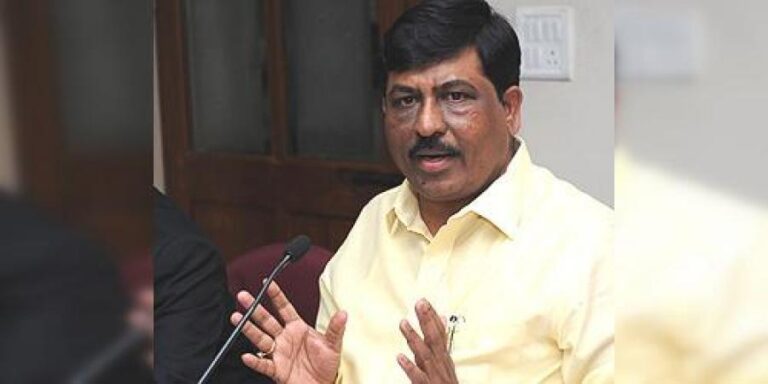
  • Karnataka Minister for mines and geology Murugesh Nirani on Monday said that the existing lockdown should be extended by 10 more days and go beyond May 24.
  • Addressing a press meet, Nirani said that the Kalaburagi district has witnessed a slight decrease in positive cases and it is necessary to extend the lockdown to break the chain and control the spread of the virus, further adding that he has spoken with health minister Sudhakar and home minister Basavaraj Bommai in this regard.
  • Nirani said that the government will take appropriate decision after consulting expert committee.

Paresh Rawal has a witty response to his death hoax: ‘Sorry for the misunderstanding as I slept past 7 am’

KEY STORY

  • After actor Mukesh Khanna and singer Lucky Ali, veteran Bollywood star Paresh Rawal has fallen prey to a death hoax. A tweet claimed that the actor passed away on Friday at 7 am. However, Rawal refuted the claim and gave a witty response to the rumour.
  • Taking to the micro-blogging site Twitter, the actor said he is not dead. He just slept past seven in the morning. In a funny tweet, Rawal wrote, “Sorry for the misunderstanding as I slept past 7am …!” He also shared a screenshot of the tweet which mourned his demise.

  • In March, Paresh Rawal had tested positive for coronavirus after getting the first dose of the Covid-19 vaccine. He shared on Twitter, “Unfortunately, I have tested positive for COVID-19. All those that have come in contact with me in the last 10 days are requested to please get themselves tested.”
  • On the work front, Rawal will be next seen in Hungama 2 which also stars Shilpa Shetty, Meezaan, Pranitha Subhash, Ashutosh Rana, Manoj Joshi, Rajpal Yadav, Johnny Lever and Tiku Talsania.

Private hospitals in Karnataka cite ‘zero stock’ of COVID vaccine

KEY STORY

  • Private hospitals will take some more time before resuming vaccination at their facilities as the government has told them to source vaccines on their own, but there is no stock available anywhere.
  • The Private Hospital and Nursing Association (PHANA) had written to Chief Secretary P Ravi Kumar a week ago, asking the government to supply them vaccines. PHANA president Dr HM Prasanna said, “But we have not got any response. We have also approached Bharat Biotech and Serum Institute of India, but they have not replied either.”
  • Private hospitals will take some more time before resuming vaccination at their facilities as the government has told them to source vaccines on their own, but there is no stock available anywhere.

CONCLUSION

  • The Private Hospital and Nursing Association (PHANA) had written to Chief Secretary P Ravi Kumar a week ago, asking the government to supply them vaccines. PHANA president Dr HM Prasanna said, “But we have not got any response.
  • We have also approached Bharat Biotech and Serum Institute of India, but they have not replied either.”

No home isolation needed for COVID patients at villages and urban slums: Karnataka deputy CM

KEY STORY

  • To bring down the mortality rate by avoiding late reporting to hospitals, the Karnataka government on Saturday decided to do away with home isolation for COVID patients at villages and slum areas in cities.
  • “This is to ensure that they get admitted mandatorily at COVID Care Centres (CCCs),” Deputy Chief Minister and State Covid Task Force Chairman Dr CN Ashwath Narayan told reporters after the task force meeting, which was also attended by Health Minister Dr K Sudhakar and senior officials.
  • In rural areas, CCCs will be set up at primary health centres and deputy commissioners will be entrusted with the responsibility of making arrangements for isolation and treatment also at places like hostels, he said. Rapid Antigen Test (RAT) will be conducted at the doorsteps of people in hotspots, he added.
  • The task force decided that 100 ICU beds will be made available in every district hospital; 100 oxygenated beds, including 25 ICU beds, at taluk hospitals and 10 oxygenated beds at PHCs. The task force took a decision to purchase 1,000 oxygen utility regulatory devices developed by the Defence Research and Development Organisation.

CONCLUSION

  • Of them, 900 will be the automatic model which costs Rs 10,000 each and 100 will be the manual model that is priced at Rs 6,000 each. The DyCM said that oxygen bottling plants will be set up in nine districts and oxygen generators of 200-300 litre/minute at community health centres.

Build Your Immunity to Fight Covid: Rasam with Tamarind and Garlic

KEY STORY

  • While the nation still fights with the second wave of the novel coronavirus pandemic, people need to boost their immunity to protect themselves from the deadly virus. Eating healthy food with immunity boosting qualities is one of the ways by which people can ensure that their immune system is ready to tackle Covid-19.
  • Rasam made with immunity boosting ingredients like garlic, tamarind and curry leaves, among other things, is not only good for the gut, but also tastes delicious. For today’s segment of Build Your Immunity to Fight Covid, we got in touch with a practising dietician, Priyanka Singh.
  • She suggests a delicious Rasam recipe from Indian spices that are easily available in our kitchen to help strengthen our immune system. The recipe requires minimal ingredients like tamarind pulp, tomato, curry leaves, garlic and black pepper. This rasam recipe doesn’t have lentils as one of the main ingredients.
  • INGREDIENTS (Serves:1)

    Tamarind pulp – 1 table spoon
    Tomato – 1 (chopped)
    Curry leaves – 10-12
    Black pepper – 1-2 tablespoons
    Garlic – 4-5 cloves
    Turmeric powder (Haldi) – half teaspoon
    Dry red chilli – 2
    Salt – to taste
    Cumin seeds – 1 teaspoon
    Hing – half teaspoon
    Coriander leaves – 1 tablespoon (freshly chopped)

    Oil – 1 tablespoon

    Mustard seeds – 1 teaspoon

    HOW TO MAKE

    Dry roast 2 red chilli, black-pepper, cumin seeds, garlic and 4-5 curry leaves and coarsely grind them in a mixer. Keep the mixture aside. Take a kadhai and heat oil and add chopped tomatoes, the rest of the curry leaves, haldi and some salt and cook for 3-4 minutes. Now add the coarsely ground masala and mix well. Add the tamarind pulp and 2 cups of water. Close the lid and let it simmer for at least 10 minutes. In another pan, add some oil (or ghee). After the oil heats up, put mustard seeds, 1 red chilli and hing and temper them till the seeds start crackling. Now add the tempered spices in the kadhai. Switch off the flame and garnish with freshly chopped coriander leaves. Sprinkle some black pepper powder.
    You can have plain Rasam or can have it with boiled rice in lunch.

    BENEFITS

    The ingredients used in making the Rasam are known for their immunity-boosting qualities. Tamarind, haldi or turmeric and curry leaves are considered beneficial with anti-fungal qualities. As for garlic, its benefits for the immune system are world known. It combats sickness including the common cold.