KEY STORY
-
Many a diet can go for a toss because you tried too many things all at once. If you have been a nibbling fan all your life, eating small bites intermittently, you cannot shut down hunger pangs at night just by turning Nelson’s eye towards it. It may make you cheat often, binge, or give up altogether.
-
Instead, make healthy choices, eat sensibly, and keep these items handy for late-night snacking. The idea should be to cheat the stomach by giving it food and achieve the sensible eating target by opting for nutrition rather than calories.
-
Dieticians argue that occasional late-night snacks are not usually an issue if someone chooses healthy foods. Making a regular habit of it and snacking on unsuitable foods could, however, lead to weight gain or reflux symptoms.
Here are 5 food choices for that late-night bite.
Bananas
Bananas are good not just for your guts but also for your mind. Bananas help increase melatonin production, which can help you sleep. A good source of fibre, vitamins, and minerals, bananas are easy to store and easily available. You can add almond butter to the chopped banana pieces or make a banana smoothie. Alternatively, you can mix chopped banana pieces in yoghurt and add some crushed walnuts too. Good fr the brain and the gut.
Eggs:
This is an incredibly versatile source and variety of snacks, especially for that late-night tuck-in. You can keep some hard-boiled eggs in the refrigerator, handy for a quick snack or turn them into egg salad as a spread for crackers. If you are cholesterol conscious, eat only the egg white, which has 6 grams of hunger-satisfying protein, as well as vitamin B2 and lower amounts of fat than the yolk. Eggs are rich sources of selenium, vitamin D, B6, B12 and minerals such as zinc, iron and copper. This ‘complete’ source of protein contains all nine essential amino acids, the ones we cannot synthesise in our bodies and must obtain from our diet.
Nuts
Always keep a jar of mixed nuts (almonds, walnuts, and pistachios) handy so that when hunger strikes at odd timings you can grab a fistful of these mixed nuts guilt-free. They are a rich source of protein, vitamins, and other essential nutrients. Nutritionists claim that eating 1.5 ounces of nuts daily as part of a diet low in saturated fat and cholesterol may reduce the risk of heart disease. Also, pistachios contain the highest melatonin content among plant foods and can help you sleep well. Unsalted and unflavoured nuts are the healthiest. Another nut that you can have in a spread form is peanut butter spread evenly on a slice of toast, or multigrain bread, or whole wheat bread.
Kiwis
Kiwis are a light, satisfying snack that is rich in vitamin C. Peel and slice two kiwis, a natural source of serotonin, which promotes relaxation and gives a feeling of satiation. Tried a Kiwi Sandwich, ever? Get 4 slices of organic rye bread, 50g mascarpone cheese, and 2 ripe kiwis. Now peel the kiwis and cut them into thin slices. Spread the mascarpone cheese over the rye bread and place the kiwi slices on top of the cheese. You are good to go. Another one, here: Make dried kiwi slices, or a smoothie bowl topping or granola ingredient. Kiwi chips are easy to make in the oven and is a healthy, low-calorie treat. But make sure it is fresh fruits you pick for these and not the frozen or canned variety.
Phool Makhana
Makhana is also known as fox nuts, or as Euryale Ferox, lotus seeds, gorgon nuts and Phool makhana. A popular homemade snack in most Indian households, it is also commercially available in ready-to-eat form. These seeds are often used in quite a few Indian sweets and savouries like kheer, raita or makhana curry. Have a small bowl of Phool makhana as your midnight snack. Dry roast or roast them with 1 teaspoon ghee and sprinkle your favourite masala like powdered kali mirch, dhaniya powder, or curry leaves powder. Add a little salt or sprinkle a tiny amount of saltwater while stirring on the heat. A healthy night time or anytime snacks.
Disclaimer: Tips and suggestions mentioned in the article are for general information purposes only and should not be construed as professional medical advice. Always consult your doctor or a professional healthcare provider if you have any specific questions about any medical matter.

KEY STORY
-
Royal Challengers Bangalore (RCB) survived a Shimron Hetmyer special to regain the top spot in the points table. The 22nd match of the Indian Premier League (IPL) 2021 went down to the wire with Delhi Capitals (DC) needing 6 off the final ball. Rishabh Pant only managed a boundary and DC lost the final-ball thriller.
-
Hetmyer, who walked out to bat at 6, gave DC hope with his 25-ball 53*. But that didn’t prove to be enough as they fell short by just 1 run in the end.
-
After a delayed start to their innings due to a sandstorm, DC lost the early wicket of in-form Shikhar Dhawan. The left-handed batsman gave a straightforward catch to Yuzvendra Chahal for 6. He was followed by Steve Smith an over later. The number three batsman only scored 4 off 5.
-
Prithvi Shaw looked confident during his time out in the middle but edged one to AB de Villiers off Harshal Patel. He scored 21 off 18. Marcus Stoinis and Rishabh provided stability to the innings and added 45 runs for the fourth wicket.
-
The partnership ended with Harshal Patel getting the better of Stoinis. Following his dismissal, Rishabh was joined by Hetmyer, who added a match-defining 78 runs with the captain. Retained in the playing XI, Hetmyer smashed 4 sixes en route his 25-ball effort.
-
Earlier, Delhi Capitals’ bowlers provided a soild start to the team with scalps of Virat Kohli and Devdutt Padikkal inside the powerplay. Kohli was bowled by Avesh Khan while Ishant Sharma castled Padikkal’s stumps. Glenn Maxwell batted at 125.00 for his 20-ball 25.
CONCLUSION
-
Backed to do the number 3 job on a few occasions, Rajat Patidar continued to hold one end and added crucial 54 runs for the 4th wicket with De Villiers. Patidar scored 31 off 22 before being dismissed in the 15th over.
-
It was all about De Villiers after that as he upped the ante in the final five overs. The right-handed batsman was 28 off 22 before the beginning of the 16th over and finished at 75 off just 42 balls. De Villiers’ blitz saw RCB accumulating 56 runs in the final 30 deliveries, thus setting up a target of 172. De Villiers struck 3 sixes in the final over bowled by Marcus Stoinis.
KEY STORY
-
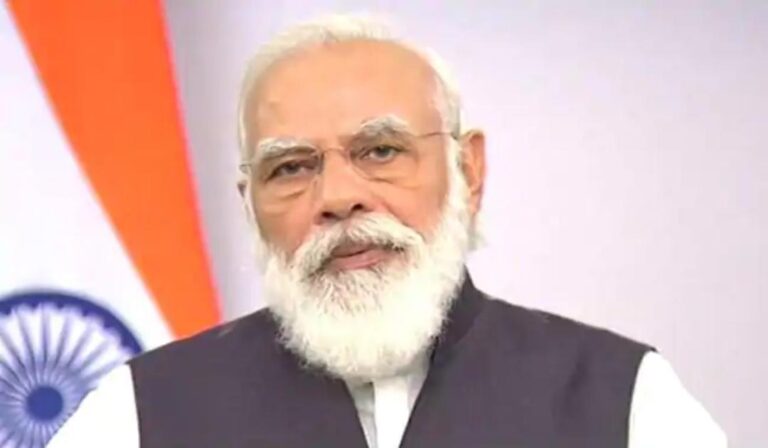
Amid spiralling cases of coronavirus in the county, Prime Minister Narendra Modi on Tuesday chaired a high-level meeting with top officials to review the present situation in the country.
-
The Prime Minister was briefed about the COVID-19 situation in the country relating to oxygen availability, medicines, health infrastructure, etc.
-
The Empowered Group working on boosting oxygen supply informed the Prime Minister about the efforts being made to ramp up the availability and supply of oxygen in the country.
-
They also informed the Prime Minister about increasing allocation of oxygen to states. It was discussed that the production of liquid medical oxygen in the country has increased from 5700 MT/day in August 2020 to the present 8922 MT (on 25th April 2021).
-
The domestic production of liquid medical oxygen is expected to cross 9250 MT/day by the end of April 2021.
-
The Prime Minister instructed the officials to work closely with state governments to start the pressure swing adsorption (PSA) oxygen generating plants at the earliest. Officers also apprised PM Modi that they are encouraging states to also set up PSA oxygen plants.
-
PM Modi was briefed about the functioning of the Oxygen Express Railways Service as well as the domestic sorties and international sorties undertaken by IAF to transport oxygen tankers.
PM briefed about availability of beds, ICUs
-
The Empowered Group working on medical infrastructure and COVID management briefed the PM on efforts being undertaken to ramp up the availability of beds and ICUs. They informed the Prime Minister about the efforts being taken to break the chain of transmission.
-
PM Modi stressed on the need to ensure that specific guidelines and strategies evolved regarding COVID management are properly implemented by the relevant agencies in the states.
-
The Empowered Group working on communication informed PM Modi on the efforts being undertaken to improve awareness among people on COVID-related behaviour.
-
Cabinet Secretary, Home Secretary, Secretary RT&H, Secretary I&B, Secretary Pharmaceuticals, Member NITI Aayog, DG ICMR, Secretary Biotechnology and other senior officers were present in the meeting.
KEY STORY
-
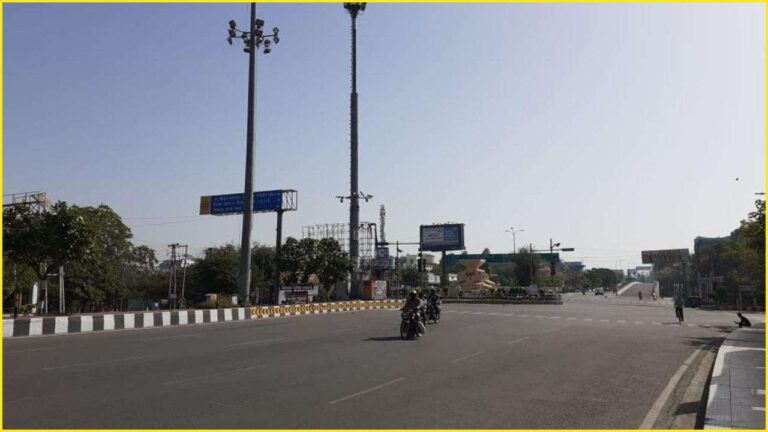
New Delhi: Amidst the rapidly increasing COVID-19 cases during the deadly second wave, several state governments across India have imposed stringent travel and movement restrictions in a bid to curb the spread of coronavirus infection. While Delhi has extended the lockdown till 5 AM, May 3 due to the crisis, other states such as Karnataka, Kerala, and Maharashtra too announced travel restrictions.

-
Here are all the COVID-19 travel restrictions and lockdown norms imposed in various states in India.
-
Recently, Delhi government announced a six-day lockdown till April 26, 2021, due to the rising coronavirus cases. However, on Sunday, the Delhi government extended the lockdown by a week more, i.e., till 5 AM, May 3. It is a “last resort” measure put in place to arrest the alarming spread of Covid-19 in the Capital, as the health care infrastructure remained overwhelmed by a massive surge in infections. In the city, there are complaints of shortages of medical oxygen and hospital beds.
-
While unnecessary travelling and vehicle movement has been restricted in the national capital, there are exceptions as well. Essential activities, including the sale and supply of food items, groceries, medicines, etc., are allowed in the lockdown. T
-
here are no restrictions on the movement of health care workers, frontline workers, government staff, judicial officials, journalists and those seeking medical attention.
-
The lockdown order issued on Sunday also specified that there will be no restrictions on the interstate and intrastate movement of all types or goods, cargoes and empty trucks. They don’t need any separate movement passes.
-
Delhi Metro and public buses are functional but with only 50% occupancy. Autos and electric autorickshaws are allowed to run with only two passengers. Taxis, app cabs too are allowed to move with two passengers. Petrol pumps, CNG stations, LPG stations are functional.
-
Karnataka
-
Amid the ever-increasing coronavirus cases, on Monday, the BS Yediyurappa-led Karnataka government imposed a 14-day curfew in the state. The lockdown will begin on Tuesday night from 9 PM.
-
Essential services will be allowed between 6-10 am; after 10 am shops will remain closed; only construction, manufacturing, and agriculture sectors are allowed to function. Meanwhile public transport will remain shut; schools, colleges, universities will remain shut; Inter or intra-state travel will not be allowed, except for emergency purposes.
-
Also, home delivery of liquor is permitted, takeaway from restaurants will be available and interstate transportation of goods will function too.
-
State and central government employees, essential services’ employees can move and avail transportation upon providing valid IDs. People eligible for vaccination can move and avail transport system upon showing minimal proof. The state will provide free vaccination to all including people aged between 18-45 years.
-
Patients and their helpers and close relatives requiring essential travel are allowed to move. People who need medical assistance can move. In case of emergencies, people required to visit doctors or hospitals are free to move.
-
Taxis (including auto rickshaws) and services of cab aggregators can be used only for emergencies, vaccination, to take people who work in exempted industries or jobs and to take people to railway stations and airports.
-
Maharashtra
-
In Maharashtra, one of the worst-hit states in India, the travel restrictions are in effect till 7 am on May 1, 2021. These restrictions have been imposed to ensure that a maximum number of people remain at home.
-
Unnecessary traveling is barred, while the essential service workers are allowed to move by providing valid identity proof. Public transportation too is allowed to be operational for the personnel involved in essential services.
-
The local trains, metro, and monorail services are operational only for government employees and healthcare workers, upon production of valid I cards. Movement of private passenger transport such as taxis and autorickshaws is only for emergency and essential services and restricted to within the city of residence with the driver plus 50 per cent of the seating capacity.
-
The emergency and essential services’ workers can avail themselves the state-run buses but these are allowed to operate at 50% of total capacity.
-
Kerala
-
Kerala has announced that the state will not see a total lockdown, but strict restrictions will remain in place. Chief Minister Pinarayi Vijayan, after a virtual all-party meeting on Monday, said that the government will impose restrictions on non-essential activities and weekend curfews to curb the spread of the virus.
-
In the state, the 9 pm to 5 am night curfews and the weekend curfews, during which only essential activities will be allowed, shall continue, the CM added. Public transport will carry on unhindered. For private transport during curfews, people will have to state reasons for stepping out.
-
Cinema theatres, shopping malls, gymnasiums, sports complexes, clubs, swimming pools, tourism parks, bars and outlets selling foreign liquor will be temporarily shut down across the state. Religious places, especially mosques during the ongoing Ramzan, must control crowds to less than 50 at a time.
-
Meanwhile only vehicles carrying people involved in essential and emergency services are allowed to ply on roads. The vehicles related to hospital emergencies, election related vehicles are exempted from the restrictions. However, no unnecessary venturing out on roads is allowed.
-
No more than 50 people can attend weddings while the same for funerals is 20. All such functions shall be held after registering on the Covid-19 jagratha portal.
-
Tamil Nadu
-
Tamil Nadu too has announced a slew of COVID-related travel restrictions in the state effective from April 26. The state has joined other states in imposing weekend lockdowns and has announced a complete lockdown in the state on Sundays, with an exemption for essential services.
-
Unnecessary travelling has been restricted in the state. However, people working in essential service sectors and people travelling for emergency reasons are allowed to move, but they have to provide valid IDs and reasons. Passengers travelling to Tamil Nadu from other states, except for Puducherry, will need to apply for an e-pass through the government portal.
-
Cabs are allowed to ferry only a total of three passengers excluding the driver while auto rickshaws will be allowed to carry two passengers excluding the driver.
-
Private and government bus services are allowed to be functional but passengers will not be allowed to travel while standing. Grocery, vegetable and other outlets are allowed following standard operating procedures.
KEY STORY
-
In the wake of the prevailing situation resulting from the second wave of COVID-19, the Indian Railways has cancelled the services of 40 trains. Speaking to reporters, North Western Railway (NWR) region deputy general manager Lt. Shashi Kiran said the decision has been taken to cancel 40 trains due to the situation resulting from COVID-19 and low passenger load. The train services will remain suspended till further orders.

-
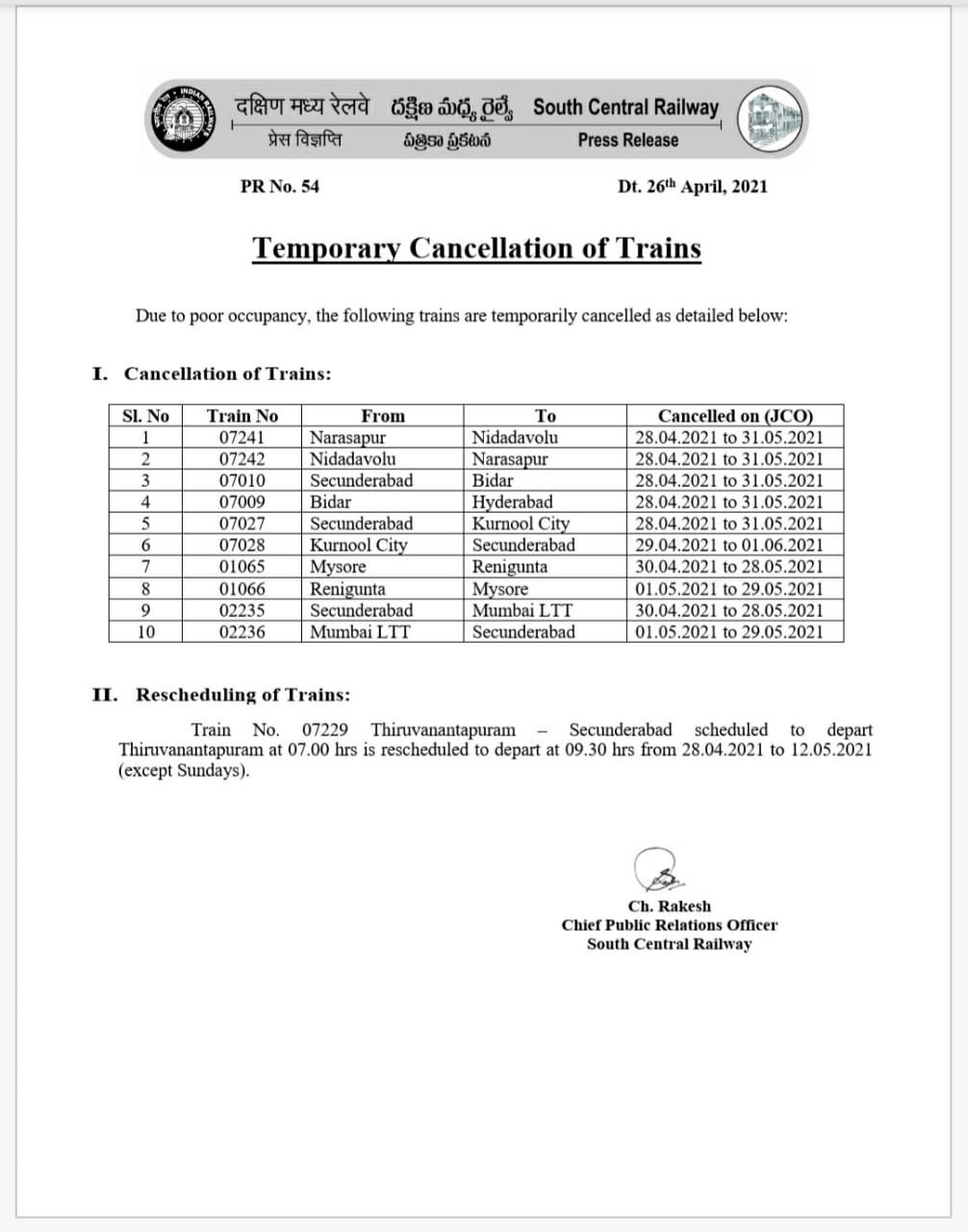
The South Central Railway (SCR) has also announced that it has cancelled as many as 10 trains scheduled to run between April 28 and June 1. The cancellations will affect some services to Andhra Pradesh, Telangana, Karnataka and Maharashtra.
-
The SCR has also rescheduled the departure timing of Train No. 07229 from Thiruvananathapuram to Secunderabad. Instead of 7 a.m., the train will depart from Thiruvanathapuram at 9.30 a.m., from April 28 to May 12.
KEY STORY
-
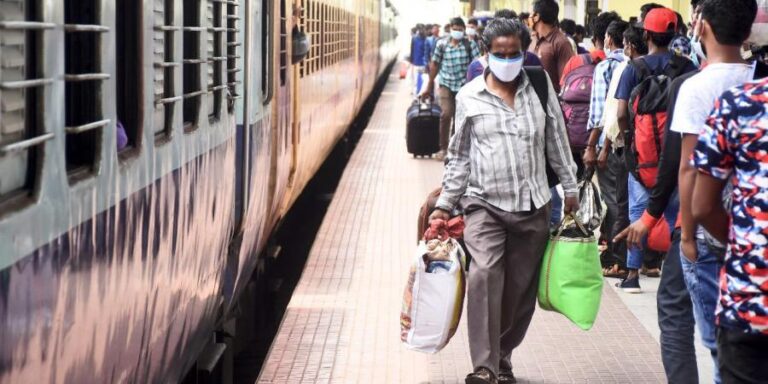
The “Covid Curfew” since Tuesday evening has pushed up the demand for train tickets from residents of West Bengal and Bihar, who are largely labourers, wanting to leave Bengaluru.
-
The big waiting list and repeated enquiries at KSR and Yesvantpur railway stations prompted the South Western Railway to announce a special train to Danapur in Bihar on Wednesday morning (8 am departure) and one to Patna at night.
-
The Bengaluru-Danapur Covid special train was fully booked within two hours of opening reservations. SWR had earlier announced a special train from Bengaluru to Howrah on April 30 and one from Bengaluru to Tata Nagar on May 4.
-
Divisional Railway Manager A K Verma told The New Indian Express, “There was some rush noticed at Bengaluru and Yesvantpur stations for trains towards Bihar and West Bengal. We are announcing new trains in that direction.
-
”Since April 24, SWR has been running five fully reserved weekly special trains, four from Yesvantpur to Howrah, Gorakhpur, Guwanahi and Danapur, and one from Mysuru to Howrah. The trains totally have 7,000 berths.
Many trains cancelled
-
The Railways has temporarily cancelled the following Express Special trains on different dates starting Wednesday: The Shatabdi between KSR Bengaluru and MGR Chennai Central cancelled both ways from April 28; Kochuveli-Banaswadi-Biweekly Hamsafar Special cancelled from Kochuveli end (April 29) and Banaswadi end (April 30); Coimbatore-KSR Bengaluru- Coimbatore cancelled from both ends on April 29; MGR Chennai Central-Mysuru-Chennai Central cancelled from both ends from April 29, Ernakulam-Banaswadi-Ernakulam Biweekly Superfast Express Special cancelled from May3 from Ernakulam and from May 5 from Banaswadi; Chatrapati Shivaji Maharaj Terminus-Gadag Express-CSTM cancelled from April 28. Three pairs of MEMU trains have been cancelled from April 29. They are the Baiyappanahalli-Hosur-Baiyappanahalli, KSR-Hosur-KSR and KSR-Marikuppam-KSR.
KEY STORY
-
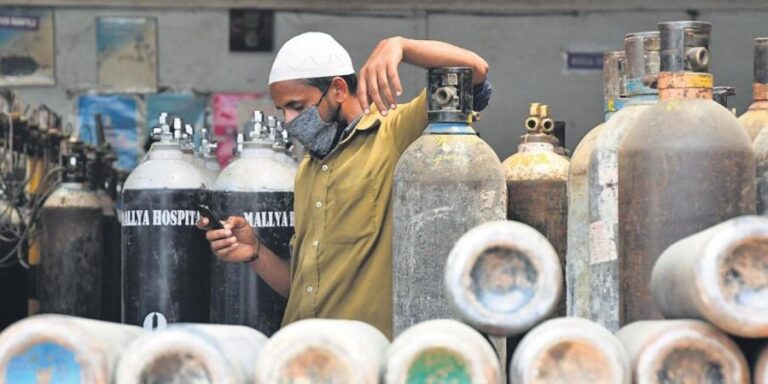
Noting that the situation is alarming in Bengaluru as there is a huge gap in demand and supply of medical oxygen and Remdesivir, and also the availability of beds, the Karnataka High Court on Tuesday directed the Union Government to take immediate steps to allocate 802 metric tons of oxygen per day to Karnataka.
-
An assurance to this effect had earlier been given to the state by the Principal Secretary, Union Ministry of Health and Family Welfare, in a letter.
-
A division bench of Chief Justice Abhay Shreeniwas Oka and Justice Aravind Kumar issued the directive during a special sitting held to deal with PILs arising out of Covid-19, when the court was informed that the allocation to Karnataka is yet to be made, though it was promised on April 24.
-
The court noted that oxygen supply is a serious issue in the state, specially in Bengaluru. The state’s requirement of oxygen is 1,417 metric tons a day in view of the expected 3,24,944 active cases by April 30.
-
It is recorded that the Centre has agreed to allocate 802 metric tons and 812 is Karnataka’s domestic production capacity, it noted.
-
Prior to this, Dr H M Prasanna, president of the Private Hospitals and Nursing Homes Association (PHANA), informed the court that they are able to procure only about 25 per cent of their Remdesivir requirement and 50 per cent of oxygen.
-
They are paying 3-4 times more than the actual cost, he added. The court also directed the State Government and the BBMP to publish information about the availability of Remdesivir and oxygen in public domain, as directed earlier.
-
As the Corona Curfew starts from Tuesday night, people cannot run one place to another for the drug. This is one area where immediate steps are required to be taken, the court noted.
CONCLUSION
-
Pointing out that there has been only a marginal increase in the number of beds in different categories in Bengaluru from April 23, after directions were issued, the court said the situation is very alarming as the available beds may not be enough to meet the demand.
-
Therefore, the state and BBMP should make immediate efforts to increase the number of beds, the court said.
KEY STORY
-
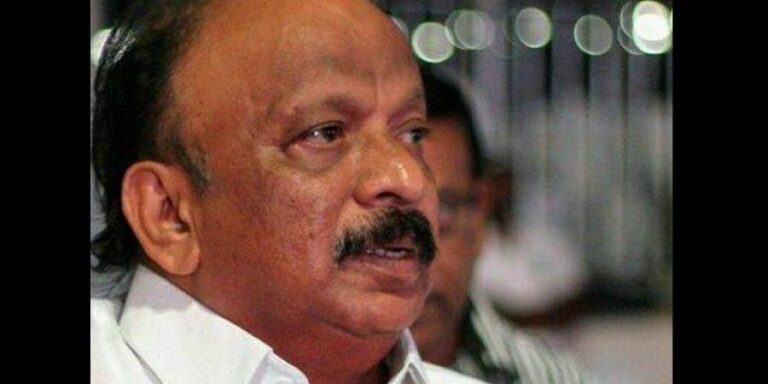
The Central Bureau of Investigation on Tuesday filed a supplementary charge sheet before the designated court for CBI cases in Bengaluru against former Congress minister R Roshan Baig, his firm Danish Publications, managing director of IMA Mohammed Mansoor Khan and other directors of the company in the multi crore I Monetary Advisory (IMA) scam.
-
According to the CBI, Baig had allegedly “received several crores of rupees from the IMA funds for election expenditure. He was also utilising the said funds for the day-to-day expenditure including salaries of employees of his firm Danish Publications.
-
He spent the funds for various social and cultural activities in his constituency to increase his popularity,” said the CBI spokesperson.
-
The IMA had raised illegal funds of around Rs 4000 crore through unauthorised deposits from around one lakh gullible investors, said the CBI. “That money was diverted to Baig so that the IMA could continue it’s illegal activities,” it alleged.
-
The central anti-corruption agency had registered four cases in the IMA scam and filed three charge sheets and three supplementary charge sheets against 33 accused including Mansoor Khan, other directors, several private persons, some revenue and police officials.
CONCLUSION
-
“The IMA had raised unauthorised deposits and had cheated the public by failing to repay the principal as well as the promised returns. These funds were allegedly diverted for acquiring properties, paying bribe to some government officials.
-
Several IMA properties have been identified and attached under the Karnataka Protection of Interest of Depositors in Financial Establishments (KPIDFE) Act, 2004 by the Competent Authority,” added the CBI.

KEY STORY
-
The government has issued an admission policy notification as panicked people not in need of hospitalisation are also rushing to hospitals for admission, causing severe strain and crisis for the medical fraternity that is already under pressure. This kind of actions is also hurting the survival chances of seriously ill patients.
-
While hospitals across India are battling to render life-saving medical care to COVID-19 patients, there is a serious shortfall of medical supplies, apparatuses, set-ups and beds that the hospital authorities have to workaround. The shortfall in medical oxygen supplies has allegedly caused shocking losses in terms of lives and health.
-
Through a new notification, the government – through the Ministry of Health and Family Welfare – has now decided that for hospital admission, patients with severity of symptoms will be given precedence over those with a mild or moderate range of symptoms.
-
The government has drawn up a table to categorise and defines which cases are Aymptomatic/symptomatic, which ones are mild, which ones are moderate and which ones fall in the Severe category.
-
It has been decided that Asymptomatic/Presymptomatic cases must undergo Home Isolation or be admitted to regular Covid Care Centres (CCCs). These are the cases that have been diagnosed as COVID-19 positive but with no symptoms being manifested currently.
-
The same is applicable for mild cases as well. Those with mild cases may have a fever and/or an uncomplicated Upper Respiratory Tract Infection without Dyspepnoeas and hypoxemia (SPO2 – Oxygen in blood level to be monitored 10-12 times a day on pulse oximeter).
-
For cases diagnosed as Moderate, the criteria are that they may have pneumonia with RR Count more than 24, with no signs of severe disease or SPO2 level is less than 94 per cent. Such persons may be admitted to Dedicated COVID Health Centre (DCHC).
-
Similarly, those cases that are Severe – criteria being that they show Respiratory distress requiring mechanical ventilation (non-invasive and invasive) and SPO2 less than 90 per cent and RR Count more than 30 – should be admitted to DCH.

-
The Ministry of Health and Family Welfare admission guidelines for coronavirus related fever also mention that cases with even very mild/pre-symptomatic/asymptomatic falling in the following category – will be compulsorily admitted to CCC. These patients are not eligible for Home Isolation:
-
Patients suffering from immune-compromised status (like HIV, organ transplant recipients, cancer therapy etc.
-
Elderly patients aged more than 60 years of age
-
Those patients who have co-morbidities such as Hypertension, Diabetes, Heart Disease, Chronic Lung/Liver/Kidney Disease, Cerebro-Vascular disease etc.
The patients in category 2 and 3 above can be allowed to go on Home Isolation if the treating physician, after proper evaluation, certifies that the patient is fit and stable for Home Isolation.


KEY STORY
-
WhatsApp has since long been hinted at bringing more options to its disappearing messages. Building on the speculations, the chat app has now been reported to add a more limited time frame option to the feature soon.

-
The Facebook-owned chat app introduced the Telegram-like disappearing messages option to its global users late last year. The option can be turned on or off by opening a particular chat, clicking on the contact’s name/ number and tapping on disappearing messages.
-
If or when activated, the option lets users send messages to the contact that disappear in a seven days time period. WhatsApp is now working on further shortening this time to as little as 24 hours.
-
The tip comes from a leak uncovered by WABetaInfo. The publication has spotted an upcoming version of the app wherein an additional 24-hour option is seen with disappearing messages.
-
The feature has been spotted in the iOS version of WhatsApp for now. Sharing screenshots of the same, the report by WABetaInfo confirms that the feature will soon be available to WhatsApp users on both Android and iOS.

-
As per the report, the new limited-time option will expand the user choices for the feature. WhatsApp users will be able to select if they want the disappearing messages to work on a 24-hours basis, on a 7-day basis or to keep it off altogether. All the options will be displayed right where the feature is seen right now, under the contact’s info page.
CONCLUSION
-
The co-existence of both the timeframes is a big revelation through the report, as earlier, the 24-hour option was thought to be the only choice for the feature going forward. As for its working, all messages sent or received under the 24 hours disappearing messages option will vanish from the chat after 24 hours.
-
The report says that the new option for disappearing messages is still under development. It is expected to be available in a future update for iOS, Android as well as WhatsApp Web.
1...599600601...884Page 600 of 884