
KEY STORY
-
Bharat Bandh : Farmers’ organisations from Karnataka, Maharashtra, and Tamil Nadu have also called for a shutdown tomorrow, i.e. on 25th September 2020.
-
Amidst huge uproar by the opposition parties, more than two dozen farmer organisations have extended their support to the ‘Bharat Bandh’ call tomorrow (Friday, September 25) to protest against the farm Bills passed by Parliament. Notably, 31 farmer bodies in Punjab and Haryana cutting across party lines are already protesting against the farm Bills.
-
Farmer organisations such as All India Farmers Union (AIFU), Bharatiya Kisan Union (BKU), All India Kisan Mahasangh (AIKM), and All India Kisan Sangharsh Coordination Committee (AIKSCC) have announced a nationwide bandh tomorrow.
-
farmers’ bodies from Karnataka, Tamil Nadu and Maharashtra have also called for a shutdown on September 25. Ten Central trade unions, including All India Trade Union Congress, National Trades Union Congress, Centre of Indian Trade Unions, Hind Mazdoor Sabha, All India United Trade Union Centre and Trade Union Coordination Centre have also come out in support of ‘Bharat Bandh’ on September 25.
-
All India Kisan Sangharsh Coordination Committee convenor VM Singh, who hails from central Uttar Pradesh, said: “There will be nationwide unrest if MSP is not guaranteed and the food security of the poor is handed over to multinationals and corporates.”
-
Jai Kisan Andolan’s Avik Saha said, “We have been trying to engage democratically with the government. After the ordinances were issued, hundreds and thousands of letters have been sent to the Prime Minister. But even in Parliament, this government has refused to listen”.
-
Farmers have been asked by the unions to come forward and oppose the legislation. “On September 25, there will be farmers’ curfew, blockade and till purchase of produce as per MSP is guaranteed in the law, the agitation will go on,” said Bharatiya Kisan Union.
CONCLUSION
-
Meanwhile, various farmers’ unions in Punjab are claiming that Shiromani Akali Dal leader Harsimrat Kaur Badal stepped down as a minister from the Union Cabinet because of their pressure. However, they added, the real success will be when the law is repealed.
-
As per the unions, the problem with the Bills is not just Minimum Support Price (MSP) but also the phasing out of the mandis. If that happens, farmers will become much more vulnerable to exploitation as they are producers, not agri-businesses, said the unions.
-
Eighteen political parties have come out in support of the farmers. Congress (which has governments in four states), All India Trinamool Congress (West Bengal), Aam Aadmi Party (Delhi), Left (Kerala), Telangana Rashtra Samithi (Telangana) and the Biju Janata Dal (Odisha) have demanded that the Bills be sent to a select committee.
-
The Rajya Sabha has passed the Farmers’ Produce Trade and Commerce (Promotion and Facilitation) Bill, 2020, and the Farmers (Empowerment and Protection) Agreement on Price Assurance and Farm Services Bill, 2020.

KEY STORY
-
American motorcycle manufacturer Harley-Davidson Inc is planning to wind up its assembly operations in India owing to poor sales and no visibility for future demand.
-
The firm has reportedly approached a few automakers soliciting a possible outsourcing deal using its leased assembly facility at Bawal in Haryana, The Hindu has reported.
-
The decision is in accordance with the iconic motorcycle maker’s “rewire” strategy, which seeks to focus around 50 markets where the company is doing well, the report said.
-
Harley-Davidson India sold less than 2,500 units in the last financial year, making it one of its worst-performing international markets, it said.
-
“The company is evaluating plans to exit international markets, where volumes and profitability do not support continued investment in line with the future strategy,” the high-end bike maker said in July.
-
The motorcycle maker will likely run a skeletal operation to provide after-sales service for bikes already on the road in India, a person privy to the preliminary talks.

CONCLUSION
-
The US company, in March 2020, named a board member, hailed for turning around the Puma brand’s near-bankrupt business, as its interim chief. Jochen Zeitz was asked to take over after Chief Executive Officer Matthew Levatich stepped down following the Milwaukee, Wisconsin-based company’s worst sales performance in 16 years in the US.
-
In addition to international markets, Harley Davidson has failed to increase sales in the United States too. The US accounts for more than half of its motorcycles sold.
-
Falling sales in the past 12 quarters have forced the company to limit the production of its bikes to prevent price discount pressure and protect profit.
-
In 2019, the company’s bike shipment volume in the United States was the lowest in at least two decades. Global shipments were the lowest since 2010.
KEY STORY
-
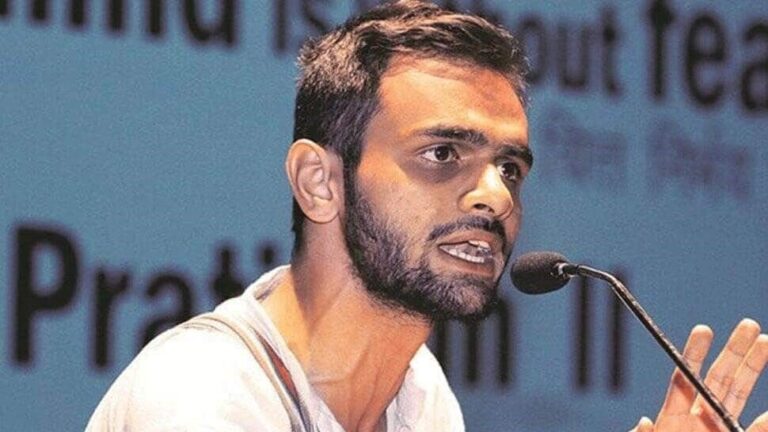
A Delhi court Thursday sent former JNU student leader Umar Khalid, arrested under the stringent anti-terror law, Unlawful Activities (Prevention) Act, in a case related to the communal violence in north east Delhi in February, to judicial custody till October 22.
-
Umar Khalid was present before Additional Sessions Judge Amitabh Rawat through video conferencing at the end of his police custody.
-
Khalid was arrested on September 13 in the case.Police did not seeks his further custody.
-
the FIR, police has claimed that the communal violence was a “premeditated conspiracy” which was allegedly hatched by Khalid and two others.
-
He has also been booked for the offences of sedition, murder, attempt to murder, promoting enmity between different groups on grounds of religion and rioting.
-
Khalid had allegedly given provocative speeches at two different places and appealed to the citizens to come out on streets and block the roads during the visit of US President Donald Trump to spread propaganda at international level about how minorities in India are being tortured, the FIR alleged.
CONCLUSION
-
In this conspiracy, firearms, petrol bombs, acid bottles and stones were collected at numerous homes, FIR claimed.
-
Co-accused Danish was allegedly given the responsibility to gather people from two different places to take part in the riots, police alleged. Women and children were made to block the roads under the Jafrabad metro station on February 23 to create tension amidst the neighborhood people, the FIR said.
-
Communal clashes had broken out in northeast Delhi on February 24 after violence between citizenship law supporters and protesters spiralled out of control leaving at least 53 people dead and around 200 injured.
HIGHLIGHTS
-
Congress MLA B Narayan Rao, 65, who was admitted to a private hospital after contracting COVID-19, passes away on Thursday at a private hospital in Bengaluru. He was in a critical state, the hospital had said on Wednesday.
-
Rao, the sitting MLA from Bidar, was admitted to the Manipal Hospital on September 1 with diagnosis of severe COVID-19 infection, hospital director Dr Manish Rai said.
-
“He was critically ill with multi-organ failure on multiple supports including ventilator in the Intensive care unit under constant observation by our expert panel of doctors,” Dr Rao said.

KEY STORY
-
International Film Festival of India, IFFI, 51st edition of IFFI, coronavirus pandemic,InternationalFilmFestival circuit.
-
The 51st edition of the annual International Film Festival of India (IFFI) which was scheduled to start from November 20 in Goa has been postponed to next year amid the coronavirus pandemic.
-
Information and Broadcasting Minister Prakash Javadekar said in a statement on Thursday that the decision to postpone IFFI was arrived at after he discussed the matter with Goa Chief Minister Pramod Sawant
-
The Press Information Bureau (PIB) confirmed the news on their Twitter handle. Their tweet read, “51st Edition of the #InternationalFilmFestival of India, #Goa postponed to 16th to 24th January 2021. Earlier it was scheduled to be held from 20th November to 28th November 2020.”
-
The Bureau further informed that the festival will be conducted in virtual and physical formats. They tweeted, “The festival will be conducted in a Hybrid format i.e. Virtual & Physical format.”
CONCLUSION
All #COVID related protocols will be strictly enforced as per the festivals convened recently in the #InternationalFilmFestival circuit.”
The 51st edition of the IFFI will be held in the coastal state from 16 to 24 January.
I&B Ministry officials said the decision was taken keeping in mind the COVID-19 situation. “It has also been jointly decided to hold the festival from 16th to 24th January, 2021 at Goa as per the International Film Festival guidelines and protocols,” Javadekar said.

KEY STORY
-
Vodafone Idea Ltd lost 4.8 million users in June, registering eight straight months of decline. Rival Bharti Airtel Ltd’s loss of users narrowed to 1.1 million from the previous two months when India’s economic activity came to a standstill due to cvoid-led lockdowns. At 4.5 million, Reliance Jio Infocomm Ltd was the only telecom operator to have added customers in June.
-
Mukesh Ambani’s Reliance Jio now has 34.8% wireless market share, while Airtel and Vodafone’s subscriber base stood at 27.8% and 26.8%, respectively, Telecom Regulatory Authority of India (Trai) said on Thursday.
-
India’s overall mobile subscriber base — 2G, 3G and 4G–declined by 3.2 million in June, taking the total to 1.14 billion. However, the fixed-line subscriber base increased a marginal 40,000 to 19.8 million amid the government’s focus to improve broadband connectivity.
-
Reliance Jio, Airtel and Vodafone added fixed-line subscribers in June, at 2.2 lakh, 25,256 and 6,854, respectively. However, BSNL lost 1.8 lakh wireline customers in the reporting month.
-
Total subscription in urban areas decreased to 636.8 million in June from 637.9 million at the end of May.rural subscriptions declined to 523.7 million as of 30 June from 525.8 million a month ago.

CONCLUSION
-
The loss of millions of mobile subscribers is due to deactivation by those holding multiple SIM cards, besides the migration of workers to their native places. Lack of physical recharge outlets added to the losses that started at the end of March.
-
In the fixed-broadband category, BSNL led with 7.9 million subscribers in June, followed by Bharti Airtel at 2.5 million, Atria Convergence Technologies at 1.7 million and Reliance Jio 1.1 million. Both Reliance Jio and Airtel have recently launched cheaper fixed broadband plans to attract customers in a tariff war-stricken market.
HIGHLIGHTS
-
Despite the unavailability of Chris Morris, Royal Challengers Bangalore look to be in better shape than Kings XI Punjab. One match really shouldn’t say much about a long tournament, but RCB had a lot of positives in their opening match of IPL.
-
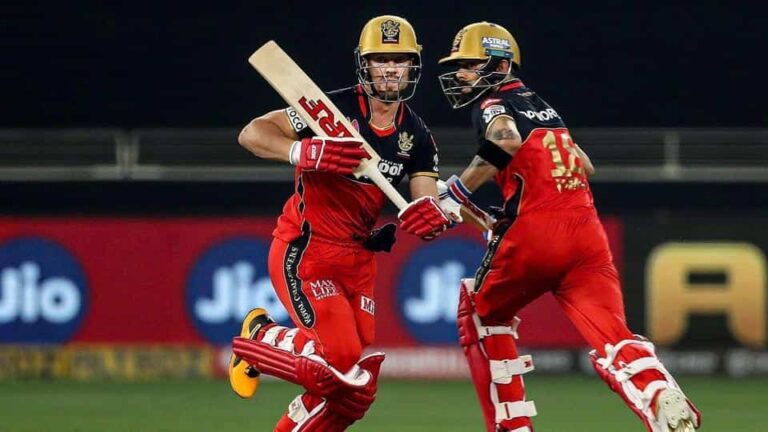
Royal Challengers Bangalore (RCB) started their Indian Premier League (IPL) journey in 2020 on a handsome note. Virat Kohli and Co got past the Sunrisers Hyderabad (SRH) by 10 runs after some impressive performances from IPL debutant Devdutt Padikkal, AB de Villiers, Navdeep Saini and leggie Yuzvendra Chahal- the Player of the Match.
-
RCB are next set to lock horns with KL Rahul’s Kings XI Punjab (KXIP) on Thursday, September 24 at the Dubai International Cricket Stadium. The Mohali-based franchise is coming off a Super Over defeat against the Delhi Capitals (DC) and will be looking to make amends. Though RCB and KXIP are locked on equal wins on head-to-head, it’s the former, who’s on a four-match winning streak.
-
In the bowling front, Yuzvnedra Chahal was the start as usual. He has emerged as RCB’s No.1 bowler. Navdeep Saini’s performance with the new and old ball is certain to put a broad smile on the RCB management’s face.
-
The concern however is the form of Umesh Yadav, who once again leaked runs.
CONCLUSION
-
KXIP, on the other hand, would look to get over the heart-breaking defeat against DC. Apart from not being able to close the match, the fact that would hurt KXIP is the umpiring error which the management believe, may have cost them the match. The KL Rahul-led side however, would look to rise above it and showcase a better performance against RCB.
-
While KXIP’s bowling looked in top shape with Mohammed Shami looking menacing and Sheldon Cottrell delivering the goods and young Ravi Bishnoi impressing on debut, it will be the batting that will keep them on their toes.
-
Apart from Mayank Agarwal, none of the KXIP batters could get going in their previous match.
KEY STORY
-
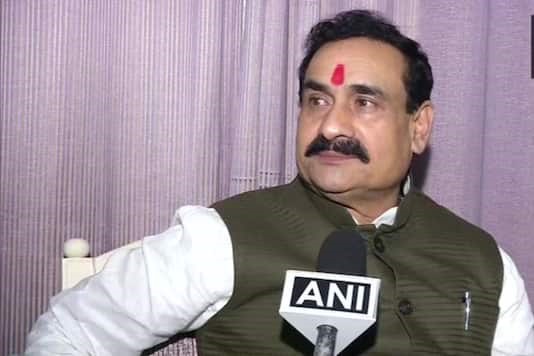
Madhya Pradesh Home Minister Narottam Mishra on Thursday apologised for not wearing a mask and urged everyone else to do so, a day after his “I don’t wear a mask” remark caused a flutter and drew fire from the Opposition.
-
“My statement over wearing a mask appears to be a violation of law. It wasn’t in line with sentiment of the PM. I accept my mistake and express regret. I’ll wear mask. I also appeal to everyone to wear mask & observe social distancing,” Mishra said in an early morning tweet today.
-
Earlier on Wednesday, when the BJP leader was questioned by reporters on not wearing a mask at an event in Indore, he responded, “I don’t wear a mask in any programmes. ‘Isme kya hota hai?’ (so what).”
-
Mishra was in Indore to participate in a programme for distribution of assistance under the state government’s Sambal Yojana, which provides social security cover to the poor and the SC and ST communities.
CONCLUSION
-
Reacting to his comment, state Congress spokesman Narendra Saluja slammed him, asking if masks were only meant for the common people. Following the attack from the Opposition, the minister later tempered his remarks, saying he cannot wear a face mask due to a medical condition.
“I normally wear a mask but I can’t sport it for a long time, as I am suffering from Polypus and if I wear a mask it leads to suffocation,” Mishra told reporters in Bhopal.
-
Indore is among the worst-hit districts in Madhya Pradesh with a total of 20,834 Covid-19 cases and 516 deaths so far. The Indore Municipal Corporation (IMC) penalises people without masks with Rs 200 fine, said an official.

KEY STORY
-
As Protests Spiral Over Farm Bills in Haryana and Punjab, Farmers in Uttar Pradesh are unhappy
-
Observers say that in Punjab and Haryana, farmers have large landholdings, they hold an influence over the government and that’s why mandis have worked well for them; also the maximum purchase is on the MSP. However, in UP it has been a largely different story.
-
As a political battle rages over the opening up of the farming and agricultural produce procurement sector to big private players, farmers in one of the biggest food grain and vegetable producing states, Uttar Pradesh, are in a fix.
-
Unlike the farmers in Haryana and Punjab, in UP the community, though a bit suspicious of the farm bills cleared by Parliament, is still in a mood to wait and watch. This is because dealing with private players, exploitation by both the government-controlled mandis and middlemen or agents of the open market is an existing bitter reality for them.
-
The ground situation in UP shows how both the government and the open markets can be exploitative for the farmers, especially where the bulk of the tillers constitute the poor and marginalised. With the average landholding being even less than the national average of 1.15 hectare, more than 80 per cent of farmers in UP fall below the mark.

WHY GOVERNMENT MANDIS ARE INEFFICIENT
-
The first obvious question is why unlike Haryana, Punjab and even states like Madhya Pradesh and Maharashtra, the government mandi and procurement system is so inefficient in Uttar Pradesh. It should not come as a surprise that this year, wheat procurement by the state government was just at 36 lakh metric ton, which was far below the target of 55 lakh metric ton. Such low purchase happened despite the fact that the state has produced a record 385 metric tons of wheat.
-
This is also the reality when it comes to rice purchase, even though the BJP government in the state led by Yogi Adityananth had been making big claims about improved mechanisms for government procurement.
DEPENDENCE ON OPEN MARKETS AND THE REALITY
-
With government procurement being less than 15 per cent of the total harvest, the open markets in their present structure are the only remaining option for the farmers. But experience shows that this open market has its own share of exploitation. Rarely big firms or companies do direct business with farmers, the bulk of whom have small landholdings.
-
The farmer has no other option but to deal with the middlemen, or Adhatiyas as they are known in local language. The Adhatiyas generally pay less than the MSP. The only solace for the poor farmer is that he gets just enough cash in hand to meet his investment requirements for sowing the next crop.
ROAD AHEAD AND POSSIBLE DANGERS
-
At the moment, as the government and the opposition lock horns over the merits and demerits of the new bills, serious doubts remain over the road ahead. On the opposition’s charges of betraying the farmers’ interests, Prime Minister Narenra Modi has assured the nation that neither will the MSP mechanism be diluted nor will the government procurement and mandis stop doing business.
CONCLUSION
-
“Farmers are therefore justified in their demand that the government should give a written assurance that it will continue with the MSP mechanism and that private players will not be able to decide their own rates,” Professor Trivedi maintains.
-
As political parties continue to battle over what is being termed as long-awaited structural reforms in the agriculture sector, there is a long road ahead to determine the actual impact of the potential new laws. The impact in turn will redefine the mood and politics on the ground. For the moment it is more of a wait-and-watch scenario for the “Annadata”.
STORY HIGHLIGHTS
-
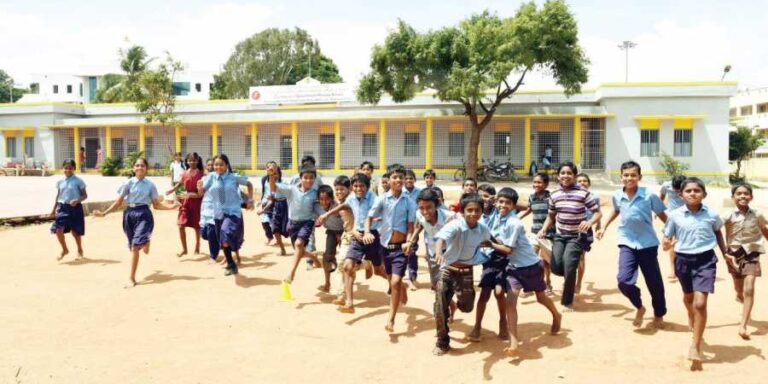
Lack of running water, poor maintenance and unavailability of separate toilets for girls too continue to affect school students, according to the CAG report tabled in Parliament on Wednesday.

-
Out of 2,326 constructed toilets surveyed, 691 or 30% were found not in use mainly due to lack of running water, lack of cleaning arrangements, damages or other reasons like use of toilets for other purposes.
-
Lack of running water, poor maintenance and unavailability of separate toilets for girls too continue to affect school students, according to the CAG report tabled in Parliament on Wednesday.
-
Over half of the government school toilets built by central public sector enterprises (CPSEs) do not have even the basic hand-washing facility, an even greater necessity in Covid-19 affected times, a survey of over 2,000 schools by the Comptroller and Auditor General (CAG) has found.
-
The Swachh Vidyalaya Abhiyan was launched by the Ministry of Human Resource Development in September 2014 to meet the Right to Education Act’s mandate that all schools must have separate toilets for boys and girls. Lack of dedicated funds, poor maintenance and poor water availability in toilets were identified as major challenges, and central public sector enterprises (CPSEs) were roped in to bridge the gap over a one year period.
Physical survey
-
There are 10.8 lakh government schools in the country. Overall, more than 1.4 lakh toilets were built by 53 CPSEs, with significant support coming from power, coal and oil companies. The CAG audit conducted a physical survey of a sample of 2,695 toilets built by these companies in 15 States.
No functional toilets
-
Out of the 1,967 coeducational schools surveyed, 99 schools had no functional toilets while 436 had only one functional toilet, meaning that the objective of providing separate toilets for boys and girls was not fulfilled in 27% of the schools, said the CAG.

-
In order to effectively change the behaviour of students, the project norms required the CPSEs to build toilets with running water and hand washing facilities, and to maintain the toilets for three to five years while charging the annual expenses to their CSR budgets.
CONCLUSION
-
According to the findings, the CPSEs did not construct 83 toilets though these toilets were identified by them for construction. Of the remaining 2,612 toilets which were reported to have been constructed, 200 toilets were not found constructed in the respective schools and 86 toilets were only partially built.
-
“The non-existing and partially constructed toilets constituted 11 % of toilets surveyed,” the CAG report pointed out.
-
The aim of providing separate toilets for boys and girls was not fulfilled in 535 schools, a sizeable 27 % of the sample.
-
Out of 2,326 constructed toilets surveyed, 691 or 30% were found not in use mainly due to lack of running water, lack of cleaning arrangements, damages or other reasons like use of toilets for other purposes.
1...793794795...883Page 794 of 883
