Social Activist Swami Agnivesh Dies At A Hospital In Delhi

Swami Agnivesh was receiving treatment for liver cirrhosis and had been on ventilator support for four days following multi-organ failure
New Delhi: Social activist Swami Agnivesh died after a cardiac arrest Friday evening at the Institute of Liver and Biliary Sciences in Delhi. He was 80 years old. Admitted to the hospital on Tuesday, Swami Agnivesh was being treated for liver cirrhosis and had been on ventilator support following multi-organ failure.
According to a statement by the hospital, his condition began deteriorating this evening and he suffered a heart attack at 6 PM. Doctors attempted to resuscitate him but failed, and he was declared dead at 6.30 PM.
A social activist, religious leader and former Haryana MLA, news of Swami Agnivesh’s death was greeted with shock, with Congress MP Shashi Tharoor and senior lawyer and activist Prashant Bhushan among those who tweeted.

In July 2018 Swami Agnivesh was brutally assaulted, allegedly by BJP Yuva Morcha workers, in Jharkhand’s Pakur, where he was attending an event.
As he came out of the hotel he was staying in, he was attacked by a mob who were allegedly chanting “Jai Sri Ram” as they thrashed him
“I am against any sort of violence. I am known as a peace-loving person. I don’t know why I was attacked,”
The BJP condemned the attack and insisted that the attackers weren’t associated with the party, but added that the incident was not a surprise given “Swami Agnivesh’s ‘track record'”.
“They were carrying black flags and without any warning pounced on me. They punched, kicked and dragged me on the ground. They also used cuss words,” Swami Agnivesh

Onion prices could touch Rs 100/kg by Oct as heavy rain damaged early-kharif crop, rabi stock

Over the last two weeks, wholesale and retail prices have more than doubled in several markets across India, including the largest wholesale onion market in Nashik.
New Delhi: Onion prices are witnessing a steep rise in retail and wholesale markets in several parts of the country with excessive monsoon rains causing crop damage in some states and affecting the quality of stored items in some others.
The early-kharif onion crop in the two southern states of Andhra Pradesh and Karnataka, which is usually supplied across the country in the July-September period, has been badly damaged due to flooding in farmlands due to incessant rains, according to traders.
Heavy rains in Gujarat, Maharashtra and Madhya Pradesh, the other major onion producing regions, have also hit the quality of onions stored from the bumper rabi harvest earlier this year.
As a result, the wholesale and retail onion prices have more than doubled in several markets as well as in major producing areas of the country over the last couple of weeks, shows data from the markets.
Retail prices have touched Rs 50 per kg in Mumbai and Kolkata, and Rs 60/kg in Delhi from the mid-20s range. Similarly, the wholesale rate in Nashik’s Lasalgaon, the country’s largest wholesale market of onions, has doubled to Rs 29/kg as of 8 September from Rs 12/kg on 28 August.
In Delhi’s Azadpur Mandi, the biggest vegetable and fruits market in Asia supplying Delhi and nearby states, onion prices have risen rapidly even as supply has dwindled almost 50 per cent. On 9 September, the wholesale onion price in Azadpur stood at Rs 23/kg with a supply of 628 tonnes as compared to Rs 8/kg on 27 August with a supply of 1,069 tonnes to the market.

HIGHLIGHTS

  • Retail prices have touched Rs 50 per kg in Mumbai and Kolkata, and Rs 60/kg in Delhi from the mid-20s range
  • Onion prices are witnessing a steep rise in retail and wholesale markets in several parts of the country due to excessive rain
  • Prices has doubled to Rs 29/kg as of 8 September from Rs 12/kg on 28 August.
  • The early-kharif onion crop in the two southern states of Andhra Pradesh and Karnataka is badly damaged due to heavy floods
Many traders said the prices are further expected to skyrocket to Rs 100/kg over the next month.

Private Schools in Bengaluru Want Students to Pay ‘Covid Fees’ as Classes Set to Restart

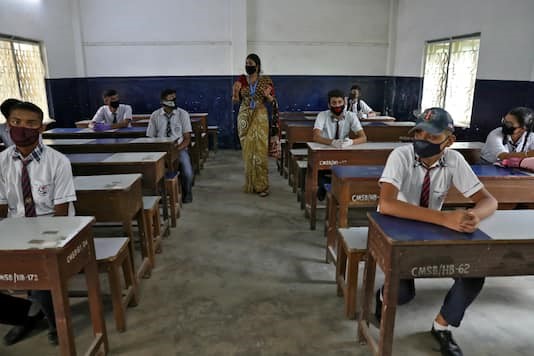
The Centre, in its recent set of standard operating procedures for schools, said that students from class 9 to 12 can return to schools September 21 onwards in a phased manner and on a voluntary basis. However, the school premises, especially the ones that were turned into Covid-19 facilities, need thorough cleaning.
After the Centre’s announcement of reopening educational institutions under Unlock 4, private schools in Bengaluru are mulling to levy an excess ‘COVID fees’ to fund the expenditure for sanitisation and disinfection of their premises. Students across India are set to return to campus from September 21 onwards.
The Centre, in its recent set of standard operating procedures for schools, said that students from class 9 to 12 can return to schools September 21 onwards in a phased manner and on a voluntary basis. However, the school premises, especially the ones that were turned into Covid-19 facilities, need thorough cleaning. Sanitisation of other buildings, setting up markers to ensure social distancing, sanitiser stations at entry points, are among the key guidelines for schools to reopen.
In Bengaluru, private schools say that the task of deep cleaning every few hours adds a huge responsibility on the management, as a result, an added amount will be sought from students as “COVID fees”, thereby raising the current fees.
“We plan to use 70 per cent alcohol wipes and good disinfectants to ensure the safety of our students. The housekeeping budget may go up by 5 per cent, but in the long run, only our children will benefit,” D. Shashi Kumar was quoted as saying. Kumar is the general secretary of Associated Management of English Medium Schools, a private-run body that coordinates management of English-medium primary and secondary unaided schools in Karnataka.

HIGHLIGHTS

  • Sanitisation of other buildings, setting up markers to ensure social distancing, sanitiser stations at entry points, are among the key guidelines for schools to reopen.
  • The school premises, especially the ones that were turned into Covid-19 facilities, need thorough cleaning.
  • private schools say that the task of deep cleaning every few hours adds a huge responsibility on the management,
  • We plan to use 70 per cent alcohol wipes and good disinfectants to ensure the safety of our students.
“It is a genuine expenditure, as housekeeping is going to escalate. We would need thermal scanners, disinfectants and necessary infrastructure,” Kumar said, adding that the move will also explain to the parents the expensive affair to ensure children’s safety.
The schools managements claim that the spike in fees would compensate for the continuous sanitisation process as areas/surfaces that are frequented by staff and students such as railings, desks, chairs and equipment have to be constantly disinfected to keep everyone safe.

Indian Railways: 80 new trains from September 12, tickets available from today

These new trains are being introduced keeping in mind the migrant workers who are now travelling back to their workplaces as unlocking has entered the fourth phase in September.
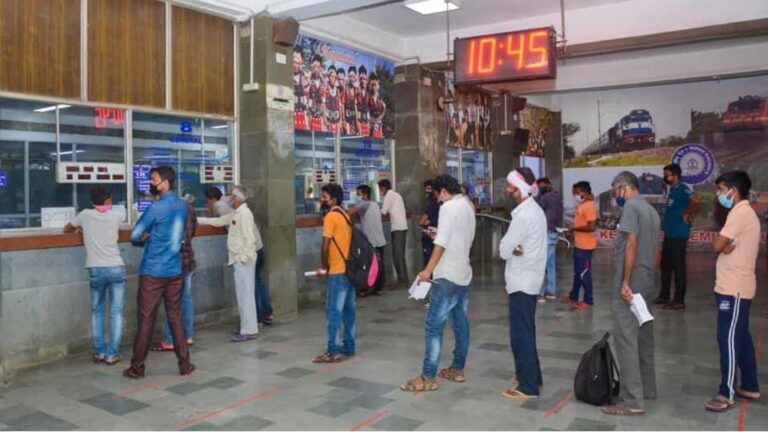
The Indian Railways will run 80 (40 pairs) new trains starting from September 12, tickets of which went live on Thursday at the Indian Railways website. These trains will be in addition to the 230 special trains already in operation — introduced at various stages of lockdown and unlocking in the last six months. The tickets are also available from station counters.
All regular passenger trains were suspended on March 25 owing to the nationwide lockdown. From May, the railways resumed operations in a staggered manner — first it ran Shramik Special trains to ferry migrants workers, then it introduced special trains, which are not regular passenger trains tailor-made according to demand. These new 80 trains, which will connect Delhi-Indore, Yesvantpur-Gorakhpur, Puri-Ahmedabad, Delhi- Bengaluru among other routes, will also be special trains.
Here’s all you need to know about the 80 new trains
1. Several trains connecting small cities to Delhi are being introduced in this phase. Varanasi-New Delhi vande Bharat Express will run from September 12. Here is the list of all 80 trains:


2. All these trains will be reserved
. To book tickets, log on to www.irctc.co.in. Or, download the IRCTC app
4. After logging in, you can look for the availability of these special trains and accordingly book tickets through e-payment. You will receive an SMS.
5. The stoppages of these trains will be regulated after consulting with the state governments
6. At present, the railways is running 30 Rajdhani-type special trains, which started from May 12. From June 1, the railways has been running 200 special Mail Express trains.
7. As several national-level examinations are going on, the railways is planning to run more special trains as and when the demand rises.
8. If waiting lists are long for any particular trains, the railways will run clone train to accommodate the waitlisted passengers, it has said.
9. The 80 new trains are being introduced keeping in mind the migrant workers who are now travelling back to their workplaces as unlocking has entered the fourth phase in September.
10. Owing to its limited service, the Indian Railways has estimated a loss of around Rs 40,000 crore in the current financial year.

Rajasthan: 30-year-old man buys 13-year-old UP girl, forcibly marries and sexually abuses her

A man from Rajasthan’s Chittorgarh sexually assaulted a 13-year-old from UP’s Sonbadhr for several months after buying and forcibly marrying her.
Jaipur: In a horrifying incident, a 30-year-old man from Babrana village of Rajasthan’s Chittorgarh district allegedly bought a 13-year-old girl from Uttar Pradesh’s Sonbadhr, forcibly married her at a public gathering seven months ago and then sexually abused her for several months.
After suffering for several months, the minor girl somehow managed to call the Childline helpline, following which she was rescued. Currently, she is staying at a shelter home in the district. On Wednesday, the survivor narrated her story to Dr Shailendra Pandya, a member of Rajasthan State Commission for Protection of Children, while he was on a visit to the shelter home.
Neighbour sold the minor girl, says shelter home in-charge
According to Bhojraj Singh, in-charge of the shelter home, the girl is a native of UP’s Sonbhadra, where she resided with her parents, a brother and two sisters. She was a Class 6 student. The family’s neighbour Lakshmi Dadeech is married to a Bhilwara resident, identified as Satyanarayan. On February 14, Lakshmi, on the pretext of a tour, brought the minor girl to Chittorgarh, where she was sold off to one Basanti Lal Dadeech of Babrana village for Rs 2.70 lakh,
Man, his elder brother thrash minor girl after she calls parents
After paying the money, Lal took the teenager to his village, married her at a mass gathering, and then sexually assaulted her. The minor survivor said that Lal and his elder brother thrashed her mercilessly when she called up her parents and narrated her ordeal. Her parents told her that they would take her back once the lockdown restrictions get lifted, but Lal did not let her speak to them

KEY HIGHLIGHT

  • February 14, the minor survivor’s neighbour, identified as Lakshmi Dadeech, brought her to Chittorgarh on the pretext of a tour
  • She sold her off for Rs 2.70 lakh to one Basanti Lal Dadeech of Babrana village for marriage
  • Lal and his elder brother allegedly thrashed the girl when she called up her parents and narrated her ordeal.
After that ,she added Police have been asked to register a case under the provisions of the POCSO Act, child marriage, child trafficking and domestic violence. Pandya said the state child rights commission would also take action against gangs involved in trafficking minors for marriage.

“Corona Is Gone,” Declares BJP’s Bengal Chief At Crowded Rally

Dilip Ghosh claimed that Mamata Banerjee was only “pretending” the virus is around and imposing lockdowns for the sole purpose of blocking BJP rallies ahead of elections due next year.
New Delhi: Elections in Bengal are just months away now and the state’s BJP unit appears to have recruited the corona virus in its campaign against Chief Minister Mamata Banerjee’s Trinamool Congress. “Corona is gone,” the BJP’s top leader in Bengal declared at a public rally on Thursday, at a time the country is hitting record spikes in corona virus cases. Dilip Ghosh claimed that Mamata Banerjee was only “pretending” the virus is around and imposing lockdowns for the sole purpose of blocking BJP rallies ahead of elections due next year.
“Corona chole gechhe (Corona virus is gone). Didimoni (Mamata Banerjee) is just pretending and imposing lockdowns so that the BJP can’t organise meetings and rallies in the state. No one can stop us,” Dilip Ghosh, Bengal BJP chief, said at a rally in Dhaniakhali.
India has crossed 45 lakh corona virus cases with 96,551 new infections and 1,209 deaths in 24 hours, a record so far. Bengal has close to 2 lakh infections and over 3,700 deaths.
In his latest comments on the Covid-19 crisis, Prime Minister Narendra Modi on Thursday urged people not to take coronavirus lightly and follow rules of wearing face masks and maintaining social distancing until scientists developed a vaccine.
But a member of his own party seemed to undermine the threat as he addressed a crowded public meeting at a time other top leaders have switched to online rallies. The BJP had, earlier this year, relentlessly attacked the state’s ruling Trinamool over Bengal’s worsening virus crisis, saying it had deliberately underreported cases and deaths.
The BJP’s national chief JP Nadda also targeted Mamata Banerjee yesterday, calling her government “anti-Hindu” for ordering a Covid lockdown on August 5 – the date of the ground-breaking ceremony for a Ram temple at Ayodhya. She did it “to prevent people from being part of the occasion at local level,” said Mr Nadda, but at the same time eased restrictions in the state on July 31 for Eid al-Adha.

HIGHLIGHTS

  • The BJP’s top leader in Bengal declared at a public rally on Thursday.
  • Dilip Ghosh claimed that Mamata Banerjee was only “pretending” the virus is around and imposing lockdowns for the sole purpose of blocking BJP rallies ahead of elections due next year.
  • The BJP’s national chief JP Nadda also targeted Mamata Banerjee yesterday, calling her government “anti-Hindu” for ordering a Covid lockdown on August 5 – the date of the ground-breaking ceremony for a Ram temple at Ayodhya
  • No one can stop us,” Dilip Ghosh, Bengal BJP chief, said at a rally in Dhaniakhali.
“This shows the state’s policies are driven by an anti-Hindu mind-set and appeasement politics. The public should be told about (this),” the BJP chief claimed, adding, “Our vote percentage is continuously increasing (and) in the next election we have to overthrow the Trinamool Congress government.”

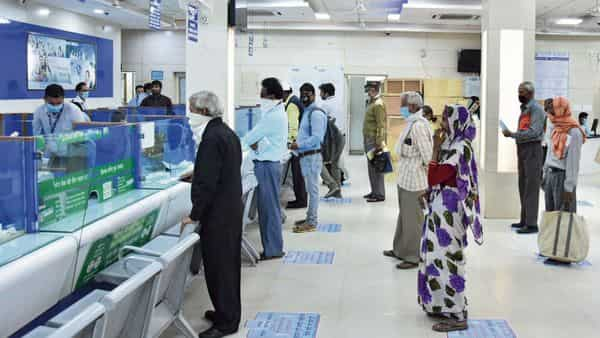
You may still have to visit your bank branch for making high-value transactions

The covid-19 pandemic is spreading quickly as instances spike with every passing day. With social distancing turning into the brand new regular, clients may discover it troublesome to perform high-value transactions via the bank’s cellular utility or web site as a result of banks impose a restrict to mitigate dangers.

Highlights

  • Banks usually put an higher cap on every day fund switch so as to restrict the chance of the client in case of a wrongful transaction or fraud.
  • However, as per the Reserve Bank of India (RBI) laws, there isn’t any cap on the quantity of money one can switch via National Electronic Funds Transfer (NEFT) and Real-Time Gross Settlement (RTGS). Immediate Payment Service (IMPS) and Unified Payments Interface (UPI), however, have a cap of ₹2 lakh and ₹1 lakh, respectively.
  • Experts stated another excuse for having a cap could possibly be to decrease the bank’s liquidity danger. “RBI has given banks the liberty to set their very own higher ceiling on NEFT and RTGS transactions primarily based on their danger and liquidity administration. Banks have positioned sure particular higher limits on their NEFT transactions relevant on RTGS holidays and off-business hours for the reason that introduction of 24/7 NEFT facility,” stated Sahil Arora, director at Paisabazaar.com.
  • State Bank of India, for instance, has a cap of ₹10 lakh on RTGS transactions whereas HDFC Bank has a ₹25 lakh higher restrict. Kotak Mahindra Bank has a per-beneficiary cap of ₹5 lakh and a per-day transaction restrict of ₹10 lakh for NEFT transactions.
  • “Our retail clients can switch up to a most of ₹20 lakh in a day utilizing each cellular and web banking channels by way of RTGS, NEFT, IMPS and UPI,” stated Jithesh P V, deputy vice-president and head digital, Federal Bank.
“We have set a every day higher cap restrict of ₹10 lakh for our retail cellular banking utility; FedMobile and our clients can do funds or transfers, together with NEFTs up to this restrict each day. This restrict is predicated on an evaluation of transaction knowledge and the chance insurance policies of the bank,” he stated.
Adhil Shetty, CEO of BankBazaar stated the bounds differ relying on the client phase, the software used for the transaction and the channel. “Some banks enable clients to switch as a lot as ₹25 lakh whereas others prohibit it to ₹10 lakh. For occasion, one bank limits the utmost quantity of funds that may be transferred by way of on-line NEFT switch to ₹2 lakh, however permits a number of transactions for a complete worth of ₹25 lakh or the third-party switch restrict chosen by the client,” he stated.
Further, banks additionally give clients the selection to put a cap on the transaction restrict, which is helpful in case the client needs to have a decrease cap so as to eradicate dangers.
For instance, Federal Bank presents retail clients three web banking restrict choices to select from. The buyer has a primary restrict of ₹30,000 after they log in and have three sorts of limits— ₹1 lakh, ₹5 lakh, and ₹10 lakh for fund switch. Beyond the set limits, most banks require clients to visit the branch to make the transaction.
“A retail buyer can switch up to a most of ₹20 lakh in a day utilizing each cellular and web banking channels akin to RTGS, NEFT, IMPS and UPI. Customers can at all times use the branch channel for transferring money past this restrict. However, in our company web banking channel, company purchasers can set their required restrict with none restrictions,” stated Jithesh.

BBMP wades into row by dropping Mercy Angels doctor from Kempegowda Award list

Bengaluru: Honouring Dr Taha Mateen of ‘Mercy Angels’ with Kempegowda Award in recognition of the efforts to ensure dignified last rites for persons who died from Covid-19, the BBMP has blundered by removing him from the list of awardees.
Mercy Angels volunteers were instrumental in providing dignified burials for bodies of Covid-19 victims whose families did not come forward to conduct last rites.The BBMP presented 33 persons with the award and Dr Taha Mateen was among them. The list of awardees released to the media in the morning had Dr Mateen’s name. But by evening, the name had disappeared.A row erupted after BBMP opposition leader Abdul Wajid took up the issue. “The mayor dropped Dr Mateen’s name at the behest of the RSS,” he said.
Mayor M Goutham Kumar, however, said there was a different reason. “The list of awardees I signed didn’t have the name of Mercy Angels’ Taha Mateen. As the Kempegowda Award can’t be given to non-governmental organisations, the name was dropped,” he said.

Deputy Chief Minister Dr C N Ashwath Narayan

COVID-19 in Bengaluru: 'We'll fix all WFH problems,' says Deputy Chief Minister Dr CN Ashwath Narayan

who spoke after the award ceremony, said as per the practice, the BBMP has honoured achievers from various spheres. “This year, it was decided to honour people who involved themselves in different streams to fight COVID,” he said.
Responding to the allegation that people with links to RSS were getting awards, he said, “There is no rule against awarding those in RSS. Whoever contributes to social welfare and those who achieve should be honoured. We have done that,” he said.Meanwhile, the mayor said he would look into the claim that Nandidurga Balu Gowda was given the Award for the second time. “I didn’t know about this. I will look into it,” he said.

Highlights

  • The list of achievers included Dr Aseema Banu, who had set up the dedicated Covid ward.
  • Dr Meena Ganesh, Dr Naveen Benakappa and Dr Venkatesh Murthy for championing the cause of home isolation.
  • Tasleem Arif Syed from the biotechnology field, Nitin Kamath and several others.
The celebration, scheduled to be held last week, was deferred following the death of former President Pranab Mukherjee.

Cricket Australia Blasts “Blatantly Racist” Abuse Of Dan Christian

Dan Christian,one of just six indigenous people to play for Australia at international level, took part in a panel discussion this week, “Cricket Connecting Country”, commissioned by the governing body.

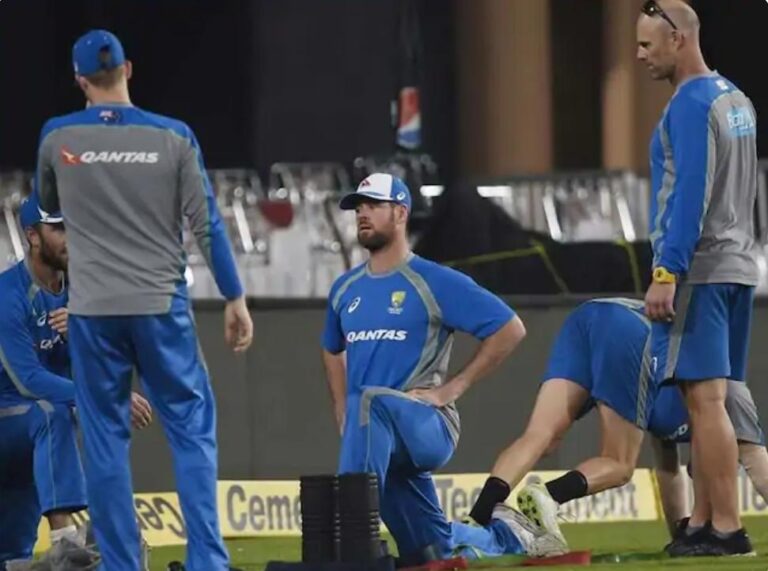
An irate Cricket Australia has slammed online trolls as “uneducated” after all-rounder Dan Christian was targeted for speaking up about “casual racism” in the sport. Christian, one of just six indigenous people to play for Australia at international level, took part in a panel discussion this week, “Cricket Connecting Country”, commissioned by the governing body. Christian told the panel, whose purpose was to encourage more Aboriginal people to play cricket and address issues like racism, that he had experienced the problem first-hand.

“I don’t think it’s as in-your-face as you might see elsewhere around the world or even elsewhere in Australian culture, but it’s definitely there,” said the 37-year-old. “It’s more of a casual racism.”

His comments saw two Twitter users question his Aboriginality based on his appearance, with one saying: “How can someone who looks white be discriminated against?”

CA tweeted late Thursday that it was “deeply disappointed to see blatantly racist and uneducated comments”.

“Whilst we have chosen not to name the publisher of these comments publicly, we want to strongly reinforce that any form of racism or discrimination has no place in cricket, sport or wider society,” it added.

“Comments like these demonstrate just how far we still have to go.”

Christian, who played 19 one-dayers and 16 Twenty20 internationals for Australia, told the panel that comments about his skin colour was one of the issues that hurt most.

“Little throwaway lines here and there that are made to be jokes. And a lot of that, for me personally, has been around the colour of my skin and the fact I don’t look Aboriginal, whatever that means,” he said.

“That’s the most noticeable thing for me.”

Christian added that in his 15 years in the game, he had never seen any training around cross-cultural awareness from any cricket organisation.

“That’s one thing we could at least do to raise some awareness and educate people within our sport,” said Christian, who has played for the likes of Hampshire and Middlesex in England and several franchises in the Indian Premier League

HIGHLIGHTS

  • An irate Cricket Australia has slammed online trolls as “uneducated”
  • Dan Christian was targeted for speaking up about “causal racism”
  • Dan Christian, one of just six indigenous people to play for Australia

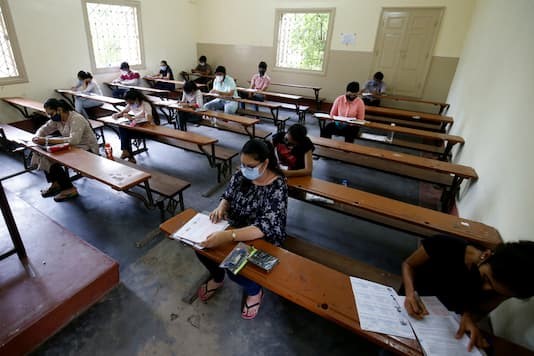
Govt Revises SOP for Exams Ahead of NEET 2020, Removes Isolation Option for Symptomatic Students

Authorities concerned should plan out the examination schedule in a staggered manner so as to avoid overcrowding at any examination centre on any day, the SOP stated.
The Union health ministry on Thursday modified the SOP for holding exams during the coronavirus pandemic, scrapping the provision that permitted symptomatic candidates to take the test in an isolated room. As per the updated document, a symptomatic aspirant should be referred to the nearest health centre and provided a chance to appear for the test through other modes or the educational institution shall make provisions for taking the exam at a later date when the student is deemed fit.
“However, if a student is found to be symptomatic, the permission or denial thereof, in such cases shall be granted as per the policy already enunciated on the issue by the Examination Conducting Authorities,” the revised Standard Operating Procedure (SOP) said. The development assumes significance as the earlier guidelines, issued on September 2, stated that personnel and examinees from containment zones shall not be allowed to be physically present at exam centres and other arrangements would be made for such students.

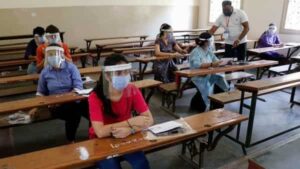
These students will be provided with an opportunity to appear for the examination through other ways, or universities shall arrange for taking the exam at a later date for them. As per the SOP, suitable preparations for arranging personal protection gears like face masks or hand sanitisers, soap, sodium hypochlorite solution etc. shall be provided by universities, educational institutions, examination conducting authorities or examination centres to the staff as well as students as per the necessity.
“Exam functionary and examinees may also submit self-declaration about health status at the time of entrance to the examination centre. Such self-declaration form may be circulated at the time of issue of admit tickets,” the guidelines said. If any examination functionary or examinee fails to meet the self-declaration criteria, they shall not be allowed entry, the SOP emphasised.
Besides this, only asymptomatic staff and students shall be permitted inside the examination hall, the SOP said, adding that wearing face cover or mask is compulsory. The designated authorities will also chalk out the schedule for the examination in a staggered manner in order to prevent congestion at any examination centre on any day, the SOP underscored. Examination centres in containment zones shall not be allowed to operate, it added.
Meanwhile, for pen and paper-based tests, the SOP details that the invigilator will sanitise his or her hands before handing out of question papers or answer sheets and the examinees will also sanitise their hands before receiving these items. The collection and packaging of the answer sheets at each stage would require sanitisation of hands. The answer sheets will preferably be opened up after 72 hours have gone by after the collection of papers, the guidelines advised.

“Use of spit/saliva for counting and distributing sheets shall not be allowed,” the SOP stated. The examination centre should have a designated isolation room for isolating any person who is found symptomatic at the time of screening or during examination, till such time medical advice may be sought.

HIGHLIGHTS

  • symptomatic aspirant should be referred to the nearest health centre and provided a chance to appear for the test through other modes
  • personnel and examinees from containment zones shall not be allowed to be physically present at exam centres and other arrangements would be made for such students.
  • personal protection gears like face masks or hand sanitisers, soap, sodium hypochlorite solution shall be provided by universities ,educational institutions.
  • Exam functionary and examinees may also submit self-declaration about health status at the time of entrance to the examination centre
  • Use of spit/saliva for counting and distributing sheets shall not be allowed,” the SOP stated
A clear policy on permitting or not permitting symptomatic candidates to appear for the examinations shall be delineated by the examination conducting authorities in advance, the SOP stated.