Karnataka High Court ignored law in allowing FIR, B S Yediyurappa tells SC

Highlights
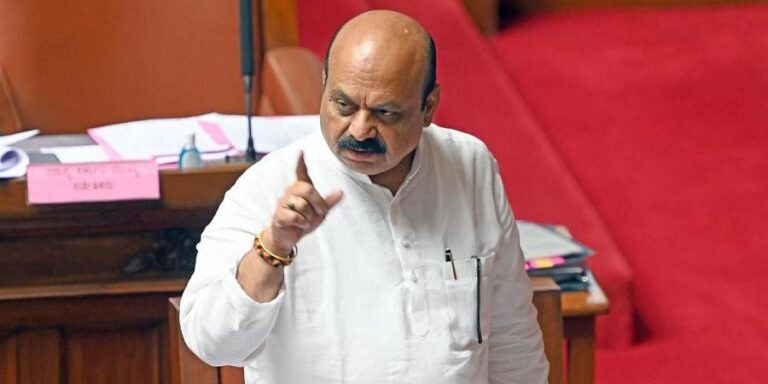
  • Former Karnataka Chief Minister B S Yediyurappa on Monday told the Supreme Court that the Karnataka High Court ignored the statutory provision and the binding nature of the top court’s judgement to allow lodging of a corruption case against him without requisite sanction.
  • Appearing for the politician, senior advocate Mukul Rohatgi, along with senior advocates Sidharth Luthra and Siddharth Dave submitted before a bench of Justices D Y Chandrachud and Hima Kohli that the High Court had wrongly interpreted a reference made to larger bench on question of sanction to allow the probe against the leader.
  • “Law, as of now, is that a sanction from competent authority is a pre condition. But the High Court reversed it, even though sanction was positively refused in my case,” Rohatgi said.
  • The High Court said the sanction is only at the stage of taking cognisance, while ignoring Section 17 (A) of the Prevention of Corruption Act, 2018, which stated no inquiry or enquiry or investigation in case of public servants can be carried out without approval of the appropriate authority.
  • The bench, which conducted a brief hearing, put the special leave petition filed by Yediyurappa for hearing on Friday.
  • The court said, it would prefer to hear the arguments on behalf of activist-complainant T J Abraham, before issuing notice in the matter.
  • The Karnataka High Court had, in an order earlier on September 7, held that the rejection of sanction would not come in the way of proceedings against Yediyurappa.
  • The case related to allegation of  bribes to the tune of Rs 12 crore to award a BDA contract for a construction firm to build a housing complex for the government during his tenure as CM in 2019-21.
An FIR had already been lodged against the Karnataka CM, his family members and others on September 16.

Karnataka to introduce moral education in schools from December

Highlights
  • The state government will introduce moral education in schools from December that will include the Bhagavad Gita, the Legislative Council was told on Monday.
  • School Education & Literacy Minister B C Nagesh told the Council that there is no proposal before the government to make Bhagavad Gita a standalone learning component.
  • He was replying to MLC M K Pranesh who asked what stopped the government from introducing the Bhagavad Gita “when no one is opposed to it”.
  • “There is no proposal before the government to teach the Bhagavad Gita in textbooks, but it will be included in moral education,” he said, adding that it would be introduced from December this academic year.
  • Nagesh said there is no decision yet on the kind of moral education that needs to be introduced. “We will constitute an expert committee that will recommend on moral education. Based on the committee’s report, we will decide about what should be taught under moral education,” Nagesh added.
  • According to the minister, students will neither be assessed on moral education nor will there be an exam.
  • In the March legislature session, lawmakers had demanded that moral education be introduced in schools.
Meanwhile, Nagesh assured the Council that the government would take necessary measures to rectify mistakes in textbooks regarding Indian history.

Karnataka floods: School submerged, students study in temple

Highlights
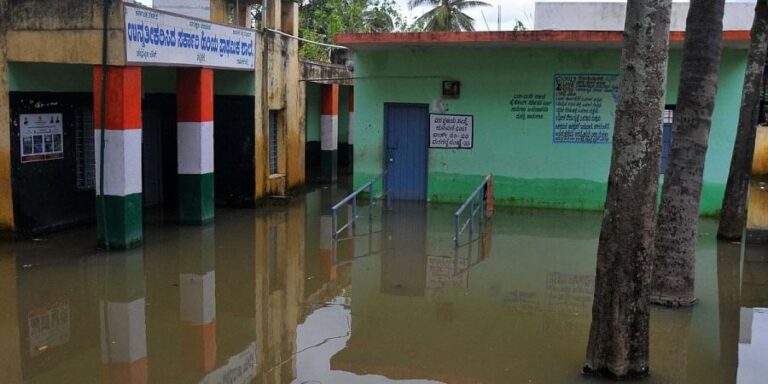
  • CHANNAPATNA(RAMANAGARA DIST) : It has been three weeks since Ramanagara district was pounded by heavy rain, flooding many areas. But students and teachers of the Government Upgraded Higher Primary School in Thattekere area of Channapatna town still cannot enter their school as four feet of water is standing on the premises, making it inaccessible.
  • Local authorities have not taken any action to remove water from the school, while the students, left with not other option, are attending classes at a nearby temple. Thattekere is around 60 km from Bengaluru and 11 km from Ramanagara. The school has more than 60 students from Standards one to eight, five teachers and two staff members, including cooks to prepare mid-day meals.
Lack of toilets affects teachers, girl students
The school was flooded on August 26, a week before the Gowri-Ganesha festival, after a small waterbody nearby breached. Lakshmi, who has been working as a cook at the school for the last 20 years, said all the grains kept for mid-day meals was spoilt. “We cannot even enter the school as water is around four feet,” she explained. “The school is in a low-lying area.

Even if water is removed, it keeps entering from the nearby lake,” she added. For drinking and cooking purposes, water is being sourced from local residents. The classes are being held at Beereshwara Swamy Temple at Kattemane, which is in the middle of a residential area.

Children of all classes are packed into a small space. For a few days, residents pooled in money and ration to prepare the mid-day meals. Some days later, authorities sent the foodgrains. With no place to prepare meals, Lakshmi is cooking at the house of a nearby resident.

The students are also finding it difficult as there are no toilets, while some residents have allowed teachers and girl students to use their washrooms. The Education Department has started constructing a new building for the school.

Students and teachers hope at least one classroom is ready in two months. “But the toilets are yet to be constructed at the new building. Education Department should construct toilets, otherwise many girl students will quit studies,” a resident said.

No burial ground, Dalit woman laid to rest by roadside in Karnataka

Highlights
  • Hanumakka (75), a Dalit woman who passed away in Bijwara village of Madhugiri taluk in Tumakuru, had a long and troubled last journey on Sunday. Denied entry into the village burial ground, her wailing family finally laid to rest by the roadside, and conducted the last rites.
  • Dalit activists responded in anger, saying this is not a problem unique to this area, and that more than 1,000 villages and hamlets across the state do not have designated burial grounds for Dalits. Activist Vijay Sreenivasa said, “It has been a problem for a long time. There is no conviction among political parties to ensure dignity for Dalits. If there is no space, the government should buy land.”
  • Dalit Janandolana activist Narasimha Murthy said, “There are about 200 villages in Tumakuru district, which have no burial grounds for Dalits.’’  Law and Parliamentary Affairs Minister and Chikkanayakanahalli MLA J C Madhuswamy said,  “It has come to my notice. A person has claimed that land allocated for the burial ground is his.
  • I will hold a meeting with the Assistant Commissioner and officials to sort out the problem on Monday. Almost 90 per cent of villages have burial grounds. Today, someone had come to me from Sira with a similar issue.’’
  • Former District Minister of Tumakuru Dr G Parameshwara who was previously elected MLA from Madhugiri but is now MLA from Koratgere said, “I am aware of Bijwara which has about 150 Dalit houses, I will speak to the officials.’’

Drug shortage in Karnataka, health department faces bribe heat

Highlights
  • Hospitals in Karnataka are witnessing a shortage of drugs and medical supplies, with the ongoing fulfilment process of the state health centre’s demand list for the year 2020-21, as mentioned in a letter by Health and Family Welfare Services dated September 14.
  • Out of 445 medicines, the tender process of 210 medicines has been completed, but is ongoing for the remaining 235 drugs, and is expected to take around 60 days to be completed. The department is trying to procure the medicines locally for a temporary period, to overcome the ongoing shortage. According to the letter, there is a shortage of 44 essential drugs currently in hospitals across the state.
  • Sources also raised concerns of shortage of medical supplies, like IV fluids, painkillers, paracetamol tablets, disposable cannulas, syringes, surgical sutures etc regularly used in government hospitals and PHCs.
  • Groups of vendors associated with the Karnataka State Medical Supplies Corporation Limited (KSMSCL) for drugs and medical supplies have alleged that the department seeks bribes to clear pending bills.
    A vendor said the department was made to centralise medical supplies, however, mismanagement had caused the opposite. They said that during the Covid pandemic, a lot of emergency procurement was done and vendors supplied medicines/equipment going beyond their reach. However, post delivery of products, they faced many issues with clearance of EMD (Earnest Money Deposit) or their pending bills.
  • Many bills remain pending until now. Companies like Biocon Biologics, Capital Biotech, Juggat Pharma have written to the department requesting clearance of bills, which can mount to over Rs 100 crore.
    Biocon Biologics recently wrote to the Health department, regarding dues in payment for supplies of Remdesivir during Covid-19 second wave. The letter mentioned delay in clearance of Rs 63.34 lakh for supplies, and Rs 43.14 lakh worth of deposit.
  • Constant change of department heads caused inconvenience in terms of management, vendors complained. Due to this, lower ranked officers created chaos in terms of selective clearance of bills, another vendor alleged. Participation and procurement of tenders by smaller companies was also raised, alleging lobbying and favouritism towards certain companies. The department was allegedly drawing up drafts, sidelining certain companies for their automatic removal from the tendering process.
  • Despite numerous calls to  department of KSMSCL, there was no response regarding alleged bribery, pending bills and mismanagement in the department.

Congress won’t come to power in 2023 polls: BS Yediyurappa

Highlights
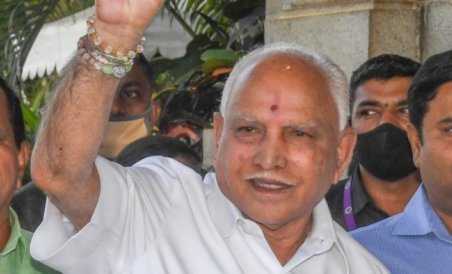
  • Former chief minister B S Yediyurappa on Sunday predicted that the Congress will not come to power in the 2023 Assembly elections.
  • Speaking to reporters at Hubballi airport on Sunday Yediyurappa said that the people of Karnataka were in favour of the BJP and Prime Minister Narendra Modi. He said he will launch state-wide tour on September 22 to galvanize the party ahead of Assembly polls.

Power subsidy for SC/STs from this month: Karnataka CM

Highlights
  • Chief minister Basavaraj Bommai of Sunday rejected claims by Opposition parties that the government had withdrawn the scheme which assured 75 units of free electricity per month to Scheduled Castes and Scheduled Tribes families.
  • Speaking at an event organised by the Karnataka Bhovi Welfare Association, he said that the scheme will not be withdrawn ‘at any cost’. The scheme will be simplified further and subsidies will be provided to farmers from this month, he said. The Bommai administration had in May raised the free power subsidy from 40 units to 75 units per month to SC/ST communities.

Cauvery: Tamil Nadu got 3 times the yearly allocation in just 4 years

Highlights
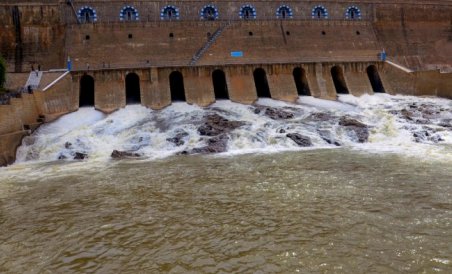
  • The state has released 239 tmcft of excess Cauvery water to Tamil Nadu between June 2022 and September 2022, thanks to copious rainfall in the monsoon months.
  • In a reply to a query raised by MLC Dinesh Gooligowda, Water Resources Minister Govind Karjol told Council, “The state has released 416.65 tmcft to TN in just four months as against the allocation of 177.25 tmcft of water made to lower riparian state for the entire water year by the Cauvery Water Dispute Tribunal.”
  • In fact the actual allocation to Tamil Nadu in four months between June and September is 101.08 tmcf. This year, the river water flows into the neighbouring state clocked three times more than the quantum determined by the tribunal.
  • As per the data provided by the government, in the month of August alone, the water released to Tamil Nadu has crossed the allocation made for the entire year.

Level crossings: Centre allocates Setu Bandhan funds

Highlights
  • In a boost to state road works and construction of rail over bridges and under bridges (ROBs and RUBs), Karnataka can now get Rs 327.17 crore from the Central Road Infrastructure Fund to enable safe travel besides removing bottlenecks.
  • The Ministry of Road Transport and Highways (Morth) has asked the Karnataka government to finalise the list of ROBs, RUBs and bridge works on state roads which will be taken up under the Setu Bandhan scheme.
  • The Karnataka government has proposed to remove 32-level crossings. Officials believe the ministry’s latest push will help them identify and remove more level crossings in the coming days.
  • The state, Morth and the railways will sign a tripartite memorandum of understanding. Though the scheme was introduced last year, it has not taken off due to delays on the part of the state governments.
  • Last week, Morth has written to its zonal chief engineers and regional officers to take up the matter with the state governments, which have not given consent to the tripartite MoU. “The issue has been viewed seriously,” the letter stated.
  • The Setu Bandhan works have been introduced to improve inter-state connectivity, especially on the rural areas at the borders where state roads do not get the required attention.

Rain-hit Karnataka farmers pin hopes on new crop varieties

Highlights
  • After three harrowing years of rain-damaged harvest, Hanumanthappa Gouda is now banking on Dh-257, a new groundnut variety developed by the University of Agricultural Sciences (UAS), Dharwad.
  • Heavy rains in the second week of August — the peak season for the harvest of Kharif crops — had dealt a blow to farmers in North Karnataka who saw nearly 30% of their standing crops damaged due to waterlogging in fields.
  • Waterlogging in fields during the harvest season is called wet drought.
  • Now, the UAS has developed 12 varieties of Kharif crops, including pulses and cereals, which are resistant to ‘wet drought’ and can be harvested 15 days early. The varieties were unveiled at the krishi mela in Dharwad on Sunday.
  • Hanumanthappa said he incurred huge losses in the last three years due to flash floods. He has been cultivating groundnut on three acres of land at Yadwad village in Dharwad taluk. During the normal season, he gets 28 quintals of yield per hectare but due to waterlogged fields, he could harvest only 16 quintals of groundnut last year.
  • “UAS experts had visited several oilseed-growing fields in the taluk and farmers had demanded a groundnut variety resistant to wet drought. This year, they came up with Dh-257, a high-yielding crop,” he said.
  • According to a crop damage survey by the state agriculture department this year, standing crops — particularly green gram, cotton, black gram and maize — on 2.87 lakh hectares of land were damaged, forcing farmers to seek compensation.
  • Apart from groundnut, the UAS has developed new varieties for maize, sorghum, soya, black gram, sugarcane, safflower and fodder cowpea. It also launched 59 agricultural technologies at the krishi mela.
  • UAS Vice-Chancellor R Basavarajappa and Director of Extension P S Hugar said the rain pattern has changed in three years, with several districts in North Karnataka facing flash floods. They said the new varieties of crops are tolerant to salinity and resistant to leaf spot disease, which is usually found in groundnut due to high moisture content in the ground.
Accordingly, the UAS has released groundnut varieties DBG-3 and DBG-4, which have a duration of 95 to 100 days and are resistant to late leaf spot disease. Dh-256 is a dual-season groundnut variety which is tolerant to mid-season drought and foliar disease. Dh-257 has a yield of 4,000 kg per hectare and is tolerant to drought and salinity. It will be a changemaker, said Hugar.
Similarly, UAS has developed improved varieties like GH-150125 (maize), CSH-42 (sorghum), DSb-34 (soya), DBG-16 (black gram), etc which are resistant to waterlogging and give high yields.
Hugar said these varieties are suitable for Maharashtra and Karnataka.
Manjunath Onkari, a green gram grower from Garag who lost 40% of the harvest to rains in the last two years, said he wants to purchase DGGV-2, a variety which allows farmers to harvest early. This improved crop has a maturity period of 75 days compared to the normal 95 days, he explained.