
KEY STORY
-
As the demand for imposition of a country-wide lockdown gains momentum, large parts of India are already under similar strict curbs for varying periods in a bid to check the unrelenting COVID wave.
-
Here is a look at coronavirus-induced restrictions imposed by states and union territories.
*Delhi: The national capital has been under lockdown since April 19 and it will continue till May 10.
*Haryana is under a seven-day long lockdown from May 3. Earlier, a weekend curfew was enforced in nine districts.
*Bihar on May 4 imposed a lockdown till May 15.
*Uttar Pradesh has extended its weekend lockdown further by two more days till Thursday.
*Odisha is under a 14-day lockdown from May 5 till May 19.
*Rajasthan has imposed lockdown-like restrictions till May 17.
*Karnataka imposed a lockdown from the night of April 27 till May 12.
*Jharkhand is under lockdown-like restrictions from April 22 till May 6.
*Chhattisgarh has allowed district collectors to extend lockdown, which was to end on May 6 morning, till May 15.
*Punjab saw extensive curbs, in addition to measures like a weekend lockdown and night curfew which will be in force till May 15.
*Madhya Pradesh has imposed “corona curfew” till May 7 with only essential services allowed.
*Gujarat has imposed a night curfew in 29 cities, besides other restrictions on movement and gathering at public places.
*Maharashtra had imposed lockdown-like curbs on April 5 coupled with prohibitory orders and restrictions on the movement of people. The curbs were later extended till May 15.
*Goa lifted a four-day lockdown on Monday, except in tourist hotspots like Calangute and Candolim in North Goa, but the government said COVID-19-induced restrictions will remain in force till May 10 during which various commercial establishments will remain closed while political and social gatherings will be banned.
*Tamil Nadu has imposed extensive curbs including on all political, social and cultural activities till May 20.
*Kerala has announced severe lockdown-like restrictions from May 4 till May 9.
*Puducherry has extended lockdown till May 10
*Telangana has imposed night curfew till May 8.
*Andhra Pradesh has announced a partial curfew from 12 noon to 6 AM from May 6 for two weeks. The state had earlier imposed a night curfew.
*West Bengal last week imposed extensive curbs including ban on all kinds of gatherings.
*Assam advanced the night curfew to 6 PM from the current 8 PM with restrictions imposed on the movement of people at public places from Wednesday. Night curfew was imposed on April 27 till May seven.
*Nagaland has imposed partial lockdown with stricter rules from April 30 to May 14.
*Mizoram is under an eight-day lockdown in Aizawl and other district headquarters town from May 3.
*Jammu and Kashmir administration has extended the lockdown in four districts of Srinagar, Baramulla, Budgam and Jammu till May 10, while Samba too will see same restrictions. Night curfew continues in all municipal/urban local body limits of all 20 districts.
*Uttarakhand has reimposed several restrictions and night curfew.
*Himachal Pradesh has imposed night curfew in four districts out of 12 and weekend shutdown.

KEY STORY
-
Ever since Kangana Ranaut officially took the charge of her Twitter profile, she has been constantly making headlines for her controversial tweets. Now, as per the latest information, the Queen actress’ Twitter account has been suspended for violating rules. This comes after she launched a series of tweets after the ongoing violence in West Bengal.
-
In her last couple of tweets, Kangana had commented on the alleged violence that took place in West Bengal after the election results. The actress had shared disturbingly violent videos and demanded president rule in Mamta Banerjee-led state.
-
For your information, major violence broke out in West Bengal hours after the Assembly Election results were announced and Trinamool Congress (TMC) returned to power with a majority in the state.
-
Check out the screenshot of Kangana’s suspended Twitter account below:

In the particular tweet that may have caused spurred this action, the actress urged Prime Minister Narendra Modi to “tame” Mamata Banerjee using his “Virat Roop” from “early 2000s” in Bengal.

-
The actress started trending on the micro-blogging site soon after her suspension. Fans shared screenshots of her bio which is currently unavailable and trolled her. Some even called it an “overdue” decision. “Twitter seems to have vaccinated itself against this virus. #KanganaRanaut,” wrote a user, another compared the actress to coronavirus and tweeted, “One virus left the twitter now waiting for other virus to leave the country #KanganaRanaut.”
Actress Kubbra Sait lauded Twitter India’s move and tweeted, “Who knows? Even this is good for now. Keep it going @TwitterIndia (please don’t say later, it was an error on your part.).”


KEY STORY
-
Amid an alarming surge in coronavirus cases in the country, the Indian Council of Medical Research on Tuesday recommended measures to reduce pressure on diagnostic labs, suggesting that the need for RT-PCR test should be “completely removed” for domestic travel if an individual is healthy.
-
Stating that laboratories are presently “facing challenges” to meet the expected testing target due to “extraordinary caseload”, the ICMR said it is important to optimise RT-PCR testing and increase the availability of testing to all citizens.
“An unprecedented upsurge of COVID-19 cases and deaths is currently being witnessed across India. The overall nationwide test positivity rate is above 20%. As on today, India has a total of 2506 molecular testing laboratories including RTPCR, TrueNat, CBNAAT and other platforms,” the ICMR said.
-
The medical research regulator also stressed that “testing-tracking-tracing, isolation and home-based treatment” of positive patients is the key measure to curb transmission of the viral disease.
“The total daily national testing capacity is close to 15 lakh tests considering a three- shift operationalization of the existing laboratory network. At present, the laboratories are facing challenges to meet the expected testing target due to extraordinary caseload and staff getting infected with COVID-19. In view of this situation, it is imperative to optimize the RTPCR testing and simultaneously increase the access and availability of testing to all citizens of the country,” it said in a statement
Recommended measures to optimize RTPCR testing
i. RTPCR test must not be repeated in any individual who has tested positive once either by RAT or RTPCR.
ii. No testing is required for COVID-19 recovered individuals at the time of hospital discharge in accordance with the discharge policy of MoH&FW (https://www.mohfw.gov.in/pdf/ReviseddischargePolicyforCOVID19.pdf).
iii. The need for RTPCR test in healthy individuals undertaking inter-state domestic travel may be completely removed to reduce the load on laboratories.
iv. Non-essential travel and interstate travel of symptomatic individuals (COVID-19 or flu like symptoms) should be essentially avoided to reduce the risk of infection.
v. All asymptomatic individuals undertaking essential travel must follow COVID appropriate behavior.
vi. Mobile testing laboratories are now available on GeM portal. States are encouraged to augment RTPCR testing through mobile systems.
Measures to improve access and availability of testing:
Rapid antigen tests (RATs) were recommended in India for COVID-19 testing in June 2020. However, the use of these tests is currently limited to containment zones and health care settings. RAT has a short turn-around time of 15-30 minutes and thus offers a huge advantage of quick detection of cases and opportunity to isolate and treat them early for curbing transmission.
So far, ICMR has approved 36 RATs of which 10 are on GeM portal. To meet the overwhelming testing demand, it will be prudent to upscale testing using RATs.
Measures to ramp up testing through RAT:
i. RAT may be allowed at all available government and private healthcare facilities.
ii. Set up dedicated RAT booths in cities, towns and villages to offer testing to people.
iii. Testing booths may be set up at multiple locations including healthcare facilities, RWA, offices, schools, colleges, community centers and other available vacant spaces.
iv. These booths should be operational on a 24X7 basis to improve access and availability of testing.
v. Drive-through RAT testing facilities may be created at convenient locations as identified by local administration.
vi. Stringent measures must be instituted to avoid overcrowding at RAT testing facilities.
Additional advice
• All states are advised to ensure full utilisation of the available RTPCR testing capacity, both in public and private laboratories.
• RAT testing must be conducted in compliance with the ICMR advisory available at: https://www.icmr.gov.in/pdf/covid/strategy/Testing_Strategy_v6_04092020.pdf
• Symptomatic individuals identified positive by RAT should not be re-tested and advised to go through home-based care as per ICMR guidelines available at: https://www.icmr.gov.in/pdf/covid/techdoc/COVID_HOME_CARE.pdf.
• Symptomatic individuals identified negative by RAT should be linked with RTPCR test facility and in the meantime be urged to follow home isolation and treatment.
• All RTPCR and RAT test results should be uploaded on ICMR portal at: https://cvstatus.icmr.gov.in.
• During the current upsurge of COVID-19 cases, any individual presenting with fever with/without cough, headache, sore throat, breathlessness, bodyache, recent loss of taste or smell, fatigue and diarrhea should be considered as suspect case of COVID-19 unless proven otherwise by confirmation of another etiology.
• The vaccination status of all individuals tested for COVID-19 must be entered into the Sample Referral Form (SRF) in the RTPCR app both for individuals tested by RTPCR and RAT. This information is of critical importance.
• Payment modalities for upscaled RAT testing may be decided by the state health authorities.
KEY STORY
-
While it is crucial to maintain hygiene, wash hands, use alcohol-based sanitisers, wear masks and avoid touching hands and mouth to fight coronavirus externally, a proper and healthy diet is also paramount to improve the immunity and combat the deadly virus within the body.
-
The foods we consume play a key role in determining our overall health and immunity. Eating low-carb diets will help control high blood sugar levels and cut down diabetes. Adding Omega 3 and Omega 6 fatty acids in your daily diet can effectively control depression and anxiety caused by social isolation.
-
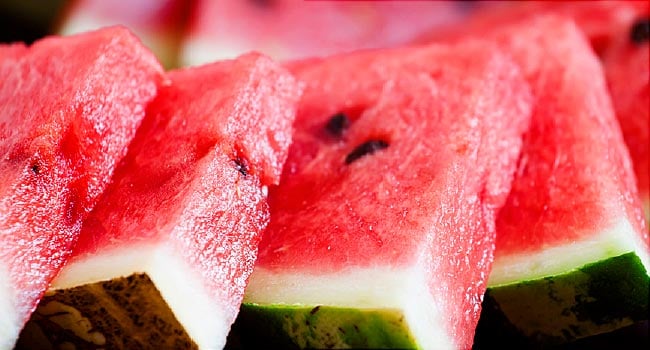
Similarly, consuming Vitamin C and healthy plant compounds can enable the body to heal from within. Shikha Mahajan, senior nutritionist at Diet Podium in Delhi, tells us how having an easy watermelon cooler, infused with the goodness of tulsi and aloe vera, is very therapeutic and helps strengthen the immune system. She says this summer drink is excellent for hydration as it is not only high in water content, but also contains essential minerals like potassium and magnesium to lower blood pressure.
INGREDIENTS
5-6 large cubes of watermelon
5 – 6 leaves of tulsi
2 – 3 teaspoons of aloe vera gel
1 teaspoon of black salt
1/2 teaspoon of black pepper powder
1/4 cup of water
1-2 tablespoon of lemon juice
HOW TO MAKE

Watermelon is rich in vitamins and antioxidants.
De-seed the watermelon cubes and blend tulsi leaves, aloe vera gel, black salt, lemon juice, water and black pepper powder with it till everything is mixed well. Adjust salt and pepper as per your taste. Strain the mixture in a strainer and put some ice in it. Serve the watermelon cooler chilled.
WHEN TO DRINK
The ideal time to have a cooling drink like this one is in the afternoon. Such drinks can be consumed daily, but it is better to change the fruits often so that you get a variety of nutrients instead of the same daily.
BENEFITS

Aloe Vera has been used for centuries as a medicinal plant.
Strong immunity is helpful against all diseases and their after-effects.
Mahajan says watermelon, tulsi and aloe vera are cooling fruits and herbs. Watermelon is rich in minerals, vitamins and antioxidants, while aloe vera and tulsi have healing properties and both are anti-inflammatory in nature. All three ingredients together will help boost the immune system.

KEY STORY
-
WhatsApp will now let users see larger images and video previews in chats. The Facebook-owned messaging app had rolled out the feature only for iOS users, but now the feature is available to Android users as well. The feature enlarges the content that is shared in chats and does not crop out the pictures or videos. You can now scroll through chats without having to tap on the image or the video to open it on the big screen.
-
WhatsApp tweeted from its official Twitter account about the new feature. “Photos and videos in WhatsApp are now even bigger, so no one will be left out of the picture! That’s the perfect reason to smile,” the company wrote.
-
Along with the tweet, there is a small video preview of how the feature will look once it is rolled out to a wider audience. In the video, you can see that the pictures no longer appear in a square-shaped box, you can now view the original size of the picture.
-
Earlier, in order to view the complete picture, users had to tap on the image but now the image will automatically appear in the chats. The tweet hinted that the feature has been rolled out across all platforms.
-
WhatsApp had rolled out the larger preview feature with the 2.21.71 update. Android users can update the app on Google Play Store to get the latest feature.
-
Apart from this, WhatsApp was found testing a new feature that would allow users to listen and review their voice messages at different playback speeds.
CONCLUSION
-
“WhatsApp already had a similar feature to review voice messages, but the way to trigger the feature was very cumbersome, for example switching to a different section before sending the voice message.This new feature (currently under development) will add a new Review button, that you can easily tap to listen to the voice message,” the wabetainfo report stated.
-
This means that users can now record their voice message, preview it, and can even change the playback speeds before finally sending it to their contacts. As per the screenshot shared by WhatsApp features tracker, a new review button has been added to the chatbox, which will let users review that recording. The feature is under development and WhatsApp plans to release it in a future update on WhatsApp for iOS and Android.

KEY STORY
-
Days after the COVID-19 surge managed to burst the bio-bubbles of the India Premier League (IPL) during the 14th season, the tournament’s governing council and Board of Control for Cricket in India (BCCI) confirmed the suspension of the cash-rich league on Tuesday.
-
The IPL 2021 was suspended indefinitely after several star players contracted COVID-19 despite staying inside their respective franchise bio-bubbles.
-
Taking a stock of the things post the indefinite suspension of the IPL 2021, BCCI vice president Rajeev Shukla has clarified that the tournament is postponed not cancelled.
-
Speaking about the postponement of the tournament amid the second wave of COVID-19 across India, Shukla said that the franchises and organisers of the elite league are looking after their players during testing times. The BCCI vice president revealed that there are not many cases and only one or two franchises are affected by the COVID-19 surge.
-
“I want to make it clear that IPL 2021 has been not cancelled. It has been suspended, it has been postponed, it has been deferred, so it will happen. The remaining part of this year’s IPL will happen. But in due course, when the covid situation improves, a decision will be taken about it,” Shukla added.
-
A day before the twin COVID-19 positive cases were reported inside the IPL bio-bubble, Kolkata Knight Riders (KKR) bowlers Sandeep Warrier and Varun Chakravarthy had contracted the deadly disease. Chennai Super Kings (CSK) bowling coach L Balaji and batting coach Michael Hussey have also tested positive for novel coronavirus.
CONCLUSION
-
“They are scared, situation in India is bad. Few players wanted to leave the country. They had spoken to their franchisees and the franchisees also confided with us. But not many players were willing to leave the country,” the BCCI vice president added.
-
Shukla asserted that BCCI president Sourav Ganguly, secretary Jay Shah, and the IPL Governing Council took the call to suspend the 14ths season over a video conference due to the surge in the coronavirus cases.
KEY STORY
-
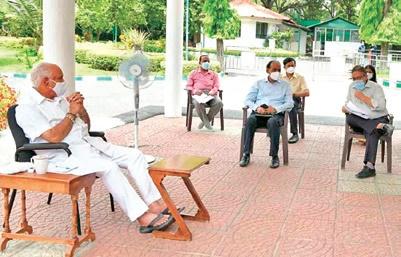
Following a discussion in the Cabinet meeting, Karnataka joined the list of states declaring journalists as ‘frontline workers’. More than a year after the Covid-19 pandemic hit, Chief Minister BS Yediyurappa on Tuesday announced that journalists in Karnataka will be considered as frontline workers and will be administered vaccines on priority.
-
“Our government has decided to consider journalists as frontline workers and accord priority in vaccination against Covid-19. We appeal to mediapersons, especially television journalists, to help us create awareness and avoid panic over the need for hospitalisation, oxygen, ventilators etc.\
-
You can help create awareness about who needs hospitalisation and who doesn’t. During times of a public health crisis, all of us have to come together,” Yediyurappa said. Since the state is facing a shortage of vaccines, inoculating journalists under the ‘frontline workers’ quota may take a day or two to take off.
-
The New Indian Express in its campaign had urged the Union as well as State governments to recognise journalists as frontline workers. In April this year, the Editor’s Guild had even written to the Centre to acknowledge the work of journalists as frontline services.
CONCLUSION
-
More than 150 journalists have died due to Covid-19 while on duty in India. Karnataka joined the likes of Punjab, West Bengal, Uttarakhand, Odisha, Madhya Pradesh, Bihar and Tamil Nadu in deeming journalists as frontline workers.
-
Opposition leaders as well as those from the BJP has been calling for the government to identify journalists as frontline workers and administer vaccines to them considering they report on the ground and come in close contact with Covid-19 patients and their kin apart from doctors, healthcare workers and crematorium staff.

KEY STORY
-
The second PUC (Pre University College) examinations have been postponed, announced the Minister of Primary and Secondary Education Suresh Kumar S on Tuesday. He said this was done keeping the health of students in mind because of the rampant spread of the pandemic.
-
The examinations were earlier scheduled to commence on May 24. The time table of the examinations will be announced 15-20 days in advance.
-
Talking after a meeting with department officials, Kumar said seven lakh students are writing the examinations this year.
-
The practical examinations for science students were postponed recently.
-
He said officials had convened a meeting with the principals of various colleges, lecturers and parents and gotten their opinion.
-
He said all departments are busy with COVID prevention activities and several students have returned to their hometowns.
-
Various states have postponed their second PUC examinations on account of the lockdown and hence the decision has been taken, he added.
No exam for first PUC
-
First PUC students will all be admitted to second PUC directly said Kumar, adding that they will have a bridge course when they join the second year.
CONCLUSION
-
New dates will be announced well in advance. The minister appealed to students to continue with their preparations without getting disheartened.
-
Lecturers will work from home. They need to be in touch with the students to monitor their learning progress incessantly. Those who are on COVID-19 duty will continue there.
KEY STORY
-
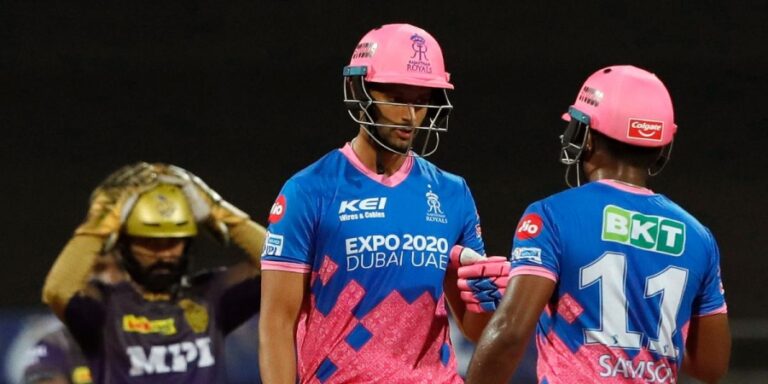
The BCCI stands to lose over Rs 2000 crore of the broadcast and sponsorship money earmarked for this year’s Indian Premier League which was indefinitely postponed on Tuesday due to COVID-19 cases in its bio-bubble.
-
The BCCI was forced to postpone the IPL after multiple cases of COVID-19 among players and support staff emerged from Ahmedabad and New Delhi in the past couple of days.
-
“We would be losing anything between Rs 2000 to Rs 2500 crore for the midway postponement of this season. I would say something in the range of Rs 2200 crore will be closer to accurate estimation,” a senior BCCI official told PTI on conditions of anonymity.
-
The 52-day 60-match tournament would have concluded in Ahmedabad on May 30
-
However, only 24 days of cricket was possible with 29 completed games before the virus halted proceedings.
-
The biggest loss for BCCI is the money it gets from Star Sports for the broadcast rights of the tournament.
-
Star has a five-year contract worth Rs 16,347 crore which is Rs 3269.4 crore per year.
-
If there are 60 games in a season, the per match valuation comes to approximately Rs 54.5 crore.
-
If Star pays per match, then the amount for 29 matches would be Rs 1580 crore approximately out of what would have been Rs 3270 crore for a full tournament.
-
This means a loss of Rs 1690 crore for the Board.
-
Similarly, mobile manufacturers VIVO, as tournament’s title sponsors, pay Rs 440 crore per season and BCCI is likely to get less than half of that amount because of the postponement.
-
Add to it, associate sponsor companies like Unacademy, Dream11, CRed, Upstox, and Tata Motors, who pay in the range of Rs 120 crore each.
-
Some subsidiary sponsors are also there.
-
“Slash all the payments by half or a bit less and you will be reaching a loss in the range of 2200 crore. The actually losses could be much more but this is a back of the hand calculation for the season,” the official said.
-
The loss of a substantial amount of money will also reduce the central revenue pool for the season (the money that BCCI distributes among eight franchises) to nearly half.
-
The official, however, didn’t divulge how much each franchise would lose due to the suspension of the tournament.
-
“It is difficult to say what kind of sponsorship and co-sponsorship money they earned this season as the economic climate has been pretty hostile,” he said.
Players’ payment would be based on duration rather than pro-rata
In case players are available only for a part of the tournament, the salaries are paid on pro-rata basis which means “assigning an amount to one person according to their share of the whole”.
However, a senior player said that pro-rata is only applicable when a player voluntarily makes himself available for only a part of the tournament based on the matches available.
In this case, the organisers have halted the event so the franchises are likely to pay for at least half of the season.
KEY STORY
-
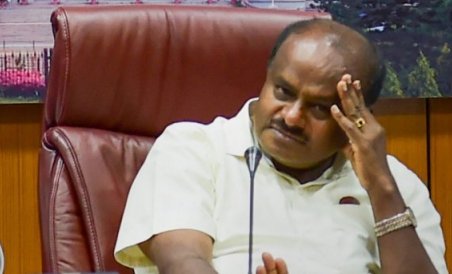
Irked by Congress leader Siddaramaiah’s statement on the JD(S) cashing in on minority votes in Basavakalyan, former Chief Minister H D Kumaraswamy lashed out at CLP leader for “insulting” minority voters.
-
In the wake of the bypoll results in Basavakalyan where Congress candidate Mala Narayan Rao lost, Siddaramaiah had stated that the Congress lost considerable votes as the JD(S) had fielded a Muslim candidate Syed Yasrab Ali Quadri.
-
Offended by this, JD(S) legislature party leader H D Kumaraswamy alleged that Siddaramaiah had never groomed any minority leader. “I am unable to understand whether Siddaramaiah has issues with the minority community or has a problem with JD(S). You have never groomed any minority leader. You have claimed that the JD(S) has taken away Congress votes in Basavakalyan. Isn’t this an insult to the voter? Are minority voters your slaves?” he charged.
CONCLUSION
-
He further alleged that Siddaramaiah had tried to sabotage the prospects of his own party candidate in Maski and was working against the interests of his own party. Siddaramaiah is dreaming of becoming the chief minister again. He must stop working against the interests of his party, Kumaraswamy said.
1...591592593...883Page 592 of 883