KEY STORY
-
From May 1, the present system of private COVID-19 vaccination centres receiving doses from the government and charging up to Rs 250 per dose will cease to exist and they will procure directly from vaccine manufacturers.
-
According to the Liberalised Pricing and Accelerated National COVID-19 Vaccination Strategy, COVID-19 vaccination will continue to be free for eligible population groups comprising health care workers, frontline workers and population above 45 years of age in government COVID vaccination centres which receive doses from the Government of India.
-
Vaccine manufacturers would make an advance declaration of the price for 50 per cent supply that would be available to state governments in the open market before May 1.
-
Based on this price, states, private hospitals, industrial establishments may procure vaccine doses from manufacturers.
-
Private hospitals would have to procure their supplies of COVID-19 vaccine exclusively from the 50 per cent supply earmarked for other than the Government of India channel.
-
The price charged for vaccination by private hospitals would be monitored, it said.
-
“Consequently the present dispensation where private COVID vaccination centres receive doses from the government and can charge up to Rs. 250 per dose will cease to exist,” the Union Health ministry document said.
-
Vaccine manufacturers would supply 50 per cent of their monthly Central Drugs Laboratory (CDL) released doses to the Government of India and would be free to supply remaining 50 per cent doses to state governments and in the open market.
-
For Government of India vaccination centres, the eligible population would be the same which exists today that is healthcare workers (HCWs), frontline workers (FLWs) and population above 45 years of age.
-
For other than the government of India channel, the eligibility would be all adult citizens of the country, the document said.
-
The COVID-19 vaccination will continue to be free for eligible population groups in all those Government COVID Vaccination Centres which receive vaccine doses from Government of India.
-
All vaccination (through Govt. of India vaccination centres and other than Govt. of India channel) would be part of the National Vaccination Programme, will follow all existing guidelines, will be captured on CoWIN platform along with the stocks and price per vaccination applicable in all vaccination centres, will comply with Adverse Event Following Immunization (AEFI) management and reporting, digital vaccination certificate and all other prescribed norms.
-
The division of vaccine supply which would mean 50 per cent to Govt of India and 50 per cent to other than Govt of India channel would be applicable uniformly across for all vaccines manufactured in the country.
-
However, the fully ready to use imported vaccine would be allowed to be utilized entirely in the other than Government of India channel.
-
The Centre from its share, will allocate vaccines to states and UTs based on the criteria of performance (speed of administration, average consumption), extent of infections (number of active Covid cases), the document stated.
-
Wastage of vaccine will also be considered in the criteria and will affect the allocation negatively.
-
Based on the above criteria, state-wise quota would be decided and communicated to the states in advance.
-
Second dose of all existing priority groups i.e. HCWs, FLWs and population above 45 years, where ever it has become due, would be given priority, for which a specific and focused strategy would be communicated to all stakeholders.
-
This policy would come into effect from May 1 and will be reviewed from time to time.
-
“The Government of India will make advance purchase offer for a maximum quantity that manufacturers commit to supply by a pre-defined period. Such an advance purchase provision signals Government’s willingness to pay upfront to vaccine manufacturers to enable them to augment their production and supply capacities,” the document said.
CONCLUSION
-
In its phase-III, the National Vaccine Strategy aims at liberalized vaccine pricing and scaling up of vaccine coverage.
-
This would incentivise vaccine manufacturers to rapidly scale up their production and also attract new vaccine manufacturers.
-
It would make pricing, procurement and administration of vaccines more flexible and ensure augmented vaccine production as well as wider availability of vaccines in the country, the document said.

KEY STORY
-
Superstar Salman Khan’s upcoming action drama “Radhe: Your Most Wanted Bhai” is set to release theatrically as scheduled on May 13 and also simultaneously stream on multiple platforms.
According to a statement by Salman Khan Films and Zee Studios, the film would be available in cinema halls in “all Indian states where the theatres are operational as per COVID protocols.”
“The perfect Eid celebration! #Radhe: Your Most Wanted Bhai’ releasing simultaneously on multiple platforms worldwide,” SKF’s official handle tweeted.
“Radhe: Your Most Wanted Bhai” would simultaneously stream on ZEE5 with ZEE’s pay per view service ZEEPlex and release on all leading DTH operators-Dish, D2H, Tata Sky and Airtel Digital TV.
-
The film would also open in theatres worldwide, adhering to the COVID protocol issued by the government.
-
Shariq Patel, CBO, Zee Studios said the coronavirus pandemic forced the team to “innovate” their distribution strategy at a time when several states have either put an occupancy cap or completely shut down cinema halls.
-
“While we all love to catch the latest movies at the nearest theatres, we realized we’d be doing a disservice to Salman’s fans nationwide if we aren’t able to release theatrically in all Indian states.
-
We sensed the need for a pay per view solution along with theatres, which gives the consumers flexibility and convenience of viewing the film.
-
“There cannot be a better film than ‘Radhe’ to offer the audiences who’ve been waiting for an out and out entertainer for over a year now,” Patel said in a statement.
-
The team is planning to release the film in over 40 countries across all international territories including Middle East, North America, Australia, New Zealand, Singapore and Europe.
-
A spokesperson from Salman Khan Films’ said it was important to think “out-of-the-box” to tackle the current crisis and a multi-platform release, which would also bring relief to national exhibitors, was ideal.
-
“We will support the theatre owners by releasing the film in as many theatres as we can, keeping in line with the rules and protocols laid down by the government.
-
But, considering the guidelines and safety measures, we also need to devise ways to ensure that the film reaches all of our audience.
-
“We don’t want to deny the audience the choice of entertainment in the comfort of their homes during these times,” the spokesperson said.
-
Directed by Prabhudheva, “Radhe” also features Disha Patani, Randeep Hooda and Jackie Shroff.
CONCLUSION
-
Manish Kalra, Chief Business Officer, ZEE5 India said they are proud to give “Radhe: Your Most Wanted Bhai” a wide scale release.
-
“We are extremely excited to partner with Salman Khan and join him in making ‘Radhe: Your Most Wanted Bhai’ this year’s biggest blockbuster,” Kalra said.
The film is presented by Salman Khan films in association with ZEE Studios.
“Radhe Your Most Wanted Bhai” is produced By Salma Khan, Sohail Khan and Reel Life Production Private Limited.

KEY STORY
-
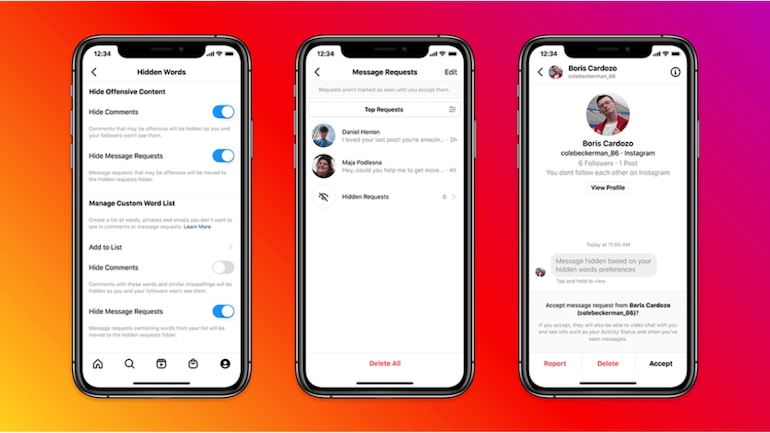
Instagram is rolling out filters for direct messages (DM)s that will let users persoanlise their DMs by choosing to hide certain abusive words. Instagram will then hide these messages from users’ DMs. Instagram notes that it aims to reduce racist, sexist, homophobic, and other kind of abuse that users with particularly a large number of followers face. Users can access this tool by going to Privacy Settings > Hidden words.
-
“But combatting abuse is a complex challenge and there isn’t one single step we can take to eliminate it completely. For example, we know that many in our community, particularly people with larger followings, have faced abuse in their DM request inbox from people they don’t follow,” Instagram in a blog post noted.
-
When the new tool is turned on, it will automatically filter DM requests containing offensive words, phrases, and emojis, so you never have to see them. Instagram notes that the tool will focus on DM requests where unknown people message users as against regular SM inbox where users receive messages from friends.
-
The tool functions similarly as the Hide comments tool which lets users hide offensive comments and lets them choose what terms they do not want people to use in comments.
-
The tool also enables users to personalise a list of words, phrases, or emojis that they want to filter out of DM requests. “Those DM requests will then be filtered into a separate hidden requests folder.
CONCLUSION
-
If you choose to access that folder, the abusive text will be covered so you don’t have to see it, but you can tap to uncover it, should you wish to. You can then choose to accept the message request, delete it, or report it,” Instagram noted.
-
Instagram also announced that make it harder for someone who you have already blocked from contacting you again through a new account. Instagram notes that with the new update in place when a user blocks someone on Instagram, he or she will have the option to block their accounts and preemptively block new accounts that person may create. The feature will roll out to users globally in the next few weeks.
KEY STORY
-
Chikkamagalur: At a time when the second wave is at its peak, people seem to be throwing all COVID-19 caution to the wind just for petty ‘gain’.
-
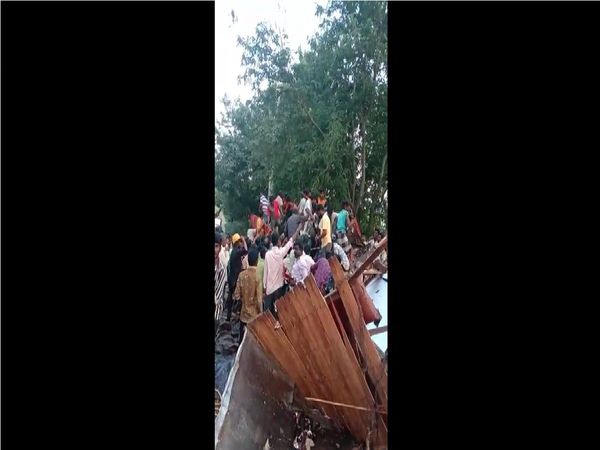
Fresh disturbing visuals have come to light from Karnataka where a herd of people could be seen looting liquor bottles from an overturned truck.
-
The shocking incident took place in the Chikkamaglur area of the state. The irresponsible behaviour of the people showed that for them, the love for beer precedes the love for their lives.
-
Hundreds pounce on top of a lorry to get hold of few beer bottles after the vehicle crashed on the highway after losing control. Cops had to finally resort to lathi-charge to clear the crowd.
KEY STORY
-
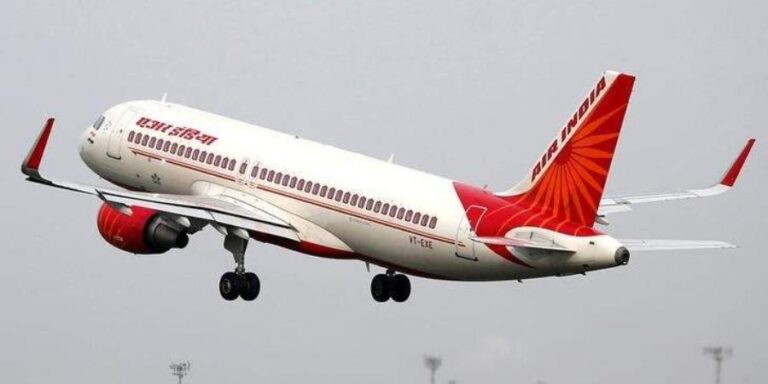
Amid the COVID-19 surge, Air India has cancelled all its flights from and to the United Kingdom from April 24 to 30 after the UK added India to its travel “red list”.
-
In a statement, Air India said, “Passengers who were to travel between India and UK may note that in view of recent restrictions announced by the UK, flights from or to the UK stand cancelled from April 24 to April 30.”
-
Further updates regarding rescheduling, refunds and waivers will be informed later, it added.
-
It said, “Between April 24 to April 30, we are in the process to schedule once a week flight to the United Kingdom from Delhi and Mumbai.” The information regarding the same will also be updated on the website of Air India and social media channels, they said.
CONCLUSION
-
The United Kingdom added India to its travel “red list” on a precautionary basis after reporting 103 cases of a coronavirus variant first identified in India, health minister Matt Hancock said on Monday.
-
The British High Commission in India said that the decision is to help prevent the spread of variants of concern and protect the most vulnerable.
KEY STORY
-
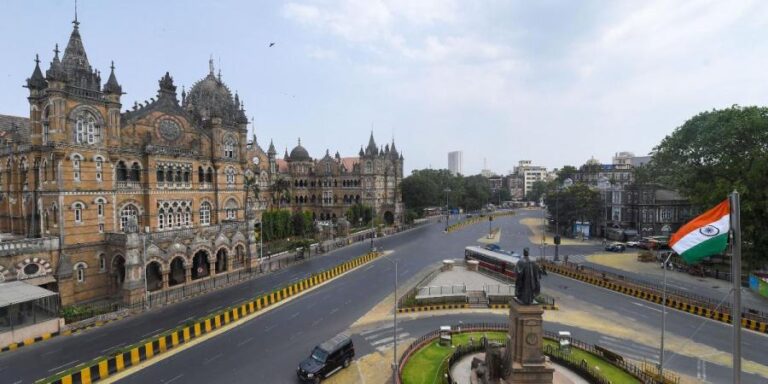
Maharashtra government issued the order of complete lockdown starting from April 22 to May 1, 2021 across the state, banning inter-district and inter-city travel except for emergency and non-avoidable reasons.
-
Maharashtra state chief secretary Sitaram Kunte issued the lockdown order on Wednesday later evening. As per the order, the lockdown will come in effect from April 22, 8.00 PM to May 1, 7.00 AM across the state.
-
According to the order, all government offices, state and central, will operate with 15 per cent attendance except for emergency services and directly connected to the management of Covid 19 pandemic. The head of the department of each department will decide the attendance of the respective office staffers.
-
More than 25 people cannot attend marriage ceremonies. The ceremony should be held in one place and it should be conducted for a maximum of two hours. If there is a violation of this norm, the Rs 50,000 fine will be charged. Inter-district and inter-city travelling is banned except for emergency and non-avoidable reasons like attending funeral and severe sickness.
-
In that case, only 50 per cent of people of the capacity of the vehicle are allowed to travel. If anyone flouts the norms, then Rs 10,000 fine will be charged.
CONCLUSION
-
The private buses can ply with 50 per cent capacity, no standing passengers will be allowed to travel in the bus. The bus will be allowed to stop at only two places between their travel distances.
-
The alighting passengers at stoppage will be stamped with 14 days quarantine period. Thermal screening will be done and suspected patients will be sent directly to Covid 19 centre for treatment. The public transport will operate but only government staff and people working in medical and essential services will be allowed to use them.
KEY STORY
-
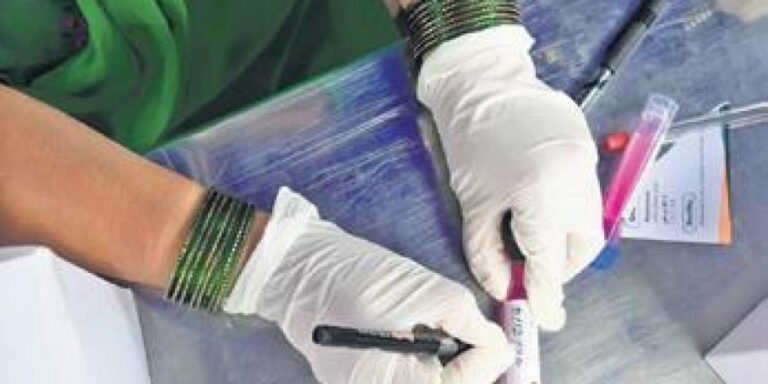
The Karnataka government on Wednesday directed labs and testing agencies in the state to give the RT-PCR test results within 24-hours after collecting samples. It also instructed that the test results be updated on the ICMR portal.
-
Additional Chief Secretary (Health), Jawaid Akhtar, in an order, pointed to the Karnataka High Court’s direction to the government in this regard in the wake of the rampant spread of the second wave of coronavirus in the state. “Along with giving the RT-PCR test results within 24 hours, the information should also be updated on the ICMR portal,” he said.
CONCLUSION
-
Sources said that there have been rising complaints about delay in getting the test results, in some cases upto three to four days. The High Court had on Saturday directed the state government to issue necessary instructions to the authorities and laboratories to give results at the earliest and not later than 24 hours.
KEY STORY
-
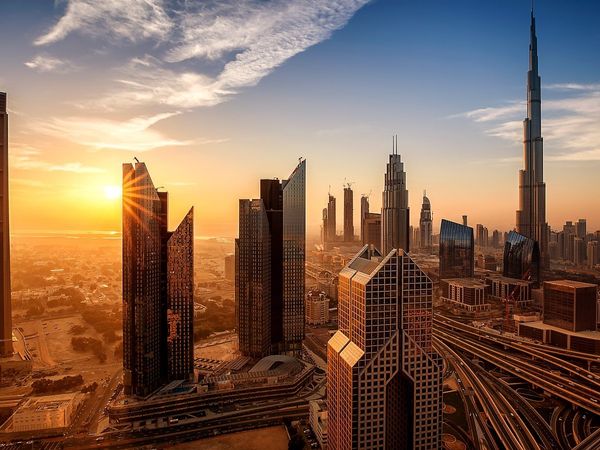
Dubai tightened the entry of travellers from India due to fear of rising Covid cases. Passengers travelling from India to Dubai will now need to show a negative Covid report from a test done within 48 hours of departure from April 22.
-
The time limit for showing a negative report has been reduced from 72 hours to 48 hours of departure to the UAE.
-
The reports must also have a QR code linked to the original report for verification by the airline. It will be verified by Dubai health authorities on arrival as well.
-
In wake of the severe Covid surge in India, Dubai has put in place stricter entry requirements for Indian travellers from 12:01 am on April 22. The test report must have the “time of sample collection,” Air India Express said in a tweet.
-
Note that Delhi-Dubai and Mumbai-Dubai have been among the world’s busiest international sectors during the pandemic, with the former often topping that list in the last few months. This is not the first time Dubai has tightened rules for Indians.
-
Last year also when travel between both nations resumed under air bubble, Dubai required passengers to take a test within 96 hours of boarding a flight from India.
-
Just a few months back this requirement was reduced to 72 hours and from Thursday onwards, it will be 48 hours.
-
This order comes at a time when getting test results is taking much longer in many Indian cities due to the massive surge in Covid cases.
CONCLUSION
-
Meanwhile, various countries have now started tightening norms for travel from India due to the Covid surge. New Zealand has barred entry of travellers from India, including its own citizens, from April 11-28.
-
Hong Kong has also barred passenger flights from India, Pakistan and the Philippines for 14 days from April 20 over Coronavirus fears. Oman has also asked its citizens not to travel to India unless absolutely necessary.

KEY STORY
-
The medical oxygen supply has been increased by nearly four times from 1,273 metric tonnes in a day in the last week of February to 4,739 metric tonnes in a day on April 17, government sources said on Tuesday.
-
Amid concerns over the shortage of medical oxygen, as coronavirus cases grow across the country, the Central government has taken several steps to boost the supply of oxygen to hospitals.
-
Indian Railways will be running ‘Oxygen Express’ trains over the next few days to transport liquid medical oxygen and oxygen cylinders across the country.
-
The Union Ministry of Health and Family Welfare had earlier informed that 162 Pressure Swing Adsorption (PSA) oxygen plants have been sanctioned by the Centre for installation in public health facilities in all states.
CONCLUSION
-
The Health Ministry further informed that in addition to 162 plants already sanctioned, the states have requested Centre for more than 100 such additional plants which are also being sanctioned.
-
Indian Council of Medical Research (ICMR) Director-General Dr Balram Bhargava had on Monday stated that oxygen utilisation has been more in the second wave of COVID-19.

KEY STORY
-
In an attempt to curb the coronavirus disease, the Maharashtra government on Monday announced more strict guidelines for shops selling groceries, vegetables etc.
-
In its new order, the state government allowed all groceries, vegetable shops, fruit vendors, dairies, bakeries, confectionaries, all type of food shops (including chicken, mutton, poultry, fish and eggs), shops related to agricultural implements and farm produce, pet food shops, shops related to materials for impending rainy season for individuals as well as for organisations to be open only between 7 am to 11 am.
-
Home delivery from the said shops however may be allowed between 7 am to 8 pm, according to the order. However, the local authorities have been given permission to change the timings.
-
The tough measures were announced after it was found that people were coming out from their residences in the name of buying groceries throughout the day and crowding the markets.
-
The latest restrictions were announced a day after Maharashtra Health Minister Rajesh Tope said that keeping in view the coronavirus situation, the Maha Vikas Aghadi government is contemplating restrictions on shops selling essentials like groceries, fruits, vegetables, etc.
-
Maharashtra on April 19 recorded 58,924 fresh coronavirus infections, pushing the tally to 38,98,262. The deadly contagious virus also claimed 351 more lives, taking the death toll to 60,824.
-
Chief Miniter Uddhav Thackeray on April 13 had announced that a strict ‘janta curfew’ will be enforced, starting 8 pm on April 14 till 7 am on May 1. So far 31,59,240 people have recovered from the disease.
CONCLUSION
-
As per the latest data of the state health department, Maharashtra’s case recovery rate stands at 81.04 per cent, while the fatality rate is 1.56 per cent.
-
During the curfew period, Section 144 of CrPC will remain imposed throughout the state to prevent gatherings.
-
The government of India on Monday announced that all above 18 years of age will be eligible for COVID vaccination from May 1, 2021.
1...604605606...883Page 605 of 883