Outlay for State Budget for 2021-22 will be downsized: CM

  • Chief Minister B.S. Yediyurappa has said that the State Budget for 2021-22 will be downsized given the financial condition as a fallout of the COVID-19 pandemic.
  • Speaking to reporters here on Saturday, he said the financial situation was such that downsizing of the budget was inevitable and the outlay was bound to be less than what it was last year. The Chief Minister, who also holds the financial portfolio, had tabled a budget with an outlay of ₹2,37,893 crore last year.
  • However, he pointed out that there will be no dearth of funds or resources to fight COVID-19 while expressing hope that the requirement could be less in the new financial year. “COVID-19 is almost 90% under control and hence the resources required too could be less,” he added.
  • The Chief Minister said recently that he would present the budget in March. He had also admitted that the financial position was not good.

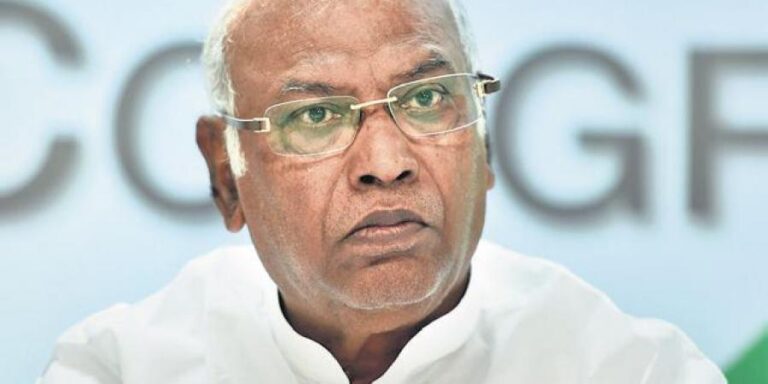
Centre must repeal farm laws, not take it as prestige issue: Mallikarjuna Kharge

HIGHLIGHTS

  • As the stalemate between the Centre and farmers protesting against farm laws continues, Congress Working Committee and Rajya Sabha member Mallikarjuna Kharge said the Central Government should correct its mistakes by repealing the Acts and not make it a prestige issue.
  • The veteran Congress leader, in conversation with The New Sunday Express, also spoke about the state of the country’s economy and ideological battles between the Grand Old Party and BJP. Excerpts.
Is Congress doing enough to support farmers’ stir?
Congress has always been fighting for farmers’ interests. Rahul Gandhi and others took part in a massive tractor rally. Apart from extending full support to the agitation, we will also put pressure on the government both within and outside Parliament to repeal the Acts. We had fought against these laws earlier too and eight members, including three from Congress, were suspended in Parliament. The CWC discussed the issue on Friday.
Is the Centre doing enough to end the stir?
Farmers have been protesting for the last 60 days, but the Prime Minister has taken it as a prestige issue. The government considers it as a setback and an insult to repeal the Acts. They are offering to keep these laws in abeyance for sometime, so that they gain time to break unity among farmers. They have held several rounds of meetings and tested the patience of farmers. But the protesters are united and are not willing to budge till the Acts are repealed. The government did not allow a detailed discussion in the Lok Sabha and Rajya Sabha. The three Acts are detrimental to farmers and to common people. Private firms with deep pockets will control the entire farm sector and people will suffer.
The government has clarified that the MSP will continue…
They may continue with MSP, but what is important is how much they will procure. They have only issued statements that they will continue with MSP, but the Acts don’t mention it. Let them clearly state in the Acts the minimum quantity they will procure under MSP. There is no provision in the Act to ensure that companies do not purchase farmers’ produce below MSP. The APMC market is the base for fixing the price and it helps farmers to know the price at different places. The government gives the example of Bihar, but farmers there are suffering and selling their paddy and wheat in Punjab. APMC does not control the market, but provides a platform to support farmers. But the government does not understand this.
How to end the stalemate?
In the interest of the country, farmers, poor people, consumers and everyone, what is the harm in repealing the Acts?
Won’t it be a bad precedent to repeal the Acts?
No. You should have thought about the repercussions before taking the decision and held discussions with farmers, experts, NGOs and the stakeholders. The government should have also allowed a detailed discussion in Parliament. If it had followed the parliamentary procedure of going through the Standing Committee and Consultative committee, this problem would not have arisen. When you have committed a mistake, you have to repent.
As a member of the Congress high-powered committee on economic affairs, what are your views on the economy?
We will talk about it in detail in Delhi on January 28 and will also take it up in Parliament. The economic situation is grim, but the government is not taking the advice of any experts, even their own. Many advisors have left the government as they don’t want to listen to anyone. The situation is getting worse by the day. Inflation is going up, petrol prices are increasing and the share of non-performing assets (NPAs) has increased from 7.5 per cent two years ago to nearly 16 per cent now. They have not managed it well on any front.
The BJP is getting stronger at the Centre and in states. What is the future of Congress?
We are fighting an ideological battle, while they are polarising voters. They bring religion to every aspect and raise emotional issues without focusing on welfare measures or the economy. Even while collecting donations for the Ram Temple, they are trying to polarise voters. It is a form of dictatorship that is in play now, and not democracy. If you oppose them, they will brand you as anti-national.
Will Rahul Gandhi come back as Congress president after the party elections?
Mrs (Sonia) Gandhi will fix the date for (internal) elections after the Assembly polls in five states. For the country’s unity and to protect our institutions, we need a strong national party.

India, China hold 9th round of military-level talks today: What to expect?

HIGHLIGHTS

  • The ninth round of Corps Commander-level talks between India and China took place on Sunday with a focus on mutually acceptable timeline to disengage from friction points along the Line of Actual Control (LAC) in eastern Ladakh.
  • The military-level talks are being held at the Moldo border point on the Chinese side of the Line of Actual Control (LAC) in eastern Ladakh. Like the previous few meetings, a representative from the Ministry of External Affairs was part of the latest military talks.
  • The eighth and last round of military talks took place on November 6 at Chushul during which both sides broadly discussed disengagement of troops from specific friction points. “Both sides agreed to earnestly implement the important consensus reached by the leaders of the two countries, ensure their frontline troops exercise restraint and avoid misunderstanding and miscalculation,” said a joint statement issued after the eight round of talks.
  • India and China standoff has now entered its ninth month as both sides continue with heavy deployment of troops, artillery guns, tanks and armoured vehicles in close proximity.
9th round of India-China military talks: What to expect
The ongoing military-talks are aimed at first easing tension on the northern bank of Pangong Lake which is where the flare up first happened in May last year sparking violent clashes.
“The focus will be build on the consensus reached a step by step de-escalation. First the north bank, followed by south bank and then Depsang and other areas,” an official said.
As per earlier proposals, the ‘Finger’ area on the northern bank of the Pangong Lake could turn into a temporary no man’s land with Indian or Chinese troops not carrying out patrols as a measure to ease tensions and find a breakthrough the deadlock.
For a phased de-escalation, the contentious conflict zone between Finger 4 to Finger 8 could become a no patrolling zone for sometime, as per the proposal.
If this resulted in de-induction of troops as weapons and a pull back to positions as of April 2020 in the next phase India would also vacate heights occupied on the Kailash range on the southern side of the lake.
In the third phase areas like Depsang plains where that had already been tense with induction of troops and weapon systems for the last 5-6 years could be focused upon for a complete de-escalation, sources said.
The Indian Army in a counter operation has occupied unmanned heights that gave it a strategic advantage as the positions overlook China’s military garrison in Moldo and other key military positions.
If a mutual pullback as proposed both by India and China from their current positions takes place at the northern bank of the lake, it would mean the Chinese would return beyond Finger 8 which India claims to to be the Line of Actual Control (LAC).
The Chinese came in about 8 km-the distance between Finger 8 and 4 seting up bunkers and fortifications in what was seen as a clear violation of status quo by India.
Both sides would patrol the area between Finger 4 and Finger 8 that often led to faceoffs and skirmishes.
Mountain spurs jutting out into the lake at more than 14,000 feet are referred to as fingers.
The north bank of the lake is divided into 8 fingers that are contested by both sides. India claims Line of Actual Control at Finger 8 and had been holding on to area till Finger 4 but in a clear alteration of status quo the Chinese have been camping at Finger 4 and have set up fortifications between Finger 5 and 8.
What happened so far
India has all along been maintaining that the onus is on China to carry forward the process of disengagement and de-escalation at the friction points in the mountainous region.
On Saturday, Indian Air Force (IAF) chief RKS Bhadauria, while speaking about China opting for an aggressive stance in eastern Ladakh, said: “If they [China] can be aggressive, we can also be aggressive.”
On January 12, Army chief Gen MM Naravane had said that Indian troops will hold their ground as long as it takes to achieve the “national goals and objectives” even as he hoped for an amicable resolution of the prolonged standoff through talks. The standoff erupted on May 5 last.
Nearly 50,000 troops of the Indian Army are deployed in a high state of combat readiness in various mountainous locations in eastern Ladakh in sub-zero temperatures as multiple rounds of talks between the two sides have not yielded concrete outcome to resolve the standoff. China has also deployed an equal number of troops, according to officials.
Last month, India and China held another round of diplomatic talks under the framework of the Working Mechanism for Consultation and Coordination (WMCC) on India-China border affairs. However, no concrete outcome emerged from the talks.

SSLC answer scripts to have QR code

KEY STORY

  • For the first time, the answer scripts for SSLC students will be affixed with QR code. The Karnataka Secondary Education Examination Board (KSEEB) has decided to introduce this step to prevent malpractice. The exam is tentatively scheduled to take place from June 14 to 27.
  • With the QR code, students will not be able to use answer scripts of other students or add their own sheets. The code will have all the particulars of the student, which includes the name, roll number, and the subject name of the examination, said an official. This will help authorities easily identify to which student the script belongs to even if there are errors made while writing the roll number.
  • “Very often when students ask for additional sheets, the papers get misplaced during evaluation or the student does not tag them properly and we cannot locate them. Putting the QR code will help in identifying to which student the answer sheet belongs to,” an official said. The decision was taken at a recent meeting of the board.
  • Apart from cracking down on malpractice, the board also plans to improve the quality of answer scripts for the 2021 examination.
  • “We will ensure that the answer papers are A4 size with 70 GSM paper,” a senior official of the Department of Public Instruction stated.
  • Each answer script will have 24 pages for all papers, barring mathematics which will have 36 pages. With the size of the answer sheets being increased, students will get three lines extra per page. Overall, the students will get two pages extra in the main answer booklet.
  • According to KSEEB officials, only 2% of students ask for additional sheets. The number of pages in the additional sheets has also been increased from 4 to 24 pages.

CONCLUSION

  • The move has been welcomed by students, parents, and school managements. “It is good that the board is streamlining the process to eliminate manual errors,” said Sujata S., mother of an SSLC student.

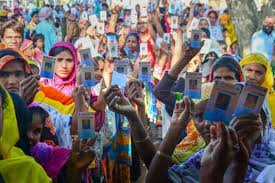
Voter ID Cards to Go Digital on National Voter’s Day Tomorrow as EC Targets 5 State Elections

HIGHLIGHTS

  • The Election Commission is set to launch the e-EPIC (Electronic Electoral Photo Identity Card) programme on January 25, which is the National Voter’s Day.
  • New voters will get the facility after downloading the card on a registered mobile connection. Once the approval by competent authorities for a new application for a voter card is provided, the applicant can get it in digital format.
  • According to the plan, on the digital format of the EPIC there will be two different QR codes consisting of information about the voter. One QR code will have the voter’s name and other specific details while the second code will have the voter’s other information. On the basis of the data stashed in the QR codes in the downloaded version of the EPIC, voting rights can be availed.
  • Once the EC plan rolls out, Service and Overseas Voters will also be able to download their EPIC. At present they are not provided physical voter ID cards. The facility will be also helpful for those voters who have shifted and need to enrol their names at new polling booths. Apart from this, voters who have lost their cards and applied for new ones will also be able to use this service after their applications for new cards are approved.
CONCLUSION
  • The initiative would be launched in two phases. In the first phase from January 25 to 31, all those new voters who have applied for the voter-ID and registered their mobile numbers in Form-6 will be able to download the e-EPIC by authenticating their mobile number.
  • Sources said that the digital EPIC service will become available to voters across the country before assembly elections in five states.


National Girl Child Day: Theme, importance, significance

HIGHLIGHTS

  • India celebrates National Girl Child day each year on January 24.
  • The day is an initiative of the ministry of women and child development and focuses on the need to address the challenges that girls face in Indian society due to gender biases.
  • The purpose of the day is also to change the attitude of society towards girls.
Here’s everything you need to know about National Girl Child Day:
1. The initiative was started by the ministry of women and child development in 2008. The objective of celebrating the day is to highlight the inequalities faced by girls in the country, promote awareness about the rights of a girl child and generate awareness on the importance of girl education, health and nutrition.
2. Various events are organised all across the country to celebrate the day. To mark National Girl Child Day, the government organises awareness campaigns under Beti Bachao, Beti Padhao (Save the girl child, Educate the girl child) scheme.
3. According to a government press release, National Girl Child day 2021 is being celebrated across the country with the objective of raising awareness on the issue of declining Child Sex Ratio (CSR). The celebrations will also mark the anniversary of Beti Bachao, Beti Padhao (BBBP) scheme.
4. Punjab has announced January 2021 to be the “month of the girl child”. The scheme Dheeiyan Di Lohri has also been launched.
5. The Odisha government will honour individuals and organisations who have worked towards mitigating child marriage on the National Girl Child Day.
6. Madhya Pradesh will celebrate National Girl Child Day with the theme of “Aware girl child, Able Madhya Pradesh” under the scheme Beti Bachao, Beti Padhao. From January 24 to 30, the state will also observe the National Girl Child week.
7. Last year’s theme for National Girl Child Day was “My Voice: Our Equal Future” and in 2019, it was “Empowering Girls for a Brighter Tomorrow”.

Messaging app Signal faces global outage days after adding millions of users


HIGHLIGHTS

  • Cross-platform messaging app Signal faced a global outage on Friday, just days after it was downloaded by millions of new users.
  • Users across the world reported they were unable to send messages on both the mobile and desktop applications.
  • The company posted on Twitter that it was experiencing technical difficulties and was “working hard to restore service as quickly as possible.”
  • Ever since its rival WhatsApp, owned by Facebook, unveiled its new privacy terms last week, Signal has seen a huge interest from new users.

Signal said that it has been adding new servers and extra capacity at “a record pace” every single day this week nonstop.
“…but today exceeded even our most optimistic projections. Millions upon millions of new users are sending a message that privacy matters. We appreciate your patience,” the messaging app tweeted.
It further said it is working to get the service back online.
“We are making progress towards getting the service back online. Privacy is our top priority, but adding capacity is a close second right now,” add the tweet image here.
According to estimates, in India, Signal was downloaded by close to 3 million users.
WhatsApp on Friday (local time) said it has decided to postpone a privacy update due to “misinformation causing concern” among people, the company said.
“We’re now moving back the date on which people will be asked to review and accept the terms. No one will have their account suspended or deleted on February 8. We’re also going to do a lot more to clear up the misinformation around how privacy and security works on WhatsApp. We’ll then go to people gradually to review the policy at their own pace before new business options are available on May 15,” the blog post read.
This came following a rise in concerns among the public regarding a threat to their right to privacy.
The New York Times reported that since the announcement of the privacy update many users and some media outlets interpreted the notification as a marked shift in WhatsApp’s data-sharing practices, mistakenly believing that the company could now read people’s conversations and other personal data.
The concerns resulted in people switching to other messaging services such as Signal and Telegram. This week, Signal became the No. 1 app in India, one of WhatsApp’s biggest markets, on Apple and Android phones, the NYT said.
Earlier this month, an advocate in Delhi filed a plea stating that WhatsApp’s update privacy policy violated the Right to Privacy and sought to direct the Centre to lay down guidelines in the exercise of its powers under relevant sections of the Information Technology Act and under the Constitution of India to ensure that Respondent Whatsapp does not share any data of its users with any third party or Facebook and its companies for any purpose whatsoever.

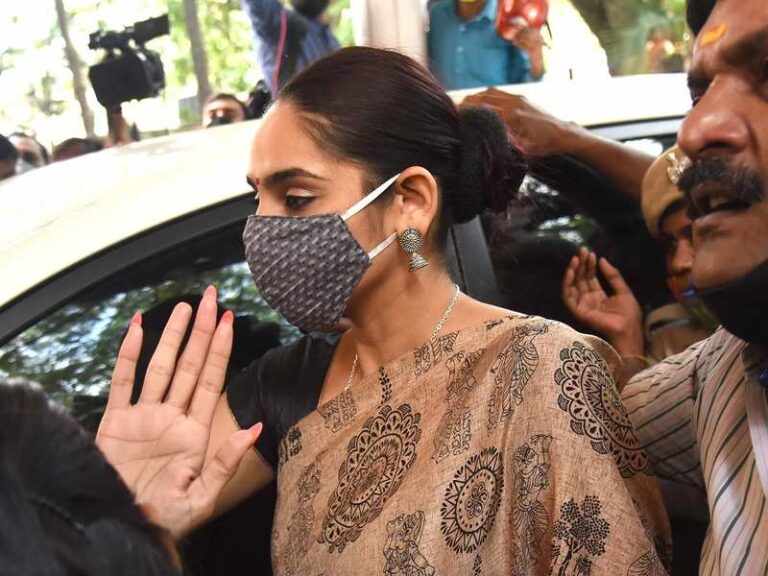
Two days after getting bail, Ragini Dwivedi waits to get out of jail

HIGHLIGHTS

  • On Thurday, January 21, after nearly 140 days of being in judicial custoday, the Supreme Court granted bail to actress Ragini Dwivedi. She was arrested in September for her alleged role in a drug racket that named her as accused number 2 in a case that connects showbiz and nightlife industries with drug peddling.
  • The actress had appealed for bail twice before this, at the Special NDPS Court and the Karnataka High Court, where her bail was rejected twice before she moved Supreme Court to hear her bail plea.
  • The actress, though, is still in jail two days after the bail was granted as the formalities need to be completed still. Reports say that once the order from the Supreme Court reaches the NDPS Court, Ragini can be released after all the formalities stated in them are completed.
  • On Thursday, Ragini’s parents shared their excitement and relief after she was granted bail and said that they want to ensure that their daughter takes care of her physical and mental health once she is out of jail. Ragini had appealed to the jail authorities for medical help with regards to some health issues related to her back and we hear that will be the immediate concern that the actress will look into once she is out.
  • Ragini was to shoot for a film Gandhigiri before she was arrested. The much delayed film, which has her paired opposite actor and filmmaker Prem, has just a few portions left to be shot. It is to be seen if they will resume shoot now.

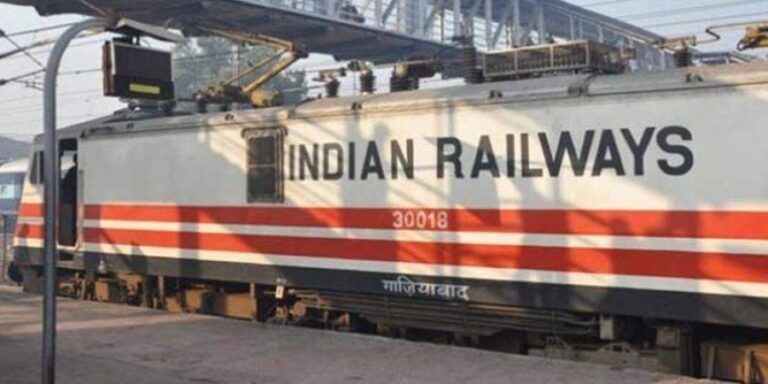
Indian Railways longest freight train ‘Vasuki’ creates new record in SECR zone

KEY STORY

  • RAIPUR: The South-East Central Railways (SECR) zone in Chhattisgarh breaks its own previous record by successfully operating the longest ever freight train by amalgamating five rakes of goods trains as one unit of around 3.5 km.
  • Named as ‘Vasuki’, it covered the distance of 224 km between the railway stations of Bhilai and Korba and took about seven hours.
  • The ‘Vasuki’, comprising of 300 wagons of long haul rake of five goods trains, ran with the help of one pilot, one assistant loco pilot and a guard.
  • The nation’s most profitable railways zone SECR had earlier operated 177 loaded wagons “Super Anaconda” of 2 km long freight train on 29 June 2020, then connecting three goods trains using the latest technology of Distributed Power Control System (DPCS).
  • SECR also successfully operated another trial ‘Shesh-Naag’ of 251 empty wagons with four electric locomotives that traveled a distance of 260 km from Nagpur to Bilaspur.

CONCLUSION

  • Under the given application of technology, the leading (front) diesel loco (engine) controlled the entire train along with the simultaneous functioning of the rear loco through electronic transmission while running on the rail network.
    “It was a great achievement of the Raipur Railway division of SECR. The concerned officials kept a close watch on any possibility of technical issue that might crop up as the long train passed through various stations”, said Shyam Sunder Gupta, Raipur Divisional Railway Manager (DRM).

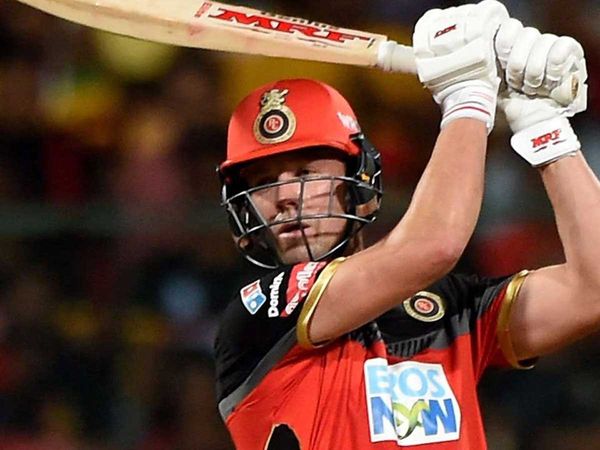
IPL 2021: AB de Villiers first overseas player to top Rs. 100cr in salaries, courtesy new RCB contract

KEY STORY

  • The Indian Premier League (IPL) franchises announced the names of players they have retained and released for the 2021 season a few days ago. Royal Challengers Bangalore (RCB) made headlines by releasing as many as 10 players into the auction pool. But they also retained their top stars like Virat Kohli, AB de Villiers, Yuzvendra Chahal, Washington Sundar, etc.
  • The contract extensions meant that the players were given an additional year on their current deals, for the prices on which they were bought.
  • As per a report in InsideSport, De Villiers, hence, went on to become the first overseas player in the history of the league to top INR 100 crore in earnings in the T20 league.
  • The likes of MS Dhoni, Virat Kohli and Rohit Sharma had already breached the Rs. 100 cr mark while Raina became the fourth one to do so by fetching a new contract from Chennai Super Kings for IPL Season 14.
  • De Villiers’ current contract sees him fetch Rs 11 crore for a season. The sum was enough for him to get into the 100 crore club alongside Dhoni, Kohli, Rohit and Raina. With the IPL 2021 contract, De Villiers has now earned a total of INR 102.5 crore from his contracts from the franchises in the T20 league.
  • De Villiers is widely considered as one of the finest batsmen in the world when it comes to the shortest format. Despite retiring from international cricket in May 2018, De Villiers has remained one of the finest batters in the world in the T20 format.

CONCLUSION

  • Last season, the South African had scored 454 runs for RCB at an average of 45.40 and a strike-rate of 158.74. Even a season before, Mr. 360 had aggregated 442 runs in just 13 matches for the franchise. Overall, De Villiers has scored 4849 runs in the T20 league from 169 matches at an average of 40.40.
  • De Villiers has represented a total of two franchises in the league, with the first being Delhi Daredevils. The Proteas stalwart has been a part of the IPL since the inaugural season in 2008. His first deal in the league was worth a little more than 1 crore. He joined RCB in 2011 after being purchased for a little over Rs 5 crore and has since been with them.