Nitin Gadkari lays foundation for 33 highway projects worth ₹11,000 crore in Karnataka

Road transport and highways minister Nitin Gadkari. (MINT_PRINT)

HIGHLIGHTS

  • Union minister for road transport and highways Nitin Gadkari inaugurated and laid the foundation for 33 National Highway projects in Karnataka via video conferencing on Saturday. These projects include 1,197 km long roads worth ₹10,904 crore.
  • Addressing the event, Nitin Gadkari said that for providing smooth connectivity to the ports for the benefit of trade and economy, 4-laning of the entire coastal road from Goa Border to Kerala Border connecting the port city of Belekeri, Karwar and Mangalore covering a length of 278 km have been taken up at a cost of ₹3,443 crore and the work has been substantially completed.
  • Also, in view of the safety of road users, three works for improving the safety by providing protective measures on Hill slopes in Shiradi Ghat on NH-75, Charmadi Ghat on NH-73 and Sampaje Ghat on NH-275 have been sanctioned amounting to ₹115 crore.
  • Gadkari further informed that the Central Government will invest approximately an amount of ₹1,16,144 crore in Karnataka in the coming years.
  • Eleven road projects of 275 km worth ₹5,083 crore have been awarded in the state during the financial year 2019-21, he added.
  • The minister also said that CRF works worth ₹8,330 crore have been sanctioned till now for Karnataka.
  • Gadkari called upon the state to take up the production of Ethanol in a big way, as it is one of the largest producers of sugarcane in the country.
  • He said, the country is already over-producing sugar and rice, and sufficient stock are available with the government. The surplus may be converted to Ethanol, which can be used as an alternative fuel for vehicles.
  • He said this will not only improve farmers’ income but will also be an indigenous source of fuel for the country.
  • Today’s event was presided over by Karnataka Chief Minister BS Yediyurappa and was attended by former Prime Minister HD Devegowda, Union Ministers Prahlad Joshi, Sadanand Gowda, Gen Dr VK Singh, ministers from the State and senior officers.
  • CM Yediyurappa assured to take forward all the suggestions given by the Union Minister. He said, his government is committed to the development of the state, and uplifting the lifestyle of its people. He said he is working in co-operation with the Centre to achieve his government’s targets.

Australia’s ‘Ash nightmare’: Bowlers led by R Ashwin put India in control on Day 2 of Adelaide Test

KEY STORY

  • Senior off-spinner Ravichandran Ashwin produced one of his most memorable overseas performances as Indian bowlers collectively terrorised Australia into submission, bowling them out for 191 on the second day of the opening Day/Night Test here on Friday.

Australia's 'Ash nightmare': Bowlers led by R Ashwin put India in control on Day 2 of Adelaide Test

  • Courtesy Ashwin’s 18-3-55-4, India successfully managed to neutralise a sub-par first innings score of 244. Rival skipper Tim Paine (73 off 99 balls) was the only home batsman to show stomach for a fight.

  • With a handy first innings lead of 53 runs, India found their opener Prithvi Shaw’s defence being breached again before ending the day at 9/1 — an overall lead of 62 runs.
  • Indian bowling could be segregated into three phases. In the early afternoon, Jasprit Bumrah (21-7-52-2) bowled the fuller length to make the first inroads.
  • Ashwin then took charge of late afternoon with his perfect length and made use of the additional bounce to blow away the middle-order.
  • And then under lights, Umesh Yadav (16.1-5-40-3) was brilliant with the old pink kookaburra as he bowled back of the length to get rid of the dangerous Marnus Labuschagne and Pat Cummins.
  • Mohammed Shami (17-4-41-0) was also immaculate with his length but he was let down by the fielders as the only glitch in their second day’s performance was a poor catching effort.
  • But Virat Kohli wouldn’t mind even four dropped chances as his bowlers forced the Australian batsman to go into a defensive shell in their 72.1 overs on second day. It was one of the most ‘Un-Australian’ batting by a team that prides itself on intent.
  • Save for Labuschagne (47 off 119 balls), who couldn’t capitalise on three reprieves, and skipper Paine, no other batsman seemed to know how to bat on a surface, which picked pace on the second day.
  • After Bumrah removed the two openers in the first session, Ashwin did the star turn in the second session.
  • Ashwin set up Smith with a few that were flighted with the angle and then bowled one that straightened and bounced a touch more. Smith, expecting turn, squared up and Ajinkya Rahane at first slip made no mistake.
  • Travis Head (7) wasn’t reading Ashwin well and the left-hander got a flighted one that took the leading edge of his bat, which ended in a chest-high return catch for the bowler.
  • Debutant Cameron Green (11) would curse himself as his was a long hop asking to be pulled but the extra bounce got the top edge and captain Virat Kohli pulled off a fabulous catch at mid-wicket, diving full-stretch to his right.
  • This was after, Bumrah bowled a brilliant opening spell to send back the Australian opening pair of Joe Burns (8 off 41 balls) and Matthew Wade (8 off 51 balls) for identical scores.
  • The two were ready to stay put and wait but Bumrah angled a fuller one into Wade, which rapped him on the pads while he was trying to whip it to mid-wicket.
  • Burns, the man going through a bad patch, had changed his stance to a more open-chested one.
  • He also did all the hard work but he was susceptible to being leg before. Bumrah fired one fast and full into the block-hole and got the decision in his favour as ‘Umpires Call’ in the DRS went India’s way.
  • Labuschagne was insanely lucky when Bumrah dropped a dolly at fine leg after the batsman had mistimed a pull shot off Shami. Before that, it was a diving Wriddhiman Saha, who missed a tough but gettable edge off Bumrah’s bowling.
  • After the dinner break, Labuschagne on 21, was dropped by Shaw at square leg and that was also a mistimed pull-shot.
  • Umesh was fantastic in the twilight as he trapped Labuschagne with a delivery that kept low and then a short ball saw Cummins awkwardly fending it to gully.
  • A run-out and the fourth wicket by Ashwin saw Paine waging a low battle to reduce the first innings lead. At the start of the day, India’s tail-enders contributed precious little and the visitors’ first innings folded in just 93.1 overs.
  • Mitchell Starc (4/53 in 21 overs) and Pat Cummins (3/48 in 21.1 overs) dismissed the last four batsmen for an addition of only 11 runs to the overnight score.

When you use WhatsApp, this is data it collects and records for user tracking according to Apple App Store

HIGHLIGHTS

  • iPhone users can see all the information that WhatsApp collects from users.
  • Apple is enforcing a rule in the App Store that says all apps must make it clear to users the data points that they are collecting.
  • Facebook, which owns WhatsApp is not exactly very happy about the transparency that it brings and is fighting a public battle.
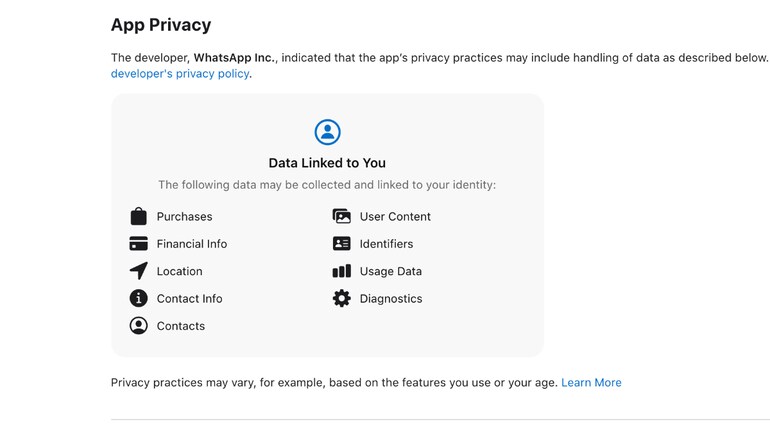
Apps like WhatsApp often advertise just how private they are. At every opportunity, WhatsApp loves to tell users that it is a chat app offering end-to-end encrypted chats, calls, and video calls. What it means to say is that if you send your friend a text “where can I get the best pizza in Delhi” WhatsApp is not going to show you an ad for “the best pizza restaurants in Delhi” because it doesn’t know what you are saying in a message. But this doesn’t mean WhatsApp is not collecting data to track its users. In fact, it collects a lot of user data as revealed by the “privacy nutrition labels” that all apps now must supply to the Apple App Store.
This is important for users. Now, for the first time users at least those using WhatsApp on the iPhone — can see all the information that WhatsApp collects from users and then can try to understand all the ways in which this information is used for targeted advertising. The collection of this data is not new. It is just that now you can see it.
You can see it because Apple is enforcing a rule in the App Store that says all apps must make it clear to users the data points that they are collecting. Facebook, which owns WhatsApp is not exactly very happy about the transparency that it brings and is fighting a public battle with Apple, but let’s not get into that. Let’s see what all info WhatsApp is collecting from iPhone and presumably Android users.

According to Apple App Store, WhatsApp Collects:

Identifiers: This is the device ID, or basically the digital signature of your phone on which you have installed WhatsApp. This is unique for every phone. We don’t know how exactly WhatsApp uses it, but potentially it can be used to figure out that the same user has WhatsApp installed as well as other Facebook apps, like Facebook and Messenger. Basically, this one ID probably binds all the data Facebook has of you and makes it useful for user tracking and targeted advertising.
Usage data: We are not sure which data is part of it, but Facebook says that this data is used for advertising. It could be something like for how long you use WhatsApp, or at what time, and for what purposes, which is whether to make calls or chats, etc. It could be something like, at “8 am, the user opened WhatsApp and sent 7 messages.” WhatsApp doesn’t know what messages you sent, but it does know that 7 messages were sent at 8 am.
Purchases: This is probably data related to any purchase you have made using WhatsApp. Recently, WhatsApp rolled out a digital mart feature to help people buy stuff through the app.
Location: Where you are located, in which city and in which colony. But not which house because WhatsApp collects “coarse” location data and not fine.
Contact info: Of course, your phone number.
User Content: WhatsApp messages are end-to-end encrypted, which WhatsApp cannot access for advertising or even analytics purposes. So, what is this? WhatsApp says it is other user content. We are assuming this is probably the wallpapers etc that you use in WhatsApp. But we are not sure.
Diagnostics: Probably the data WhatsApp collects when the app crashes, network conditions, etc.
Contacts: Yes, WhatsApp has access to all your contacts. This is how WhatsApp functions.
Financial Info: WhatsApp collects details of payment information, such as when you are using WhatsApp Pay.
All of this data once collected is then used by WhatsApp and Facebook in various ways, including for targeted advertising as well as to ensure all the features and functionality that offers works well. Now, this is a standard industry practice so it is not like WhatsApp is the only app doing something like this, which is collecting all this private data. And of course, when you install WhatsApp and agree to terms and conditions, you give WhatsApp and Facebook permission to collect this data. It is just that now, the process is a little more transparent.

WhatsApp vs Signal: data collection

But about other chat apps? Most of them are similar to WhatsApp but some are different. The Signal app, which has also seen praise from NSA whistle-blower Edward Snowden, seems to be very different from WhatsApp if the privacy labels at the App Store are any indication.
While WhatsApp does collect a lot of information about its users, the Signal Messaging app does not collect any such sensitive information about its users.
Apple revealed in its privacy section the slew of information WhatsApp collects from information but no such data was displayed about Signal. The App Privacy label of Signal showed that the data which the app collects from the user is not linked to them. This means that the data types including location data or browsing history are not linked to the user in any way that can be identified. The only data that Signal seems to collect from its user is the Contact Info. Signal uses the open-source Signal Protocol to encrypt all forms of communication on the app. While WhatsApp only encrypts the messages and calls, Signal encrypts the metadata too.

Exclusive: CarryMinati to make Bollywood debut with Amitabh Bachchan- Ajay Devgn starrer MayDay

Ajey Nagar aka CarryMinati is a popular YouTuber

He enjoys massive popularity in the online space, and is known to his army of fans by the name CarryMinati. But now, Ajey Nagar (his real name) is all set to try his hand at another medium: films! We have exclusively learnt that he has been roped in to play a special role in Ajay Devgn- Amitabh Bachchan starrer MayDay.
Carry, as his fans call him, confirms to us, “My brother/business head Deepak Char got a call from Kumar Mangat Pathak (Co-Producer at Devgn’s production company) and I have been meaning to align forces with them since a while now.”
‘Anxious’ is the word he chooses to describe what he felt when the film came his way. “What made it really interesting for me was when I heard I am supposed to play my own character (CarryMinati) & the way it’s going to be shown on screen. I am excited to see how this will unfold,” he reveals.
https://www.instagram.com/p/CGcRXGWpSrR/?utm_source=ig_web_copy_link
While his short skits in the form of his videos did enjoy massive popularity, how did he end up in films? Was getting into Bollywood at the back of his mind all this while? The 21-year-old denies, “It has never been one of my interests. The main purpose of those skits was to entertain people. Currently I don’t see myself going in that direction but yes I like to experience everything. I agreed to be a part of this film because I had to essay my own character (CarryMinati) and that comes very easily to me. I eat, breathe, sleep and live my character every single day. But I’m hoping I get to learn a thing or two about acting from Amitabh Bachchan and Ajay Devgn. They are personalities I look up to and fondly admire.”
He doesn’t want to call MayDay his “full-fledged debut”. “It’s more like an extension of what I do. I dedicate 10 hours in a day for content creation and I’d like to consider that as my passion and calling, acting and music for me is a medium where I can showcase my art to a more varied audience. For me personally, my authentic acting innings will happen when I get to the opportunity to dedicate myself wholeheartedly to the art unflinchingly, everything else I do right now I consider as a special appearance,” says Nagar.

Reopen classes 10 and 12 on January 1; classes 9 and 11 on January 15: Karnataka Technical Advisory Committee

KEY STORY

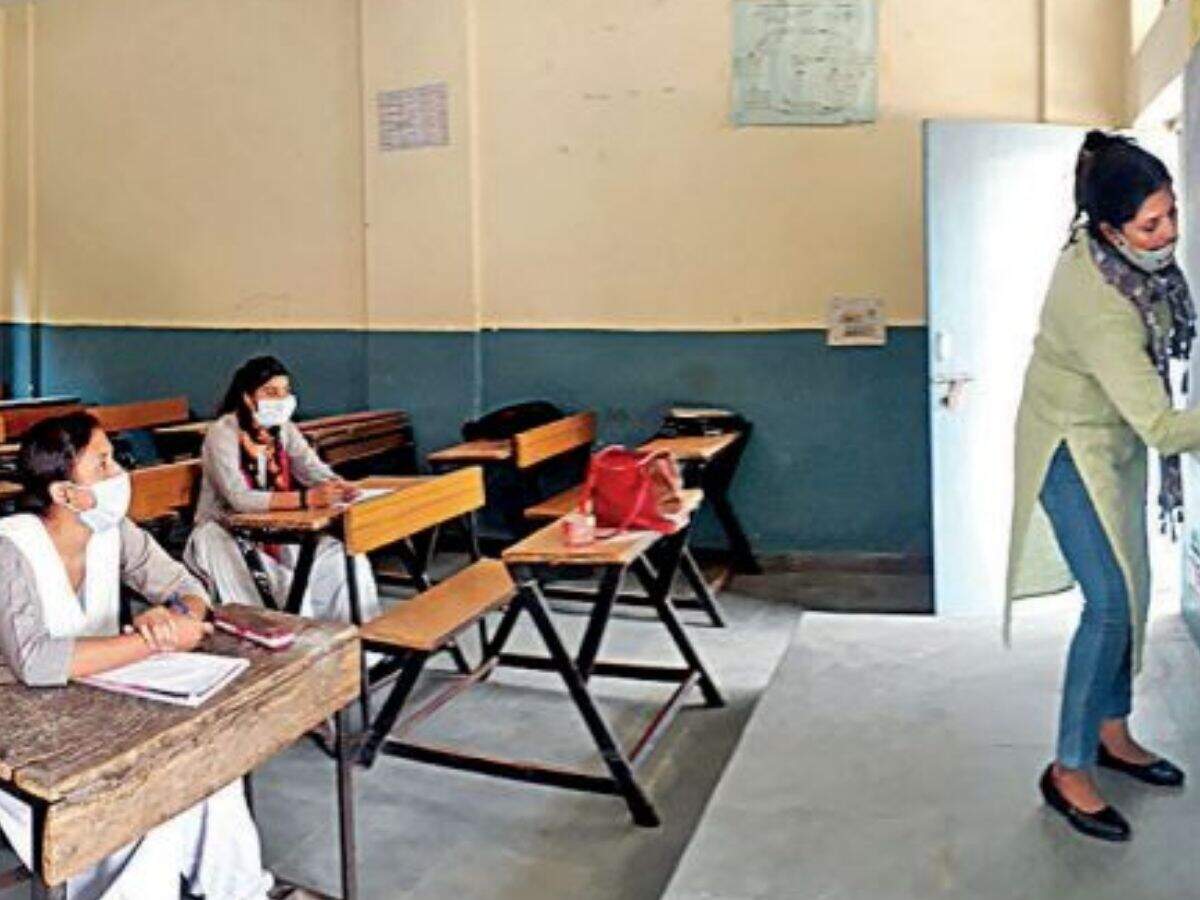
  • The Technical Advisory Committee for Covid-19 in Karnataka has recommended that classes for grades 10 and II PU can start from January 1.

  • This will be followed by classes for grades 11 and I PU from January 15. Vidyagama in its new form– classes in small groups on campus– for classes 6-9 can also be held from January 1.
  • The committee held a meeting on Thursday to discuss issues on the reopening of schools.
  • The dates will be discussed with the chief minister and finalised after the Standard Operating procedures are in place. Thursday’s meeting was attended by the education minister and department officials.

CONCLUSION

  • The committee has also recommended that the state should wait for some more time before rolling out Vidyagama for primary classes. Sources point out that the government will also wait for the High Court order on the same.
  • According to the recommendations, students should come to school with a consent letter from the parents.
  • The consent later should also have an undertaking that students have no symptoms like sore throat, cold or cough. Those students who have any of these symptoms should not attend classes.

Watering it down: Here’s why you must avoid ‘overhydration’

water, drinking water

 It is easy to believe that more hydration is always better. Every individual is directed to drink lots of water on a daily basis. While it’s definitely a good practice, everything has two extremes. What you may not be aware of is that too much water can be harmful. Water intoxication is an existing condition in spite of how ironic it may sound. Overdoing hydration can be dangerous for your health, causing damage afflicting the routine bodily functions. Maintaining hydration levels for patients undergoing hemodialysis is an even bigger challenge.
Signs of overhydration
Overhydration among dialysis patients can cause edema where your feet, ankles and wrists swell up. Maintaining optimal blood pressure is another challenge. Undergoing dialysis or not, do not turn a blind eye to any such signs. When left unattended, it can turn serious, or even lead to death in worst-case scenarios.
Result of Overhydration
Hyponatremia is the medical term used for such a condition. Overhydration makes it difficult for the kidneys to function normally. If not examined in the earlier days, it may lead to symptoms of heart failure, risking the patient’s life. Treatment varies depending on the severity of your condition. You will be asked to follow one or all of these solutions:
  • IVs: Saline solutions may be injected into your body in order to heighten the salt content in your blood.
  • Medicines: Prescription of medicines to help and retain the sodium levels in your body by helping your kidneys get rid of more urine.
  • Dialysis: In severe case scenarios, you may have to support your kidneys in filtering and excretion by undergoing dialysis.
The right water diet
Managing your liquid intake in terms of both the right amount and the right time plays an important role in preventing hyponatremia. Consuming eight glasses of water per day is a generalised idea in all minds. But the normal water intake level cannot be the same for everybody as it also depends on various factors like health conditions, size, weather and physical activities.
For a dialysis patient, liquid intake has to be given utmost priority. Here’s how overhydration can be avoided:
  •     Always maintain a track of your fluid intakes.
  •     Consume water from very small cups.
  •     Eat frozen fruits and vegetables.
  •     Keep a check on salt intake.
For others:
  •     Male: 13 glasses or 3 litres approximately.
  •     Female: Over 2 litres or 9 glasses of fluid per day. If pregnant, up to 10 glasses and a mother who is breastfeeding, 12 glasses
  • Kids and teenagers: 8 glasses of fluid daily
Additionally, it is advisable to treat related conditions like adrenal gland insufficiency which would contribute to hyponatremia. Educating oneself about the impact of diuretic medications or any new prescriptions is important.
(The author is consultant nephrologist, ApolloDialysis Clinics)

“Not Possible To Give Definite Date”: Railways On Normal Train Services

KEY STORY

  • The Railways on Friday said it is not possible to provide a definite date for the resumption of normal train services and pointed out that it has seen an 87-per cent drop in the earnings from the passenger segment so far this year, compared to the last year.

'Not Possible To Give Definite Date': Railways On Normal Train Services

  • Addressing a press conference, Railway Board Chairman, VK Yadav said, so far in the current fiscal, the Railways’ earnings from passenger revenue have been ₹ 4,600 crore and estimates show that by March 2021, the figure is expected to rise to ₹ 15,000 crore.
  • Mr Yadav, however, said the loss in the passenger segment will be overcome from the earnings through freight, which is expected to cross last year’s figures.
  • He said by December, the national transporter had already achieved 97 per cent of last year’s loading. Mr Yadav said the Railways has suffered massive losses in passenger revenue due to the suspension of train services because of the coronavirus pandemic.
  • It is not possible to give a definite date for the resumption of normal train services. The general managers have been in discussion with the state governments and we will resume the services when and where we get the go-ahead.

CONCLUSION

  • Even now, the situation is not normal. So far, our earnings from passenger revenue are ₹ 4,600 crore and by the year-end, our aim is to take our total earnings from the passenger segment to ₹ 15,000 crore.
  • In the last fiscal, our earnings from this segment were ₹ 53,000 crore. This makes our earnings 87 per cent less than the last year,” Mr Yadav said.
  • He pointed out that even the trains that are currently in operation are witnessing around 30-40 per cent occupancy on an average, reflecting that the fear of the pandemic is still there. Mr Yadav said the Railways is currently operating 1,089 special trains.
  •  The Kolkata Metro is running 60 per cent of its services, the Mumbai suburban is running 88 per cent trains and 50 per cent of the Chennai suburban services are in operation. Senior railway officials are closely monitoring the situation and normal train services will be resumed “slowly” in a phased manner, the officer said.

UPSC Civil Services Admit Card 2020 for main exam out: Here’s direct link

KEY STORY

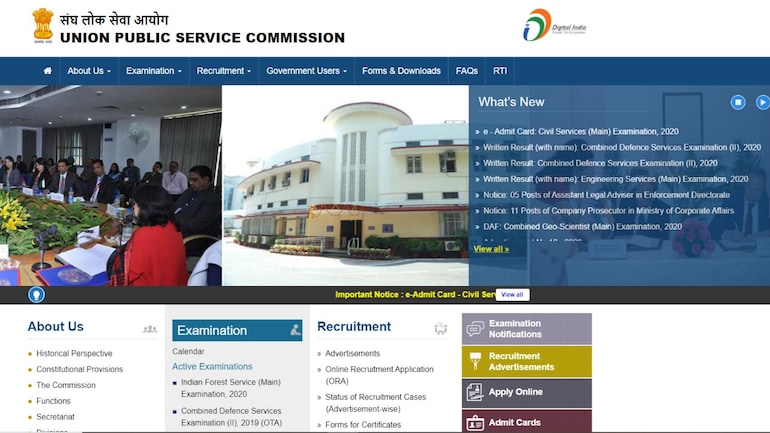
  • UPSC Civil Services Main Exam Admit Card 2020: The Union Public Service Commission, UPSC has released the admit cards of the Civil Services (Main) Examination, 2020.

UPSC Civil Services Admit Card 2020 for main exam out @ upsc.gov.in: Here’s direct link

  • All the candidates can download the UPSC Civil Services Main 2020 exam admit card from the official website of the commission, the link for which is upsc.gov.in. The UPSC Civil Services Main Exam 2020 is scheduled to begin from January 8, 2021.
  • Further, the UPSC Civil Services main exam will be held in two sessions i.e., the forenoon session would be from 9 am to 12 noon and the afternoon session would be conducted from 2 pm to 5 pm.

UPSC Civil Services Main Exam Admit Card 2020: How to download

Step 1: Log on to the official website, upsc.gov.in.
Step 2: Click on the link which says, e- Admit Card: Civil Services (Main) Examination, 2020.”
Step 3: Enter your UPSC Civil Services 2020 roll number/registration id along with other details.
Step 4: Click on submit and the admit cards of the UPSC Civil Services Main Exam 2020 will be displayed.
Step 5: Download it and take print out of the same for future reference.

Direct link to download UPSC Civil Services Main Exam Admit Card 2020

Important instructions for candidates:

1. Check the e-admit card carefully and bring discrepancy (ies), if any, to the notice of UPSC immediately.
2. Bring this e-admit card (print out), along with the (original) photo identity card, whose number is mentioned in the e-admit card, in each session to secure admission to Examination Hall. E-admit card must be preserved by the candidate.
3. Candidates are advised not to bring any valuables/costly items in the examination halls as safe keeping of the same cannot be assured. The commission will not be responsible for any loss in this regard.
4. Enter the examination hall 30 minutes before the scheduled commencement of the examination in each session. entry to the examination hall closes 10 minutes prior to the scheduled commencement of the examination in each Session.
5. If you appear at a centre / sub-centre or in an optional subject, other than the one indicated by the Commission in your e-Admit Card, your answer scripts will not be evaluated and your candidature will be liable to be cancelled.
6. Possession (even in switch off mode) / use of mobile phones and other electronics/communication devices are banned at the examination premises. Any infringement of these instructions shall entail disciplinary action including ban from future examinations under the rules of the examination.
7. Candidates who do not have clear photographs on the e-admit card will have to bring passport size photograph, one for each session, for appearing in the examination with an Undertaking.
8. Use of scientific (non-programmable type) calculators is allowed and if considered necessary may be brought by candidates. Programmable type calculators are, however, not allowed in this examination.
9. Candidates must note that they should strictly answer all parts and sub-parts of a question in the Question Cum Answer (QCA) booklet in the space provided under each question / part in the QCA booklet. Read the Instructions for Candidates printed on the QCA booklet carefully. Any infringement of the instructions in the QCA booklet might entail penalty in the form of deduction of marks scored by the candidate and disciplinary action including debarment from future examinations under the rules of the examination.
10. Candidates are advised to ensure that spaces / pages remaining blank are clearly crossed out before the QCA booklets are handed over to the Invigilator.
11. Candidates for each session are required to hand over their QCAB to the Invigilator after detaching Question Paper available in detachable form at the end of the QCA Booklet, before leaving the Examination Room/Hall.
12. Mention your name, roll number, registration id and name and year of the examination in all the correspondence with the commission.
13. Candidate are also advised to bring black ball point pen to the examination hall for making entries in the attendance list.

Covid-19 guidelines:

  • Wearing of mask/face shield is mandatory for all candidates. Candidates without mask/face shield will not be allowed entry into the venue
  • Candidates, however, will have to remove their masks/face shield for verification, whenever required by the examination functionaries
  • Candidate may carry his/her own hand sanitizer (small size) in transparent bottle
  • Candidates to follow Covid-19 norms of ‘social distancing’ as well as ‘personal hygiene’ inside the examination halls/rooms as well as in the premises of the venue.
For any query, candidates can check the official website of UPSC. In case of any problem in downloading e-admit card for the Civil Services (Main) Examination, 2020 or discrepancy noticed in the e-admit card , may please be informed in detail on e-mail: – [email protected] (For Technical Problem) , [email protected] (For Applicant Data Problem).

Rs 2,500 cr scam in Delhi municipal corporations bigger than Commonwealth Games scam, says Arvind Kejriwal

KEY STORY

  • New Delhi: Delhi Chief Minister Arvind Kejriwal on Friday said the alleged scam of Rs 2,500 crore in the BJP-ruled municipal corporations was even bigger than the Commonwealth Games scam.

MCD corruption

  • Addressing a special session of the Delhi Assembly, he claimed that scams of Rs 5,000-10,000 crore happen every year in municipal corporations while giving required permissions for buildings.
“It’s a very painful day as we are discussing the biggest scam in MCD. Rs 2,500 crore scam is bigger than the Commonwealth Games scam. Even people on the street say there is corruption in MCD and the same people say the Delhi government is honest,” he said.
“Rs 2,500 crore could have been used to pay salaries of sanitation workers, doctors and other employees of corporations. It could have been used to make 12,500 hospital beds or 7,500 Mohalla Clinics,” Kejriwal added.

CONCLUSION

  • The AAP national convenor asked the Leader of Opposition in the assembly Ramvir Singh Bidhuri to push for a CBI probe into the alleged scam.
“The black era of the BJP’s 15-year rule in municipal corporations is about to end now. The MCDs even went to the courts over funds but they have said all dues have been paid,” he said.

Karnataka government to remove Class 6 textbook content that hurt feelings of Brahmins

KEY STORY

  • The Karnataka Government has instructed removal of contents from the class 6 social science textbooks after the Brahmin Development Board complained it was “insulting” to the Brahmin community.

Karnataka Government To Remove Textbook Content That Hurt Feelings Of Brahmins

  • The Primary and Secondary Education Minister S Suresh Kumar in a note to top officials of his department has also directed that a committee be constituted including teachers and experts to examine such contents in the social science and language textbooks from class 1 to 10, and submit a report in 15 days to take necessary action.
  • The move came after a delegation from the Brahmin Development Board petitioned Chief Minister BS Yediyurappa in this regard and said these contents were “insulting” to the Brahmin community.
  • Stating that the seer of Mantralaya mutt had telephoned him and informed him about the feelings of the Brahmin community, Suresh Kumar in Facebook post clarified that revision of textbook or addition of any fresh chapter has not taken place after the current government came to power.
    “I have promised to the seer that the blunder that has taken place in the past and has come to light now will be rectified immediately,” he said.
  • While citing the reasons for the birth of new religions, the content in the class 6 social science textbook states Sanskrit was the language of priests and the common man could not understand it, the minister said in his note.

CONCLUSION

  • According to the textbook, there was a food scarcity because “homa” and “havana” (fire rituals) were performed by offering large quantities of foodgrains, milk, ghee and other materials.
  • Also it has been said sacrificing animals that were helpful to farmers in cultivation contributed to it, he pointed out.
  • Further highlighting similar such portions, Suresh Kumar in his note said the opinion of majority of the people is that such content was unnecessary and was above the standard of the students of the age group to whom it was taught.
  • Such provocative content will not only lead to confusion in the society, but also hurt the feelings of the people of certain sections of community or society, he added.