Delhi Gets “Green War Room” To Bring Down Pollution Levels This Winter

KEY STORY

New Delhi: 

  • Delhi Environment Minister Gopal Rai on Thursday inaugurated a “green war room” at the Delhi Secretariat to monitor steps being taken to bring down pollution levels in the city this winter.
  • The minister said a 10-member team has been set up under senior scientists Mohan George and B L Chawla to monitor the levels of primary pollutants, measures taken to curb pollution and status of complaints received through the “Green Delhi” mobile application.
  • Satellite data related to farm fires in the neighbouring states will also be analysed in the green war room.
  • There are multiple agencies working to deal with the problem of air pollution in Delhi. The “green war room” has been set up to coordinate their efforts, Mr Rai said.
The “green war room” has three big screens – one is for monitoring primary pollutants such as PM2.5 and PM10, ozone, sulphur dioxide, nitrogen dioxide, carbon monoxide, and wind speed.
  • Pollution levels at 13 hotspots in the city and the steps taken to bring them down will be monitored on the second screen.
  • The 13 pollution hotpots are Okhla Phase-II, Dwarka, Ashok Vihar, Bawana, Narela, Mundka, Punjabi Bagh, Wazirpur, Rohini, Vivek Vihar, Anand Vihar, R K Puram and Jahangirpuri.
  • The third screen projects satellite data from NASA and ISRO related to crop residue burning, the minister told reporters.
  • According to data of the Punjab government, 169 farm fires were observed in the state on Wednesday. Overall, 1,692 “fire events” have occurred this season so far.
In Haryana, authorities have reported 526 farm fires this season so far.
  • The team will also keep an eye on the mechanised sweeping of roads and sprinkling of water to prevent dust pollution.
  • Rai said the control room will work towards ensuring stricter enforcement of guidelines to check dust pollution at construction and demolition sites, ready-mix concrete plants, and garbage burning.
“This anti-dust campaign will continue in mission mode till October 15 and strict action will be taken against the violators,” he said.
The minister added that daily reports on the number of complaints received and grievances redressed will be sent to Chief Minister Arvind Kejriwal.

CONCLUSION

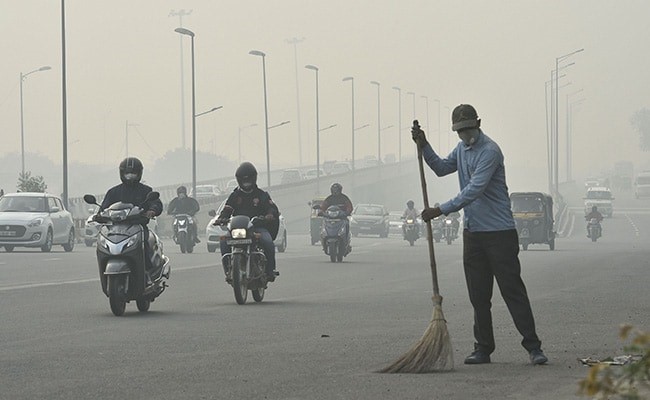
  • The national capital’s air quality was recorded in the “poor” on Thursday and is likely to deteriorate further due to unfavourable meteorological conditions and spike in farm fires.
  • The city recorded an air quality index (AQI) of 208 at 3 pm, which falls in the poor category.
  • Delhi’s air quality had turned poor on Wednesday, the first time in since June 29, with the Central Pollution Control Board recording a 24-hour average AQI of 215. It was 178 on Tuesday.
  • An AQI between 0 and 50 is considered “good”, 51 and 100 “satisfactory”, 101 and 200 “moderate”, 201 and 300 “poor”, 301 and 400 “very poor”, and 401 and 500 “severe”.
  • High levels of air pollution in Delhi is a year-round problem, which can be attributed to unfavourable meteorological conditions, farm fires in neighbouring regions and local sources of pollution.
  • The Delhi government on Monday launched a massive anti-air pollution campaign.

Amazon India opens its largest especial distribution centre in Karnataka

KEY STORY

  • Ahead of its month-long Great Indian Festival sale, Amazon India has announced that it is opening its largest specialized fulfilment centre in India at Kolar in Karnataka.
  •  The storage capacity of more than 1.2 million cubic feet, Amazon said that the new fulfilment centre is specialised to store and manage customer orders from the large appliances and furniture category.
  • With this infrastructure expansion, Amazon.in will now offer storage capacity of more than 4 million cubic feet across 4 fulfilment centres to its close to 35,000 sellers in Karnataka.
  • The fulfilment centre was virtually inaugurated by Karnataka Chief Minister B.S Yediyurappa, along with Amit Agarwal, Senior Vice President, Amazon India and Akhil Saxena, VP, Customer Fulfilment Operations, APAC, MENA & LATAM, Amazon India and other members of Amazon India Leadership.
  • “The expanded fulfilment network will create thousands of work opportunities and further boost ancillary businesses in the State. At Amazon, we continue to invent on behalf of our customers and this festive season our priority is to ensure health and safety of our associates, partners and customers” said Akhil.

CONCLUSION

  • Amazon India is set to host its Great Indian Festival sale from October 17, which will go on for a month. Prime members get early access on October 16.
    “The fresh investment by Amazon in India will create more job opportunities for local youth and also enable these MSMEs to sell their “Made-in-Karnataka” products all over India and the world,” CM Yediyurappa added.
  • With this new centre, Amazon India has four fulfilment centres with more than 4 million cubic feet of storage space and three Sort Centres with more than 3 lakh square feet of sortation area in the state.
  • The expansion in Karnataka is a part of the company’s plans announced in July 2020 to add 10 new Fulfilment Centres and expand 7 existing sites, across India.

Karnataka mulls installing sleep detectors in govt-run buses as safety measure

KEY STORY

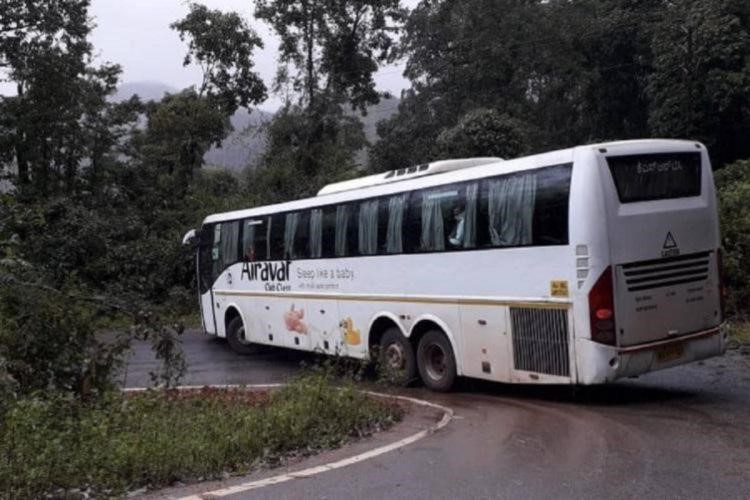
  • The Karnataka government on Wednesday said that it was looking at installing high-tech security equipment, in a phased manner, in all its state-run buses to reduce the number of road accidents.
  • Speaking to reporters after chairing the high-level meeting of the state run transport corporations officers in Bengaluru, Deputy Chief Minister Lakshman Savadi, who holds charge of the Transport department.
  •  Device equipped with special sensors will initially warn the driver with a beep sound and red light in the event of him getting sleepy during driving and later slow down the vehicle and put emergency brakes to stop it altogether.
  • He added that cars and other high end vehicles already come equipped with these devices in the market.
  • “State run transport corporations are incurring additional expenditure of whopping Rs 100 crore due to accidents on various routes. As we know, most of these accidents take place due to drivers dozing off,” he said.
  • According to him, this was not just a problem existing in Karnataka but it is a worldwide phenomenon. “That is why several tech companies have come up with special sensor-based devices to alert the drivers who doze off.
  • By deploying such devices, the state-run corporations not only save a lot of additional expenses but also make travelling safer for both staff and passengers,” the Deputy CM explained.

CONCLUSION

  • Karnataka operates its inter-state buses through Karnataka State Road Transport Corporations, North-East Karnataka Road Transport Corporation and North-West Karnataka State Road Transport Corporation while Bengaluru Metropolitan Transport Corporation operates local buses in the Bengaluru Metropolitan area.
  • In one of the major accidents earlier this year, falling asleep on the wheel was attributed to the mishap where a total of 19 persons died when a Kerala-government bus travelling from Bengaluru towards Ernakulam collided with a container truck in Tirupur.

Scores turn out for protest against Labour Law Amendments in Bengaluru

KEY STORY

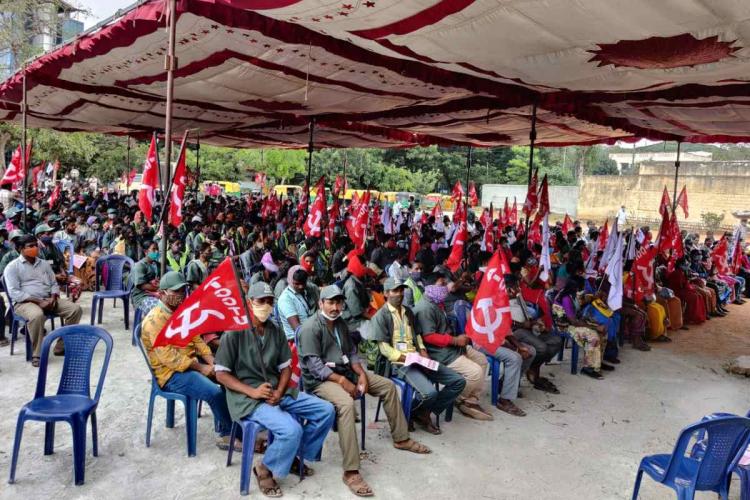
  • The All India Central Council of Trade Unions (AICCTU) held a protest in Bengaluru on Wednesday against the labor law amendments made by the Union and state governments.
  • The protesters, including workers and members of various trade associations in Bengaluru, gathered at Freedom Park at 12:30 pm. They observed a minute’s silence for the victim of the rape victim from Hathras, Uttar Pradesh.

Puttegowda, the Karnataka President of AICCTU, said, “Since the time of coronavirus, the government has been negligent about the working class. There was no food, no wages, no job security. Now workers are being removed from work and unemployment is growing. It is during this time that they have brought about the labour law changes and we must fight this”.

  • Protesters highlighted the amendments to contract labor under the Industrial Disputes Act  passed by the Karnataka government in July which stated that establishments and contractors with up to 50 workers do not need to be registered and are therefore exempted from inspections.
  • Factories (with aid of power) with 10 or more workers and factories (without aid of power) with 20 or more workers no longer fall under the ambit of the Factories Act.
  • This limit was increased in an amendment passed by the state government. Trade unions say that this will affect a large number of workers and their access to safety, toilets, food and water.

CONCLUSION

  • Among the workers present at the protest were those involved in COVID-19 related work including pourakarmikas working in Bengaluru.
  • Meena of Victoria Hospital Workers Union is employed to clean waste in hospitals. “We do not have job security or wage security. We are paid less than minimum wages by ‘contractors’. Only through our unity, we can fight against this,” Meena said


Study Reveals: How long covid-19 live on your Skin and Other Surfaces

KEY STORY

  • Despite all the strides made by humankind over the last few months, the COVID-19 pandemic is far from over. It is common knowledge by now that the SARS-CoV-2 virus, which causes COVID-19, can be transmitted through a number of mechanisms.
  • The US Centers for Disease Control and Prevention (CDC) may still be unsure about airborne transmission, but respiratory transmission and surface transmission are possible routes of spread.

What is hand sanitizer, and does it keep your hands germ-free?

  • Direct inhalation of droplets containing the COVID-19 virus is likely and can be avoided by wearing masks when outdoors or in crowded places, surface transmission that could go undetected.
  • The virus enters the body via the mucous membranes in the nose, eyes and mouth, and it can easily get there if you touch a contaminated surface and then proceed to touch your face without washing your hands first.

SARS-CoV-2 on the skin

  • Your skin – especially the skin of your hands – may act as the biggest carrier of SARS-CoV-2. Research conducted at the United States Army Medical Research Institute of Infectious Diseases in July 2020 had indicated that SARS-CoV-2 can stay on the skin for eight hours to 14 days depending on the temperature.
  • This study said that the virus survives on the skin for eight hours at 37 degrees Celsius, for about four days at 22 degrees Celsius and up to 14 days at 4 degrees Celsius.
  • This clearly shows that using a potent, 80% alcohol-based hand sanitizer is the best way to kill the virus before it can enter your system
  • Hand sanitization should be done regularly to avoid COVID-19 infection.

SARS-CoV-2 on other surfaces

  • Your skin is a carrier and should be sanitized regularly, but you also need to keep other surfaces in mind – after all, we are all surrounded by high-touch surfaces, from door handles to remote controls and switchboards.
  • The study mentioned above shows that the survival time of the SARS-CoV-2 virus on other surfaces like borosilicate glass, stainless steel and polystyrene was about eight times more than that of the flu virus.
  • virus stays active on various surfaces and the following are some estimates to keep in mind.
  1. Metal: Five days
  2. Glass: Five days
  3. Ceramics: Five days
  4. Wood: Four days
  5. Plastic: Two to three days
  6. Stainless steel: Two to three days
  7. Cardboard: 24 hours
  8. Copper: Four hours
  9. Aluminium: Two to eight hours
  10. Paper: Depends on the type but usually lasts between a few minutes to about five days
  11. Fabrics: Depends on the type but all fabrics can be easily disinfected if washed and dried properly
The best way to avoid surface transmission is to clean and disinfect all surfaces, especially high-touch ones, regularly.


Ignoring A Covid Test? Be prepared to get imprisoned Or Pay A massive Fine In Karnataka

KEY STORY

  • The newest order in Karnataka by the state government now dictates that anybody refusing to get a COVID-19 test can be jailed and or heavily fined.
  • Amid the worsening Covid-19 outbreak in the state, the government on Tuesday invoked the Karnataka Epidemic Diseases Ordinance 2020 to crack down on people who refuse to get tested.

  • Invoking powers under section 4 of the Ordinance, the government issued an order stating, “All individuals who are identified for Covid-19 test by the government shall get tested so that the spread of the disease can be contained and lives can be saved.”
  • If a person refuses to get tested, he/she can face a jail term of up to three years and a fine up to Rs 50,000 as per the Ordinance.
  • Highlighting the problem, DH had carried a report Karnataka faces Covid contacts challenge’ in its Oct 6 edition, revealing that as much as 60 per cent of primary and secondary contacts of Covid patients in the state are refusing the calls to get tested.
  • Government officials said the problem, which was widespread across the state, was creating a serious impediment in the government’s efforts to control the pandemic.
  • “It has come to notice that certain individuals are refusing to get tested and thus hampering the efforts to stop the transmission of Covid virus.
  • The timely testing will only help the family members, co-workers etc of Covid positive patients to identify disease early and go for treatment,” said Dr Omprakash Patil, Director, Department of Health and Family Welfare, in the order.

IPL 2020, KKR vs CSK :Men in Purple takes the match into their pace with a thrilling victory against CSK by 10 runs

HIGHLIGHTS

Match 13 of Indian Premier League (IPL) 2020 saw Kolkata Knight Riders (KKR) lock horns with MS Dhoni-led Chennai Super Kings (CSK) from the United Arab Emirates (UAE).
Batting first, the openers gave KKR a fiery start, before Shardul Thakur dismissed Shubman Gill. Rahul Tripathi dazzled with a brilliant 81, but the other batsmen couldn’t get going, as CSK stifled the run-flow. Karn Sharma and Dwayne Bravo starred with the ball, as KKR were bowled out for 167 runs.

CSK lost Faf du Plessis in the powerplay, but Watson and Rayudu put CSK in control with a fine partnership. However, Rayudu’s wicket turned the game on its head, as KKR stifled the run-flow, and pulled of a stunning 10-run victory.

Game Ends – Kolkata Knight Riders win

Chennai have only themselves to blame for this loss. They were 90-1 at the 10-over mark, and Sunil Narine’s advent just turned the game on its head.
Dinesh Karthik was being riled for not bringing on Narine in the powerplay, but boy, didn’t that move pay off! It did, and KKR have ended benefitting from it.
Rayudu’s wicket stifled the run-flow, and Dhoni getting castled unravelled the chase altogether. Chennai were cruising, and just threw the game away.
Karthik must be given a lot of credit for this performance. What a fine performance, overall, from the Men in Purple. Captivating game, indeed. Thanks for joining us folks, goodnight!

Schools, colleges turn to virtual labs to teach practicals

KEY STORY

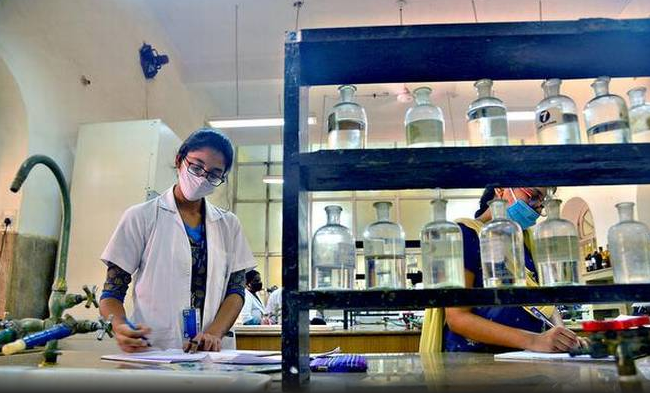
  • In an attempt to break away from the tedium of a digital class format where a teacher talks online while students take notes, several city schools and colleges are conducting practical classes by making use of ‘virtual labs’ and also organizing virtual field trips of museums and zoos

Student Research in a COVID-19 World - Titan Voices

  • Virtual labs allow students to conduct experiments by testing formulae, clicking on icons and test tubes, etc.
  • While it is a far cry from the actual experience of conducting experiments in laboratories, teachers say it’s the best option available given that the government is not allowing schools to open this month.
  • Manila Carvalho, principal, Delhi Public School (Bengaluru East), said that science teachers in the school use these labs to help students visualise and understand concepts.
  • “Many of our teachers, besides using these virtual labs which are available online, also come to school and record the experiments they conduct. They then share the videos with students,” she said.
  • Many virtual labs conduct experiments that are aligned to the NCERT/CBSE and State board syllabus
  • Dakshayini Kanna, principal of Harvest International School, said that they have been conducting virtual field trips as well.
  • “We can book virtual tours of museums and zoos. We cannot continuously only conduct online classes. We are trying to do everything to make sure that online learning is attractive for the students,” she said.
  • Several enterprising teachers in government schools and colleges too are making use of these labs.

CONCLUSION

  • Visvesvaraya Technological University has tied up with National Institute of Technology Karnataka Surathkal to implement technology enabled learning through virtual labs for all institutions affiliated to the university.
  • The university said that these labs can be used to provide remote experiential learning of courses in engineering and applied sciences.
  • The move has received a mixed response from students. Karthik S., who studies in a government PU College, started using these virtual labs after his teacher recommended them. “Our college does not have a lab and I am glad that I found these tools to understand concepts better,” he said.
  •  Tanya S., a class twelve student of a CBSE-based school says that the virtual labs do not provide them hands-on experience like the regular practical classes. “We understand that our schools have no option but to conduct virtual practical sessions. But if we do not get any practical exposure this academic year, we want CBSE to cancel our practical examination,” she said.

M Rajeshwar Rao appointed as deputy governor of RBI

KEY STORY

  • The central government on Wednesday has appointed M Rajeshwar Rao as deputy governor of the Reserve Bank of India, it said in a notification. He is currently the executive director of RBI.

M Rajeshwar Rao appointed as RBI Deputy Governor- The New Indian Express

  • The Appointment Committee of the Union cabinet has approved the appointment, the notification stated. Rao succeed NS Vishwanathan as the fourth deputy governor.
  • He has been associated with the Reserve Bank since 1984, holding various positions. He took charge as an executive director of the central bank in 2016.
  • At present, he is in charge of the internal debt management, financial markets operations, international and secretarial departments at the central bank.
  • Prior to taking over this position, Rao was the chief general manager, financial markets operations department. He has previously held charge of the risk monitoring department.
  • His vast experience makes him a front runner for the post. He has a Bachelor of Arts in Economics and a Master of Business Administration from University of Cochin. He is also a Certificated Associate of Indian Institute of Bankers.
  • Rao has experience of working as the Banking Ombudsman in New Delhi and in the Reserve Bank’s regional offices at Ahmedabad, Hyderabad, Chennai and New Delhi.
  • The central government on Tuesday appointed three external members Ashima Goyal, Jayanth R Varma and Shashanka Bhide to the Monetary Policy Committee (MPC) of the RBI.
  • The MPC of the RBI on Wednesday has started its three-day deliberations. There is a consensus that the central bank will maintain status quo on the benchmark lending rates in the view of inflation, scheduled to be announced on 9 October.
  • Rahul Gupta, head of research- currency, Emkay Global Financial Services said, “We expect the central bank to maintain a status quo on the back of rising inflation. The focus will be on growth projections, as since February 2020, the RBI has not given a solid economic projection.”

“This meeting of the MPC is the first with the new government nominees on the Committee. Considering that this is their first meeting and with the inflation consistently above 6, they are expected to retain the policy rates,” said Divakar Vijayasarathy, founder and managing partner, DVS Advisors LLP.

Former CBI Director and Ex-Governor of Dies by Suicide, Say’s Police

KEY STORY

Former CBI director and Governor of Nagaland Ashwani Kumar on Wednesday allegedly committed suicide by hanging himself at his residence in Shimla.
Shimla Superintendent of Police Mohit Chawla confirmed the incident, according to news agency ANI, describing it as a shocking development. It is learnt that the former state Director General of Police was under depression for sometime.

A file photo of Ashwani Kumar.

Kumar was DGP of Himachal Pradesh from August 2006 to July 2008 and then the Director of CBI from August 2008 to November 2010.
After his retirement from the CBI, Kumar had settled down in Shimla. After his retirement, he worked briefly for a private university located near Shimla as its chancellor. A 1973-batch IPS officer, Kumar is survived by his wife and son.