PM Insurance Scheme For Health Workers Fighting COVID-19 Extended

New Delhi: The ”Pradhan Mantri Garib Kalyan Package Insurance Scheme for Health Workers Fighting COVID-19”, which was announced on March 30 this year for a period of 90 days, has been extended for a further period of 90 days.
“The ”Pradhan Mantri Garib Kalyan Package Insurance Scheme for Health Workers Fighting COVID-19” was announced on 30 March 2020 for a period of 90 days. This was extended for a further period of 90 days i.e. up to 25th September 2020. The scheme has now been extended for another 180 days i.e. 6 months,” according to a government release.
The scheme provides an insurance cover of ₹ 50 lakhs to healthcare providers, including community health workers, who may have to be in direct contact and care of COVID-19 patients and therefore at risk of being infected. It also includes accidental loss of life on account of contracting COVID-19.
“There is no age limit for this scheme and individual enrolment is not required. The entire amount of premium for this scheme is being borne by the Ministry of Health and Family Welfare, Government of India. The benefit/claim under this policy is in addition to the amount payable under any other policies,” read the release.
The Ministry of Health and Family Welfare has collaborated with the New India Assurance (NIA) Company Limited for providing the insurance amount based on the guidelines prepared for the scheme.
HIGHLIGHTS
-
The Ministry of Health and Family Welfare has collaborated with the New India Assurance (NIA) Company Limited
-
PM Insurance Scheme For Health Workers Fighting COVID-19 Extended.
-
The scheme provides an insurance cover of ₹ 50 lakhs to healthcare providers.
-
“There is no age limit for this scheme and individual enrolment is not required.
-
Including community health workers, who may have to be in direct contact and care of COVID-19 patients to be provided PM Insurance Scheme.
So far, a total of 61 claims are processed and paid under the scheme.156 claims are under examination by New India Assurance (NIA) Company Limited, and in 67 cases claims forms are yet to be submitted by the States, the government said.
The scheme also covers private hospital staff/ retired/volunteer/ local urban bodies/contract/daily wage/ ad-hoc/outsourced staff requisitioned by States/ Central hospitals/autonomous hospitals of Central/States/UTs, AIIMS & INIs/ hospitals of Central Ministries drafted for COVID-19 related responsibilities.
The insurance provided under this scheme is over and above any other insurance cover being availed of by the beneficiary.
As Minister Flags Toyota’s “No Expansion”, Clarification On “Investment”
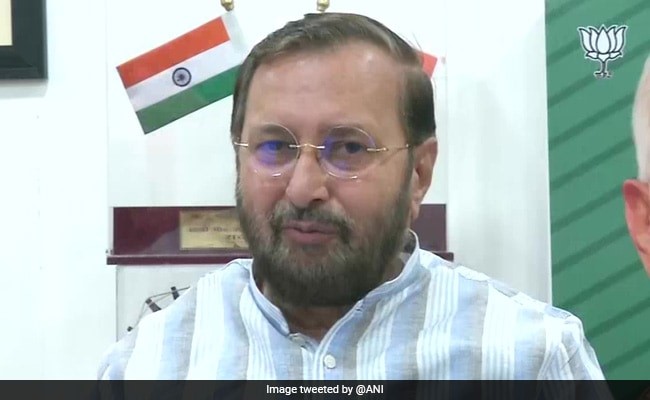
Union Minister Prakash Javadekar tweeted that the news that Toyota will stop investing in India is incorrect and the company will invest more than ₹ 2,000 crore in the country in the next 12 months
New Delhi: The government and the Indian unit of Toyota Motors have both played down the auto giant’s decision against expansion in the country due to the high tax regime. Union Minister Prakash Javadekar tweeted that Toyota will invest more than ₹ 2,000 crore in the country over the next year. It was confirmed by Vikram Kirloskar, the vice-chairman of Toyota Kirloskar Motor, who said the company is “committed to the future of India”.
“The news that Toyota Company will stop investing in India is incorrect. @vikramkirloskar has clarified that Toyota will invest more than ₹ 2000 crore in next 12 months,” read the tweet by the Union Minister, who is in charge of the heavy Industries portfolio
The news that Toyota Company will stop investing in India is incorrect. @vikramkirloskar has clarified that Toyota will invest more than Rs 2000 crore in next 12 months.@PIB_India
— Prakash Javadekar (@PrakashJavdekar) September 15, 2020
Absolutely! We are investing 2000+ crs in electric components and technology for the domestic customer and export. We are committed to the future of India and will continue to put all effort in society, environment, skilling and technology.
— Vikram Kirloskar (@vikramkirloskar) September 15, 2020
In an interview on Tuesday, Shekar Viswanathan, vice chairman of Toyota Kirloskar Motor, Toyota’s local unit, said high taxes in the country keeps cars outside the reach of a majority of consumers. This means that factories are sitting idle and jobs aren’t created, he said.
“The message we are getting, after we have come here and invested money, is that we don’t want you,” Mr Viswanathan said. In the absence of any reforms, “we won’t exit India, but we won’t scale up,” he added.
In a carefully-worded statement later in the evening, Toyota said it needs to protect the jobs it has created in the country and would prefer to work towards consolidating existing operations.
“Over our two decades of operations in India, we have worked tirelessly to build a strong competitive local supplier eco-system and develop strong capable human resources. Our first step is to ensure full capacity utilization of what we have created and this will take time,” the statement read.
It also pointed to the high tax regime in the country, and said the auto industry “has been requesting the Government for support to sustain industry through a viable tax structure” in the aftermath of the post-coronavirus slowdown in economy.
“We recognize the strong proactive efforts being made by the Government to support various sectors of the economy and appreciate the fact that it is open to examine this issue despite the current challenging revenue situation,” the statement read.
The auto industry has been stagnating even before the pandemic started due to the economic downturn. But a decision against expansion by a major auto-maker is likely to weigh down the government’s efforts to seek business.
STORY HIGHLIGHTS
-
Union Minister Prakash Javadekar tweeted that Toyota will invest more than ₹ 2,000 crore in the country over the next year.
-
Toyota earlier said high taxes push cars out of reach for many consumers.
-
Toyota said it needs to protect the jobs it has created in the country and would prefer to work towards consolidating existing operations
Over the last months, Prime Mnister Narendra Modi has been repeatedly flagging the Make in India initiative and seeking foreign investment, showcasing the government’s efforts to offer investors a better business environment.
In a nod to the government efforts, the Toyota statement read, “Our recent partnership with Suzuki in India on sharing technology and best practices are also in support of the “Make in India” initiative and Indian Government’s policy, and aim to enhance the competitiveness of both companies”.
Toyota halts India expansion, blaming ‘we don’t want you’ taxes


Highlights
-
Toyota in India has largely pivoted toward hybrid vehicles, which attract taxes of as much as 43% because they aren’t purely electric. (AP)
-
In India, motor vehicles including cars, two-wheelers and sports utility vehicles, attract taxes as high as 28%
-
Toyota, one of the world’s biggest carmakers, began operating in India in 1997
Topics
Toyota Motor Corp. won’t expand further in India due to the country’s high tax regime, a blow for Prime Minister Narendra Modi, who’s trying to lure global companies to offset the deep economic malaise brought on by the coronavirus pandemic.
India is planning to offer incentives worth $23 billion to attract firms to set up manufacturing, people familiar with the matter said last week, including production-linked breaks for automakers. The South Asian country is the fourth-biggest car market in the world but international players have struggled to find a niche in a sector that’s dominated by cheap, fossil-fueled vehicles.
The government keeps taxes on cars and motorbikes so high that companies find it hard to build scale, said Shekar Viswanathan, vice chairman of Toyota’s local unit, Toyota Kirloskar Motor. The high levies also put owning a car out of reach of many consumers, meaning factories are idled and jobs aren’t created, he said.
“The message we are getting, after we have come here and invested money, is that we don’t want you,” Viswanathan said in an interview. In the absence of any reforms, “we won’t exit India, but we won’t scale up.”

Toyota, one of the world’s biggest carmakers, began operating in India in 1997. Its local unit is owned 89% by the Japanese company and has a small market share — just 2.6% in August versus almost 5% a year earlier, Federation of Automobile Dealers Associations data show.
In India, motor vehicles including cars, two-wheelers and sports utility vehicles (although not electric vehicles), attract taxes as high as 28%. On top of that there can be additional levies, ranging from 1% to as much as 22%, based on a car’s type, length or engine size. The tax on a four-meter long SUV with an engine capacity of more than 1500 cc works out to be as high as 50%.
Ford, GM Out
The additional levies are typically imposed on what are considered to be “luxury” goods. As well as cars, in India that can include cigarettes and sparkling water.
General Motors Co. quit the market in 2017 while Ford Motor Co. agreed last year to move most of its assets in India into a joint venture with Mahindra & Mahindra Ltd. after struggling for more than two decades to win over buyers. That effectively ended independent operations in a country Ford had once said it wanted to be one of its top three markets by 2020.
Such punitive taxes discourage foreign investment, erode automakers’ margins and make the cost of launching new products “prohibitive,” Viswanathan said.
“You’d think the auto sector is making drugs or liquor,” he said. Toyota, which also has an alliance with Suzuki Motor Corp. to sell some of Suzuki’s compact cars under its own brand, is currently utilizing just about 20% of its capacity in a second plant in India.
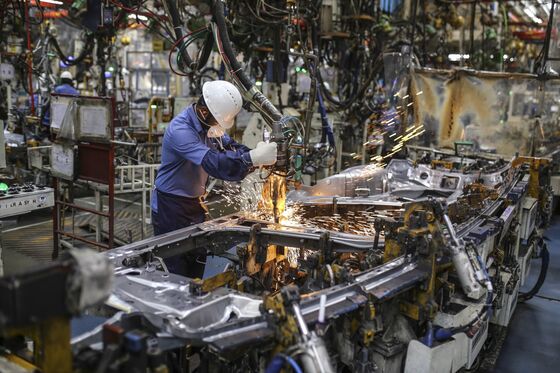
Taxes on electric vehicles, currently 5%, will probably also go up once sales increase, Viswanathan said, referring to what he says has become a pattern with successive governments in India.
While discussions are ongoing between ministries for a reduction in taxes, there may not any immediate agreement on an actual cut, India’s Heavy Industries Minister Prakash Javadekar said earlier this month.
A finance ministry spokesman didn’t immediately respond to messages seeking comment.
EV Challenge
Automobile sales in India were weathering a slump before the coronavirus pandemic, with at least half a million jobs lost. A lobby group has predicted it may take as many as four years for sales to return to levels seen before the slowdown.
The biggest players are the local units of Suzuki and Hyundai Motor Co., which have cornered the market for compact, affordable cars. Maruti Suzuki India Ltd. and Hyundai Motor India Ltd. have a combined share of almost 70%.

Toyota in India has largely pivoted toward hybrid vehicles, which attract taxes of as much as 43% because they aren’t purely electric.
But in a nation where few can even afford a car, let alone a more environmentally friendly one, EVs or their hybrid cousins have yet to gain much acceptance. Elon Musk, the billionaire founder of Tesla Inc., has said import duties would make his vehicles unaffordable in India.
“Market India always has to precede Factory India, and this is something the politicians and bureaucrats don’t understand,” Viswanathan said. Modi’s much-touted Make in India is another program aimed at attracting foreign companies.
India needs to have demand for a product before asking firms to set up shop, yet “at the slightest sign of a product doing well, they slap it with a higher and higher tax rate,” he said.
UP:Govt.Slammed for proposal of Five-year Contractual Jobs for group B and C Employees

Highlights
-
The employees will initially be recruited on contract basis for five years.
-
These employees would not be entitled to allowances and other benefits like the permanent employees and their wages would be fixed by the government.

Lucknow: At a time when millions of people are losing jobs all over the country due to the COVID-19 pandemic, the Yogi Adityanath led-Uttar Pradesh government is mulling over a proposal that will bring about major changes for Group B and Group C state government employees.
According to the proposal, the employees will initially be recruited on contract basis for five years. These employees would not be entitled to allowances and other benefits like the permanent employees and their wages would be fixed by the government.
Once the contract period is over, a rigorous appraisal of their performance will be reportedly carried out and only those who meet the minimum performance standards will be retained and their services regularised. The rest will be terminated.
No allowances and other social security and labour benefits will be given to the employees during their five-year tenure. The Department of Personnel has initiated the consultation process with other stakeholders and the proposal is likely to be placed before the cabinet soon.
“The employees will be subject to scrutiny even during the five-year contract period and will have to score at least 60% in different tests. If they pass the tests which will be conducted in all five years with first division, they will be considered for a permanent job,” a state government employee, who wished to remain anonymous, told NewsClick.
The six-monthly assessment of the employees would be done by a committee at the department level. The assessment will be made on a measurable key performance indicator (MKPI), which will include attendance and timely performance of work, discipline, patriotism and morality. The reports of the employees will be assessed every six months and even if an employee is not found to be up to the mark after a year, they will be shown the door.
Official sources, however, said the proposal is in the initial stages and the government had asked all departments to give their opinion on the new policy. Opposition parties and trade unions have indicated that they would oppose the proposal.
Sources, however, indicated that the government had already prepared a proposal and it could be placed before the state cabinet.
An ordinance is said to be the preferred way to bring about the change. Officers selected through the PCS (executive), PPS and PCS (Judicial) exams would not be covered by the new recruitment policy.
Dependents of deceased state employees, who are appointed on compassionate grounds, will also have to pass such tests and they will be employed on a contractual basis as well.
Former Vice-Chancellor of Lucknow University, Roop Rekha Verma, opposed the move. “It is very bad step by the state government at a very wrong time. Instead of creating jobs for the youth when they need it the most, the government is trying to slash jobs, and it will create fear psychosis among employees who have secure jobs,” Verma told NewsClick, adding that there would then be no difference between a government and a contractor.
“It comes at a time when people are living on the edge due to COVID-19 and there is a peak in unemployment – there is no creation of jobs. I urge the state government to check the unemployment data and layoffs in every sector then take a decision,” she said.
Sandeep Pandey, Magsaysay awardee and social activist, said: “It is totally unfair that employees will have to go through tests to be made permanent employees. The state government should have created more jobs for the youth instead of taking this step. This will create uncertainty. What will those who are not permanent after five years, do?” asked Pandey, adding that the BJP government, both at the Centre and in Uttar Pradesh, is trying to crush the dreams of millions of youths.
Congress leader Priyanka Gandhi took to Twitter and said: “Youth are demanding jobs and the UP government comes up with a proposal for contractual jobs for five years. It is an effort to rub salt into the wounds of the youth…”
She added that the youth is being denied permanent jobs even in Gujarat. “We will not allow the government to take away the self-respect of the youth,” she added.
There are about nine lakh Group B and Group C employees in the state at present.
IPL 2020: Mumbai Indians Fans Curious After Arjun Tendulkar Spotted With Team in UAE

Arjun also shared an image on his Instagram stories where he can be seen chilling in the pool. He captioned the image, “Rest days are the best.”
Arjun Tendulkar, son of legendary cricketer and former Mumbai Indians (MI) skipper Sachin Tendulkar, has sparked rumours of joining the IPL franchise. The youngster was spotted enjoying with Trent Boult, Rahul Chahar and James Pattinson as an image of him surfaced from UAE on social media.
Arjun, who is a left-arm pacer, was not part of IPL 2020 auction and his picture left fans wondering what is he doing with MI players.
This is not the first time that Arjun has been spotted training in the MI camp, but the franchisee has not signed him yet. The young player has travelled to UAE as a part of the net bowlers contingent. Every IPL franchisee is carrying a number of net bowlers with them and Arjun will be bowling to the MI batsmen in the nets.
Our #Master Blaster SACHIN TENDULKAR's SON –
ARJUN TENDULKAR 💙 in #MI Camp.Left Arm Seamer🎯
All-rounder🔥#MumbaiIndians #OneFamily pic.twitter.com/eiBDDLpVCw
— பேட்டைக்காரன்🔰 (@Bigil99) September 14, 2020
Apart from Mumbai Indians, Arjun has also bowled in the net sessions of Team India. The 20-year old had also bowled to the Indian women’s team on the eve of the 2017 World Cup final. He had even managed to injure Jonny Bairstrow with a yorker a couple of weeks earlier and had forced him to miss the complete session.
While Arjun is a net bowler in IPL 2020, one cannot rule out the possibility of MI signing him if any of the players are ruled out of the tournament. The youngster was not part of the auction but given the SOPs and rules, BCCI might allow the franchises to pick a replacement from the set of players who are already in UAE. Arjun has played for India U-19 in 2018.
IPL 2020 is scheduled to commence from September 19 in the UAE. Mumbai Indians will start the tournament by locking horns against Chennai Super Kings.
‘NEET Has Taken So Many Lives’: MK Stalin Says ‘Kill-loot’ Test Completely Unnecessary, Must Be Banned
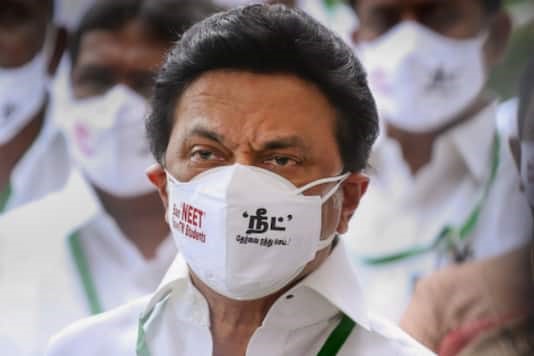
Chennai: DMK President M K Stalin, who on Monday turned up at monsoon session of the Tamil Nadu Assembly wearing a ‘Ban NEET, Save TN Students’ face mask, appears to have unleashed a diatribe against medical entrance test and wants it scrapped.
In an exclusive e-mail interview to CNN News18, Stalin reasons why his party stands, and will continue to stand, in the way of the BJP Government on many issues such the National Education Policy, the NEET exam, and continue to condemn other actions such as the demonetisation and GST. In a scathing remark about the issue that has kept Tamil Nadu on the boil, Stalin terms NEET as the guillotine that has taken many lives
He also weighs in on the Sushant Singh Rajput case, commenting that the Narcotics Control Bureau joins the long list of “autonomous” institutions such as the CBI and ED hammered out of shape to sway to the tunes of the ruling establishment in Delhi. Edited excerpts:
Won’t the DMK’s opposition to the National Education Policy — revised to reflect the changed education scenario — affect its interests?
The DMK will never stand in the way of a reform to reflect the changes brought over time. In fact, it was in the rule of Thalaivar Kalaignar that the Samacheer education system was introduced, which led to a reduction in burden and knowledge enhancement among students. Because of that, more students have been able to pass exams, equip themselves with the skills required for higher education, and employment. The Narendra Modi government’s education policy is exactly the opposite of it.
The efficient and truly improvement-focused method would be each state framing their own policies, basing them on their students’ mother tongues, their ability to grasp concepts, pass percentage, dropout ratio, and so on. But in the new education policy state rights have been totally denied. There is a tendency to forcibly impose other languages. In the name of industrial training, the policy destroys infrastructural facilities and opportunities necessary for students to go for higher education. The exam structures are built in a way that they act as stumbling blocks in the path of students willing to continue their education. As far as the DMK is concerned, we are firm in our resolve to bring education back to the State List. It should not remain in the Concurrent List. In Tamil Nadu, where the two-language policy has been in practice for over half a century, there should not be any imposition of Hindi or Sanskrit. Tamil Nadu has an infrastructure that has managed a higher pass percentage, in comparison to other states, in terms of school education and other higher levels. We will not allow its destruction.
You are opposing the National Eligibility Cum Entrance Test, too. Why?
Until twelfth grade, the education system is such that students can choose their subjects for higher secondary education depending on their areas of interest. In 2007, during the rule of Thalaivar Kalaignar, the Public Entrance Test was abolished and students were able to participate in the counseling sessions of engineering and medical universities based on their class 12 marks in a transparent, single window system. Many became engineers and doctors during the next 10 years because of that. Particularly, the education dreams of children of suburban and rural neighbourhoods, and those from oppressed communities became real. In every family, that progress was visible. NEET, an unnecessary eligibility test, has turned out to be a destroyer of such dreams, and has dismantled the social justice supporting the entry of students into government-run colleges in Tamil Nadu.
From Ariyalur Anitha (who took her own life in August 2017) to Jothi Sridurga (who died on September 12, 2020), NEET has become a guillotine that has taken away so many lives.
The BJP maintains that DMK and other parties oppose NEET because it stands in the way of several politicians and businessmen who live on the high fees charged by private medical colleges. What do you have to say to that?
This is a diversionary tactic to take attention away from the crux of the issue. In the name of NEET, there has been proliferation of coaching centres that charge exorbitant fees running into lakhs, and the BJP government has paved the way for a scenario where it is commonly understood that such training is necessary to enter medical studies. In this, there are several connected with the BJP. Occurrence of malpractices in exam procedures and other irregularities, facilitated through these NEET coaching centres, have also been exposed. On top of that, the proportion of rural students gaining entry into government-run medical colleges has also been declining. NEET is a fundamentally bad ‘kill-loot’ scheme. That is why the DMK stands firmly against it.
Does it bode well for our national interests if the DMK, the third largest party in the Lok Sabha, staunchly opposes every effort of the Centre?
A majority of the schemes/plans advanced by the BJP government turn out to be partisan, alienating towards some sections of the people, and non-inclusive, and that is why the DMK often opposes it, as a responsible opposition party should do
STORY HIGHLIGHTS
- DMK President M K Stalin, who on Monday turned up at monsoon session of the Tamil Nadu Assembly wearing a ‘Ban NEET,
- Tamil Nadu has an infrastructure that has managed a higher pass percentage, in comparison to other states, in terms of school education and other higher levels. We will not allow its destruction.
- NEET is a fundamentally bad ‘kill-loot’ scheme. That is why the DMK stands firmly against it.
- NEET, an unnecessary eligibility test, has turned out to be a destroyer of such dreams, and has dismantled the social justice supporting the entry of students into government-run colleges in Tamil Nadu.
- Introduction of the GST turned out to be deeply impactful move across industries — from small and medium-scale enterprises to large enterprises.
Take the case of demonetisation. Prime Minister Modi had hailed it as a move targeted against terrorism and black money. To the question as to how much black money has been recovered, there has been no answer. Terrorism does not seem to have been completely eliminated either. It was the poor and middle-classes that bore the brunt of demonetisation. Besides all that, the Modi government’s action (demonetisation) brought the people of the country to the streets in the middle of the night!
In a similar action, introduction of the GST turned out to be deeply impactful move across industries — from small and medium-scale enterprises to large enterprises. In fact, in one of the mentions of the AIADMK government in the Assembly, it was brought out that many industries had to shut shop after the introduction of the GST system. Across the country, the situation is the same. In a severe implementation, higher taxes were imposed but the Centre did not distribute the collected taxes properly in the states. Because of this, several states, including Tamil Nadu, have been facing a financial crisis. Drawing higher taxes from developed states, not devolving a commensurate amount, and letting flow a higher amount to states that collect lesser taxes is a partial, unequal, and unfair approach. That is why the DMK has been opposing it from the beginning. We are not in power. But, for the sake of state rights, regardless of who is in power now, the DMK is finding itself raising its voice for all, including those in power. The DMK’s voice remains as one reflecting the sentiments of all states.
That is why I’d written letters to several state chief ministers regarding the allocation mechanisms in the Fifteenth Finance Commission. By aligning with them, we will strengthen efforts towards more fund devolution to states.
By virtue of the majority enjoyed in Parliament, the BJP government has obtained the people’s mandate to bring these schemes, say BJP leaders. What is your reaction to that?
As per the current Indian electoral system, a majority of seats cannot be construed as the unified support of all people. In the absence of unification of opposite votes, or when votes are split, it should be easily possible to obtain a majority. It is because of this nature that the DMK has been demanding elections based on proportional representation since the times of Arignar Anna (CN Annadurai).
In the name of a majority government, to refuse to constructively utilise that strength, to deny welfare to states, to crush democratic values, and to use the majority to one’s own preferences is absolutely unconstitutional.
What is happening in Jammu & Kashmir? Is it democratic to hold representatives of the duly elected government under house-arrest, scrap special privileges extended to the state, and curtail free movement of people? It is democratic that a Union Minister professes ignorance about a resolution passed to “Ban NEET” unanimously by the ruling government and the opposition parties?
To turn autonomous institutions such as the CBI and Enforcement Directorate in the hands of the Centre, and to push the Election Commission of India to such a state is democracy?
Through the NIA, to brand democratic forces as “traitors,” “urban Naxals” and “anti-nationals” — is democracy? And now, to use the Narcotics Control Bureau in the same vein, for political score-settling, is a kind of democracy?
Majority should not be used as a tool to muzzle democratic dissent. Democracy is about protecting the voice of fairness and justice, as enshrined in the Indian constitution.
Apple Watch Series 6, New iPad Air Likely at Apple’s ‘Time Flies’ Event: How to Watch

Story Highlight
-
At Apple’s Time Flies event, the Watch Series 6 is slated to come with a few key new features. Here’s how you can catch the event live.

Apple is all set for its second virtual event for 2020. The Cupertino-based giant is hosting an online event, where the company is said to launch the next generation of its Apple Watch, along with a new iPad Air model, and a much anticipated Apple One services bundle. The event will take place at 10AM Pacific Time (10:30PM IST) today. Here’s how to watch the livestream, and what to expect from Apple’s “Time Flies” event.
HOW TO WATCH
Apple’s event to launch the Apple Watch Series 6 will be held online. The event will be available for livestream on YouTube, and on Apple’s website, under the dedicated events section. The event can also be watched live from Apple’s TV app on iPhone, iPad, iPod touch, Mac, Apple TV, and other supported devices.
WHAT TO EXPECT
Now, while Apple has not said anything officially, there has been a slew of rumours leading up to tonight’s event. With things like a smaller version of the Apple Watch and a new iPad Air set to arrive tonight, the Apple Watch Series 6 is said to be the key announcement for today.
Cabinet Likely to Clear IIM for Bihar Among Slew of Projects as Modi Makes Urbanisation Push Ahead of Polls
Highlights
-
The prime minister had also inaugurated three petroleum sector projects worth Rs 900 crore.
-
The projects include the Durgapur-Banka section of the Paradip-Haldia-Durgapur Pipeline Augmentation Project and two LPG Bottling Plants.

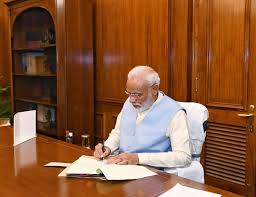
The Union Cabinet is likely to clear Indian Institute of Management (IIM) for Bihar. This institute shall come up in Darbhanga, sources said. The move comes ahead of state assembly elections.
Recently Prime Minister Narendra Modi had praised Bihar for being the “powerhouse of country’s talent”. He had said that the influence of Bihar’s youth and talent is everywhere. “If you go to any IIT, Bihar shines there as well. If you go to any other state, the strength of Bihar, the impression of labour here will be seen in the development of every state,” the PM said.
The prime minister had also inaugurated three petroleum sector projects worth Rs 900 crore. The projects include the Durgapur-Banka section of the Paradip-Haldia-Durgapur Pipeline Augmentation Project and two LPG Bottling Plants. They have been commissioned by IndianOil and HPCL, PSUs under the aegis of the Ministry of Petroleum and Natural Gas.
“Centre has worked extensively in developing all energy related projects in Bihar. New India and new Bihar believes in fast-paced development,” PM Modi said, adding that Bihar’s contribution to India in every sector is clearly visible.
RS MP Jaya Bachchan gives ‘Zero hour’ notice to discuss ‘conspiracy’ to defame the film industry
Highlights
-
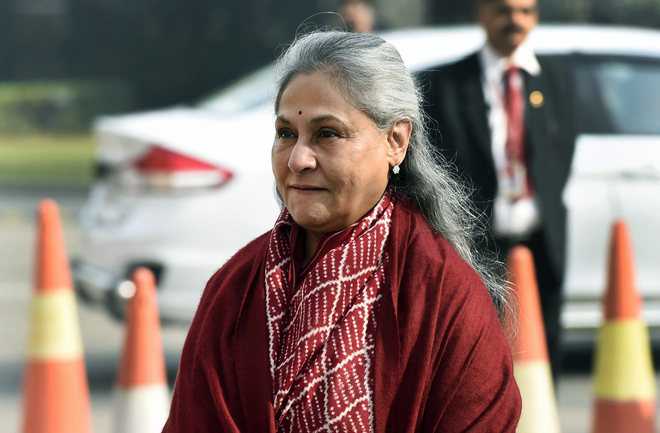
Veteran actor and MP Jaya Bachchan has given a Zero Hour notice in Rajya Sabha to raise the issue of an alleged “conspiracy to defame Bollywood”.
-
Amid the raging controversy of Sushant Singh Rajput’s suicide and the subsequent drug links case against his girlfriend Rhea Chakraborty, Jaya Bachchan, a veteran actor and Rajya Sabha MP has given a Zero Hour notice to discuss the issue of the film industry being defamed.