Huge Security In Ayodhya, Eye On Social Media Ahead Of Verdict: 10 Points

Ayodhya case: Ahead of Ayodhya verdict, social media platforms are being closely monitored. Any attempts to inflame passions over social media may invite the National Security Act (NSA). Sharing and liking any contentious posts will attract police action.

With days to go before the much-anticipated Supreme Court verdict in the Ayodhya temple-mosque dispute case, the Uttar Pradesh police is all geared up with a four-layered security plan. If one plan fails, the other one will be pressed into action, news agency PTI reported quoting a police official. Over 12,000 policemen have been deployed across the temple town ahead of the verdict. The Ministry of Home Affairs has sent 4,000 paramilitary jawans in the state and more forces will be pushed in early next week including the Provincial Armed Constabulary (PAC) of the Uttar Pradesh police. The Ministry of Home Affairs has asked all states and union territories to ensure “no untoward incident takes place anywhere” following the Ayodhya verdict. Sources have told NDTV that there are no plans to impose curfew in Ayodhya or shut schools or colleges down. “We want to portray a sense of ormalcy,” the officials said. The Supreme Court is expected to pronounce its verdict in the Ayodhya title dispute case before November 17.

Here’s a look at all the police preparations ahead of the Ayodhya verdict:

  1. An Additional Director General rank officer of the Uttar Pradesh Police has been made in-charge of the security measures in Ayodhya.
  2. The police said they are ready to deal with terror attacks, communal riots, public resentment, any danger to the disputed site and all possible loopholes. An anti-riot drill was organised by the Uttar Pradesh Police
  3. The assembly of more than four people is prohibited in Ayodhya town and district till the end of December.
  4. Social media platforms are being closely monitored. Any attempts to inflame passions over social media may invite the National Security Act (NSA). Sharing and liking any contentious posts on social media about the Ayodhya verdict will also attract police action, according to an order by the Ayodhya District Magistrate.
  5. OP Singh, the Director-General of Police in Uttar Pradesh, said that they are fully prepared and alert for the Ayodhya verdict. “We are carrying out foot-patrolling, holding peace committee meetings and have instructed all district Superintendents of Police (SPs) and magistrates to keep in touch with people and that no one will be allowed to flout the law. We have geared up our intelligence network and if required we will invoke the National Security Act against anti-social elements who try and vitiate the atmosphere,” Mr Singh said.
  6. Ayodhya police have launched a mobile application connecting 16,000 volunteers in 1,600 villages with 10 volunteers each. These volunteers will keep a track on the ground situation and inform the police teams about any possible attempts to disturb the environment in the run up to the verdict.
  7. The Ayodhya district has been divided into different security zones – red, yellow, green and blue – to avoid any untoward incident. While the red and yellow zones will be secured by the Central Para Military Forces (CPMF), the green and blue zones will be looked after by the civil police. The red security zone covers the disputed site, the yellow zone covers five miles periphery of Ayodhya, the green zone covers 14 miles periphery of the temple town and the blue zone covers the adjoining districts of Ayodhya, news agency PTI reported.
  8. Seven hundred government schools, 50 Uttar Pradesh Board-aided schools and 25 CBSE schools have been taken over to accommodate the security forces, according to news agency PTI.
  9. The police in Ayodhya and other districts are holding meetings at village level between the members of both communities and are also carrying out flag marches. Anti-riot drills are also being performed by the UP Police to prepare for protests over the Ayodhya verdict.
  10. According to a PTI report, schools and colleges that can serve as temporary jails have also been identified across the district and elsewhere in the state.

Robotic machine to wipe out manual scavenging in Hyderabad

The Bandicoot grabs, picks and shovels away waste from deep manholes methodically, doing away the need for men to enter manholes for cleaning sewers and clearing blockages and work in unhygienic and risky conditions

Repeated handling of human excreta without protection leads to respiratory and skin diseases, anaemia, jaundice, trachoma and carbon monoxide poisoning. Manual scavenging is not only a caste-based but also a gender-based occupation with 90 per cent of them being women.

Image result for manual scavenging dangers

Hyderabad: Signalling the beginning of the end for manual scavenging in the city, the Greater Hyderabad Municipal Corporation (GHMC) on Tuesday introduced a robotic manhole desilting machine, the Bandicoot, at Ghousia Café in Serilingampally zone. The machine was launched by Mayor Bonthu Rammohan.

The Bandicoot grabs, picks and shovels away waste from deep manholes methodically, doing away the need for men to enter manholes for cleaning sewers and clearing blockages and work in unhygienic and risky conditions.

Developed by a Kerala-based company, the machine is an automated system with a stationary unit to control the operations. It is equipped with a user interface at the top while at the bottom, there is a robotic device with tentacles that aid in grabbing, picking and shovelling waste from manholes.

The machine comes with cameras, which are connected to a screen and the user can monitor the live internal inspection of sewer lines. The clogs can be monitored from the screen and the operator does not need to get into the manhole as the tentacle-like rods collect the waste and shovels it out of the manhole.

The robotic machine can be operated in manholes up to eight metres deep and can be comfortably used in standard-sized (diameter) manholes. It has a bucket capacity of 16 litres. More importantly, it is enabled with poisonous gas detectors to provide additional safety to the operator from gases such as methane, hydrogen sulphide, carbon monoxide etc.

Speaking after the launch, Mayor Rammohan said the municipal corporation was taking up different initiatives to eliminate manual scavenging. Already, sweeping machines were being utilised to sweep major roads, along with mini-jetting machines to clear sewers. The robotic machines would come in handy to clear manholes and avoid manual scavenging, he said.
The Rs 32 lakh robotic machine was sponsored by K Raheja Corp under its corporate social responsibility initiative.

There are 30,000 manholes in GHMC limits. While those in erstwhile Municipal Corporation of Hyderabad limits are being maintained by HMWSSB, others in the fringe municipalities are being maintained by GHMC. Based on the feedback over the efficiency of the robotic machine, more will be introduced in other areas, he added.

In the west zone alone, there are over 7,000 manholes, which are over five-foot deep, GHMC Serilingampally Zone Commissioner D Harichandana said.

Incidentally, this is not the first attempt to introduce robotic machines in the city. Last year, the HMWSSB had attempted to use a Bengaluru-based company’s robot, which identifies clogs in sewers and clears the same. But officials wanted the company to come up with more practical features.

Gold demand falls to lowest in three years

0

Gold prices in India have increased by around 20% since the first week of June 2019 and closed at ₹38,692 per 10 grams on India’s Multi Commodity exchange (MCX) on November 4, 2019.

Gold demand by consumers in India fell by 32% to 123.9 tonnes in the September 2019 quarter, according to the World Gold Council (WGC) data. This is the lowest quarterly demand in three years.

Gold prices in India have increased by around 20% since the first week of June 2019 and closed at ₹38,692 per 10 grams on India’s Multi Commodity exchange (MCX) on November 4, 2019.

This fall is the highest after March 2016, when the demand fell by 43.78%. To be sure, the demand had further reduced in the next two quarters – June 2016 and September 2016 – by 23% and 29% respectively.

The decline in import was steeper as jewellers met their demand with old imported stock and recycling, news agency PTI quoted the WGC as having said on Tuesday. India’s cumulative imports in the first nine months of this year stood at 496.11 tonnes compared to 523.93 tonnes during the January-September 2018 period, as per the WGC data.

This is 5.31% less compared to the same period last year. The biggest fall was in 2016 when cumulative gold demand fell by 32% in the first nine months of the year.

“In India, there was decline in gold demand due to two reasons. One was sharp increase in prices by 20% towards the end of Q2 and in Q3. The second reason was that, in various countries including India and China, general economic slowdown affected the consumer sentiment,” industry group WGC India managing director Somasundaram PR told PTI.

Multiple factors led to the lower demand for gold in India in 2019, Tapan Patel, senior manager at HDFC Securities, said.

“The hike in import duty in budget hit the import demand which added 2.5% weight to the importers,” he said, adding that the longer monsoon season and heavy flooding in some parts of the country has also restricted the farmers’ spending on gold.

Hyd’s bad roads claim another life: 23-yr-old woman on way to write exam killed

CCTV footage showed that a patch of bad road and loose gravel caused the vehicle to skid and fall.

A private bus is seen taking the road under a flyover. A two-wheeler attempts to overtake the bus from the left, but the rider spots gravel and a bad patch of road right in front of him. He slams the brakes to avoid it, but in vain. The vehicle skids, both he and the pillion rider fall down to their right and the bus runs over the pillion rider.


The pillion rider was identified as 23-year-old college student G Kavya, who was on her way to write the Railway Recruitment Board exam when she was killed near Hyderabad’s Nalgonda crossroads on Saturday morning.

She was riding pillion with her brother, Shiva Sai. They were both residents of Saidabad. The police said that Kavya was en route to Alwal, to attend the exam when the accident took place at around 7.30 am.

CCTV footage of the accident which has surfaced shows that while a parked auto rickshaw on the side of the road may have prevented the bike from overtaking the bus, it was loose gravel on the road which caused the vehicle to skid and fall.

Neither of them was wearing a helmet. While Shiva suffered minor injuries, Kavya’s head came directly under the back tyres of the bus. The private bus driver immediately stopped the vehicle but she had died on the spot.

Speaking to TNM the Chadarghat police said, “They were both taken to Osmania hospital but the woman had died on the spot. Her brother has escaped with minor injuries.”

A pall of gloom descended over Kavya’s family, who approached the police and demanded strict action against the official responsible for the upkeep of the road.

The police have booked a case against the driver of the bus for negligence not amounting to culpable homicide under Section 304 of the IPC and have taken him into custody. However, they are yet to identify the official of the Greater Hyderabad Municipal Corporation (GHMC) who is responsible for the condition of the road.

Earlier in October, Syed Azmath Hussain Jaffery, a Hyderabad-based journalist, had filed a case against the GHMC after he was injured in a bike accident. His bike had slipped because of a pothole. The GHMC was booked under sections Section 228, for causing grievous hurt by act endangering life or personal safety of others, under the IPC.

The GHMC had in August identified 978 patches of roads that were in a bad condition and pegged the number of potholes in the city at 4,000. At the time, it said that it would take up restoration of these roads at a cost of Rs 50 crore.

TNM reached out to the GHMC zonal commissioner in charge of the road quality at Nalgonda X roads, Charminar zone, but the official was unresponsive.

Flyover opened at Hyderabad’s Biodiversity junction to ease traffic in city’s IT sector

Hyderabad techies commuting to offices in Hitec City and Gachibowli can breathe a sigh of relief with lesser traffic bottlenecks expected after one level of the Biodiversity Junction flyover was thrown open to the public on Monday. The 990-meter long flyover is uni-directional, and begins at the DivyaSree Orion SEZ and ends after the Biodiversity Junction, heading towards IKEA.

This flyover is expected to clear up congestion near the SEZ on the old Mumbai Highway, which is a daily affair for techies commuting to and from work. Constructed at a cost Rs 69.47 crore under the state government’s Strategic Road Development Programme (SRDP), the Greater Hyderabad Municipal Corporation (GHMC) hopes that the flyover would ease traffic from Mehdipatnam to the Mindspace junction and also underneath it, towards the Old Mumbai Highway and Gachibowli.

It was inaugurated on Monday by KT Rama Rao, the Minister for Municipal Administration and Urban Development for the state along with GHMC officials. The project was scheduled to have been finished by April this year. However, it got delayed due to issues related to land acquisitions.

An alternate road is also being built, to ease vehicle movement on the road leading from Cyber Towers and Mindspace to Inorbit Mall and eventually Biodiversity Junction, enabling commuters to skip the junction altogether.

Only the second level of the two-level flyover was thrown open on Monday. Level one of the flyover begins after the Cyberabad Commissionerate on the right and ends after the Biodiversity Junction, in the direction leading to Rai Durg. Level two of the flyover begins near the DivyaSree Orion SEZ and ends after the Biodiversity Junction, heading towards IKEA.

The Greater Hyderabad Municipal Corporation (GHMC) hopes that the flyover would ease traffic at the Biodiversity Junction notorious for traffic congestion.

The ‘first-level’ flyover which will help commuters from Gachibowli skip the Biodiversity junction, is still under construction and remains incomplete due to litigation. Officials have cited land acquisition issues as the main hurdle in completing the project.

According to a GHMC survey conducted in 2015, on the traffic congestion at various points in the city, it was reported that about 15,000 vehicles crossed the Biodiversity Junction every hour.

KTR also laid the foundation stone for a flyover at the Shilpa Layout road, next to IKEA. Under the proposal, a four-lane bidirectional flyover is being constructed from Shilpa Layout to Gas Godown. An underpass will be built at the Gas Godown road, and a six-lane bi-directional flyover will begin from Kondapur And end at Gachibowli junction, leading to Outer Ring Road (ORR). All three projects combined will cost an estimated Rs 330 crore. This will also help ease traffic congestion at the Biodiversity junction.

Tehsildar burnt alive at her office near Hyderabad

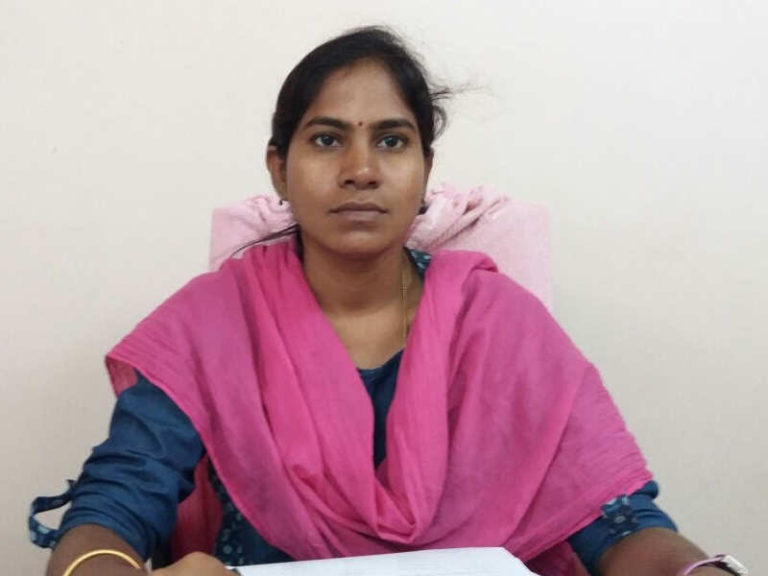
HYDERABAD: In a shocking incident, Tehsildar of Abdullapurmet near Hyderabad in Telangana was set ablaze at her office by a local farmer on Monday afternoon.

The official, identified as Vijaya, died on the spot. The accused too tried to kill himself by setting himself on fire after the incident; he was hospitalised after suffering severe burns.

Two officials also suffered burn injuries while trying to save the tehsildar Vijaya.

According to police, Vijaya succumbed to burns at her office in Abdullapurmet. The incident happened at around 1.20 pm when Suresh, a farmer from Gowrelli village near Abdullapurmet, doused the deceased with inflamable liquid and set her afire at her office.

People present in the office at the time of the incident said they heard an explosion inside the slain tehsildar’s office.

After the noise, I saw a man running out of tehsildar’s office in flames. There was a lot of smoke and we ran away for safety,” said a woman who was at the tehsildar’s office.


The police are trying to find out the exact reason behind the attack.

Hyderabad Man Gives Triple Talaq To Wife Over “Crooked Teeth”

Ruksana Begum accused her husband and in-laws of harassing her for dowry.

HYDERABAD: 

Hyderabad Man Gives Triple Talaq To Wife Over Crooked Teeth: Hyderabad Police has registered a case against a man for allegedly giving triple talaq to his wife over her misaligned teeth.

Rukhsana Begum has alleged that her husband Mustafa and in-laws harassed her dowry. Rukhsana Begum and Mustafa married on June 27, 2019.

According to the police, on October 31, a case was registered against Mustafa under section 498 A of the Indian Penal Code (IPC), Dowry Act and Triple Talaq Act. Further investigation is underway.

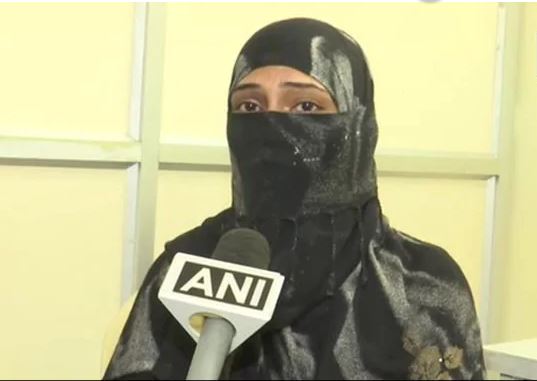
Circle Inspector Kushaiguda, K Chandra Shekar told ANI, “We have received a complaint from Begum accusing her husband of pronouncing triple talaq as she has crooked teeth and for harassing her for extra dowry.”

“At the time of our marriage Mustafa and his family had demanded so many things and my family fulfilled their demands. After our marriage, my husband and in-laws started harassing me, asking me to bring more gold and money from my home. Mustafa even took a bike from my brother,” said Ms Begum narrating her ordeal.

“They used to torture me regularly and finally Mustafa said that he does not like me because of my crooked teeth and that he did not want to live with me anymore. My in-laws locked me inside their house for 10 to 15 days,” she added.

Ms Begum further asserted that later when she fell ill, Mustafa and her in-laws sent her to her parents’ house.

“I filed a complaint with the local police and my in-laws and Mustafa agreed to compromise. They said that they will take me back. But on October 1, Mustafa came to my place and said that he would not take me back with him. He abused my parents and pronounced triple talaq,” she said.

Ms Begum stated that on October 12, she tried to contact Mustafa, when he again pronounced triple talaq on the phone.

2 Arrested For Trying To Bury Baby Alive In Hyderabad

2 Arrested For Trying To Bury Baby Alive In Hyderabad

A video taken on a mobile phone has captured the moment the police confronted the two men.


HYDERABAD: 

Two men in Hyderabad trying to bury a baby alive were caught on the spot by the police and arrested. The men had aroused the suspicion of an auto-driver who saw them digging at a hidden spot near a bus stand.

“This morning, an auto driver at the Jubilee bus stand ground noticed two persons with a bag in their hand. They were digging a pit in the ground. Looking at the scene the auto driver immediately reported about the incident to police,” said a police officer.

A video taken on a mobile phone has captured the moment the police confronted the two men.

The man carrying the baby wrapped in a blanket claims she is dead.

The two men, both from Karimnagar district, claimed that the baby was their granddaughter who had died because of a failed surgery recently. They said the dead baby would not be allowed on public transport, so they decided to bury her.

The police examined the baby and realized she was alive.

“After it came to our notice, we immediately went to the location and it was found that the bag they were carrying had a baby,” it added.


Maharashtra Congress MLAs Meet In Mallikarjun Kharge’s Presence

MUMBAI: 

The Congress on Thursday held a meeting of its newly-elected MLAs in Maharashtra at the party office in Mumbai.

Congress general secretary Mallikarjun Kharge also attended the meeting, sources said.

The legislators were felicitated at the meeting.

State Congress president Balasaheb Thorat, senior leaders Ashok Chavan, Prithviraj Chavan and Sushilkumar Shinde were also present.

Congress MLAs are expected to elect legislature party leader in the next four-five days in the presence of central observers, sources said.

“The party president will announce the name in Delhi,” the sources added.


Smog continues to envelop Delhi, as air quality remains ‘severe’ for third day

0


A woman wearing a pollution mask rides a scooter, in NCR, (PTI)
A woman wearing a pollution mask rides a scooter, in NCR, (PTI

NEW DELHI : A thick blanket of smog continues to envelop Delhi as the city recorded the highest level of pollution this season, with air quality in ‘severe’ category for the third consecutive day.

According to System of Air Quality Weather Forecasting and Research (SAFAR) of the Union ministry of earth sciences, the Air quality index (AQI) remained above ‘400’ on Wednesday, considered to be ‘severe’ when experts recommend even healthy people to avoid any outdoor physical activity, which could otherwise lead to itchy throats, dry cough or difficulty in breathing. The effects can be more pronounced on those already vulnerable children and older adults, or those with respiratory problems.

The visibility remained poor during the early hours on Wednesday, as thick haze shrouded the city. The AQI was recorded at ‘423’ for Delhi around noon, with the highest level of ‘462’ recorded for the monitoring station at Delhi University. The air quality remained ‘very poor’ in neighboring Gurugram at ‘391’, but the worst for Noida, where it breached the ‘500’ mark, and hovered around ‘515’.

“The wind speed had dropped significantly since last few days and its not favouring the dispersion of pollutants accumulated in the air during Diwali. The impact of stubble burning incidents is also being seen quite prominently. The situation may improve slightly if wind gain speed but even that does not bring any relief as it is still likely to remain ‘very poor’ which is a matter of concern,” said Vijay Soni, senior scientist at India Meteorological Department (IMD).

According to the weather department, no major change in temperatures is expected over the next two days, after which they could dip by at least 2 °C. Any lowering of temperature would only worsen the situation.

The average concentration of PM2.5 was recorded at a hazardous level of ‘273’, while it was ‘421’ for PM10. Several published studies have established a strong correlation between ambient PM concentrations and increase in mortality and hospitalizations due to respiratory diseases.

PM2.5 (smaller than 2.5 micrometres) is of specific concern because it contains a high proportion of various toxic metals and acids, and can penetrate deeper into the respiratory tract. Long-term exposure to PM10 is linked to effects on breathing, respiratory symptoms, decrease in pulmonary function and damage to lung tissue and cancer.