Karnataka minister Sudhakar hints at free COVID vaccine in state

KEY STORY

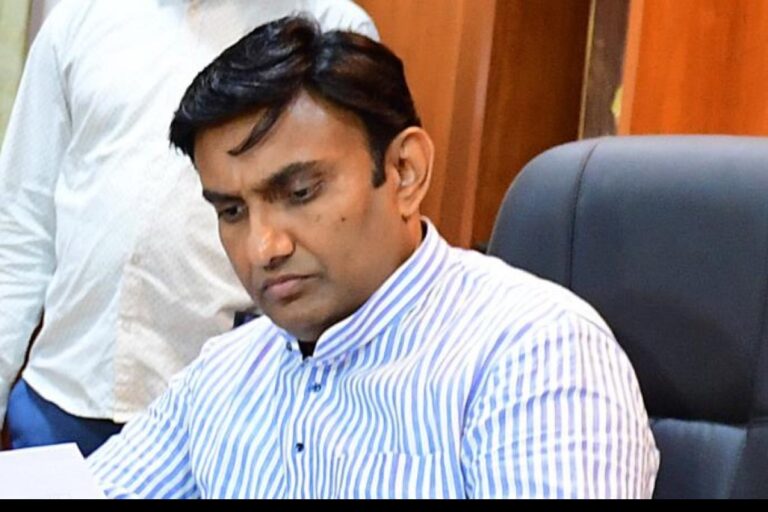
  •  After the Kerala government recently announced free vaccines for the state, state Health Minister Dr K Sudhakar has hinted that Karnataka too could roll out the vaccine free of cost. Although he did not say this explicitly, the Health Minister said on Saturday, after a meeting with Chief Minister B S Yediyurappa, that a decision in this regard would be taken in the interest of the people.
“Karnataka has been offering free COVIDtests, free treatment since the beginning of the pandemic. We have so far tested 1.20 crore people free of cost. The Karnataka government is very proactive and committed. Between the Government of India and Government of Karnataka, either one of us will ensure that the vaccine will be taken care of in the interest of the people and that money is not a concern,” Sudhakar said, answering a question on the rolling out vaccine for free.
  • However, a senior doctor on the COVID19 task force said that the minister may be referring to the first set of priority populations. “It is not yet clear whether the vaccination will be totally free of cost or charged. The health minister may be referring to the priority health care workers and frontline workers who will be in the first list of vaccination. They might not be charged at all,” said an expert on the task force committee.
  • Though the government provides several vaccines free to children and pregnant women under its National Immunization Programme, the sheer scale of the pandemic and complex international financial agreements undergirding vaccine development and deployment, mean that there’s uncertainty on the actual costs to the Centre.
  • However, Dr K R Antony, former health and nutrition specialist at UNICEF, India and life member of Indian Public Health Association, Public Health Resource Network said, the though the Centre has not announced free vaccines for all, it has also not said that people will be charged.

CONCLUSION

  • Considering the cost of the existing vaccines, it will be a huge financial commitment for the government.
“The entire scheme will require more than Rs 6 lakh crore. However, Prime Minister Narendra Modi has said that frontline workers and healthcare workers will not be charged. The second phase onwards needs to be seen,” he told. The Karnataka government recently slashed the price of an RT-PCR test to Rs 800 from Rs 1,200 at private labs (for private samples).
  • The tests cost Rs 500 if the sample is referred by the government. Meanwhile, the government has also set aside Rs 300 crore for its vaccine trials and free treatment. It has provided free COVIDtesting in all government-run primary health care centres and hospitals.

Karnataka Schools to reopen from Jan. 1 for SSLC, PUC 2nd Year students, decision on exam dates later

KEY STORY

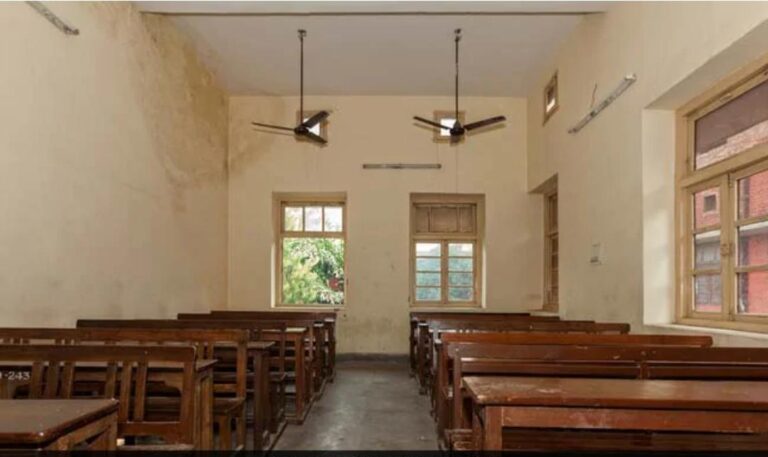
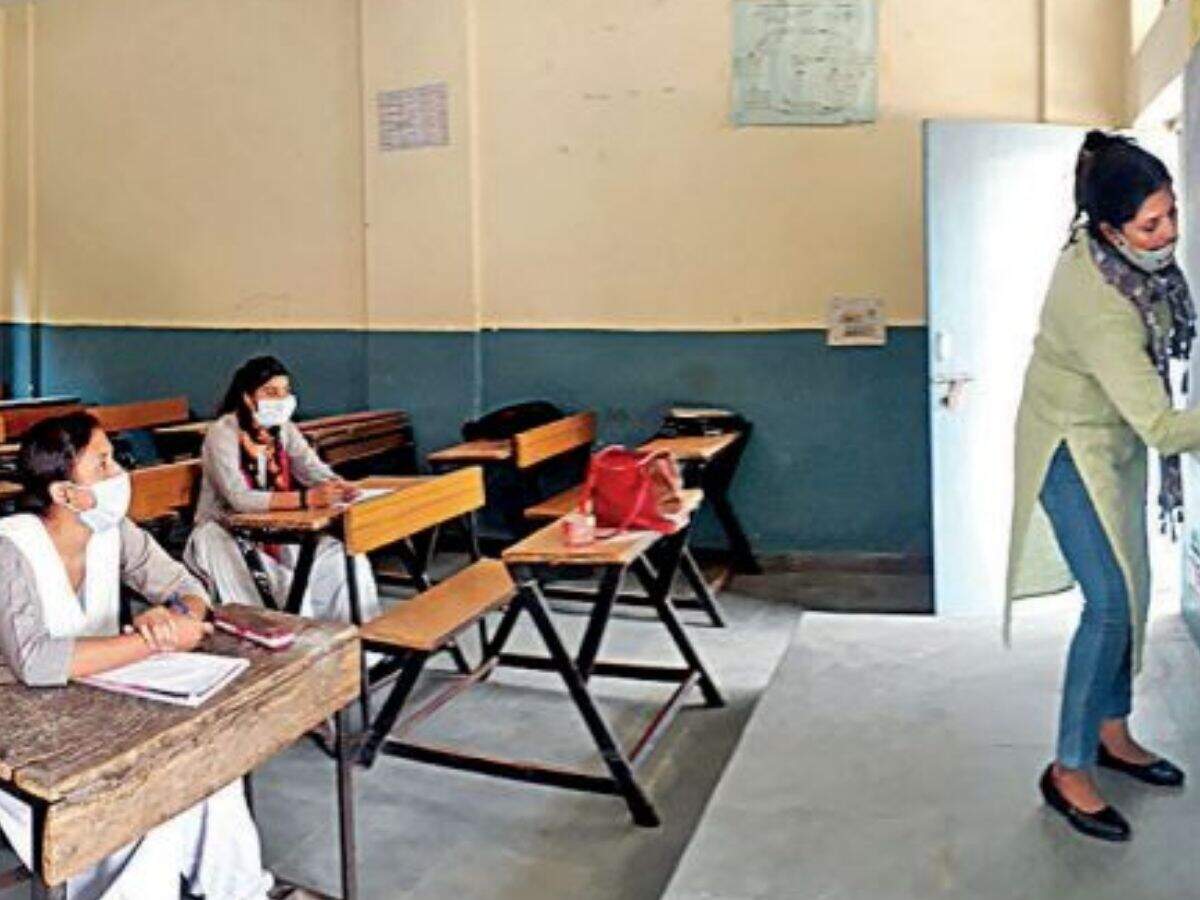
  • Karnataka Schools would reopen from January 1, 2021 for classes 10 and 12 students. Thee government announced the decision on Saturday, December 19 to reopen the schools for Class 10 or SSLC and Class 12 of 2n year Pre-University Colleges or PUC students from Jan.1.

Karnataka Schools to reopen from Jan. 1 for 10th, 12th

  • Chief Minister B S Yediyurappa made the decision in a high level meeting conducted by the state in regards reopening of schools.
  • As for exam dates for Karnataka SSLC and Karnataka 2 PUC 2021 board exams, the minister said that the decision on the dates would be taken depending on the number of dates they get after schools reopen.
  • Apart from resuming classes for SSLC and PUC IInd year students, the government has decided to start Vidyagama programme which would enable continued schooling for students from classes six to nine, from that date. Situation would be reviewed after 15 days and decision to reopen schools for other classes would be taken after that.
  • The decision to reopen schools for students of classes 10 and 12 was taken after a deliberation of over an hour. Recommendations were also taken from state’s Technical Advisory Committee for COVID-19 on reopening schools and colleges.
    “Everyone has unanimously agreed to it…so it has been agreed to start classes 10 and 12 from January 1 and Vidyagama for classes 6 to 9 students,“ Yediyurappa said while speaking to reported. It was further added that the reopening of schools for Class 10 and 12 students is important as they have to face board examinations.
    Speaking on the decision, Primary and Secondary Education Minister S Suresh Kumar said that both – the health & safety of the students as well as their academic future was important. “We are balancing both and taking all necessary care,” he said.
  • SOPs for reopening of schools have been prepared. The Rural Development and Urban Development departments would ensure sanitizing the government school classrooms. Also, the hostels run by the Social Welfare Department will be opened for the students. Also, a maximum of 15 students would be allowed inside a classroom.
    “Attending classes is not compulsory as students can continue with classes that are online, Youtube or telecast on DD Chandana channel,” he added.

CONCLUSION

  • As for Vidyagama, the programme would be held only in school premise and students can attend the same with parental consent. Also, students exhibiting symptoms of COVID19 would not be allowed to attend the same.
  • These classes are not compulsory and students can attend them thrice a week. The intent of the program is inclusion of all the students, who may not have access to online classes. Private schools are also encouraged to follow the programme.
  • Schools in Karnataka have been closed since March 2020 when the lockdown was announced. While colleges were allowed to reopen from November 17 in the state, the decision to reopen the schools was put on hold after feedback was received.
  • The government has now decided to reopen the schools from January 1, 2021 in a phased manner, with priority to the board classes.

Mosque in Ayodhya: Trust unveils first pictures of ‘Dhannipur Masjid’, grand hospital [SEE PICS]

KEY STORY

  • New Delhi: Ayodhya: The first pictures of a futuristic mosque to be built in Uttar Pradesh’s Ayodhya were released by the Indo-Islamic Cultural Foundation (IICF). The mega project will also have a hospital, a library and a community kitchen with cutting edge designs.
  • The mosque will be built on a five-acre land in Dhannipur village allocated by the Supreme Court in the Ramjanmabhoomi-Babri Masjid case. The Sunni Waqf Board in Uttar Pradesh had formed the IICF trust to construct the mosque and other utilities on the plot.
  • According to the blueprint, a dome-less mosque, 200-bed hospital, a community kitchen and a modern library will be set up in the complex.

  • One of the presenters of the project, Prof SM Akhtar of Jamia Millia Islamia, said, “The design of the mosque has been prepared using modern technology, and it will be egg-shaped without any dome. The two-storeyed mosque will not have any minaret.”
    “Solar power will be installed in the mosque, and around 2,000 people will be able to offer ‘namaaz’ at the same time,” he added.
  • In an official statement, the IICF stated that the hospital will provide state-of-art facilities, much needed in the surrounding population, with a focus on the needs of the children who are suffering from malnourishment and expectant mothers.

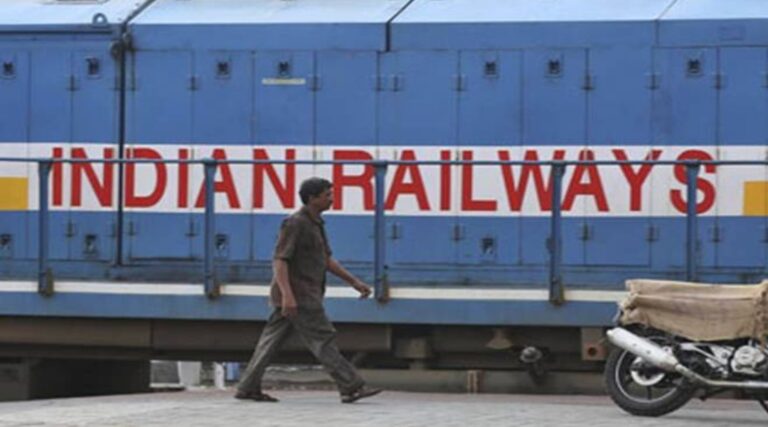
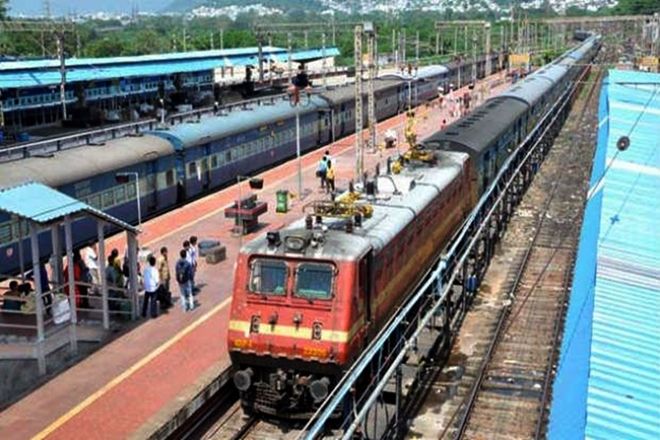
Indian Railways Planning to Scrap Waiting Lists And Run Demand-based Passenger Trains From 2024? Know Complete Truth

KEY STORY

  • Dismissing reports which claimed that the concept of ‘waiting lists’ for train seat reservation would be scrapped by 2024, the Ministry of Railways stated that it is planning to take measures that would prevent passengers from getting “waitlisted”

Indian Railways Planning to Scrap Waiting Lists And Run Demand-based Passenger Trains From 2024? Know Complete Truth

  • Issuing a clarification, the ministry stated that it has been working in the direction to increase the capacity to make trains available on demand to reduce the possibility of passengers getting waitlisted but this does not mean that there will be no waiting lists.
  • “Waitlist’ is a provision which acts as a buffer to mitigate the fluctuations in demand and availability.
  • Railways would like to explain and clarify that efforts are being made to increase the capacity to make trains available on demand. This would reduce the possibility of passengers getting waitlisted”, it stated.
  • The clarification comes after some reports claimed that Indian Railways plans to end the waiting list with effect from 2024 and run demand-based passenger trains while raising its share in freight movement from 27 per cent now to 45 per cent by 2030 as part of its draft National Rail Plan.

Nitin Gadkari lays foundation for 33 highway projects worth ₹11,000 crore in Karnataka

Road transport and highways minister Nitin Gadkari. (MINT_PRINT)

HIGHLIGHTS

  • Union minister for road transport and highways Nitin Gadkari inaugurated and laid the foundation for 33 National Highway projects in Karnataka via video conferencing on Saturday. These projects include 1,197 km long roads worth ₹10,904 crore.
  • Addressing the event, Nitin Gadkari said that for providing smooth connectivity to the ports for the benefit of trade and economy, 4-laning of the entire coastal road from Goa Border to Kerala Border connecting the port city of Belekeri, Karwar and Mangalore covering a length of 278 km have been taken up at a cost of ₹3,443 crore and the work has been substantially completed.
  • Also, in view of the safety of road users, three works for improving the safety by providing protective measures on Hill slopes in Shiradi Ghat on NH-75, Charmadi Ghat on NH-73 and Sampaje Ghat on NH-275 have been sanctioned amounting to ₹115 crore.
  • Gadkari further informed that the Central Government will invest approximately an amount of ₹1,16,144 crore in Karnataka in the coming years.
  • Eleven road projects of 275 km worth ₹5,083 crore have been awarded in the state during the financial year 2019-21, he added.
  • The minister also said that CRF works worth ₹8,330 crore have been sanctioned till now for Karnataka.
  • Gadkari called upon the state to take up the production of Ethanol in a big way, as it is one of the largest producers of sugarcane in the country.
  • He said, the country is already over-producing sugar and rice, and sufficient stock are available with the government. The surplus may be converted to Ethanol, which can be used as an alternative fuel for vehicles.
  • He said this will not only improve farmers’ income but will also be an indigenous source of fuel for the country.
  • Today’s event was presided over by Karnataka Chief Minister BS Yediyurappa and was attended by former Prime Minister HD Devegowda, Union Ministers Prahlad Joshi, Sadanand Gowda, Gen Dr VK Singh, ministers from the State and senior officers.
  • CM Yediyurappa assured to take forward all the suggestions given by the Union Minister. He said, his government is committed to the development of the state, and uplifting the lifestyle of its people. He said he is working in co-operation with the Centre to achieve his government’s targets.

Australia’s ‘Ash nightmare’: Bowlers led by R Ashwin put India in control on Day 2 of Adelaide Test

KEY STORY

  • Senior off-spinner Ravichandran Ashwin produced one of his most memorable overseas performances as Indian bowlers collectively terrorised Australia into submission, bowling them out for 191 on the second day of the opening Day/Night Test here on Friday.

Australia's 'Ash nightmare': Bowlers led by R Ashwin put India in control on Day 2 of Adelaide Test

  • Courtesy Ashwin’s 18-3-55-4, India successfully managed to neutralise a sub-par first innings score of 244. Rival skipper Tim Paine (73 off 99 balls) was the only home batsman to show stomach for a fight.

  • With a handy first innings lead of 53 runs, India found their opener Prithvi Shaw’s defence being breached again before ending the day at 9/1 — an overall lead of 62 runs.
  • Indian bowling could be segregated into three phases. In the early afternoon, Jasprit Bumrah (21-7-52-2) bowled the fuller length to make the first inroads.
  • Ashwin then took charge of late afternoon with his perfect length and made use of the additional bounce to blow away the middle-order.
  • And then under lights, Umesh Yadav (16.1-5-40-3) was brilliant with the old pink kookaburra as he bowled back of the length to get rid of the dangerous Marnus Labuschagne and Pat Cummins.
  • Mohammed Shami (17-4-41-0) was also immaculate with his length but he was let down by the fielders as the only glitch in their second day’s performance was a poor catching effort.
  • But Virat Kohli wouldn’t mind even four dropped chances as his bowlers forced the Australian batsman to go into a defensive shell in their 72.1 overs on second day. It was one of the most ‘Un-Australian’ batting by a team that prides itself on intent.
  • Save for Labuschagne (47 off 119 balls), who couldn’t capitalise on three reprieves, and skipper Paine, no other batsman seemed to know how to bat on a surface, which picked pace on the second day.
  • After Bumrah removed the two openers in the first session, Ashwin did the star turn in the second session.
  • Ashwin set up Smith with a few that were flighted with the angle and then bowled one that straightened and bounced a touch more. Smith, expecting turn, squared up and Ajinkya Rahane at first slip made no mistake.
  • Travis Head (7) wasn’t reading Ashwin well and the left-hander got a flighted one that took the leading edge of his bat, which ended in a chest-high return catch for the bowler.
  • Debutant Cameron Green (11) would curse himself as his was a long hop asking to be pulled but the extra bounce got the top edge and captain Virat Kohli pulled off a fabulous catch at mid-wicket, diving full-stretch to his right.
  • This was after, Bumrah bowled a brilliant opening spell to send back the Australian opening pair of Joe Burns (8 off 41 balls) and Matthew Wade (8 off 51 balls) for identical scores.
  • The two were ready to stay put and wait but Bumrah angled a fuller one into Wade, which rapped him on the pads while he was trying to whip it to mid-wicket.
  • Burns, the man going through a bad patch, had changed his stance to a more open-chested one.
  • He also did all the hard work but he was susceptible to being leg before. Bumrah fired one fast and full into the block-hole and got the decision in his favour as ‘Umpires Call’ in the DRS went India’s way.
  • Labuschagne was insanely lucky when Bumrah dropped a dolly at fine leg after the batsman had mistimed a pull shot off Shami. Before that, it was a diving Wriddhiman Saha, who missed a tough but gettable edge off Bumrah’s bowling.
  • After the dinner break, Labuschagne on 21, was dropped by Shaw at square leg and that was also a mistimed pull-shot.
  • Umesh was fantastic in the twilight as he trapped Labuschagne with a delivery that kept low and then a short ball saw Cummins awkwardly fending it to gully.
  • A run-out and the fourth wicket by Ashwin saw Paine waging a low battle to reduce the first innings lead. At the start of the day, India’s tail-enders contributed precious little and the visitors’ first innings folded in just 93.1 overs.
  • Mitchell Starc (4/53 in 21 overs) and Pat Cummins (3/48 in 21.1 overs) dismissed the last four batsmen for an addition of only 11 runs to the overnight score.

When you use WhatsApp, this is data it collects and records for user tracking according to Apple App Store

HIGHLIGHTS

  • iPhone users can see all the information that WhatsApp collects from users.
  • Apple is enforcing a rule in the App Store that says all apps must make it clear to users the data points that they are collecting.
  • Facebook, which owns WhatsApp is not exactly very happy about the transparency that it brings and is fighting a public battle.
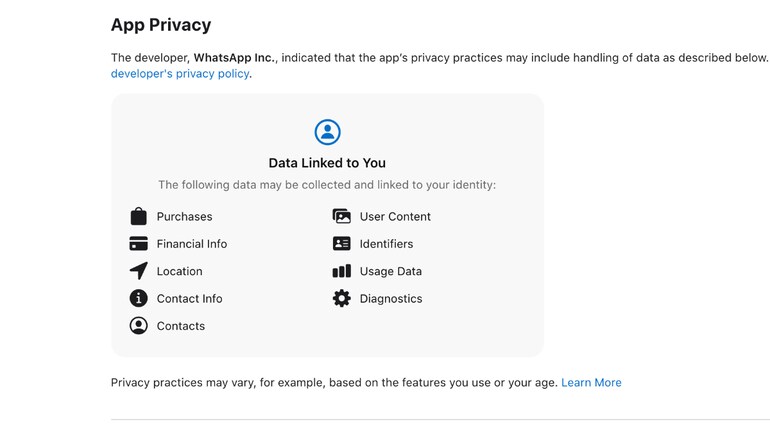
Apps like WhatsApp often advertise just how private they are. At every opportunity, WhatsApp loves to tell users that it is a chat app offering end-to-end encrypted chats, calls, and video calls. What it means to say is that if you send your friend a text “where can I get the best pizza in Delhi” WhatsApp is not going to show you an ad for “the best pizza restaurants in Delhi” because it doesn’t know what you are saying in a message. But this doesn’t mean WhatsApp is not collecting data to track its users. In fact, it collects a lot of user data as revealed by the “privacy nutrition labels” that all apps now must supply to the Apple App Store.
This is important for users. Now, for the first time users at least those using WhatsApp on the iPhone — can see all the information that WhatsApp collects from users and then can try to understand all the ways in which this information is used for targeted advertising. The collection of this data is not new. It is just that now you can see it.
You can see it because Apple is enforcing a rule in the App Store that says all apps must make it clear to users the data points that they are collecting. Facebook, which owns WhatsApp is not exactly very happy about the transparency that it brings and is fighting a public battle with Apple, but let’s not get into that. Let’s see what all info WhatsApp is collecting from iPhone and presumably Android users.

According to Apple App Store, WhatsApp Collects:

Identifiers: This is the device ID, or basically the digital signature of your phone on which you have installed WhatsApp. This is unique for every phone. We don’t know how exactly WhatsApp uses it, but potentially it can be used to figure out that the same user has WhatsApp installed as well as other Facebook apps, like Facebook and Messenger. Basically, this one ID probably binds all the data Facebook has of you and makes it useful for user tracking and targeted advertising.
Usage data: We are not sure which data is part of it, but Facebook says that this data is used for advertising. It could be something like for how long you use WhatsApp, or at what time, and for what purposes, which is whether to make calls or chats, etc. It could be something like, at “8 am, the user opened WhatsApp and sent 7 messages.” WhatsApp doesn’t know what messages you sent, but it does know that 7 messages were sent at 8 am.
Purchases: This is probably data related to any purchase you have made using WhatsApp. Recently, WhatsApp rolled out a digital mart feature to help people buy stuff through the app.
Location: Where you are located, in which city and in which colony. But not which house because WhatsApp collects “coarse” location data and not fine.
Contact info: Of course, your phone number.
User Content: WhatsApp messages are end-to-end encrypted, which WhatsApp cannot access for advertising or even analytics purposes. So, what is this? WhatsApp says it is other user content. We are assuming this is probably the wallpapers etc that you use in WhatsApp. But we are not sure.
Diagnostics: Probably the data WhatsApp collects when the app crashes, network conditions, etc.
Contacts: Yes, WhatsApp has access to all your contacts. This is how WhatsApp functions.
Financial Info: WhatsApp collects details of payment information, such as when you are using WhatsApp Pay.
All of this data once collected is then used by WhatsApp and Facebook in various ways, including for targeted advertising as well as to ensure all the features and functionality that offers works well. Now, this is a standard industry practice so it is not like WhatsApp is the only app doing something like this, which is collecting all this private data. And of course, when you install WhatsApp and agree to terms and conditions, you give WhatsApp and Facebook permission to collect this data. It is just that now, the process is a little more transparent.

WhatsApp vs Signal: data collection

But about other chat apps? Most of them are similar to WhatsApp but some are different. The Signal app, which has also seen praise from NSA whistle-blower Edward Snowden, seems to be very different from WhatsApp if the privacy labels at the App Store are any indication.
While WhatsApp does collect a lot of information about its users, the Signal Messaging app does not collect any such sensitive information about its users.
Apple revealed in its privacy section the slew of information WhatsApp collects from information but no such data was displayed about Signal. The App Privacy label of Signal showed that the data which the app collects from the user is not linked to them. This means that the data types including location data or browsing history are not linked to the user in any way that can be identified. The only data that Signal seems to collect from its user is the Contact Info. Signal uses the open-source Signal Protocol to encrypt all forms of communication on the app. While WhatsApp only encrypts the messages and calls, Signal encrypts the metadata too.

Exclusive: CarryMinati to make Bollywood debut with Amitabh Bachchan- Ajay Devgn starrer MayDay

Ajey Nagar aka CarryMinati is a popular YouTuber

He enjoys massive popularity in the online space, and is known to his army of fans by the name CarryMinati. But now, Ajey Nagar (his real name) is all set to try his hand at another medium: films! We have exclusively learnt that he has been roped in to play a special role in Ajay Devgn- Amitabh Bachchan starrer MayDay.
Carry, as his fans call him, confirms to us, “My brother/business head Deepak Char got a call from Kumar Mangat Pathak (Co-Producer at Devgn’s production company) and I have been meaning to align forces with them since a while now.”
‘Anxious’ is the word he chooses to describe what he felt when the film came his way. “What made it really interesting for me was when I heard I am supposed to play my own character (CarryMinati) & the way it’s going to be shown on screen. I am excited to see how this will unfold,” he reveals.
https://www.instagram.com/p/CGcRXGWpSrR/?utm_source=ig_web_copy_link
While his short skits in the form of his videos did enjoy massive popularity, how did he end up in films? Was getting into Bollywood at the back of his mind all this while? The 21-year-old denies, “It has never been one of my interests. The main purpose of those skits was to entertain people. Currently I don’t see myself going in that direction but yes I like to experience everything. I agreed to be a part of this film because I had to essay my own character (CarryMinati) and that comes very easily to me. I eat, breathe, sleep and live my character every single day. But I’m hoping I get to learn a thing or two about acting from Amitabh Bachchan and Ajay Devgn. They are personalities I look up to and fondly admire.”
He doesn’t want to call MayDay his “full-fledged debut”. “It’s more like an extension of what I do. I dedicate 10 hours in a day for content creation and I’d like to consider that as my passion and calling, acting and music for me is a medium where I can showcase my art to a more varied audience. For me personally, my authentic acting innings will happen when I get to the opportunity to dedicate myself wholeheartedly to the art unflinchingly, everything else I do right now I consider as a special appearance,” says Nagar.

Reopen classes 10 and 12 on January 1; classes 9 and 11 on January 15: Karnataka Technical Advisory Committee

KEY STORY

  • The Technical Advisory Committee for Covid-19 in Karnataka has recommended that classes for grades 10 and II PU can start from January 1.

  • This will be followed by classes for grades 11 and I PU from January 15. Vidyagama in its new form– classes in small groups on campus– for classes 6-9 can also be held from January 1.
  • The committee held a meeting on Thursday to discuss issues on the reopening of schools.
  • The dates will be discussed with the chief minister and finalised after the Standard Operating procedures are in place. Thursday’s meeting was attended by the education minister and department officials.

CONCLUSION

  • The committee has also recommended that the state should wait for some more time before rolling out Vidyagama for primary classes. Sources point out that the government will also wait for the High Court order on the same.
  • According to the recommendations, students should come to school with a consent letter from the parents.
  • The consent later should also have an undertaking that students have no symptoms like sore throat, cold or cough. Those students who have any of these symptoms should not attend classes.

Watering it down: Here’s why you must avoid ‘overhydration’

water, drinking water

 It is easy to believe that more hydration is always better. Every individual is directed to drink lots of water on a daily basis. While it’s definitely a good practice, everything has two extremes. What you may not be aware of is that too much water can be harmful. Water intoxication is an existing condition in spite of how ironic it may sound. Overdoing hydration can be dangerous for your health, causing damage afflicting the routine bodily functions. Maintaining hydration levels for patients undergoing hemodialysis is an even bigger challenge.
Signs of overhydration
Overhydration among dialysis patients can cause edema where your feet, ankles and wrists swell up. Maintaining optimal blood pressure is another challenge. Undergoing dialysis or not, do not turn a blind eye to any such signs. When left unattended, it can turn serious, or even lead to death in worst-case scenarios.
Result of Overhydration
Hyponatremia is the medical term used for such a condition. Overhydration makes it difficult for the kidneys to function normally. If not examined in the earlier days, it may lead to symptoms of heart failure, risking the patient’s life. Treatment varies depending on the severity of your condition. You will be asked to follow one or all of these solutions:
  • IVs: Saline solutions may be injected into your body in order to heighten the salt content in your blood.
  • Medicines: Prescription of medicines to help and retain the sodium levels in your body by helping your kidneys get rid of more urine.
  • Dialysis: In severe case scenarios, you may have to support your kidneys in filtering and excretion by undergoing dialysis.
The right water diet
Managing your liquid intake in terms of both the right amount and the right time plays an important role in preventing hyponatremia. Consuming eight glasses of water per day is a generalised idea in all minds. But the normal water intake level cannot be the same for everybody as it also depends on various factors like health conditions, size, weather and physical activities.
For a dialysis patient, liquid intake has to be given utmost priority. Here’s how overhydration can be avoided:
  •     Always maintain a track of your fluid intakes.
  •     Consume water from very small cups.
  •     Eat frozen fruits and vegetables.
  •     Keep a check on salt intake.
For others:
  •     Male: 13 glasses or 3 litres approximately.
  •     Female: Over 2 litres or 9 glasses of fluid per day. If pregnant, up to 10 glasses and a mother who is breastfeeding, 12 glasses
  • Kids and teenagers: 8 glasses of fluid daily
Additionally, it is advisable to treat related conditions like adrenal gland insufficiency which would contribute to hyponatremia. Educating oneself about the impact of diuretic medications or any new prescriptions is important.
(The author is consultant nephrologist, ApolloDialysis Clinics)