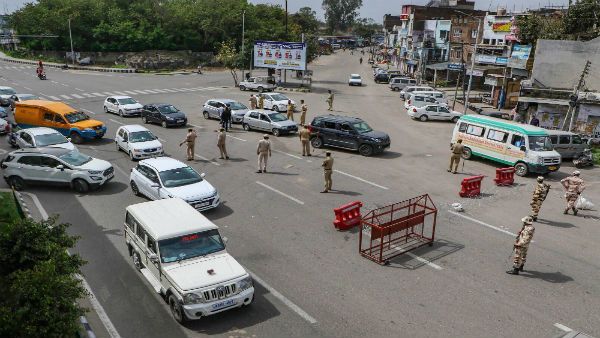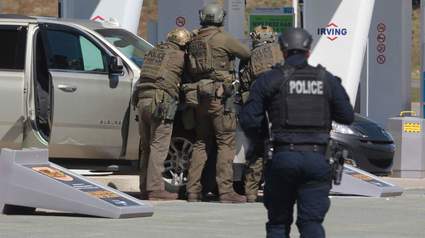
16 killed in shooting rampage, deadliest in Canadian history

TORONTO (AP) — A gunman disguised as a police officer shot people in their homes and set fires in a rampage across the Canadian province of Nova Scotia that killed 16 people, the deadliest such attack in the country’s history. Officials said Sunday the suspected shooter was also dead.

A police officer was among those killed. Several bodies were found inside and outside one home in the small, rural town of Portapique, about 60 miles (100 kilometers) north of Halifax — what police called the first scene. Bodies were also found at other locations. The assault began late Saturday, and authorities believe the shooter may have targeted his first victims but then began attacking randomly.

Overnight, police began advising residents of the town — already on lockdown because of the coronavirus pandemic — to lock their doors and stay in their basements. Several homes in the area were set on fire as well.

Police identified the man believed to be the shooter as Gabriel Wortman, 51, who was thought to live part-time in Portapique. Authorities said he wore a police uniform at one point and made his car look like a Royal Canadian Mounted Police cruiser.

Police first announced that they had arrested Wortman at a gas station in Enfield, outside Halifax, but later said he had died. It was not clear how, and they did not explain further.

“This is one of the most senseless acts of violence in our province’s history,” said Nova Scotia Premier Stephen McNeil.

RCMP spokesman Daniel Brien confirmed that 16 people had been killed in addition to the suspect. The dead officer was identified as Constable Heidi Stevenson, a mother of two and a 23-year veteran of the force. Another officer was also injured.

Mass shootings are relatively rare in Canada. The country overhauled its gun-control laws after gunman Marc Lepine killed 14 women and himself at Montreal’s Ecole Polytechnique college in 1989. Before this weekend’s rampage, that had been the country’s worst.

It is now illegal to possess an unregistered handgun or any kind of rapid-fire weapon in Canada. The country also requires training, a personal risk assessment, two references, spousal notification and criminal record checks to purchase a weapon.

“As a country, in moments like these, we come together to support one another. Together we will mourn with the families of the victims, and help them get through this difficult time,” Prime Minister Justin Trudeau said in a written news release.

While they believe the attack did not begin as random, police did not say what the initial motive was. RCMP Chief Superintendent Chris Leather said many of the victims did not know the shooter.

“That fact that this individual had a uniform and a police car at his disposal certainly speaks to it not being a random act,” Leather said. He added that police believe he acted alone.

Leather said they would investigate whether the attack had anything to do with the coronavirus pandemic but no link has been found thus far.

At one point, there was an exchange of gunfire between the suspect and police, he said.

Late Sunday morning, there were half a dozen police vehicles at the scene of the gas station where the suspect died. Yellow police tape surrounded the gas pumps, and a large silver-colored SUV was being investigated.

Cpl. Lisa Croteau, a spokeswoman with the provincial force, said police received a call about “a person with firearms” late Saturday night, and the investigation “evolved into an active shooting investigation.”

Christine Mills, a resident of the area, said it had been a frightening night for the small town, with armed officers patrolling the streets. In the morning, helicopters flew overhead searching for the suspect. “It’s nerve-wracking because you don’t know if somebody has lost their mind and is going to beat in your front door,” she said.

Tom Taggart, a lawmaker who represents the Portapique area in the Municipality of Colchester, said the quiet community has been shaken.

“This is just an absolutely wonderful, peaceful quiet community and the idea that this could happen in our community is unbelievable,” Taggart said by phone from his home in nearby Bass River.

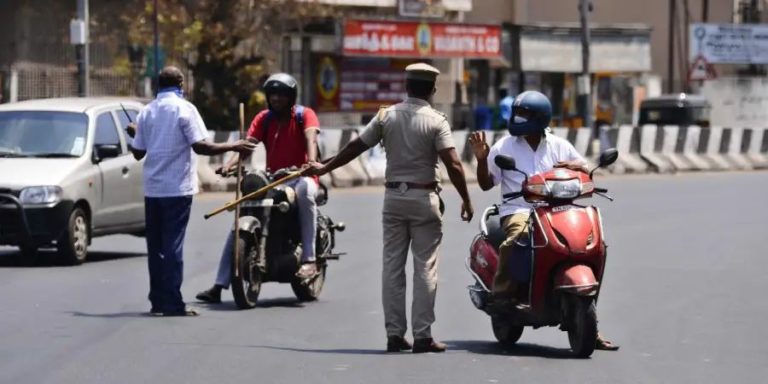
Armed hijacker on city bus in Dallas area shoots at officers in police chase

Source : NBC NEWS
An armed man is dead after hijacking a bus and leading police on a chase and shootout that injured two officers in the Dallas area on Sunday morning.

Authorities received a call at 11:00 a.m. local time that a man entered a bus and fired a weapon, shooting out several bus windows, according to a statement from Dallas Area Rapid Transit. The man then allegedly demanded the DART bus driver take them to an undisclosed location.

One DART officer was reportedly wounded in the leg and another Garland officer also sustained a non-life threatening injury, the transit authority said. Police in the Dallas suburb of Garland began to chase the bus and as officers neared, the man allegedly shot at them while leaning out the windows, according to NBC Dallas-Fort Worth.

Spikes were deployed on the bus, but the vehicle turned around and headed to Rowlett, another Dallas suburb, according to NBC Dallas-Fort Worth.

Political leader in Karnataka ‘kills’ dead dad twice to avail travel pass and ‘attend his funeral’

0

By Arunkumar Huralimath

Express News Service

HUBBALLI: A local political leader, Somalinga Yeligar, took a travel pass from Dharwad district administration saying his father died in Bengaluru and he needs to go for the funeral. Later it turned out that his father had died about five years ago and he misused his pass.

The district administration had given him a pass with a condition that he should not return to the district till the lockdown period ends. He agreed to all the conditions but did not follow them.

To facilitate the people at the time lockdown period, the district administration is giving passes to those who need it for an emergency.

Sources said one of his friends was supposed to go to Bengaluru. Therefore Somalinga Yeligar, a political leader and president of a pro-Kannada wing, took a pass to drop his friend. After dropping his friend, he disobeyed the order and returned to Hubballi. On National Highway-4, the police stopped his car at Davangere, but he managed to convince the police with the same story of a funeral and made his way back to Hubballi.

The news of him misusing his pass went viral in the city and the police are investigating the issue although a case has not yet been booked.

Kerala announces lockdown relaxation plan for 14 districts

0

As India continues to reel under the threat of COVID-19 pandemic, the Kerala government announced a four-tiered lockdown relaxation plan for all its 14 districts.

The fourteen districts have been classifed into four categories: Red, Orange A, Orange B and Green.

Kasaragod, Malappuram, Kozhikode and Kannur have been marked ‘Red’, and will be under complete lockdown until 3 May, when the national lockdown is expected to end.

Pathanamthitta, Ernakulam and Kollam have been marked ‘Orange A’, and will be under complete lockdown until 24 April, and are expected to see partial relaxation thereafter.

Alapuzzha, Trivandrum, Wayanad, Palakkad and Thrissur districts have been marked ‘Orange B’, and will be under complete lockdown until 20 April and are expected to see partial relaxation thereafter.

Kottayam and Idukki have been marked Green, which denotes complete absence of the virus at those places, and will see lockdown lifted after 20 April.

All government offices will function in Kottayam and Idukki from Tuesday and all employees have to attend offices.

According to the report, restaurants can remain open from 7 am to 7 pm, and textiles shops can function from 9 am to 6 pm. All commercial establishments will remain open. However, restrictions on travelling to neighbouring districts will remain the same.

People have to wear masks while moving out. In cars and autos, only two passengers other than driver are allowed.

On Saturday, Four more COVID-19 cases were reported in Kerala, taking the tally in the state to 399.

Three of the new cases have been reported from Kannur and one from Kozhikode. Meantime, two patients in Kasaragod recovered.

Three out of the four came to the state from Dubai and one was infected with the coronavirus through a contact.

According to the official report, there are 140 COVID patients undergoing treatment, while 257 people have been cured so far. Meantime, 67,190 people are under observation – 66,686 in home quarantine and 504 in hospitals. The number of hospitalisations related to COVID-19 was 104.

Earlier, Chief Minister Pinarayi Vijayan had said Kerala will implement an “odd-even“ system for private vehicles with partial restrictions after April 20.

Apart from implementing the odd-even system for private vehicles, the concession will also be given to vehicles driven by women drivers.

Prior to the announcement of the extension of lockdown till May 3, an expert committee constituted by the Kerala government had recommended a gradual lifting of the lockdown in the State after April 15 in a phased manner.

The recommendations also included an odd-even scheme for private vehicles on the road throughout the week, with Sunday being no-vehicle day.

According to the data provided by the Ministry of Health and Family Welfare on Sunday,the total number of coronavirus patients in India has surged to 15,712. Meanwhile, the number of deaths in the country due to COVID-19 has risen to 507.

The total number of active cases in the country is 12,974. Meanwhile, 2231 persons have been cured/discharged/migrated.

The Central government has taken many stringent measures to prevent the further spread of the disease.

Starting from March 24 midnight, India is under 21-day lockdown to curb the spread of novel coronavirus. The lockdown, effective March 25, is supposed to end on April 14.

However, on Tuesday, in an address to the nation, Prime Minister Narendra Modi announced that the 21-day national lockdown has been extended till May 3.

Coronavirus, which originated in China’s Wuhan city in December last year, has so far spread to more than 200 countries. The World Health Organisation (WHO) has declared coronavirus a pandemic.

With inputs from media reports

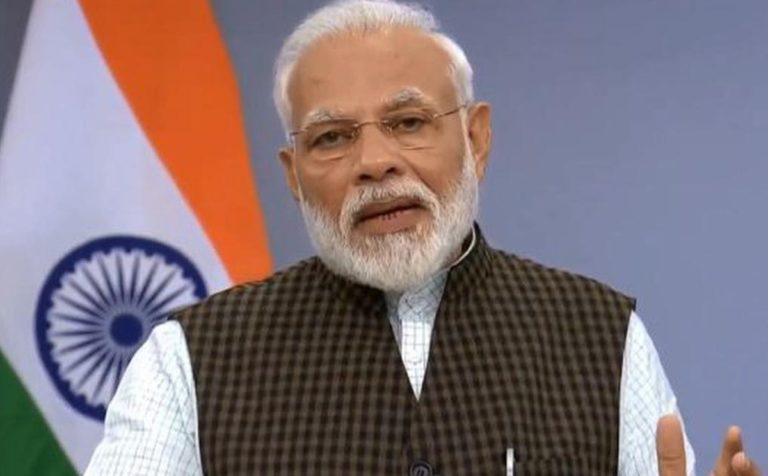
“Home is the new office”, says PM Modi

It has been a topsy-turvy start to the third decade of this century. COVID-19 has brought with it many disruptions. 

Coronavirus has significantly changed the contours of professional life. 

These days, home is the new office. 

The Internet is the new meeting room.

For the time being, office breaks with colleagues are history. 

I have also been adapting to these changes. Most meetings, be it with minister colleagues, officials and world leaders, are now via video conferencing. 

In order to get ground level feedback from various stakeholders, there have been videoconference meetings with several sections of society. There were extensive interactions with NGOs, civil society groups and community organisations. There was an interaction with Radio Jockeys too. 

Besides that, I have been making numerous phone calls daily, taking feedback from different sections of society.

One is seeing the ways through which people are continuing their work in these times. There are a few creative videos by our film stars conveying a relevant message of staying home. Our singers did an online concert. Chess players played chess digitally and through that contributed to the fight against COVID-19. Quite innovative! 

The work place is getting Digital First. And, why not?

After all, the most transformational impact of Technology often happens in the lives of the poor. It is technology that demolishes bureaucratic hierarchies, eliminates middlemen and accelerates welfare measures.

Let me give you an example. 

When we got the opportunity to serve in 2014, we started connecting Indians, especially the poor with their Jan Dhan Account, Aadhar & Mobile number. This seemingly simple connection has not only stopped corruption and rent seeking that was going on for decades, but has also enabled the Government to transfer money at the click of a button. This click of a button has replaced multiple levels of hierarchies on the file and also weeks of delay. 

India has perhaps the largest such infrastructure in the world. This infrastructure has helped us tremendously in transferring money directly and immediately to the poor and needy, benefiting crores of families, during the COVID-19 situation.

Another case in point is the education sector. There are many outstanding professionals already innovating in this sector. Invigorating technology in this sector has its benefits. The Government of India has also undertaken efforts such as the DIKSHA Portal, to help teachers and boost e-learning. There is SWAYAM, aimed at improving access, equity and quality of education. E-Pathshala, which is available in many languages, enables access to various e-books and such learning material. 

Today, the world is in pursuit of new business models. 

India, a youthful nation known for its innovative zeal can take the lead in providing a new work culture. 

I envision this new business and work culture being redefined on the following vowels.

I call them- vowels of the new normal- because like vowels in the English language, these would become essential ingredients of any business model in the post-COVID world.

Adaptability: 

The need of the hour is to think of business and lifestyle models that are easily adaptable.

Doing so would mean that even in a time of crisis, our offices, businesses and commerce could get moving faster, ensuring loss of life does not occur. 

Embracing digital payments is a prime example of adaptability. Shop owners big and small should invest in digital tools that keep commerce connected, especially in times of crisis. India is already witnessing an encouraging surge in digital transactions. 

Another example is telemedicine. We are already seeing several consultations without actually going to the clinic or hospital. Again, this is a positive sign. Can we think of business models to help further telemedicine across the world?

Efficiency:

Perhaps, this is the time to think of reimagining what we refer to as being efficient. 

Efficiency cannot only be about- how much time was spent in the office.

We should perhaps think of models where productivity and efficiency matter more than appearance of effort.

The emphasis should be on completing a task in the specified time frame. 

Inclusivity:

Let us develop business models that attach primacy to care for the poor, the most vulnerable as well as our planet. 

We have made major progress in combating climate change. Mother Nature has demonstrated to us her magnificence, showing us how quickly it can flourish when human activity is slower. There is a significant future in developing technologies and practices that reduce our impact on the planet. Do more with less.

COVID-19 has made us realise the need to work on health solutions at low cost and large scale. We can become a guiding light for global efforts to ensure the health and well being of humanity.

We should invest in innovations to make sure our farmers have access to information, machinery, and markets no matter what the situation, that our citizens have access to essential goods. 

Opportunity:

Every crisis brings with it an opportunity. COVID-19 is no different.

Let us evaluate what might be the new opportunities/growth areas that would emerge now.

Rather than playing catch up, India must be ahead of the curve in the post-COVID world. Let us think about how our people, our skills sets, our core capabilities can be used in doing so.

Universalism: 

COVID-19 does not see race, religion, colour, caste, creed, language or border before striking. 

Our response and conduct thereafter should attach primacy to unity and brotherhood. 

We are in this together. 

Unlike previous moments in history, when countries or societies faced off against each other, today we are together facing a common challenge. The future will be about togetherness and resilience.

The next big ideas from India should find global relevance and application. They should have the ability to drive a positive change not merely for India but for the entire humankind. 

Logistics was previously only seen through the prism of physical infrastructure – roads, warehouses, ports. But logistical experts these days can control global supply chains through the comfort of their own homes. 

India, with the right blend of the physical and the virtual can emerge as the global nerve centre of complex modern multinational supply chains in the post COVID-19 world. Let us rise to that occasion and seize this opportunity. 

I urge you all to think about this and contribute to the discourse.

The shift from BYOD to WFH brings new challenges to balance the official and personal. Whatever be the case, devote time to fitness and exercising. Try Yoga as a means to improve physical and mental wellbeing. 

Traditional medicine systems of India are known to help keep the body fit. The Ayush Ministry has come out with a protocol that would help in staying healthy. Have a look at these as well. 

Lastly, and importantly, please download Aarogya Setu Mobile App. This is a futuristic App that leverages technology to help contain the possible spread of COVID-19. More the downloads, more its effectiveness. 

Will wait to hear from you all…

YouTube starts showing view counts as lakhs, crores for some users in India

Google has started showing YouTube views as lakhs and crores instead of millions and billions in India. This is currently visible only on YouTube’s Android app. Its desktop version and iOS app still displays view counts as millions and billions.

There was no update or announcement from YouTube on the change, and turns out it’s not visible for all Android users. With the new change, users will start seeing view counts displayed in lakhs and crores instead of the previous millions and billions. For example, if a video on YouTube has 10 lakh views it means it has 1 million views. Similarly, 1 crore views on a video means it has 10 million views. This is applicable to the number of subscribers as well. There’s also no option to switch back to the older view count.

This change in view count will naturally be applicable only to Indian viewers but it may end up causing confusion. YouTube has so far determined view counts in thousands, millions and billions for creators and viewers globally. Now users in India who wish to understand how many views a video has received would have to calculate and compare.


Some users have also pointed out that changing the location to a different region shows the view counts as millions and billions. This however did not work on our device when we changed to places like the US or the UK.

Egg & cress club sandwich

Ingredients

  • EGG
  • 2 tbsp mayonnaise
  • 3 slices bread
  • ⅓ carton of cress
  • or a lettuce leaf and a slice of ham or cheese

  • crisps, to serve

Method

  1. Bring a pan of water to the boil and carefully lower in the eggs. Cook for 6 mins, then cool under running water until they can be peeled. Peel the eggs, then leave to cool completely.
  2. Mash or chop the eggs, then mix with 1½ tbsp mayonnaise and some seasoning, if you like. Toast the bread.
  3. Lay one slice of bread on a board. Butter it, then spread on three quarters of the egg and scatter over the cress. Add another slice of toast and gently spread on the remaining mayo. Add the tomato or lettuce and ham or cheese (or whichever combination you prefer). Dot the remaining egg over the top, spread gently, then top with the final piece of toast. Cut the crusts off if you like, then gently cut the sandwich into four quarters, being careful not to squash out the egg. Skewer each sandwich with a sandwich pick. Serve with crisps.

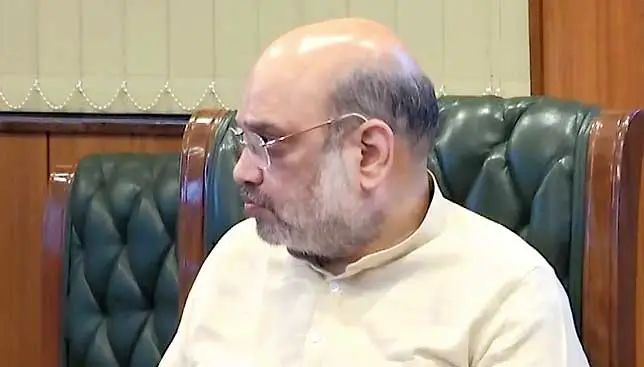
Where is Amit Shah ?

0

For the second time in successive crises, Union home minister Amit Shah has made himself conspicuous by his absence.

The home minister was rarely sighted at the controls during February’s carnage in northeast Delhi; and he has spent nearly all of the coronavirus lockdown period so removed from the public eye that it has raised probing, often anxiety-ridden, questions over India’s second-most powerful entity: Where is Amit Shah? And why isn’t he being seen to be playing the role he ought to as home minister?

Is he unwell? Or is he merely being doubly cautious on distancing because he is diabetic and requires several doses of insulin?

Or could it be that he has been sidelined? Why was he not present at the group of ministers’ Covid-19 review meeting chaired by defence minister Rajnath Singh on Saturday?

There has yet been no credibly attributable answer to those questions. Any queries about Shah’s state of being or level of involvement in the current crisis – compared to wartime scale by Prime Minister Narendra Modi himself – are strictly off the table.

Few are willing to take the question; none has been answering it with any degree of fullness or certitude. “The home minister is performing his duties from home,” has been the stock reply handed out by anonymous North Block sources.

Often, the media has also been drip-fed, again anonymously, details of the “busy schedule” Shah has been keeping from the recesses of his Lutyens bungalow.

A little past 6 on Saturday evening, ANI, a wire service widely seen as an accessory to the Modi government, put out pictures of Shah chairing a meeting of officials to “take stock” of the Covid-19 situation. By then, though, the wonderment over Shah’s extended absences from the scene had turned to public lampooning.

Srivatsa, a Congressman from Karnataka, tweeted: “Breaking News: UNESCO has just declared the Best Quarantine and Social Distancing Award in the World to India’s Home Minister Amit Shah. New India’s New Iron Man has followed the highest standards of quarantine by staying at home and disappearing from the scene altogether.”

It can be reliably concluded that Shah has rarely stepped out of his residence since the lockdown was imposed, and conducts most of his work on the phone. He was last seen seated at a distance behind the Prime Minister as he conferred with chief ministers over video on April 11.

The rest remains speculation, often fuelled by those in power circles Shah has not endeared himself to. “This is not the first time there is adverse comment over Amitji’s low profile,” said a senior BJP leader.

“Even during the Delhi riots, it was said that he had been cast aside or reprimanded for not being able to manage the situation. That turned out to be utterly false. The truth is, he remains Number Two in the government and enjoys the unstinted confidence of the Prime Minister. There is a bond between the two that many do not understand.”

In party circles, Shah’s absence from the frontlines of Covid-19 management is explained as a combination of the “extra care” he needs to take because of his pre-existing health issues and his “reluctance” to assume a prominent role at this time.

“The Prime Minister has taken it upon himself to engage with the masses and oversee the management of this crisis,” the BJP leader said. “Given that, Amitji is performing his ministerial duties from the background; he does not need to showcase himself and what he is doing.”

Another party leader, who has an interface with government matters, suggested it would be “erroneous” to reach “hurried and convenient” conclusions about Shah’s retreat to a work-from-home situation.

“The coronavirus crisis is the foremost concern of the government at the moment and all administrative and public attention is focused on managing it. But the fact remains that a home minister, especially a proactive home minister like Amit Shah, has more on his plate than just the coronavirus. After all, we must be prepared to land running when we get out of this crisis, and you will see Amit Shah lay out the road beyond the coronavirus the moment we get out of this,” the party leader said.

Asked whether he meant the revival of the controversial National Population Register (NPR) exercise, he said: “Well that is one of the things. Nobody in government has concluded that the NPR should be given up, we have merely been forced to postpone it because of the pandemic.”

He added, a bit cheekily: “Now is the time to keep public morale and confidence high; that isn’t Amit Shah’s forte.”

Gold and silver rates today in Bangalore, Hyderabad, Kerala, Vizag – 19 April 2020

Gold rates today 19 April, 2020: Gold rates in Indian markets have seen a slight fall on Sunday after a continuous rise for past week. The silver rates have also reduced by Rs. 50. Going by the gold rates at all major cities, in the Silicon city Bangalore, the yellow metal slipped by Rs. 90 per ten gram of 22 carat taking the gold rate to Rs. 39,760 while the rate of ten gram of 24 carat is down by Rs. 90 making it to Rs. 42,940

Hyderabad markets also see a cut of Rs. 90 for ten gram of 22 carat to Rs. 40,540 and ten gram of 24 carat gold also reduced by Rs. 90 taking the rate to Rs. 44,200.

The gold rate in Kerala has also seen a fall.

The cost of ten gram of 22 carat gold is reduced by Rs. 90 to 38,910 while on the other hand, the ten gram of 24 carat gold is cut by Rs. 90 to Rs. 42,960

The gold rate of ten gram of 22 carat in Visakhapatnam is reduced by Rs. 90 for ten grams of 22 carat to Rs. 40,510 and and Rs. 90 to Rs. 43,710 per ten gram of 24 carat gold. The price of silver reduced by Rs. 50 to Rs. 41,150 across the country.

There are many factors that affect the gold price such as Inflation, global market price changes, gold reserves at the central banks, interest rates, jewelery market and trade wars.

Govt does U-turn, says no easing

0

By Express News Service

BENGALURU: Bowing to public opinion, the state government on Saturday evening changed its decision taken earlier in the day to ease restrictions after April 20 to restart economic activities. For now, there is no change in the lockdown guidelines.

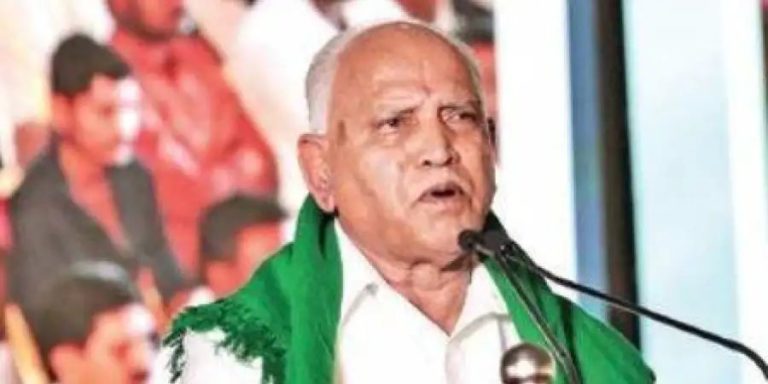
“In view of the public opinion and after holding discussions with senior officers, we have reconsidered our decision on allowing two-wheeler movement. Use of two-wheelers is prohibited. There is no change in the lockdown guidelines,” the chief minister stated.

Earlier in the day, the Chief Minister had announced that 33 per cent of staff at IT/BT firms could work from offices, industries located in Special Economic Zones would be allowed to start operations and also construction activities were allowed, provided workers stayed at construction sites.

The government had also decided to consider Ramanagar, Bengaluru Urban and Bengaluru Rural districts as one district for the movement of industrial workers.

However, in view of increasing number of COVID-19 positive cases in the state in last few days and concerns over possible increase in the numbers if industries are allowed to reopen and if free movement of vehicles is allowed, the state government reconsidered its decision on easing the restrictions, a senior officer in the Chief Minister’s Office said. The Government will take an appropriate decision on April 20, the official added.

The CM made it clear that prohibitory orders imposed across the state will continue till May 3 and malls, showrooms and other commercial establishments will remain closed. The ban on sale of liquor will also continue till May 3, he said. Yediyurappa said the government has decided to appoint ‘incident commanders’ in containment zones to monitor the implementation of the lockdown guidelines. Assisted by police and health department officials, the ‘incident commanders’ will be responsible for containing crowd movement and providing basic amenities in these areas and they will have magisterial powers, he said.