
Highlights
-
The Karnataka High Court on Friday issued notice to Congress leaders Rahul Gandhi, Jairam Ramesh and Supriya Shrinate on a contempt petition filed by MRT Music for allegedly using copyrighted soundtracks of the film, KGF Chapter-2, on social media accounts of INC India and Bharat Jodo Yatra managed by the Congress.
-
A division bench of Chief Justice Prasanna B Varale and Justice Ashok S Kinagi issued notice to Jairam Ramesh, who is in charge of communication, publicity and media of the party, Supriya Shrinate, chairperson, social media and digital platforms of the party and Rahul Gandhi, who is Member of Parliament from Wayanad in Kerala.
-
The single judge on November 8, 2022, had set aside the order passed by the sessions court, directing Twitter to remove the links and temporarily block the accounts of INC India and Bharat Jodo Yatra, after the Congress admitted that it had taken 45 seconds of the audio inadvertently while giving an undertaking that they will remove the offending material from all social media accounts.
-
MRT Music has alleged that the accused have not removed the infringing content from social media handles on Twitter and Facebook and the same is willfully disobeying the conditions imposed by the HC.
Highlights
-
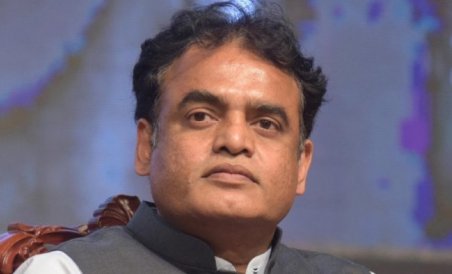
Karnataka Higher Education Minister C N Ashwath Narayan has instructed the state-run universities to start at least one course through online mode by March next year.
-
This is one of the initiatives under the ‘Good Governance Month’ that Narayan launched on Thursday.
-
“Online digital learning courses will be introduced in universities. Accordingly, every university will have to have minimum one degree course in the online format before March 2023,” Narayan said.
-
He further said every university must register under the Academic Bank of Credit by December-end.
-
On the occasion, Narayan launched a new ‘Skill Connect’ portal. College and Technical Education Commissioner P Pradeep signed agreements with Talencia Global, Innovsource, FUEL, Aisest and Infiquity Auto Technologies.
-
“Universities need to enter into MoUs with minimum five industry partners in next three months,” Narayan said. Marks cards of ITIs will be digitalised. “A total of 60,000 ITI students will be provided with the best training by Microsoft,” the minister said.

Highlights
-
Minister Basavaraj Bommai on Wednesday met Union Jal Shakti Minister Gajendra Singh Shekhawat and requested him to grant an early approval for Mekedatu and Mahadayi projects.
-
The CM, along with Water Resources Minister Govind Karjol, met the union minister and held discussion for more than half an hour.
-
Emerging out of the meeting, Karjol told reporters that, “We have requested the union minister to grant early approval for both Mekedatu and Mahadayi projects. The minister responded positively.”
-
Karjol also said that they have requested the union minister for an early approval of the state’s long pending demand to declare Upper Bhadra as a national project. Though the Jal Shakti Ministry approved the proposal, it has been waiting for the Union Ministry of Finance’s nod. The Finance Ministry is likely to grant its approval soon, he said.
-
During his three-day tour to the national capital, the Chief Minister could not meet BJP national president J P Nadda, as the latter was busy with the election campaign in Gujarat.
-
Earlier, there was a speculation that the CM might meet Nadda to discuss a long pending Cabinet rejig. The CM also said he sought an appointment with Nadda, however, the party president was busy in Gujarat.
Later in the day, the CM also met President of India Droupadi Murmu at the Rashtrapati Bhavan, as a courtesy.
Highlights
-
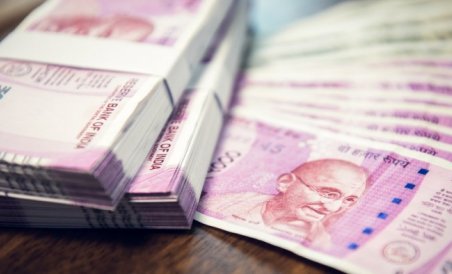
Karnataka’s excise revenue has touched Rs 19,244 crore so far and the government expects to reach Rs 30,000 crore by the end of the current fiscal, exceeding the target fixed.
-
“During the same period last year, the excise revenue was Rs 16,641 crore. Comparatively, excise revenue has increased by Rs 2,603 crore this time,” Excise Minister K Gopalaiah said.
-
Chief Minister Basavaraj Bommai has fixed Rs 29,000 crore as the excise revenue target for 2022-23 fiscal.
-
“We expect to breach the target with an additional Rs 1,000 crore,” Gopalaiah said. “Between December and March, revenues will be more. Over the next four months, we will collect Rs 10,000 crore,” he explained.
-
Asked about issuing new liquor licences, Gopalaiah said there was no proposal before the government. “So, the question of giving licences doesn’t arise,” he said. Karnataka has not issued new CL-2 (retail shops) and CL-9 (bar and restaurant) liquor licences since 1992. “Anyway, we have curbed bootlegging and illicit liquor,” the minister said.
-
Gopalaiah said permission has been granted to set up 24 new check posts in the state’s border areas. “This will help regulate the smuggling of liquor from neighbouring states. The state will also get revenue from this,” he said.
-
At present, there are 16 check posts and the new ones will take the tally to 40. “Checkposts of the commercial taxes department will be used as excise check posts. For the new 24 check posts, 24 excise inspectors, 24 sub-inspectors and 163 constables will be appointed. Vigilance will be heightened across the borders,” Gopalaiah said.
‘BJP getting strong in Mandya’
Gopalaiah, a Vokkaliga, said the BJP has improved its strength in Mandya where Congress and JD(S) have been the traditional competitors. “Many Congress and JD(S) leaders are going to join the BJP. There’ll be a three-way contest in all eight assembly constituencies in the Mandya district and the chances of us winning in several of them have gone up,” he said. Gopalaiah also expressed confidence in the BJP doing well in Hassan, a traditional JD(S) stronghold. “We will see unexpected results in Hassan,” Gopalaiah, the Hassan district minister, said.

Highlights
-
The Congress on Wednesday demanded the withdrawal of the Karnataka Prevention of Slaughter and Preservation of Cattle Act, known as the anti-cow slaughter law, with the party’s communications chief Priyank Kharge claiming that it has pushed farmers into further distress.
-
“The law was hailed as revolutionary. But, has it helped the state, farmers, labourers and industry? The law banning cattle slaughter has dealt a huge blow to farmers, leather industry workers and the state’s finances,” Kharge told a news conference.
-
“According to the state’s economic survey, Karnataka’s leather exports stood at Rs 521.81 crore in 2017-18, Rs 562 crore in 2018-19 and Rs 502 crore in 2019-20. In 2020-21, it fell to Rs 160.84 crore,” he said. “There are 91 leather units in the state and most of them are on the verge of closure. Has the government thought about them and its workers? Without all that, the law was introduced,” the former social welfare minister said.
-
Kharge said the BJP government disregarded the finance department’s caution against implementing the anti-slaughter law. Karnataka would need Rs 5,240.18 crore in four years to implement the law, the finance department had said. “When it comes to filling up vacancies, the government says it’d ask the finance department. But, the same government did not listen to the finance department that opposed this law,” he said.
-
“Unable to bear this cost, the government started the Punyakoti scheme for the adoption of cows. So far, only 151 out of 21,207 cows sheltered in 177 goshalas have been adopted. And, only three of the 177 goshalas are government-run. There isn’t a single government-run goshala in the chief minister’s constituency,” Kharge pointed out.
Kharge also pointed to a letter written to Prime Minister Narendra Modi by one Harsha Associates in April this year. “This 40% BJP government is looting even in the name of Gau Mata. Harsha Associates wrote to PM Modi complaining about having to pay 8.5% commission for the release of money towards fodder supply to goshalas,” he said.
“Unable to bear this cost, the government started the Punyakoti scheme for the adoption of cows. So far, only 151 out of 21,207 cows sheltered in 177 goshalas have been adopted. There isn’t a single government-run goshala in the chief minister’s constituency,” Priyank Kharge, chairman, KPCC Communications said

Highlights
-
Aiming to create a complete database of all monuments in its jurisdiction, for the first time, the Archaeological Survey of India (Bangalore Circle) is preparing something called the “monument health card” for all 129 protected monuments across 17 districts in Karnataka.
-
While the ASI has designed the programme to check the current condition of all monuments, regional offices are responsible to gather data and document specifications of every monument in detail. “While the annual inspection of monuments only studies if the monument is strong enough, this year, we have been asked to prepare a card for every monument with complete details of the monument. It will contain a detailed description of the material used for construction, strength of the binding material, architectural style, and many other parameters,” said Bipin Chandra Negi, superintending archaeologist (ASI, Bangalore Circle).
-
Other major parameters documented are the status of the monument, a brief history, environment and surroundings along with drone shots and engineering aspects of the monument.
-
The data collected provides a clear picture of the strength of the monuments to help officials prioritise restoration or conservation work. “With complete details on hand, we can decide which works need to be taken up immediately and which can wait. Also, we can easily determine the nature of work required,” said a senior official from the archaeological department.
-
That apart, if the activity is carried out every year, it will also help determine the year-on-year degradation of the monuments and a study of this could suggest preventive measures to be put in place, the officials added.
-
Experts working in the field of restoration of monuments and archaeological structures opined that documenting such parameters in detail will help restore the structure in case of any damage.
-
“During restoration, if we have a brief history and architectural details along with the way it was constructed, we can redo the work using the same principles so that the design remains the same. This helps protect the uniqueness of the monument,” said Pankaj Modi, conservation architect with Intach.
Yet another architect who has worked on restoration projects said that the history of the era and documentation of monuments will help differentiate one monument from another, which in turn helps protect the integrity of the monument.

Highlights
-
The state government is planning a major revamp in the pre-university (PU) examination system with the introduction of Multiple Choice Questions (MCQ) worth 15-20 marks.
-
This is being planned to improve the pass percentage. The introduction of MCQ was discussed at a review meeting of the Department of PU Education chaired by School Education & Literacy Minister B C Nagesh.
-
The government wants to improve PU pass percentage to compete with CBSE and increase enrolment in higher education.
-
According to sources, the government is considering MCQs in first and second PU. It is believed that this would help students score and sail through.
-
A few senior officers present at the meeting advocated for MCQs. “Some of the officers opined that introducing MCQs is the only way to improve the results,” a source said.
-
During the meeting, 2nd PU results were compared with that of central boards. “Officials said the pass percentage and the ability to score is decreasing and our students are struggling to compete with CBSE for seats in professional courses,” the source said.
-
In the 2nd PU exams held earlier this year, the pass percentage was 61.88.
-
At present, the question paper pattern for PU comprises only descriptive answers. Even questions that carry one mark require descriptive answers.
Over the years, the 2nd PU pass percentage has not crossed 65%, whereas it is 90-100% in the case of CBSE.
Senior officials, including Minister Nagesh, are said to have expressed their inclination to introduce MCQs for 2023 PU exams. However, they decided to convene another round of meeting to finalise this.
During the 2022 board exams, the PU department had increased the number of questions and helped students with more choices. This contributed towards an increase in the overall results. This was done considering the Covid-19 pandemic during which there were no offline classes.
This year, the department has already announced a switchover to the pre-pandemic question paper pattern. The exams will be held between March 9 and 29.

Highlights
-
Rejecting reports that the Karnataka government has given consent to the Wakf Board to open 10 colleges for Muslim women students in the state, Chief Minister Basavaraj Bommai on Thursday said no such discussions have taken place at any level of his administration. As the topic drew ire from some Right wing groups, the Chief Minister clarified that it might be the personal view of the Wakf board Chairman and not the stand of his government.
-
“..I don’t know, it might be his (Wakf Chairman) personal view. It has not been discussed in any quarters of our government and it is not the stand of my government. If anything is there, let the Wakf Chairman come and speak to me,” Bommai said in response to a question.
-
Karnataka Minister for Haj and Wakf Shashikala Jolle too has issued a statement clarifying that there was no proposal or file before the government regarding starting separate colleges for Muslim women. Terming reports that the government has already given its approval for stating such colleges as “far from the truth”, she said, “the statement in this regard by the Wakf board Chairman is his personal one. I have already spoken to the Wakf board Chairman and have asked him to issue a clarification regarding the speculations which have arisen.”
-
Karnataka Wakf Board Chairman Maulana Shafti Saadi had recently said that it has been decided to start 10 colleges for girls in various districts in the state at a cost of Rs 2.5 crore per college, and the Chief Minister and Minister Jolle had given in principle consent to this project.

Highlights
-
The Karnataka High Court upheld the notification issued by the Ministry of Home Affairs, giving immediate effect to the ban on the Popular Front of India and its affiliates or front, declaring them ‘unlawful associations’ for five years, for allegedly having international links with terrorist groups like the ISIS.
-
The notification dated September 27 has two parts — the first declaring the PFI ban ‘unlawful’, and the second bringing it into effect immediately. As the first part was referred to the Tribunal constituted in terms of Section 4 of the Unlawful Activities (Prevention) Act for adjudication, the petitioner Nasir Pasha, a member of PFI, had questioned the second part of the notification which gives immediate effect to the ban, on the ground that separate reasons are not recorded, in terms of Section 3(3) of the Act.
-
Justice M Nagaprasanna dismissed the petition filed by Pasha, represented by his wife Arshiya Fathima, as he is in judicial custody. Justice Nagaprasanna observed that the impugned notification would indicate that reasons are present in the notification itself. Article 19(1)(c) (fundamental right to form associations or unions) on which much emphasis is laid, can have reasonable restrictions imposed under certain circumstances under Article 19(4) in the interest of the sovereignty and integrity of India, or public order, or morality.
“I do not find any warrant that would entail interference at the hands of this court. Any further consideration of the submissions made by the senior counsel for the petitioner would prejudice proceedings before the Tribunal,” the judge said, referring to the Delhi HC verdict on the ban on Islamic Research Foundation with immediate effect, based on the SC verdict.
Highlights
-
The Karnataka High Court upheld the notification issued by the Ministry of Home Affairs, giving immediate effect to the ban on the Popular Front of India and its affiliates or front, declaring them ‘unlawful associations’ for five years, for allegedly having international links with terrorist groups like the ISIS.
-
The notification dated September 27 has two parts — the first declaring the PFI ban ‘unlawful’, and the second bringing it into effect immediately. As the first part was referred to the Tribunal constituted in terms of Section 4 of the Unlawful Activities (Prevention) Act for adjudication, the petitioner Nasir Pasha, a member of PFI, had questioned the second part of the notification which gives immediate effect to the ban, on the ground that separate reasons are not recorded, in terms of Section 3(3) of the Act.
-
Justice M Nagaprasanna dismissed the petition filed by Pasha, represented by his wife Arshiya Fathima, as he is in judicial custody. Justice Nagaprasanna observed that the impugned notification would indicate that reasons are present in the notification itself. Article 19(1)(c) (fundamental right to form associations or unions) on which much emphasis is laid, can have reasonable restrictions imposed under certain circumstances under Article 19(4) in the interest of the sovereignty and integrity of India, or public order, or morality.
-
“I do not find any warrant that would entail interference at the hands of this court. Any further consideration of the submissions made by the senior counsel for the petitioner would prejudice proceedings before the Tribunal,” the judge said, referring to the Delhi HC verdict on the ban on Islamic Research Foundation with immediate effect, based on the SC verdict.
1...276277278...883Page 277 of 883