Covid-19 surge likely in Chikkamagaluru , Tumakuru

HIGHLIGHTS
  • An early warning system for a surge in Covid cases, developed by researchers from the Indian Statistical Institute (ISI), Bengaluru, has warned that 12 districts of Karnataka are showing an increase in effective reproduction number of Covid-19 cases, and two districts need immediate focus as they will reach 1,500 cases per million population, in the next 46 and 72 days.
  • The research by Siva Athreya, a probability theorist specialising in statistical physics and population biology, and others in the team have created an early warning system from daily reported cases, and each district’s healthcare infrastructure capacity.
  • The prediction has warned that Chikkamagaluru will reach 1,500 cases per million population in the next 46 days, and Tumakuru in the next 72 days. Explaining the basis of predictions on the website, the researchers said, “From the daily reported cases, a stable early warning system has been created based on each district’s health infrastructure capacity. It is assumed that health infrastructure capacity in a district is proportional to its population. Hence, the days taken to reach 50 cases per million population and 1,500 cases per million population, has been taken as markers for healthcare infrastructure capacity.”
  • The aim of this prediction is to provide an early warning to epidemiologists and district authorities. The researchers say the growth rate here is equal to the number of new infections per active infection, per unit time. Which means, the number of cases at the peak is taken as a critical number of cases in the early warning system. This is just another marker for healthcare infrastructure capacity.
  • “For the current date, we use the model to predict active cases for the next 14 days. If the green curve is shooting upward, then this is an early warning for the district,” they said. As per data, in Chikkamagaluru, the R-value is expected to go up to 2.54, with growth rate of 0.243, and days taken to increase to 1,500 active cases per million population (10 lakh people) is 56. For Tumakuru, the R-value is expected to go up to 1.21 with growth rate of 0.207, and days taken is 49 to reach 1,500 per million population. They have also warned other districts where the R-value is expected to grow. These districts are predicted to reach 1,500 active cases per million population in less than 100 days.
worrying signs
Chikkamagaluru, Tumakuru, Bagalkot, Belagavi, Bengaluru Rural, Bengaluru Urban, Chamarajanagar, Chikkaballapur, Davanagere, Dharwad, Hassan, Kodagu, Mysuru, Yadgir

6,500 smart classrooms by 2023

HIGHLIGHTS
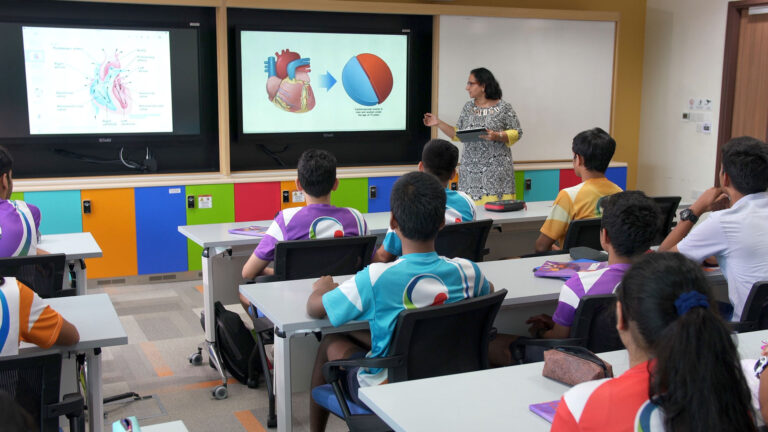
  • Department of Collegiate and Technical Education commissioner Pradeep P said 2,500 smart classrooms have been set up in government colleges over the last year with 6,500 to be converted by 2022-23. Though the Karnataka Learning Management System (LMS) had been implemen­ted a year ago, some aspects of it are yet to be implemented, he said. When the implementation concludes, students will have access to their syllabus and lessons through the LMS website and mobile app.
  • Pradeep said 2,500 classroms have been converted to smart classrooms over the last year. He said attendance, curriculum, classes, assignments (both online and offline), libra­ries and doubt forums will be available for students thro­ugh LMS web portal and app.
  • He said digitisation will aid teachers and students rather than replace teachers and offline classrooms. Speaking on attendance with digitisation, Karnataka State Higher Education Council vice-chairman, Prof B Thimme Gowda also hinted that the UGC might drop attendance requirements.
  • This is also in line with a previous UGC announcement of allowing universities to set their own attendance policies with the implementation of simultaneous degrees under NEP. “This is the first by any state. We are compiling material from top-level teachers through the portal and over time, it will get better,” he said.Pradeep also said that issuing of copies of marks cards and degree certificates will stop soon.

Hijab will be banned during exams: BC Nagesh

HIGHLIGHTS

No 'hijab' during board exam: B C Nagesh | udayavani

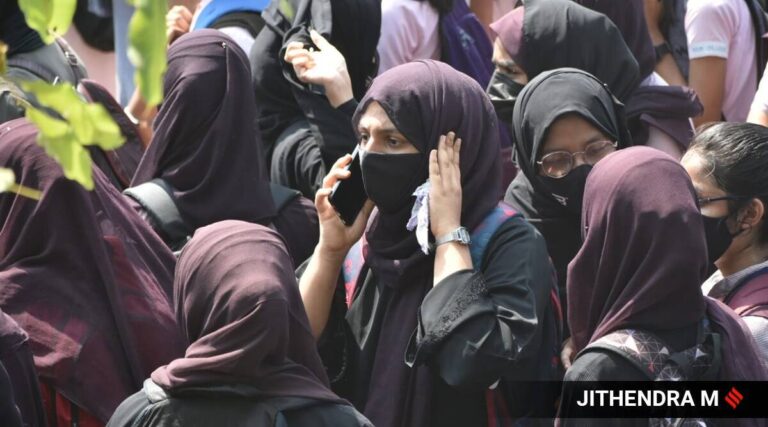
  • Although uniform is not compulsory for students of those colleges where college development have not prescribed uniforms for second PU exams, none are allowed to wear any religious attires like hijab. With the government coming up with its circular regarding barring hijabs for students taking exams following high court orders, so far, they are yet to receive any special appeals for permission to wear them, said Primary and Secondary Education Minister BC Nagesh.
  • Though there has not been any direction from the education department for teachers/lecturers against wearing religious attires, the educational institution managements have appealed to them not to wear them on moral grounds.
  • Teachers who insist to wear them will be relieved from exam duty, Nagesh said, adding that 99 per cent of the teachers are cooperating except for one or two instances. For those students who miss the exams for wearing hijabs will not be given special option and have to appear for supplementary exams like any other student, Nagesh announced.

Karnataka: Over 6 lakh students to take II PU exams from April 22

HIGHLIGHTS
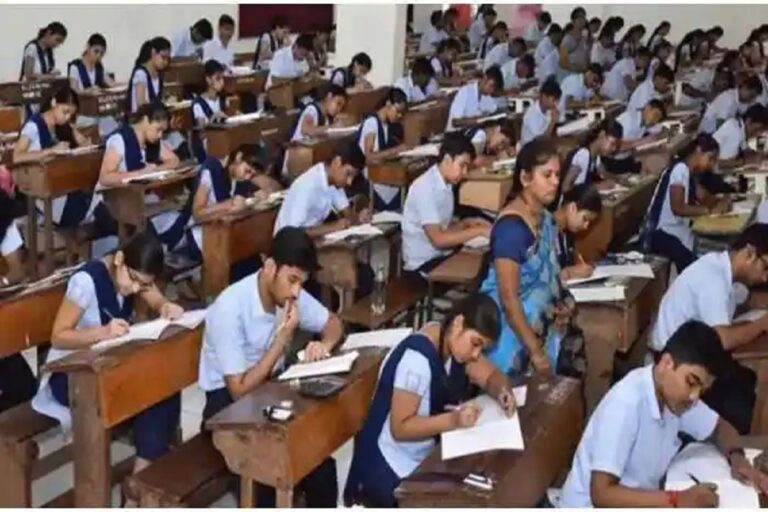
  • Pre University Board is all set to hold the second year PUC exams from April 22 to May 18. As many as 6,84,255 students including 6,00,519 regular students, 61,808 repeaters, 21,928 private students and 2,212 physically challenged children have enrolled for the exams, said minister for primary and secondary education minister BC Nagesh on Tuesday.
  • He said that the exams between 10.15 am and 1.30pm will be held across 5,241 centres including 1,231 government PU colleges, 797 aided, 3,040 unaided, 159 composite and 14 corporation PU colleges. Bengaluru south district will have the highest number of exam centres at 83, while the lowest will be in Ramanagar district (13).
  • Like every year, highest number of students (58,836) have enrolled from Bengaluru south and lowest number of students (6,048) from Kodagu district. As many as 3,46,936 boys and 3,37,319 girls will appear for exams.
  • There have been almost equal number of students appearing for exams in all three faculties including 2,45,519 in Commerce, 2,28,167 in Arts, and 2,10,569 in Science. Evaluation will be done across 81 centres. New valuation centres will be set up in Tumkur, Hassan and Ballari districts, Nagesh said.
  • Six meetings have been held with education department officers and others since March 26, he said, adding that the revised time table issued on April 6 should be followed. Students appearing for exams can travel for free in KSRTC buses on exam days by showing their hall tickets, and Covid-appropriate behaviour must be followed.  For any exam related query students can contact 080-23080864.

Strong Home Minister needed in Karnataka, should advertise in media: Yatnal

Highlights
  • BJP leader and Vijayapura City MLA Basanagouda Patil Yatnal took a dig at Home Minister Araga Jnanendra saying “the current law and order situation in Karnataka demands an able home minister.”
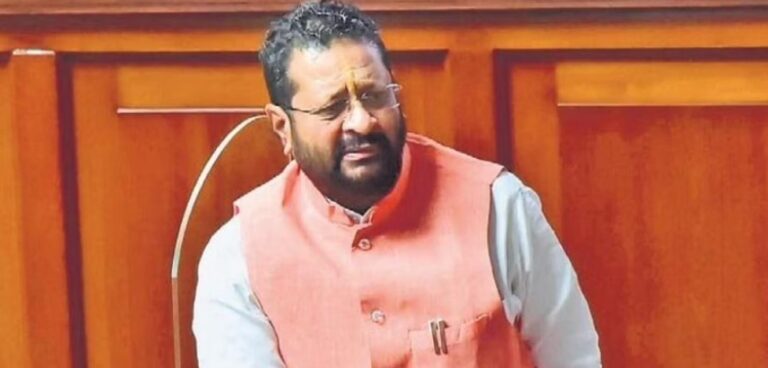
  • Speaking to reporters on Monday, Yatnal said, “An advertisement should be given in newspapers that the post of Home Minister of Karnataka is vacant. The current Home Minister seems to have a soft corner on the latest riots in the state.”
  • “Violence is breaking out in those places where the law and order situation is weak. There is a need for a strong Home Minister for the state,” Yatnal said.
  • On the much-awaited Cabinet expansion, Yatnal said, “Chief Minister Basavaraj Bommai has said that he will fill the vacant berths at the earliest. It was also discussed in the recent executive committee meeting. Cabinet expansion is likely to happen in the last week of April.”
  • When questioned whether the party high command will drop senior ministers from the Cabinet, Yatnal said he was not aware of any such decision.

Embarrassment for Bommai govt: Lingayat seer says mutts pay 30% commission to get sanctioned grants

Highlights
  •  In an embarrassment for the Basavaraj Bommai government in Karnataka, a seer from the influential Lingayat community has alleged that mutts (monasteries) are also affected with corruption as the government take a 30 per cent cut from the grants set aside for the welfare of the religious places.
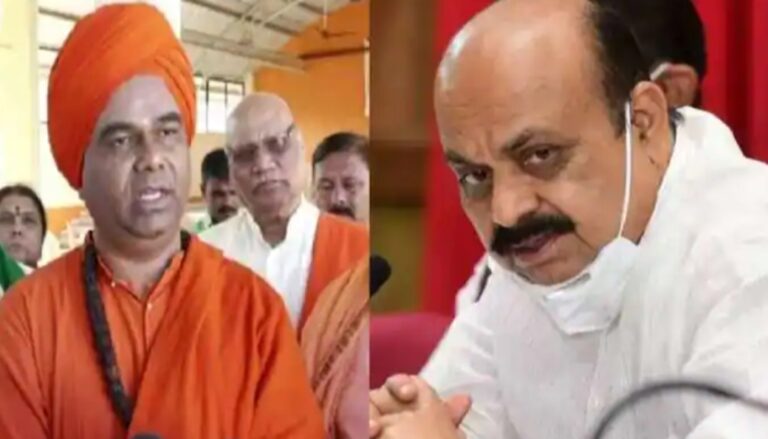
  • Dingaleshwar Swamiji of Balehosur Mutt in Shirahatti taluk of Gadag made the sensational claim while addressing a rally organised in Badagandi village in Bagalkote district of Karnataka.
  • “If a grant is sanctioned for a swami (seer), it reaches the mutt after 30 per cent deduction. This is the plain truth. Officials clearly tell you that unless the amount is deducted, your project will not start,” the Lingayat seer said.
  • The Lingayat seer further accused that some legislatures ‘fix’ the rate before any development work is started. He also alleged that none of the government programmes are happening properly in the southern state.
  • “There is a pathetic situation of paying 30 per cent commission. The work starts only after paying 30 per cent. Many contractors have stopped their works. There are only talks but no development is happening. Many MLAs fix the rate first before starting the work,” Dingaleshwar Swamiji of Balehosur Mutt claimed.
  • The seer claimed that northern Karnataka is suffering the most as roads, bus services, education, schools are in bad shape. He further said that there is a shortage of teachers in the region and farmers are also suffering as Irrigation works are pathetic.
  • Reacting to the Lingayat seer’s charges, CM Chief Minister Basavaraj Bommai said the charges levelled by swamiji will be probed and action will be taken against the guilty.
  • “He (the seer) is a great swamiji with a great track record. The entire state knows it. I only request His Holiness to give the entire details as to who paid, for what purpose it was paid and whom it was paid to. We will certainly inquire and go into the depth of the case. We consider his allegation very seriously,” the Karnataka CM said.
  • Notably, the Lingayat community is considered to be very influential. BS Yediyurappa, the former CM and senior BJP leader enjoys massive support amongst the Lingayat community.

Santosh Patil gave us sub-contracts to finish road works: Contractors

Highlights
  • The case of civil contractor Santosh Patil’s suicide took a new turn on Monday when a team of contractors from Belagavi claimed that they had taken up road development works at Hindalga Gram Panchayat limits on the instructions of Patil and panchayat president Nagesh Mannolkar.
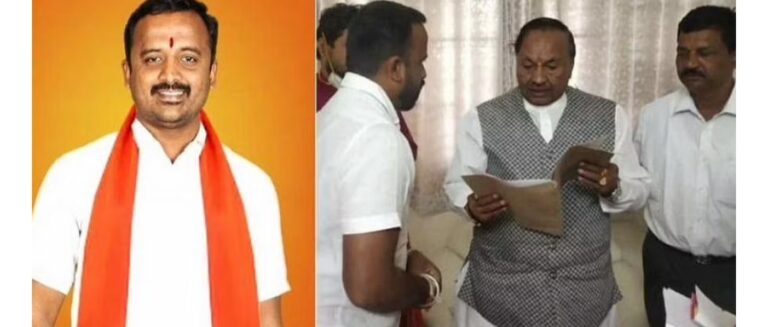
  • The disclosure implies that Patil had assigned the development of 108 roads to several other road contractors. The number of such contractors involved in taking up “piece” works is not clear, but Raju Jadhav, one of the contractors, said the works were assigned to at least 10-12 of them. The contractors met former minister Ramesh Jarkiholi at his residence in Gokak on Monday before speaking to the media.
  • Jadhav and other contractors said they took up the works only after being assured of payments by Patil and Mannolkar. “The two said they had the work orders,” Jadhav added. Mannolkar and Patil were pushing these sub-contractors to complete the works before the start of Laxmi Jathra at Hindalga which was being celebrated after 100 years.
  • Asked if they had been paid, Jadhav said they have not received any payments so far. “We have invested our money into the road works and Patil was supposed to clear the bills. We are not aware of how much money was invested or availed as loan by Patil for the project. He may have been under pressure to clear our dues and that was why he may have claimed he owed huge amounts,’’ he added. Jadhav said he was not aware whether 40 per cent commission was being demanded from Patil.

Big rejig as Karnataka transfers IAS officers

Highlights
  • The Karnataka government announced a number of transfers within various state departments. Amlan Aditya Biswas, the regional commissioner for Belagavi, has concurrently been posted as Special Officer and Competent Authority, IMA, replacing Harsh Gupta. Meanwhile Dr Srivatsa Krishna has been posted as the Principal Secretary for DPAR, replacing Munish Moudgil. Munish Moudgil has been posted as the Commissioner for Survey Settlement and Land Records.
  • Dr G Kalpana, formerly Additional Chief Secretary to the Government for the Department of Personnel and Administrative Reforms (DPAR) Janaspandana, has been posted as the Additional Chief Secretary to Government for the Labour Department. Shivayogi C Kalasad will be posted as Secretary for Agriculture Department. BMTC Managing Director, Anbu Kumar, has been transferred to the same post for Karnataka State Road Transport Corporation (KSRTC).
  • Dr N V Prasad, Kalaburagi regional commissioner, is posted as secretary for Transport Department. Sathyavathi G will be taking charge as BMTC managing director, she will also be holding concurrent charge of Secretary for Karnataka Public Service Commission. Dr Reju M T will take the post of Secretary for Department of Women and Child Development and Empowerment of Differently Abled and Senior Citizens.
  • Deepa M will take charge of the Karnataka Urban Infrastructure Department and Finance Corporation (KUIDFC) as managing director. Pallavi Akurathi will head Sarva Shikshana Abhiyana as state project director. Dr Rakesh Kumar K will serve as the Social Welfare Department Commissioner, replacing Dayananda K. Ravindra P N will serve as Special Commissioner (Projects) for BBMP. Chandrashekhar Nayaka L has been transferred as the Joint Secretary for the Finance Department (Budget and Resources) to deputy commissioner for Raichur district. Vijaymahantesh B Danammanavar will serve as Vijayapura Deputy Commissioner, replacing Pommala Sunil Kumar.

Karnataka HC allows govt to implement Slaughter Act

key Highlights
  • Modifying the interim order passed in January 2021, the Karnataka High Court on Monday permitted the state government to implement the provisions of Section 5 of the Karnataka Prevention of Slaughter and Preservation of Cattle Act, 2020 and the Rules framed thereunder with regard to transportation of cattle. The court passed the order permitting the state government to take action for breach of Section 5 and Rules thereunder. However, the court said that it is subject to final decision of the court on a batch of petitions challenging the validity of the Act.
  • A division bench of Chief Justice Ritu Raj Awasthi and Justice SR Krishna Kumar modified the order after hearing the Advocate General (AG) Prabhuling K Navadagi and a counsel of the petitioners, with regard to a batch of petitions against the Act. On January 20, 2021, the court had passed the interim order clarifying that no coercive action should be initiated by the state government for the breach or violation of Section 5 of the Ordinance, till the Rules being framed as contemplated by the proviso to Section 5 of the Karnataka Prevention of Slaughter and Preservation of Cattle Ordinance, 2020 and are brought into force.
  • According to Section 5, before the Rules were framed, a farmer who takes his cattle from one village to another village for his own work can be prosecuted and arrested, the petitioners pointed out. Now, state has come out with ways to deal with offences under the Section 5.

World Heritage Day 2022: Take a look at seven major heritage sites of India

iStock-962421230

Every year on April 18, the world commemorates World Heritage Day to raise awareness about the cultural heritage that surrounds us. The day also reminds us to conserve our cultural diversity. This day is also known as International Monuments and Sites Day. India is endowed with magnificent historical monuments that define our culture and diversity.
Here are seven major heritage sites of India:
Ajanta Caves, Maharashtra – The Ajanta Caves, located in Maharashtra’s Aurangabad, are widely recognised as masterpieces of Buddhist religious art. There are roughly 30 rock-cut Buddhist cave monuments ranging from the 2nd century BCE to around 480 CE. The caverns are also referenced in the memoirs of various mediaeval Chinese Buddhist travellers to India, as well as by an Akbar-era Mughal official in the early 17th century.
Kaziranga National Park, Assam – Two-thirds of the world’s giant one-horned rhinoceroses live at Kaziranga National Park. The ‘Big Five’ of Kaziranga include the One-Horned rhinoceros, Royal Bengal Tiger, Asian elephant, wild water buffalo, and swamp deer. It is a wide region of tall elephant grass, marshes, and deep tropical wet broadleaf forests, crisscrossed by four main rivers, including the Brahmaputra, and several tiny bodies of water.
Taj Mahal, Uttar Pradesh – The Taj Mahal, one of the World’s Seven Wonders, it is a funeral mosque. Emperor Shahjahan constructed it in honour of his third wife, Begum Mumtaz Mahal, who died in 1631. It was included as a cultural monument on the UNESCO World Heritage List in 1983, under Category i.
Konark Sun Temple, Odisha – The Konark Sun Temple (also known as the “Black Pagoda”) is a 13th-century Sun Temple in Konark, Odisha. It is created in the Mahanadi Delta on the east coast of the Bay of Bengal in the shape of Surya’s chariot with 24 wheels and is extensively ornamented with symbolic stone sculptures that is driven by seven horses.
Sanchi, Madhya Pradesh – The Buddhist Monuments at Sanchi are a series of Buddhist structures that date from 200 BC to 100 BC and are located 45 kilometres from the capital city of Bhopal in the Indian state of Madhya Pradesh. On January 24, 1989, UNESCO designated it as a World Heritage Site because of its unique cultural significance.
Mahabodhi Temple Complex, Bihar – The Mahabodhi Shrine Complex is a Buddhist temple in Bodh Gaya, Bihar, where Buddha is believed to have received enlightenment. The location has a descendent of the Bodhi Tree, beneath which Buddha attained enlightenment, and it has been a Hindu and Buddhist pilgrimage destination for more than two thousand years.
Champaner-Pavagadh Archaeological Park, Gujarat – The Champaner-Pavagadh Archaeological Park is located near Champaner, a city established in the 8th century by Vanraj Chavda, the most notable ruler of the Chavda Dynasty. Mosques, temples, granaries, tombs, wells, walls, and terraces are among the eleven various types of structures found at Champaner-Pavagadh.