Promotion of engineers in four depts creates confusion

KEY STORY

  • There is serious confusion over promotions to the posts of chief engineers and engineers-in-chief in different departments in the state.
  • Government sources said that public works, water resources, minor irrigation, and rural development and panchayat raj departments had a common pool of engineers before 2021. But last year, the government passed an order splitting all the four departments, leading to problems of seniority and promotions among engineers.
  • Earlier, chief engineers of the Department of Personnel and Administrative Reforms (DPAR) oversaw promotions, postings and seniority of all the four departments, but that changed last year. Engineers from the four departments feel that they should have been given the option to pick departments and DPAR should have retained its control. In 2020, PWD and water sources departments broke away from the common pool, leading to resentment among engineers of other departments.
  • Sources said all the four departments together have 51 sanctioned posts of engineers-in-chief and chief engineers, but DPAR has promoted 70 to these top positions, creating an excess of 19 engineers who have no sanctioned posts. PWD has 13 sanctioned posts, but there are a total of 55 chief engineers.

CONCLUSION

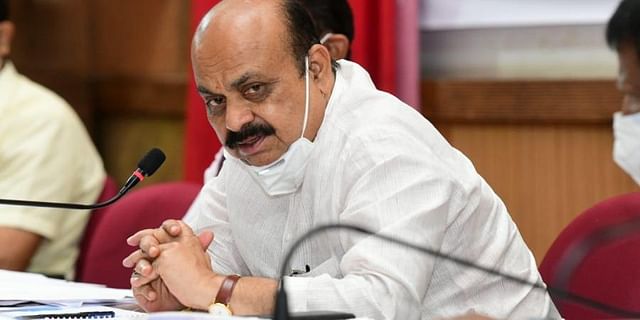
  • The Irrigation Department has 36 sanctioned positions, but only 15 have opted for them. The engineers have now written to Chief Minister Basavaraj Bommai, Chief Secretary P Ravi Kumar and other top officials to order DPAR to redo the promotions, strictly based on seniority.
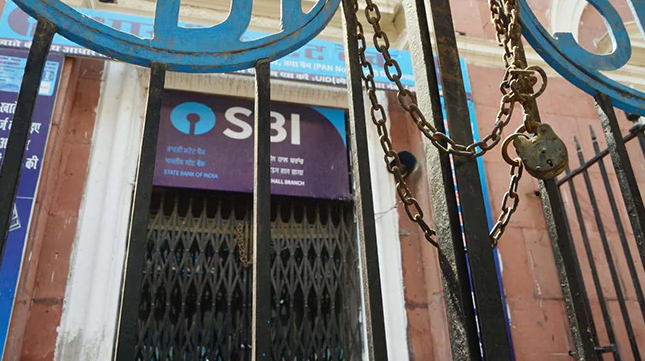
Bharat Bandh Called On Monday, Tuesday: Your 10-Point Guide

KEY STORY

 A two-day nationwide strike, starting Monday, has been called for by a joint forum of central trade unions to protest against central government policies. The All India Bank Employees Association has announced its support to the strike.
  1. The call for the nationwide strike was given by a joint forum of central trade unions, to protest against government policies affecting workers, farmers, and people.
  2. The to bank unions are participating in the strike protest against the government’s plan to privatise public sector banks, as well as the Banking Laws Amendment Bill 2021.
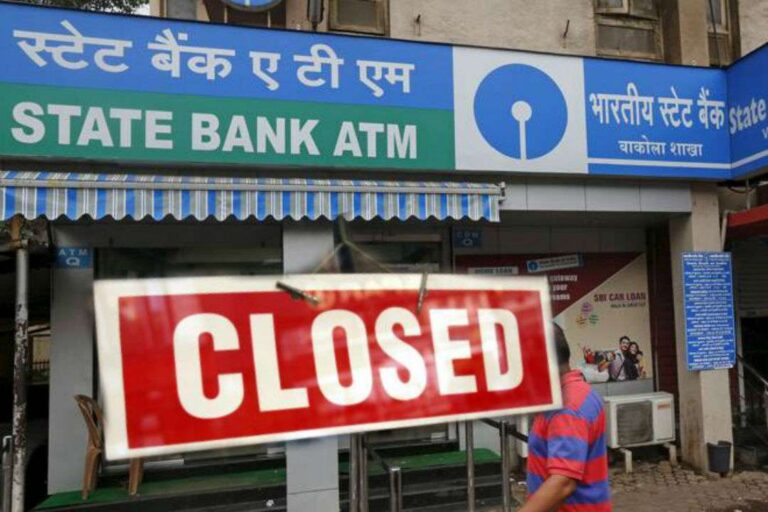
  3. The State Bank of India, the country’s largest lender, has issued a statement informing customers that banking services may be impacted on Monday and Tuesday.
  4. Apart from banks, workers from various other sectors such as steel, oil, telecom, coal, postal, income tax, copper, and insurance are expected to participate in the strike.
  5. The unions in railways and defence sector are expected to make mass mobilisation in support of strike at several hundreds of spots.
  6. Roadways, transport workers and electricity workers have decided to join the strike.
  7. The West Bengal government has mandated employees to report for duty on Monday and Tuesday saying that all state government offices will remain open despite the Bharat Bandh.
  8. In its memorandum, the Bengal government also said that no casual leave or a half-day leave would be granted to any employee on March 28 and 29. “It is further notified that the absence of employees in those days will be treated as ‘dies-non’ and no salary will be admissible,” reads the state government memorandum.
  9. The Bharatiya Mazdoor Sangh has announced that it will not participate in the strike. The Sangh said that the upcoming strike was ‘politically motivated’ and aimed at the survival of selected political parties.
  10. The All India Unorganised Workers and Employees Congress has extended support to the nationwide strike. “Our leader Rahul Gandhi has been voicing concern in favour of their demands. The Unorganised and Employees Congress unequivocally not only lends support in writings but will participate in the strike wherever it is possible,” said Dr Udit Raj, the national chairman of the All India Unorganised and Employees Congress.

Be ready: Power ministry’s advisory to states ahead of 2-day trade union strike

KEY STORY

  • Ahead of the from trade unions’ two-day national strike March 28 to March 30, the power ministry on Sunday has written to all states governments and electricity authorities asking them to ensure normal functioning of the electricity supply during the strike of the employees. Shutdown activities planned during these two days may be rescheduled to suitable future dates, the ministry said.
  • Additional manpower may be deployed at all critical power stations to handle any emergency conditions.
  • Control room executives should be vigil and on high alert and power supply to essential services like hospitals, defence infrastructure, railways should be ensured, the power ministry advisory said.
  • Many services are likely to be hit for two days across the nation as a joint forum of central trade unions has given a call for a nationwide strike on March 28 and 29, to protest against government policies affecting workers, farmers, and people. Roadways, transport workers, electricity workers, bank unions have decided to join the strike. The strike notices have been given by unions in the sectors such as coal, steel, oil, telecom, postal, income tax, copper, banks, insurance among others, a statement of the joint forum issued earlier said. The unions in railways and defence sector would be making mass mobilization in support of the strike at several hundreds of spots, it stated.

CONCLUSION

  • The West Bengal government made attendance mandatory on these two days of strike. “In view of calls given by different trade unions and others for a 48 hours nationwide strike/bandh on March 28 and 29, 2022, it has been decided that all state government offices including those provided with Grants-in-Aid by the state government shall remain open and all the employees shall report for duty on those days,” reads the state government memorandum.

Historic SSLC batch of 2022 rides on anxiety, confidence alike

KEY STORY

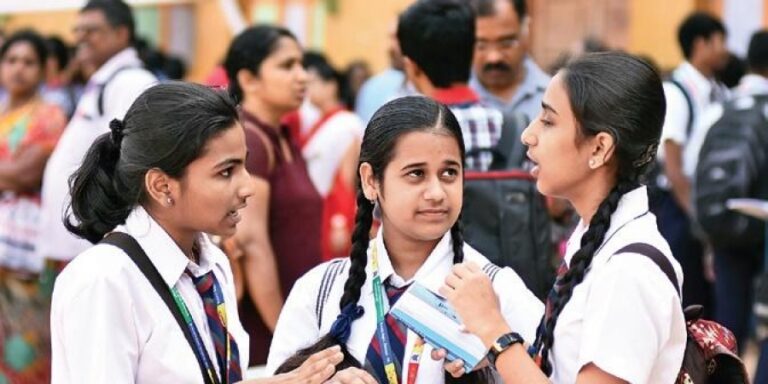
  • On Monday, history will be created when over eight lakh students will take the Secondary School Leaving Certificate (SSLC) examination across the state. This batch of SSLC students is the first in the history of education in Karnataka to be appearing for a board examination offline without having taken a single physical final examination over the past two years, thanks to the Covid-19 pandemic.
  • When the pandemic struck the state on March 8, 2020, these students were in Class 8 and after the lockdown was declared later that month, all offline classes turned to online mode, with exams postponed, only to be taken in the online mode.
  • That batch of students, two years older, and totaling 8.76 lakh across the state, are bracing themselves to face a board examination on the morrow. While many schools did hold two phases of preparatory examinations in their respective schools in the offline mode, to step into exam centres to take the official board examination would be a challenge for many children.

  • While they underwent stresses and anxieties for the past two years over the education system going for a toss, experts have suggested urgent remedial measures that are needed after these children give their exams as well as introducing bridge courses, and a series of counselling sessions to prepare them academically and psychologically for years ahead.
  • Roshan, an SSLC student from Mysuru, expresses confidence of faring well in the examination, but also remains anxious that he is facing an examination offline after two years. “Though preparatory exams were held to help us know how exams would be held, that fear of final exams still makes us worry. Preparatory somewhat has helped us to deal with it but most of all we need to gain more confidence,” he says.
  • Several students in Shivamogga say that though they are ready to write the examination and are happy that they are able to appear for the boards, their anxiety levels are higher than their seniors two years ago.SSLC student Aditya says he is confident of writing the board exam, but there will be anxiety when the invigilator starts circulating the question paper. “We can face a number of online exams confidently but not offline,” he confesses.
  • Shankara Narayan, a retired high school headmaster in Hassan who conducts counselling and training for students, says there is a big difference between online and offline exams and even meritorious students get confused while understanding and writing due to anxiety — especially after a gap of two years.
  • Poornima M, a former student counsellor from Mysuru, says realising the problem of SSLC students, several private institutions took the help of counsellors over the last three months. “Anxiety among students over examinations is not new. They face mental pressure in the run-up to the examination. But this time, it is different. The education department should have ensured that schools, whether they are private or government, take the help of counsellors for the last two-three months to help students gain confidence. ,” she says.
  • Dr Uma Hirisave, Professor and Clinical Psychology Consultant, National Institute of Mental Health & Neuro Sciences (NIMHANS), says, “There have been many children coming to us worried as they have answered only MCQ (multiple choice questions) and have lost the stamina of writing to the pace of covering three-hour-long exams. They have sought exemptions, more time to complete etc. They have lost the practice of writing. Also, some children who already had learning issues were pushed to the next grades without any assessments so they are also finding it difficult now to attempt exams offline.”
  • However, to a question on whether the state government should provide concessions for students, Dr Uma says it is better they don’t do that. “As this is the SSLC exam, if they are given grace marks and promoted to PUC they will again get stuck in II PUC, causing even more concerns. We have to tell the parents and children that it is okay to take up supplementary exams if they don’t fare well in these exams. Also, it is okay to repeat a year,” she says.She suggests that the education department make use of the summer vacations and one extra month at the beginning of I PUC.

    Few offline classes affecting kids: Minister


  • Primary and Secondary Education Minister BC Nagesh says that very few offline classes are impacting these children. “We are now coming up with bridge courses for all students as their  offline classes have started. Through this we want to fill those gaps which they missed in their previous academic year,” he adds. He says the education department is aware that those writing SSLC exams this time are doing so for the first time in their high school as they could not write proper exams in the last two years. “We therefore made them write two preparatory exams this year. This was to make them practice sitting for three hours to write exams. We were not bothered about their marks in these preparatory exams, but wanted them to sit and write exams,” he says.

    IMPACT ON URBAN-RURAL STUDENTS

    Academic Basavaraj Kumanoor, a retired principal of Ambedkar Degree College in Kalaburagi, is of the opinion that the effect of offline exams would be different on rural and urban students.   Rural students’ parents are mostly not literate, and during holidays children work with their parents. As these parents cannot help their children with studies, the students tend to take exams lightly. “If you ask a rural student about an exam, the simple answer is ‘I will write what I know’,” he says. But in urban centres, the competition is more among parents than among students, which puts undue pressure on students. These issues need to be addressed separately, sensibly and with sensitivity, he says.

Coordinated approach needed to tackle future zoonotic diseases: Expert

KEY STORY

  • R Giridhara R Babu,, a renowned epidemiologist and Covid Technical Advisory Committee member, speaks to The New Sunday Express about the Covid-19 pandemic teaching us how the complex links between human, animal and environmental health require coordinated multidisciplinary and multipronged collaboration to address threats from zoonotic diseases. “The global public health community needs to act decisively now. ‘One Health’ is the need of the hour,” he said. Excerpts.

    Officially can we declare this the end of the third wave?
    In terms of understanding the end of the third wave or end of pandemics we need to avoid using some confusing terms. End of wave or end of pandemic or even endemic doesn’t mean the end of a virus. It will probably find ways to replicate and sustain its own life cycle. While it’s doing that whether it is infectious or virulent to human beings is what is important for us. Often the end and endemic are used synonymously and that’s not correct. Even if it becomes endemic, it will not stop being harmful to humans. There is TB, malaria and other diseases that are endemic, but deaths are far higher than Covid. Endemic doesn’t mean it’s a good thing and endemic in no way means it is an end of the virus. The end of the third wave also does not mean that there will be no future waves.

  • A study by IIT Kanpur predicts a fourth wave in India in June…
    I don’t think it’s fair to compare India’s scenario with Zimbabwe’s as is done in this model. Even within India, it is completely heterogenous. If you take Karnataka’s example, over 50 per cent of cases come from Bengaluru, so can we take rural Karnataka as the prototype for Bengaluru? The model will not hold good if we base it on a particular homogeneous assumption. I agree with them on only one possibility that there will be future waves.Do we know the timing of the next wave?
    Timing depends on several things but we can’t reliably forecast the next wave without understanding clear data inputs from several parameters. Agent-the virus itself; Host- human beings; and Environment. The virus is capable of evolving much faster and if there are more infectious, virulent variants we will be in for a surprise. For humans, it has been documented that the antibody will not sustain beyond three to six months. Will that be sufficient to mount a response when a virus represents next time? That is something we need to understand. Environment is following Covid-appropriate behaviour.Is there clarity on which variant is predominant in countries that are seeing the surge?
    There is no uniformity in getting the genomic sequencing data. Predominantly it is available from the UK, some European countries and the US. Of late, India is doing well in genomic sequencing at least to understand which variant is driving the wave. BA1 and 2 are the predominant ones. There is also the combination of delta and omicron in some parts. Recent reports show that viruses are capable of showing new forms much faster by adopting to both delta and omicron.

    What about precautionary doses for all adults and vaccines for children below 12 years?
    Booster doses are necessary for people with high-risk conditions, elderly and those with comorbidities and immunocompromised conditions. Data suggests that the booster dose for everybody will help in reducing or at least ensuring the antibodies are present. We have to take collective global responsibility to vaccinate everyone in all parts of the world. There is considerable debate about children’s vaccination. There have already been approvals from FDA and CDC to vaccinate children aged seven and above. There is data of only two to three years and it is not sufficient to know how the virus is going to affect them.

    Isn’t it time for us to look into non-Covid diseases? There is a lot of talk on ‘One Health’…
    Covid is a reminder to us that in days to come, over 80 per cent of all disease outbreaks are going to be zoonotic. ‘One Health’ is governing the fears of animal health, human health and environmental health. We can’t forget about these interfaces and not pay attention to them. That’s not the way to approach other aspects of ‘One Health’. This is the time to start tracking diseases which can spread in human beings from animals and how the environmental aspects are going to be regulated. In Bengaluru, BBMP has created the ‘BBMP One Health’ task group involving several agencies. This is a good step.
    We should have clear surveillance platforms, strengthening of the laboratories and ensuring that we are tracking both diseases in animals and humans so that we are not caught by surprise.

Heavy investment needed in health, education sectors, says Gadkari

KEY STORY

  • Union Minister Nitin Gadkari on Saturday said there was need for heavy investment in the health and education sectors in the country.
  • Speaking at the inauguration of Ushakal Abhinav Institute of Medical Sciences in Sangli in the presence of Maharashtra minister and NCP leader Jayant Patil, Gadkari hailed the latter’s move to create “five-star” government clinics and model public schools in the district.
  • “Large-scale public-private investment is needed in the social sector, especially in health and education. It is needed as the government has limited resources,” he said.
  • He added that there is less economic viability in setting up a hospital but along with the hospital if a medical and paramedical college is set up, the economic viability and the internal rate of return increase.
  • India is lagging in the insurance, pension investment and shares economies, whereas almost everyone has health insurance in the US and Europe, with the insurance firm having direct contact with the hospital.
  • “My department is working on building 350 heliports along the national highways because, in the coming days, drones and helicopters will be used for various purposes, including transporting patients to hospitals,” he said.

CONCLUSION

  • Speaking about organ donation, Gadkari said, “Every year, five lakh road accidents take place in India. Around 1.5 lakh people die and 3 lakh people receive injuries. Some 65 per cent people in the deceased category are in the 18-45 age group. There is great need for organ donation.”

Services at Aadhaar Seva Kendras to be streamlined: Govt

KEY STORY

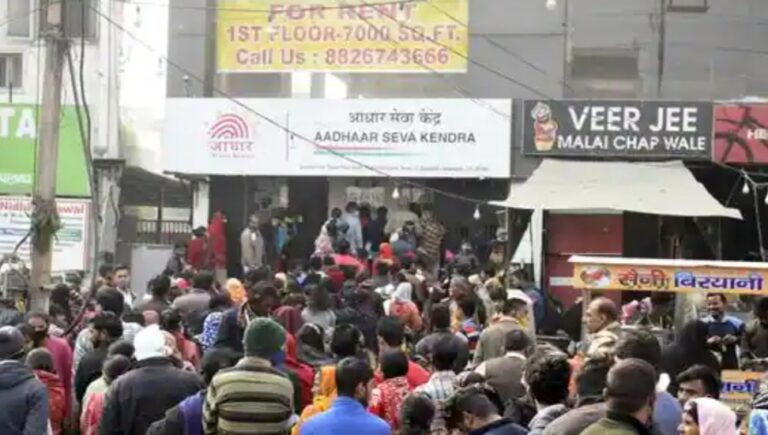
  • Taking note of irregularities at a few Aadhaar Seva Kendras, the ministry of electronics and information technology announced on Saturday that it will streamline the delivery of services and improve the interface between consumers and service providers.
  • The initiative has been taken after minister of state for IT, Rajeev Chandrasekhar made incognito visits to a few centres to inspect the delivery of services and came upon some complaints, said a functionary aware of the details.
  • The centres provide services related to Aadhaar- a 12-digit unique number assigned to residents- from enrolment to updating of details, and are administered by the Unique Identification Authority of India under the IT ministry.
  • The minister has instructed officials to visit the centres and ensure services are not only streamlined, but consumer complaints are addressed in time, the functionary said, requesting anonymity.
  • “The ministry is embarking on raising the bar on customer service and digital nagrik (customer) experience across all the service kendras. ASKs (Aadhaar Seva Kendras) are representative of the new-gen governance that Digital India is delivering,” Chandrasekhar said on Saturday.
CONCLUSION
 The is ministry is focusing on raising the service standards consistent across all the centres and on ensuring complaints of discourteousness, charging fees for free services or in excess to the prescribed fee, among others, are addressed even if they are few, the functionary quoted above said.
While services such as enrolment and mandatory biometric update are offered free of cost, additions or changes to demographic details are chargeable. These charges are uniform across the country.

Documents at doorsteps: Revolutionary change, says Karnataka CM

KEY STORY

  • Chief Minister Basavaraj Bommai has said that the state government had brought about a revolutionary change in the way the administration worked by delivering revenue documents at doorsteps of the applicants.
  • He was inaugurating the ‘Revenue Documents at Doorsteps’ and ‘Jala Jivan’ scheme at Thimmapur village in Shiggaon taluk of Haveri district on Saturday.
  • Mr. Bommai said that getting documents from government offices was always a cumbersome process for the public and now it had changed wherein the officials themselves take steps to deliver documents to the doorsteps of the people.
  • “Earlier you would go to offices and stand before the officials seeking documents. Now the same officials will come to your doorstep to deliver the documents. It is a revolutionary change,” he said.
  • The Chief Minister said that a mega drinking water project that would provide drinking water to 120 villages in Shiggaon and Savanur taluks had been sanctioned. He also listed out the various development works being initiated in the region.
  • Mr. Bommai said that the Government had added its contribution to the crop loss compensation provided by the Centre and consequently the farmers of arid lands will get ₹12,600 per acre, ₹25,000 for irrigated land, and ₹28,000 for horticultural crops.
  • Elaborating on the State Government’s Budge, he said how all sectors had been given due allocation and how his Government had brought about a change in every sector by responding to the aspirations of the people.
  • Mr. Bommai said that he fought for fulfilment of various demands in the district as an elected representative and now as the Chief Minister of the State he had taken steps to fulfil those demands.

CONCLUSION

  • “Separate milk union has been sanctioned, the district is getting mega dairy, industrial township. Our district will soon see economic development,” he said, adding that the people of Thimmapur village were clever and had got their work done through love and affection.
  • Deputy Commissioner of Haveri Sanjay Shettennavar, ZP CEO Mohammed Roshan, Assistant Commissioner Annapurna Mudakammanavar, and others were present.

Controversial Anti-Conversion Bill may have to wait longer

KEY STORY

  • Uncertainty looms large on the controversial Anti-Conversion Bill as the ruling BJP seems indecisive on seeking its passage in the Legislative Council in the ongoing Budget session of the Legislature, which will end next week.
  • While BJP’s floor leader in the Council Kota Srinivas Poojary said directions from the party are awaited, sources say that the party may go slow on the Bill till they have a clear majority in the Upper House.
  • The Protection of Freedom of Religion Bill was passed in the Assembly during the Belagavi winter session in December. The Bill was passed amid protests by the Opposition, which contended that the legislation targeted Christians.
  • Subsequently, it was tabled in the Legislative Council but was not taken up for passage.
  • Speaking to DH, Poojary said that since the House will be in session till March 30, the government is hopeful. “However, we are waiting for directions from the party leadership,” he said.
  • But, Law and Parliamentary Affairs Minister J C Madhuswamy said that passage of the Bill is “not likely” during the current session.
  • The BJP has 37 members in the 75-member Council, and has to depend on Independent MLC Lakhan Jarkiholi for support to pass the Bill.
  • Sources said clarity is awaited from Chief Minister Basavaraj Bommai on whether or not the Bill should be put up for consideration. “We’re just one short of majority. This won’t be an issue as the party can manage to pass the Bill despite this handicap. I’m not sure why they’re delaying it,” a senior leader wondered.
  • The controversial Bill proposes imprisonment of 3-5 years with a fine of Rs 25,000 for ‘forced’ conversion. Converting a minor, woman or an SC/ST person will attract a jail term of 3-10 years, with a Rs 50,000 fine. Mass conversion will attract 3-10 years of jail time with a fine of up to Rs 1 lakh.

‘Unconstitutional’

The Christian community is up in arms against the Bill. Anglo-Indian MLA Vinisha Nero said in the Assembly on Friday that she lived in fear. “Nominations of Anglo-Indians in the state legislatures and Rajya Sabha were removed citing a blatant lie that we were only 296 in India and nine in Karnataka,” she said.
“There have been attacks on churches, burning of the Bible, Bills being passed affecting our food habits and style of living, the Anti-Conversion Bill, support being withdrawn for minority schools, which are unconstitutional, discriminatory and stigmatising,” she said.


AAI introduces new Covid guidelines for international operations, details here

KEY STORY

  • After resuming the international flights from 27 March Airports Authority of India has revised the Covid guidelines concerning international operations. As per the new guideline, it will not be mandatory for the crew members to wear a full PPE kit.
  • They also mentioned that keeping the rule of keeping three seats vacant on an international flight has been removed. In addition, the authority is re-introducing the pat-down search by the security personnel conducted at airports. However, AAI also mentioned that wearing masks while in the airport and in aircraft will still be mandatory. More information to follow.