Hijab ban in classroom: SC refuses urgent hearing on pleas against Karnataka HC verdict

KEY STORY

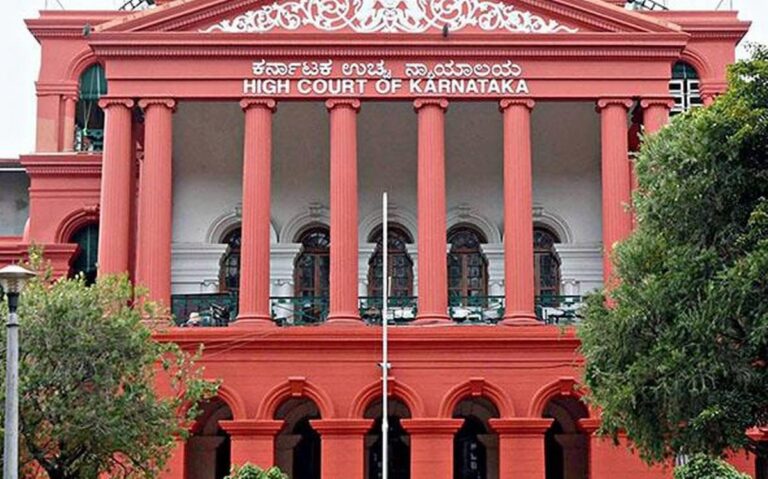
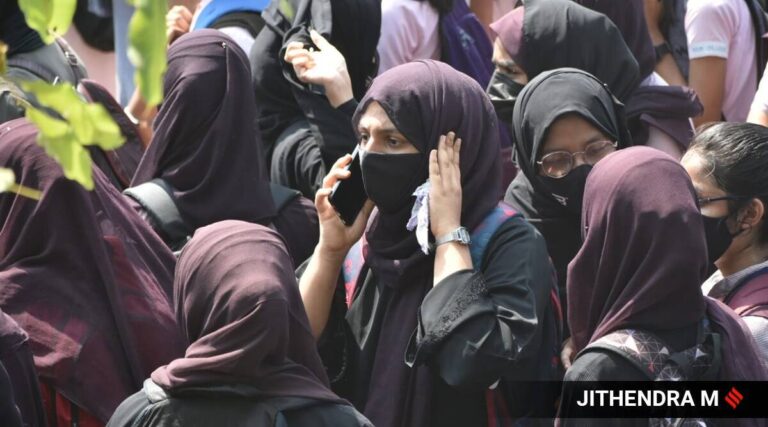
  • The Supreme Court on Thursday refused to accord urgent hearing on the pleas challenging the Karnataka High Court verdict which dismissed the petitions seeking permission to wear hijab inside the classroom and stated that the headscarf is not a part of the essential religious practice in Islam.
  • A bench comprising Chief Justice N V Ramana and Justice Krishna Murari denied the request of senior advocate Devadatt Kamat who mentioned the matter seeking urgent listing saying that examinations are going on. “Exams have nothing to do with the issue,” the bench said. Solicitor General Tushar Mehta submitted that they are repeatedly mentioning the matter.
  • “Mr SG, can you wait,” the apex court said, while asking Kamat not to sensitise the issue.
  • “These are girls, the exams are from 28th. They are being prevented from entering the schools. One year will go,” Kamat said. The apex court, however, did not accede to the request.
  • On March 16, the apex court had agreed to list for hearing after Holi vacation the pleas challenging the Karnataka High Court verdict which dismissed the petitions seeking permission to wear hijab inside the classroom saying it is not a part of the essential religious practice in the Islamic faith.
  • It had taken note of the submissions of senior advocate Sanjay Hegde, appearing for some students, that urgent hearing was needed keeping in mind the upcoming examinations.
  • Some petitions have been filed against the full bench high court verdict which held that wearing hijab is not a part of essential religious practice in the Islamic faith under Article 25 of the Constitution.

CONCLUSION

  • The high court had dismissed the petitions filed by a section of Muslim students from the Government Pre-University Girls College in Udupi, seeking permission to wear hijab inside the classroom.
  • The prescription of school uniform is only a reasonable restriction, constitutionally permissible which the students cannot object to, the high court had said.

Muslim traders banned from fairs around Hindu temples: This is what Karnataka govt has to say

KEY STORY

  • Despite posters opposing Muslim traders in Hindu religious fairs and loud protests from the Opposition Congress, the Karnataka government said it cannot initiate action against those who have banned them. In Karnataka’s coastal region, the annual temple festivals, usually held in April or May, bring in a vast amount of revenue.
  • In the Legislative Council, Law and Parliamentary Affairs Minister JC Madhuswamy said it is impossible to initiate action against those who have banned traders from other faiths around temples.
  • CM Ibrahim, the Congress MLC, has called for action against those who banned Muslim traders. To this, Madhuswamy replied that the government was working in accordance with the law.
  • In 2002, a regulation was enacted that permitted temple authorities to award contracts to business persons belonging to the Hindu religion. The minister mentioned the 2002 rule, saying that this government has no role in this matter.
  • “While framing rules to Karnataka Hindu Religious Institutions and Charitable Endowments act in 2002, Rule 12 states that no property including land, building or site situated near the institution shall be leased to non-Hindus. Citing these rules, posters and banners have been put up,” Law and Parliamentary Affairs Minister J C Madhuswamy said.
  • “The temple authorities are telling us that they are being questioned for following the rules made by the government for denying contracts for non-Hindus. It is not possible to take action in this regard,” said Madhuswamy.

CONCLUSION

  • Rangaswamy, the president of Karnataka State Roadside Vendors Federation, has submitted a memorandum to the government to ensure street vendors are not harmed.
  • “Muslim roadside vendors should not be put to inconvenience. There are 2.60 lakh registered roadside vendors in the state. Among them, more than 20 per cent are Muslims,” he said in response to the unofficial ban on Muslim traders.

Karnataka High Court on ‘Work From Home’ under Maternity Benefit Act

KEY STORY

  • The Karnataka High Court said that Mothers of newborn babies can avail work from home options once their maternity leave are up. However, WFH could be given only in cases where the nature of work assigned to the women is such that it is possible for her to work from home.

    Case background:

  • The petitioner, working as a Senior Executive Engineer with an organization, had approached the Court challenging two communications issued by the respondent organization and sought a direction to the respondent to consider her representations for sanction of child care leave with retrospective effect and to regularize the petitioner’s salary and to release the salary withheld from 24.05.2021.
  • By these communications, the petitioner was called upon to join duties immediately and regularize the absence from 24.05.2021. Petitioners’ arguments. It was contended that the provisions of the Maternity Benefit Act, 1961 is applicable to the petitioner who is an employee of the respondent organization which is a fully funded organization controlled by the Government of India.
    The petitioner should be allowed to carry on her work from home after availing of the maternity benefit for the period as provided under the Act.
    Moreover, notifications have been issued by the Central Government, directing all the Public Sector Undertakings, which include the respondent- organization, to ensure that as far as possible, provisions should be made to lactating mothers to work from home, in view of the prevalence of COVID- 19 pandemic.
    Thus, it is the duty of the respondent-organization to provide for child care leave and to permit the petitioner to work from home. Respondents argued that the benefit of the Maternity Benefit Act 1961, is applicable to the respondent organization but in respect of child care leave, in a meeting of the 14th STARC Employees Meet held on 31.03.2018, it was decided that providing crèche and day care facilities as per Maternity Benefit Act, 2017, was an option.
    It was also said that the respondent-Organization may not be equated to the Government of India and the facilities available to the Central Government employees.
    Court findings:
    The court found that the petitioner has not been able to point out to any specific provision of law or rules that would mandate the fourth respondent organisation, to grant childcare leave facility as is available to the Central Government employees.
    The Karnataka High Court has reiterated that maternity benefits such as allowing an employee to work from home, under section 5 (5) of the Maternity Benefit (Amendment) Act 2017, could be given only in the case where the nature of work assigned to the women is such that it is possible for her to work from home.
    A single-judge bench of Justice R Devdas while refusing relief to an employee working with Semi-Conductor Technology and Applied Research Centre, (‘STARC’), said, “Though reference is made to Section 5(5) of the Act, 1961, it is evident from the said provision that maternity benefits such as work from home after availing the maternity benefit could be given only in the case where the nature of work assigned to the women is such that it is possible for her to work from home.”
    Though reference is made to Section 5(5) of the Act, 1961, it is evident from the said provision that maternity benefits such as work from home after availing the maternity benefit could be given only in the case where the nature of work assigned to the women is such that it is possible for her to work from home.”
    It added, “The respondents are also on record, in their statement of objections, that even during the period of lockdown, the top officials from the cadre of Deputy managers have been functioning from the premises itself.
    Petitioners’ arguments:
    It was contended that the provisions of the Maternity Benefit Act, 1961 is applicable to the petitioner who is an employee of the respondent-Organisation which is a fully funded organisation controlled by the Government of India.
    Further, reliance was placed on Section 5(5) of the Act 1961, to contend that the petitioner should be allowed to carry on her work from home after availing the maternity benefit for the period as provided under the Act.
    Moreover, notifications have been issued by the Central Government, directing all the Public Sector Undertakings, which include the respondent- Organisation, to ensure that as far as possible, provisions should be made to lactating mothers to work from home, in view of the prevalence of COVID- 19 pandemic.
    Thus, it is the duty of the respondent-Organisation to provide for Child Care Leave and to permit the petitioner to work from home, until it is declared by the Central Government/State Government that there is no need for its employees to work from home. Respondents opposed the plea: It was submitted that the benefit of the Maternity Benefit Act 1961, as applicable to the respondent-Organisation has been granted to the petitioner.
    However, in respect of Child Care Leave, in a meeting of the 14th STARC Employees Meet held on 31.03.2018, it was decided that providing crèche and Day Care facilities as per Maternity Benefit Act, 2017, was an option.
    It was also said that the respondent-Organisation cannot be equated to the Government of India and the facilities available to the Central Government employees, be it in the nature of providing maternity leave, Child Care Leave and other facilities cannot be automatically adopted to the respondent-Organisation.
    Court findings:
    The court found that the petitioner has not been able to point out to any specific provision of law or rules that would mandate the fourth respondent Organisation, to grant child care leave facility as is available to the Central Government employees.
    Following this it granted liberty to the petitioner to make fresh representations regarding the unauthorized absence and seek regularisation of the same.
    The court said, “As and when such representations are given by the petitioner, after she joins duty, the Organisation shall consider such representations sympathetically and pass orders in the light of the observations made hereinabove.”

IMD issues heat wave and rainfall alert for these states from today. Full forecast

KEY STORY

  • The Indian Metrological Department on Thursday sounded a heat wave alarm for the Gujarat region along with Saurashtra-Kutch region from 25-28 March. It has also issued rainfall alert for Northeast and south peninsular India during the next five days.
  • Isolated heavy rainfall also likely over Coastal and South Interior Karnataka today.

Rainfall predictions
Light to moderate isolated/scattered rainfall very likely over Kerala and Mahe, Tamilnadu, Puducherry and Karaikal and Karnataka during next 5 days and over Coastal Andhra Pradesh, Telangana and Rayalaseema during next 2 days.
Isolated thunderstorm/lightning activity also very likely over Kerala and Mahe during next 5 days, over Tamilnadu, Puducherry, Karaikal and Karnataka during next 2 days. Isolated heavy rainfall also likely over Coastal and South Interior Karnataka today.
Light to moderate scattered, fairly widespread rainfall very likely over Arunachal Pradesh, Assam and Meghalaya, Nagaland, Manipur, Mizoram and Tripura and Sub-Himalayan West Bengal & Sikkim during next 5 days.
Isolated thunderstorm/lightning/gusty windsis very likely to occur over Northeast India during 24-26 March and over Sub-Himalayan West Bengal and Sikkim on 24 March.
Isolated heavy rainfall also likely over Arunachal Pradesh on 24-25 March.
Heatwave predictions
Heat Wave conditions in isolated pockets very likely over Saurashtra-Kutch during 25-28 March and over Gujarat Region during 26-28 March.
IMD also said that there will be a gradual rise in maximum temperatures by 2-3⁰C very likely over Maharashtra during next 3 days and no significant change thereafter.
No significant change in maximum temperatures very likely over rest parts of the country during next 4-5 days.
Snowfall predictions
IMD said that under the influence of Western Disturbance, isolated rainfall or snowfall is very likely to occur over Jammu and Kashmir, Ladakh, Gilgit-Baltistan and Muzaffarabad, Himachal Pradesh and Uttrakhand today.

TB detected in people who recovered from COVID, Karnataka govt calls for detailed study

KEY STORY

  • Karnataka Health Minister Dr K Sudhakar has asked for a detailed study and report on Covid infected people who have been diagnosed with tuberculosis (TB). In Karnataka, there were 243 such cases in 2021. Speaking at an event organised by the Health Department on ‘World TB Day’, Dr Sudhakar said that for the first time in India, TB screening has been conducted by the government for those who have recovered from Covid in the state.
  • “There are around 38.02 lakh individuals screened among Covid recovered individuals and their households and 243 new TB cases were identified,” says the TB report from Karnataka. However, Dr Sudhakar said, “TB has been detected among several people who have recovered from Covid. Among 25 lakh people tested, 144 people were found to have TB. These people have contracted TB after recovering from Covid.”
  • Experts said that severe Covid infection has damaged the lungs of a lot of people as the viral infection starts by targeting the respiratory system. The damage done to the lungs persists even after they recover from Covid. Covid has the potential to reactivate tuberculosis, said pulmonologist Dr Sanjay Kumar. He says a cough that refuses to quieten down for weeks or months after recovering from Covid could either be a symptom of long Covid or could also be TB. “Hence, the state government has sought a detailed report on this,” said Dr Sudhakar.
  • TB, like COVID-19, is a contagious disease. COVID-19 is caused by a virus and TB is caused by bacteria. The WHO has said that the entire world must be made TB-free by 2030. However, the Union government has aimed to make India TB-free much before that by 2025. This cannot be done just by doctors and the government. The entire society needs to join hands and work collectively to achieve this target, he said.

CONCLUSION

Instead of starting treatment after the disease gets severe, treatment must be initiated at the initial stage as soon as symptoms become apparent. People must undergo a test if any of these symptoms are seen – cough for more than two weeks, fevers in the evening, sudden weight loss etc. All government hospitals have facilities to conduct TB tests. People must go to the hospitals and get the test done. If detected early, the treatment given will be more effective, he said.
In rural areas, people don’t get tested even if they are unwell. One TB patient can spread the disease to at least 10 people. If this happens, one person’s negligence will end up harming others. So, a lot more awareness has to be created about TB, he said. The state government is spending more than Rs 5 crore every year to create awareness about diseases.

CNG, domestic PNG gets costlier as IGL hikes prices. Check new rates

KEY STORY

  • After hikes in petrol and diesel prices, consumers must gear up to pay more for domestic piped natural gas in Delhi as Indraprastha Gas Limited hiked the price by Rs 1 per standard cubic meter (SCM) to Rs 36.61 per unit on Thursday.
  • According to the new price, effective from today, domestic PNG in Noida, Greater Noida, and Ghaziabad will cost Rs 35.86 per SCM. In Gurugram, it will be Rs 34.42 per scm. In Uttar Pradesh’s Kanpur, Hamirpur and Fatehpur, domestic PNG will at retail at Rs 38.50 per scm.


  • Along with this, IGL also increased the price of Compressed Natural Gas (CNG) in Delhi by Rs 1 per Kg to Rs 59.01 per Kg. In Noida, Greater Noida and Ghaziabad, it will cost Rs 61.58 per kg. CNG in Gurugram will retail at Rs 67.37 per kg and Kanpur, Hamirpur and Fatehpur at Rs 70.82 per kg.
  • The new price, effective from today, comes at the heels of a hike in LPG price by Rs 50 per cylinder by fuel retailers. A 14.2-kg LPG cylinder will now cost Rs 949.50 in Delhi from today. Domestic LPG rates were last revised on October 6, 2021, by Rs 15 per cylinder. On March 1, the prices of 19 kg commercial LPG cylinder was increased by a whopping Rs 105 in Delhi. A 19-kg commercial cylinder now costs Rs 2,012 in the national capital.


  • Oil marketing companies also revised the petrol and diesel prices on Wednesday for the second consecutive day. They were hiked by 80 paise a litre each. Petrol in Delhi now costs Rs 97.01 per litre as against Rs 96.21 previously while diesel rate has gone up from Rs 87.47 per litre to Rs 88.27.

Omicron+Delta recombinant cases detected from 7 states in India: Report. Check symptoms for hybrid COVID variant

KEY STORY

  • After evidence of Omicron, Delta recombinant virus was found earlier this month, reports suggested similar cases were also detected from India. The COVID Genomics Consortium (INSACOG) and GSAID indicate that as many as 568 cases are under the scanner. As per Telangana Today report, Karnataka remains a hotspot with 221, followed by 90 in Tamil Nadu, 66 in Maharashtra, 33 in Gujarat, 32 in West Bengal, 25 in Telangan and 20 in New Delhi. Regarding recombinants, the World Health Organisation (WHO) said, with both Omicron and Delta spreading at an intense, it was expected. Check out the symptoms for the strain.
What are the symptoms for recombinant virus?
According to the NHS UK, the symptoms of Omicron, Delta recombinant virus remain as they have been for most of the pandemic, but scientists are still monitoring it. The NHS says the common Covid symptoms are:
High temperature: This means you feel hot to touch on your chest or back (you do not need to measure your temperature).
New, continuous cough: This is defined as coughing a lot for more than an hour, or three or more coughing episodes in 24 hours (if you usually have a cough, it may be worse than usual).

What is the Omicron, Delta recombinant virus? 

It is hybrid version of the coronavirus that combine genes from the Delta and Omicron variants, was found by experts. Philippe Colson of IHU Mediterranee Infection in Marseille, France, who is the lead author for the study, “During the SARS-CoV-2 pandemic, two or more variants have co-circulated during same periods of time and in same geographical areas… This created opportunities for recombination between these two variants.”
Loss or change to your sense of smell or taste (anosmia): This means you have noticed you cannot smell or taste anything, or things smell or taste different to normal.
What is the Omicron, Delta recombinant virus?
It is hybrid version of the coronavirus that combine genes from the Delta and Omicron variants, was found by experts. Philippe Colson of IHU Mediterranee Infection in Marseille, France, who is the lead author for the study, “During the SARS-CoV-2 pandemic, two or more variants have co-circulated during same periods of time and in same geographical areas… This created opportunities for recombination between these two variants.”

How was strain detected?

Deltacron’s story begins in mid-February, when scientists at the Institut Pasteur in Paris uploaded a genetic sequence of the coronavirus that looked very different from previous sequences.
The virus sample had come from an elderly man in northern France and looked odd. Most of its genetic sequence was the same as delta’s, which was dominant worldwide up until late last year, but the part of the sequence that encodes the virus’s spike protein – a key part of its external structure, which it uses to get inside cells in the body – came from omicron. By March, three further hybrid genetic sequences had been reported, this time in the US. There are now over 60 logged, across France, the Netherlands, Denmark, the US and the UK.
Delhi govt to strictly enforce lane discipline for buses, goods carriers from April 1; Rs 10,000 fine on violation

KEY STORY

  • Come April 1, the transport department of the Delhi government will strictly enforce lane discipline for buses and goods carriers on 15 selected roads in the city, with fines up to Rs 10,000 and six months of imprisonment for errant drivers. Vehicles found plying on other lanes will be liable for prosecution under Section 192-A of the Motor Vehicles Act, 1988, which prescribes a fine of Rs 10,000, and imprisonment upto to six months.
  • Along with the traffic police, the transport department has earmarked dedicated lanes to be used only by buses and goods carriers from 8 AM to 10 PM, according to a statement issued by the department. Other vehicles may be allowed to ply on these dedicated lanes during the remainder of the time. Buses and goods carriage vehicles, will however, stick to their dedicated marked lanes round the clock, it said.
  • In the first phase, the enforcement drive will be conducted on 15 of the total 46 corridors selected under the initiative, it said. These include the Mehrauli-Badarpur Road stretch from Anuvrat Marg T-point to Pul Prahladpur T-point, Ashram Chowk to Badarpur Border, Janakpuri to Madhuban Chowk, Moti Nagar to Dwarka Mor, Britannia Chowk to Dhaula Quan, Kashmere Gate ISBT to Apsra Border, Signature Bridge-Bhopura Border, Jahangirpuri Metro Station-Kashmere Gate ISBT and ITO-Ambedkar Nagar among others.
  • “To make Delhi roads safer, the @ArvindKejriwal govt is starting Bus Lane Enforcement drives to increase Commuter Safety & tackle congestion. Directions have been issued to DTC & Cluster for driver sensitization, PWD for earmarking bus lanes & Transport, Police enforcement teams,” Transport minister Kailash Gahlot tweeted.
  • Violators will be penalised and prosecuted under the provisions of the Motor Vehicles Act, 1988, and Delhi Maintenance and Management of Parking Places Rules, 2019, the statement mentioned.
  • The transport department has issued an advisory to its public fleet operators — Delhi Transport Corporation and Delhi Integrated Multi-Modal Transit System Ltd — to sensitize its drivers, it said. As part of the drive, the Public Works Department has been directed to mark and properly identify the corridors by placing warning signage and boards at suitable places.

CONCLUSION

  • In case any light motor vehicle, such as a car is found parked or unattended in the marked bus lanes and its owner or driver refuses to clear it, the vehicle will be towed away and the driver will have to bear the towing charges in addition to the penalty, it said.
  • The transport department will deploy two teams in two shifts in order to enforce lane discipline. Cranes will also be deployed for impounding and removal of vehicles obstructing the bus lanes. Videos or photographs of the obstructing vehicles will be captured for evidence, the statement noted.

Marriage not licence to unleash a brutal beast, says Karnataka High Court; refuses to dismiss charges of rape against husband

KEY STORY

  • The Karnataka High Court on Wednesday declined to quash charges of rape made under Section 376 of the IPC, against a man accused of raping and holding his wife as a sex slave.
  • According to single-judge Justice M Nagaprasanna, the institution of marriage cannot be utilised to grant any unique male privilege or a permission for unleashing a “brutal beast” on the wife, Bar and Bench reported.
  • For centuries, a man in a husband’s robes has treated his wife as his chattel. The Court emphasised that the age-old belief and custom that men are the rulers of their wives’ bodies, minds, and souls should be abolished.
  • The Karnataka High Court said, “A brutal act of sexual assault on the wife, against her consent, albeit by the husband, cannot but be termed to be a rape. Such sexual assault by a husband on his wife will have grave consequences on the mental sheet of the wife, it has both psychological and physiological impact on her. Such acts of husbands scar the soul of the wives.”
  • The High Court also made it clear that a man sexually assaulting or raping a woman should be charged under Section 376 of the Indian Penal Code.

CONCLUSION

  • According to a report by Bar and Bench, the Court also said, “The contention of the learned senior counsel that if the man is the husband, performing the very same acts as that of another man, he is exempted. In my considered view, such an argument cannot be countenanced.”
  • Under the particular facts of this case, the accusation made against the husband for alleged rape of his wife under Section 376 of the IPC does not deserve any interference and is a matter for trial.

Bible, Quran should also be in textbooks: DK Shivakumar

KEY STORY

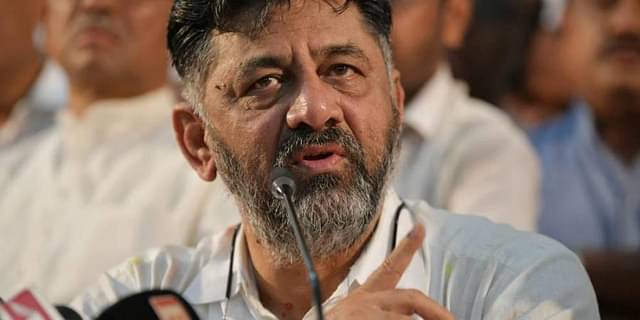
  • Karnataka Pradesh Congress Committee president DK Shivakumar on Tuesday clarified that the Congress is not opposed to the plan to introduce lessons from the Bhagwad Gita in school curriculum. “In fact, the Congress was responsible for telecasting the Ramayana and Mahabharat serials across the country when the party was in power at the Centre,” he said at a press conference here.
  • He said to show people the moral of the Ramayana and the Mahabharat, the Congress ensured the telecast of the epics and the entire country was enthralled. “What the BJP government is doing now is nothing but copying the Congress. Let them introduce the Gita in schools. This is a secular country and the Bible and Quran should also be included as the message of all religious texts is the same,” he said.
  • When his attention was drawn on the demand of G-23 to free the Congress from the Gandhi family, Shivakumar said all leaders of the party, except a few, are loyal to the Gandhi family. “If there is no Gandhi family, there is no Congress,” he said.
  • The KPCC president said it is a known fact that AICC chief Sonia Gandhi rejected becoming Prime Minister and instead selected Manmohan Singh for the country’s top post twice. “The so-called G-23 leaders enjoyed power though Sonai and Rahul opted not to be part of the government. Where were they at that time?” he questioned. As far as he is concerned, he is grateful to Sonia and Rahul as they stood with him when he was facing a crisis, Shivakumar said.

CONCLUSION

  • He also flayed the BJP government for increasing the petrol price immediately after the elections to five States. The people voted for the BJP keeping faith in it, but it betrayed the voters, he said. Shivakumar demanded that the Karnataka government protect people by providing subsidies.
  • On the opposition to the Mekedatu project by the Tamil Nadu Government, Shivakumar said Chief Minister Basavaraj Bommai has claimed in the Assembly that he will meet the Union Water Resources Minister and, if necessary, will take a delegation of all parties to New Delhi to get clearance for the project. The “double engine” government should keep its promise, he said.