Karnataka health department preps medicos for ‘frugal’ oxygen use in hospitals

KEY STORY

  • The health department recently held a training session for rational use of oxygen and stopping its wastage in private hospitals.
  • The training focused on effective handling of oxygen cylinders, concentrators, liquid medical oxygen tanks, newly added oxygen generation plants, and optimum oxygen use. The training was attended by 321 doctors, and private hospitals and nursing homes’ owners from across the state.
  • Health Commissioner D Randeep said variable gaps have been observed in training professionals involved in administering oxygen. “There should be efficiency in oxygen administration,” he added.
  • “The Covid-19 pandemic accelerated the timely delivery of oxygen. Post this training, participants will be the oxygen stewards for their respective facilities. They should train the staff at their facilities in the coming weeks.”
  • The three-hour session was attended by senior specialists, doctors, staff nurses, and biomedical engineers/technicians from each private hospital and nursing home.
  • So far, 500 oxygen stewards have been trained in government health facilities. All private medical establishments of 50 to 100 beds and above have been asked to install oxygen plants, if not installed already, to address future pandemics.
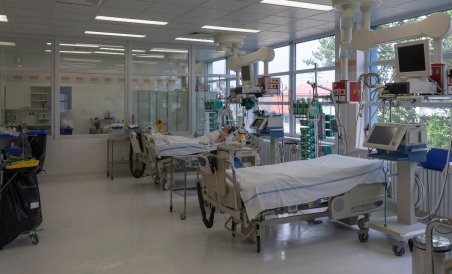
  • “Instead of bringing oxygen saturation to 92-96% when patients suffer hypoxia, hospitals target 100% when they are slammed and there is panic,” said intensivist Dr Vijay Kumar, head of the 38-bedded ICU at the Trauma and Emergency Care Centre (TECC) in Victoria Hospital.
  • He said different devices are available for oxygen therapy from nasal prongs to invasive ventilation. Each of these devices have their limitations and should be selected depending on the patient’s need. The hospital should also know when to escalate. Pre-recorded demonstration on using the equipment was shown during the session.
  • Dr Vijay Kumar said nurses should not be merely taught theory in colleges, but need training in the wards as well.
  • Dr Pradeep Rangappa, secretary, Indian Society for Critical Care Management (Bangalore Chapter), called for individualisation of the ventilation strategy. “It could be disastrous to intubate everyone early,” he said.
  • “We drew up protocols for usage because giving oxygen when it is not needed can pose a risk to the patient. This is also done anticipating pandemics in the future.”
  • Randomised trials involving intubated patients with an acute respiratory distress syndrome revealed placing them in prone position for 16 hours per day improves oxygenation, doctors said. Such methods should be used as mechanical ventilation and can be a double-edged sword, specialists added.

‘The Kashmir Files’ to be tax-free in Karnataka

KEY STORY

  • Chief Minister Basavaraj Bommai announced that The Kashmir Files movie will be tax-free in Karnataka.
  • In a tweet, he said, “Kudos to Vivek Agnihotri for #TheKashmirFiles, a blood-curdling, poignant & honest narrative of the exodus of Kashmiri Pandits from their homeland.
  • To lend our support to the movie & encourage our people to watch it, we will make the movie tax-free in Karnataka.”
  • The movie was released and several prominent BJP leaders have promoted the movie.

Caste, income certificates are different, distinct: Karnataka HC

KEY STORY

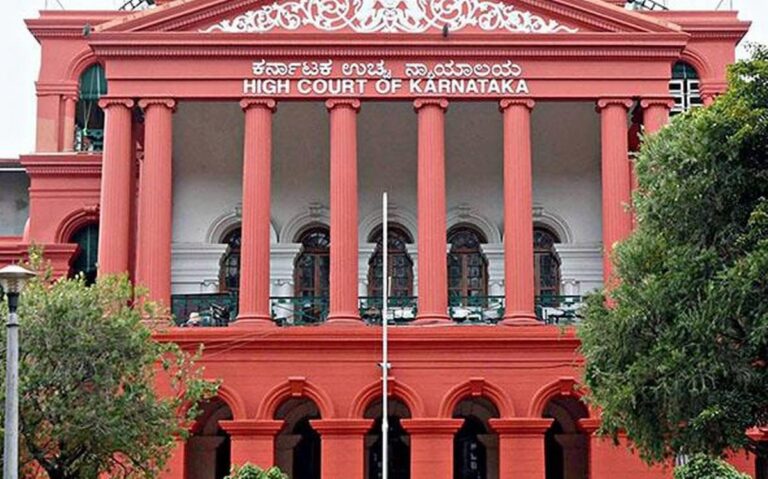
  • The Karnataka High Court has said that a caste certificate and an income certificate (creamy layer certificate) issued under the Karnataka Scheduled Castes, Scheduled Tribes and Other Backward Classes (Reservation of Appointments, Etc.) Act, are two different and distinct certificates and both cannot be treated alike.
  • The Dharwad bench of the high court observed this in a recent judgment while allowing the petition filed by the selection authority and the secretary, Karnataka High School Examination Board.
  • A division bench comprising Justice S G Pandit and Justice Anant Ramanath Hegde said that in respect of caste certificate, if a person is Scheduled Caste or Scheduled Tribe, he is so by birth and not by any subsequent event or development.
  • “A caste certificate issued by the competent authority is only an affirmation of fact which is in existence, i.e., caste status. But, insofar as the income certificate issued by the competent authority is concerned, it depends on the income of the parents of a candidate concerned as on the date of issuing such certificate. There is a purpose behind prescribing the period of validity of income certificate to five years. The income may increase or decrease, depending on his avocation/profession or employment. Government servants/ employees or salaried class would have a steady increase in their income from year to year. For professionals, businessmen and such persons in other avocation, income may increase or decrease,” the bench said.
  • In the case on hand, the petitioner had challenged the March 9, 2020 order passed by the Karnataka State Administrative Tribunal, Belagavi.

CONCLUSION

  • The tribunal had directed the petitioner to consider appointing a certain teacher to the post of secondary school assistant teacher (CBZ-Kannada) under GM/Rural in pursuant to additional list dated September 12, 2013, with all the benefits from the date on which candidates appointed, except the salary for the period with notional fixation.
  • In the instant case, the creamy layer certificate produced by the teacher is of October 31, 2006, more than five years prior to the last date for submission of application, May 10, 2012.
  • The court noted that the teacher had produced another creamy layer certificate of 2013, close to one and half years after the last date for submission of application, which cannot be taken note of for selection, since it is not within the last date prescribed under the notification inviting application, the bench said.

State polls debacle: Key takeaways of the Congress Working Committee meeting

KEY STORY

  • After a massive defeat in the recently concluded assembly elections in five states, the Congress’ top decision-making body-Congress Working Committee (CWC)-held a crucial meeting on Sunday to discuss the poll debacle.
  • During the meeting, Congress party leaders discussed the way forwards and reaffirmed ‘faith’ in Sonia Gandhi as party president. The party badly lost elections in five states-Uttar Pradesh, Goa, Manipur, Uttarakhand and Punjab.
    Here are the key takeaways from the CWC meeting
    1.The party leaders during the meeting that lasted four hours, asked Congress President Sonia Gandhi to guide the party till the organisational elections are held. The party leaders also expressed their unanimous faith in the leadership of Sonia Gandhi.
    2.Earlier, reports suggested that Sonia Gandhi, Rahul Gandhi and Priyanka Vadra had offered to resign from the party posts. But by evening, the party denied reports of resignations by three top leaders.
    3.After the meeting, AICC general secretary KC Venugopal spoke to the media and said party Sonia Gandhi president will immediately take up corrective measures to revamp and re-strengthen organisation.

4.According to sources, Congress is expected to hold a Chintan Shivir immediately after the Budget Session of Parliament. KC Venugopal said Sonia Gandhi listened to all party leaders and said she is willing to make required changes to strengthen the party.
5.Congress leader Randeep Surjewala said workers want Rahul Gandhi to lead the party in future. He said organisational polls are on and the next president will be elected through that process.
6.Among the Group of ‘G-23 dissenters’, only Mukul Wasnik, Gulam Nabi Azad and Anand Sharma participated in the meeting.
7.Former prime minister Manmohan Singh did not attend the meeting. Senior party leader A K Antony was also not present as he has contracted Covid.
8.Senior party leaders Pariyanka Gandhi Vadra, Rahul Gandhi, KC Venugopal, Mallikarjun Kharge, Adhir Ranjan Choudhary and P Chidambaram participated in the brainstorming meeting.
9.Congress leader and Rajasthan Chief Minister Ashok Gehlot said no one was taking on PM Narendra Modi as Rahul Gandhi does.
10.Congress’ Karnataka president DK Shivakumar favoured Rahul Gandhi as full-time Congress president. He tweeted, “Rahul Gandhi should take up the Congress presidency in a full-time role immediately.”


Govt plans to publicise its social welfare schemes, benefits

KEY STORY

  • The central government plans to spread the message on the way various social welfare schemes have benefitted the masses, including women, and people from SC and ST communities
  • A decision was taken last week to ask the various central ministries to collate the various welfare schemes launched by them in the past seven-and-a-half years and the number of people they have benefitted.
  • After a thorough review, the government will launch a campaign to amplify the schemes and their benefits extended across India, sources aware of the decision said on Sunday.
  • Various welfare schemes of the government are said to have played a key role in helping BJP win assembly polls in four out of five states, including Uttar Pradesh.
  • But the decision to ask the ministries to collate data was taken before the voting for assembly polls took place, sources said.
  • According to the government, such schemes as Ujjwala, Pradhan Mantri Awas Yojna, and rural employment programme have benefitted lakhs of families by way of employment generation, affordable housing, and cooking gas facility.

CONCLUSION

  • During the peak of coronavirus pandemic, government had distributed free ration to the poor and migrant workers.
  • The government had also supported women self-help groups and small business to help them withstand disruption in economy due to the pandemic.
  • Petroleum, Rural Development, Women and Child Development, Social Justice and Empowerment, and Minority Affairs are some of key ministries which have earmarked substantial funds from their budgets for such social welfare schemes.

Revenue documents to be delivered to 1.5 lakh farmers

KEY STORY

  • The Kalaburagi district administration will be delivering revenue documents on the doorsteps of 1.5 lakh farmers or land owners for free starting Saturday.
  • Deputy Commissioner Yeshwant Gurukar, addressing a press conference here on Friday, said that the “Revenue documents on the doorsteps” will be launched at Khanderaya Palli village in Sedam taluk of Kalaburagi district on Saturday.
  • Mr. Gurukar said that the Revenue Department is collecting around ₹100 for issuing revenue documents, including Pahani record, caste, income, map and mutation certificates.
  • Earlier, farmers and beneficiaries had to run from pillar to post for years to get these documents even after paying additional amounts to officials, he said.

CONCLUSION

  • “Of the five lakh eligible farmers, the district administration will issue revenue documents to 1.5 lakh eligible beneficiaries of the Pradhan Mantri Kisan Samman Nidhi (PM-KISAN) Scheme in the first phase. However, revenue documents will be delivered to all the five lakh farmers in the coming days,” the officer added.
  • The Revenue Department officials will distribute 2,77,867 Pahani, 1,04,264 maps and 4,32,746 income and caste certificates to 1.5 lakh farmers in the district.

Karnataka Cabinet gives nod to amend KIAD Act to provide higher compensation

KEY STORY

  • In a bid to provide higher compensation to those giving land for industrial development and to prevent related litigations, the state Cabinet on Friday decided to bring in an amendment to the Karnataka Industrial Areas Development Act (KIAD), 1966.
  • At present, the government provides compensation to landowners who forfeit their land for industrial development as per the KIAD Act, 1966. However, there are several litigations owing to disagreement over the compensation provided, sources in the Industries department said.
  • The government has argued that more recent legislation, the Right to Fair Compensation, Transparency in Land Acquisition, Rehabilitation and Resettlement Act 2013, provides for higher compensation to the owners. Hence, the KIAD (Section 30) needs to be amended to increase the compensation and bring it on par with the new legislation.
  • “If payment of compensation is as per the new land acquisition Act to the landowners, there will be no litigations and also it will speed up completion of land acquisition proceedings,” a Cabinet note in this regard stated.

    CONCLUSION

Speaking to DH, an official in the Industries department explained, “The compensation as per the 2013 Act is much higher. When this is the case, there is no need for the provision under the 1966 Act which provides for lower compensation. This amendment will bring parity between the provisions of the legislation.” The compensation varies from urban to rural areas. “In certain cases, the compensation goes up to four times the guidance value,” the official added.

Karnataka Cabinet discusses penalising usage of cell phones in jail

KEY STORY

  • The Cabinet is believed to have discussed the Karnataka Prison (Amendment) Bill 2022, which penalises the usage of mobile phones and other electronic gadgets in prisons.
  • This discussion comes in the wake of several legislators raising concerns about the usage of phones in jails. In one of the Legislative Assembly sessions in 2021, some legislators had even shared how some prisoners were making calls from jails to families and friends and even to MLAs.
  • Pointing out that cell phones were being misused in the prison premises for illegal activities, the legislators had urged Home Minister Araga Jnanendra to put an end to this
  • The amendment seeks to make the usage of phones and other gadgets in prison a punishable offence.
  • That apart, the amendment has also taken cognisance of a High Court order related to those on parole reporting back to prisons on time. The Cabinet is also believed to have discussed stringent norms against this.

Congress stares at possibility of losing Leader of Opposition status in Rajya Sabha after debacle in state polls

KEY STORY

  • The poor performance of the Congress in assembly polls across five states will impact its Rajya Sabha numbers and the party is now staring at the possibility of losing the Leader of Opposition status in the upper house of Parliament.
  • After biennial polls to Upper House are held this year, Congress numbers will be at a historic low and likely to be close to the minimum strength required to maintain the Leader of Opposition status. If the party is unable to do well in Gujarat polls later this year and the Karnataka assembly polls next year, it could lose this status in the subsequent biennial elections to the upper House.
  • The Congress at present has 34 members in the upper House and is on course to lose at least seven seats this year to hit a record low.
  • According to the norms, a party should have at least 10 percent strength of the total membership of House to get the status of Leader of Opposition for its leader.
  • Rajya Sabha officials said that a party should have at least 25 members for its leader in the House to retain the status of Leader of Opposition. Mallikarjun Kharge is the leader of Congress and the Leader of Opposition in the House.
  • The Congress does not have a Leader of Opposition status in Lok Sabha as its present strength in the House is less than 10 percent of the membership of the House.
  • The Election Commission had earlier this month announced elections on March 31 to fill 13 vacancies in the Rajya Sabha — five from Punjab and eight from Himachal Pradesh, Assam, Kerala, Nagaland and Tripura.
  • The members retiring next month from Punjab include two of Congress. The Aam Aadmi Party, with its three-fourth majoirty in the new Punjab assembly, will substantially boost its numbers and will be in a position to win at least six out of the seven seats in the state for which elections will be held this year to fill vacancies in the Upper House. The Congress numbers will also come down in Assam, Kerala, Himachal Pradesh, Uttarkhand and Uttar Pradesh this year.
  • While a few seats will be vacant next year in the upper House due to the retirement of members, many more vacancies will be up for biennial elections in 2024 and Congress performance in the coming assembly polls will have a bearing on its numbers in the Rajya Sabha.

CONCLUSION

  • The BJP retained power in Uttar Pradesh, Uttarakhand, Manipur and Goa in the results of assembly polls declared on Thursday. AAP registered a landslide victory in Punjab.
  • The Bharatiya Janata Party is poised to increase its numbers in the upper House to cross 100 due to its strong performance in the assembly polls and the National Democratic is set to get the majority mark. The members of the Rajya Sabha are elected by MLAs.

Karnataka govt wants local body polls with reservation for OBCs

KEY STORY

  •  The State Government on Friday informed the Legislative Council that it wants to hold elections to local bodies soon with reservation for Other Backward Communities (OBCs) and it has asked the Panchayat Raj Delimitation Committee, which is tasked with redrawing zilla and taluk panchayat boundaries, to submit its report at the earliest.
  • Replying to a question by JDS MLC Marithibbegowda, Rural Development and Panchayat Raj (RDPR) Minister K S Eshwarappa said the government intends to hold the elections soon, but wants the reservation for OBCs to stay.
  • “The Chief Minister has discussed the matter with legal experts. Also, the Panchayat Raj Delimitation Committee is yet to submit its report. Once the report is submitted, we will initiate further process to hold the elections,” the minister said. He noted that the government had written to the Election Commission earlier to hold the ZP-TP polls, but had received 888 objections against the delimitation.
  • Opposition leader B K Hariprasad asked him to consider the Kantharaj committee report and submit it to the Supreme Court, which had ruled holding elections without reservations for OBCs, but only for SCs and STs.
  • In response, Eshwarappa targeted former CM Siddaramaiah. “When I was the opposition leader, I repeatedly requested then CM Siddaramaiah to submit the report, but he didn’t. He cheated the OBCs,” Eshwarappa said, adding that the government was also considering the Kantharaj committee report and whether its data was useful now.