Zelensky slams NATO’s decision not to implement no-fly zone over Ukraine, calls it ‘weak and confused’

KEY STORY

  • Ukrainian President Volodymyr Zelensky slammed NATO’s decision not to implement a no-fly zone over Ukraine amid the ongoing conflict with Russia and took a dig at intergovernmental military alliance calling it “weak and confused summit”.
  • In a video message, the Ukrainian President said that NATO summit shows that not everyone considers the fight for freedom in Europe the number one goal and accused the members of the military alliance of giving Russia “the green light to start shelling Ukrainian cities and villages.”
  • He said that NATO countries have created a narrative that closing the skies over Ukraine would provoke Russia’s direct aggression against NATO.
Such move could provoke widespread war in Europe: NATO on no-fly zone over Ukraine
“This is the self-hypnosis of those who are weak, insecure inside, despite the fact they possess weapons many times stronger than we have,” CNN quoted the Ukrainian President as saying.
This statement comes after NATO Secretary-General Jens Stoltenberg rejected to police a no-fly zone over Ukraine warning that such a move could provoke widespread war in Europe with Russia.
Stoltenberg made clear that NATO would not impose a no-fly zone over Ukraine saying, allies have agreed NATO should not have planes operating over Ukraine.
Russian attack on Ukraine an attack on security of Europe, global peace: Joe Biden
Ukraine Foreign Minister Dmytro Kuleba also urged NATO to act before it’s too late.
“If you don’t help us, I am afraid you will have to share responsibility for the lives and suffering of the Ukrainian civilians who die because of ruthless Russian pilots dropping bombs on them,” said Kuleba.
Meanwhile, the UN Security Council will hold an emergency meeting on the humanitarian crisis triggered in Ukraine by the Russian invasion on Monday.
US President Joe Biden has termed Russia’s invasion an attack not only on Ukraine but also on the security of Europe.

Namma Clinics will take healthcare to doorstep

KEY STORY

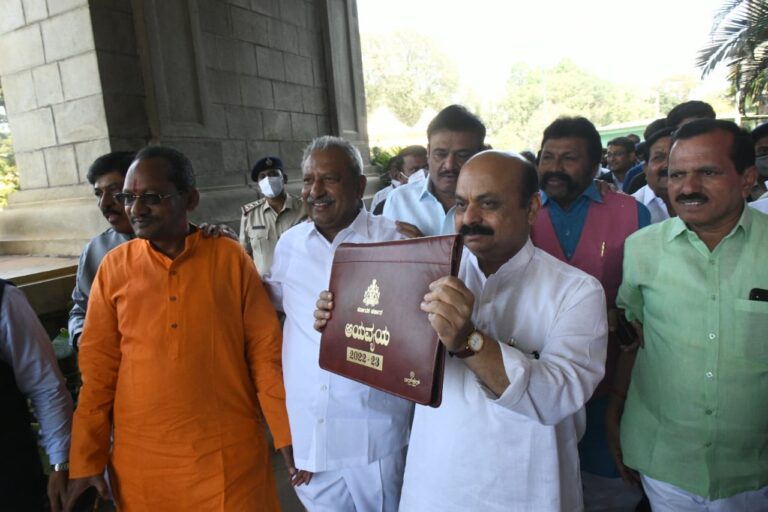
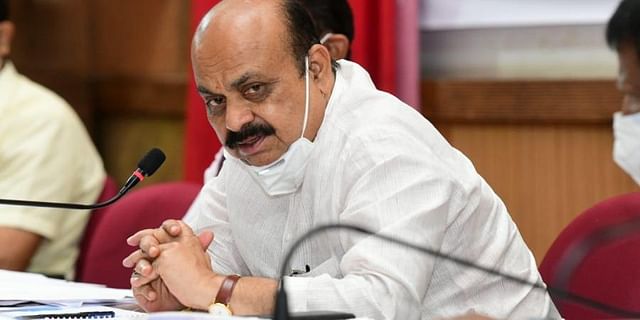
  • Chief Minister Basavaraj Bommai’s announcement of 438 ‘Namma Clinics’ (our clinics) seems to be on the lines of Mohalla Clinics in Delhi. The purpose of these clinics, according to him, is to ensure that healthcare reaches the doorsteps of the urban population, and plugs critical gaps in the public health system.
  • The clinics, also to be known as ‘health and wellness centres’, will be set up in Bengaluru’s 243 BBMP wards and 195 others will be spread across major cities of the state.“These centres are mainly being set up to ease detection of non-communicable diseases and also act as referral treatment to specialists.
  • They will have a yoga centre, teleconsultation, regular screening for NCDs such as hypertension and diabetes. A medical officer, staff nurse and two-member support staff will be posted at each health centre,” informed BBMP Health Commissioner Dr KV Thrilok Chandra. Mobile clinics are also being planned in Bidar, Chamarajanagara, Haveri and Chikkamagaluru.


Karnataka Budget: State will ask Centre to ease CRZ norms

KEY STORY

  • With an eye on improving eco-tourism along Karnataka’s coastline, the State Government has decided to approach the Union Government seeking relaxation in the Coastal Regulation Zone norms.
    While CRZ rules specify no development up to 200 mt on the shore, several tourism developers have been seeking permission to create facilities closer to the shore. The announcement in the budget has once again renewed the hopes of eco-tourism operators in the coastal districts.
  • On Friday, Chief Minister Basavaraj Bommai also announced setting up an eco-tourism centre at Tadadi port. The government has also announced Rs 2,000 monthly remuneration to 400 tourist guides working in Hampi and other tourism sites.
  • In order to boost tourism in the state, Bommai also said that the Central Government’s ‘Adopt a Monument’ scheme will be popularised in Karnataka.
Rs100cr for Anjanadri Hills
The government has set aside  Rs 100 crore for the development of Anjanadri Hills in Koppal district. The site is considered the birth place of Lord Hanuman. The government will also provide all assistance to set up regular heli tourism in Hampi.  Nearly 30,000 devotees, who will make a trip to Varanasi, will get funds from the government. Similarly, beneficiaries will get Rs 5,000 for tour packages to Tirupati, Dharmasthala, Kollur, Kukke Subramanya and Mantralaya.

Karnataka Budget 2022-23 takes good effort to raise quality of education, health: Expert

KEY STORY

  • The Karnataka government is aspiring to spend Rs 40,944 crore during 2022-23 on child-centric issues. This is about Rs 2,500 crore more compared to yesteryears. The highlight of Karnataka Budget 2022-23 from the child rights perspective is the Chief Minister’s declaration to identify backward taluks and provide them the required support to develop — improve quality of education in 93 taluks, strengthen health services in 100 taluks, and alleviate child malnutrition in 102 taluks with a substantial budgetary allocation of Rs 3,000 crore.
  • This is a welcome move as around 50 per cent of Gram Panchayats are said to be below the state average (2015, HDI study of GPs in Karnataka). Most of these backward GPs are in Kalaburagi and Belagavi (with some in Bengaluru and Mysuru) divisions where even the poverty indicators are alarming. Backwardness in education and health, nutritional levels as well as lower status of girls, child marriage, infant, child and maternal mortality are associated, and the decision of the government to make concerted efforts to raise education and health quality is most welcome. Another eye-catching element is the proposal to construct 1,000 Anganawadi buildings worth Rs 50 crore, while converging with MGNREGA scheme.
  • Earlier, the state government had promised free education for girls till Class 10. In recent years, a lot of plans have been proposed to realise the National Education Policy. At the same time, we need to recall the promises made to children under the Right of Children to Free and Compulsory Education Act 2009, and Karnataka Rules 2012.
  • There is a steady decline in government reimbursement to non-government schools, which account for 25 per cent of seats at the entry level to children under Sec 12(1)c  of the Act.  The government needs to introspect on this and find solutions, while correlating the same with budgetary allocations and actual spending in earlier years. Added to that is the plight of children who have completed eight years of schooling under the RTE Act, and face impediments when they enter Class 9.
  • They have to either pay for their education or drop out from so-called private schools and join government schools. In the past three years, more than three lakh students have suffered because of this. We are all looking at National Education Policy 2020, expecting it will be a panacea for all school education-related problems.
  • The budget highlights the application of NEP 2020 in two sectors: developing curriculum for Anganwadis and school education at various levels, including teachers’ education. Let us hope this will be a gamechanger, bridging learning gaps among children caused by the pandemic, bringing back school dropouts, and raising learning levels in rural and urban areas.
  • In the current context, apart from upgrading a certain number of schools as ‘Model Schools’, we expect all schools to be transformed into ‘schools with child rights’ by adopting the Child Protection Policy and programmes preventing child labour, child marriages and any other child abuse.
    Dr Vasudeva Sharma NV,
    Executive Director, Child Rights Trust, Bengaluru

Cheers! No tax hike on alcohol, but excise revenue target jumps Rs 4,420 crore

KEY STORY

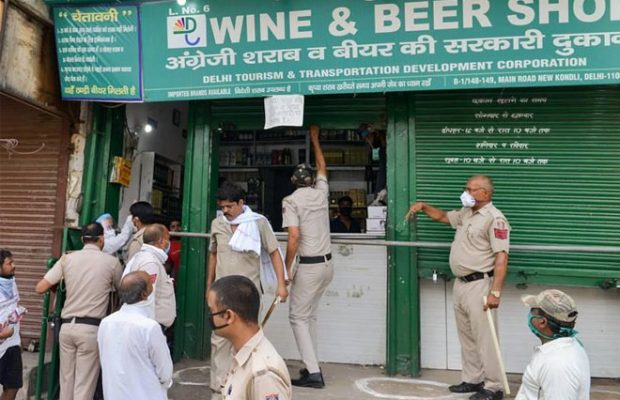
  • The liquor industry heaved a sigh of relief when Chief Minister Basavaraj Bommai, in his maiden budget speech on Friday, announced that there would be “no increase in tax for 2022-23” but when he spelt out the revenue target of Rs 29,000 crore for the Excise department for the said FY, the industry could see the writing on the wall.
  • “The unprecedented jump of Rs 4,420 crore from Rs 24,580 crore, which was the previous year’s revenue target, is unrealistic without increase in Additional Excise Duty (AED) on alcohol, even if they improve sales,” said sources on condition of anonymity.
  • Bommai, addressing the media soon after presenting the budget, said with the economy back to pre-Covid days, he is optimistic about revenue generation. “Last year was a pandemic year. We hope to do better this year in terms of revenue generation. We will also plug any pilferage,” he had responded, while addressing a media query on the hike in Excise revenue target. The department contributes over 20 per cent revenue to the state exchequer.
  • This is the first time that the revenue target of State Excise has seen such a sharp jump in the history of the department, added sources. A look at revenue targets of the department in the last few years show a gradual increase, ranging between Rs 1,000 crore and Rs 1,500 crore every year. The hike this time is close to 18 per cent over the previous year, which is the highest.

CONCLUSION

  • The annual financial target for 2020-21 was Rs 22,700 crore, and Rs 24,580 crore for 2021-22. For 2019-2020, it was kept at Rs 20,950 crore and Rs 19,750 crore for FY 2018-19.  Alcohol in Karnataka is priced and taxed according to its slab. There are 18 Excise slabs, with the cheapest alcohol falling in the first slab, and the most expensive Indian Made Liquor (IML) in the 18th slab. “The AED on expensive alcohol in Karnataka is the second highest in the country, and lowest for cheapest liquor,” sources added.
  • There are over 10,097 Excise licencees in the State. They had made several representations to the government requesting not to hike AED this year, citing business losses in the two consecutive pandemic years.

Karnataka budget: Govt to set up ‘Namma Clinics’, give priority to ‘aspirational talukas’

KEY STORY

  •  In his maiden budget, Karnataka Chief Minister BS Bommai assured that he would bring social, education and economic prosperity to all downtrodden people. Keeping in mind the COVID-19 impact on health, education and nutrition, he announced a total of 5% allocation of budget funds this year amounting to Rs 13,982 crore for all health and family welfare programmes put together.
  • The government will identify the talukas which are performing below the state average in various developmental indicators. They will be known as aspirational talukas and emphasis will be given for comprehensive development of these talukas.
  • Higher priority will be given to these aspirational talukas under programmes of various departments.
Rs 3000 crore for education and malnutrition
The Chief Minister announced that there will be focus on these talukas to ensure outcome-oriented efforts. Rs 3000 crore has been announced to improve the quality of education in 93 talukas, strengthen the health services in 100 talukas and alleviate child malnutrition in 102 talukas.
Meanwhile, action will be taken by various departments to alleviate malnutrition. As some good news, to improve malnutrition in children, the Srishti and Ksheera Bhagya scheme will now be extended to children with moderate malnutrition also, from the current year.
Further, 32 district centres, 49 taluka centres and 37 nutrition rehabilitation centres will be established to care for malnourished children.
Also, Rs 500 crore will be provided for the development of infrastructure in government schools of the state. Priority will be given for selected aspirational talukas.
To improve quality of education in government schools of the state, schools having basic infrastructure facilities at the Hobli level will be upgraded as “model schools”.
Improvement of PHCs
One primary health centre (PHC) having higher workload will be identified in each of the 100 aspirational talukas and will be upgraded to 25-bed model community health centre in two years at a cost of Rs 1000 crore.
Meanwhile, to provide well equipped medical facilities at taluka level, seven taluka hospitals will be upgraded to 100-bed hospitals.
To meet SDG goals
Meanwhile, to meet the sustainable development goals 2030, even in 2021 the state had aimed at achieving a maternal mortality rate of less than 70 and infant mortality rate of less than 10. The government has promised to take all necessary steps to achieve these goals.
“Namma Clinics”
To ease detection of non-communicable diseases and refer treatment to specialists, the state will establish “Namma Clinics” on the lines of Delhi’s “Mohalla Clinics” in major cities of the state. The Chief Minister announced that they will be established in all wards of Bengaluru.
Meanwhile, 300 women health centres will be established in the year 2022-23 under the National Health Mission. They will provide advice for women related health issues and also function as women welfare centres.
Also, the state has announced that it would spend Rs 11 crore to set up mobile clics under the “Mukyamantri Arogya Vahini” at a cost of Rs 11 crore in Bidar, Chamarajanagara, Haveri and Chikkamagalur districts to provide excellent medical services at the doorsteps in rural areas.
Telemedicine will be used to provide quick specialist medical services at the level of the taluka itself. Services of expert and specialist doctors in the medical universities of the same district will be provided through telemedicine.
Meanwhile, to create better health faclites for construction workers whereever there is high density of workers, 100 hi-tech mobile clinics will be started with an aim of protecting their health.
Free dialysis
With an increase in the number of patients needing dialysis and to further strengthen the existing ones, the state government has increased the existing dialysis cycles per month to 60,000. For this purpose, an additional grant of Rs 20 crore has been allocated.
Also, to protect eyes of senior citizens of the state who are below the poverty line, free eye check-up and if necessary surgical treatment and distribution of spectacles will be taken up under NHM.

Cardiac and cancer treatment

Meanwhile, the Chief Minister has also announced that cardiac related treatments will now be provided at the taluka level itself to the rural people by mapping 75 taluka hospitals of the state with the Jayadeva Institute of Cardiovascular Sciences and Research.
Meanwhile, to make high tech treatment available in North Karnataka, a regional cardiac centre of Jayadeva Institute of Cardiology will be established at a cost of Rs 250 crore in Hubballi.
Meanwhile, Kidwai Regional Cancer Centres will come up at a cost of Rs 50 crore in Belagavi. They are already there in Bengaluru, Tumakuru and Kalaburagi to provide timely and least expensive treatment to cancer patients.

Test positivity rate remains below 1% for the last one week

KEY STORY

  • Karnataka has been consistently maintaining a test positivity rate (TPR) of less than 1% for the last one week. The State’s TPR has been on a steady decline since January end when the seven-day average TPR stood at 17.09%. It reduced to 0.72% in a month by February 28 and 0.59% on March 2.
  • Although the daily TPR had fallen below 0.5% after over four months on Wednesday, it again rose to 1.04% on Thursday. It was last on October 17, 2021 when the State reported a TPR of less than 0.5%.
  • TPR, which is a vital marker in assessing the spread of an outbreak, is the percentage of people who are found to be infected by the virus from those who are being tested.

    Six districts

    Although six districts have a TPR higher than the State average, it is still hovering between 1.04% and 0.67% in these districts. At 1.04% Kodagu, has the highest seven-day average TPR as of Thursday. This is the only district in the State where the TPR is above 1%. While Haveri, Yadgir and Gadag have the lowest at 0.08%, 24 districts have been maintaining a TPR of less than 0.05% for the last few days.
    On Thursday, while six districts — Bagalkot, Davangere, Haveri, Mandya, Raichur and Ramanagaram — reported zero cases, 17 districts reported cases in single digits.
    C.N. Manjunath, nodal officer for labs and testing in the State’s COVID-19 task force, said people should continue to follow COVID precautions. “Also, people should not ignore any post-COVID symptoms and should seek immediate medical attention if they develop any unusual fatigue, tiredness, breathlessness, chest pain and palpitations. Blood sugars should be monitored regularly,” he said.
    New cases
    Meanwhile, after falling below 200 for the last two days, the number of new cases slightly increased on Thursday when 382 new infections were detected. With this the total number of COVID-19 cases touched 39,41,835. Bengaluru Urban recorded 239 cases. The day’s test positivity rate in the State touched 1.04%.
    With 10 deaths, the State’s toll rose to 39,979. With this, the day’s Case Fatality Rate (CFR) touched 2.61%.This is apart from 38 deaths of patients due to non-COVID-19 reasons.
    As many as 689 persons were discharged on Thursday taking the total recoveries to 38,97,928. Active cases reduced to 3,890.
    As many as 36,415 tests were conducted in the last 24 hours, including 25,032 RT-PCR tests. With this, the total number of tests rose to 6,46,17,588.

Poll-centric Karnataka budget may focus on welfare, farmers’ income

KEY STORY

Hoping to strike the right balance in his maiden budget, Chief Minister Basavaraj Bommai, who also holds the Finance portfolio, will look to focus on welfare schemes, ensure economic development and financial discipline without burdening the people. He is due to present the budget on Friday afternoon.
The CM had earlier stated that his budget will focus on the overall development of the state. Bommai will be keen to make his mark by announcing welfare schemes as well as giving an impetus to irrigation, infrastructure, drinking water projects and education, sources said.
In the past few months, the government has given a lot of emphasis on implementing the Central government’s ambitious Jal Jeevan Mission and announced measures to increase farmers’ income, and its focus on these initiatives is likely to be reflected in the budget, sources said.
In 2021, former CM BS Yediyurappa had, in his budget, allocated Rs 7,795 crore for the development of Bengaluru city. With BBMP polls likely in the next few months, Bommai is likely to announce development works and better infrastructure too. Bengaluru, that has 28 assembly constituencies, plays a major role in any assembly election.
The economy, that suffered a setback for two consecutive years, has been showing signs of recovery. There is also pressure on the CM not to hike taxes on fuel and liquor, and the CM is unlikely to announce additional tax/cess, sources said. B T Manohar, Chairman, GST Committee, FKCCI, said, “The government might not take the risk of announcing additional taxes as everyone, including industries and commoners, suffered during the pandemic.
The government’s borrowings are likely to increase.” Karnataka State Government Employment Association President Shadakshari said they are demanding constitution of the Pay Commission to increase state government employees’ salaries on par with that of central government employees.
Make announcement on Pay Panel in budget: BSY
Former CM B S Yediyurappa has urged CM Basavaraj Bommai to constitute a Pay Commission to revise the salaries of State Government employees on par with Central Government employees. Yediyurappa urged Bommai to make the announcement on constituting the Pay Commission in the State Budget. State Government employees are demanding salaries on par with Central Government staff. In the legislative session, the CM had hinted at constituting a Pay Commission. In his letter to the CM, Yediyurappa said the state revises employees’ salaries once every five years and during his tenure as CM, he implemented the recommendations of 5th Pay Commission. “Like many other states, there is a need to bring Karnataka government employees’ salaries on par with central government employees,” he said.

Indian students thank Sonu Sood as actor helps them evacuate war-hit Ukraine – WATCH

KEY STORY

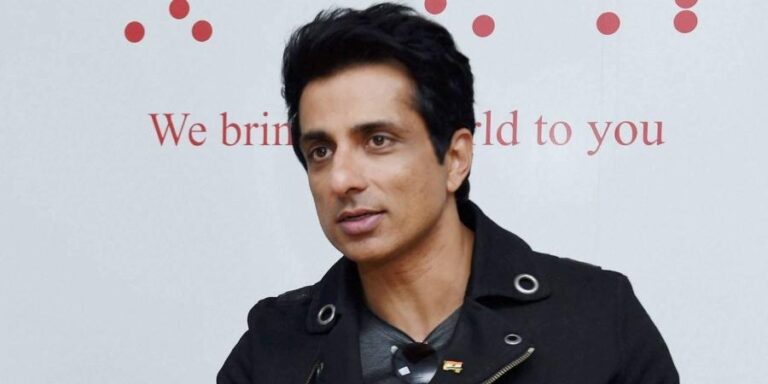
  • Sonu Sood has turned a messiah once again and this time for Indian students stuck in war-hit Ukraine. He made arrangements for the young students to evacuate them and bring them home safely. A few of these students have shared videos thanking the actor for stepping up and saving their lives amidst the Ukraine-Russia war.
  • Russia has invaded Ukraine on February 24 and tensions are only rising between the two countries. Indian students in Ukraine are facing tough time to leave the country and return home. This is where Sonu Sood came into the picture. The actor arranged buses, trains and even provide financial aid to some students to help them leave Ukraine.
  • A student named Charu said, “I am leaving Kyiv. Sonu Sood sir helped us at the right time. In sometime we will reach Lviv and from there we will cross the Poland border by tonight. Thank you so much, they are giving us hope.”
Take a look at the now-viral videos here:


Another student named Harsha was heard saying: “We were stuck in Kyiv and it was Sonu Sood sir and his team who helped us to get out. With their help, we are heading to Lviv which is a safer place and from there we will reach India.”
This move by the Happy New Year actor certainly gives hope especially after we lost an Indian national named Naveen Shekharappa Gyanagoudar amid Russian attack on Kharkiv on March 01, 2022. Gyanagoudar was a medical student. Earlier, Sonu had helped Indian students stranded in Kyrgystan due to the COVID-19 pandemic.

Karnataka govt ignored finance department warning on cow slaughter law

KEY STORY

  • The state government prohibited cattle slaughter by disregarding red flags raised by the finance department that doing so would lead to heavy expenditure, documents show.
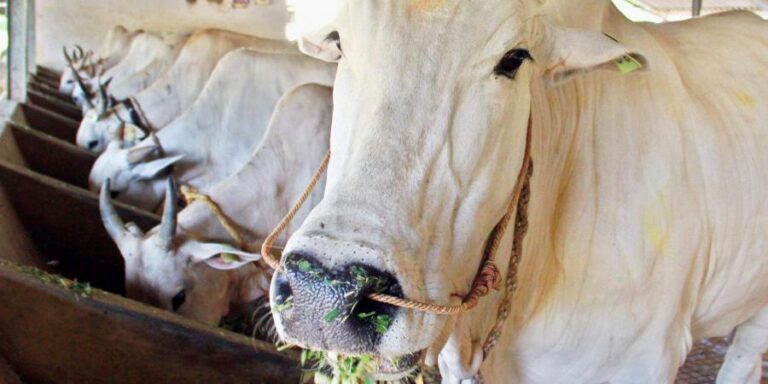
  • The Karnataka Prevention of Slaughter and Preservation of Cattle Act was enacted early last year, imposing a blanket ban on the slaughter of cattle in the state, forcing farmers to either take care of cows even after they become barren or simply abandon them. The only slaughter allowed is of terminally-ill cattle and buffalo aged above 13 years.
  • Stray cattle has become a major poll issue in Uttar Pradesh, which has a stringent law similar to Karnataka.
  • One goshala is planned in every district. They are in various stages of completion.
  • In December 2020, the finance department asked the government to reconsider its decision to implement the law. “We cannot agree to this kind of expenditure when we are struggling to make ends meet,” it said, according to the Cabinet note accessed by DH.
  • “Next two years we expect a contraction in Budget size and hence the decision of the Cabinet may be kept on hold by reconsidering the matter.”
  • Karnataka will need Rs 5,240.18 crore in four years to implement the law, the finance department said.
  • This includes the cost of cattle maintenance at Rs 70 per livestock per day, setting up goshalas and making good the reduction of 27,250 tonnes of beef production.
  • In a reply that he tabled in the recent legislature session, Animal Husbandry Minister Prabhu Chauhan said the process of opening goshalas in each of the 30 districts is under way.
  • “So far, bhumi puja (for construction to begin) has been done in Tumakuru, Chikballapur, Hassan, Chikkamagaluru, Haveri, Koppal, Vijayapura, Belagavi and Kodagu districts,” he stated.

CONCLUSION

  • The government has released Rs 36-53.50 lakh to each of the 30 districts for setting up of goshalas. According to the finance department, Karnataka will need 2,417 goshalas – one for every 200 cattle heads with Rs 50 lakh for basic infrastructure – costing Rs 1,208.50 crore, it said.
  • The government, in the Cabinet note, justified the new law in that any delay in implementing it would lead to the slaughter of 662 cattle everyday.
  • It also said the new law will prevent farmer suicides. Instead of slaughtering “mule” bullocks, aged cows and unwell cattle, farmers can get “cheap source of fertiliser, energy, rural products, health and hygiene” through “bull power, cow dung and urine”, the note said.