
KEY STORY
-
Amid a significant dip in COVID-19 cases in the entire country, the Ministry of Home Affairs has issued direction to the state government to ease curbs.
-
In a letter to Chief Secretaries of various states, MHA secretary Ajay Bhalla wrote, “With a substantial decline in case of positivity and in the number of active cases in the country, States and UTs are reopening the activities. After the analysis of the local situation, relaxation in various activities may be considered such as social, sports, entertainment, academic, cultural, religious gatherings, schools/colleges and other commercial activities”.
-
However, wearing of masks and maintaining social distancing are still needed. In the letter, it was mentioned, “while allowing such activities, the wearing of masks, maintaining physical distancing, hand hygiene, ventilation in closed spaces and other appropriate behaviour for managing Covid must be in place”.
COVID-19 cases in Telangana
On Friday, Telangana State reported 287 new COVID-19 cases, pushing the tally to 7,88,383, while the death toll remained at 4,111 with no fresh fatality occurring due to the infection.
The Greater Hyderabad Municipal Corporation (GHMC) reported the highest number of cases with 85, followed by Ranga Reddy (28) and Medchal Malkajgiri (20) districts.
Meanwhile, the recovery rate in the state rose to 99 percent. The cumulative number of recoveries in the state reached 7, 80, 462.

KEY STORY
-
There are two alternative ways to look at a secularist approach — One law that applies to all, despite diversity; or equal freedom to all to respect that very diversity. The ongoing issue of school uniforms falls within this dilemma – one uniform for all students in a particular institution, or allow students to wear what they want within their socio-cultural boundaries.
-
With the uniform issue grabbing media attention over the last few months, it has become vital to understand where exactly the idea of uniforms for schoolchildren came from. The focal point of this will be the Karnataka Education Act of 1983, particularly Section 133(2), which has been cited multiple times to designate uniforms or dress code in educational institutions by the Karnataka government.
-
However, the Act itself does not mandate any kind of dress code or uniform, with educationist K E Radhakrishna saying that uniforms became popular in Indian schools somewhere between three to four decades ago. “The purpose of uniforms and the reason they were introduced was to have a sense of different identities. It was initially used by private schools to distinguish themselves from each other and to have a qualitative and quantitative competition,” Radhakrishna told TNIE.
-
According to him, the uniform gradually became both a status symbol in schools and an equaliser to prevent poorer students from being targeted due to their economic status. Following this, government schools also started adopting uniforms, both in part to act as an equaliser and also to compete with private schools. In his experience as a faculty member of Seshadripuram College, and later as its principal, he says that dress codes were never mandated.
-
United Nations International Children’s Emergency Fund (UNICEF) education specialist Sheshagiri KM Rao echoes similar views saying that in his days as a PU student, uniforms and dress codes were not the norm, being a relatively newer aspect of education in Karnataka. “There are, however, exceptions made for minority institutions, where the right to practice their religion in educational institutions run by them is a protected right under the Constitution,” he said, citing his experience as a student of Baldwin Boys High School, run by the Methodist Church in India.
-
However, a public school, Rao says, is considered a secular space. “This can be interpreted in two ways — either by removing all religious symbols in schools to ensure complete uniformity, or allow students to wear clothes that are not considered indecent, since a secular school should not be concerned with the religious practices of a student unless it is considered offensive to other students in terms of indecency,” Rao said. Further, he said that in his experience as a specialist, he had visited thousands of government schools where pictures of gods of learning were put up, stating that it had always been common practice.
-
Radhakrishna said that he was in favour of doing away with uniforms as their purpose had been corrupted over the years. “The uniform was introduced with good intentions, it stood as a symbol of preventing caste disparity and to establish equality in schools. It later became a symbol of status, but now, it has become an instrument for politically volatile individuals to take advantage of.” He added that the need for uniforms had also reduced, stating that they were necessary to ensure equality 40 years ago, but India had come a long way in terms of access to education, which is no longer considered a status symbol.Both educationists agreed that there needs to be a minimum guideline for promoting decent clothing in educational institutions, but the need for uniforms had long passed.
-
Citing the 1992 case that led to Article 21 (A), which declares education for children between the ages of 6 to 14 a fundamental right, Sheshagiri Rao says the Supreme Court had equated the right to education with the right to life. “The court had stated that the right to education is no less than right to life and failure to guarantee it would lead to a limiting future prospects that would impact quality of life severely,” he said.
-
Several education experts have stressed that uniforms can be mandated in schools up to Class 10 and done away with in the later years to allow students transition into dressing cultures for various careers where uniforms are not mandated.
-
“Many private education institutions are given the discretion to decide and prescribe uniforms, and students and parents are aware of the uniform rule at the time of admissions,” reasons one academic, unwilling to be named. “So, if wearing a particular uniform is an issue for them on the grounds of social or cultural factors, they are free to take admission in an institution which does not make wearing of
uniforms compulsory.”
-
Highlighting examples where uniforms are used in other sections of society, Radhakrishna said, “Uniforms are used by defence personnel or police to establish an identity, corporate higher-ups may have a dress code, but people, including civil servants, do not wear uniforms.”
Arguments In
Favour of Uniforms
-
A sense of community among students, staff and parents.
-
Improved discipline and concentration.
-
Instils a working environment mindset that separates home and school life.
-
Reduces distraction from wearing the latest fashionable brands.
-
Places students on a level playing field
Arguments
Against Uniforms
-
Research conducted by David L Brunsma, a researcher at the University of Missouri-Columbia, USA, on the advantages of wearing uniforms in schools/colleges, showed they were not effective in achieving outcomes that were assumed to be achieved.
-
No noticeable increase in concentration on studies among students wearing uniforms, as believed.
-
No noticeable balance in social status separating students.
-
No noticeable improvement in academic achievements.
-
On the contrary, they are associated with a detrimental effect on achievement in reading, Brunsma’s research showed.
STATUS IN DIFFERENT STATES
-
Uniform codes across India have remained more or less than same, with each state having their respective Education Acts
-
Politics seems to have seeped into drawing up uniform codes in Rajasthan, as the then BJP-led government mandated uniforms to be brown in 2018, and the now Congress-led government changing this to dark grey and blue from the coming academic year.
-
With schools reopening, Goa has removed the compulsory uniform, mandating that authorities are not to insist on uniform wearing in schools.
-
In states like Odisha and West Bengal, school uniforms are mandatory, with the view that it helps lessen the rate of social conflicts. The Odisha government has also provided uniforms to students from Classes 1 to 8.
-
A school in Kerala recently came under fire after they decided to implement ‘unisex’ uniforms, with girls wearing trousers.
What the Karnataka ACT says
The State Government, on February 5, issued an order “invoking Sec 133 (2) of the Karnataka Education Act-1983, which says a uniform style of clothes has to be worn compulsorily. The private school administration can choose a uniform of their choice.” The order also said that in colleges which come under the Karnataka Board of Pre-University Education, dress code prescribed by the College Development Committee or the administrative supervisory committee must be followed. If the administration does not fix a dress code, clothes that do not threaten equality, unity and public order must be worn.
Under Section 133 of the Act, the government reserves the right to issue appropriate directions to schools and colleges to ensure maintenance of public order.
As per the rules and Notifications under the Karnataka Education Act, 1983, every recognised educational institution may specify its own set of uniforms. Such uniform, once specified, shall not be changed within a period of five years. A notice should be provided to change uniform. Purchase of uniform and books from the school or a shop etc., and stitching suggested by the school authorities, shall be an option to the students and parents.

KEY STORY
-
The action in the India-Sri Lanka series will move to Northern India for the next week as the two teams square off in 2 T20Is and one Test match in Dharamsala and Mohali, respectively. After dominating the proceedings in the opening T20I in Lucknow, Team India will hope to seal the series in the 2nd T20I itself. A clean sweep win for the Men in Blue won’t be a big surprise.
-
On the eve of the 2nd T20I, India suffered another injury blow as Ruturaj Gaikwad has been ruled out of the series due to a wrist issue. The issue kept him out of playing XI for the first T20I as well. With Ruturaj out, Ishan Kishan is confirmed to open the innings with Rohit Sharma. But will India make changes to their middle-order or the bowling department? Here’s a look at likely changes India might contemplate despite a big win in the opening game of the series –
Ravi Bishnoi for Deepak Hooda: Deepak Hooda worked hard for his maiden India call-up and has done well in 4 matches he played for the Men in Blue since his debut. But in T20Is, he isn’t a confirmed starter as Washington Sundar and Axar Patel will regain their spots once they return.
-
Since Hooda may not get regular chances once the regulars return, the team management can try Ravi Bishnoi, who was surprisingly benched for the opening T20I. Bishnoi holds a strong chance of making it to the T20 World Cup squad and can be given regular chances before the ICC event.
Mohammed Siraj for Bhuvneshwar Kumar: Bhuvneshwar Kumar is one of the senior pacers in the squad and a confirmed starter in the shortest format of the game. After being rested for 3rd T20I against WI, Bhuvneshwar returned for the opening T20I against SL and scalped 2 wickets for just 9 runs.
-
With Bhuvneshwar set to keep his spot, the management might give Mohammed Siraj a chance as there are only 2 T20Is left in the season. Siraj is an automatic selection in Tests but he isn’t a regular in T20Is. By playing him in the last 2 T20Is of the season, the management can give him the top-flight experience of playing the shortest format.
-
Kuldeep Yadav for Yuzvendra Chahal: A surprising choice but yes, the management is expected to give Kuldeep Yadav a chance somewhere down the line. Kuldeep may not have a great record of late but there’s a reason why the selectors brought him back in the squad.
-
They want wickets in the middle-order and with the aim to churn out positive results, Kuldeep could be included along with Bishnoi, which means a rest for Yuzvendra Chahal. Sri Lanka team isn’t expected to match India’s balance and the home team can manage to test out its irregulars during the last 2 matches with the T20 World Cup in mind.
KEY STORY
-
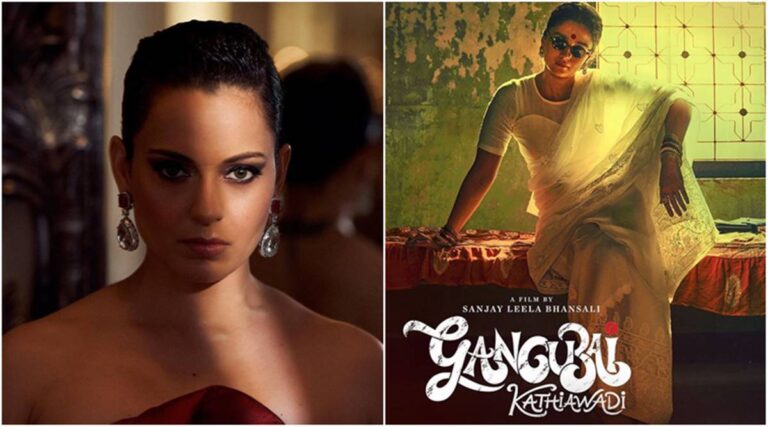
Bollywood actor Kangana Ranaut took to Instagram stories on Saturday to congratulate the team of Gangubai Kathiawadi’s and wrote that she never expected ‘move mafia will rise to the occasion’ and help the theatres that are on ‘ventilator here’.
-
Kangana’s post read, “Happy to hear theatres are being revived in south film industry with record breaking collections…! Hear some baby steps are being taken in Hindi belt also… with recent female centric film which has a big hero and a super star director… They may be baby steps but they are not insignificant, they will be crucial for theatres which are on ventilator here.. Great!! Never expected that movie mafia will rise to the occasion and do something good… If they do we will be absolutely appreciative… Hoping for the best.”

Kangana’s mention of south films refers to the recents releases – Tamil film Valimai starring Ajith and Telugu film Bheemla Nayak starring Pawan Kalyan, that have opened strongly in the southern states. Gangubai Kathiawadi starring Alia Bhatt has been directed by Sanjay Leela Bhansali and has released exclusively in theatres.
Kangana had previously said that the Bhansali film’s biggest drawback was Bhatt’s casting. She shared on Instagram, “This Friday, 200 cr will be burnt to ashes at the box office… For a papa (movie mafia daddy) ki pari (who likes to keep a British passport) because papa wants to prove that romcom bimbo can act… Biggest drawback of the film is wrong casting… Yeh nahi sudhrenge no wonder screens are going to South and Hollywood films… Bollywood is destined to doom jab tak movie mafia has power.”
She added, “Bollywood mafia daddy papa who has single-handedly ruined the work culture in the film industry, has emotionally manipulated many big directors and forced his products of mediocrity on their cinematic brilliance, another example will be following soon after this release. People need to stop entertaining him, in this Friday release even a big hero and greatest director are the new victims of his manipulations.”
KEY STORY
-
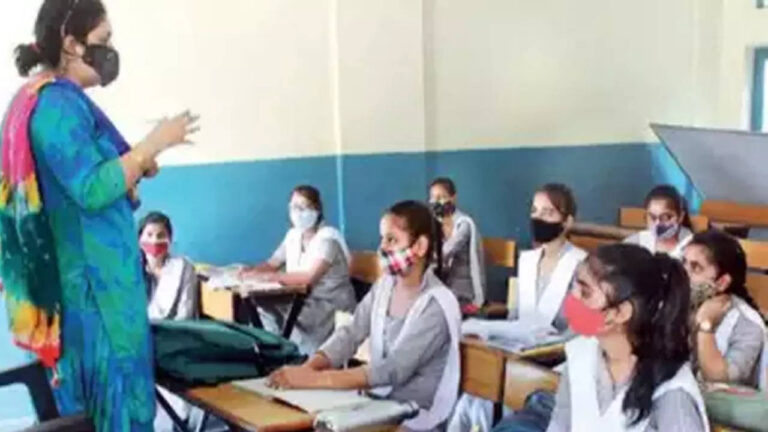
The Delhi Disaster Management Authority (DDMA), on Friday lifted all COVID-19 restrictions in the Union Territory due to a dip in the positivity rate below 1 per cent. Night curfew in Delhi will be lifted from Monday. Stress has been given on COVID appropriate behaviour, masking, surveillance, testing, and vaccination. Schools have also been asked to do away with the hybrid mode of classes from April 1 – news agency ANI reported citing sources.
-
“Fine for not wearing masks reduced from Rs 2,000 to Rs 500…,” said Delhi Chief Minister Arvind Kejriwal.
-
The decision to lift all COVID-19 curbs in Delhi was taken at the DDMA meeting chaired by Delhi Lieutenant Governor Anil Baijal. The meeting was attended by Delhi Chief Minister Arvind Kejriwal and other key ministers of the Delhi government including Deputy Chief Minister Manish Sisodia, Health Minister Satyendar Jain, Revenue Minister Kailash Gehlot, NITI Aayog member VK Paul and Health Department officials.
-
“Except for gatherings related to political, social, cultural and such other activities, the remaining restrictions are expected to be lifted as the Covid situation has improved significantly,” a Delhi government official had earlier told news agency PTI.
-
Many traders’ bodies, including the Chamber of Trade and Industry, have approached Delhi LG seeking relaxation in COVID-19 restrictions citing a dip in the number of cases in the city. Delhi BJP president Adesh Gupta had also written to Baijal urging him to allow devotees and visitors to temples and other religious places in the national capital.

KEY STORY
-
While much is known about major post-COVID complications such as diabetes, cardiac and neurological issues, doctors are now seeing many patients with tinnitus, skin rashes, hair loss and even mask acne.
-
This, doctors said, is mainly because COVID-19 has induced many autoimmune and dormant infections in people with low immunity. According to the World Health Organisation, COVID causes symptoms that last for weeks or months after the infection has gone in some people. Even people who were not hospitalised and who had mild illness can experience persistent or late symptoms and some patients develop medical complications that may have lasting health effects.
-
Karthik Shamanna, Professor, Department of ENT at Bangalore Medical College and Research Institute (BMCRI), said he is seeing at least five COVID recovered patients daily in Victoria Hospital reporting with tinnitus or ringing sound in the ear. “Rhinitis can cause blockage in the eustachian tube and that in turn can lead to negative pressure in the middle ear leading to tinnitus. While we are not seeing any cases with nerve damage, hearing loss and vertigo, people are complaining of ringing or other noise in one or both ears. This is mainly seen in middle aged people,” he said.
-
“We advise people to keep themselves warm and consume warm food. Breathing exercises, antihistamines, nasal spray and steam inhalation work best for tinnitus,” the doctor said.
-
Prateek Nayak, Consultant – ENT Surgery at Aster CMI Hospital, said post-COVID tinnitus could be due to viral infection affecting the inner ear. “Early treatment is important for complete improvement. We are also seeing patients with one-side hearing loss and giddiness along with tinnitus. People experiencing ringing sound in the ear should get evaluated at the earliest,” he said.
Skin problems
-
Girish M S, head of the department of Skin and STD at ESIC Hospital, said he has been seeing several patients with superficial fungal infections such as tinea corporis apart from acneiform eruptions, Herpes Zoster (also known as shingles) and even hair loss.
-
“Another common issue people are now complaining about is mask acne (now referred to as maskne) resulting due to clogged pores. Oil, bacteria, and dead cells on the skin can build up and block the pores when wearing a mask. A mask also traps humidity due to breathing and sweating, which may increase the risk of acne. The problem is seen more in those who are used to wearing heavy make-up,” the doctor explained, adding that maintaining mask hygiene is important.
-
Shireen Furtado, Consultant – Medical and Cosmetic Dermatology at Aster CMI Hospital said at least five patients are reporting post-COVID fiery red rashes on the body every week. “All patients give a preceding history of fever for a couple of days at least four weeks previously. Many would not have tested for COVID but an investigation shows high COVID antibodies signifying a recent infection,” she said.
-
Praveen Bhardwaj, dermatologist at Manipal Hospital (Whitefield), said many patients are also developing Lichen Planus, a condition that can cause swelling and irritation in the skin, hair, nails and mucous membranes. “People are reporting with itchy purple rashes, generalised or localised after COVID infection. This is usually self limiting but it takes time and sometimes medication to heal,” he said.
-
“We are also seeing children with reddish painful swellings on legs called Erythema Nodosum, especially in this third wave. Besides, hair loss is another common complaint that patients are reporting soon after a month of recovery,” the doctor added.

KEY STORY
-
The Karnataka government has created a web portal and a mobile app, where people can upload details of students and others stranded in war-hit Ukraine. The Karnataka State Natural Disaster Management Authority, which is managing and monitoring the portal and the app that were created within 12 hours, stated that the portal (http://ukraine.karnataka.tech) collects relevant information on people from Karnataka who are stranded in Ukraine.
-
Family members and friends can upload the details of those stranded in Ukraine. They have to provide basic information of the informant, relation with the stranded person and the stranded person’s details, including the phone number, email id and the place where they are stranded.
-
Information collected from the app and portal will be sent to the control rooms of the Ministry of External Affairs (MEA). The KSNDMA control room will talk to the informants and give them the latest updates and collect information as required.
-
The portal also gives relevant information, like contact numbers and email ids of people concerned at the central government, state government, Indian embassy in Ukraine and also the helpline numbers. The KSNDMA release stated that the Chief Minister’s Office, chief secretary and nodal officers are personally pursuing cases of stranded people with the MEA and Indian embassy in Kyiv. “The MEA is making alternative arrangements in mission mode for evacuation of Indian nationals since the Ukrainian airspace is closed,” it stated.
-
As on Friday afternoon, data of 346 students was uploaded on the portal. Of them, 115 are from Bengaluru, 30 from Mysuru, 24 from Vijayapura and other districts. KSNDMA is sending real time data to MEA. On Thursday, senior IFS officer Manoj Rajan, who is also commissioner to the Karnataka State Natural Disaster Management Authority, was appointed as nodal officer to facilitate safe transportation of stranded people and students from Karnataka in Ukraine to their respective places.

KEY STORY
-
The Karnataka High Court on Friday reserved the verdict of a batch of petitions questioning the order dated February 5, 2022, passed by the state government to ban hijab on school and college campuses.
-
The full bench of Chief Justice Ritu Raj Awasthi and Justices Krishna S Dixit and JM Khazi which commenced the hearing on February 10, 2022, reserved the verdict, after a marathon hearing for the last two weeks.
-
The petitioners-students from Government PU College for Girls at Udupi and several others have challenged the government order.
-
Purdah or burqa may not be an essential practice but a headscarf or hijab is an essential part of Islam, and two judgments of the Kerala High Court and the Madras High Court, which has gone through Islamic verses and scriptures, have arrived at this conclusion, the petitioners’ counsels argued.
-
In the counter, the state government defended its order. It has been contended that the hijab is not an essential religious practice. Citing several supreme court’s judgments, starting from Shirur Mutt to Sabarimala cases, in support of his arguments that wearing hijab is not essential religious practice under Article 25 of the Constitution, Advocate General Prabhuling K Navadagi argued that petitioners-students have placed zero materials to substantiate their claim to declare that wearing hijab is an essential religious practice.
CONCLUSION
-
On February 10, 2022, the full bench passed the interim order restraining all the students regardless of their religion or faith from wearing saffron shawl (Bhagwa), scarfs, hijab, religious flags, or the like within the classroom, pending consideration of the petitions. However, the court made it clear that this interim order is confined to such of the institutions wherein the CDCs have prescribed the student dress code/uniform.
KEY STORY
-
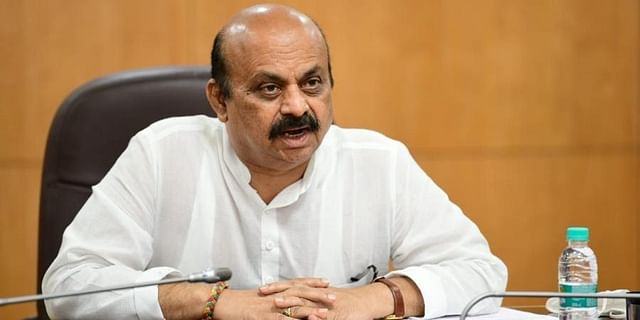
Some subgroups among the minorities are steeped in poverty and suitable programmes will be formulated for their development, Chief Minister Basavaraj Bommai said on Friday.
-
Speaking at the inaugural of the Maulana Abul Kalam Azad Bhavan, built by the Minorities Development Department, the CM said the minorities should adapt to the fast-changing world to achieve their goals and join the social mainstream. “The 21st century is the ‘Knowledge Century’. Children should be prepared to face the competitive world. We should help them utilise the opportunities and rise to international level,” he said.
-
The CM suggested that the Minorities Development Department draw up its plans keeping in mind the poorest of the poor among the communities. “Children, who should be having books in their hands, are being made to toil. They should get professional guidance to pursue IT, engineering, ITI, IAS, IPS and other career opportunities, become economically empowered and join the social mainstream,” he noted.
-
The Wakf Board should protect its properties and ensure that they are not misused. Wakf property should be used for the welfare of the community. Stringent action will be taken against those who violate the law in this regard, Bommai stressed.
KEY STORY
-
The murder of 26-year-old Bajrang Dal activist Harsha was “planned” days before
executing it. He was logistically a soft and easy target because he lived close to some of the accused, informed sources have told TNIE.
-
The killers had allegedly planned his murder 10-15 days before they finally got him on February 20. “They had kept a close watch on his movements,” the sources added. Harsha was fatally stabbed near Kamath petrol bunk late evening on February 20 in Shivamogga town.
-
“His murder was reportedly a message of one up-manship in the communally fragile district, which has been periodically used by politicians and community leaders. The fear of retaliation to Harsha’s murder in Shivamogga, or elsewhere in the state, is not lost upon the police,” the sources said. Ten people have been arrested so far for their alleged involvement in the murder case.
 Both Harsha and his assassins have previous police records for indulging in communal violence.
Whether his murder is linked to the hijab row is yet to be verified, but sources said that hijab row was a “catalyst” to his murder as he had reportedly taken part in the ongoing controversy.
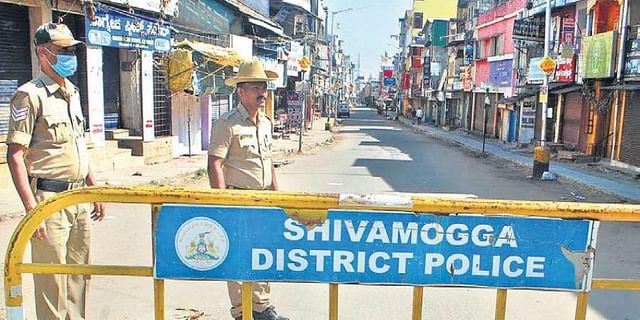
Shivamogga had turned into a fortress after rampant vandalism on February 21 when, despite prohibitory orders under Section 144 CrPC, RDPR Minister K S Eshwarappa and Shivamogga MP B Y Raghavendra led Harsha’s funeral procession. “Most of the people in the procession were not locals due to fear of identification,” claimed sources.
Shivamogga, according to sources is a “politically active district” and a hotbed of “communal and political opportunism”.
“A majority of the lower and middle-ranking police personnel like sub-inspectors and inspectors have better control in the region than the IPS officers, who are posted for a one-year tenure. The former are nurtured and have a close proximity with local politicians and elected representatives,” claimed the sources.
“Politicians encash on the fragile communal demography, which thrives upon one-upmanship between the two communities. The use of commonly available contraband drugs like ganja by the youth, who indulge in crime and communal violence, is another cause for concern,” added the sources.
Lack of access to quality higher education and employment opportunities have left a majority of youngsters in Shivamogga vulnerable to communal and hate politics.
“They otherwise have nothing to identify themselves with or brag about. The fringe extremist outfits on either side look for such youth and make use of them to carry out their ideological agenda in return for identity,” said sources.
Curbs relaxed
The Shivamogga district administration has relaxed the curfew between 6 am and 4 pm from Saturday.
The decision to reopen schools and colleges from Saturday has been put on hold and a call on reopening them from Monday will be taken after reviewing the situation.
Meanwhile, police are still hunting for slain Bajrang Dal activist Harsha’s mobile phone.
1...416417418...883Page 417 of 883
 Both Harsha and his assassins have previous police records for indulging in communal violence.