KEY STORY
-
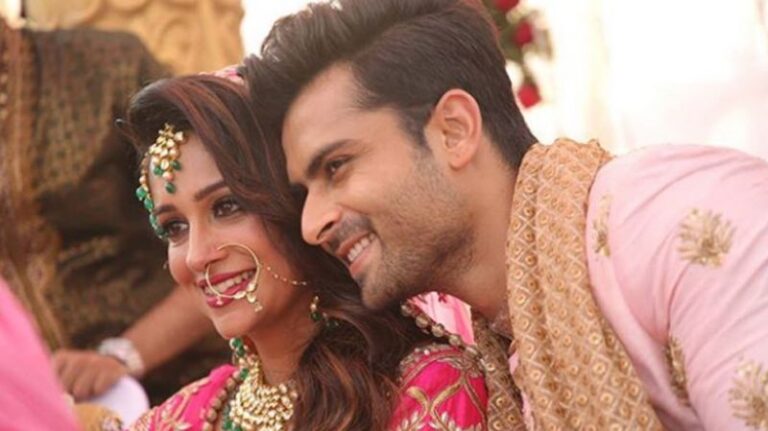
While Dipika Kakar was last seen in Sasural Simar Ka 2, Shoaib Ibrahim was seen in Ishq Mein Marjawan.Shoaib and Dipika got married on February 22, 2018 in the former’s hometown, Maudaha city. The couple is very supportive of each other and are going steady in their relationship. Dipika shares a very strong bond with Shoaib’s family and is in fact the heart of the family. This is the couple’s third music video together. Their romantic song will be today on the occasion of their 4th wedding anniversary. With the project, the couple has not only turned producers but the song also marks Shoaib’s debut as a director.

-
The duo recently launched their production house and announced their first song under their banner. At the launch event Dipika Kakar Ibrahim got emotional while she was introducing her family and crew on stage.
-
The actress got teary eyed as she asked her sister-in-law Saba (Shoaib’s sister) to join them on stage and share her thoughts about the song. Saba was all praise for her bhai and bhabhi and revealed that they have worked day in and day out for the song.
KEY STORY
-
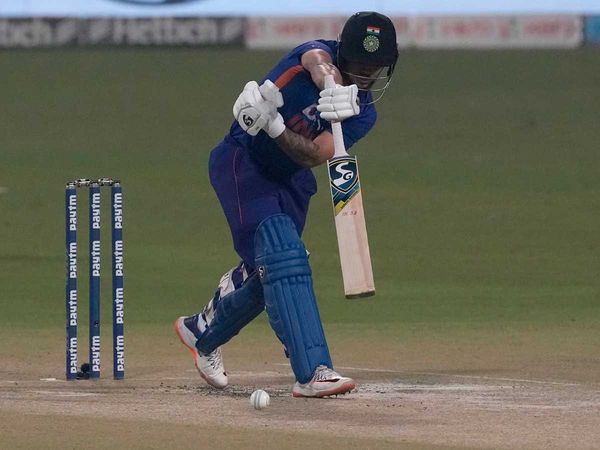
The Indian cricket team completed a clean sweep over West Indies in both the ODI and the T20I series, winning all 6 matches. However, with this being a year of the T20 World Cup, the team’s performance in the shortest format was under the microscope. Though Rohit Sharma & Co. did very well in all departments of the game, there remain a few issues the team management would be keen to address.
-
With the T20I series against West Indies set to be followed by 3 T20Is against Sri Lanka, the Men in Blue will get an instant opportunity to fix the issues they identified against the Windies.
Reserve Opening Spot: There’s no doubting that KL Rahul and Rohit Sharma are the first-choice partners as far as opening is concerned, their backup still remains a work in progress. Ishan Kishan played all three T20Is, while opening in two alongside Rohit while Ruturaj Gaikwad got the opportunity in the third T20I.
Though Ishan spent a good amount of time on the crease, he failed to accelerate run-rate the way he had been at Mumbai Indians in the Indian Premier League. His ‘reserved approach’ towards the game has come under question. In 3 matches, Ishan scored 71 runs at a strike-rate of 85.54. Ruturaj, who only featured in one game, is likely to be given more opportunities against Sri Lanka.
Middle-order Aggressor: When Rahul and Rohit open together, they are expected to give the Indian team fiery starts. However, in cases where they fail, the Indian team seems to be lacking an aggressor at the No. 3 spot. Virat Kohli is known to get runs but the manner in which he has progressed his game of late has surprised many. The former India skipper seems to slow down midway during his innings on a consistent basis, something that the team management wouldn’t be entirely impressed with.
Such situations put more pressure on the No. 4 and No. 5 spots to accelerate the run-rate pretty quickly. Though Rishabh Pant and Suryakumar Yadav are more than capable, a better balance needs to be drawn in the middle-order. While Kohli isn’t a part of the T20Is against the Lankans, another option at No. 3 position is set to be tried.
-
Experience vs Freshness: Bhuvneshwar Kumar has continued to be a part of the Indian team despite numbers showing his decreasing efficiency. Bhuvi’s inclusion in the team comes at the cost of young talents like Avesh Khan or Mohammed Siraj. Both the pacers have done really well in the shortest format but haven’t had many opportunities in the team.
Should the team management continue to prefer Bhuvi’s experience over the freshness that Siraj and Avesh bring to the team, is a question many are asking.

KEY STORY
-
A senior Indian health official has said that the BA.2 sub-variant of the Omicron variant of COVID-19 is unlikely to cause another wave of the coronavirus pandemic. Dr Rajeev Jayadevan, Co-Chairman, National IMA COVID Task Force, was quoted as saying that the BA.2 sub-variant is also not expected to infect those people who had earlier contracted the BA.1 sub-variant of COVID-19 disease.
-
The official also stressed that BA.2 is neither a new virus nor a new strain. However, it will be more transmissible than the BA.1 sub-variant, he added.
-
“BA.2 is a sub-lineage of Omicron. It’s not a new virus or strain. It’s a sub-lineage and will be more transmissible than BA.1 but will not cause another surge. BA. 2 is not capable of infecting people who had BA.1,” Dr Jayadevan said.
-
His remarks came close on the heels of a top epidemiologist calling on the UN health body to declare the BA.2 sub-variant as a “variant of concern”. Dr Eric Feigl-Ding on Sunday stated that the BA.2 sub-variant may have the capabilities to cause serious illness.
-
Referring to lab experiments in Japan, Dr Feigl-Ding said the Omicron sub-lineage may cause serious illness similar to the one caused by the Delta strain.
-
“BA.2 is seriously bad news. It’s both faster transmission than BA2 and if it’s truly more severe and as evasive against prior immunity including BA.1 old #Omicron immunity— then it’d be the worse of 4 worlds (sic),” he tweeted.
-
The yet-to-be peer-reviewed findings from the lab experiments in Japan stated that the BA.2 sub-variant was likely as capable of causing serious illness as previous COVID-19 variants.
-
The World Health Organisation has earlier stated that the BA.2 sub-variant was more transmissible but not severe than earlier sub-variants. “Among all subvariants, BA.2 is more transmissible than BA.1. However, there is no difference in terms of severity,” Maria Van Kerkhova, COVID-19 Technical Lead at WHO, had said in a video.
CONCLUSION
-
The authors of the Japanese study had stated: “Neutralisation experiments show that the vaccine-induced humoral immunity fails to function against BA.2 like BA.1.”
-
“Although BA.2 is considered as an Omicron variant, its genomic sequence is heavily different from BA.1, which suggests that the virological characteristics of BA.2 is different from that of BA.1,” the authors noted.

KEY STORY
-
The Drugs Controller General of India (DCGI) has granted emergency use authorisation to Biological E’s Corbevax COVID-19 vaccine, for use on children between 12-18 years of age. This is the second vaccine to be approved for use on children, with the DCGI having granted EUA to Bharat Biotech’s Covaxin for use on children above the age of 12 at the end of December last year.
-
According to details shared by the company, Corbevax is a “recombinant protein sub-unit” vaccine that was developed from a component of the spike protein on the virus’s surface. The vaccine had been developed by Biological E. Limited in collaboration with Texas Children’s Hospital Center for Vaccine Development and Baylor College of Medicine in Houston, Texas.
-
According to the Hyderabad-based company, it plans to complete production at a rate of 75 Million doses per month, anticipating 100+ million doses per month from February 2022. “These capacities will enable the Hyderabad-based company to deliver 300 Million doses as promised to the Government of India. Soon, the company plans to deliver more than one billion additional doses globally,” read an excerpt from an official communique.
-
While Zydus Cadila’s three-dose COVID-19 vaccine ZyCoV-D had been the first jab for children to get approval from the DCGI (for use on all individuals above the age of 12), only Covaxin has been used to inoculate children thus far. On Monday, the Serum Institute of India also sought emergency use authorisation from India’s drug regulator for its COVID-19 vaccine Covovax for the 12 to 17 year age group.
-
According to reports quoting from the company’s application for emergency use on children, SII had stated that data from two studies on about 2,707 individuals aged 12 to 17 years show Covovax is highly efficacious, immunogenic, safe and well-tolerated in this age group.

KEY STORY
-
Even as the petitions questioning the move of the government to ban hijab inside classrooms is being heard in the court, a group of people allegedly belonging to fringe element launched an attack on a restaurant in Malpe.
-
The said restaurant belongs to the father of one of the petitioners in the Hijab case- Shifa from Malpe, studying second PU at Women’s Government PU College, Udupi. The incident happened in Malpe on Monday late night.
-
Sources said that miscreants pelted stones at the restaurant of Hyder Ali, father of Shifa.
-
Shifa’s brother Saif (20) who was at the restaurant was allegedly assaulted by a group member after an argument erupted over the hijab issue, sources said. The window panes of the restaurant were damaged in the incident.Malpe police arrived and dispersed the crowd to avert further problems.
-
Meanwhile, Shifa took to Twitter tagging Udupi police to speak about this incident. She tweeted her brother was brutally attacked by a mob. ”Just because I continue to stand for My #Hijab which is MY RIGHT. Our property were ruined as well. Why?? Can’t I demand my right? Who will be their next victim? I demand action to be taken against the Sangh Parivar goons (sic),” she said.
Shifa’s brother Saif is admitted at a private hospital in Udupi and his condition is stable. A case stands registered at Malpe police station in this regard. Masood Manna, state committee member of CFI said that he has demanded action from police against the culprits who attacked hijab petitioner’s brother on Monday night.

KEY STORY
-
In the ongoing hearing on petitions related to the hijab issue before the Karnataka High Court, Advocate General Prabhuling K Navadagi on Monday argued that student-petitioners have not been able to substantiate their claim that wearing hijab is an essential religious practice as they have not placed any material to support their argument. Citing several Supreme Court judgements, starting from Shirur Mutt to Sabarimala case, Navadagi said that wearing hijab is not an essential religious practice under Article 25 of the Constitution.
-
He was arguing before the full bench of Chief Justice Ritu Raj Awasthi, Justices Krishna S Dixit and JM Khazi which is hearing a batch of petitions filed by Muslim students from Udupi district and others, questioning the order issued by the state government on February 5, 2022 banning hijab in schools and colleges where the College Development Committee (CDC) is constituted.
-
Navadagi argued that the contention that triple talaq was part of a religious practice was rejected by the apex court. If wearing hijab is an essential religious practice, it should not come in conflict with the public order, he added.
-
Not only that, it has to pass the ‘essential test’ on certain principles, otherwise the question of declaring a religious practice essential does not arise, he claimed. The principles raised by Navadagi are that wearing hijab must be a practice fundamental to that religion. If that practice is not observed or not followed or discontinued, it would result in change of the religion itself.
‘Govt doesn’t interfere in uniforms’
-
The practice must precede the birth of the religion and that practice should not be evolved after the birth of the religion. The practice should be the cornerstone or foundation stone of the religion. If the practice is optional and not essential, then it is not binding. If it is compulsive and can be disobeyed, it ceases to be a part of the religion, he stated.
-
He submitted that the state government does not interfere in the matter of uniform and hence the issue of deciding whether hijab to be permitted or not is left to the CDC. Navadagi submitted that he has communicated the grievances brought to his notice by one of the petitioners’ advocate, Mohammed Tahir, to the chief secretary to convene a meeting of all concerned to address them and take remedial measures.
-
Officials of the education department informed that no such untoward incidents as claimed by the advocate have been reported, he pleaded. Navadagi will continue his arguments at 2.30 pm on Tuesday.
Sec 144 around B’luru colleges
Bengaluru: Following protests over the hijab row at educational institutions across the state, the Bengaluru city police have imposed prohibitory orders under Section 144 of the Criminal Procedure Code, prohibiting gathering or protesting within a radius of 200 metres around schools and colleges, for two more weeks. Karnataka has witnessed several demonstrations over the last week on the issue, which had forced the State Government to declare a holiday for high schools and colleges till Friday. As a preventive step, Bengaluru Police Commissioner Kamal Pant issued prohibitory orders on Monday, banning all types of demonstrations near educational institutions in the city till March 8.

KEY STORY
-
Karnataka, though considered one of the most progressive and better administered states in the country, lags behind others in the Gross Enrolment Ratio (GER) in higher education in the country and is the worst among all South Indian states.
-
As per the All India Survey on Higher Education (AISHE) – 2019-20, Karnataka had ranked 13th in the country with 31.58 percent male and 32.80 percent female students in higher education, as against Sikkim, which is ranked first with 83.60 percent male and 67.60 percent female students in higher education.
-
Among southern states, Karnataka ranked last with Tamil Nadu ranking third, with 51.80 percent males and 51 percent females. It is followed by Kerala (32.90 percent males and 44.70 percent females), Telangana (34.80 percent males and 36.40 percent females) and Andhra Pradesh (38.30 percent males and 32.70 percent females), standing at the eighth, 10th and 12th positions in the all-India ranking.
-
The GER in higher education is calculated for 18-23 year age group. It is the total enrolment in higher education, regardless of age, as a percentage of eligible official population in a given school year. GER is widely used to show the general level of participation in higher education.
-
The survey pointed to gross disparity among districts in South Karnataka – Udupi (75.13 per cent males and 64.22 per cent females) and Dakshina Kannada (61.86 per cent males and 72.39 per cent females) at the top and Chamarajanagar (10.58 per cent males and 13.34 per cent females) at the bottom.
Budgetary allocation stagnant for last 8 years
Hassan also has dismal record with only 14.44 per cent males and 16.64 per cent females in the GER ranking. The seven districts in the Kalyana Karnataka region are among the lowest with only 14.77 per cent males and 15.46 per cent females in higher education, followed by Kalaburagi (14.16 per cent males and 22.44 per cent females).
In the last eight years, the budgetary allocation for higher education in the state has been almost stagnant. Last year, former chief minister BS Yediyurappa allocated Rs 4,772.93 crore or 1.93 per cent of the total budget for higher education.
Of this, Rs 4094.25 crore or 87 per cent was for salaries and Rs 678.61 crore (13 per cent) for development. In the previous financial year, out of the total budget allocation of Rs 23,7893 crore, only Rs 4,688 crore or 1.97 per cent was allocated for higher education.
The highest percentage of budget allocation was in the 2014-15, when out of Rs 13,2835 crore, Rs 4,673 crore or 3.52 per cent was allocated for higher education. Sources said, “Around 50 per cent of sanctioned posts are vacant in higher educational institutions.”

KEY STORY
-
Kangana Ranaut has yet again taken a dig at Alia Bhatt upcoming Gangubai Kathiawadi film. The actor has indirectly spoken about how Bollywood is “destined to doom” till the time its leash is in the hands of movie mafia. In her statement, which she posted on Sunday, Kangana made sly remarks on Alia without naming her. She called the actor “papa ki pari” and “romcom bimbo.” She also stated that the reason why the Sanjay Leela Bhansali film won’t work at the box office is because of its biggest drawback, casting.
“This Friday, 200 cr will be burnt to ashes at the box office… For a papa (movie mafia daddy) ki pari (who likes to keep a British passport) because papa wants to prove that romcom bimbo can act… Biggest drawback of the film is wrong casting… Yeh nahi sudhrenge no wonder screens are going to South and Hollywood films… Bollywood is destined to doom jab tak movie mafia has power,” her post read.


She continued, “Bollywood mafia daddy papa who has single handedly ruined the work culture in the film industry, has emotionally manipulated many big directors and forced his products of mediocrity on their cinematic brilliance, another example will be following soon after this release. People need to stop entertaining him, in this Friday release even a big hero and greatest director are the new victims of his manipulations.”
This is not the first time when Kangana has passed comment on Alia’s film. Earlier this month, she had criticised a little girl’s viral video in which she had recreated Alia Bhatt’s look from Gangubai Kathiawadi. Kangana had taken to Instagram and had written, “Should this child imitate a sex worker with a beedi in her mouth and crude and obscene dialogues? Look at her body language, is it ok to sexualize her at this age? There are hundreds of other children who are being used similarly.”
However, later, during a press conference in Delhi for her upcoming reality show Lock Upp, Kangana said that she was not trying to “harm anybody in terms of business” with her comments, but it was an act of dissent.
She said, “Jo 6-7 saal ke bachche hai, woh kisi tarah se exploit ho rahe hai, jab main unki baat kar rahi hoon (I was talking about the exploitation of 6 or 7-year-olds). With that I don’t think it’s to harm anybody in terms of business or the money that they are going to make. Shouldn’t there be a conscience keeper of society? Shouldn’t artists also have an opposing view?”
KEY STORY
-
The Congress leader said that abruptly introducing a uniform code towards the end of the school term shows that the BJP government is deliberately creating a controversy.
-
He added that those wearing saffron shawls to college are trying to create communal disharmony. “Were they wearing the saffron shawls before? They are wearing it because they (Muslim students) were wearing hijab. This is an attempt to create disharmony in society. The BJP is doing it intentionally, and this is part of their politics. They are doing this so that Muslim girls are denied education. This is bad, there should be humanity. People of all religions should be allowed to follow their faith. This has been a system for so long, and they have been no problems. Let this continue,” he reporters outside the Vidhan Soudha on Sunday.
-
In another interaction with the media, he said that the government introduced restrictions on uniforms with an ill intention. “Whatever uniform code that has to be prescribed; it should have been done at the beginning of the year. Doing this in January or February is deliberate. The conspiracy of the BJP is to prevent Muslim girls from getting an education,” he said.
-
“The government could have solved this (hijab row) problem. If students can wear a turban, why can’t students wear a hijab? Girls have been wearing it for a long time, there was no breach of peace then. Government asking people to maintain peace is just drama,” he added.
-
While the BJP didn’t respond directly to Siddaramaiah’s comments, Karnataka revenue minister R Ashoka said that Pakistan’s external intelligence agency ISI is involved in making the hijab row an international issue.
-
“The education of students is getting affected (because of the hijab row). Some are taking transfer certificates, while some are not coming to schools at all. Like I have said there is an ISI involvement in this. An incident in a Udupi school has now become an international issue. Do you think six students can do this? There is clearly a conspiracy behind this. All I asked the students is that education is important, not religion. The country is more important than religion. They should understand it,” said Ashoka.
CONCLUSION
-
On Thursday, BJP leaders in Karnataka had said the Congress party is harping on a ‘non-existent’ controversy over state minister KS Eshwarappa’s comments on the national flag to deflect attention away from the ongoing hijab controversy.
-
A senior party leader said that Congress has realised that the recent hijab controversy has consolidated the people of the state behind the saffron party. “Our stand that religion will be kept outside the classrooms has brought several consolidated our vote bank in the coastal region. Congress didn’t know how to respond to us in this hijab controversy and when they realised it was politically affecting them, they have picked up this issue. They don’t want the hijab issue to be discussed in the Assembly,” the leader told HT.

KEY STORY
-
The Indian SARS-CoV-2 Genomics Consortium (INSACOG), the Covid-19 genomic surveillance committee, is on the alert after Deltacron cases have now been traced in the UK, the USA and also in Australia.
-
Deltacron, a SARS-CoV-2 virus variant with properties of both the Delta and Omicron variants, has not been found in India so far. But a few cases with mixed infection were seen during the Omicron wave.
-
“When we talk of combination variants, which happen because of recombination of variants, and not mutation, we will still have to do the same thing as what we did do for a mutated variant. We will have to look at its clinical picture, transmission ability, epidemiological data, etc., that will reveal the consequence of that variant,” explained Dr Gagandeep Kang, one of India’s foremost virologists and member of the Covid-19 Working Group under the National Technical Advisory Group on Immunisation (NTAGI).
-
The mutant virus, also being called Deltacron, is thought to have evolved in a patient who may have caught both the Delta and Omicron variants at the same time, but it is not yet established if it was imported or originated in the UK, which first reported the recombinant virus.
-
Explaining further, Dr Kang said, “Whether it is Deltacron or any other variant, we need sufficient number of cases to understand whether the disease is more severe, escapes immune response or is more transmissible. Definitely, the INSACOG will track it here too.”
-
The INSACOG recently held a meeting to review the situation in India and, according to its members, it found that the Deltacron variant, which has been seen in some countries, has not been found so far in India.
CONCLUSION
-
However, there were some cases of mixed infection due to the Delta and Omicron variants.
-
“The UK has called it a Variant Under Investigation. Officials in the UK Health Security Agency themselves have said that they don’t yet know how infectious or severe the newly evolved virus is or whether it will impact the performance of the existing vaccines. However, INSACOG is watching the situation closely. In Karnataka at least, we have not found this variant,” said Dr V Ravi, Nodal Officer for genome sequencing, INSACOG.
-
Experts in India believe that several recombinant variants have been detected during the pandemic, “There is no reason to panic. Let’s wait for more evidence,” Dr Ravi added.
1...419420421...883Page 420 of 883