KEY STORY
-
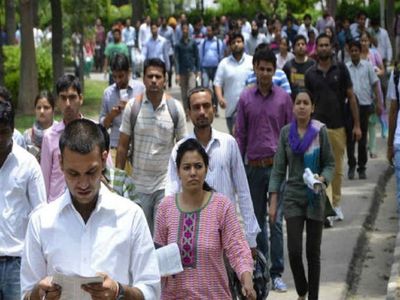
Joblessness is the top concern of Urban Indians in October 2021 while global citizens are more worried about poverty and social inequality, Ipsos What Worries the World global monthly survey has said.
-
According to the survey, unlike earlier, concern around Covid-19 has receded both for global citizens and Urban Indians. It sat on top as the top worry of global citizens (28 markets including India) for 18 months.
-
Among the Indians, the urban citizens are more concerned about unemployment (42 per cent), coronavirus (35 ), financial & political corruption (30 per cent), poverty and social inequality (26 per cent), crime and violence (24 per cent), education (20 per cent),among others.
-
For global citizens, the top concerns included, poverty and social inequality (33 per cent), unemployment (30 per cent), coronavirus (29 per cent), financial and political corruption (29 per cent), crime and violence (27 per cent), etc.
-
“Our biggest issue is of joblessness and it remains a major area of concern for most Urban Indians. Job creation and job openings need to keep pace with expectations. Right now, there is a disconnect. But there is this happy tiding in the form of worry around the coronavirus receding which could lead to more return to normalcy and for the job market to look up. Graft and social inequality are other concerns for citizens,” said Amit Adarkar, CEO, Ipsos India.
-
The survey shows that the majority of Urban Indians (68 per cent) believe India is moving in the right direction. India is second in pecking order in optimism, Saudi Arabia remains most optimistic (83 per cent).
-
Global citizens stay circumspect with 64 per cent believing their country is on the wrong track. And the markets most downbeat were Colombia (90 per cent), Peru (83 per cent) and Argentina (82%).
-
“The biggest upside of Urban Indians is their never say die attitude. Despite the worries and hardships, they always believe the tide will turn, and it does. They do not give up mid way,” added Adarkar.
CONCLUSION
-
Ipsos’ What Worries the World survey is conducted in 28 countries around the world via the Ipsos Online Panel system.
-
A total of 21,516 online interviews were conducted between September 24 to October 8 among adults aged 18-74 in the US, South Africa, Turkey, Israel and Canada and age 16-74 in all other countries. Data are weighted to match the profile of the population.
KEY STORY
-
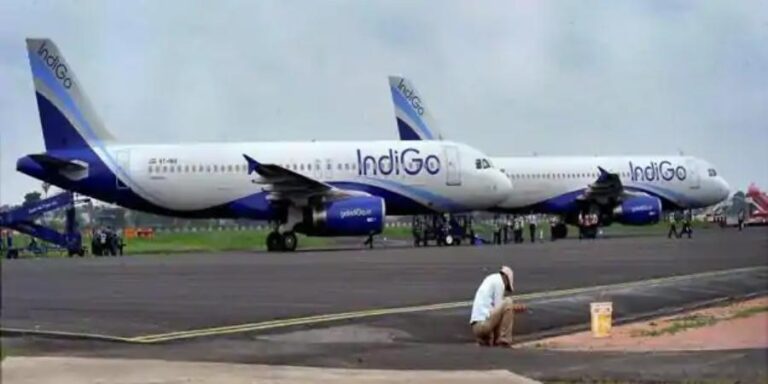
Airline major IndiGo said on Saturday that it will commence 12 new flights in November 2021.
-
Sanjay Kumar, Chief Strategy and Revenue Officer at IndiGo, said: “These routes will enhance connectivity between northern, eastern, northeastern, western, and southern regions, promoting trade and commerce. We will continue to offer new routes as per the travel demand across various sectors.”
-
The airline, which commenced flight service between Ahmedabad and Jodhpur from November 1 and in the Bengaluru-Rajkot, Kolkata-Coimbatore, Delhi-Trivandrum and Dibrugarh-Dimapur routes from November 2, will launch service between Ahmedabad and Ranchi from November 10.
-
The airline said these flights are designed to cater to business and leisure travellers, who are constantly on the lookout for new and affordable flying options.
CONCLUSION
-
At present, IndiGo has a fleet of more than 275 aircraft and operates over 1,400 daily flights, connecting 71 domestic and 24 international destinations.

KEY STORY
-
Karnataka playschools, anganwadis are all set to reopen from tomorrow, November 8, 2021. Bruhat Bengaluru Mahanagara Palike, BBMP has allowed all playschools and anganwadis to reopen with strict adherence to COVID 19 protocols. The decision was taken on November 6 as per the recommendations of the Technical Advisory Committee.
-
However, teachers, students and other stakeholders must note that the schools would reopen only in the areas where the testing positivity rate is less than 2%.
-
The school’s authority must ensure that all teachers are fully vaccinated and have taken consent from children’s parents before taking offline classes.
-
On the other hand, the state government has also announced that the parents who send their children to Karnataka playschools, anganwadis, must be fully vaccinated. The schools would function only for 2 hours from 10 am to 12 pm. Necessary COVID protocols must be followed by the school’s authority, such as proper sanitization, temperature screening, maintaining social distancing, etc.
-
Karnataka playschools, anganwadis reopening: COVID 19 guidelines hereThe schools would reopen only in areas with TPR less than 2%. The duration of offline classes would be 2 hours from 10 am to 12 pm. Teachers and parents must be fully vaccinated. Students must take parents’ consent to attend physical classes.
-
As per reports, the mask is not compulsory for Karnataka playschools, Anganwadi students. This guideline is in consideration with the norm that children below five years need not wear masks. Also, parents must submit their consent letters to send their ward to their respective schools. The preprimary schools were shut since the pandemic stuck in 2020.
CONCLUSION
-
Earlier, Karnataka State Government had permitted schools authority to conduct offline classes for Classes 6 to 12 students with 100% capacity. The state reports 224 new COVID 19 cases and five deaths in the last 24 hours. Keep following this page for more updates on Karnataka playschools, anganwadis.

KEY STORY
-
India kept their qualification hopes for the semi-final of the 2021 T20 World Cup with a resounding victory over Scotland. The Men in Blue won the encounter by eight wickets with 13.3 overs to spare.
-
After Virat Kohli won the toss and chose to bowl first, Scotland were bowled out for just 85 runs on the board. In reply, India chased down the target in just 6.3 overs to give a massive boost to their Net Run Rate.
-
If Afghanistan beat New Zealand, India can qualify for the semi-final by just bettering the victory margin of Mohammad Nabi’s side against Namibia. However, a New Zealand win on Sunday will rule out any chance of India making it to the semi-final.
Here are three key talking points from India’s stunning victory over Scotland
1) Three spinner strategy works
Virat Kohli made just one change to his line-up from the game against Afghanistan as Varun Chakravarthy replaced Shardul Thakur in the line-up. Given the fact that India had only played with a three-pacer and two-spinner combination in the tournament so far, this was a significant change in approach.
The decision to play three spinners worked wonders as the Scottish batsmen failed to read the Indian spinners. Ravindra Jadeja bowled a match-winning spell as he took three wickets and conceded just 15 runs in four overs. Ravichandran Ashwin also chipped in with one scalp while Varun Chakravarthy was wicketless but bowled an economic spell by going for just 15 runs in three overs.
2) Toss rules roast in Dubai
While delighted with the victory, Indian fans would be left asking themselves after the game what could have happened had they won the toss in the games against Pakistan and New Zealand too. On Friday evening, the massive advantage teams bowling first have in Dubai during evening games was on display as the Indian bowlers had a memorable evening.
India kept their qualification hopes for the semi-final of the 2021 T20 World Cup with a resounding victory over Scotland. The Men in Blue won the encounter by eight wickets with 13.3 overs to spare.

KEY STORY
-
Karnataka has a significant number of malnourished children, according to government data, even though a Niti Aayog report noted that 20 out of 30 districts showed a declining prevalence of the problem.
-
As per data released by the state government outside of the Niti Aayog report, there were 3,47,051 moderately malnourished children and 7,908 severely malnourished children in the state till the end of August 2021, of which 5,828 and 159 children, respectively, were in Bengaluru Urban.
-
While the government says that these numbers are lower than numbers found in 2019 (when 9,544 severely malnourished children were registered), experts noted that the pandemic had also interfered with the identification and registration, a situation that is only now being reversed.
-
“Many mothers and children were not coming to the hospital for checkups during the the pandemic, so the number of malnourished cases being registered dropped. The situation is now improving,” said Dr Geetha Shivamurthy, Medical Superintendent of Vani Vilas Hospital.

- However, while we have a good idea of the scale of the problem in Bengaluru, outskirts are a gray area,” she added.
-
Other experts said the state lost the plot on malnutrition during the pandemic because anganwadi workers were deputed to vaccination-related activities especially in rural areas.
-
“This diversion of anganwadi workers will take a toll on children in the years to come because many have been deprived for nearly one and a half years of proper nutritional support,” said a source from the United Nations Children’s Fund (Unicef).
-
Another expert flagged the issue of immunisation being hit, which she said will lead to “aggravate” malnutrition.
-
“During the pandemic, routine immunisation was affected. Increased incidence of vaccine-preventable diseases will in turn aggravate malnutrition. We are expecting a surge in kwashiorkor, marasmus, night blindness and rickets,” said Dr Sylvia Karpagam, a public health activist.
-
Dr Asha Benakappa, Head of the Department of Paediatrics, Chandramma Dayananda Sagar Institute of Medical Education and Research, pointed out the issue of take-home rations that were being handed out during the pandemic not being sufficient.
CONCLUSION
-
“There were reports that take-home rations were eaten by all members of the family and not enough went to the child or the mother,” she said.
-
A government official acknowledged the problem but said a solution was in the offing soon.
-
“The anganwadis will once again open from November 8, as per TAC recommendations, and we can resume hot meals,” said Uma Mahadevan, Principal Secretary to the state government.

KEY STORY
-
If you check your weight before going to seep in the night and again in the morning, you may notice that you may weigh less in the morning – primarily because you have lost water throughout the night as you breathed and sweated.
-
But even as our body rests, organs and organ systems do not switch off, and their working consumes calories, however less it may seem as compared to the waking hours burn.
-
It is not impossible to burn calories during the night. However, the loss of water weight is more significant than the loss of fat.
-
Edward Lane and Anna Davies write in Men’s Health that getting a poor night’s sleep doesn’t just make you cranky—it can also make you gain weight. After research, the sequence is assumed to be as below:
-
Logging less than eight hours a night increases your levels of the stress hormone cortisol.
-
A spike in the cortisol level in your blood negatively affects the microbes in your gut.
-
A disbalance in the levels of microbes ultimately slows down your metabolism.
-
Loss of sleep can disturb your hunger hormones, making you more likely to eat junk food.
-
This causes a spike in blood sugar, which can contribute to weight gain and other complications.
Repeatedly, research has highlighted the fact that just one night of bad sleep can slow down your metabolism the next morning, reducing the energy you expend by up to 20 per cent. according to a study in the American Journal of Clinical Nutrition.

KEY STORY
-
The pre-primary schools which were closed almost for the last one-and-a-half years will reopen from November 8 across the state following the recommendation by the Technical Advisory Committee for Covid-19.
-
The department of public instruction has issued a circular on Thursday permitting pre-primary schools/kindergartens to conduct physical classes from November 8 by following the Standard operating 6Procedure(SoP).
-
As per the circular issued by the department, the schools are allowed to conduct classes, in the districts and taluks where the Covid-19 positivity rate is less than 2%, during Monday to Friday between 9.30 am and 3.30 pm. This applies only for lower kindergarten (LKG) and upper kindergarten (UKG).
-
Following the decision taken by the state government to reopen anganawadi centres from November 8, the department of public instruction has decided to reopen pre-primary classes. The private schools management associations have welcomed this move.
CONCLUSION
-
This decision by the government has come as a welcome change for working parents. However, a section of parents are not ready to send their little ones to schools until they are administered Covid vaccine.

KEY STORY
-
The Samyukta Kisan Morcha, an umbrella body of 40 farmers’ unions, will hold an internal meeting today to decide the future course of action after Delhi Police removed barricades from Ghazipur and Tikri borders.
-
During the meeting, SKM will decide whether or not they should march into Delhi or the protest site should be shifted.
-
In a big relief to commuters, the Delhi Police started removing barricades from the Ghazipur and Tikri borders on October 30 with farmers sitting at the protest site for nearly a year expressing apprehension that they also might be removed.
Farmers to intensify agitation from Nov 27 if demands not met
Bharatiya Kisan Union (BKU) leader Rakesh Tikait has already warned that if the farmers’ demands are not met till November 26, they would pitch tents the following day across all borders of Delhi and strengthen their agitation.
“The farmers would reach the border points on tractors and trolleys and fortify the venues after pitching their tents,” Tikait warned in a post on Twitter.
This statement from Tikait comes after the Supreme Court, in its recent ruling, had held that though the farmers have all the freedom to protest, they cannot “block” the roads causing inconvenience to the public.
Protests can continue for 5 years: Rakesh Tikait
Tikait has also said that if governments can run for 5 years, then protests can also continue for 5 years.
Earlier, the BKU leader had warned the Centre of converting the government offices into “grain markets” if farmers are forcibly evicted from the protest site.
“If the farmers fail to sell their produce in mandis at a fair price, then, what better place to do so than the government offices?” Tikait said and demanded that the Centre engage in dialogue with them and repeal the farm laws.
The Union government and the protesting farmers met 11 times to resolve the issue but the talks remained inconclusive.

KEY STORY
-
Karnataka government has withdrawn the night curfew that was enforced across the state due to COVID-19. The order also gave clearance to holding horse races with strict adherence to COVID-19 appropriate behaviour at the venues.
-
In an order on November 5, Karnataka chief secretary P Ravi Kumar said that the night curfew, which was imposed between 10 pm to 5 am, is ‘withdrawn’. “Night curfew, which is being imposed from 10 PM to 5 AM is herewith withdrawn,” he said.
Only those vaccinated with COVID-19 allowed for horse races: order
The order made a special reference to horse racing and said that while the activity can resume, only fully vaccinated people will be allowed to enter the premises hosting horse races in Karnataka. “Number of racing patrons attending horse racing shall be strictly as per the seating capacity of the venue and only fully vaccinated people with COVID-19 vaccine will be allowed entry into such premises,” the order said.

The Karnataka government had imposed a night curfew from July 3 after a two-month lockdown in light of COVID-19. The state was among many other states which were severely hit during the second wave of COVID-19 that hit the country in April.
While the number of COVID-19 infections in Karnataka has come down significantly over the recent weeks, on Tuesday, 261 fresh cases of coronavirus were reported in Karnataka. Currently, there are 8,267 active cases of COVID-19 in Karnataka. The state reported five deaths due to COVID-19 – the state Health Department said on Friday.

KEY STORY
-
Congress on Friday laughed off the recent decrease in excise duty on petrol and diesel, and called it a “lollipop” by the Central government.
-
The grand old party also announced a massive campaign against fuel prices from November 14.
-
The Centre this week reduced excise duty on petrol and diesel by Rs 5 per litre and Rs 10 per litre, respectively.
-
Reacting to the recent reduction in fuel prices, Chhattisgarh Chief Minister Bhupesh Baghel said, “If the NDA govt decreases excise duty from Rs 30 to Rs 9 like the UPA govt did, petrol-diesel costs will definitely go down.”
-
“Increasing the petrol cost by Rs 30, then downing it by Rs 5 is just a lollipop,” he added.
-
Meanwhile, another Congress leader KC Venugopal also hit out at the Central government for not reducing the fuel prices “enough” to benefit the common man.
-
While speaking to media, Venugopal said, “It hasn’t been decreased much. During UPA govt excise duty on petrol was Rs 9.48 per litre and diesel Rs 3.56 per litre. They should reduce it more.LPG rates are still the same and need to be reduced.”
-
The Congress leader then announced that his party will continue its agitation and start a “massive campaign” against the fuel prices from November 14.
-
Before price cuts and pause, diesel prices have increased 30 out of the last 42 days taking up its retail price by Rs 9.90 per litre in Delhi.
CONCLUSION
-
Petrol prices have also risen on 28 of the previous 38 days taking up its pump price by Rs 8.85 per litre. Since January 1, 2021 petrol and diesel prices have risen by more than Rs 26 a litre before the duty cuts.
-
The excise duty was raised by Rs 13 and Rs 16 per litre on petrol and diesel between March 2020 and May 2020 and was standing high at Rs 31.8 on diesel a nd Rs 32.9 per litre on petrol before finally the Centre decided on duty cut.
1...471472473...883Page 472 of 883